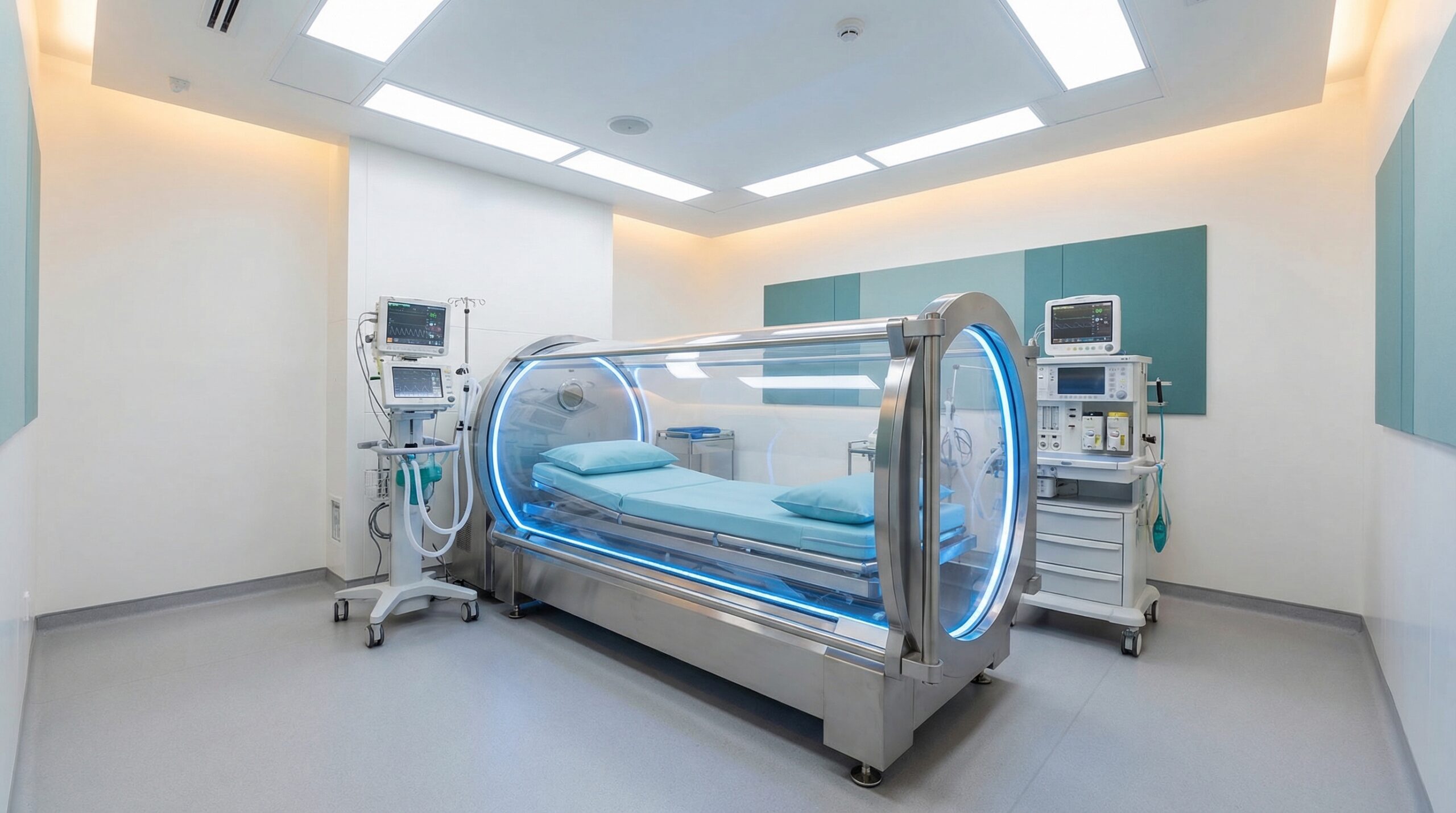
TL;DR: Delayed radiation injury affects 5–15% of long-term cancer survivors and can cause debilitating conditions including radiation cystitis, proctitis, and osteoradionecrosis. Hyperbaric oxygen therapy (HBOT) is a UHMS-approved treatment that promotes angiogenesis and tissue repair in radiation-damaged tissue. Studies report response rates of 85–96% across multiple injury sites. Canadian physicians can refer patients to accredited hyperbaric facilities, with OHIP covering treatment for approved indications in Ontario.
Estimated reading time: 9 minutes
Delayed radiation injury is one of the most clinically significant long-term complications of cancer treatment, affecting an estimated 5–15% of patients who survive beyond five years after radiotherapy. Hyperbaric oxygen therapy (HBOT) is an evidence-based, UHMS-approved intervention that addresses the underlying pathophysiology of radiation-damaged tissue by promoting neovascularisation, fibroblast proliferation, and collagen synthesis. For referring physicians across Canada, understanding when and how to refer patients for HBOT can meaningfully improve outcomes for this growing population of cancer survivors.
As cancer survival rates continue to improve – with over 60% of Canadians diagnosed with cancer now surviving five years or more – the burden of chronic radiation sequelae is increasing. This guide provides an evidence-informed framework for identifying appropriate referral candidates, understanding treatment protocols, and navigating the Canadian referral pathway.
What Is Delayed Radiation Injury and Why Does It Occur?
Delayed radiation injury is a progressive, ischaemic condition that develops months to years after radiotherapy as a result of radiation-induced vascular damage, fibrosis, and tissue hypoxia. Unlike acute radiation effects that resolve within weeks of treatment completion, delayed injuries reflect permanent changes to the microvasculature and extracellular matrix of irradiated tissue.
The pathophysiology involves three interconnected processes:
- Obliterative endarteritis – progressive narrowing and occlusion of small blood vessels, reducing oxygen delivery to irradiated tissue
- Tissue fibrosis – replacement of normal tissue architecture with dense collagen, further impairing perfusion
- Cellular depletion – loss of fibroblasts, osteoblasts, and other regenerative cells needed for tissue maintenance and repair
The result is a chronic, hypoxic wound environment that lacks the cellular machinery for self-repair. According to a 2026 clinically focused review published in CA: A Cancer Journal for Clinicians, these chronic radiation-induced conditions – including skin fibrosis, bone necrosis, radiation cystitis, and proctitis – “pose substantial challenges for both patients and caregivers, particularly in the context of improving long-term cancer survival” (Dejonckheere et al., 2026).
Which Patients Should Be Referred for Hyperbaric Oxygen Therapy?
Referral for HBOT should be considered when a patient presents with chronic radiation-induced tissue injury that has not responded to conventional management. The Undersea and Hyperbaric Medical Society (UHMS) lists delayed radiation injury (soft tissue and bony necrosis) as one of its 14 approved indications for hyperbaric oxygen therapy.
Common presentations warranting referral include:
| Condition | Typical Presentation | Time to Onset After RT |
|---|---|---|
| Radiation cystitis | Recurrent haematuria, bladder pain, reduced capacity | 6 months – 20 years |
| Radiation proctitis | Rectal bleeding, tenesmus, diarrhoea, urgency | 6 months – 5 years |
| Osteoradionecrosis (mandible) | Exposed bone, pain, pathological fracture, fistula | 1 – 10+ years |
| Soft tissue necrosis (head/neck) | Non-healing wounds, tissue breakdown, pain | 6 months – 5 years |
| Laryngeal chondroradionecrosis | Hoarseness, stridor, dysphagia, airway compromise | 3 months – 10+ years |
| Radiation enteritis | Chronic abdominal pain, malabsorption, obstruction | 1 – 5 years |
Prophylactic referral is also indicated before dental extractions or surgical procedures in previously irradiated tissue, where healing capacity is significantly compromised. A large retrospective study of 276 patients found that osteoradionecrosis prophylaxis for radiation-induced dental disease achieved a 96% overall response rate (Tahir et al., 2014).
How Does Hyperbaric Oxygen Therapy Repair Radiation-Damaged Tissue?
HBOT works by reversing the underlying hypoxic environment that sustains delayed radiation injury. During treatment, patients breathe 100% oxygen at pressures of 2.0–2.5 atmospheres absolute (ATA), which increases dissolved plasma oxygen levels by 10–15 times normal values.
The therapeutic mechanisms include:
- Neovascularisation – HBOT stimulates angiogenesis through hypoxia-inducible factor-1α (HIF-1α) and vascular endothelial growth factor (VEGF) signalling, generating new capillary networks in irradiated tissue
- Fibroblast activation – increased oxygen tension supports fibroblast proliferation and collagen synthesis, essential for tissue remodelling
- Osteoblast stimulation – in bony radiation necrosis, HBOT promotes osteoblast activity and new bone formation
- Anti-inflammatory modulation – HBOT downregulates pro-inflammatory cytokines and modulates redox signalling pathways
A 2026 narrative review of 89 articles confirmed that “HBOT modulates redox signalling, downregulates pro-inflammatory pathways, optimises HIF-1α–VEGF dynamics, and balances MMP/TIMP activity, thereby improving matrix quality and microvascular integrity” (González Flores et al., 2026).
These effects are cumulative – tissue oxygen levels and vascular density continue to increase with successive treatments, which is why protocols typically involve 20–40 sessions.
What Does the Evidence Show for Radiation Cystitis and Proctitis?
Radiation cystitis and proctitis are among the most common delayed radiation injuries referred for HBOT, and the evidence for treatment efficacy is strong.
A retrospective analysis of 88 patients treated for radiation lesions found statistically significant improvement (p < 0.005) across all patient groups when assessed using the LENT-SOMA (Late Effects of Normal Tissues – Subjective, Objective, Management, Analytical) scale. The study included 33 patients with radiation cystitis, 20 with radiation proctitis, 13 with osteoradionecrosis, and 22 with radiation enteritis (Gaio-Lima et al., 2022).
In Australasia’s largest reported series of 276 patients, response rates were equally impressive:
- Chronic radiation proctitis: 95% overall response rate
- Haemorrhagic cystitis: 85% overall response rate
- Soft tissue necrosis (head and neck): 85% overall response rate
- Soft tissue necrosis (other sites): 84% overall response rate
The total complication rate from HBOT in this series was 15.9%, comprising mostly reversible barotrauma – ear barotrauma (10.6%), ocular barotrauma (4.2%), and rare events including dental complications (0.5%) (Tahir et al., 2014).
For physicians managing refractory haematuria from radiation cystitis, HBOT offers a conservative alternative to surgical intervention – which in severe cases may require cystectomy with urinary diversion.
How Effective Is HBOT for Osteoradionecrosis?
Osteoradionecrosis (ORN) of the mandible is one of the most well-studied indications for HBOT in the context of radiation injury. It occurs in approximately 5–15% of patients receiving radiotherapy to the head and neck region and can result in exposed bone, pathological fracture, and significant functional impairment.
The 276-patient Australasian study reported an 86% overall response rate for established osteoradionecrosis of the mandible (Tahir et al., 2014). Prophylactic HBOT before dental procedures in irradiated fields achieved an even higher response rate of 96%.
For laryngeal chondroradionecrosis, a 2024 single-centre study of patients with radiation-induced laryngeal cartilage necrosis found that HBOT significantly improved Chandler’s classification grade from a median of 4 to 2.5 (p = 0.005), potentially avoiding the need for total laryngectomy (Levin et al., 2024).
These findings are particularly relevant for Canadian head and neck surgeons and radiation oncologists, as ORN prevention through prophylactic HBOT before dental extractions in irradiated fields is a well-established protocol endorsed by both UHMS and CUHMA (Canadian Undersea and Hyperbaric Medical Association).
What Are the Treatment Protocols and Parameters?
Standard HBOT protocols for delayed radiation injury follow established guidelines:
| Parameter | Standard Protocol |
|---|---|
| Pressure | 2.0–2.4 ATA (most commonly 2.4 ATA) |
| Duration | 90 minutes per session (at treatment pressure) |
| Frequency | Once daily, 5 days per week |
| Total sessions | 30–40 for established injury; 20–30 prophylactic |
| Oxygen | 100% O₂ via hood, mask, or chamber atmosphere |
For prophylactic protocols (e.g., pre-dental extraction in irradiated mandible), the Marx protocol recommends 20 pre-operative treatments followed by 10 post-operative treatments.
Treatment response is typically assessed clinically after 20 sessions, with the option to extend if improvement is ongoing. The cumulative nature of HBOT’s angiogenic effects means that maximum benefit may not be apparent until several weeks after the course is complete.
How Do Physicians Refer Patients for HBOT in Canada?
The referral pathway varies by province, but the general process is consistent across Canada:
- Document the radiation history – include treatment dates, dose, field, and fractionation schedule
- Confirm failed conventional management – HBOT is typically indicated after first-line treatments have been insufficient
- Provide relevant investigations – cystoscopy for cystitis, imaging for ORN, endoscopy for proctitis
- Submit referral to an accredited hyperbaric facility – include a summary of the clinical problem, radiation details, and current medications
- Ensure no absolute contraindications – untreated pneumothorax is the only absolute contraindication
In Ontario, OHIP covers HBOT for delayed radiation injury at both hospital-based and eligible private clinics that bill OHIP directly. In British Columbia, MSP covers treatment at Vancouver General Hospital. In Alberta, AHCIP covers treatment at AHS hospital clinics in Calgary and Edmonton. Other provinces may require patients to access treatment through hospital-based programmes or seek private coverage.
To find an accredited facility, physicians can consult the Canada Hyperbarics facility directory or contact CUHMA directly. Canada Hyperbarics maintains a comprehensive directory of hyperbaric facilities across 10 provinces.
What Are the Contraindications and Screening Considerations?
Before referral, referring physicians should screen for the following:
Absolute contraindication:
- Untreated pneumothorax
Relative contraindications requiring assessment:
- Active malignancy (discussed below)
- Uncontrolled seizure disorder
- Severe COPD with CO₂ retention
- Active upper respiratory infection
- Recent middle ear or sinus surgery
- Claustrophobia (may be managed with anxiolytics or multiplace chamber)
- Certain chemotherapeutic agents (bleomycin, cisplatin, doxorubicin – discuss with hyperbaric physician)
Regarding concurrent or recent malignancy: A common concern among referring physicians is whether HBOT could stimulate tumour growth. The available evidence largely refutes this concern. As noted by Feldmeier in the UHMS evidence review, “the concerns of HBO₂ enhancing growth of or precipitating recurrence of malignancy is discussed and largely refuted” (Feldmeier, 2012). However, the decision should be made collaboratively between the referring oncologist and the hyperbaric physician.
For a comprehensive overview of HBOT-approved conditions and current Health Canada regulatory status, visit the Canada Hyperbarics resource pages.
Frequently Asked Questions
Is delayed radiation injury the same as acute radiation side effects?
No. Acute radiation effects (skin redness, mucositis, fatigue) occur during or shortly after treatment and typically resolve within weeks. Delayed radiation injury develops months to years later due to progressive vascular damage and tissue fibrosis, and does not resolve spontaneously.
How soon after radiotherapy can delayed radiation injuries appear?
Delayed radiation injuries can develop as early as 6 months after radiotherapy or as late as 20 years post-treatment. The median onset varies by site – radiation cystitis typically presents 2–5 years after pelvic radiation, while osteoradionecrosis may appear 1–10 years after head and neck radiation.
Does HBOT cure radiation injury or just manage symptoms?
HBOT addresses the underlying pathophysiology by stimulating new blood vessel growth and tissue regeneration in irradiated areas. Many patients experience durable improvement after completing a course of treatment. However, severely damaged tissue may not fully recover, and some patients may benefit from additional sessions.
Can patients receive HBOT if they have active cancer or are currently receiving chemotherapy?
This requires careful clinical assessment. Current evidence does not support the concern that HBOT promotes tumour growth. However, certain chemotherapeutic agents may interact with hyperbaric oxygen. The decision should be made collaboratively between the referring oncologist and the hyperbaric medicine physician.
How many HBOT sessions are typically needed for radiation injury?
Standard protocols involve 30–40 daily sessions for established radiation injury. Prophylactic protocols (e.g., before dental work in an irradiated field) typically require 20 pre-operative and 10 post-operative sessions. Treatment response is assessed clinically after 20 sessions.
Is HBOT covered by provincial health insurance for radiation injury?
Coverage varies by province. In Ontario, OHIP covers HBOT for approved indications including delayed radiation injury at both hospital-based and eligible private clinics. In British Columbia (MSP) and Alberta (AHCIP), coverage is available at hospital-based programmes. Visit the Canada Hyperbarics FAQ page for detailed provincial coverage information.
What evidence supports HBOT for radiation injury specifically?
Based on articles retrieved from PubMed, multiple studies report response rates of 85–96% across radiation cystitis, proctitis, osteoradionecrosis, and soft tissue necrosis. A landmark review published in CA: A Cancer Journal for Clinicians in 2026 provides a comprehensive evidence framework for clinicians.
Where can I find an accredited hyperbaric facility in Canada?
The Canada Hyperbarics facility directory lists accredited hyperbaric facilities across 10 provinces. You can also contact CUHMA for referral guidance. For research supporting HBOT indications, visit the Canada Hyperbarics research database.
Support Your Patients With Evidence-Based Referrals
Delayed radiation injury is a growing challenge as cancer survivorship improves. Hyperbaric oxygen therapy offers a well-evidenced, conservative treatment option that can significantly improve quality of life for your patients. If you are managing a patient with chronic radiation-related complications that have not responded to conventional treatment, consider referral to an accredited hyperbaric facility.
For more information on HBOT indications, the latest research, and facility locations across Canada, explore the Canada Hyperbarics research database or consult the conditions guide.
References
- Dejonckheere CS, Käsmann L, Schmeel LC, et al. Hyperbaric oxygen therapy for chronic radiotherapy-related adverse effects: A clinically focused review. CA Cancer J Clin. 2026;76(1):e70058. DOI: 10.3322/caac.70058
- Gaio-Lima C, Castedo J, Cruz M, et al. The role of hyperbaric oxygen therapy in the treatment of radiation lesions. Clin Transl Oncol. 2022;24(12):2466-2474. DOI: 10.1007/s12094-022-02892-x
- Tahir ARM, Westhuyzen J, Dass J, et al. Hyperbaric oxygen therapy for chronic radiation-induced tissue injuries: Australasia’s largest study. Asia Pac J Clin Oncol. 2015;11(1):68-77. DOI: 10.1111/ajco.12289
- Levin EG, Ritter A, Bachar G, et al. Management of laryngeal chondroradionecrosis: A single-center experience. Head Neck. 2024;47(1):300-308. DOI: 10.1002/hed.27919
- González Flores JE, Vázquez Hernández DB, Gonzalez Espinosa A, et al. Hyperbaric oxygen therapy in modern surgical practice: Mechanistic basis and clinical applications across specialties. Cureus. 2026;18(1):e102116. DOI: 10.7759/cureus.102116
This content is for informational purposes only and does not constitute medical advice. Consult a qualified healthcare professional for diagnosis and treatment decisions. All medical claims in this article are supported by peer-reviewed research cited above.