HBOT Coverage in Canada - Provincial Health Insurance Guide | Canada Hyperbarics Skip to main content

Coverage Guide

Is HBOT Covered in Canada?

Provincial health coverage, private insurance, and out-of-pocket costs for hyperbaric oxygen therapy, everything you need to know, organized by province.

Quick Answer

HBOT coverage varies by province. Some provinces cover approved medical indications through public health insurance at hospitals and regulated facilities. Private insurance may cover additional indications. Many wellness uses are out of pocket. Use the Coverage Navigator below or find your province further down, or find the nearest hyperbaric facility. For the underlying chamber licensing, CSA standards, and operationally-funded indication list, see our regulatory framework overview.

Coverage Navigator

Check your HBOT coverage in 2 steps
Select your province, then your insurance type. We will show you what's covered, who to contact, and what to expect.

Step 1 of 2 · Choose your province

Province by Province

Find Your Province
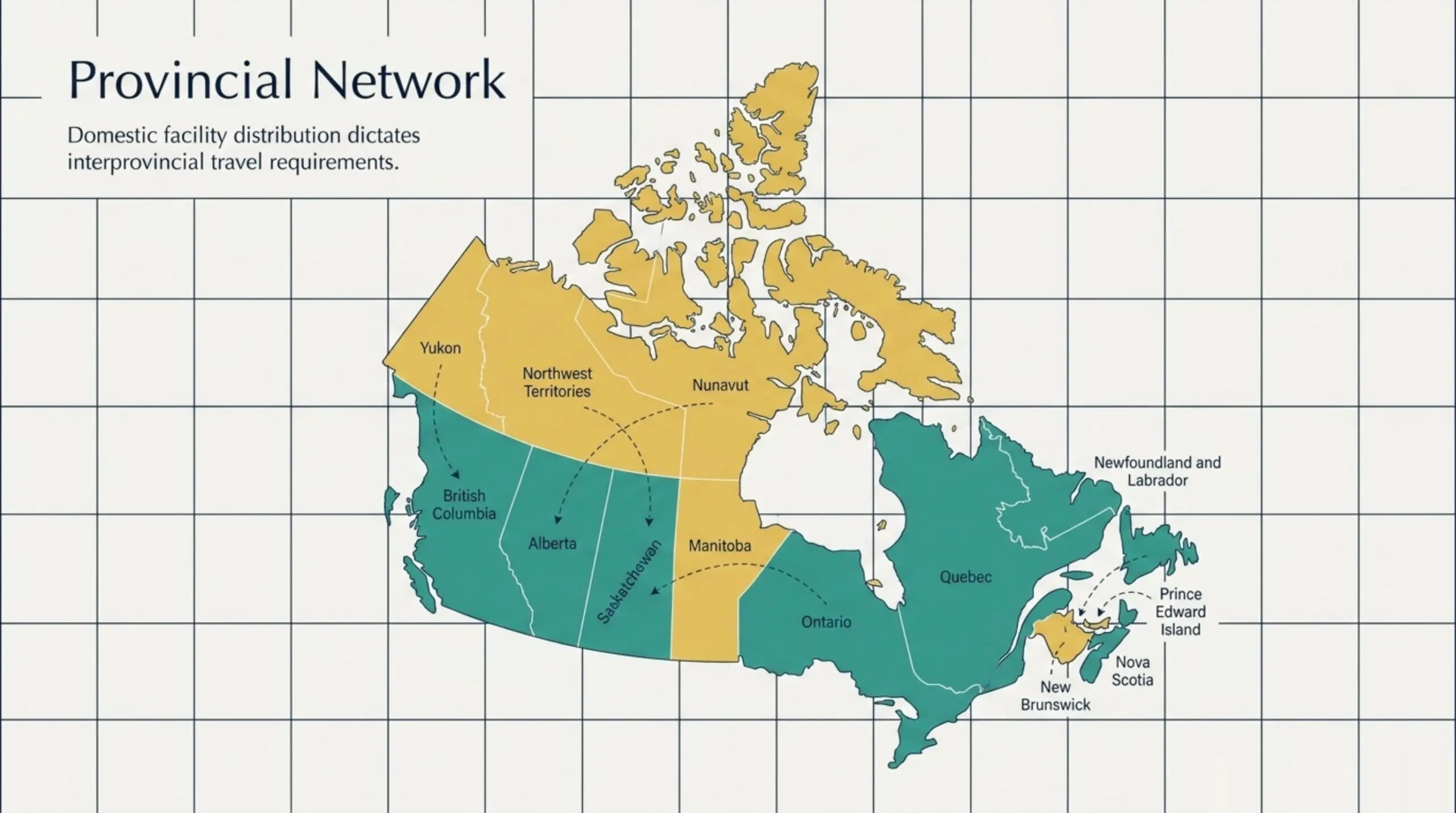
Click your province to see coverage details, which conditions qualify, and how to access treatment.

Covered
Disrupted
Via Referral
No Facility

Note: Coverage information compiled from publicly available sources, March 2026. Confirm directly with your provincial health authority before beginning treatment.

Cost Information

What Does HBOT Cost?
Emergency

CO Poisoning

1–3 sessions typical

$150–$1,200

at private clinics (may be covered)

Time-Sensitive

Hearing Loss

10–20 sessions typical

$1,500–$8,000

at private clinics (may be covered)

Approved

Diabetic Wound

20–40 sessions typical

$3,000–$16,000

at private clinics (may be covered)

Approved

Radiation Injury

30–60 sessions typical

$4,500–$24,000

at private clinics (may be covered)

Costs are estimates for private facility treatment. Publicly covered treatment at hospitals and regulated facilities has no out-of-pocket cost. Many facilities offer package discounts. Find a facility near you.

For Patients

See the full HBOT cost reference for Canada

Per-province table, what affects the per-session price, package discounts, extended health insurance details, and source-traced canonical numbers.

Read the cost guide

Detailed Coverage

Provincial Coverage Deep Dives
Detailed coverage information for each province with public HBOT coverage. Click a province to expand.

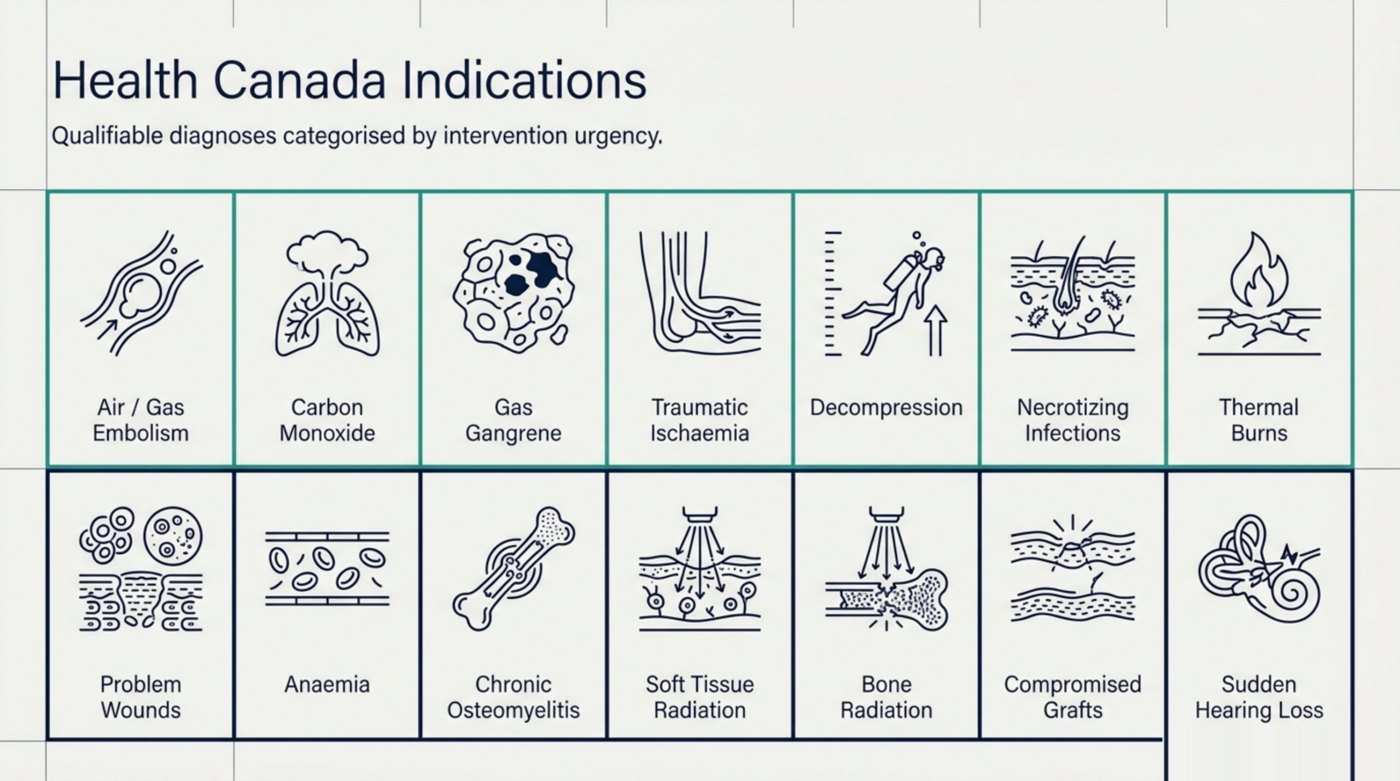
14 OHIP-Covered Indications

1 Air or Gas Embolism
2 Carbon Monoxide Poisoning
3 Gas Gangrene
4 Crush Injury, Compartment Syndrome & Acute Traumatic Ischaemia
5 Decompression Sickness
6 Enhancement of Healing in Selected Problem Wounds
7 Exceptional Blood Loss (Anaemia)
8 Necrotizing Soft Tissue Infections
9 Chronic Osteomyelitis
10 Soft Tissue Radiation Necrosis
11 Radiation Damage Affecting Bone
12 Compromised Skin Grafts & Flaps
13 Thermal Burns
14 Sudden Sensorineural Hearing Loss

How HBOT Is Billed

Hospital programmes bill OHIP for HBOT delivered for covered indications using insured-service codes; patients are not billed directly. At select eligible Independent Health Facilities, OHIP coverage may also apply for approved indications, with eligibility varying by facility. Confirm with the treating centre before booking.

Facilities

Hospital programmes: Toronto General / UHN (24/7), Hamilton General (24/7), The Ottawa Hospital (24/7)

Private HBOT clinics: 15 private HBOT clinics operate across Ontario (Toronto, Mississauga, Barrie, Brampton, Sudbury, Thunder Bay, Oakville, Tobermory, and others). Select eligible Independent Health Facilities may bill OHIP for approved indications; most are self-pay. Confirm eligibility with each clinic.

View all Ontario facilities on the map

How to Access

Physician referral required. Valid OHIP card needed. Contact an approved hospital or regulated facility directly - their intake team will confirm eligibility and coordinate paperwork. No out-of-pocket cost for covered conditions at approved facilities. Find the closest facility to you.

Covered Indications

1 Air or Gas Embolism
2 Carbon Monoxide Poisoning
3 Gas Gangrene
4 Crush Injury, Compartment Syndrome & Acute Traumatic Ischaemia
5 Decompression Sickness
6 Enhancement of Healing in Selected Problem Wounds
7 Exceptional Blood Loss (Anaemia)
8 Necrotizing Soft Tissue Infections
9 Chronic Osteomyelitis
10 Soft Tissue Radiation Necrosis
11 Radiation Damage Affecting Bone
12 Compromised Skin Grafts & Flaps
13 Thermal Burns
14 Sudden Sensorineural Hearing Loss

Billing Code

13.99IHBOT detention time (per 15 min)

Facilities

Hospital: Misericordia Community Hospital, Edmonton (monoplace, 24/7 emergency) and Arthur J.E. Child Comprehensive Cancer Centre / Foothills Medical Centre, Calgary (monoplace, no 24/7).

CPSA-Accredited Private: The College of Physicians & Surgeons of Alberta accredits private HBOT clinics, setting standards and conducting on-site assessments. CPSA accreditation does not automatically confer Alberta Health billing. Hospital programmes bill AHS directly; private clinic fees are generally out of pocket. Confirm billing arrangements with each clinic.

View all Alberta facilities on the map

How to Access

Doctor's referral required - can be faxed for primary care referrals. Emergency referrals through ER. Contact: Misericordia Hyperbaric Unit 780-735-2627 | Calgary clinic 587-231-5475. Find the closest facility to you.

Covered Indications

RAMQ covers recognised conditions at hospital-based facilities. Hyperbaric medicine has been available in Quebec since 1982. Coverage is not available at private clinics, only hospital-delivered treatments are insured.

1 Air or Gas Embolism
2 Carbon Monoxide Poisoning
3 Gas Gangrene
4 Crush Injury, Compartment Syndrome & Acute Traumatic Ischaemia
5 Decompression Sickness
6 Enhancement of Healing in Selected Problem Wounds
7 Exceptional Blood Loss (Anaemia)
8 Necrotizing Soft Tissue Infections
9 Chronic Osteomyelitis
10 Soft Tissue Radiation Necrosis
11 Radiation Damage Affecting Bone
12 Compromised Skin Grafts & Flaps
13 Thermal Burns
14 Sudden Sensorineural Hearing Loss

Billing

RAMQ specialist billing manual includes hyperbaric medicine codes. Billing is handled by the treating hospital, patients do not receive a bill for covered indications. Specific fee codes are in the RAMQ Manuel de rémunération à l'acte for specialists.

Facilities

Hospital (RAMQ-covered): Hôtel-Dieu de Lévis (multiplace + monoplace, 24/7 emergency, 418-835-7121 ext 11505) and Hôpital du Sacré-Coeur de Montréal (multiplace + monoplace, 24/7 emergency).

Private (NOT RAMQ-covered): Private HBOT clinics operate in Quebec. Treatment is entirely out of pocket or through private insurance. See the facilities directory for current Quebec listings.

View all Quebec facilities on the map

How to Access

Physician referral required. Emergency cases: contact ER directly. Elective referrals: contact Hôtel-Dieu de Lévis at 418-835-7121 ext 11505. Wait times may apply for non-emergency indications. Valid RAMQ card required. Find the closest facility to you.

Covered Indications

MSP covers 14 recognised conditions at VGH. The MSC Payment Schedule includes hyperbaric chamber billing codes. Only hospital-delivered treatment is MSP-covered.

1 Air or Gas Embolism
2 Carbon Monoxide Poisoning
3 Gas Gangrene
4 Crush Injury, Compartment Syndrome & Acute Traumatic Ischaemia
5 Decompression Sickness
6 Enhancement of Healing in Selected Problem Wounds
7 Exceptional Blood Loss (Anaemia)
8 Necrotizing Soft Tissue Infections
9 Chronic Osteomyelitis
10 Soft Tissue Radiation Necrosis
11 Radiation Damage Affecting Bone
12 Compromised Skin Grafts & Flaps
13 Thermal Burns
14 Sudden Sensorineural Hearing Loss

Billing

MSP billing codes for hyperbaric chamber services are included in the BC Medical Services Commission Payment Schedule. Hospital handles billing, no out-of-pocket cost for patients with valid BC Services Card at VGH for approved indications.

Facilities

Hospital (MSP-covered): Vancouver General Hospital Hyperbaric Unit (multiplace, 24/7 emergency). This is the only hospital-based chamber in the entire province and the only BC facility compliant with Health Canada licensing and College of Physicians accreditation.

Private (NOT MSP-covered): Private HBOT clinics operate in Metro Vancouver (Burnaby, Richmond). All private clinic treatment is out of pocket or through private insurance. See the facilities directory for current BC listings.

Access note: VGH is the sole MSP-covered provider for 5+ million BC residents. Wait times for non-emergency indications may be significant. Emergency cases are prioritized. For full MSP coverage details, referral steps, and the BC FAQ, see our British Columbia MSP coverage guide for hyperbaric oxygen therapy.

View all British Columbia facilities on the map

How to Access

Physician referral required. Emergency referrals through ER. Valid BC Services Card needed. Contact the VGH Hyperbaric Unit directly for referral coordination. Find the closest facility to you.

Covered Indications

recognised conditions covered through MSI (Medical Services Insurance) at the QEII. This facility serves as the only hospital-based chamber for all three Maritime provinces (NS, NB, PEI). No private clinics operate in Nova Scotia.

1 Carbon Monoxide Poisoning
2 Decompression Sickness
3 Air or Gas Embolism
4 Gas Gangrene
5 Delayed Radiation Injury
6 Diabetic & Problem Wounds
7 Necrotizing Soft Tissue Infections
8 Crush Injury
9 Compromised Grafts & Flaps
10 Refractory Osteomyelitis
11 Thermal Burns
12 Sudden Hearing Loss

Billing

Hospital-based service covered through MSI. No out-of-pocket cost for approved indications. Hospital handles all billing directly. Valid NS Health Card required.

Facility

QEII Health Sciences Centre, Halifax (multiplace, 24/7 emergency). This is the only hospital-based chamber in the Maritimes, no private hyperbaric clinics exist in Nova Scotia.

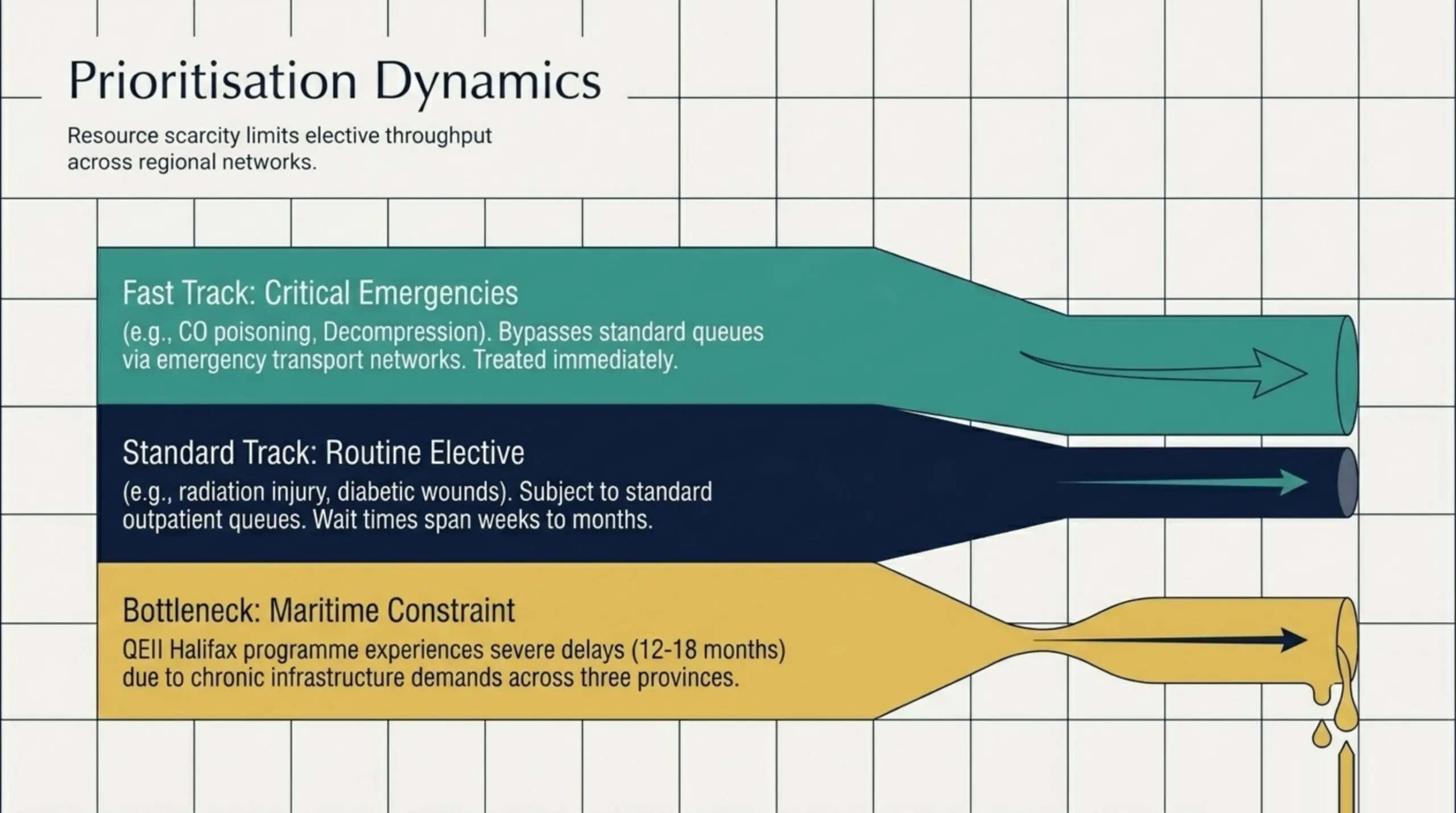
Critical access issue: Wait times for chronic indications can extend from several months to over a year; annual chronic-condition capacity is limited by staff shortages, COVID-related capacity reductions, and increased Maritime population demand. The aging chamber also requires increasing maintenance. Emergency cases (DCS, CO poisoning) are prioritized; routine outpatient referrals should be submitted early. Confirm current wait estimates with NS Health when referring.

View Atlantic facilities on the map

How to Access

Physician referral required. Given the long wait times, submit referrals early. Maritime patients from NB and PEI are also referred here via interprovincial referral, adding to demand. Emergency cases should contact the QEII ER directly. Find the closest facility to you.

Covered Indications

MCP covers HBOT as a hospital-based insured service. The program provides both emergency and elective outpatient treatment. Hospital-only, no private clinic coverage.

1 Carbon Monoxide Poisoning
2 Decompression Sickness
3 Air or Gas Embolism
4 Problem Wound Healing
5 Delayed Radiation Injury
6 Gas Gangrene
7 Necrotizing Soft Tissue Infections
8 Crush Injury
9 Compromised Grafts & Flaps
10 Thermal Burns

Billing

Covered under MCP (Medical Care Plan) as a hospital-based insured physician service. Hospital handles billing. No out-of-pocket cost for approved indications. Valid MCP card required.

Facility

Health Sciences Centre, St. John's (monoplace, 24/7 emergency coverage). Operated by Eastern Health (transferred from Memorial University's MEDICOR).

View Atlantic facilities on the map

How to Access

Physician referral required. Emergency cases (CO poisoning, DCS) have 24/7 access - contact the Health Sciences Centre ER. For outpatient wound/radiation treatment, contact the Hyperbaric Medical Services unit directly. MCP enquiries: 709-758-1600 (St. John's/Avalon). Find the closest facility to you.

Private Coverage

Private Insurance, Extended Benefits & Other Coverage

Beyond provincial health plans, there are several other ways Canadians access HBOT coverage.

Extended Health Benefits

Many employer-sponsored and individual extended health plans from Canadian insurers include coverage for HBOT, though the extent varies significantly by plan level and insurer.

Major Canadian insurers to ask:

Sun Life Manulife Canada Life (Great-West) Blue Cross Desjardins GreenShield Industrial Alliance Equitable Life

Coverage typically falls under "paramedical services" or "medical equipment/treatment" categories. Some plans cover HBOT explicitly; others require it to be prescribed by a physician for a recognized medical indication. Always check your specific plan booklet or call the number on your benefits card.

Auto Insurance (MVA)

If your condition resulted from a motor vehicle accident, HBOT may be covered through your auto insurance benefits. In Ontario, this is submitted through the OCF-18 Treatment Plan via the HCAI (Health Claims for Auto Insurance) system.

Acceptance of OCF-18 treatment plans involving HBOT is increasing as the therapy gains wider recognition. Your HBOT clinic can help prepare and submit the treatment plan to your auto insurer.

Note: Auto insurance coverage for HBOT varies by province and by insurer. No guarantee of approval. Your clinic and treating physician can provide supporting documentation.

Workers' Compensation (WSIB/WCB)

If your condition is work-related, provincial workers' compensation boards may cover HBOT. This includes workplace injuries requiring wound healing, crush injuries, CO exposure at work, or decompression sickness for commercial divers.

Coverage is assessed on a case-by-case basis. Your treating physician must submit a treatment plan demonstrating medical necessity. Contact your provincial WCB: WSIB (Ontario), WorkSafeBC (BC), WCB Alberta, or your province's equivalent.

Veterans Affairs Canada

Canadian veterans with service-related injuries may be eligible for HBOT coverage through Veterans Affairs Canada (VAC). This is particularly relevant for TBI, blast injuries, and PTSD, conditions where HBOT research is growing.

Coverage is assessed individually. Contact VAC directly at 1-866-522-2122 or through your VAC case manager to inquire about HBOT eligibility for your service-related condition.

How to Get Private Insurance Approval

1

Check Your Plan

Call the number on your benefits card. Ask specifically: "Is hyperbaric oxygen therapy covered for [your diagnosis]?" Get the answer in writing.

2

Get Pre-Authorization

Most insurers require pre-authorization. Submit your physician's referral, diagnosis, proposed treatment plan, and supporting clinical documentation before starting treatment.

3

Gather Documentation

Your insurer will want: physician's letter of medical necessity, diagnosis code, wound measurements or imaging, list of failed treatments, and the proposed number of sessions.

4

Your Clinic Can Help

Most HBOT clinics have experience with insurance submissions and will help you prepare documentation, write supporting letters, and submit claims on your behalf.

What to Ask Your Insurer

  • • Is HBOT covered for my specific diagnosis?
  • • Do I need pre-authorization?
  • • Is there a session or dollar limit per year?
  • • Does the provider need to be accredited?
  • • What documentation is required?
  • • Is there a co-pay or deductible?

If Your Claim Is Denied

  • • Request the denial in writing with the specific reason
  • • Ask your doctor to write a letter of medical necessity
  • • Have your HBOT physician provide supporting research and clinical guidelines
  • Appeal the decision, most insurers have a formal appeals process
  • • Contact your provincial insurance ombudsman if the appeal fails

Tax Deduction

HBOT prescribed by a licensed physician for a diagnosed medical condition may qualify as an eligible medical expense under the Medical Expense Tax Credit (METC) on your Canadian tax return.

  • • Keep all receipts and your physician's prescription
  • • Claim on Line 33099 (for yourself) or Line 33199 (for a dependant)
  • • You can claim out-of-pocket amounts not reimbursed by insurance
  • • Consult a tax professional for advice specific to your situation

Step by Step

How to Get Covered
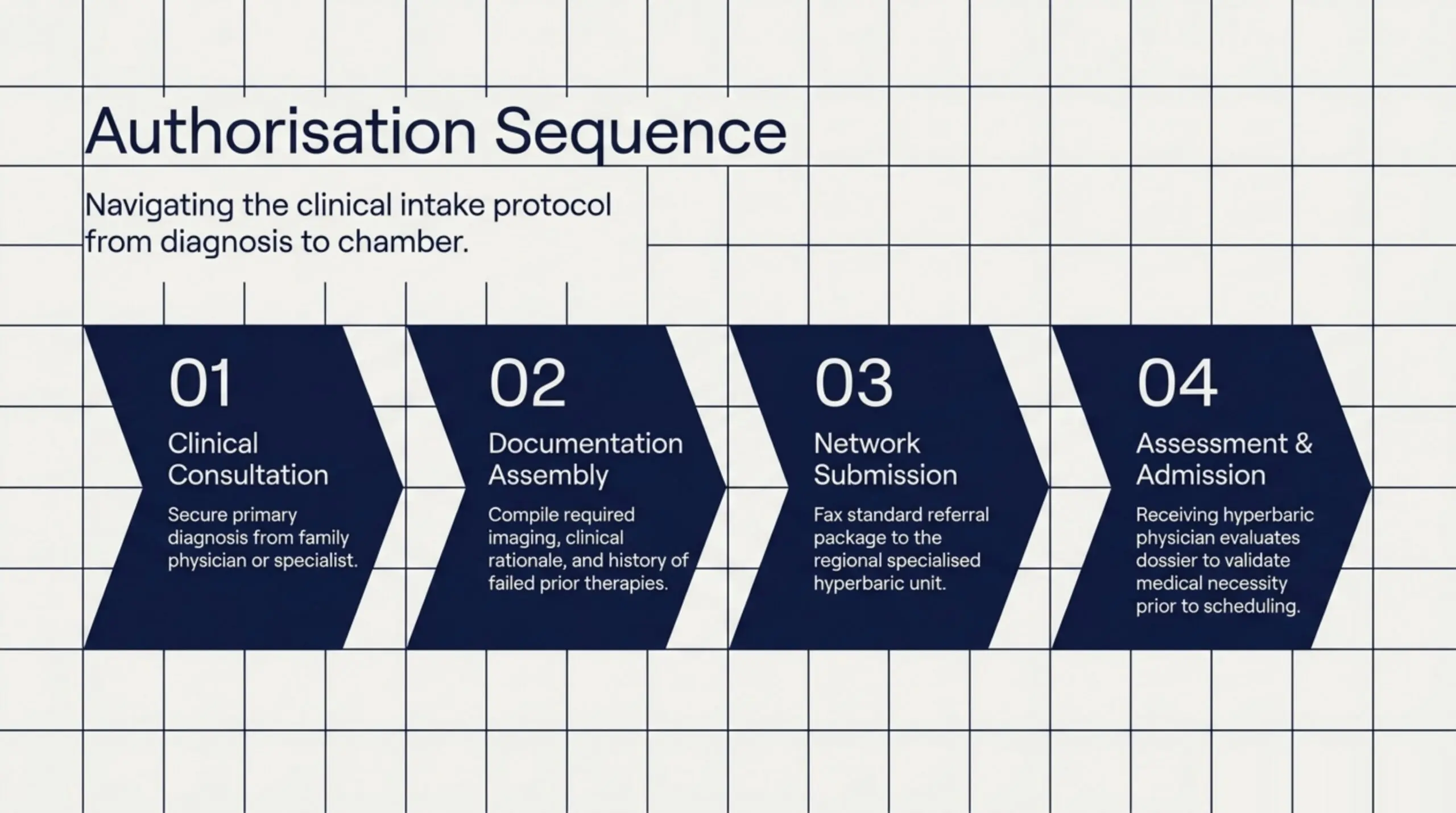
01

Talk to Your Doctor

Discuss HBOT and get a referral with your diagnosis and clinical rationale.

02

Get Documentation

Diagnosis, imaging, treatments tried, and why HBOT is medically necessary.

03

Check Provincial

Contact your provincial health authority to confirm coverage and approved facilities.

04

Check Private

Call your insurer about HBOT coverage for your diagnosis. Get pre-authorization.

05

Find a Facility

Search our facilities directory to find a hospital or regulated facility near you. Their intake team confirms coverage and coordinates your referral.

Common Questions

Coverage FAQ

Coverage varies by province. Some cover HBOT for recognised conditions at hospitals and regulated facilities. Ontario covers 14 indications through OHIP at both hospital and approved private facilities. Contact your provincial health authority to confirm, or use our facilities directory to find a provider near you.

Yes. OHIP covers 14 recognised conditions at approved facilities. Physician referral required. Covered conditions include diabetic foot ulcers, radiation injury, CO poisoning, decompression sickness, and others.

Some extended health plans cover HBOT. Coverage depends on your plan and diagnosis. Contact your insurer directly and ask about pre-authorization requirements.

$150–$400 per session at Canadian private clinics. Full courses of 20–40 sessions range from $3,000 to $16,000. Package discounts and payment plans may be available.

The 14 Health Canada-recognised conditions vary slightly by province. The Ottawa Hospital canonical OHIP list is: air or gas embolism, carbon monoxide poisoning, gas gangrene, crush injury & acute traumatic ischaemia, decompression sickness, enhancement of healing in selected problem wounds, exceptional blood loss (anaemia), necrotizing soft tissue infections, chronic osteomyelitis, soft tissue radiation necrosis, radiation damage affecting bone, compromised skin grafts & flaps, thermal burns, and sudden sensorineural hearing loss. Other provinces may add indications such as intracranial abscess.

Yes. You need a referral from a physician with your diagnosis, medical history, and supporting documentation.

HBOT prescribed by a physician may qualify under the Medical Expense Tax Credit (METC). Keep all receipts and your prescription. Consult a tax professional.

Options include: treatment at a regulated private facility, private insurance, interprovincial referral to a province with coverage, or claiming costs as a medical tax expense. Search our facilities directory to find the nearest hospital or regulated facility.

Not currently a recognised condition. Generally not covered by provincial plans. Clinical trials are ongoing. Private clinics offer treatment out of pocket.

Contact your provincial health authority directly, or call the nearest hospital or regulated hyperbaric facility - their intake team knows current policies. Use our facilities directory to find the closest one to you by postal code.

Coverage FAQ

Hyperbaric oxygen therapy coverage in Canada: frequently asked questions

Provincial health insurance, referral pathways, wait times, and the regulatory framework.

Is hyperbaric oxygen therapy covered by Canadian provincial health insurance?
Yes, at hospital-based programmes for the 14 Health Canada-recognised conditions with a physician referral. Coverage is provincial: OHIP in Ontario (Toronto General, Hamilton General, The Ottawa Hospital), MSP in British Columbia (Vancouver General Hospital), AHCIP in Alberta (Misericordia Edmonton, Foothills/AJECCC Calgary, billing code 13.99I), RAMQ in Quebec (Hôtel-Dieu de Lévis, Hôpital du Sacré-Coeur de Montréal), MSI in Nova Scotia (QEII Halifax), Saskatchewan Health (Wigmore Moose Jaw, partial-hours), MCP in Newfoundland (Health Sciences Centre St. John's). Provinces without an in-province programme refer publicly funded patients interprovincially.
How do I get a referral for hyperbaric oxygen therapy in Canada?
The referral pathway typically starts with a family physician or specialist (hyperbaric medicine, wound care, infectious disease, otolaryngology for sudden hearing loss, ophthalmology for retinal indications). The referring physician faxes the referral to the closest hospital hyperbaric unit, which schedules an in-person consultation; treatment begins after the unit's hyperbaric physician confirms clinical appropriateness. Emergency cases (carbon monoxide poisoning, decompression sickness, gas embolism, gas gangrene) bypass the elective referral pathway and are accepted directly from emergency departments through provincial emergency-transport networks (CritiCall Ontario at 1-800-668-4357, equivalents elsewhere).
What is the difference between Health Canada-recognised conditions and the UHMS Indications list?
Health Canada recognises 14 conditions for hyperbaric chamber licensing under the Canadian Medical Devices Regulations. The Undersea and Hyperbaric Medical Society (UHMS), an international scientific society, maintains a broader 15-condition Indications Manual (15th Edition, 2024) that adds avascular necrosis as the 15th. The two lists overlap substantially but are not identical: provincial coverage in Canada follows the Health Canada framework, while UHMS-listed indications not on the Health Canada list (such as intracranial abscess in some provincial pathways) may be treated case-by-case at hospital programmes. Always confirm with the receiving hospital and the referring physician.
Does extended health insurance cover hyperbaric oxygen therapy?
Coverage varies widely by plan. Some private extended health plans (workplace benefits, individual policies) cover specific HBOT indications when prescribed by a physician; many do not cover off-label uses. Pre-authorisation is typically required before treatment begins. Workplace health spending accounts sometimes cover all or part of private-clinic HBOT regardless of indication. Always confirm coverage with your specific plan administrator before booking, and provide the clinical indication plus proposed session count so the administrator can give a definitive answer.
What is the difference between hospital-based and private-clinic hyperbaric oxygen therapy in Canada?
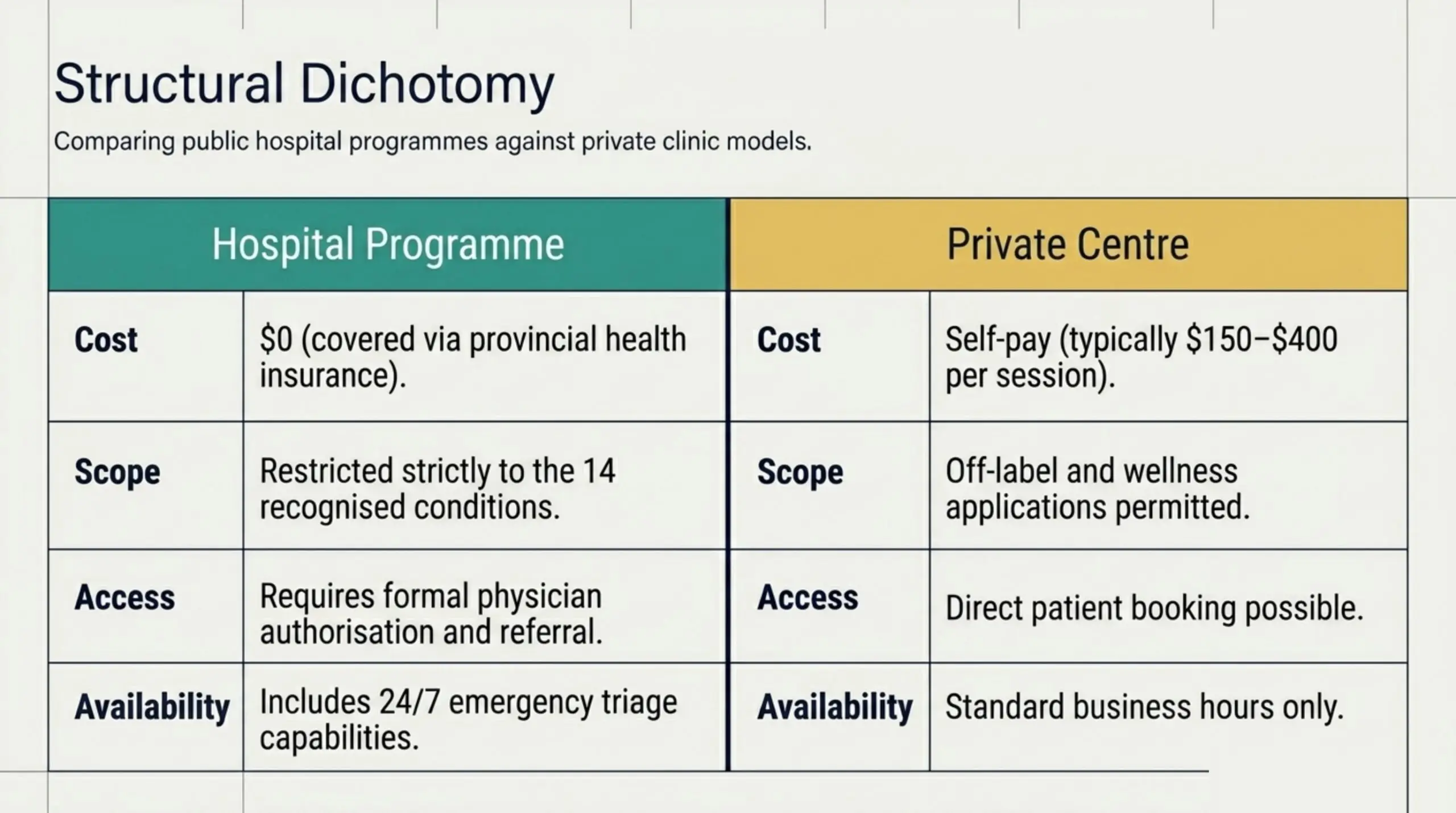
Hospital-based hyperbaric programmes treat the 14 Health Canada-recognised conditions at no out-of-pocket cost to patients with valid provincial health insurance and a physician referral. They operate clinical-grade multiplace or monoplace chambers, provide 24/7 emergency coverage in most cases, and accept interprovincial referrals where in-province hospital capacity is absent. Wait times for elective and chronic indications can range from weeks to months. Private clinics are self-pay (or covered by extended health benefits where the plan applies), charge $175 to $350 per session, typically operate during business hours, and offer faster access for elective and off-label indications. Both must use Health Canada-licensed chamber equipment.
How long are wait times for hyperbaric oxygen therapy in Canada?
Emergency cases (carbon monoxide poisoning, decompression sickness, gas embolism, gas gangrene, severe crush injury) are treated immediately at the closest 24/7 hospital programme via provincial emergency-transport networks. Elective and chronic cases (diabetic foot ulcers, delayed radiation injury, idiopathic sudden sensorineural hearing loss, refractory osteomyelitis, compromised grafts) face provincial wait times that vary widely: typically 4 weeks to several months in most provinces, with notably longer waits at the QEII Halifax (the only hospital programme serving the Maritimes). Patients with time-critical indications (sudden hearing loss within 14 days of onset, central retinal artery occlusion within 24 hours) should request expedited referral.
Are there interprovincial referral programmes for hyperbaric oxygen therapy in Canada?
Yes. Provinces without an in-province hospital hyperbaric programme (Manitoba, New Brunswick, Prince Edward Island, Yukon, Northwest Territories, Nunavut) refer publicly funded patients with the 14 Health Canada-recognised conditions to programmes in neighbouring provinces, with treatment costs covered by the home-province health plan. Common referral pathways: Manitoba and the territories (NWT, Nunavut) typically refer to Misericordia Edmonton; Yukon refers to Vancouver General Hospital; New Brunswick and PEI refer to QEII Halifax. The referring physician initiates the out-of-province transfer through the provincial health plan's medical-travel program.
Is hyperbaric oxygen therapy covered by workers' compensation in Canada?
Workers' compensation may cover HBOT for work-related injuries on a case-by-case basis through provincial WCB or WSIB. Common workplace-injury indications include decompression sickness in commercial divers and offshore workers, crush injuries with compartment syndrome, severe carbon monoxide exposure (firefighters, industrial accidents), and acute traumatic ischaemia. The receiving clinic typically handles the billing once approval is secured. Patients should notify their WCB or WSIB case manager of the recommended HBOT course and ask the referring physician to provide treatment justification documentation.
What is the closest hospital hyperbaric programme to me in Canada?
Canada has 11 hospital-based hyperbaric programmes across 7 provinces: Ontario (Toronto General/UHN, Hamilton General, The Ottawa Hospital), British Columbia (Vancouver General Hospital), Alberta (Misericordia Edmonton, Foothills/AJECCC Calgary), Quebec (Hôtel-Dieu de Lévis, Hôpital du Sacré-Coeur de Montréal), Nova Scotia (QEII Halifax), Saskatchewan (Wigmore Moose Jaw), Newfoundland (Health Sciences Centre St. John's). Use our facilities directory to find the closest programme by province, or your province-specific coverage guide via the cards below.
Are private hyperbaric clinics in Canada regulated by Health Canada?
Health Canada regulates the chamber equipment (Class III medical devices under the Canadian Medical Devices Regulations); it does not directly license clinical facilities. Provincial Colleges of Physicians and Surgeons regulate clinical practice (CPSA in Alberta, CPSO in Ontario, equivalents in other provinces). CUHMA (Canadian Undersea and Hyperbaric Medical Association) publishes Standards of Practice Guidelines that hospital programmes and CPSA-accredited private clinics follow. Patients should verify that a private clinic uses Health Canada-licensed chamber equipment operating at clinical-grade pressures (2.0 to 2.8 ATA on 100 per cent oxygen), not lower-pressure recreational chambers.
Can I get hyperbaric oxygen therapy if my condition is not on the Health Canada list?
For off-list conditions (including long COVID, traumatic brain injury, autism spectrum disorder, anti-aging, athletic recovery), HBOT is not covered by Canadian provincial health insurance and is not delivered at hospital-based programmes outside of clinical trials. Treatment is available at private clinics on a self-pay basis ($175 to $350 per session), and some extended health plans may cover specific off-label indications when prescribed by a physician. Patients pursuing off-label HBOT should discuss the evidence quality with the referring physician and confirm the private clinic uses Health Canada-licensed clinical-grade chambers (2.0 to 2.8 ATA on 100 per cent oxygen).
Where can I find peer-reviewed research on hyperbaric oxygen therapy in Canada?
The Canada Hyperbarics research database indexes 14,489+ peer-reviewed HBOT studies across all indications, updated weekly via the PubMed import pipeline. CUHMA (Canadian Undersea and Hyperbaric Medical Association, cuhma.ca) publishes Canadian Standards of Practice Guidelines and an annual scientific meeting. The Undersea and Hyperbaric Medical Society (UHMS) publishes the HBO Indications Manual (15th Edition, 2024) and the journal Undersea and Hyperbaric Medicine. Cochrane Reviews cover several recognised indications including diabetic foot ulcers, late radiation tissue injury, idiopathic sudden hearing loss, and traumatic brain injury.
Can I claim hyperbaric oxygen therapy on my Canadian taxes?
HBOT prescribed by a licensed medical practitioner for a diagnosed medical condition may qualify as an eligible medical expense under the Medical Expense Tax Credit (METC) on your Canadian tax return. Keep all receipts and your physician's prescription or referral letter on file. The CRA list of eligible medical expenses is updated periodically; consult a tax professional or the Canada Revenue Agency directly for advice specific to your situation, as eligibility rules can change year to year.
How do I find out if hyperbaric oxygen therapy is covered in my province?
Three direct paths: (1) Contact your provincial health ministry (Ontario Ministry of Health, BC Ministry of Health, Alberta Health, etc.) and ask specifically about hyperbaric oxygen therapy coverage for your diagnosis. (2) Call the nearest hospital-based hyperbaric unit's intake team -- they know current provincial coverage policies and referral requirements. (3) For private insurance, call the number on the back of your benefits card and ask about coverage for "hyperbaric oxygen therapy" with your specific diagnosis code. Our provincial coverage section above lists the canonical plan name and hospital programmes for each province.

Find a Clinic That Accepts Your Coverage

We'll match you with a verified Canadian HBOT facility and confirm coverage options in your province.

Find a Clinic Near You

Disclaimer: Coverage information is compiled from publicly available sources and may not reflect the most current provincial policies. Always confirm with your provincial health authority, insurance provider, or HBOT facility before beginning treatment. This page does not constitute financial or medical advice.

Last reviewed: May 22, 2026 | Reviewed by: Canada Hyperbarics Editorial Team | Editorial process | Research sources | Counts & methodology