Compliance & Coverage
Regulatory & Coverage Framework
Understanding the Canadian regulatory landscape for hyperbaric oxygen therapy, from federal device classification to provincial health insurance coverage.
Regulatory Oversight at a Glance
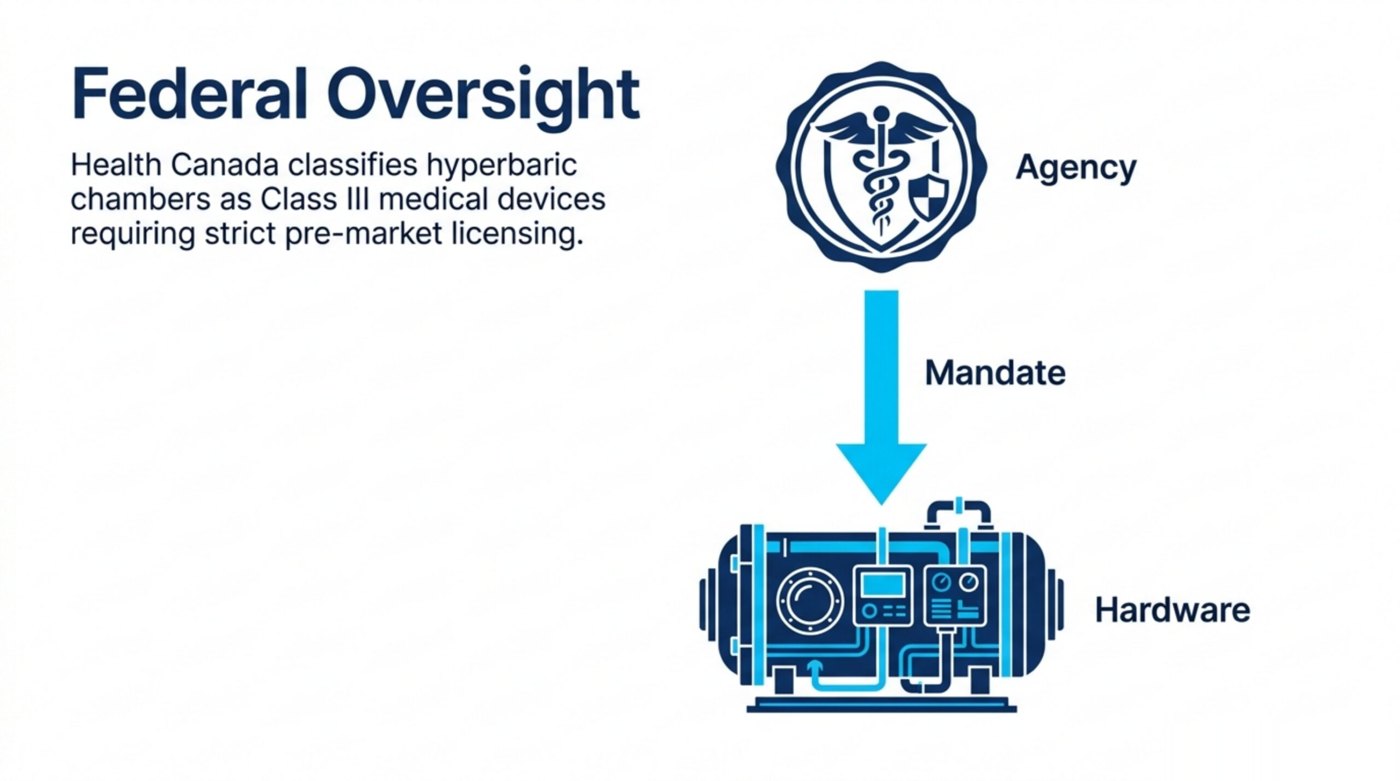
Federal, Health Canada
- • Hyperbaric chambers classified as Class III medical devices under the Medical Devices Regulations (SOR/98-282)
- • Manufacturers require a Medical Device Licence (MDL) before selling in Canada
- • Designed and operated to CSA Z275.1 (Hyperbaric facilities); CSA Z7396.1 (medical gas pipelines), NFPA 99 Chapter 14, and CUHMA Standards of Practice are also widely referenced in Canadian clinical practice
- • Clinical use decisions deferred to licensed practitioners and UHMS guidelines
Provincial Coverage
- • Ontario (OHIP): Covers the 14 recognised conditions at hospital-based programmes. Select eligible Independent Health Facilities may bill OHIP for approved indications; confirm eligibility with each facility
- • British Columbia (MSP): May cover for specific indications in hospital settings with specialist referral
- • Alberta (AHS): Hospital-based programs; coverage varies by indication
- • Quebec (RAMQ): Hospital-based coverage for recognised indications
- • Private clinics: In Ontario, a limited number of Independent Health Facilities are licensed for hyperbaric services; eligibility to bill OHIP varies by facility and indication. In Alberta, CPSA accreditation of private clinics is a safety standard and does not automatically grant Alberta Health billing. In other provinces, private treatment is typically out of pocket or through private insurance. Confirm billing arrangements with each facility directly
Professional Standards
- • No single Canadian medical specialty "owns" hyperbaric medicine
- • UHMS publishes clinical guidelines widely referenced by Canadian practitioners and accredits facilities; the CHT and CHRN credentials are issued by the NBDHMT; formal medical licensing remains with each provincial College of Physicians and Surgeons
- • Practitioners may hold NBDHMT certification or ABEM subspecialty certification
- • Canadian Armed Forces maintains diving medicine expertise through military medical training
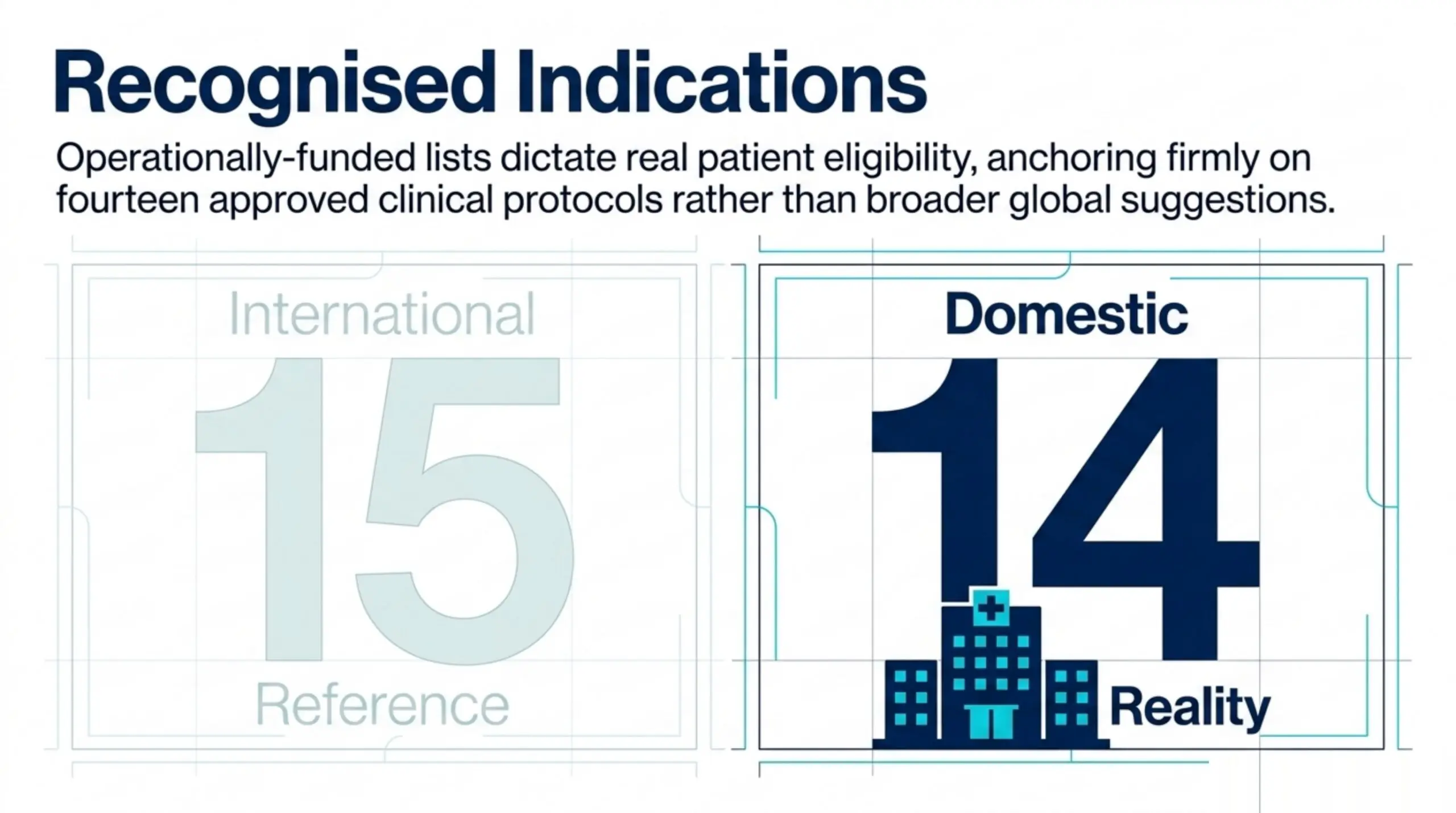
A note on “the 14 conditions”
Two slightly different lists of about fourteen indications are frequently cited in Canadian hyperbaric medicine. The UHMS Indications Manual (15th Edition, 2024) is the international clinical reference and currently lists fifteen recognised indications, including intracranial abscess (Indication #8) and central retinal artery occlusion (part of Indication #6, Arterial Insufficiencies). The operationally-funded Canadian list, the one Canadian patients can actually access through hospital programmes such as The Ottawa Hospital Hyperbaric Medicine Unit and equivalent OHIP/MSP/RAMQ/AHCIP-funded sites, is a 14-item list anchored on UHMS #1–14 (replacing “intracranial abscess” with “sudden sensorineural hearing loss”). Canada Hyperbarics uses the operationally-funded list when we say “the 14 conditions”, because it is the list that determines real patient access. Conditions outside that list (including intracranial abscess) may still be treated at Canadian hospital hyperbaric programmes on a case-by-case basis with provincial / hospital approval; we frame those as UHMS-recognised provincial / hospital practice rather than as part of the operationally-funded 14.
Health Canada MDALL Registry
Licensed Hyperbaric Chambers in Canada
Only these hard-shell hyperbaric chambers hold active Medical Device Licences from Health Canada. All are Class III devices requiring pre-market safety review.
Anaheim, California, USA
Licensed since January 1999. The most widely deployed chambers in Canadian hospital hyperbaric programs.
| Model | Since |
|---|---|
| 2500B | 1999 |
| 2500BR | 1999 |
| 3200 | 1999 |
| 3200R | 1999 |
| 2800 | 2000 |
| 2800R | 2000 |
Examples of common licensed models • Class III • See Health Canada MDALL for complete listing
Riviera Beach, Florida, USA
Licence #26990 issued January 2001 (Sigma 34, 36, 40); separate licence #105882 issued February 2021 (Sigma Plus). The Sigma series is used in hospital and private clinical settings across Canada.
| Model | Since |
|---|---|
| Sigma 34 | 2001 |
| Sigma 36 | 2001 |
| Sigma 40 | 2006 |
| Sigma Plus | 2021 |
4 models • Class III • Single-patient acrylic chambers
Hyperbaric Modular Systems, Inc.
San Diego, California, USA
Licensed since September 2008. The only multiplace (walk-in) chamber system licensed in Canada, treating up to 18 patients simultaneously.
| Model | Since |
|---|---|
| HMS 5000-12 / OxyHeal 5000-12 | 2022 |
| HMS 5000-18 / OxyHeal 5000-18 | 2022 |
| OxyControl System (HMI) | 2012 |
3 models • Class III • 12–18 patient walk-in chambers
Soft-Shell / Inflatable Chambers Are Not Licensed
Health Canada has not licensed any soft-shelled or inflatable hyperbaric chambers and has issued safety warnings against their use. These devices have not been evaluated for safety, quality, or effectiveness, and may pose serious risks including fire, barotrauma, and infection transmission. Only hard-shell chambers listed above hold valid Medical Device Licences.
Health Canada Safety Advisory →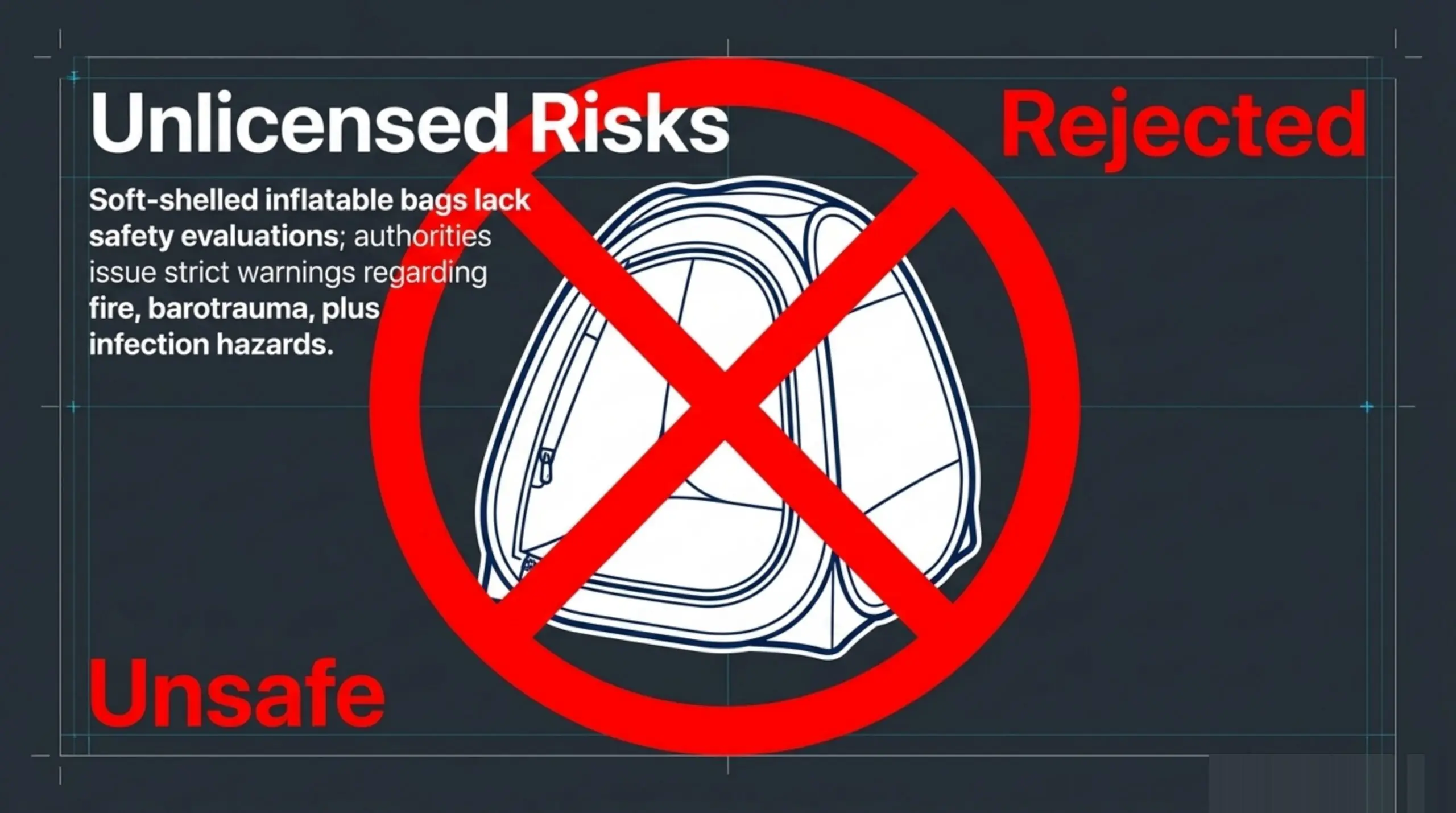
Source: Health Canada Medical Devices Active Licence Listing (MDALL), Verified February 2026
Oxygen Standards
Medical Oxygen Quality Requirements for HBOT
In Canada, medical oxygen is regulated as a drug. Not all oxygen is equal - purity, source, and regulatory compliance determine whether oxygen can legally be used for patient treatment.
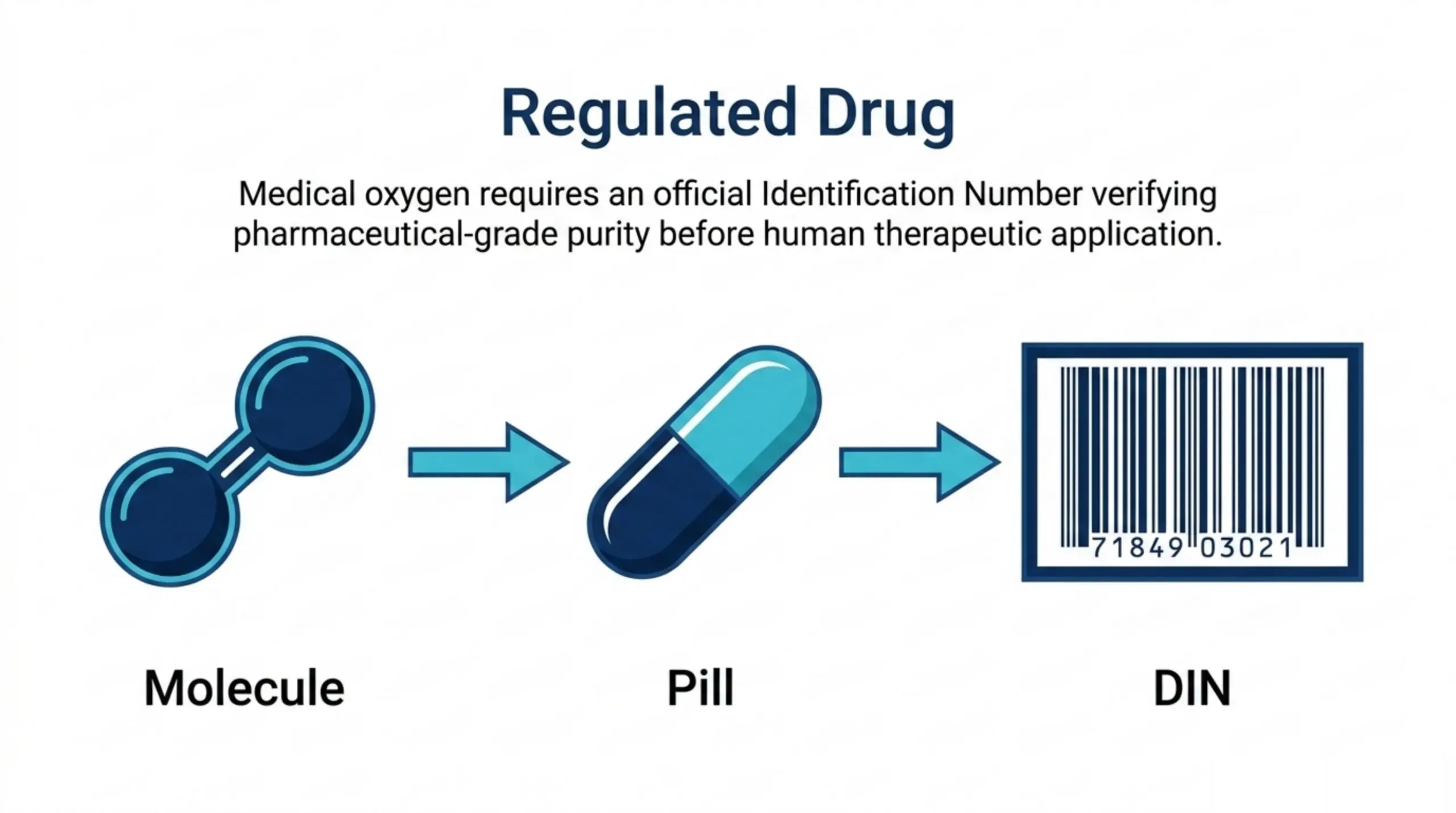
Medical Oxygen Is a Drug in Canada
Under the Food and Drug Regulations (CRC, c. 870), medical oxygen is classified as a drug and requires a Drug Identification Number (DIN) before it can legally be sold or used for human therapeutic purposes. This is the fundamental distinction between medical-grade and industrial oxygen in Canada - purity may be similar, but only DIN-bearing products are legal for medical use.
Under section C.01.011 of the Food and Drug Regulations, any drug sold in Canada must meet the highest purity standard set out in a Schedule B pharmacopeia. Schedule B incorporates the United States Pharmacopeia (USP), the British Pharmacopoeia, and the European Pharmacopoeia.
All manufacturers and suppliers of medical oxygen must comply with Health Canada's Good Manufacturing Practices for Medical Gases (GUI-0031), which requires oil-free production, quality control testing against USP specifications, certified containers, and traceable documentation.
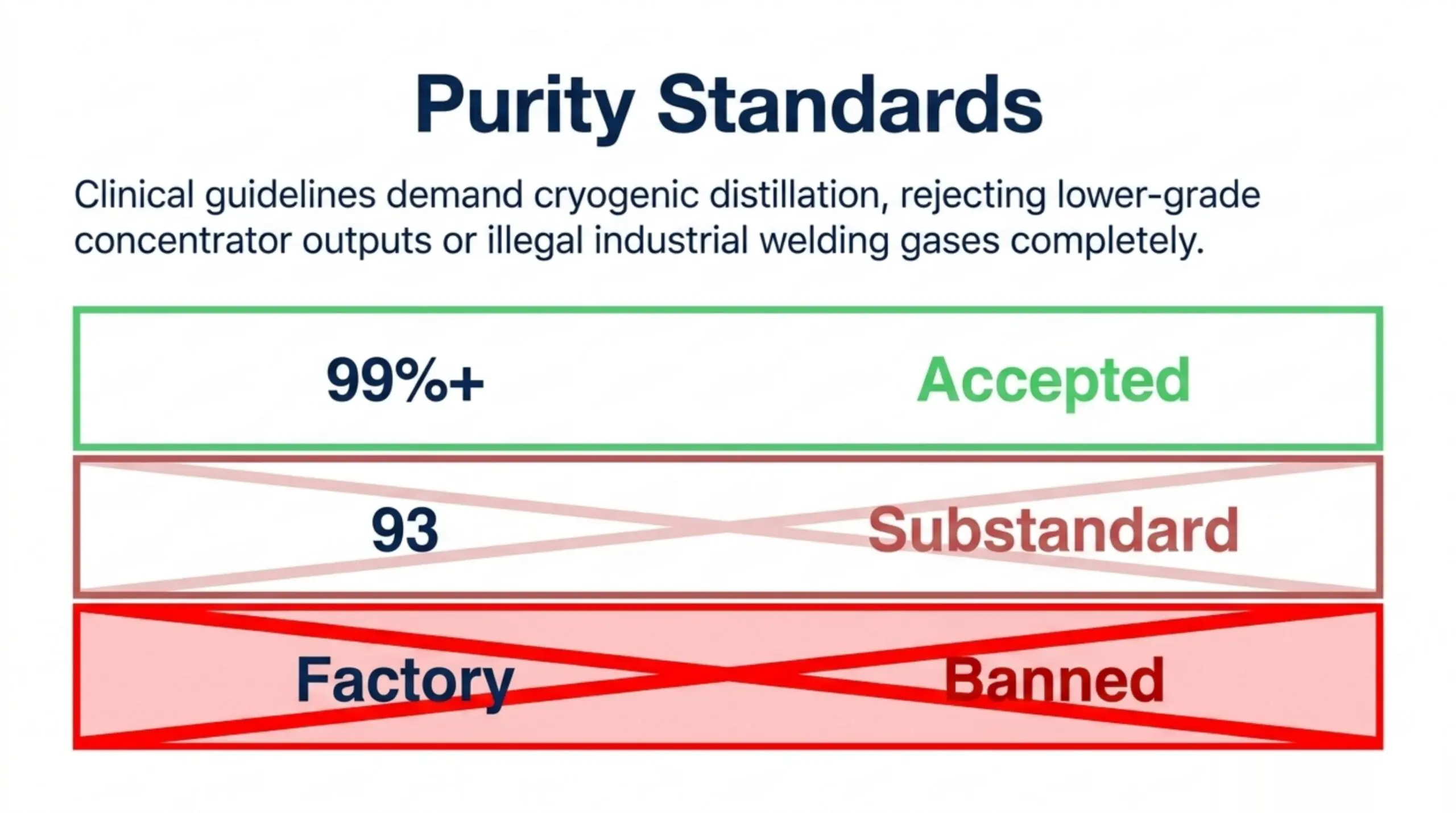
Oxygen Grades: What the Regulations Recognise
| Category | Purity | DIN Required? | Legal for HBOT? |
|---|---|---|---|
| Medical Oxygen USP (cryogenic distillation) |
99.0%+ (typically 99.5%) |
Yes - required | Yes - standard for HBOT |
| Oxygen 93 USP (PSA/concentrator) |
90-96% (labelled as 93%) |
Possible if DIN obtained | Below CUHMA recommended standard - see below |
| Industrial/Welding Oxygen | 99.2-99.5% | No | No - illegal for patient use regardless of purity |
| Concentrator Output (without DIN) |
90-96% | No | No - not a regulated drug product |
The molecular composition of O2 is identical across all sources. What distinguishes medical from industrial oxygen is the regulatory chain: GMP-compliant manufacturing, traceable quality control testing, certified containers, and a DIN on every cylinder or bulk delivery document.
Professional Standard: 99%+ Purity for HBOT
While Oxygen 93 USP is a pharmacopeia-recognised grade in Canada, the professional bodies that govern hyperbaric medicine set a higher bar for therapeutic HBOT:
UHMS (Undersea and Hyperbaric Medical Society)
Professional hyperbaric standards call for medical grade oxygen of 99.0%+ purity (USP or national equivalent) for therapeutic HBOT delivery. The UHMS explicitly opposes the use of oxygen concentrators in HBOT settings and has issued a position statement that low-pressure fabric chambers with concentrators "do not meet the minimum requirements in terms of exposure pressure, structural design, or safety."
CUHMA (Canadian Undersea and Hyperbaric Medical Association)
CUHMA's Guidelines to the Practice of Clinical Hyperbaric Medicine set professional standards for Canadian clinical hyperbaric practice. Health Canada's device licensing framework references the UHMS indications list when evaluating hyperbaric chamber applications.
What this means in practice: Even though Oxygen 93 USP is a legally recognised drug product in Canada, CUHMA guidelines recommend medical-grade Oxygen 99 USP for clinical HBOT programmes. A facility's choice of oxygen grade may be assessed against these professional standards in any regulatory, insurance, or liability proceeding.
Provincial Compliance
No province independently sets an oxygen purity threshold beyond the federal DIN requirement. However, provincial medical regulatory colleges enforce compliance through accreditation:
Ontario (CPSO)
The CPSO Out-of-Hospital Premises Inspection Program (OHPIP) requires that all medical compressed gases comply with CSA standards and hold valid Health Canada DINs. A facility using non-DIN oxygen would fail CPSO inspection.
Alberta (CPSA)
The CPSA hyperbaric accreditation programme references CUHMA guidelines and CSA Z275.1. Accredited facilities must comply with Health Canada's DIN regime for all medical gases used.
Compliant Medical Oxygen Suppliers in Canada
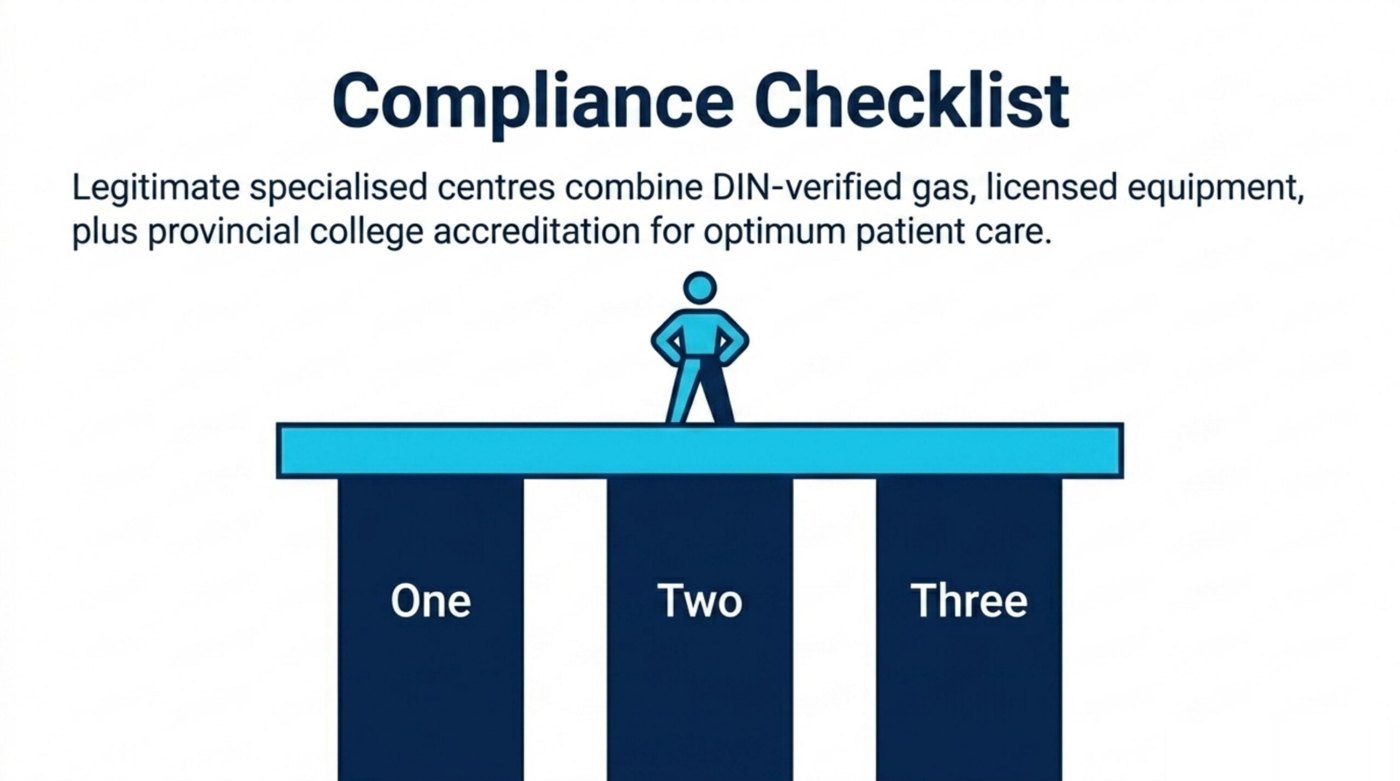
Legitimate HBOT facilities in Canada source their medical oxygen from DIN-holding suppliers that comply with Health Canada's GMP requirements. Major suppliers include:
DIN status can be verified through the Health Canada Drug Product Database (DPD). When evaluating an HBOT facility, patients and referring physicians can ask to see the facility's oxygen supply documentation, including DIN verification and GMP compliance certificates.
Beware of Non-Compliant "Mild HBOT" Operations
Some businesses in Canada offer "mild hyperbaric oxygen therapy" using soft-shell inflatable chambers pressurised to 1.3-1.4 ATA with oxygen from portable concentrators (90-96% purity). These operations typically have no DIN for their oxygen supply, use unlicensed soft-shell chambers, operate at pressures the UHMS considers sub-therapeutic, and are not accredited by any provincial medical regulatory college. Health Canada has issued safety warnings about these devices.
Sources and Reference Documents
- Food and Drug Regulations (CRC, c. 870) - Medical oxygen classified as a drug requiring DIN
- Health Canada GUI-0031: GMP for Medical Gases - Manufacturing and quality control requirements
- Health Canada Drug Product Database - Verify DINs for medical oxygen products
- CUHMA Guidelines to the Practice of Clinical Hyperbaric Medicine (1st Edition)
- UHMS Position Statement on Low-Pressure Fabric Chambers
- CPSO Out-of-Hospital Premises Standards
- CPSA Hyperbaric Oxygen Therapy Accreditation
- Health Canada: Hyperbaric Oxygen Therapy (Consumer Information)
Information compiled from publicly available regulatory documents; last reviewed June 2026. Confirm specific requirements with your provincial regulatory college before making compliance decisions.
Further Reading
HBOT Indications in Canada: A 2026 Referral Guide to the Health Canada and UHMS Lists for Physicians
TL;DR: Hyperbaric oxygen therapy (HBOT) is a treatment that delivers 100 percent oxygen inside a pressurised chamber. The…
Hyperbaric Oxygen Therapy Advertising Rules in Canada: A 2026 Compliance Guide for Clinic Owners
TL;DR: In Canada, a hyperbaric clinic may only advertise therapeutic claims that match what its chamber is authorized…
How to Document HBOT Referrals for Health Canada Compliance: A Step-by-Step Guide for Canadian Physicians
TL;DR: A defensible HBOT referral note documents five things: the indication, evidence supporting the referral, confirmation that the…
Health Canada Medical Device Licensing for Hyperbaric Chambers: A 2026 Compliance Update for Canadian Clinic Owners
A hyperbaric chamber is a pressurised medical device used to deliver hyperbaric oxygen therapy (HBOT) at pressures greater…