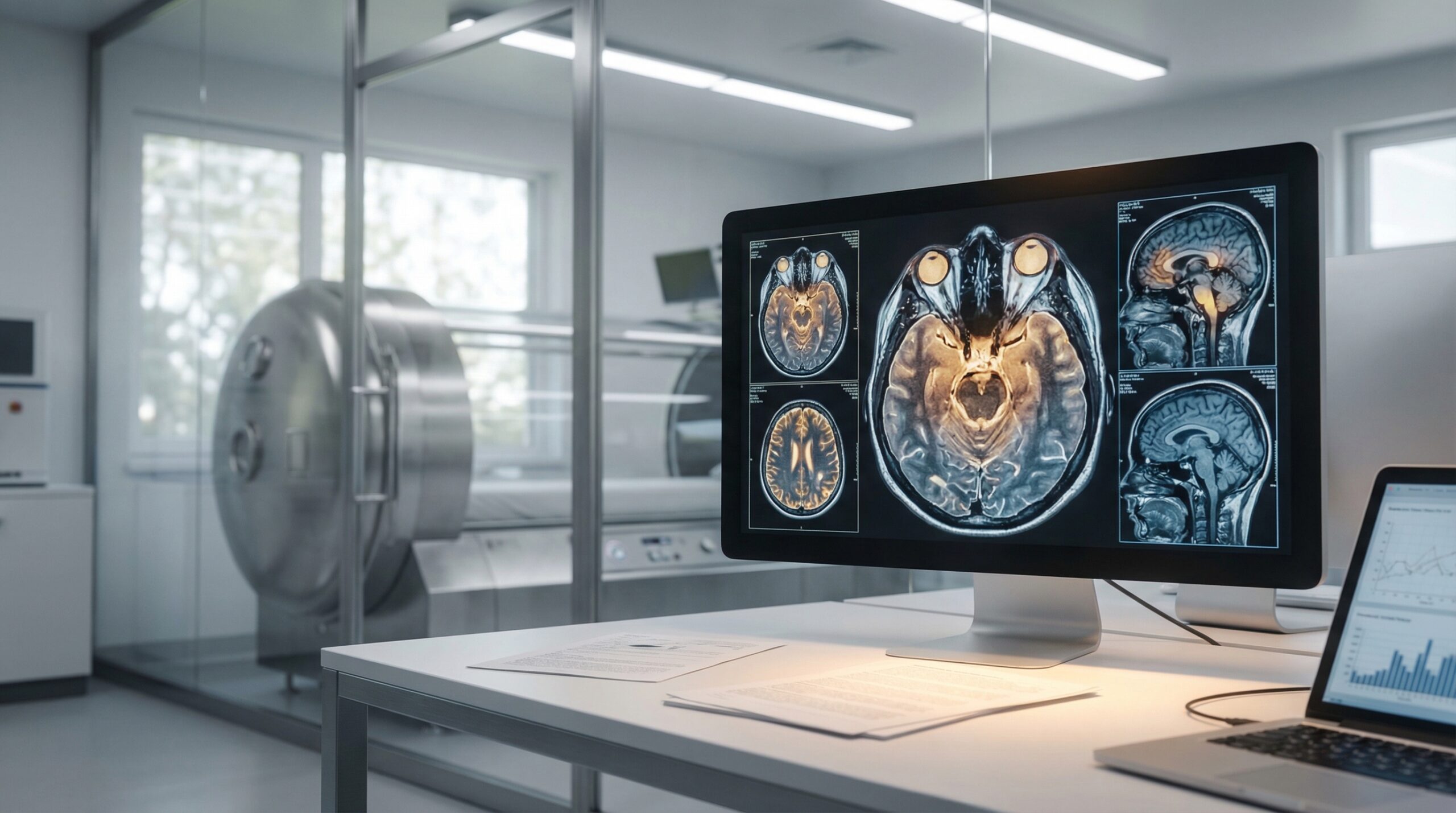
TL;DR: Hyperbaric oxygen therapy (HBOT) is an emerging area of stroke research, with evidence from meta-analyses and clinical trials exploring its potential for neuroprotection, functional recovery, and post-stroke depression. While preliminary findings show promise – particularly for reducing neurological deficits and improving mood outcomes – the evidence base remains mixed. This article reviews the current state of HBOT stroke research, including key mechanisms, clinical trial results, and where the field is heading.
Hyperbaric oxygen therapy (HBOT) is a medical treatment that delivers 100% oxygen at pressures greater than normal atmospheric pressure, typically between 1.5 and 3.0 atmospheres absolute (ATA). Originally developed for decompression sickness and carbon monoxide poisoning, HBOT has attracted growing research interest as a potential adjunctive therapy for ischaemic stroke – the most common type of stroke, accounting for approximately 87% of all stroke cases worldwide.
Stroke remains the second leading cause of death globally and a primary driver of long-term disability. In Canada, approximately 62,000 strokes occur each year, with many survivors experiencing lasting motor, cognitive, and emotional impairments. As researchers explore interventions beyond standard thrombolysis and thrombectomy, HBOT has emerged as a non-pharmacological neuroprotective strategy warranting rigorous investigation.
Estimated reading time: 10 minutes
What Is the Rationale for Using HBOT in Stroke Recovery?
Ischaemic stroke occurs when a blood clot blocks an artery supplying the brain, creating a core of dead tissue surrounded by a region of metabolically compromised but potentially salvageable tissue known as the ischaemic penumbra. HBOT is a treatment that delivers pure oxygen under increased pressure to significantly elevate dissolved oxygen levels in blood plasma, independent of haemoglobin binding.
According to a comprehensive review published in Frontiers in Neurology, HBOT addresses several key pathological mechanisms in ischaemic stroke (Yan et al., 2022):
- Oxygenation of the penumbra: By increasing the oxygen diffusion radius, HBOT can deliver oxygen to ischaemic tissue that conventional blood flow cannot reach
- Reduction of cerebral oedema: Hyperbaric conditions promote vasoconstriction in healthy tissue while preserving blood flow to ischaemic areas, reducing intracranial pressure
- Anti-inflammatory effects: HBOT modulates inflammatory cascades, reducing neutrophil adhesion and pro-inflammatory cytokine release
- Neuroprotection: The therapy activates protective pathways including heat shock proteins, hypoxia-inducible factor-1 (HIF-1), and erythropoietin (EPO)
A 2023 review in Metabolic Brain Disease further described how hyperbaric oxygen preconditioning (HBO-PC) induces antioxidant, anti-apoptotic, and autophagy-activating mechanisms that may protect brain tissue before or during ischaemic events (Wu et al., 2023).
What Does the Clinical Trial Evidence Show for Acute Ischaemic Stroke?
The most comprehensive assessment of HBOT in acute ischaemic stroke comes from a 2024 systematic review and meta-analysis published in BMC Neurology. This analysis included eight randomised controlled trials (RCTs) involving 493 patients (Li et al., 2024).
The key findings were mixed:
| Outcome Measure | HBOT vs Control | Statistical Significance |
|---|---|---|
| Modified Rankin Scale (functional disability) | Favoured HBOT | Significant (MD = 0.10, 95% CI 0.03–0.17) |
| NIHSS Score (neurological deficit) | Trend toward HBOT | Not significant (MD = −1.41, 95% CI −7.41 to 4.58) |
| Barthel Index (daily living activities) | Trend toward HBOT | Not significant (MD = 8.85, 95% CI −5.84 to 23.54) |
| Adverse events at end of treatment | Fewer in HBOT group | Significant (OR = 0.42, 95% CI 0.19–0.94) |
| Adverse events at 6 months | Similar between groups | Not significant |
The authors concluded that while the results “do not support the routine use of HBOT for improving clinical outcomes in AIS,” they noted the possibility of clinical benefits within specific therapeutic windows and for particular types of cerebral occlusion cannot be entirely ruled out. Importantly, HBOT demonstrated a favourable safety profile with significantly fewer adverse events during treatment.
Is There Evidence for HBOT in Chronic Stroke Recovery?
A particularly noteworthy study for Canadian researchers is the 2024 randomised controlled trial conducted at Vancouver General Hospital – one of the few Canadian centres with a clinical hyperbaric unit (Harrison et al., 2024).
This single-centre trial enrolled 34 participants who were 6 to 36 months post-ischaemic stroke. The treatment group received 40 sessions of HBOT, while the control group initially received sham treatments designed to replicate the HBOT experience. Due to recruitment challenges, the protocol was modified midway to include a waitlist control.
Key details of the Canadian trial:
- Primary outcome was the Stroke Impact Scale-16 (SIS-16)
- Secondary outcomes included NIHSS, Berg Balance Test, Montreal Cognitive Assessment, 6-Minute Walk Test, grip strength, and depression screening
- The study was stopped prior to reaching the target sample size of 68 per arm due to low recruitment
- Results showed a difference in SIS-16 that favoured the sham group (difference of 55 points, 95% CI: 13–97, p = 0.001)
The investigators concluded that these findings “do not support the use of HBOT in chronic stroke survivors” based on the primary outcome. However, the study’s significant limitations – including early termination, small sample size, and mid-study protocol changes – mean the results should be interpreted cautiously. The trial underscores the well-known challenge of recruiting stroke patients into hyperbaric studies.
Does HBOT Help With Post-Stroke Depression?
One of the more robust areas of evidence concerns HBOT for post-stroke depression (PSD), which affects approximately 30–50% of stroke survivors and significantly impairs rehabilitation outcomes.
A 2020 meta-analysis published in Clinical Neurology and Neurosurgery analysed 27 RCTs involving 2,250 participants and found statistically significant benefits (Liang et al., 2020):
- Response rate: 69.4% in the HBOT group versus 51.2% in controls (OR = 2.51, 95% CI 1.83–3.43)
- Depression severity: Significant reductions in Hamilton Depression Rating Scale scores (both 17-item and 24-item versions)
- Neurological function: Significant improvements on the NIHSS (WMD = −2.77, 95% CI −3.57 to −1.98)
- Functional independence: Significant improvement in Barthel Index scores (WMD = 10.68, 95% CI 7.98–13.37)
- Safety: Fewer adverse events in the HBOT group (9.6% vs 16.6%), with ear pain being the most common side effect
The analysis also found that HBOT combined with antidepressants produced superior results compared to antidepressants alone, and that HBOT monotherapy achieved a slightly higher response rate than antidepressant monotherapy. However, the authors cautioned that the methodological quality of included studies was relatively poor, and more rigorous trials are needed.
What Molecular Mechanisms Has Recent Research Uncovered?
Recent transcriptomic research is shedding new light on how HBOT may protect the brain at the molecular level. A 2025 study published in Neuromolecular Medicine used a middle cerebral artery occlusion (MCAO) mouse model to explore gene expression changes following HBOT (Bao et al., 2025).
The researchers identified several key findings:
- HBOT significantly modulated differentially expressed genes involved in inflammatory responses, blood-brain barrier integrity, and neural repair – including Lcn2, Bcl3, Olr1, Pdpn, Gpnmb, and Gfap
- m6A methylation levels were decreased by HBOT, affecting post-transcriptional RNA modifications that play a role in stroke pathology
- HBOT reduced brain damage and promoted neural repair at the molecular level in the animal model
While animal studies cannot be directly extrapolated to human clinical practice, these findings provide important mechanistic insights and identify potential therapeutic targets for future clinical trials. Understanding why HBOT may work at the cellular level is essential for designing more effective treatment protocols.
What Are the Current Gaps in the Research?
Despite growing interest, the HBOT stroke research landscape has several critical gaps that the research community must address:
Timing and protocol optimisation
There is no consensus on the optimal therapeutic window for HBOT after stroke. Studies have tested treatments ranging from within hours of onset to years post-stroke, using varying pressures (1.5–2.5 ATA), session durations (60–90 minutes), and total session counts (10–60 sessions). Standardising protocols is essential for producing comparable, reproducible results.
Sample size limitations
Most trials have been small. The Canadian Vancouver trial recruited only 34 of a planned 136 participants. Larger, adequately powered multi-centre trials are needed, particularly in the chronic stroke phase where evidence is weakest.
Sham control challenges
Creating a convincing sham HBOT experience is technically difficult. Participants often detect differences in pressure sensations, potentially compromising blinding. This methodological challenge affects the quality of randomised evidence.
Stroke subtype stratification
Different types of ischaemic stroke (large vessel occlusion, small vessel disease, cardioembolic) may respond differently to HBOT. Current studies rarely stratify by stroke mechanism, making it difficult to identify which patients might benefit most.
Long-term follow-up
Most studies report outcomes at the end of treatment or at 6 months. Long-term outcomes beyond one year are largely unknown, which is critical for a condition where recovery can continue for years.
How Does HBOT for Stroke Compare to Other Emerging Therapies?
| Therapy | Mechanism | Evidence Level | Availability in Canada |
|---|---|---|---|
| HBOT | Increased tissue oxygenation, neuroprotection | Mixed (emerging) | Limited – select hospital-based units |
| Transcranial magnetic stimulation (TMS) | Non-invasive brain stimulation | Moderate (growing RCT base) | Available at rehabilitation centres |
| Stem cell therapy | Neural regeneration, anti-inflammatory | Early (mostly preclinical) | Clinical trials only |
| Robot-assisted rehabilitation | Repetitive motor training | Moderate to strong | Major rehabilitation facilities |
| Constraint-induced movement therapy | Neuroplasticity through forced use | Strong | Widely available |
What Is the Regulatory Status of HBOT for Stroke in Canada?
In Canada, HBOT is regulated as a medical treatment delivered in Health Canada-approved hyperbaric chambers. Stroke is not currently among the 14 indications approved by the Undersea and Hyperbaric Medical Society (UHMS) for routine HBOT use.
This means that HBOT for stroke recovery is considered investigational or off-label in Canada. Patients seeking this treatment would typically need to:
- Discuss the option with their neurologist or rehabilitation physician
- Understand that provincial health plans (OHIP, MSP, AHCIP, etc.) are unlikely to cover HBOT for stroke
- Seek treatment at a CUHMA-affiliated or accredited facility
- Consider participating in a clinical trial, where available
Researchers interested in conducting HBOT stroke trials in Canada can access facilities at centres including Vancouver General Hospital, which has an established hyperbaric medicine programme with clinical trial experience.
Where Is the Research Heading?
Several research directions are particularly promising for advancing the field:
- Combination therapies: Studies combining HBOT with rehabilitation techniques, pharmacological agents, or brain stimulation may reveal synergistic effects. The post-stroke depression evidence already suggests combination approaches may be more effective than monotherapy
- Neuroimaging biomarkers: Advanced MRI and PET imaging could help identify patients with salvageable penumbral tissue who are most likely to benefit from HBOT
- Genomic and transcriptomic approaches: As demonstrated by Bao et al. (2025), molecular profiling may identify gene expression signatures that predict HBOT response
- Canadian multi-centre trials: Given the recruitment challenges demonstrated by the Vancouver trial, collaborative multi-site studies across Canadian hyperbaric centres could achieve adequate sample sizes
- Post-stroke sequelae focus: Rather than targeting stroke recovery broadly, focusing on specific post-stroke conditions (depression, insomnia, cognitive impairment) may yield clearer evidence
Canada Hyperbarics maintains a comprehensive research database tracking HBOT studies across all conditions, including stroke-related investigations.
Frequently Asked Questions
Is hyperbaric oxygen therapy approved for stroke treatment in Canada?
No. Stroke is not currently among the UHMS-approved indications for HBOT. It remains investigational, meaning it is being studied in clinical trials but is not a standard-of-care treatment. Researchers and patients should consult with qualified hyperbaric medicine specialists about current trial opportunities.
What did the Canadian HBOT stroke trial find?
The 2024 Vancouver General Hospital trial (Harrison et al.) found that 40 sessions of HBOT did not demonstrate benefit over sham treatment in chronic stroke survivors on the primary outcome measure. However, the study was significantly underpowered due to recruitment difficulties, limiting the conclusions that can be drawn.
Does HBOT help with depression after stroke?
A meta-analysis of 27 trials (Liang et al., 2020) found that HBOT significantly improved depression scores in post-stroke patients, with a response rate of 69.4% versus 51.2% in controls. The evidence quality is relatively low, but the direction of effect is consistent across studies.
How does HBOT work in the brain after a stroke?
HBOT increases dissolved oxygen in plasma, which can reach ischaemic brain tissue beyond the clot. It also reduces cerebral oedema, suppresses inflammatory cascades, and activates neuroprotective molecular pathways including antioxidant and anti-apoptotic mechanisms.
What pressure is used in HBOT for stroke research?
Studies have used pressures ranging from 1.5 to 2.5 ATA, with most acute stroke trials using 2.0–2.5 ATA and chronic stroke trials using 1.5–2.0 ATA. There is no established optimal pressure for stroke treatment, which is one of the key research gaps.
Are there risks of HBOT after stroke?
The meta-analysis by Li et al. (2024) found that HBOT actually had fewer adverse events than control groups during treatment. Common side effects include middle ear barotrauma (ear pain or pressure), transient myopia, and claustrophobia. Serious complications such as oxygen toxicity seizures are rare at therapeutic pressures.
Can HBOT be combined with standard stroke rehabilitation?
Research suggests HBOT may complement standard rehabilitation. The post-stroke depression evidence indicates combination approaches (HBOT plus antidepressants) are more effective than either alone. However, specific protocols for integrating HBOT into stroke rehabilitation programmes have not been standardised.
Where can I find HBOT clinical trials for stroke in Canada?
Researchers can search for active trials at ClinicalTrials.gov using terms like “hyperbaric oxygen” and “stroke.” Canada Hyperbarics also maintains a conditions directory with links to relevant research and facility information.
Conclusion
The evidence for HBOT in stroke recovery is at an intriguing but early stage. While mechanistic studies and animal models provide a strong biological rationale, clinical trial evidence remains mixed – with promising signals for post-stroke depression but inconclusive results for motor and functional recovery. The Canadian research community has contributed directly to this evidence base through the Vancouver General Hospital trial, highlighting both the potential and the practical challenges of conducting HBOT stroke research.
For researchers, the field presents significant opportunities: better-powered multi-centre trials, standardised protocols, advanced neuroimaging for patient selection, and focused investigation of specific post-stroke sequelae could all advance the evidence. As molecular research continues to reveal HBOT’s mechanisms of action, the prospect of precision-targeted hyperbaric interventions for stroke survivors becomes increasingly tangible.
For the latest research on hyperbaric oxygen therapy and stroke, visit the Canada Hyperbarics research database or explore the FAQ section for foundational information about HBOT.
This content is for informational purposes only and does not constitute medical advice. Always consult a qualified healthcare professional for medical decisions. The research discussed represents the current state of evidence and does not imply that HBOT is an effective or approved treatment for stroke.