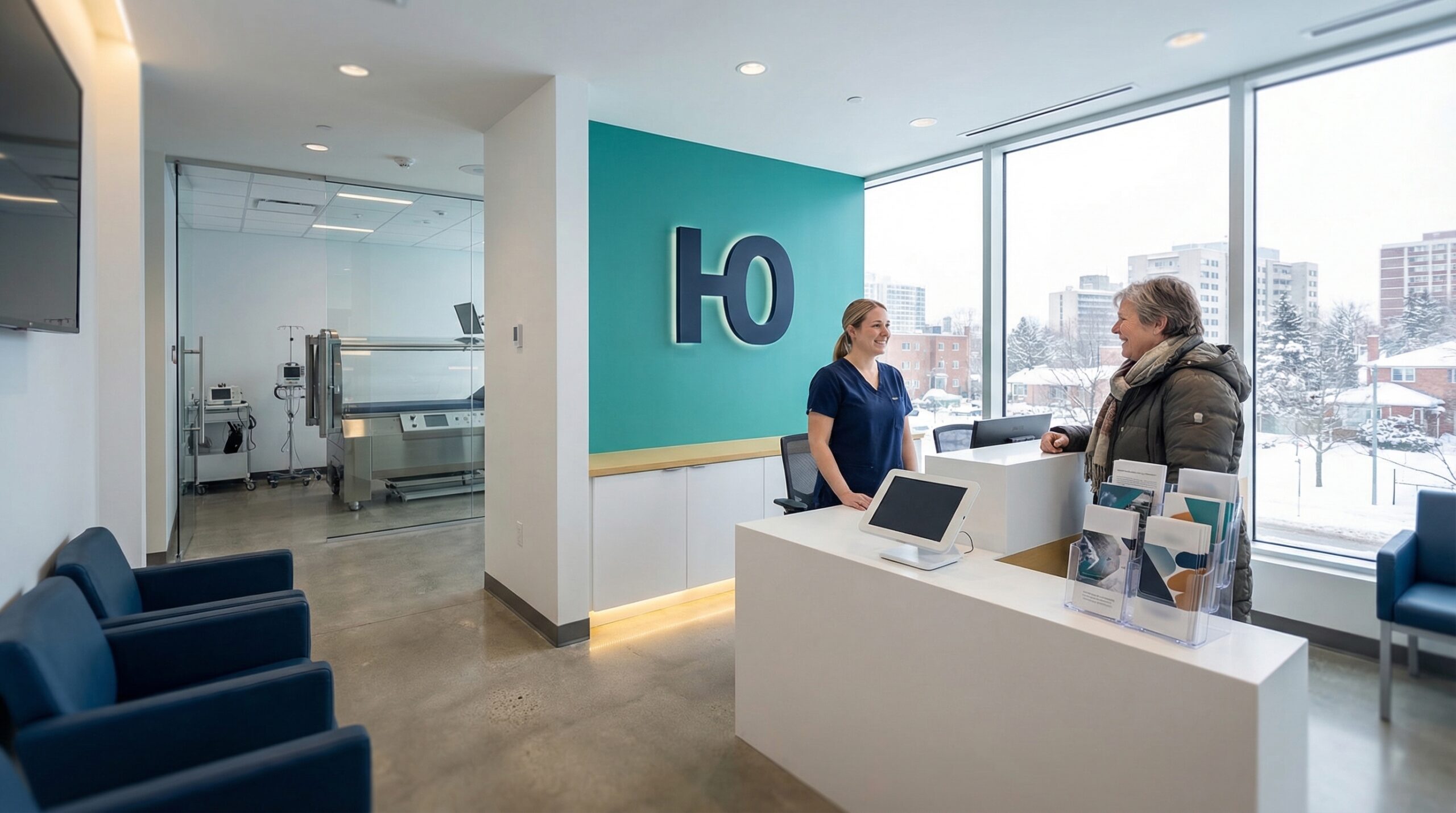
TL;DR: OHIP covers hyperbaric oxygen therapy (HBOT) for 14 approved medical indications at both hospital-based and eligible private clinics across Ontario. You need a physician referral, and your condition must match one of the approved indications. Ontario has 13 clinical-grade hyperbaric facilities – 3 hospital-based and 10 private – making it the most accessible province in Canada for HBOT.
Hyperbaric oxygen therapy (HBOT) is a medical treatment where patients breathe 100% oxygen inside a pressurised chamber at greater than atmospheric pressure. In Ontario, the Ontario Health Insurance Plan (OHIP) covers this treatment for specific approved medical conditions – at both hospital programs and eligible private clinics. This guide explains exactly what OHIP covers, how to qualify, and how to access treatment across the province.
Reading time: 6 minutes
What Conditions Does OHIP Cover for Hyperbaric Oxygen Therapy?
OHIP covers HBOT for 14 approved medical indications. These indications align closely with the conditions recognised by the Undersea and Hyperbaric Medicine Society (UHMS) and are supported by clinical evidence. The approved indications include:
- Air or gas embolism
- Carbon monoxide poisoning – according to PubMed, early HBOT within 6 hours of carbon monoxide exposure significantly improves 6-month neurocognitive outcomes (Lee et al., 2021)
- Gas gangrene (clostridial myonecrosis)
- Crush injuries and compartment syndrome
- Decompression sickness
- Non-healing wounds – including diabetic foot ulcers, where a systematic review and meta-analysis of 14 controlled clinical trials found HBOT significantly effective for complete wound healing and reduction of major amputation (Sharma et al., 2021)
- Exceptional blood loss anaemia
- Intracranial abscess
- Necrotising soft tissue infections
- Refractory osteomyelitis
- Delayed radiation injury – a literature review confirmed HBOT’s role as a complementary treatment for radiation-induced tissue damage (Alpuim Costa et al., 2021)
- Compromised skin grafts and flaps
- Thermal burns
- Sudden sensorineural hearing loss
The International Working Group on the Diabetic Foot (IWGDF) 2023 guidelines issued a conditional supportive recommendation for HBOT in diabetic foot ulcers where standard care alone has not achieved healing (Chen et al., 2023).
Does OHIP Cover HBOT at Private Clinics or Only Hospitals?
OHIP covers hyperbaric oxygen therapy at both hospital-based programs and eligible private clinics in Ontario. This is an important distinction – many patients assume coverage is limited to hospitals, but multiple private clinics across Ontario bill OHIP directly for approved indications. This means you can receive OHIP-covered treatment at a facility that may be closer to your home or have shorter wait times.
To receive OHIP coverage at a private clinic, the clinic must be an eligible facility and your treatment must be for one of the 14 approved indications listed above. Always confirm with the clinic that they accept OHIP billing before booking your first appointment.
How Do You Qualify for OHIP-Covered HBOT?
To qualify for OHIP-covered hyperbaric oxygen therapy, you need to meet these requirements:
- Valid Ontario health card – you must be an Ontario resident enrolled in OHIP
- Physician referral – a licensed physician must assess your condition and provide a referral for HBOT
- Approved indication – your medical condition must match one of the 14 OHIP-approved indications
- Clinical assessment – the hyperbaric medicine team will evaluate whether you are a suitable candidate, checking for contraindications and determining the appropriate treatment protocol
How Do You Get a Referral for Hyperbaric Oxygen Therapy in Ontario?
The referral process in Ontario follows these steps:
- Talk to your family doctor or specialist – discuss whether HBOT may benefit your condition
- Your physician sends a referral – the referring physician completes a referral to a hyperbaric medicine program, including your medical history, diagnosis, and any relevant imaging or test results
- Hyperbaric team reviews the referral – the receiving facility’s hyperbaric medicine physician reviews your case and determines if you meet the criteria for treatment
- Pre-treatment screening – before treatment begins, you will undergo a physical examination, chest X-ray, and ear assessment to ensure you can safely undergo pressurisation
- Treatment plan – the hyperbaric physician prescribes a treatment protocol, typically involving 20 to 40 sessions depending on your condition
If you are unsure whether your condition qualifies, ask your physician to contact a hyperbaric facility directly. Many clinics have intake coordinators who can advise on eligibility before a formal referral is submitted.
How to Get Referred for OHIP-Covered HBOT: A Step-by-Step Guide
Many Ontario patients find the referral pathway confusing, particularly if their family physician has limited familiarity with hyperbaric medicine. The following step-by-step process clarifies what to expect from first contact through to your initial treatment session.
Step 1: Confirm Your Condition May Qualify
Review the 14 approved indications listed above. If your diagnosis – for example, a non-healing diabetic foot ulcer, delayed radiation injury following cancer treatment, or sudden sensorineural hearing loss – appears on the list, you have grounds to pursue an OHIP-covered referral. If you are unsure, book an appointment with your family physician specifically to discuss HBOT eligibility.
Step 2: Request a Referral at Your Physician Appointment
Come prepared. Bring documentation of your diagnosis, any specialist reports, and records of treatments already attempted. Your physician will be more confident writing a referral if you can demonstrate that conservative management has been tried. For non-healing wounds, for example, wound care records and photographs are helpful supporting materials.
Step 3: Your Physician Submits the Referral Package
The referring physician completes a referral form addressed to the hyperbaric medicine program at the receiving facility. The package typically includes:
- Your OHIP card number and Ontario residency confirmation
- A summary of your diagnosis and its duration
- Prior treatment history and outcomes
- Relevant laboratory results, imaging, or specialist consultations
- Any known contraindications, such as active pneumothorax or certain medications
Step 4: Hyperbaric Medicine Physician Reviews Your Case
A hyperbaric medicine physician at the receiving facility reviews the referral package and determines whether your case meets the clinical criteria for OHIP-funded treatment. You may be asked for additional information or to attend a pre-assessment appointment before a decision is made.
Step 5: Pre-Treatment Medical Screening
Before your first treatment, you will undergo a pre-treatment assessment. This typically includes a physical examination, a chest X-ray (to rule out pneumothorax), and an otoscopic ear examination. This step confirms that you can safely tolerate pressurisation and identifies any contraindications that require management before treatment begins.
Step 6: Begin Your Treatment Course
Once cleared, your hyperbaric physician will prescribe a treatment protocol specifying the number of sessions, treatment pressure (typically 2.0–2.4 ATA), and session duration (usually 90 minutes). Most OHIP-covered courses involve 20 to 40 sessions, scheduled daily or five days per week. Your sessions are billed directly to OHIP by the facility – there is no direct charge to you for the hyperbaric treatment itself.
Where Are Hyperbaric Facilities Located in Ontario?
Ontario has 13 clinical-grade hyperbaric facilities – the most of any Canadian province. These include 3 hospital-based programs and 10 private clinics, located in communities across the province.
Hospital-based programs are typically found in larger urban centres and treat the full range of approved indications, including emergency conditions like carbon monoxide poisoning and decompression sickness. Private clinics offer OHIP-billable treatments for approved indications and may have shorter wait times than hospital programs.
For a complete directory of verified Ontario facilities, visit the Canada Hyperbarics clinic directory or the Canadian Undersea and Hyperbaric Medical Association (CUHMA) facility list.
What If Your Condition Is Not Covered by OHIP?
If your condition does not fall within the 14 approved indications, OHIP will not cover your HBOT treatment. In this case, you have several options:
- Private pay – many Ontario clinics offer self-pay options for conditions not covered by OHIP. Costs typically range from $200 to $400 per session
- Private insurance – some extended health benefit plans through employers or private insurers may cover HBOT. Contact your insurance provider to check your policy
- Veterans Affairs Canada – eligible veterans may receive coverage for HBOT through VAC programs
- Workers’ compensation (WSIB) – if your condition is work-related, the Workplace Safety and Insurance Board may cover treatment
Emerging indications such as traumatic brain injury, long COVID, and post-traumatic stress are under active research investigation. While these conditions are not yet covered by OHIP, the evidence base continues to grow. Check the Canada Hyperbarics research database for the latest studies.
Frequently Asked Questions About HBOT and OHIP
Is hyperbaric oxygen therapy covered by OHIP?
Yes. OHIP covers HBOT for 14 approved medical indications at both hospital-based programs and eligible private clinics across Ontario.
Do I need a referral for hyperbaric oxygen therapy in Ontario?
Yes. A licensed physician must provide a referral for HBOT. Your condition must match one of the 14 approved indications for OHIP coverage.
How many HBOT sessions does OHIP cover?
The number of sessions depends on your condition and treatment protocol. Most treatment plans involve 20 to 40 sessions, each lasting approximately 90 minutes. Your hyperbaric medicine physician will determine the appropriate number.
Can I choose which hyperbaric clinic to attend in Ontario?
Yes. Your physician can refer you to any accredited hyperbaric facility in Ontario, whether hospital-based or private. You may wish to consider factors such as location, wait times, and the type of chamber (monoplace or multiplace) when selecting a clinic.
Does OHIP cover HBOT for concussion or TBI?
Traumatic brain injury and concussion are not currently among the 14 OHIP-approved indications for HBOT. However, research into HBOT for neurological conditions is ongoing. Patients may access treatment through private pay or extended insurance coverage.
Is HBOT for long COVID covered by OHIP?
Long COVID is not currently an OHIP-approved indication for HBOT. Some private clinics in Ontario offer HBOT for long COVID on a self-pay basis. Visit the research section to explore the latest evidence on HBOT for post-COVID syndrome.
How do I find an accredited hyperbaric clinic near me in Ontario?
Use the Canada Hyperbarics facility directory to search for verified hyperbaric clinics across Ontario. You can also check the CUHMA directory for accredited facilities.
Are there any out-of-pocket costs for OHIP-covered HBOT?
When your treatment is OHIP-covered, there should be no direct cost to you for the hyperbaric sessions themselves. However, related expenses such as travel, parking, and time off work are not covered by OHIP. Some facilities may charge for supplementary services not included in the OHIP billing.
How long is the wait time to begin OHIP-covered HBOT in Ontario?
Wait times vary by facility and by the urgency of your condition. Emergency indications such as decompression sickness and carbon monoxide poisoning are treated without delay. For non-emergency conditions such as non-healing wounds or radiation injury, wait times at hospital programs can range from a few weeks to several months. Private clinics that bill OHIP may have shorter wait times. Contact individual facilities directly to ask about current availability.
Which hospitals in Ontario offer hyperbaric oxygen therapy?
Ontario has three hospital-based hyperbaric medicine programs. Hospital programs are equipped for the full range of approved indications including emergencies, and typically have hyperbaric-trained physicians on call. For the most current list of hospital programs and private OHIP-eligible clinics, visit the Canada Hyperbarics facility directory or the CUHMA facility list.
What documentation do I need to bring to my first HBOT appointment in Ontario?
You should bring your valid Ontario health card, the referral letter from your physician, any relevant specialist reports or consultation notes, recent laboratory results, and imaging (X-rays, MRI, CT scans) related to your condition. If your condition involves a non-healing wound, wound care records and photographs may also be requested. The hyperbaric team uses this documentation to confirm your eligibility and design an appropriate treatment plan.
Canada Hyperbarics provides independent, research-backed information about hyperbaric oxygen therapy access across Canada. For more about HBOT in other provinces, visit our FAQ page or browse the conditions directory.
This content is for informational purposes only and does not constitute medical advice. Always consult a qualified healthcare provider before starting any treatment. Information about OHIP coverage is current as of March 2026 and may change. Verify coverage details with your healthcare provider or Ontario Health.