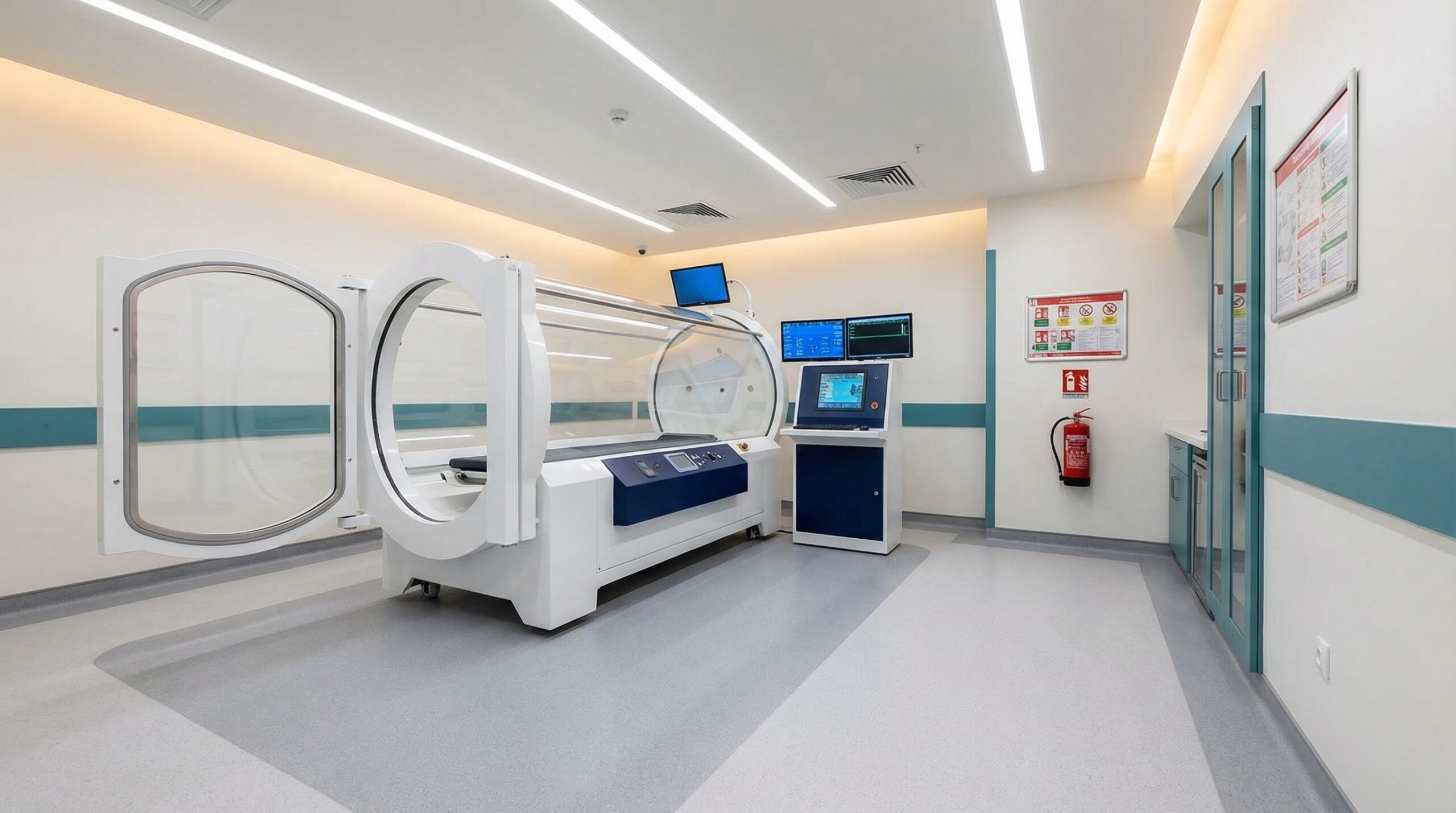
TL;DR: Fire is the most catastrophic risk in hyperbaric medicine. Oxygen-enriched environments inside pressurised chambers dramatically lower ignition thresholds, meaning materials that are safe at normal atmospheric conditions can ignite explosively under pressure. Canadian clinic owners must implement rigorous fire prevention protocols aligned with NFPA 99, CSA Z275.1, and Health Canada guidelines – including strict prohibited-items policies, staff training, chamber-specific fire suppression systems, and documented emergency procedures. This guide covers every element of a compliant hyperbaric fire safety programme.
Hyperbaric chamber fire safety is a critical operational concern for every clinic that operates pressurised oxygen environments. Hyperbaric chamber fire safety is the single most critical operational concern for any clinic delivering hyperbaric oxygen therapy (HBOT) in Canada. While HBOT is a well-established medical treatment with a strong safety profile when protocols are followed, the oxygen-enriched environment inside a pressurised chamber fundamentally changes the physics of combustion. Materials that pose no fire risk under normal conditions can become highly flammable – or even explosive – when exposed to elevated oxygen concentrations and increased atmospheric pressure.
For Canadian clinic owners and operators, understanding and implementing comprehensive fire prevention protocols is not optional – it is a regulatory requirement and a matter of patient and staff survival. This guide from Canada Hyperbarics covers the science behind hyperbaric fire risk, the specific standards that apply in Canada, prohibited items, staff training requirements, emergency procedures, and how to build a fire safety programme that protects your patients, your team, and your business.
Estimated reading time: 10 minutes
Why Is Fire Risk So Much Greater Inside a Hyperbaric Chamber?
The answer lies in the fire triangle: fuel, heat, and oxygen. In a hyperbaric chamber, two of these three elements are already present in abundance. Oxygen concentration inside a treatment chamber can reach 100% during therapy – roughly five times the 21% found in normal air. Atmospheric pressure is simultaneously elevated to 2.0–3.0 atmospheres absolute (ATA), which further increases the partial pressure of oxygen.
This combination has several dangerous effects on combustion:
- Lower ignition temperatures: Materials that require significant heat to ignite in normal air can catch fire at much lower temperatures in oxygen-enriched environments
- Faster flame propagation: Fires spread dramatically faster when more oxygen is available to sustain combustion
- Greater intensity: Fires burn hotter and more violently, making them extremely difficult to control once ignited
- Wider range of fuels: Materials considered non-flammable under normal conditions – including some metals and synthetic fabrics – can burn vigorously in high-oxygen environments
According to PubMed, a 2025 scoping review published in Diving and Hyperbaric Medicine examining defibrillation during HBOT noted that “the oxygen-enriched atmosphere and increased ambient pressure could, in case of sparking, increase fire and explosion risk,” highlighting why electronic devices and electrical equipment require rigorous safety testing before being permitted inside chambers (Nöhl et al., 2025).
What Standards Govern Hyperbaric Fire Safety in Canada?
Canadian hyperbaric facilities must comply with multiple overlapping safety frameworks. The primary standards include:
NFPA 99: Health Care Facilities Code
Chapter 14 of NFPA 99 is the most comprehensive fire safety standard for hyperbaric facilities in North America. It covers chamber design, installation, operation, and maintenance requirements, including:
- Fire suppression system specifications for both monoplace and multiplace chambers
- Electrical equipment restrictions inside chambers
- Patient clothing and material requirements
- Operator training and staffing minimums
- Emergency procedures and evacuation protocols
CSA Z275.1: Hyperbaric Facilities
The Canadian Standards Association (CSA) Z275.1 standard provides Canadian-specific requirements for hyperbaric facility design and operation. This standard is referenced by many provincial regulators and is essential reading for any clinic owner operating in Canada.
Health Canada Medical Device Regulations
Health Canada classifies hyperbaric chambers as Class III medical devices, requiring licensed facilities to meet specific safety and maintenance standards. Chambers must be Health Canada approved, and modifications that could affect fire safety – including installing new electrical systems or changing oxygen delivery methods – require regulatory review. For more on Canadian hyperbaric regulations, visit our regulatory overview.
Provincial Fire Codes
Each province enforces its own fire code, typically based on the National Fire Code of Canada. Clinic owners must ensure their hyperbaric facility meets both the national standards and any additional provincial requirements. Your local fire marshal’s office can clarify which specific codes apply to your facility.
What Items Are Prohibited Inside a Hyperbaric Chamber?
Maintaining a strict prohibited-items policy is the first line of defence against fire in a hyperbaric environment. The following categories of items must never enter a pressurised chamber during treatment:
Ignition Sources
- Lighters, matches, and smoking materials
- Battery-powered devices (phones, tablets, smartwatches, hearing aids with batteries)
- Hand warmers or heat packs
- Any electrical device not specifically tested and approved for hyperbaric use
Based on articles retrieved from PubMed, research published in Undersea and Hyperbaric Medicine demonstrated that even medical-grade electronic devices like point-of-care ultrasound units require specific safety testing before use in hyperbaric environments, with investigators monitoring device temperature throughout pressurisation to confirm no fire hazard existed (Tanaka et al., 2023, Undersea Hyperb Med, 50(3):265-272).
Flammable Materials
- Petroleum-based products (Vaseline, lip balm, hair gel, lotions, cosmetics)
- Alcohol-based hand sanitisers and cleaning products
- Synthetic fabrics (nylon, polyester, rayon) – patients should wear 100% cotton garments
- Aerosol sprays of any kind
- Nail polish and nail polish remover
- Newspapers, books, and magazines (in monoplace chambers; restricted in multiplace)
A 2025 study in Diving and Hyperbaric Medicine investigating surface cleaning in hyperbaric environments specifically noted that “surface cleaning and hand hygiene within hyperbaric chambers are challenging because of the risk of fire with currently used products containing alcohol or glycerine” (Hendier et al., 2025). This underscores the challenge clinic owners face in maintaining both infection control and fire safety simultaneously.
Static Electricity Generators
- Wool clothing and blankets
- Synthetic wigs and hair extensions
- Fleece or microfibre materials
Every patient must be screened before every session. A documented pre-treatment checklist should be completed by trained staff, and patients should change into facility-provided 100% cotton garments before entering the chamber.
How Should Clinic Owners Structure Staff Fire Safety Training?
Staff training is the cornerstone of hyperbaric fire prevention. According to NFPA 99 and CUHMA (Canadian Undersea and Hyperbaric Medical Association) guidelines, training should cover:
Initial Training (Before Staff Operate Chambers)
- Fire science fundamentals: The fire triangle in oxygen-enriched environments, how pressure affects combustion, and why standard fire safety assumptions do not apply
- Prohibited items identification: Hands-on practice identifying and screening for prohibited materials
- Chamber-specific fire suppression systems: How your specific chamber’s suppression system operates, including manual activation procedures
- Emergency decompression procedures: Step-by-step protocols for safely depressurising the chamber during an emergency
- Patient evacuation: Procedures for removing patients from monoplace and multiplace chambers under emergency conditions
- Communication protocols: How to coordinate with fire services and emergency medical teams
Ongoing Training Requirements
- Monthly fire drills: Simulated emergency scenarios that test staff response times and procedural compliance
- Annual recertification: Comprehensive review and testing of all fire safety knowledge
- Incident debriefing: Immediate review following any safety incident, near-miss, or protocol deviation
- Documentation: All training must be documented with dates, content covered, staff attendance, and assessment results
According to PubMed, a 2025 retrospective study of safety during intensive care HBOT sessions found that specific risk factors – including continuous intravenous infusions, nighttime sessions, and mechanical ventilation – significantly increased the likelihood of adverse events (Miszewska et al., 2025). For clinic owners, this reinforces that staff must be trained to recognise and manage variable risk levels across different patient populations and treatment conditions.
What Fire Suppression Systems Are Required for Hyperbaric Chambers?
Fire suppression requirements differ significantly between monoplace and multiplace chambers:
| Feature | Monoplace Chamber | Multiplace Chamber |
|---|---|---|
| Primary suppression | External deluge system (water) | Internal hand-held extinguishers + overhead deluge |
| Activation | Operator-activated from outside | Inside attendant + external operator |
| Water supply | Dedicated reservoir or direct connection | Dedicated reservoir with pump system |
| Extinguisher type | Water only (no chemical agents inside) | Water only inside; CO₂ or dry chemical outside |
| Testing frequency | Quarterly flow test, annual inspection | Monthly functional test, annual inspection |
| Attendant inside | No (single patient, externally monitored) | Yes (trained attendant required during treatment) |
Key points for Canadian clinic owners:
- Never use chemical fire extinguishers inside a chamber – the fumes can be lethal in a pressurised enclosed space
- Water-based suppression systems must be tested on the schedule specified by the chamber manufacturer and NFPA 99
- Suppression system maintenance records must be kept and available for inspection
- The Nöhl et al. (2025) scoping review found “strong consensus that defibrillation is strictly contraindicated inside monoplace chambers” due to fire risk, while multiplace chambers require individual risk-benefit assessment (DOI)
What Should a Hyperbaric Emergency Action Plan Include?
Every Canadian hyperbaric facility must maintain a written Emergency Action Plan (EAP) that covers fire and other critical scenarios. Your EAP should include:
- Immediate actions: Who does what in the first 30 seconds – activate suppression, initiate emergency decompression, alert emergency services
- Emergency decompression procedure: Step-by-step instructions for the fastest safe depressurisation rate for your specific chamber model
- Patient evacuation routes: Primary and secondary routes from the chamber room to building exits, with consideration for patients who may have limited mobility
- Communication tree: Who contacts 911, who notifies hospital management, who briefs arriving fire crews on hyperbaric-specific hazards
- Fire crew briefing template: A pre-prepared document for first responders explaining the unique hazards of your hyperbaric facility, including oxygen storage locations and chamber operation basics
- Post-incident procedures: Chamber lockout protocols, incident documentation, regulatory reporting requirements, and staff debriefing
Your local fire department should be invited to tour your facility annually so they understand the layout, the equipment, and the specific risks they would face responding to an emergency. This is a best practice recommended by both UHMS (Undersea and Hyperbaric Medical Society) and CUHMA.
How Can Clinic Owners Reduce Fire Risk Through Facility Design?
Fire prevention begins with facility design and maintenance. Key considerations include:
- Ventilation: Chamber rooms must have adequate ventilation to prevent oxygen accumulation from venting systems – an often-overlooked risk that can turn the entire treatment room into an oxygen-enriched zone
- Electrical systems: All electrical installations in the chamber room should meet the requirements of the Canadian Electrical Code for hazardous locations
- Oxygen storage: Bulk oxygen supplies must be stored in accordance with NFPA 55 and CSA B149.1, with appropriate separation distances from buildings and ignition sources
- Flooring and furnishings: Non-combustible or flame-resistant materials throughout the chamber room
- Signage: Clear “No Smoking” and “Oxygen in Use” signage at all entry points, with prohibited-items lists posted visibly
- Separation: The chamber room should be separated from other areas of the facility by fire-rated walls and doors
For a comprehensive overview of chamber types and their design implications, see our conditions and treatment guide and our frequently asked questions.
What Are the Insurance and Liability Implications?
Non-compliance with fire safety standards can void your liability insurance. Canadian hyperbaric clinic owners should ensure their insurance provider understands the specific nature of hyperbaric operations and that their policy explicitly covers hyperbaric treatment. Key steps include:
- Provide your insurer with copies of your fire safety protocols and training records
- Ensure your policy covers hyperbaric-specific incidents, not just general medical malpractice
- Maintain meticulous documentation of all safety inspections, maintenance, training, and drills
- Report any incidents or near-misses to your insurer promptly
Canada Hyperbarics maintains a research database with thousands of peer-reviewed studies on HBOT, including safety-related publications that can help clinic owners stay current with the evidence base.
Frequently Asked Questions About Hyperbaric Fire Safety
What is the most common cause of fire in hyperbaric chambers?
The most common cause is the introduction of prohibited items into the chamber – particularly petroleum-based personal care products, synthetic fabrics, and unapproved electronic devices. Rigorous pre-treatment screening is the most effective prevention measure.
How often should fire drills be conducted at a hyperbaric facility?
NFPA 99 and CUHMA recommend monthly fire drills for all staff involved in hyperbaric operations. Each drill should simulate a different scenario (fire during treatment, fire during compression, fire during decompression) and be documented with response times and corrective actions identified.
Can patients wear their own clothing in a hyperbaric chamber?
No. Patients must change into facility-provided 100% cotton garments before entering the chamber. Synthetic fabrics, blended materials, and any clothing that may contain petroleum-based treatments (fabric softener, starch) are prohibited due to fire risk.
Are cell phones allowed in hyperbaric chambers?
Cell phones and all personal electronic devices are strictly prohibited inside hyperbaric chambers. Their batteries represent an ignition source, and the devices have not been tested for safety in oxygen-enriched pressurised environments.
What type of fire extinguisher should be inside a multiplace chamber?
Only water-based extinguishers are permitted inside pressurised chambers. Chemical extinguishers (dry chemical, CO₂, halon) must never be discharged inside a chamber, as the fumes would be toxic in an enclosed pressurised environment. Chemical extinguishers may be stationed outside the chamber for use in the chamber room.
How do I know if my chamber’s fire suppression system is compliant?
Your chamber manufacturer will specify the required suppression system. Have it inspected annually by a qualified fire protection technician, and conduct quarterly flow tests. Maintain all records for regulatory inspection. Consult CSA Z275.1 and NFPA 99 Chapter 14 for specific requirements.
What should I tell local firefighters about my facility?
Invite your local fire department for an annual walkthrough. Provide them with a facility briefing document that includes the location and type of your chamber, oxygen storage locations, emergency decompression procedures, and any hazards specific to your equipment. This preparation can be life-saving during an actual emergency.
Does CUHMA accreditation require fire safety compliance?
Yes. CUHMA accreditation standards require documented fire safety protocols, trained staff, compliant suppression systems, and regular drills. Accreditation demonstrates to patients, insurers, and regulators that your facility meets the highest safety standards in Canada.
Building a Culture of Safety
Fire prevention in hyperbaric medicine is not a one-time checklist – it is an ongoing commitment built into every aspect of clinic operations. From the moment a patient books an appointment (when they should receive pre-treatment instructions about prohibited items) to the post-treatment debriefing, safety must be woven into every process.
The evidence consistently shows that adverse events during HBOT are rare when proper protocols are followed. The Miszewska et al. (2025) study of 176 intensive care patients receiving HBOT found that while risk factors exist, systematic safety protocols significantly mitigate danger (DOI). For clinic owners, this reinforces a reassuring truth: hyperbaric oxygen therapy is safe when fire prevention is taken seriously and protocols are followed consistently.
For more information about HBOT safety, treatment conditions, and finding accredited facilities across Canada, explore our clinic directory and about page.
Medical Disclaimer: This content is for informational purposes only and does not constitute medical advice, legal advice, or regulatory guidance. Hyperbaric clinic owners should consult directly with regulatory authorities, accreditation bodies, fire safety professionals, and legal counsel to ensure full compliance with all applicable standards. Always refer to the current editions of NFPA 99, CSA Z275.1, and provincial fire codes for authoritative requirements.