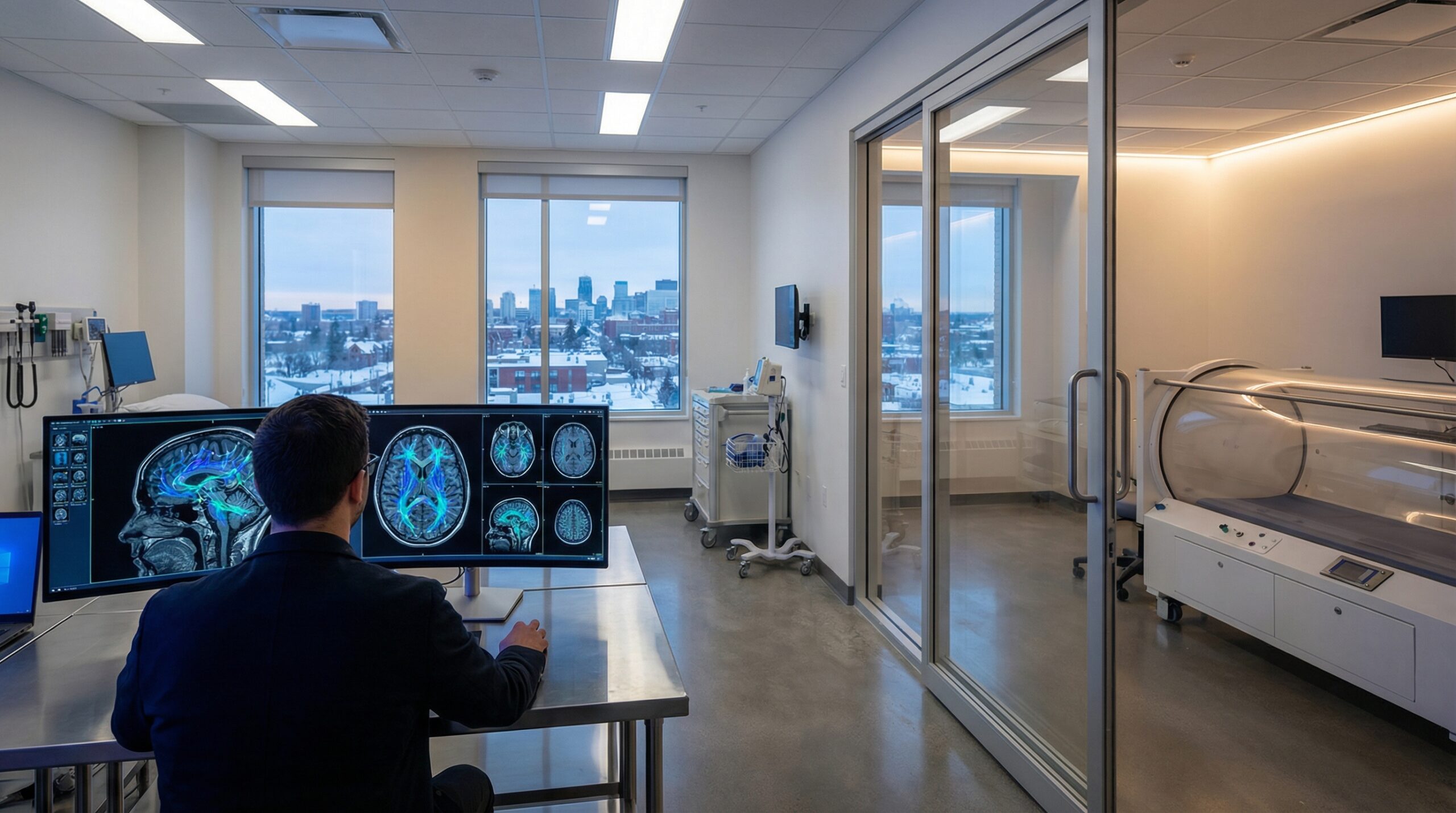
TL;DR: A growing body of randomised controlled trials and meta-analyses suggests that hyperbaric oxygen therapy (HBOT) may significantly reduce symptoms of depression and anxiety across multiple clinical populations – including veterans with PTSD, post-stroke patients, and individuals with fibromyalgia. While the evidence is promising, most studies are small, and large-scale, condition-specific trials with standardised protocols are still needed before HBOT can be considered a front-line psychiatric intervention.
Hyperbaric oxygen therapy (HBOT) is a medical treatment being investigated for its potential effects on depression and anxiety, particularly in cases linked to traumatic brain injury, PTSD, and post-stroke mood disorders. Hyperbaric oxygen therapy (HBOT) is a medical treatment that delivers 100% oxygen at pressures above normal atmospheric levels, typically between 1.5 and 2.5 atmospheres absolute (ATA). Originally developed for decompression sickness and chronic wound healing, HBOT has attracted increasing research attention for its potential neuropsychiatric applications. A convergence of clinical trial data now suggests that HBOT may offer measurable benefits for depression and anxiety – not as a standalone psychiatric treatment, but as an adjunctive therapy that targets the neurobiological underpinnings these conditions share with other disorders.
This evidence review examines the current state of research on HBOT for depression and anxiety across multiple clinical contexts, evaluates the strength of available data, and identifies the critical gaps that future studies must address. All citations reference peer-reviewed studies indexed in PubMed.
Why Is HBOT Being Studied for Depression and Anxiety?
The rationale for investigating HBOT as a neuropsychiatric intervention rests on its established capacity to modulate neurobiological processes relevant to mood disorders. HBOT increases dissolved oxygen in plasma and cerebrospinal fluid, which in turn promotes angiogenesis (new blood vessel formation), neuroplasticity (structural and functional brain remodelling), and the release of neurotrophic factors such as brain-derived neurotrophic factor (BDNF). These mechanisms overlap substantially with the pathophysiology of depression and anxiety disorders, which are characterised by neuroinflammation, reduced cerebral blood flow, impaired neuroplasticity, and dysregulated neurotransmitter systems.
Importantly, depression and anxiety frequently present as comorbid symptoms in conditions already treated with HBOT – including traumatic brain injury, stroke, spinal cord injury, and chronic pain syndromes such as fibromyalgia. The improvement in neuropsychiatric symptoms observed during HBOT trials for these primary conditions has prompted dedicated investigation into whether HBOT can address depression and anxiety directly.
What Does the Evidence Show for PTSD-Related Depression and Anxiety?
Post-traumatic stress disorder (PTSD) is one of the most actively studied neuropsychiatric applications of HBOT, and the results to date are among the most robust in the field. PTSD involves significant neurobiological changes – including altered connectivity in the default-mode network, central-executive network, and salience network – that make it a compelling target for an oxygen-mediated neuroplasticity intervention.
| Study (Author, Year) | Population (N) | Protocol (ATA, Sessions) | Key Findings |
|---|---|---|---|
| Doenyas-Barak et al., 2024 | Combat veterans with PTSD (56) | 2.0 ATA, 60 sessions | Significant decrease in CAPS-5, BDI-II, DASS-21 scores; enhanced brain network connectivity. |
| Doenyas-Barak et al., 2022 | Treatment-resistant PTSD veterans (35) | Not explicitly stated in article | Significant improvements in CAPS-V, BSI, BDI scores; structural improvements in fronto-limbic white matter. |
| Andrews & Harch, 2024 | Systematic review (393 subjects across 8 studies) | 1.3-2.0 ATA, 40-60 sessions | Statistically significant symptomatic improvements; linear dose-response; high doses associated with reversible emotional exacerbation. |
A 2024 randomised, sham-controlled clinical trial published in The Journal of Clinical Psychiatry evaluated 56 male veterans with combat-associated PTSD who completed a protocol of 60 daily HBOT sessions at 2.0 ATA. The HBOT group showed a significant decrease in CAPS-5 total scores from 42.57 to 25.8 (p < 0.001), while the sham group’s scores actually worsened over the same period. Critically, the HBOT group also demonstrated significant improvements in depression as measured by both the Beck Depression Inventory-II and the DASS-21 depression subscale. Resting-state functional MRI confirmed enhanced connectivity within all three major brain networks implicated in PTSD (Doenyas-Barak et al., 2024).
These findings built upon an earlier 2022 randomised controlled trial from the same research group at the Sagol Centre for Hyperbaric Medicine in Israel. That study, involving 35 veterans with treatment-resistant PTSD, showed significant improvements in CAPS-V scores (net effect size = 1.64), BSI scores (net effect size = 0.89), and BDI depression scores (net effect size = 1.03). Diffusion tensor imaging (DTI) revealed structural improvements in fronto-limbic white matter, the genu of the corpus callosum, and the fornix – regions critical for emotional regulation (Doenyas-Barak et al., 2022).
A 2024 systematic review and dosage analysis in Frontiers in Neurology synthesised data from eight studies encompassing 393 subjects. The review found that statistically significant symptomatic improvements were achieved across a range of pressures from 1.3 to 2.0 ATA with 40–60 sessions, and that there was a linear dose-response relationship between cumulative oxygen dose and symptom improvement. However, the highest oxygen doses were associated with a severe but reversible exacerbation of emotional symptoms in 30–39% of subjects – a finding with important clinical implications for protocol design (Andrews & Harch, 2024).
Can HBOT Improve Depression After Stroke?
Post-stroke depression (PSD) affects approximately one-third of stroke survivors and is associated with poorer functional recovery, increased mortality, and reduced quality of life. The largest body of evidence for HBOT’s antidepressant effects comes from this population.
A comprehensive 2020 meta-analysis published in Clinical Neurology and Neurosurgery pooled data from 27 randomised clinical trials involving 2,250 participants. The analysis found that HBOT significantly reduced depression severity on both the HAMD-17 (weighted mean difference [WMD] = −4.33) and HAMD-24 (WMD = −4.31) scales compared with controls. The overall response rate was 69.4% in the HBOT group versus 51.2% in the control group (OR = 2.51, 95% CI 1.83–3.43). HBOT also improved neurological deficit scores and activities of daily living. Importantly, HBOT combined with antidepressants outperformed antidepressant monotherapy, and HBOT monotherapy achieved a slightly higher response rate than antidepressants alone (OR = 1.29). The HBOT group also reported fewer adverse events (9.6% versus 16.6%) (Liang et al., 2020).
A 2022 randomised controlled trial further supported these findings using MRI evaluation of neural recovery. Patients receiving HBOT in addition to standard antidepressant therapy showed significantly lower NIHSS and HAMD scores, improved sleep quality (PSQI), reduced glial fibrillary acidic protein (GFAP – a biomarker of brain injury), and elevated norepinephrine levels compared with the antidepressant-only group (Yuan et al., 2022).
Does HBOT Reduce Anxiety and Depression in Fibromyalgia Patients?
Fibromyalgia (FM) is a chronic condition characterised by widespread musculoskeletal pain, fatigue, sleep disturbances, and frequently comorbid depression and anxiety. HBOT’s analgesic and anti-inflammatory properties have made it a subject of increasing interest for FM, and several trials have now reported meaningful neuropsychiatric outcomes.
A Canadian study conducted at the Hyperbaric Medicine Unit of Toronto General Hospital evaluated HBOT in 18 patients with FM in a cohort study with a delayed-treatment comparator arm. Participants received 40 HBOT sessions at 2.0 ATA over 8 weeks. The study found that HBOT was associated with improved global functioning, reduced symptoms of anxiety and depression, and improved sleep quality – improvements that were sustained at three-month follow-up. The investigators concluded that HBOT appears feasible and safe for individuals with FM (Curtis et al., 2021).
A 2024 randomised clinical trial from the University of Valencia examined low-pressure HBOT in 33 women with FM. The HBOT group received 40 sessions over 8 weeks and showed significant improvements across all psychological constructs related to pain – including pain catastrophism, pain acceptance, pain inflexibility, and mental defeat – as well as improved quality of life. The control group showed no improvements on any measure (Izquierdo-Alventosa et al., 2024).
What About HBOT for Neuropsychiatric Symptoms in Neurodegenerative Disease?
Emerging evidence also suggests HBOT may address depression and anxiety in the context of neurodegenerative conditions. A 2025 systematic review and meta-analysis published in Clinical Rehabilitation evaluated HBOT for non-motor symptoms in Parkinson’s disease across 16 studies involving 1,324 individuals. The meta-analysis found that HBOT significantly improved scores on both the Hamilton Anxiety Scale and Hamilton Depression Scale compared with baseline (both p < 0.05). Additionally, HBOT improved cognitive function (MoCA, MMSE), sleep quality, swallowing dysfunction, and motor function (Pan et al., 2025).
Similarly, a 2021 meta-analysis of HBOT for spinal cord injury (11 RCTs, 875 participants) reported significant reductions in both HAMA anxiety scores (MD = −2.37) and HAMD depression scores (MD = −3.74) alongside improvements in motor and sensory function (Huang et al., 2021).
What Are the Proposed Mechanisms of Action?
The neurobiological mechanisms through which HBOT may exert antidepressant and anxiolytic effects are not fully elucidated, but several pathways have been identified in preclinical and clinical research:
- Neuroplasticity and neurogenesis: HBOT promotes the proliferation of neural stem cells and the formation of new synaptic connections, particularly in the hippocampus – a brain region critically involved in mood regulation and known to exhibit volume reduction in major depressive disorder.
- Anti-inflammatory effects: Depression is increasingly understood as a neuroinflammatory condition. HBOT reduces pro-inflammatory cytokines (TNF-α, IL-1β, IL-6) and may help restore the balance between pro- and anti-inflammatory signalling in the central nervous system.
- Cerebral blood flow restoration: Impaired cerebral perfusion is a documented feature of both depression and PTSD. HBOT increases oxygen delivery to hypoperfused brain regions, potentially restoring function in areas such as the prefrontal cortex and limbic system.
- Neurotransmitter modulation: The Yuan et al. (2022) study demonstrated elevated norepinephrine levels following HBOT for post-stroke depression, suggesting HBOT may directly influence monoaminergic neurotransmitter systems implicated in mood regulation.
- Network connectivity restoration: The Doenyas-Barak et al. (2024) PTSD trial demonstrated enhanced connectivity in the default-mode network, central-executive network, and salience network following HBOT – all of which are dysregulated in both PTSD and major depressive disorder.
What Are the Key Limitations of the Current Evidence?
Despite the promising results, several important limitations must be acknowledged:
- Depression and anxiety are rarely the primary outcome. In most studies, neuropsychiatric symptoms are measured as secondary endpoints in trials designed for other primary conditions (PTSD, stroke, fibromyalgia, Parkinson’s disease). Dedicated trials with depression or anxiety as the primary diagnosis remain exceptionally rare.
- Small sample sizes. The majority of HBOT trials for neuropsychiatric outcomes involve fewer than 75 participants per study. This limits statistical power and the generalisability of findings.
- Protocol heterogeneity. Pressure protocols range from 1.3 to 2.5 ATA, session counts from 20 to 60, and treatment durations from 4 to 12 weeks. This variability makes it difficult to establish standardised treatment recommendations.
- Sham control challenges. Creating a convincing sham condition for HBOT is methodologically challenging. Some studies use pressurised air at low ATA, but participants may still perceive pressure changes, potentially compromising blinding.
- Geographic bias. A significant proportion of post-stroke depression trials originate from China, while PTSD trials are concentrated in Israel. Multi-centre international trials are needed.
- Long-term follow-up is limited. Most studies assess outcomes immediately post-treatment or at three-month follow-up. The durability of HBOT’s neuropsychiatric effects beyond six months remains largely unknown.
What Does This Mean for Future Research Directions?
For the field to advance, several research priorities must be addressed:
- Dedicated RCTs for major depressive disorder (MDD) as the primary indication – not as a comorbid symptom of another condition. These trials should use validated psychiatric diagnostic criteria and standardised outcome measures.
- Dose-finding studies that systematically compare pressure levels, session counts, and treatment frequencies to establish optimal protocols for neuropsychiatric applications.
- Biomarker integration – incorporating neuroimaging (fMRI, DTI), inflammatory markers, and neurotrophic factor levels to establish objective measures of treatment response alongside symptom scales.
- Canadian multicentre trials – Canada has established HBOT infrastructure through hospital-based programmes in Ontario, British Columbia, Alberta, Quebec, and Nova Scotia, as well as a growing network of private clinics. Institutions such as the Canadian Undersea and Hyperbaric Medical Association (CUHMA) and the Undersea and Hyperbaric Medical Society (UHMS) are positioned to coordinate multi-site studies. Canada Hyperbarics maintains a comprehensive research database tracking these developments.
- Cost-effectiveness analyses – given the significant treatment burden of 40–60 sessions, health economic studies are essential for informing provincial health system coverage decisions across Canada.
Frequently Asked Questions
Is HBOT an approved treatment for depression in Canada?
HBOT is not currently approved by Health Canada as a treatment for depression or anxiety. The approved indications focus on conditions such as decompression sickness, carbon monoxide poisoning, chronic non-healing wounds, and radiation injury. Research into neuropsychiatric applications is ongoing but has not yet led to regulatory approval.
How many HBOT sessions are typically used in depression research?
Based on available evidence, most clinical trials use between 20 and 60 HBOT sessions. The Andrews and Harch (2024) systematic review found clinically significant improvements with 40–60 sessions, and a linear dose-response relationship with cumulative oxygen dose.
What pressure levels are used in neuropsychiatric HBOT research?
Protocols vary widely, from 1.3 ATA (low-pressure) to 2.5 ATA. The most common protocols in PTSD and post-stroke depression studies use 2.0 ATA with 100% oxygen for 60–90 minutes per session.
Are there risks to using HBOT for psychiatric conditions?
HBOT is generally considered safe under medical supervision. Common side effects include middle-ear barotrauma and transient myopia. However, the Andrews and Harch (2024) review noted that higher oxygen doses were associated with a severe but reversible exacerbation of emotional symptoms in 30–39% of PTSD subjects – a finding that requires careful clinical monitoring.
Has any HBOT research for depression been conducted in Canada?
Yes. Curtis et al. (2021) conducted a study at the Hyperbaric Medicine Unit of Toronto General Hospital evaluating HBOT for fibromyalgia, which included depression and anxiety as outcome measures. The study reported sustained improvements at three-month follow-up. Researchers can explore additional Canadian HBOT studies in our research database.
Can HBOT replace antidepressant medications?
Current evidence does not support HBOT as a replacement for established psychiatric treatments. The Liang et al. (2020) meta-analysis found that HBOT combined with antidepressants outperformed antidepressant monotherapy, suggesting a potential adjunctive role rather than a replacement. Any changes to medication should be discussed with a qualified physician.
What brain changes does HBOT produce that could explain mood improvements?
Clinical imaging studies have documented enhanced functional connectivity in the default-mode, central-executive, and salience networks; increased fractional anisotropy in fronto-limbic white matter tracts; elevated norepinephrine levels; and reduced glial fibrillary acidic protein (a brain injury biomarker). These changes are consistent with restored neuroplasticity and reduced neuroinflammation.
Where can I find a hyperbaric facility in Canada?
Canada Hyperbarics maintains a comprehensive facility directory covering hospital-based programmes and private clinics across 10 provinces. For information on provincial health insurance coverage, visit our coverage guide.
Conclusion
The evidence base for HBOT’s effects on depression and anxiety, while still developing, represents one of the most active and promising areas of hyperbaric medicine research. Across PTSD, post-stroke depression, fibromyalgia, and neurodegenerative disease, a consistent pattern has emerged: HBOT appears to reduce depression and anxiety symptoms with meaningful effect sizes, and these improvements correlate with measurable changes in brain structure and function.
However, the field remains at an early stage. The absence of dedicated large-scale RCTs for major depressive disorder as a primary indication is the most significant gap. Until such trials are completed, HBOT’s role in psychiatry will remain investigational – a promising adjunctive approach supported by convergent evidence from multiple clinical populations, but not yet ready for routine clinical adoption.
For researchers interested in contributing to this field, the combination of established HBOT infrastructure in Canadian hospitals, the growing private clinic network, and organisations such as CUHMA and UHMS provides a strong foundation for the multicentre trials this field urgently needs. Canada Hyperbarics will continue to track and report on these developments through our research database and editorial coverage.
Estimated reading time: 10 minutes
Medical Disclaimer: This content is for informational purposes only and does not constitute medical advice. Hyperbaric oxygen therapy should only be administered under the supervision of qualified medical professionals. The research findings described in this article reflect the current state of evidence and should not be interpreted as endorsement of HBOT for conditions not approved by Health Canada. Always consult your physician before pursuing any new treatment.