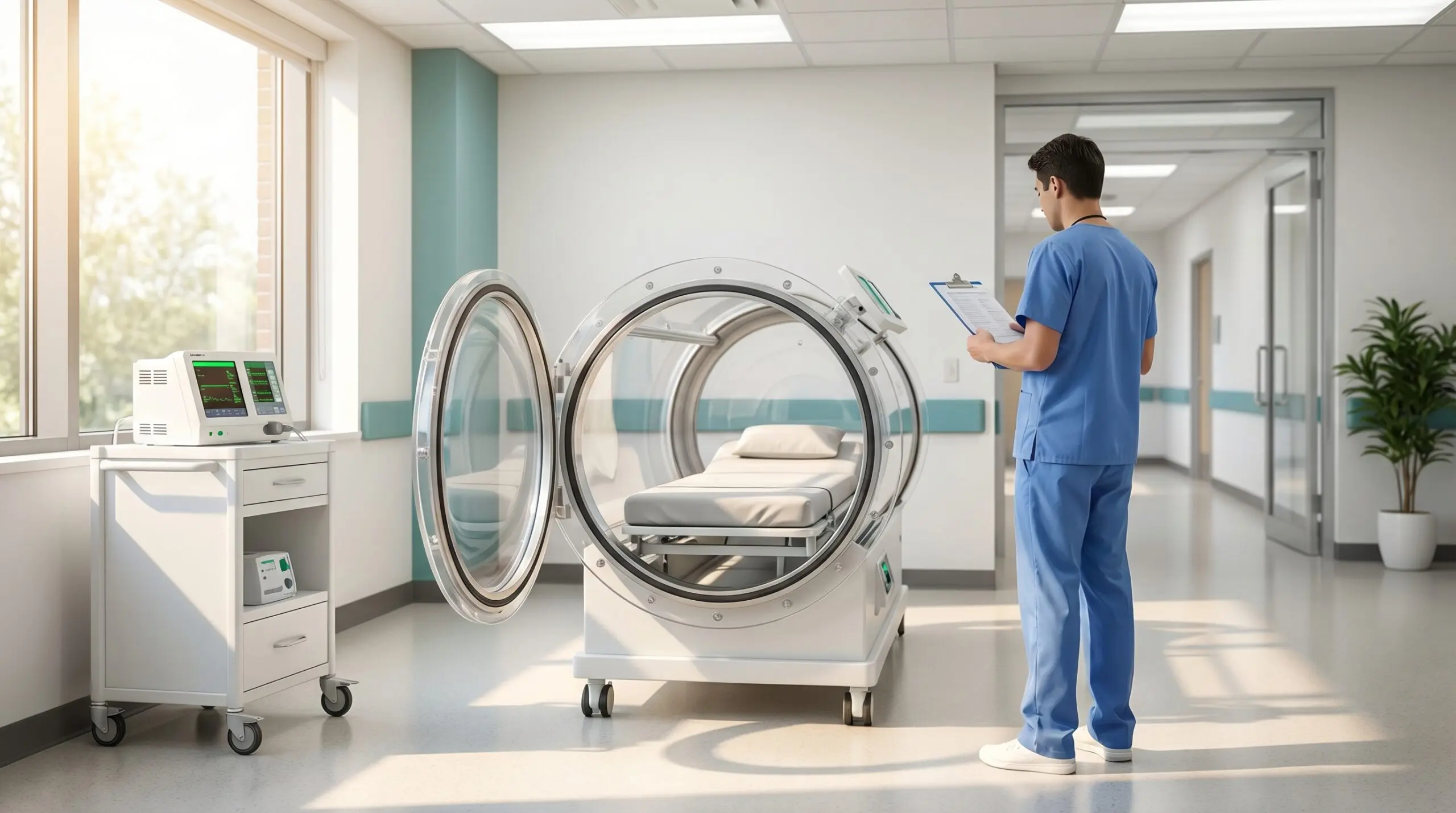
TL;DR: Hyperbaric oxygen therapy (HBOT) is considered a safe medical treatment when administered in accredited facilities by trained professionals. The most common side effect is mild middle ear pressure, which occurs in roughly 15% of patients and usually resolves on its own. Serious complications are rare. This FAQ covers everything Canadian patients need to know about HBOT safety, side effects, contraindications, and how to prepare for treatment.
What Is Hyperbaric Oxygen Therapy and How Does It Work?
Hyperbaric oxygen therapy (HBOT) is a medical treatment in which a patient breathes 100% pure oxygen inside a pressurised chamber at higher-than-normal atmospheric pressure, typically between 2.0 and 2.5 atmospheres absolute (ATA). This process significantly increases the amount of oxygen dissolved in the blood and delivered to tissues throughout the body. HBOT promotes wound healing, reduces inflammation, fights certain infections, and supports recovery from conditions such as carbon monoxide poisoning, diabetic wounds, radiation injuries, and decompression sickness.
In Canada, HBOT is available at hospitals and regulated private clinics across several provinces. Canada Hyperbarics maintains a directory of accredited facilities where patients can access treatment under proper medical supervision. Health Canada regulates hyperbaric chambers as Class III medical devices, and the Canadian Undersea and Hyperbaric Medical Association (CUHMA) sets clinical practice standards for the country.
Is Hyperbaric Oxygen Therapy Safe?
Yes, HBOT is generally considered a safe medical treatment when delivered in a properly maintained, Health Canada-licensed chamber under the supervision of trained hyperbaric medical staff. Like any medical intervention, it carries some risks, but serious adverse events are uncommon.
According to research retrieved from PubMed, a 2024 systematic review and meta-analysis of HBOT for fistulising Crohn’s disease found that the pooled number of adverse events was just 51.7 per 10,000 HBOT sessions across all included studies (Dokmak et al., 2024). A separate 2023 systematic review examining HBOT for fibromyalgia confirmed that no serious adverse events or complications were observed among the 288 patients studied, and all side effects that did occur were reversible (Chen et al., 2023).
The key to safe treatment is choosing an accredited facility staffed by trained hyperbaric professionals. In Canada, clinics that follow CUHMA and Undersea and Hyperbaric Medical Society (UHMS) guidelines maintain rigorous safety protocols, including pre-treatment screening, continuous patient monitoring, and emergency preparedness procedures.
What Are the Most Common Side Effects of HBOT?
The most frequently reported side effect of hyperbaric oxygen therapy is middle ear barotrauma, which is pressure-related discomfort or injury to the ear. Based on articles retrieved from PubMed, a comprehensive 2025 systematic review of otologic adverse events covering 18,284 patients found that approximately 15% experienced some form of ear-related side effect during HBOT. Of those cases, 42.8% were classified as mild and only 6.4% as severe (Voigt et al., 2025, Undersea and Hyperbaric Medicine).
Other possible side effects include:
- Sinus pressure or discomfort – similar to what you might feel during air travel
- Temporary changes in vision (myopia) – mild near-sightedness that typically resolves within weeks after completing treatment
- Fatigue – some patients feel tired after sessions, particularly in the first few treatments
- Lightheadedness – a brief feeling of dizziness that passes quickly after leaving the chamber
- Mild claustrophobia – feeling confined, especially in monoplace (single-person) chambers
Most of these side effects are temporary and resolve on their own once the treatment course is complete or between sessions.
How Common Are Serious Complications from HBOT?
Serious complications from hyperbaric oxygen therapy are rare. The two most significant but uncommon risks are:
| Complication | Estimated Incidence | Description |
|---|---|---|
| Oxygen toxicity seizure | approximately 2.4 per 10,000 treatments (Sherlock 2018) | A brief seizure caused by high oxygen levels affecting the central nervous system. Seizures stop once the oxygen source is removed and do not cause lasting harm. |
| Pulmonary oxygen toxicity | Very rare at standard protocols | Prolonged oxygen exposure can irritate the lungs. Standard treatment protocols include air breaks to prevent this. |
| Tension pneumothorax | Extremely rare | A collapsed lung that could worsen under pressure. Pre-treatment screening identifies patients at risk. |
| Severe barotrauma | Less than 1% of patients | Significant ear or sinus injury requiring medical attention. Proper equalization techniques reduce this risk. |
The 2023 fibromyalgia systematic review confirmed that across nine studies and 288 patients, no serious adverse events were documented (Chen et al., 2023). When they do occur, most complications are manageable and resolve without lasting effects.
Who Should Not Receive Hyperbaric Oxygen Therapy?
Certain medical conditions make HBOT unsafe or require special precautions. Your referring physician and the hyperbaric medical team will screen for these before treatment begins.
Absolute contraindication (HBOT must not be given):
- Untreated pneumothorax (collapsed lung) – the only universally accepted absolute contraindication. Pressure changes inside the chamber could cause a life-threatening tension pneumothorax.
Relative contraindications (HBOT may be possible with caution):
- Certain chemotherapy drugs – medications such as bleomycin, cisplatin, and doxorubicin may interact with high-oxygen environments. Your oncologist and hyperbaric physician will assess the risks.
- Severe COPD or emphysema – lung conditions that trap air may increase the risk of pulmonary barotrauma.
- Uncontrolled high fever – elevated body temperature increases the risk of oxygen toxicity seizures.
- History of spontaneous pneumothorax – previous collapsed lungs may recur under pressure.
- Active upper respiratory infection or severe sinusitis – congestion makes it difficult to equalize pressure in the ears and sinuses.
- Certain implanted medical devices – some devices may not function properly under increased pressure. Most modern pacemakers and insulin pumps are pressure-rated, but this must be verified.
If you have any of these conditions, discuss them with your physician before pursuing HBOT. In many cases, treatment can proceed once the condition is managed or resolved. Your frequently asked questions page covers additional details about eligibility.
Can HBOT Cause Oxygen Toxicity?
Oxygen toxicity is a real but rare risk of HBOT. It occurs when the body is exposed to elevated oxygen levels for extended periods, potentially affecting the central nervous system or lungs.
Central nervous system (CNS) oxygen toxicity is the more immediate concern. It can cause a seizure during treatment, but this is extremely rare at standard clinical pressures (2.0-2.4 ATA). The estimated risk is approximately 2.4 seizures per 10,000 treatments (Sherlock 2018). If a seizure does occur, the oxygen source is immediately removed, and the seizure stops. These seizures do not cause brain damage and do not lead to epilepsy.
Pulmonary oxygen toxicity affects the lungs and is associated with prolonged, continuous oxygen exposure. Standard HBOT protocols include scheduled “air breaks” during which you breathe normal room air for a few minutes. These breaks are specifically designed to prevent pulmonary oxygen toxicity and are a standard part of every treatment session.
Will HBOT Affect My Eyesight?
Some patients experience temporary changes in vision during a course of HBOT, most commonly a mild shift toward near-sightedness (myopia). This is caused by oxygen-related changes to the shape of the eye’s lens. The effect tends to develop gradually over the course of treatment.
The good news: this change is almost always temporary and typically resolves within weeks of completing HBOT. If you wear prescription glasses or contact lenses, be aware that your prescription may seem slightly off during treatment but should normalise afterward.
Patients with pre-existing cataracts should discuss this with their hyperbaric physician, as prolonged courses of HBOT may be associated with progression of cataracts in some individuals.
Is HBOT Safe for Children and Older Adults?
HBOT is used safely in both paediatric and geriatric populations, though each group requires specific considerations.
Children: HBOT has been studied in paediatric patients for conditions including carbon monoxide poisoning, wounds, and decompression illness. Children may have a higher rate of middle ear barotrauma because they sometimes have difficulty with ear equalization techniques. A parent or guardian is typically allowed to accompany a child in a multiplace chamber, and staff are trained to help children feel comfortable.
Older adults: According to PubMed research, increasing age is a risk factor for ear-related side effects during HBOT (Voigt et al., 2025). Older patients may also have more relative contraindications due to existing health conditions. However, many older adults safely complete full HBOT treatment courses. A thorough pre-treatment medical assessment ensures that any age-related risks are identified and managed.
What If I Have Claustrophobia?
Claustrophobia is a common concern for patients considering HBOT, particularly those receiving treatment in a monoplace chamber, which is designed for one person. These chambers are typically clear acrylic tubes, allowing you to see outside at all times.
Strategies that help patients manage claustrophobia during HBOT include:
- Visit the facility first – see the chamber, ask questions, and do a brief orientation before your first session
- Multiplace chamber option – if available, a multiplace chamber allows you to sit in a room-sized space with other patients and staff
- Distraction techniques – many clinics offer music, audiobooks, or video during treatment sessions
- Relaxation strategies – deep breathing, guided meditation, or progressive muscle relaxation
- Gradual exposure – some clinics offer a brief introductory session to help you acclimatise
- Medical support – in some cases, your physician may prescribe a mild anti-anxiety medication before treatment
Most patients who initially feel anxious about the chamber find that their comfort level improves significantly after the first few sessions.
How Do I Prepare for Safe HBOT Treatment?
Proper preparation helps ensure your HBOT sessions are safe and comfortable. Here are the key steps:
- Disclose your full medical history – inform the hyperbaric team about all medications, surgeries, implants, and pre-existing conditions
- Avoid tobacco products – smoking restricts blood vessels and reduces the effectiveness of HBOT. Most clinics recommend stopping smoking for the duration of treatment.
- Skip carbonated beverages – carbonated drinks can cause gas expansion discomfort during pressurisation
- Wear 100% cotton clothing – synthetic fabrics can generate static electricity, which is a fire safety concern in an oxygen-enriched environment
- Remove prohibited items – electronics, lighters, matches, petroleum-based products (hair spray, lotions), and hearing aids must be left outside the chamber
- Practise ear equalization – learn techniques like swallowing, yawning, or the Valsalva manoeuvre (gently blowing with your nose pinched) to equalize ear pressure
- Eat a light meal beforehand – avoid going on an empty stomach, but do not eat heavily right before treatment
- Inform staff of any illness – cold, flu, or sinus congestion may require your session to be postponed
Your hyperbaric facility will provide detailed preparation instructions specific to their protocols. Canada Hyperbarics recommends reviewing these guidelines with your treatment team before your first session.
What Happens If I Feel Uncomfortable During a Session?
Your safety and comfort are the top priorities during every HBOT session. You are never locked inside the chamber, and you can communicate with staff at all times through an intercom system.
If you experience discomfort during treatment:
- Ear or sinus pain: Signal the staff. They can slow or pause the pressurisation to give you time to equalize.
- Anxiety or panic: Speak to the attendant through the intercom. They can talk you through relaxation techniques or, if needed, begin decompression.
- Any unusual symptoms: If you feel nauseous, dizzy, or experience tingling in your extremities, alert staff immediately. These may be early signs of oxygen sensitivity, and the team will adjust your treatment.
The chamber can be depressurised and opened at any time. Treatment can be paused, adjusted, or ended early based on your needs. Trained hyperbaric technicians monitor you continuously throughout every session.
What Are the Risk Factors for HBOT Side Effects?
Based on PubMed research, certain factors may increase your likelihood of experiencing side effects during HBOT. The 2025 systematic review by Voigt et al. identified the following risk factors for ear-related complications:
| Risk Factor | Why It Matters |
|---|---|
| Increasing age | Older patients may have reduced ability to equalize ear pressure |
| Female sex | Women showed a slightly higher incidence of middle ear barotrauma in studies |
| Head and neck conditions | Previous surgery or radiation to the head and neck area can impair eustachian tube function |
| Sensory neuropathy | Reduced sensation may delay recognition of pressure-related discomfort |
| Difficulty equalizing pre-treatment | Patients who struggle with equalization before treatment have higher complication rates |
The main protective factor identified in the research was experience with effective equalization techniques. Patients who learned and practised proper ear-clearing methods before treatment had significantly fewer complications. This is why most Canadian hyperbaric clinics include equalization training as part of their pre-treatment orientation.
How Do I Find a Safe, Accredited Hyperbaric Clinic in Canada?
Choosing the right facility is one of the most important safety decisions you can make. Here is what to look for when selecting a hyperbaric clinic in Canada:
- Health Canada-licensed chambers – the facility should use Class III medical device-approved hyperbaric chambers, not unregulated “mild” or portable units
- Qualified medical oversight – treatment should be prescribed and supervised by a physician with hyperbaric medicine training
- CUHMA or UHMS accreditation – accreditation demonstrates that the facility meets recognised safety and clinical practice standards
- Trained staff – hyperbaric technicians should hold certifications from recognised training programmes
- Emergency protocols – the facility should have documented emergency procedures, fire safety protocols, and rapid decompression capability
- Patient screening process – a thorough intake that reviews your medical history, medications, and contraindications before treatment begins
Be cautious of: facilities advertising “mild hyperbaric therapy” using inflatable or soft-sided chambers at low pressures (1.3 ATA or less). These are not equivalent to medical-grade HBOT and are not approved by Health Canada for treating medical conditions. For a list of hospitals and regulated facilities offering approved HBOT treatment across Canada, visit the Canada Hyperbarics facility directory.
Frequently Asked Questions
Is hyperbaric oxygen therapy covered by provincial health insurance in Canada?
Coverage varies by province. In Ontario, OHIP covers HBOT for 14 recognised indications at both hospitals and eligible private clinics. In British Columbia, MSP covers treatment only at Vancouver General Hospital. Alberta Health covers HBOT at hospital-based clinics in Calgary and Edmonton. Other provinces have limited or no provincial coverage. Visit the Canada Hyperbarics coverage guide for province-by-province details and information about private insurance options.
How many HBOT sessions are typically needed?
The number of sessions depends on your condition. Emergency treatments like carbon monoxide poisoning may require only 1 to 3 sessions. Chronic conditions such as non-healing wounds or radiation injury typically require 20 to 40 sessions, delivered once or twice daily over several weeks. Your hyperbaric physician will create a treatment plan tailored to your specific condition.
Can I receive HBOT if I am taking blood thinners?
Yes, in most cases. Blood thinners (anticoagulants) are not a contraindication to HBOT. However, you should disclose all medications to your hyperbaric treatment team so they can monitor you appropriately and adjust your care plan if needed.
Is it safe to drive home after an HBOT session?
Most patients can safely drive after a standard HBOT session. However, if you experience lightheadedness, fatigue, or temporary vision changes, it is advisable to arrange a ride home, at least for your initial sessions, until you understand how your body responds to treatment.
Does HBOT increase cancer risk?
No. Research has not shown that HBOT causes cancer or promotes tumour growth. In fact, some studies suggest HBOT may have tumour-suppressive effects in certain contexts. HBOT is regularly used to treat radiation injuries in cancer survivors. However, patients with active cancers should only receive HBOT under the direction of both their oncologist and a hyperbaric physician.
What is the difference between a monoplace and multiplace chamber?
A monoplace chamber is designed for one patient and is typically a clear acrylic tube. The entire chamber is pressurised with oxygen. A multiplace chamber is a larger, room-sized unit that can treat multiple patients simultaneously. Patients breathe oxygen through masks or hoods while the chamber is pressurised with regular air. Both types are safe and effective when operated by trained staff. Learn more about hyperbaric therapy research and evidence on the Canada Hyperbarics research page.
Can I use a portable hyperbaric chamber at home?
Home or portable soft-sided chambers operate at much lower pressures (typically 1.3 ATA) and use ambient air or low-concentration oxygen, not the 100% medical-grade oxygen used in clinical HBOT. They are not approved by Health Canada for treating medical conditions, are not the same treatment studied in clinical research, and lack the safety monitoring provided in a clinical setting. Canada Hyperbarics recommends receiving HBOT only at hospitals and regulated facilities with proper medical oversight.
Is HBOT safe during pregnancy?
HBOT during pregnancy is generally reserved for life-threatening emergencies, such as carbon monoxide poisoning, where the risk of not treating outweighs the potential risks. Routine or elective HBOT is not recommended during pregnancy due to insufficient safety data. If you are pregnant and facing a condition that might benefit from HBOT, the decision should be made by your obstetric team and a hyperbaric physician together.
The Bottom Line on HBOT Safety in Canada
Hyperbaric oxygen therapy has a well-established safety profile supported by decades of clinical use and peer-reviewed research. The most common side effects are mild ear pressure and temporary vision changes, both of which resolve after treatment. Serious complications are rare, particularly when treatment is delivered at an accredited facility with trained staff and proper patient screening.
If you are considering HBOT, the most important steps you can take are to discuss the treatment thoroughly with your physician, choose an accredited facility, disclose your complete medical history, and follow all pre-treatment preparation instructions.
For help finding hospitals and regulated facilities offering hyperbaric oxygen therapy across Canada, visit the Canada Hyperbarics facility directory.
References
- Voigt A, Laspro M, Thys E, et al. Systematic Review of Otologic Adverse Events in Hyperbaric Oxygen Therapy. Undersea Hyperb Med. 2025;52(4):537-547.
- Dokmak A, Sweigart B, Orekondy NS, et al. Efficacy and Safety of Hyperbaric Oxygen Therapy in Fistulizing Crohn’s Disease: A Systematic Review and Meta-analysis. J Clin Gastroenterol. 2024;58(2):120-130. DOI: 10.1097/MCG.0000000000001905
- Chen X, You J, Ma H, Zhou M, Huang C. Efficacy and safety of hyperbaric oxygen therapy for fibromyalgia: a systematic review and meta-analysis. BMJ Open. 2023;13(1):e062322. DOI: 10.1136/bmjopen-2022-062322
This content is for informational purposes only and does not constitute medical advice. Always consult a qualified healthcare provider before beginning any treatment, including hyperbaric oxygen therapy. Individual results may vary, and treatment decisions should be made in consultation with your physician based on your specific medical history and condition.