TL;DR: A 2024 randomised, sham-controlled trial found that 60 sessions of hyperbaric oxygen therapy (HBOT) reduced PTSD symptoms by 39% in combat veterans, with improvements sustained at three-month follow-up. A concurrent systematic review of eight studies confirmed a linear dose-response relationship across 393 subjects, with brain imaging revealing structural and functional changes in PTSD-affected regions.
Hyperbaric oxygen therapy (HBOT) is a medical treatment that delivers 100% oxygen at pressures above normal atmospheric levels, typically in a pressurised chamber at 1.5–2.0 atmospheres absolute (ATA). Emerging evidence from multiple randomised controlled trials now suggests that HBOT may offer a biologically based treatment pathway for post-traumatic stress disorder (PTSD)-a condition affecting an estimated 10% of Canadian Armed Forces veterans who have deployed to combat zones. This research summary from Canada Hyperbarics examines the most significant HBOT-PTSD studies published between 2022 and 2025.
Estimated reading time: 4 minutes
What Did the 2024 Randomised Controlled Trial Find?
The landmark study by Doenyas-Barak et al. (2024), published in The Journal of Clinical Psychiatry, enrolled 63 male veterans with combat-associated PTSD in a randomised, sham-controlled design (DOI: 10.4088/JCP.24m15464). Participants received either 60 daily sessions of HBOT (100% oxygen at 2.0 ATA) or a sham intervention (21% oxygen at 1.02 ATA). Fifty-six veterans completed the protocol.
The HBOT group demonstrated a 39% reduction in Clinician-Administered PTSD Scale (CAPS-5) scores, from a baseline mean of 42.57 to 25.8 post-treatment (p < .001). These gains were maintained at three-month follow-up (mean 25.08). In contrast, the sham group’s CAPS-5 scores worsened from 45.11 to 49.22 at follow-up (p = .011).
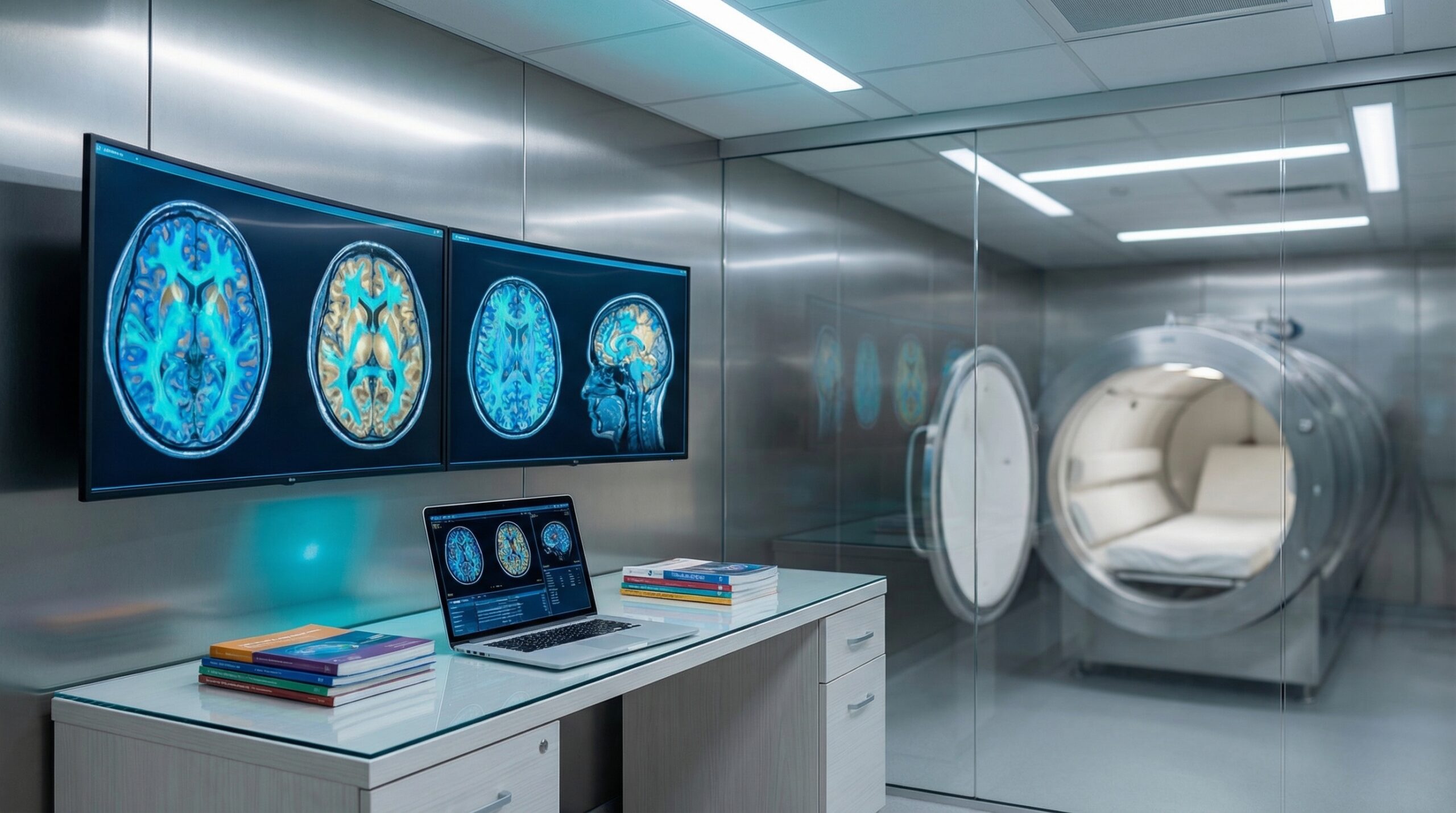
Resting-state functional MRI revealed improved connectivity within three critical neural networks: the default-mode network, central-executive network, and salience network-all implicated in PTSD pathophysiology. Significant improvements were also observed in depression measures (Beck Depression Inventory-II, p = .04; DASS-21 depression domain, p = .03).
What Does the Systematic Review Reveal About Dosing?
Andrews and Harch (2024) conducted a systematic review and dosage analysis of HBOT for PTSD, published in Frontiers in Neurology (DOI: 10.3389/fneur.2024.1360311). The review analysed eight studies encompassing 393 subjects across seven randomised trials and one imaging case-controlled study.
Key findings included:
- A linear dose-response relationship for symptomatic improvement, ranging from 1,002 to 11,400 atmosphere-minutes of cumulative oxygen dose
- Statistically significant improvements achieved with 40–60 sessions at pressures from 1.3 to 2.0 ATA
- Higher oxygen doses produced greater symptom relief but also a reversible exacerbation of emotional symptoms in 30–39% of subjects at the highest doses
- Functional and anatomical brain imaging changes corroborated symptomatic improvements in three of the eight studies
The authors concluded that, given the structural brain changes observed with treatment, PTSD “can no longer be considered strictly a psychiatric disease.”
Is There a Treatment Threshold for Sustained Improvement?
A 2025 post hoc analysis by Danan et al., published in Brain and Behavior (DOI: 10.1002/brb3.70757), reanalysed data from the Doenyas-Barak RCT to identify a treatment threshold. Veterans who achieved ≥35% improvement by end of treatment demonstrated continued symptom improvement at three-month follow-up.
Intrusive symptoms (Cluster B) showed the strongest correlation with sustained gains (r = 0.80, p < .001), while avoidance symptoms (Cluster C) at end of treatment were the best predictor of follow-up outcomes (r = 0.70). This threshold model suggests that HBOT may operate through bistable neural circuit dynamics, where sufficient treatment shifts the brain into a self-sustaining recovery state.
How Does HBOT Affect Brain Structure in PTSD?
The earlier 2022 RCT by Doenyas-Barak et al. in PLoS ONE (DOI: 10.1371/journal.pone.0264161) provided the first randomised evidence of HBOT-induced structural brain changes in PTSD. Diffusion tensor imaging (DTI) revealed significant increases in fractional anisotropy in fronto-limbic white matter, the genu of the corpus callosum, and the fornix-regions central to emotional regulation and memory processing.
Functional MRI showed improved activity in the left dorsolateral prefrontal cortex, hippocampus, thalami, and insula. The net effect size for CAPS-V improvement was 1.64, considered a large clinical effect.
How HBOT May Help PTSD: Proposed Mechanisms
PTSD is increasingly understood not only as a psychological disorder but as a condition with measurable neurobiological correlates – altered brain connectivity, regional hypoperfusion, neuroinflammation, and disrupted white matter integrity. The emerging evidence suggests that HBOT may act on several of these biological substrates simultaneously, which helps explain why its effects appear durable and neuroimaging-confirmed.
Neuroinflammation Reduction
Chronic PTSD is associated with elevated levels of pro-inflammatory cytokines – including interleukin-6, TNF-alpha, and C-reactive protein – in the central nervous system and systemic circulation. This neuroinflammatory state contributes to excitotoxicity in the hippocampus and prefrontal cortex, the regions most critical for fear regulation, contextual memory processing, and emotional modulation.
Hyperbaric oxygen therapy exerts anti-inflammatory effects through multiple pathways. Intermittent high-dose oxygen exposure downregulates nuclear factor kappa B (NF-κB), a key transcription factor driving inflammatory gene expression. Simultaneously, HBOT upregulates antioxidant enzymes and heat shock proteins that protect neurons from oxidative stress. The net result, as demonstrated in the brain imaging studies, is a measurable reduction in neuroinflammatory burden that correlates with symptomatic improvement in PTSD scores.
Cerebral Blood Flow Restoration
Single-photon emission computed tomography (SPECT) and functional MRI studies have consistently demonstrated regional cerebral hypoperfusion in PTSD patients, particularly in the prefrontal cortex, anterior cingulate cortex, and hippocampus. These are the same regions responsible for inhibiting the amygdala’s fear response – and their reduced activity in PTSD is directly linked to hypervigilance, intrusive memories, and impaired emotional regulation.
HBOT promotes angiogenesis – the formation of new blood vessels – through upregulation of vascular endothelial growth factor (VEGF) and other angiogenic signalling molecules. This effect has been demonstrated in wounded tissue repair and, more recently, in neurological conditions. In the context of PTSD, restored perfusion to hypoperfused cortical regions may re-engage inhibitory circuits that were previously functionally offline, reducing hyperactivation of fear networks.
The combination of reduced neuroinflammation and improved cerebral perfusion provides a plausible biological explanation for why HBOT produces neuroimaging-confirmed changes that persist beyond the treatment period – a finding not typically seen with pharmacological or psychotherapeutic interventions alone.
Canadian Context: Access and Coverage for Veterans
For Canadian veterans and their families, understanding how to access HBOT for PTSD requires navigating both the current regulatory status of the treatment and the available funding pathways. The situation is evolving, and awareness of these options is important for veterans who have exhausted conventional therapies.
Current Regulatory and Coverage Status
HBOT is not currently among Health Canada’s approved indications for PTSD, and Veterans Affairs Canada (VAC) does not list HBOT for PTSD as a standard benefit under the Veterans Well-being Act. This means that veterans seeking HBOT for PTSD will generally need to access treatment through private facilities on a self-pay basis, at a typical cost of $200–$400 per session – totalling $8,000–$24,000 for a complete 40–60 session course.
However, the funding landscape has some flexibility. Veterans may apply to VAC for coverage of treatments not on the standard benefit list through the Rehabilitation Services and Vocational Assistance Program or by demonstrating exceptional need through the Veterans’ Treatment Review Committee. Outcomes vary, and veterans are advised to work with a VAC case manager when pursuing these avenues.
Clinical Trial Participation
For veterans who cannot access private-pay treatment, participation in a clinical trial may offer an alternative pathway. Research into HBOT for PTSD is ongoing internationally, and some Canadian academic medical centres are monitoring the literature for opportunities to initiate domestic trials. Veterans interested in trial participation can search ClinicalTrials.gov using the terms “hyperbaric oxygen” and “PTSD” to find currently recruiting studies.
The Path Toward Recognised Coverage
The 2024 randomised controlled trial by Doenyas-Barak et al. and the 2024 systematic review by Andrews and Harch represent the highest-quality evidence yet published for HBOT in PTSD. As the evidence base strengthens, advocacy organisations such as the Canadian Undersea and Hyperbaric Medical Association (CUHMA) and veteran advocacy groups may work toward formal guideline review and potential inclusion of PTSD as a VAC-covered HBOT indication. Veterans and clinicians who wish to support this process can contact CUHMA directly.
In the interim, Canadian veterans with treatment-resistant PTSD and their physicians can access the full body of HBOT-PTSD research through the Canada Hyperbarics Research Database, which catalogues thousands of HBOT studies including those focused on neurological and psychiatric applications.
What Are the Implications for Canadian Researchers and Clinicians?
While these trials were conducted internationally, their findings carry direct relevance for Canada’s veteran population and the broader PTSD research community. PTSD affects approximately 10% of Canadian Armed Forces members who have deployed to combat zones, according to Veterans Affairs Canada. Current first-line treatments-including cognitive processing therapy and prolonged exposure-leave a significant proportion of patients with residual symptoms.
HBOT is not currently among Health Canada‘s approved indications for PTSD. However, these randomised trials contribute to a growing evidence base that may inform future clinical guideline discussions. The Undersea and Hyperbaric Medical Society (UHMS) and the Canadian Undersea and Hyperbaric Medical Association (CUHMA) continue to monitor the evolving literature.
Canada Hyperbarics maintains a searchable Research Database cataloguing thousands of HBOT studies across 14 condition categories, including emerging evidence for neurological and psychiatric applications.
Frequently Asked Questions
Is HBOT approved for PTSD treatment in Canada?
HBOT is not currently among Health Canada’s approved indications for PTSD. The therapy is classified as investigational for this condition. Patients and researchers interested in HBOT for PTSD should review the current evidence base and consult with qualified hyperbaric medicine specialists.
How many HBOT sessions were used in the PTSD clinical trials?
The primary randomised controlled trials used 60 daily sessions of 90 minutes each at 2.0 ATA. The systematic review found effective protocols ranging from 40 to 60 sessions across pressures of 1.3–2.0 ATA, with a clear dose-response relationship.
Which PTSD symptoms responded best to HBOT?
Intrusive symptoms (re-experiencing, flashbacks) showed the strongest treatment response, followed by avoidance behaviours. Depression scores also improved significantly. Anxiety and general stress showed trends toward improvement but did not consistently reach statistical significance across all measures.
Were there adverse effects reported in the trials?
At higher oxygen doses, 30–39% of participants experienced a reversible exacerbation of emotional symptoms. Other reported side effects were transient and minor, consistent with standard HBOT safety profiles. For a comprehensive overview of HBOT safety considerations, visit the Canada Hyperbarics FAQ.
Can Canadian veterans currently access HBOT for PTSD?
Veterans Affairs Canada does not currently cover HBOT for PTSD as a standard benefit. However, veterans may access HBOT at private hyperbaric facilities across Canada on a self-pay basis, or may be eligible through VAC’s Rehabilitation Services program in exceptional circumstances. Clinical trial participation is another avenue – search ClinicalTrials.gov for currently recruiting HBOT-PTSD studies.
Where can researchers access the full study data?
All studies cited in this summary are available through PubMed. The primary RCT is registered at ClinicalTrials.gov (NCT04518007). Visit the Canada Hyperbarics Research Database for a searchable collection of HBOT studies with multi-format citation tools.
Does HBOT work alongside existing PTSD therapies?
The clinical trials enrolled veterans who had already received or were receiving standard treatments, including psychotherapy and medication. HBOT was not used as a replacement for these treatments but as a complementary intervention. The available evidence does not suggest that HBOT interferes with cognitive processing therapy, prolonged exposure, or SSRI pharmacotherapy. Patients should discuss any new treatment with their treating mental health team before initiating HBOT.
How does HBOT compare to ketamine or other emerging PTSD treatments?
Ketamine-assisted therapy and MDMA-assisted psychotherapy have each shown significant results in PTSD trials, and comparison is difficult because the mechanisms, delivery models, and study populations differ substantially. What distinguishes HBOT in the emerging literature is the neuroimaging evidence of structural brain change – white matter integrity improvements measured via diffusion tensor imaging – which suggests a biological substrate for recovery rather than a purely symptomatic effect. Head-to-head comparisons between HBOT and other novel PTSD treatments have not yet been conducted. Canadian veterans and clinicians should discuss all emerging treatment options with qualified specialists when conventional therapies have been insufficient.
References
- Doenyas-Barak K, Kutz I, Lang E, et al. Hyperbaric oxygen therapy for veterans with combat-associated posttraumatic stress disorder: a randomized, sham-controlled clinical trial. J Clin Psychiatry. 2024;85(4). doi:10.4088/JCP.24m15464
- Andrews SR, Harch PG. Systematic review and dosage analysis: hyperbaric oxygen therapy efficacy in the treatment of posttraumatic stress disorder. Front Neurol. 2024;15:1360311. doi:10.3389/fneur.2024.1360311
- Danan D, Grosskopf Y, Mayo A, et al. Hyperbaric oxygen therapy for PTSD: threshold effect for sustained symptom improvement. Brain Behav. 2025;15(8):e70757. doi:10.1002/brb3.70757
- Doenyas-Barak K, Catalogna M, Kutz I, et al. Hyperbaric oxygen therapy improves symptoms, brain’s microstructure and functionality in veterans with treatment resistant post-traumatic stress disorder. PLoS One. 2022;17(2):e0264161. doi:10.1371/journal.pone.0264161
This content is for informational purposes only and does not constitute medical advice. Hyperbaric oxygen therapy for PTSD is considered investigational and is not among Health Canada’s currently approved indications. Always consult a qualified healthcare provider before pursuing any treatment. The studies reviewed here represent current research findings and do not guarantee individual treatment outcomes.