For referring and emergency physicians in Canada. Idiopathic sudden sensorineural hearing loss (ISSNHL) is one of the 14 conditions publicly funded in Canada for hyperbaric oxygen therapy (HBOT), and it is treated as a time-sensitive elective indication at Canadian hospital-based hyperbaric programmes, covered by provincial health insurance with physician referral. Because the benefit of HBOT declines with delay, prompt referral matters even though this is not an emergency in the resuscitation sense. This guide summarises when to refer, how to assess the patient before referral, what the evidence supports, the Canadian referral pathway, and contraindications. It closes with the complete list of open-access research published since 2020, each linked to its free full text.
When to refer
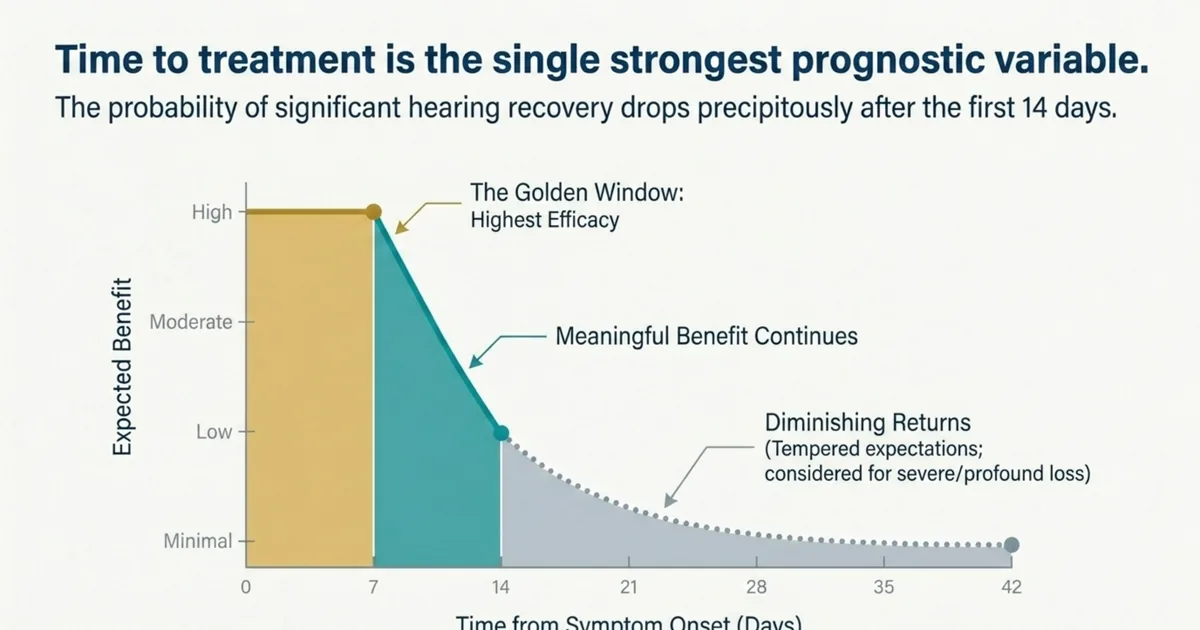
Refer promptly for hyperbaric and ENT assessment when a patient presents with idiopathic sudden sensorineural hearing loss, defined as a rapid loss of hearing of 30 decibels or more across three or more contiguous audiometric frequencies, occurring over 72 hours or less, with no identifiable cause on initial evaluation. The decision to refer should be made as soon as the diagnosis is suspected, because time from onset to treatment is the single strongest prognostic variable.
Refer with particular urgency when the patient has:
- Recent onset within the treatment window. Outcomes are best when HBOT begins within the first 7 days of symptom onset, and the effective window extends to roughly 14 days. Benefit diminishes after 14 days, although Canadian programmes may still offer HBOT for severe or profound losses up to about 6 weeks with appropriately tempered expectations.
- Severe or profound loss at presentation (61 to 80 decibels, or greater than 80 decibels). Severity at presentation is the second strongest prognostic variable, and the larger treatment effects are seen in this group.
- Failure of, or contraindication to, first-line corticosteroids. HBOT is used adjunctively alongside corticosteroid therapy rather than as a delayed salvage option, so it should be considered concurrently rather than after a corticosteroid trial has failed.
- Associated tinnitus or vertigo. These accompany a substantial proportion of cases and often improve in parallel with hearing recovery.
Do not delay referral while awaiting full audiometric workup if the clinical picture is clear. The window is short, and an accepting programme can complete audiometry as part of the consultation.
Assessing the patient before referral
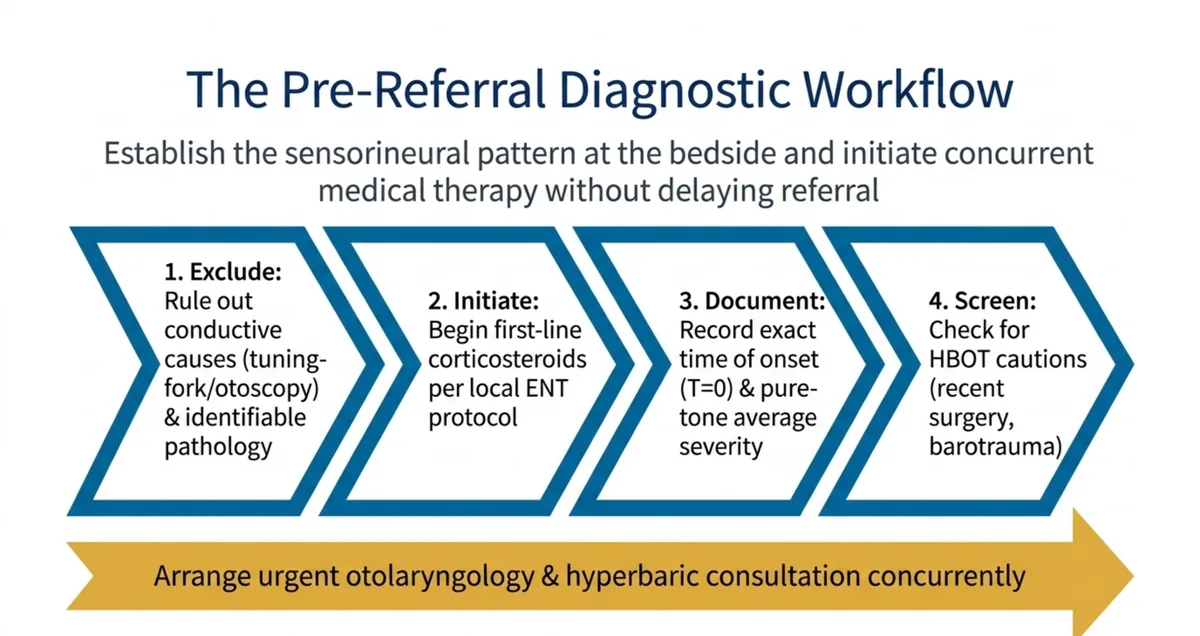
While arranging hyperbaric and otolaryngology assessment, the referring clinician should:
- Confirm the sensorineural pattern and exclude a conductive cause at the bedside (for example, with tuning-fork tests and otoscopy to rule out cerumen impaction or middle-ear effusion). Formal pure-tone audiometry establishes the baseline against which treatment response is judged.
- Begin first-line corticosteroid therapy without waiting for the hyperbaric consultation, using high-dose oral or intratympanic corticosteroids per local ENT protocol. HBOT is adjunctive to this therapy, not a substitute for it.
- Document the exact time of onset and the trajectory since, because the time from onset directly determines expected benefit.
- Record the severity at presentation (the pure-tone average and affected frequencies) and any associated symptoms such as tinnitus, vertigo, or aural fullness.
- Screen for HBOT cautions that may need concurrent management, particularly recent middle-ear or sinus surgery, severe ear barotrauma, or significant bullous lung disease.
- Exclude identifiable causes that would change management (for example, retrocochlear pathology, recent ototoxic exposure, or acoustic trauma); the diagnosis is idiopathic by definition.
What the evidence supports
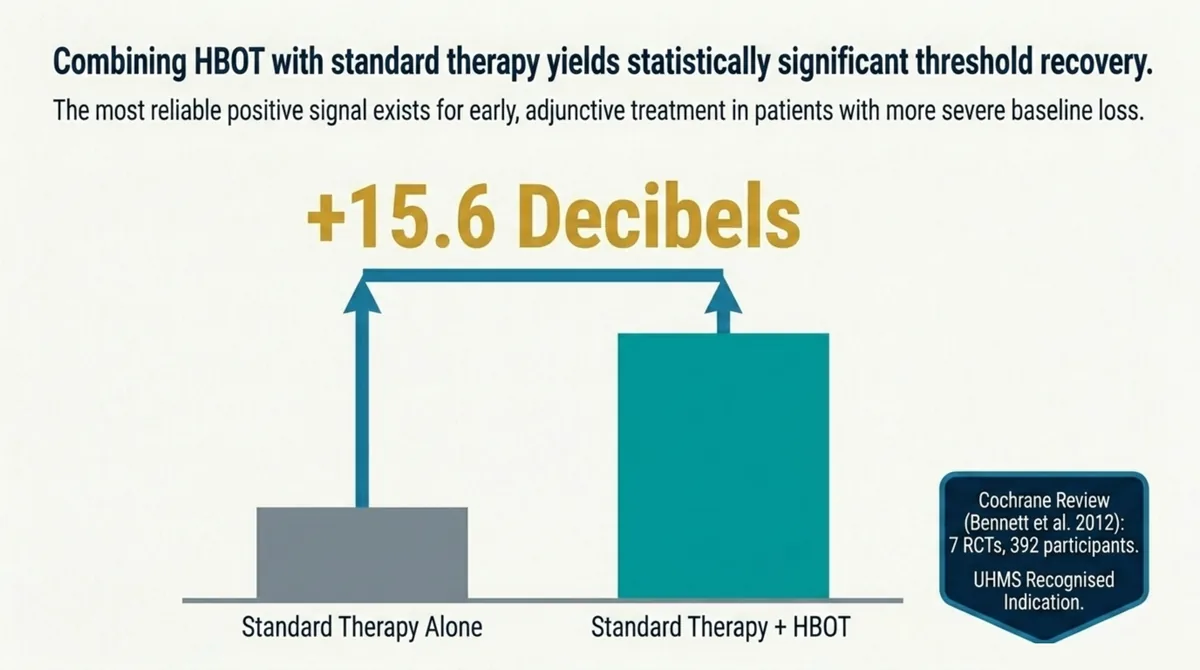
The reference evidence is the Cochrane review (Bennett et al. 2012, 7 RCTs, 392 participants), which found that HBOT combined with standard therapy improved the absolute pure-tone average by 15.6 decibels and was associated with a higher rate of hearing improvement compared with standard therapy alone. The Cochrane authors noted that, while hearing improved significantly, the clinical significance of the change remained uncertain, and the benefit was concentrated in patients treated within 14 days of onset. On this evidence base, the Undersea and Hyperbaric Medical Society approved ISSNHL as the 14th recognised hyperbaric indication in 2011, carried into its indications manual in 2014 and forward through the current edition, with a strong level-of-evidence rating.
Trial-level data are broadly consistent with this pooled result. Across Lamm et al. and subsequent trials, HBOT plus corticosteroids tended to outperform corticosteroids alone in improving pure-tone thresholds and word-recognition scores, with the larger effects in patients who had severe (61 to 80 dB) or profound (greater than 80 dB) hearing loss at presentation. Two prognostic variables emerge consistently across studies: time from onset to treatment (the strongest single predictor) and severity at presentation (the second strongest).
The mechanistic rationale is well established. The cochlea has a high metabolic demand and a tenuous end-arterial blood supply, and ISSNHL is associated with cochlear hypoxia. Hyperbaric oxygen raises the plasma oxygen content 10- to 15-fold, allowing oxygen to dissolve directly into the perilymph and endolymph and reach the hair cells even where the vascular supply is compromised. Hyperbaric oxygen is also thought to attenuate the inflammatory cascade, reduce neutrophil adhesion to cochlear microvascular endothelium, and limit lipid peroxidation in hair cells.
The evidence is not without limits. The constituent trials are small and clinically heterogeneous, and the most reliable positive signal is for early, adjunctive treatment in patients with more severe loss. There is no robust evidence that HBOT reverses long-established hearing loss, which is why the treatment window is central to the referral decision. Further detail on the indication is available on the sudden sensorineural hearing loss condition page.
Clinical translation
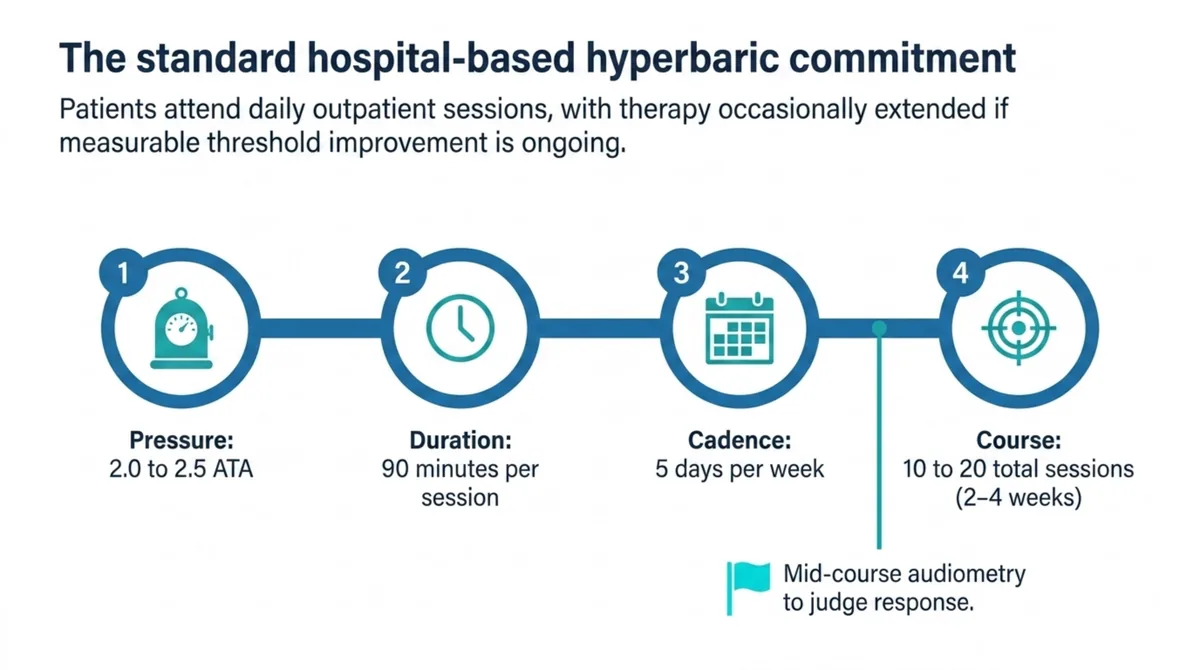
Refer early, and refer alongside corticosteroids rather than after them. The benefit signal is strongest within the first 7 days and remains meaningful to about 14 days, so the referral should be made as soon as ISSNHL is suspected rather than after a corticosteroid trial has been judged a failure. A standard course runs at 2.0 to 2.5 ATA for 90 minutes per session, five days per week, for 10 to 20 total sessions over roughly two to four weeks, occasionally extended where improvement is still continuing. Responders typically show measurable improvement in pure-tone thresholds over the course of treatment, with mid-course audiometry (around session 10) used to judge response. When in doubt, especially with severe or profound loss or a patient still inside the treatment window, contact the hyperbaric team.
The Canadian referral pathway
ISSNHL is treated as a time-sensitive elective indication at Canadian hospital-based hyperbaric programmes and is covered by provincial health insurance with physician referral. Because of the short treatment window, most programmes prioritise ISSNHL referrals for prompt consultation, with treatment beginning as soon as the consultation confirms suitability. Patients should also have urgent otolaryngology evaluation in parallel.
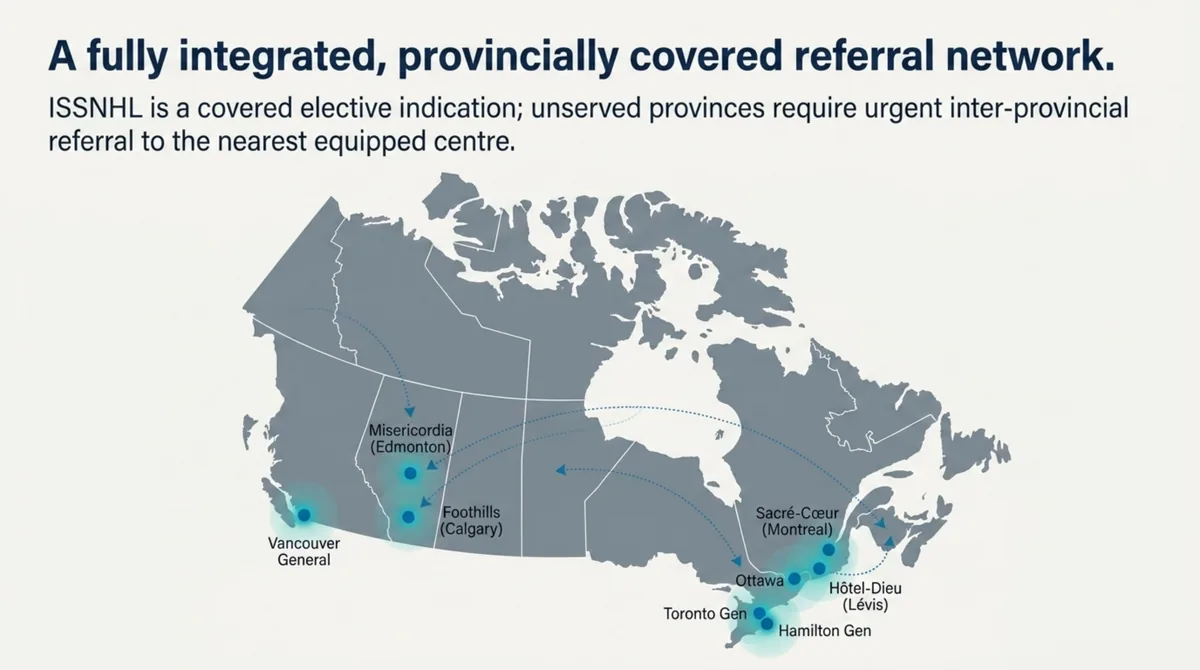
- Ontario: refer to the Toronto General Hospital (UHN), Hamilton General Hospital, or The Ottawa Hospital programmes; covered under OHIP.
- British Columbia: route to Vancouver General Hospital (Leon Judah Blackmore Pavilion), the hospital chamber for the province; covered under MSP.
- Alberta: route to Misericordia Community Hospital (Edmonton) or Foothills Medical Centre / Arthur J.E. Child Comprehensive Cancer Centre (Calgary); covered by Alberta Health.
- Quebec: RAMQ covers Hôpital du Sacré-Cœur de Montréal and Hôtel-Dieu de Lévis.
- Provinces and territories without an in-province hospital programme (Manitoba, New Brunswick, PEI, Yukon, NWT, Nunavut): inter-provincial referral to the nearest chamber, most commonly Misericordia Edmonton or the Ontario programmes. Given the time-sensitivity, arrange this referral without delay.
Contraindications and cautions
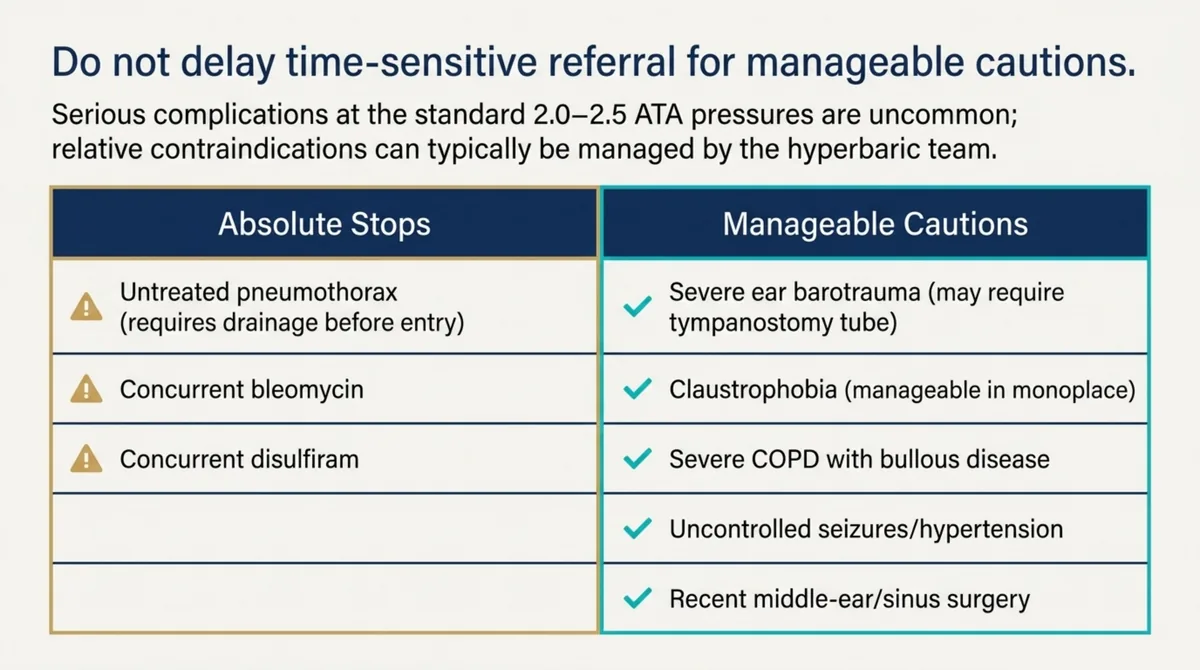
The only absolute contraindication relevant in this setting is an untreated pneumothorax, which must be drained before chamber entry. Concurrent bleomycin and concurrent disulfiram are also absolute contraindications. Relative contraindications include severe COPD with bullous lung disease, an uncontrolled seizure disorder, claustrophobia (often manageable in a monoplace chamber), recent middle-ear or sinus surgery, uncontrolled hypertension, and severe ear barotrauma at presentation, which may require a tympanostomy tube before HBOT. Because ISSNHL is time-sensitive, treatment should not be delayed for minor relative contraindications that can be managed concurrently. Serious complications are uncommon at the 2.0 to 2.5 ATA pressures used for ISSNHL; the most common adverse effect is middle-ear barotrauma during pressurisation, managed with pressure-equalisation techniques, and a temporary refractive shift toward near-sightedness that usually reverses over the weeks to months after treatment stops.
How to use the research list below
The list contains every sudden sensorineural hearing loss study in the Canada Hyperbarics database that was published in 2020 or later and has a freely available full-text version, each linked directly to that full text. Paywalled and abstract-only studies are excluded, and retracted studies are removed. This is a reference list, not a set of summaries. Counts and the open-access set refresh each quarter.
Open-access research, 2020 to present
69 studies with a free full-text version, grouped by year, newest first. Each entry links to the full text. The set refreshes each quarter; retracted and paywalled studies are excluded.
202610 studies
- Abdalkarim M et al. Hyperbaric Oxygen Therapy for Sensorineural Hearing Loss from Streptococcus pneumoniae Meningitis: A Case Report. Avicenna J Med. Full text (Unpaywall) ›
- Šimunjak T et al. Severe Bilateral Sudden Sensorineural Hearing Loss Following Mild COVID-19 Infection Requiring Cochlear Implantation: A Case Report. Clin Case Rep. Full text (Unpaywall) ›
- Betyna-Białek M et al. The impact of hyperbaric therapy on cognitive functions in patients treated for idiopathic sudden hearing loss or hard-to-heal chronic wounds. Sci Rep. Full text (Unpaywall) ›
- Xie S et al. Impact of hyperbaric oxygen as initial treatment on idiopathic sudden sensorineural hearing loss prognosis: a propensity scores matching analysis. Braz J Otorhinolaryngol. Full text (Unpaywall) ›
- Han S et al. Semicircular canal dysfunction in profound sudden sensorineural hearing loss and its prognostic value: implications for the proper indication of hyperbaric oxygen therapy. Sci Rep. Full text (Unpaywall) ›
- Chin CS et al. Hyperbaric Oxygen Therapy for Idiopathic Sudden Sensorineural Hearing Loss: Factors Affecting Benefits of Earlier Start and Longer Treatment Duration. Diagnostics (Basel, Switzerland). Full text (Unpaywall) ›
- Li H et al. Efficacy of the Additional Effect of Stellate Ganglion Block in Combination of Intratympanic Steroid and Hyperbaric Oxygen Therapy for Refractory Sudden Sensorineural Hearing Loss. J Int Adv Otol. Full text (Unpaywall) ›
- Gupta DK et al. Role of hyperbaric oxygen therapy in idiopathic sudden sensorineural hearing loss management: A multicentre experience. Medical journal, Armed Forces India. Full text (Unpaywall) ›
- Gur I et al. ''Comparing the effectiveness of the combination of hyperbaric oxygen therapy and systemic glucocorticoids in the treatment of sensorineural hearing loss resulting from shooting noise versus blast injury''. Hearing research. Full text (Unpaywall) ›
- Ahn J Dexamethasone palmitate: A promising intratympanic treatment option for severe sudden hearing loss. Am J Otolaryngol. Full text (Unpaywall) ›
202512 studies
- Zheng Q et al. Dynamic Changes in Free Triiodothyronine (FT3) and Their Correlation with Hearing Recovery in Sudden Sensorineural Hearing Loss: Clinical Implications. Journal of otology. Full text (Unpaywall) ›
- Sun Y et al. Hyperbaric oxygen therapy for sudden sensorineural hearing loss (Review). Molecular medicine reports. Full text (Unpaywall) ›
- Newth A et al. Hyperbaric oxygen therapy for acute idiopathic sudden sensorineural hearing loss; a systematic review with meta-analysis. Diving Hyperb Med. Full text (Unpaywall) ›
- Zhi L et al. Effect of corticosteroid-based combination therapy on sudden deafness: a retrospective study. Am J Otolaryngol. Full text (Unpaywall) ›
- Lu Y et al. Electroacupuncture for Sudden Sensorineural Hearing Loss: A Case Report. Medical acupuncture. Full text (Unpaywall) ›
- Tan Z et al. Analysis of the positive influence of hyperbaric oxygen therapy on the prognosis and hearing control of patients with noise-induced hearing loss. Noise Health. Full text (Unpaywall) ›
- Demir N et al. Impact of a single session of hyperbaric oxygen therapy on the healthy retina. Frontiers in ophthalmology. Full text (Unpaywall) ›
- Spiegel JL et al. Adjunctive Hyperbaric Oxygen Therapy or Intratympanic Steroids in Sudden Sensorineural Hearing Loss?. The Laryngoscope. Full text (Unpaywall) ›
- Koo HB et al. Development of a machine learning model for prognostic prediction of severe sudden sensorineural hearing loss with hyperbaric oxygen therapy. Frontiers in neurology. Full text (Unpaywall) ›
- Chen YC et al. Hyperbaric oxygen therapy improves the effects of systemic steroid therapy for sudden sensorineural hearing loss. Heliyon. Full text (Unpaywall) ›
- Joo HA et al. Impact of Hyperbaric Oxygen Therapy on Recovery in Patients With Sudden Sensorineural Hearing Loss: An Observational Study. Journal of audiology & otology. Full text (Unpaywall) ›
- Rodríguez-Izquierdo C et al. Current Role of the Nonsteroid Treatment of Idiopathic Sudden Sensorineural Hearing Loss (ISSNHL): A Narrative Review. Journal of clinical medicine. Full text (Unpaywall) ›
202416 studies
- Chen J et al. Management of sudden sensorineural hearing loss: A time-critical diagnosis. Aust J Gen Pract. Full text (Unpaywall) ›
- Sanda N et al. Clinical impact of hyperbaric oxygen therapy combined with steroid treatment for sudden sensorineural hearing loss: A case-control study. Laryngoscope investigative otolaryngology. Full text (Unpaywall) ›
- Celik A et al. Treatment effectiveness according to frequencies in patients with sudden sensorineural hearing loss. Cir Cir. Full text (Unpaywall) ›
- Rozbicki P et al. Assessing the Effectiveness of Different Hyperbaric Oxygen Treatment Methods in Patients with Sudden Sensorineural Hearing Loss. Audiology research. Full text (Unpaywall) ›
- Franz L et al. Pneumo-Membranous Labyrinth After Hyperbaric Oxygen Therapy for Sudden Sensorineural Hearing Loss. Laryngoscope. Full text (Unpaywall) ›
- Chuang KF et al. Bilateral sudden sensorineural hearing loss in patient with Behçet disease. Ear, nose, & throat journal. Full text (Unpaywall) ›
- Choi Y et al. The therapeutic effect of hyperbaric oxygen therapy in patients with severe to profound idiopathic sudden sensorineural hearing loss. Sci Rep. Full text (Unpaywall) ›
- Caragli V et al. Prognostic Factors in Idiopathic Sudden Sensorineural Hearing Loss: The Experience of Two Audiology Tertiary Referral Centres. Medicina (Kaunas). Full text (Unpaywall) ›
- Chrysouli K et al. The First Cases of Sudden Sensorineural Hearing Loss Post Coronavirus Disease in Children. Journal of audiology & otology. Full text (Unpaywall) ›
- Laupland B et al. Hyperbaric oxygen therapy for idiopathic sudden sensorineural hearing loss: a cohort study of 10 versus more than 10 treatments. Diving Hyperb Med. Full text (Unpaywall) ›
- Catty J et al. Acoustic emission, an innovative diagnosis tool for therapeutic hyperbaric chambers: or how to requalify safely using pneumatic pressure test. Diving Hyperb Med. Full text (Unpaywall) ›
- Pincelli T et al. Sudden Sensorineural Hearing Loss in Patient Incidental to Treatment With Hyaluronic Acid Filler. Aesthetic surgery journal. Open forum. Full text (Unpaywall) ›
- Hu Y et al. The role of hyperbaric oxygen in idiopathic sudden sensorineural hearing loss. Med Gas Res. Full text (Unpaywall) ›
- Yao Y et al. Analysis of Therapeutic Options for Noise-Induced Hearing Loss: Retroauricular Injection of Methylprednisolone Sodium Succinate Combined with Hyperbaric Oxygenation. Noise Health. Full text (Unpaywall) ›
- Liu X et al. Efficacy of hyperbaric oxygen therapy in treating sudden sensorineural hearing loss: an umbrella review. Frontiers in neurology. Full text (Unpaywall) ›
- Siewiera J et al. Levels of small extracellular vesicles in patients treated with hyperbaric oxygenation. Archives of medical science : AMS. Full text (Unpaywall) ›
20235 studies
- Mariani C et al. Idiopathic sudden sensorineural hearing loss: effectiveness of salvage treatment with intratympanic dexamethasone or hyperbaric oxygen therapy in addition to systemic steroids. Frontiers in neurology. Full text (Unpaywall) ›
- Wang HH et al. Effect of the Timing of Hyperbaric Oxygen Therapy on the Prognosis of Patients with Idiopathic Sudden Sensorineural Hearing Loss. Biomedicines. Full text (Unpaywall) ›
- Yuan Z et al. Case report: Bilateral sudden deafness in acute middle cerebellar peduncle infarction: central or peripheral?. Frontiers in medicine. Full text (Unpaywall) ›
- Acikgoz GG et al. The efficacy of nurse-led hyperbaric oxygen therapy in improving the quality of life in patients with sudden hearing loss. Nigerian journal of clinical practice. Full text (Unpaywall) ›
- Skarzynski PH et al. Hyperbaric oxygen therapy as an adjunct to corticosteroid treatment in sudden sensorineural hearing loss: a retrospective study. Frontiers in neurology. Full text (Unpaywall) ›
20229 studies
- Včeva A et al. Pretreatment hearing grades and hearing recovery outcomes after primary hyperbaric oxygen treatment in patients with idiopathic sudden sensorineural hearing loss. Diving and hyperbaric medicine. Full text (Unpaywall) ›
- Huo Z et al. Prognostic factors for hearing outcomes in patients that undergo adjuvant hyperbaric oxygen therapy for sudden sensorineural hearing loss. Laryngoscope investigative otolaryngology. Full text (Unpaywall) ›
- Feng T et al. Effects of alprostadil combined with hyperbaric oxygen on hearing recovery and hemorheology in patients with sudden sensorineural hearing loss and analysis of related influencing factors. Experimental and therapeutic medicine. Full text (Unpaywall) ›
- Zhang Y et al. Hyperbaric Oxygen Therapy Promotes Hearing Gain with Increases in Serum IGF-1 and HSP70 in Patients with Idiopathic Sudden Sensorineural Hearing Loss. Evidence-based complementary and alternative medicine : eCAM. Full text (Unpaywall) ›
- Ahmed MM et al. Noise-Induced Hearing Loss Treatment: Systematic Review and Meta-analysis. Military medicine. Full text (Unpaywall) ›
- Okuda H et al. Serum Fibrinogen Level and Cytokine Production as Prognostic Biomarkers for Idiopathic Sudden Sensorineural Hearing Loss. Otology & neurotology : official publication of the American Otological Society, American Neurotology Society [and] European Academy of Otology and Neurotology. Full text (Unpaywall) ›
- Cavaliere M et al. Combination of Hyperbaric Oxygen Therapy and Oral Steroids for the Treatment of Sudden Sensorineural Hearing Loss: Early or Late?. Medicina (Kaunas, Lithuania). Full text (Unpaywall) ›
- Conte G et al. Prognostic Value of Early Magnetic Resonance Imaging Patterns in Sudden Hearing Loss. Audiology & neuro-otology. Full text (Unpaywall) ›
- Chin CS et al. Idiopathic Sudden Sensorineural Hearing Loss: Is Hyperbaric Oxygen Treatment the Sooner and Longer, the Better?. Journal of personalized medicine. Full text (Unpaywall) ›
20218 studies
- Çiçek T et al. Evaluation of Neutrophil/Lymphocyte and Platelet/Lymphocyte Ratios in Sudden Sensorineural Hearing Loss and Relationship with Hyperbaric Oxygen Therapy. The journal of international advanced otology. Full text (Unpaywall) ›
- Paprocki J et al. Association between Vitamin D Supplements, Oxidative Stress Biomarkers, and Hyperbaric Therapy in Patients with Sudden Sensorineural Hearing Loss. Oxidative medicine and cellular longevity. Full text (Unpaywall) ›
- Jrad M et al. Intracochlear Hemorrhage: A Rare Cause of Sudden Sensorineural Hearing Loss. Case reports in radiology. Full text (Unpaywall) ›
- Ahn Y et al. The Effectiveness of Hyperbaric Oxygen Therapy in Severe Idiopathic Sudden Sensorineural Hearing Loss. J Int Adv Otol. Full text (Unpaywall) ›
- Sherlock S et al. Hyperbaric oxygen for sudden hearing loss: Influence of international guidelines on practice in Australia and New Zealand. Diving Hyperb Med. Full text (Unpaywall) ›
- Ata N et al. Effects of Oxygen Therapies in Experimental Acute Acoustic Trauma. The journal of international advanced otology. Full text (Unpaywall) ›
- Holy R et al. The Use of Hyperbaric Oxygen Therapy and Corticosteroid Therapy in Acute Acoustic Trauma: 15 Years' Experience at the Czech Military Health Service. International journal of environmental research and public health. Full text (Unpaywall) ›
- Bayoumy AB et al. It's all about timing, early treatment with hyperbaric oxygen therapy and corticosteroids is essential in acute acoustic trauma. Journal of otology. Full text (Unpaywall) ›
20209 studies
- Eski E et al. Comparing the Efficiencies of Hyperbaric Oxygen Therapy and Intratympanic Steroid Treatment for Sudden Hearing Loss. The journal of international advanced otology. Full text (Unpaywall) ›
- Olex-Zarychta D Hyperbaric Oxygenation as Adjunctive Therapy in the Treatment of Sudden Sensorineural Hearing Loss. International journal of molecular sciences. Full text (Unpaywall) ›
- Kayalı Dinç AS et al. Is Salvage Hyperbaric Oxygen Therapy Effective for Sudden Sensorineural Hearing Loss in Patients with Non-response to Corticostreoid Treatment?. Cureus. Full text (Unpaywall) ›
- Yücel A et al. Comparison of Steroid Treatment with and without Hyperbaric Oxygen Therapy for Idiopathic Sudden Sensorineural Hearing Loss. Journal of audiology & otology. Full text (Unpaywall) ›
- Mirasoglu B et al. Sphenoid sinus mucocele as an unusual differential diagnosis in diving injuries. Diving and hyperbaric medicine. Full text (Unpaywall) ›
- Almutairi N et al. The Effectiveness of Hyperbaric Oxygen Therapy as Salvage Treatment for Sudden Sensorineural Hearing Loss: A Retrospective Study. Cureus. Full text (Unpaywall) ›
- Bayoumy AB et al. Effect of hyperbaric oxygen therapy and corticosteroid therapy in military personnel with acute acoustic trauma. BMJ military health. Full text (Unpaywall) ›
- Castellucci A et al. Case Report: Filling Defect in Posterior Semicircular Canal on MRI With Balanced Steady-State Gradient-Echo Sequences After Labyrinthine Ischemia in the Common Cochlear Artery Territory as an Early Sign of Fibrosis. Frontiers in neurology. Full text (Unpaywall) ›
- Keseroğlu K et al. Addition of intratympanic steroid or hyperbaric oxygen treatment to systemic steroid treatment in sudden idiopathic sensorineural hearing loss treatment, and long-term results of salvage treatment. Turkish journal of medical sciences. Full text (Unpaywall) ›