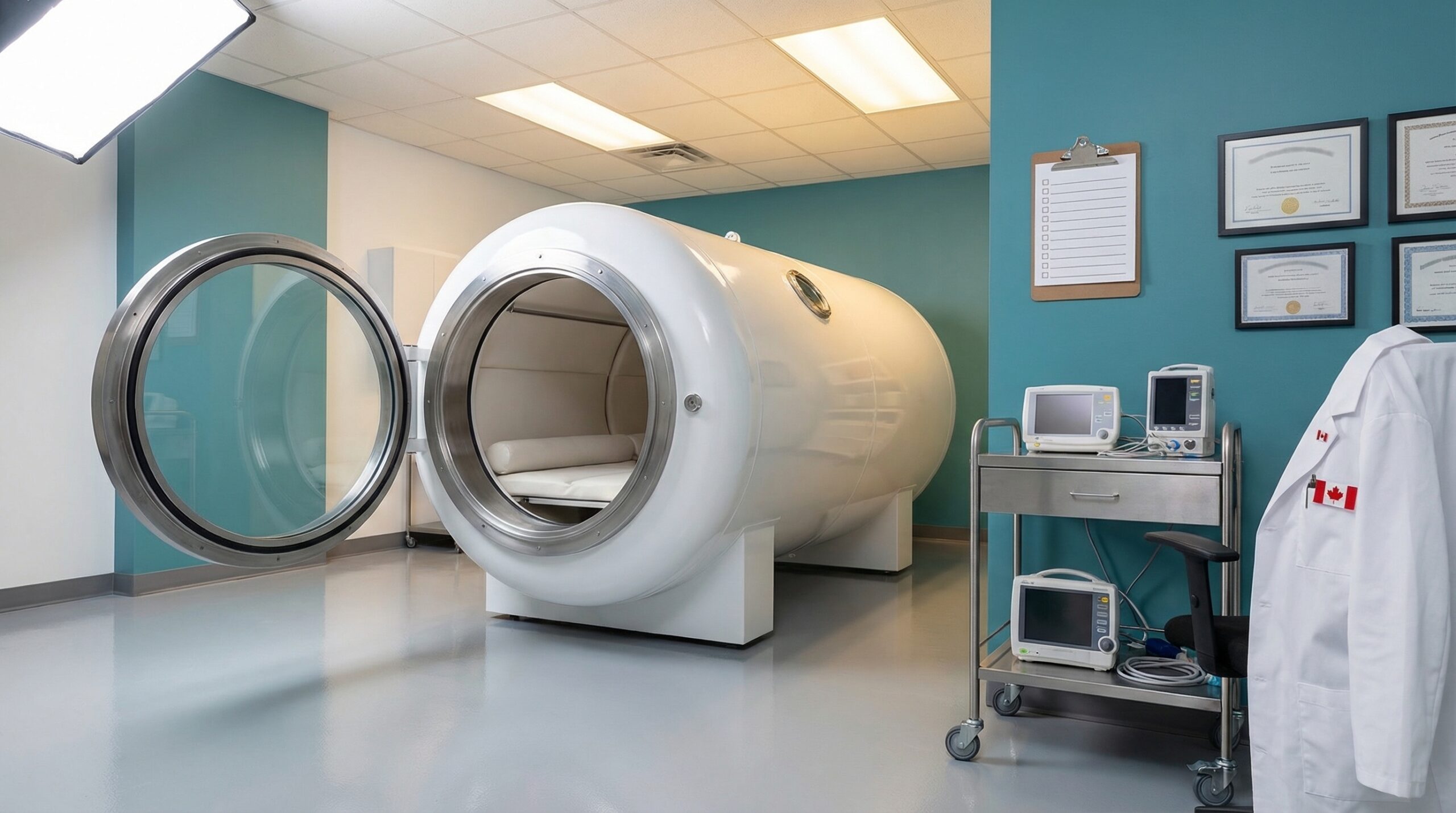
TL;DR: Canadian hyperbaric clinics must comply with Health Canada medical device regulations, the CSA Z275.1 standard for hyperbaric facilities, and CUHMA practice guidelines. This step-by-step checklist covers chamber licensing, staff qualifications, safety protocols, documentation requirements, and accreditation pathways to help clinic owners and operators stay compliant and inspection-ready.
Health Canada compliance for hyperbaric clinics is a multi-layered regulatory requirement covering medical device licensing, oxygen quality standards, facility safety, and provincial accreditation. Health Canada compliance for hyperbaric clinics is a multi-layered process that involves federal medical device regulations, national safety standards, and professional practice guidelines. Whether you are opening a new hyperbaric facility or auditing an existing one, understanding these requirements is essential for patient safety and legal operation. Canada Hyperbarics has compiled this step-by-step checklist to help clinic owners navigate every regulatory layer with confidence.
What Are the Core Regulatory Requirements for Hyperbaric Clinics in Canada?
Hyperbaric oxygen therapy (HBOT) clinics in Canada must satisfy three overlapping regulatory frameworks: Health Canada’s Medical Devices Regulations (SOR/98-282), the CSA Z275.1 standard for hyperbaric facility operations, and the CUHMA Guidelines to the Practice of Clinical Hyperbaric Medicine. Provincial health ministries may impose additional licensing conditions depending on your jurisdiction.
Hyperbaric chambers are classified as Class III medical devices under Health Canada’s risk-based classification system, meaning they require a medical device licence before they can be sold or imported into Canada. Clinic owners must ensure their chamber holds a valid Health Canada medical device licence number, which can be verified through the Medical Devices Active Licence Listing (MDALL) database.
Step 1: Verify Your Chamber’s Medical Device Licence
- Check the MDALL database. Search for your chamber manufacturer and model to confirm an active licence exists. Every chamber used for clinical HBOT in Canada must carry a valid Health Canada medical device licence.
- Confirm the licence class. Clinical hyperbaric chambers fall under Class III. The licence must be current – not expired, suspended, or cancelled.
- Retain documentation. Keep a copy of the manufacturer’s device licence certificate, the device’s intended use statement, and any conditions of licence on file at your facility.
- Report changes. If you modify, relocate, or replace a chamber, you may need to notify Health Canada or your provincial regulator. Modifications to a Class III device can trigger a new licence application.
Step 2: Meet CSA Z275.1 Facility Standards
CSA Z275.1 is the National Standard of Canada for hyperbaric operations. Now in its sixth edition (CSA Z275.1:23), this standard establishes minimum requirements for the design, construction, operation, maintenance, and testing of all hyperbaric chambers used in clinical, research, and training settings.
- Chamber design and construction. Your chamber must meet or exceed the engineering and pressure vessel requirements outlined in CSA Z275.1, which coordinates with the ASME PVHO-1 international standard for pressure vessels for human occupancy.
- Fire safety. The oxygen-enriched environment inside hyperbaric chambers creates a significant fire risk. CSA Z275.1 requires strict controls on materials brought into the chamber, fire suppression systems, and a comprehensive fire safety plan reviewed and drilled regularly.
- Maintenance and testing schedule. Establish a documented maintenance programme that includes regular pressure testing, valve inspections, oxygen system checks, and communication system verification as specified in CSA Z275.1.
- Emergency procedures. Your facility must have written emergency protocols for rapid decompression, fire, medical emergencies, and equipment failure – all accessible to staff and reviewed at least annually.
Step 3: Implement CUHMA Practice Guidelines
The Canadian Undersea and Hyperbaric Medical Association (CUHMA) publishes practice guidelines that define staff qualifications, clinical protocols, and quality assurance requirements for Canadian hyperbaric facilities.
- Medical director requirements. Your facility must be overseen by a physician who holds a Level 2 or Level 3 hyperbaric medicine qualification and is licensed to practise in your province. CUHMA defines these training levels in its Standards of Practice Guidelines.
- Safety director. A trained safety director must oversee daily chamber operations, staff training, and emergency preparedness. This role is distinct from the medical director.
- Chamber operator credentials. All chamber operators must complete a recognised hyperbaric safety course. CUHMA and the Undersea and Hyperbaric Medical Society (UHMS) both offer accredited training programmes.
- Patient screening protocols. Implement standardised pre-treatment screening for contraindications including untreated pneumothorax, certain chemotherapy agents, and specific cardiac conditions. Document every screening result.
Step 4: Establish a Safety and Adverse Event Monitoring System
According to research retrieved from PubMed, HBOT carries a low but non-trivial rate of adverse events that proper protocols can further minimise. A 15-year retrospective review of 3,164 HBOT exposures found that middle ear barotrauma occurred in only 5 treatments and no central nervous system oxygen toxicity events were recorded when appropriate precautions were followed (Aydin, 2023). A separate 10-year retrospective study of patients treated for radiation-induced proctitis (151 treated, 88 included in the final analysis) found reversible ear barotrauma in 18 patients (20.5% of those analysed), with the number of HBOT sessions identified as a predictor of side effects (Monteiro et al., 2023).
- Incident reporting. Establish a system for documenting and reporting adverse events – including barotrauma, oxygen toxicity symptoms, claustrophobia episodes, and equipment malfunctions. Health Canada requires mandatory reporting of serious medical device incidents.
- Adverse event tracking. Maintain a log of all adverse events with dates, patient details, event descriptions, actions taken, and outcomes. Review this log quarterly to identify trends.
- Mandatory problem reporting. Under the Medical Devices Regulations, healthcare facilities must report any incident where a medical device may have caused or contributed to a serious injury or death. Use Health Canada’s Medical Device Problem Reporting Form for mandatory reports.
Step 5: Prepare Documentation for Inspections
Provincial health inspectors and accreditation bodies expect to see a comprehensive paper trail. Prepare these documents:
- Chamber maintenance logs – dated entries for every inspection, test, and repair
- Staff credential records – current licences, certifications, and training completion dates for all clinical and operator staff
- Patient screening and treatment records – standardised forms with physician sign-off
- Fire safety plans and drill records – at least two fire drills per year, documented
- Adverse event log – complete, current, and reviewed quarterly
- Equipment calibration records – oxygen analysers, pressure gauges, and monitoring equipment
- Insurance documentation – professional liability and facility insurance
Step 6: Pursue CUHMA or UHMS Accreditation
While not legally mandatory in all provinces, facility accreditation from CUHMA or UHMS demonstrates a commitment to the highest safety and quality standards. Many provincial health plans require accreditation as a condition of reimbursement eligibility.
- Conduct a self-assessment. Review your facility against CUHMA’s published standards and identify gaps before applying.
- Complete the application. CUHMA’s accreditation programme evaluates your facility, equipment, staff qualifications, and training programmes.
- Prepare for the site visit. An accreditation team will inspect your facility, review documentation, interview staff, and observe operations.
- Maintain accreditation. Accreditation requires ongoing compliance, continuing education, and periodic re-evaluation.
A 2024 meta-analysis of 51 randomised controlled trials across multiple adjuvant wound therapies – including HBOT – highlighted that evidence-based guideline development depends on high-quality clinical data from properly regulated facilities (Monami et al., 2024). Well-regulated clinics produce better patient outcomes and contribute to the growing evidence base for HBOT.
Frequently Asked Questions
Is a Health Canada medical device licence required for all hyperbaric chambers?
Yes. Any hyperbaric chamber used for clinical treatment in Canada must hold a valid Health Canada Class III medical device licence. Operating without one is a violation of the Medical Devices Regulations.
What is CSA Z275.1 and does it apply to my clinic?
CSA Z275.1 is the National Standard of Canada for hyperbaric facility operations. It applies to all hyperbaric chambers that subject humans to pressures exceeding 1 atmosphere absolute, including clinical, research, and training chambers. Most provinces reference this standard in their occupational health and safety regulations.
How often should we conduct fire drills in a hyperbaric facility?
CSA Z275.1 and CUHMA guidelines recommend conducting documented fire drills at least twice per year. Many accreditation programmes expect quarterly drills. All drills should be documented with participants, scenarios, and outcomes recorded.
What qualifications does a hyperbaric medical director need?
Under CUHMA guidelines, a clinical hyperbaric medical director must hold a Level 2 or Level 3 hyperbaric medicine qualification and be licensed to practise medicine in the province where the facility operates.
Is CUHMA or UHMS accreditation mandatory?
Accreditation is not legally required in all provinces, but it is increasingly expected by provincial health plans, insurance providers, and referring physicians. Some provinces require accreditation for facilities seeking public health plan reimbursement for HBOT services.
How do I report a medical device incident to Health Canada?
Healthcare facilities must report serious medical device incidents using Health Canada’s Medical Device Problem Reporting Form. Reports should be submitted as soon as possible after the event, and the facility should also conduct an internal investigation and document corrective actions.
What are the most common adverse events in HBOT?
Based on published research, the most common adverse event is middle ear barotrauma, which is typically mild and reversible. Central nervous system oxygen toxicity is rare when treatment protocols and pressure limits are followed. A large retrospective study found no CNS oxygen toxicity events across 3,164 HBOT exposures when appropriate precautions were maintained (Aydin, 2023).
Does Canada Hyperbarics offer compliance consulting?
Canada Hyperbarics is an informational resource connecting patients, physicians, and clinic owners with authoritative, research-backed information about HBOT in Canada. Visit our clinic directory, research database, and conditions guide for more resources.
Your Next Steps
Staying compliant with Health Canada regulations, CSA Z275.1 standards, and CUHMA guidelines protects your patients, your staff, and your business. Canada Hyperbarics recommends starting with a thorough self-assessment against the checklist above, then addressing any gaps before your next inspection or accreditation review.
Explore our regulatory overview for more information on Health Canada’s recognised indications for HBOT, or browse our research database of thousands of peer-reviewed studies to support your clinical protocols. For condition-specific evidence summaries, visit our conditions guide.
This content is for informational purposes only and does not constitute medical or legal advice. Clinic owners should consult directly with Health Canada, their provincial health authority, and qualified legal counsel regarding specific compliance requirements for their facility.