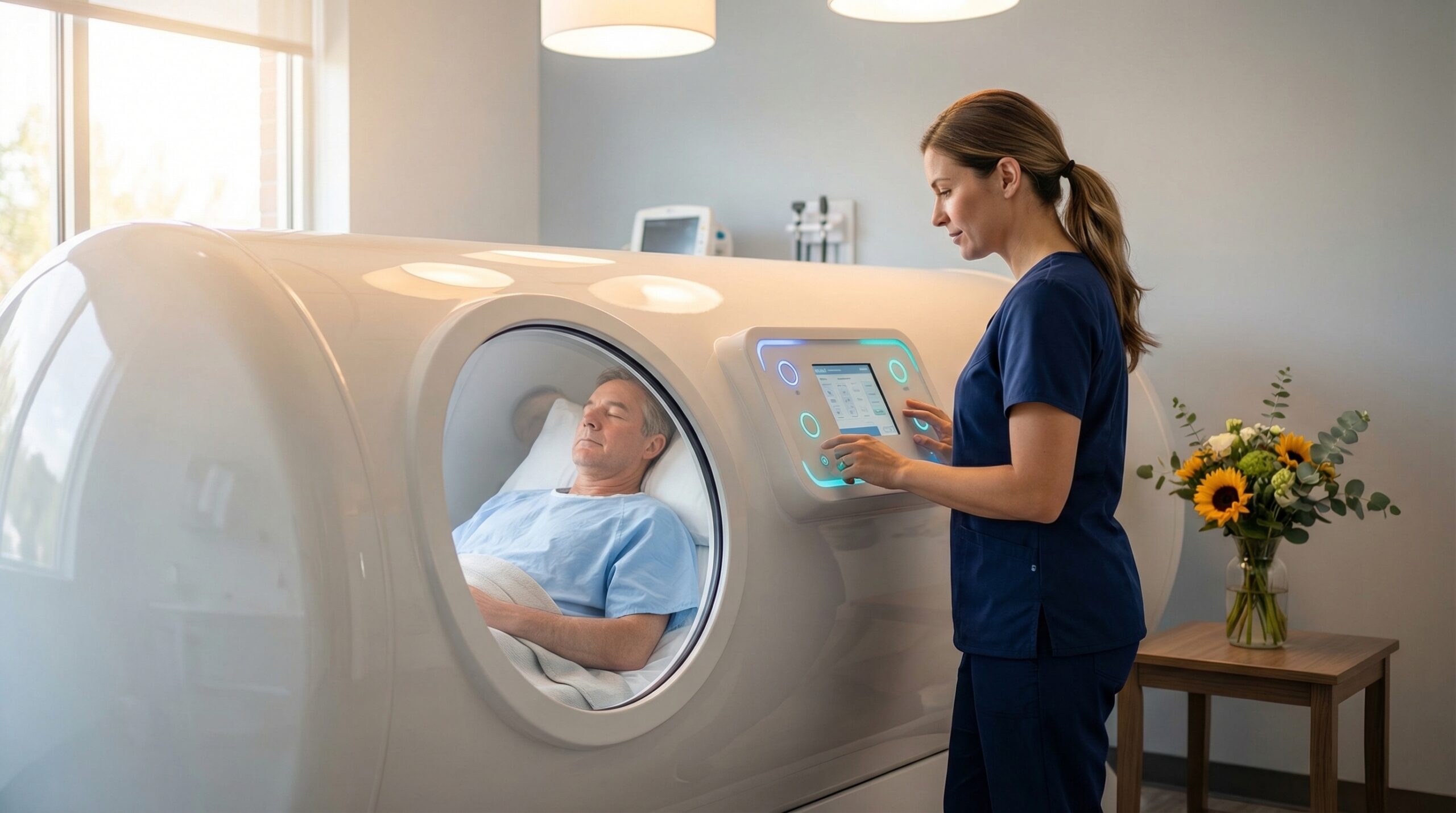
TL;DR: Hyperbaric oxygen therapy (HBOT) is not a cancer treatment itself, but it is recognised under Health Canada’s hyperbaric licensing framework and on the UHMS Indications list for managing delayed radiation injury – one of the most common long-term side effects of cancer treatment. HBOT helps heal tissue damaged by radiation, including osteoradionecrosis, radiation cystitis, and radiation proctitis. Current research suggests HBOT does not promote tumour growth and may even enhance some cancer therapies.
Hyperbaric oxygen therapy (HBOT) is a medical treatment that delivers 100% oxygen at elevated pressure inside a specialised chamber, and it has a complex relationship with cancer care.
If you or a loved one has been treated for cancer, you may have heard about hyperbaric oxygen therapy as a way to manage side effects of radiation. It is natural to have questions – especially about safety, effectiveness, and access in Canada. Hyperbaric oxygen therapy (HBOT) is a medical treatment where patients breathe 100% oxygen inside a pressurised chamber at higher-than-normal atmospheric pressure. This FAQ answers the most common questions Canadian patients ask about HBOT and cancer care, based on the latest published research.
What Is Hyperbaric Oxygen Therapy and How Is It Used in Cancer Care?
Hyperbaric oxygen therapy is a treatment that delivers pure oxygen at increased atmospheric pressure to promote healing in damaged tissues. During a session, you sit or lie inside a sealed chamber while breathing 100% oxygen at 1.5 to 3.0 times normal atmospheric pressure. This dramatically increases the amount of oxygen dissolved in your blood and delivered to injured tissues.
In cancer care, HBOT is primarily used to treat the late side effects of radiation therapy – not cancer itself. Radiation therapy, while effective at destroying tumours, can also damage healthy tissue surrounding the treatment area. This damage sometimes appears months or even years after radiation ends. According to a 2026 review published in CA: A Cancer Journal for Clinicians, HBOT promotes angiogenesis (new blood vessel growth), activates fibroblasts, and supports tissue remodelling in hypoxic environments created by radiation (Dejonckheere et al., 2026).
In Canada, delayed radiation injury is one of the indications on the UHMS Indications list (15th Edition, 2024; maintained by the Undersea and Hyperbaric Medical Society). You can learn more about all recognised conditions on the Canada Hyperbarics conditions page.
Can Hyperbaric Oxygen Therapy Treat Cancer Directly?
No – HBOT is not approved as a standalone cancer treatment in Canada or internationally. It does not replace surgery, chemotherapy, or radiation therapy. Health Canada has not approved HBOT as a primary therapy for any type of cancer.
However, emerging laboratory research suggests HBOT may play an adjunctive (supportive) role alongside conventional cancer treatments. A 2021 narrative review found that hyperbaric oxygen may inhibit tumour tissue growth when used as an adjunctive therapy in glioma (a type of brain tumour) alongside surgery, radiotherapy, and chemotherapy (Xue et al., 2021). More recent preclinical research has shown HBO therapy may help overcome drug resistance in hepatocellular carcinoma (liver cancer) by modulating cellular oxygen pathways (Lin et al., 2025).
These findings are promising but still in early research stages. Patients should never use HBOT as a substitute for proven cancer treatments. Always discuss any complementary therapy with your oncologist first.
What Types of Radiation Injury Does HBOT Treat?
HBOT treats a range of chronic radiation injuries that can develop after cancer treatment. The most common conditions treated include:
- Osteoradionecrosis (ORN) – bone death caused by radiation, most commonly in the jaw after head and neck cancer treatment
- Radiation cystitis – bladder inflammation and bleeding after pelvic radiation (commonly from prostate or cervical cancer treatment)
- Radiation proctitis – rectal inflammation and bleeding after pelvic radiation
- Soft tissue radionecrosis – damage to skin, muscle, and other soft tissues in the radiation field
- Radiation-induced skin fibrosis – thickening and scarring of skin in irradiated areas
- Laryngeal radionecrosis – tissue damage in the voice box after throat cancer treatment
A comprehensive 2026 review in CA: A Cancer Journal for Clinicians evaluated randomised trials and real-world data confirming HBOT’s role in managing these chronic conditions (Dejonckheere et al., 2026). Visit the Canada Hyperbarics research database to explore studies on radiation injury and HBOT.
How Does HBOT Help with Osteoradionecrosis?
Osteoradionecrosis (ORN) is one of the most well-studied indications for HBOT in cancer survivors. ORN occurs when radiation damages blood vessels in bone, reducing oxygen supply and causing the bone to break down. The jaw is the most commonly affected site, particularly after treatment for head and neck cancers.
HBOT works by flooding the damaged tissue with oxygen, which stimulates the growth of new blood vessels and supports bone healing. A 2026 narrative review examining HBOT for dental and oral surgery complications found that HBOT may improve healing outcomes and reduce complication rates in early-stage ORN when used alongside surgery and antibiotics (Wiśniewska et al., 2026).
Treatment typically involves 20 to 40 HBOT sessions before and after any necessary surgical intervention. Early referral is important – the sooner ORN is identified and treated, the better the outcomes.
Can HBOT Help with Radiation Cystitis and Proctitis?
Yes – radiation cystitis (bladder) and radiation proctitis (rectum) are among the most common reasons cancer survivors are referred for HBOT. These conditions cause chronic bleeding, pain, and urinary or bowel difficulties that can significantly affect quality of life.
A 2026 study comparing different HBOT pressures for haemorrhagic radiation cystitis found that patients treated at 2.5 ATA had fewer episodes of gross haematuria (visible blood in urine) within one year compared to those treated at 2.0 ATA (Soriano et al., 2026). Adverse events, however, were more frequent at 2.5 ATA, and the authors call for randomised trials to confirm the optimal treatment pressure. The study involved 93 patients across two clinical sites.
For radiation proctitis, HBOT has been shown to reduce rectal bleeding and improve tissue healing. If you are experiencing bleeding or discomfort months after pelvic radiation, ask your doctor whether HBOT may be appropriate. More information about treatment protocols is available on the Canada Hyperbarics FAQ page.
Will Hyperbaric Oxygen Make My Cancer Grow or Come Back?
This is one of the most common concerns patients have – and current research is reassuring. Multiple studies have investigated whether the increased oxygen from HBOT could stimulate tumour growth, and the evidence does not support this fear.
A 2026 survey of 202 healthcare professionals working in HBOT and oncology found that clinicians generally hold positive attitudes toward HBOT as an adjunctive cancer treatment, with knowledge positively influencing clinical decision-making (Zhou et al., 2026). Preclinical studies have even suggested that HBOT may inhibit tumour growth in certain contexts rather than promote it.
That said, HBOT is contraindicated in some specific situations, including certain untreated cancers. Your hyperbaric physician will review your full medical history and current cancer status before recommending treatment. The Canadian Undersea and Hyperbaric Medical Association (CUHMA) provides clinical guidelines that Canadian practitioners follow.
What Does a Typical HBOT Session Look Like for Cancer Patients?
A typical HBOT session lasts 90 to 120 minutes and is painless. Here is what to expect:
- Preparation: You change into a cotton gown. All electronics, jewellery, and cosmetics containing petroleum are removed for safety.
- Entering the chamber: You lie down or sit inside a monoplace (single-person) or multiplace (group) chamber.
- Pressurisation: The chamber is gradually pressurised. You may feel pressure in your ears, similar to flying in an aeroplane. Staff will teach you equalisation techniques.
- Treatment: You breathe normally while the chamber maintains the prescribed pressure (typically 2.0 to 2.5 ATA). You can rest, listen to music, or watch a screen.
- Depressurisation: The chamber slowly returns to normal pressure over 10 to 15 minutes.
Most radiation injury protocols involve 30 to 40 sessions, typically five days per week. Each clinic may vary slightly in its approach. Visit the Canada Hyperbarics clinic directory to find an accredited facility near you.
Is HBOT Covered by Provincial Health Insurance for Radiation Injuries?
Coverage varies significantly by province. Here is a summary of current coverage for HBOT radiation injury treatment across Canada:
| Province | Health Plan | HBOT Coverage |
|---|---|---|
| Ontario | OHIP | Covered at hospitals and eligible private clinics for 14 recognised indications including delayed radiation injury |
| British Columbia | MSP | Covered at Vancouver General Hospital only; private clinics are not covered by MSP |
| Alberta | AHCIP | Covered at AHS hospital clinics (Misericordia Edmonton and Foothills/AJECCC Calgary) under code 13.99I; private clinics are not covered by AHCIP (CPSA accreditation is a quality standard, not a billing pathway) and charge private out-of-pocket rates |
| Quebec | RAMQ | Hospital-based coverage only; private clinics are not covered by RAMQ |
| Nova Scotia | MSI | Covered at QEII Health Sciences Centre only (several months to over a year wait); private clinics are not covered by MSI |
| Other provinces | Varies | No confirmed provincial coverage for private clinics; check with your provincial health plan |
Many private health insurance plans cover HBOT with a physician’s referral. Check with your insurer about your specific policy. Some clinics also offer payment plans. For detailed province-by-province information, visit the Canada Hyperbarics coverage guide.
How Do I Get a Referral for HBOT After Cancer Treatment?
Most hyperbaric clinics in Canada require a physician referral. Here is the typical process:
- Speak with your oncologist or family doctor about your radiation side effects and ask whether HBOT is appropriate for your condition.
- Your doctor sends a referral to a hyperbaric medicine clinic, including your cancer treatment history, radiation dose records, and current symptoms.
- The hyperbaric physician assesses you for suitability, reviews contraindications, and develops a treatment plan.
- Treatment begins – typically within a few weeks at private clinics, though hospital-based programs may have longer wait times.
If your physician is unfamiliar with HBOT referral pathways, the Canada Hyperbarics regulatory page provides information about recognised indications and accredited clinics across the country.
What Are the Risks or Side Effects of HBOT for Cancer Patients?
HBOT is considered safe when administered by trained professionals in an accredited facility. The most common side effects are mild and temporary:
- Ear and sinus pressure – the most common complaint, manageable with equalisation techniques
- Temporary myopia (nearsightedness) – vision changes that typically resolve within weeks of completing treatment
- Fatigue – some patients feel tired after sessions
- Claustrophobia – can be managed with sedation or multiplace chambers
Rare but serious risks include oxygen toxicity seizures (very rare at treatment pressures) and pneumothorax (collapsed lung) in patients with certain lung conditions. Your hyperbaric physician will screen you for contraindications before starting treatment. Cancer patients taking certain chemotherapy drugs should discuss timing with their oncologist, as some medications may interact with high-oxygen environments.
How Many HBOT Sessions Will I Need for Radiation Injury?
Most radiation injury protocols require 30 to 40 HBOT sessions. The exact number depends on:
- The type and severity of radiation injury – osteoradionecrosis may require more sessions than radiation cystitis
- Whether surgery is planned – pre-operative HBOT (20 sessions) followed by post-operative HBOT (10 sessions) is a common protocol for ORN
- Your individual healing response – your hyperbaric physician will monitor progress and adjust the treatment course
Sessions are typically scheduled five days per week, meaning a full course takes 6 to 8 weeks. Some patients notice improvement within the first two weeks, though the full benefit of HBOT develops over time as new blood vessels grow in the treated tissue.
Where Can I Find a Hyperbaric Clinic in Canada?
Canada has both hospital-based and private hyperbaric clinics across most provinces. Canada Hyperbarics maintains a comprehensive directory of hyperbaric facilities across the country. When choosing a clinic, look for:
- Accreditation by a recognised body
- Physicians trained in hyperbaric medicine – ideally holding the Royal College of Physicians and Surgeons of Canada Diploma in Hyperbaric Medicine or equivalent fellowship training; CUHMA membership is a further positive signal
- Medical-grade chambers – not portable or mild chambers, which cannot reach the pressures needed for radiation injury treatment
- Experience treating radiation injuries – ask how many cancer-related cases the clinic has treated
If you live in a rural or northern area with limited access to hyperbaric facilities, some provincial programs may assist with travel and accommodation costs. Speak with your referring physician or a clinic social worker about available support.
Key Takeaways
- HBOT is an approved treatment for radiation injury – not a cancer cure, but a valuable therapy for managing the late effects of radiation
- Current evidence does not suggest HBOT promotes cancer growth
- Radiation cystitis, proctitis, and osteoradionecrosis are the most common cancer-related conditions treated with HBOT
- Provincial health coverage varies – Ontario offers the broadest access through OHIP
- A physician referral is required at most Canadian clinics
- 30 to 40 sessions is the typical treatment course for radiation injuries
If you or someone you know is dealing with the lasting effects of radiation therapy, hyperbaric oxygen therapy may help. Speak with your oncologist or family physician about whether HBOT is right for your situation, and visit Canada Hyperbarics for more information about treatment options, research, and clinics across Canada.
Medical Disclaimer: This content is for informational purposes only and does not constitute medical advice. Always consult a qualified healthcare professional before beginning any new treatment. The information presented here is based on published research and may not reflect the most current clinical guidelines. Canada Hyperbarics does not endorse or recommend any specific clinic, product, or treatment provider.