For Canadian athletes
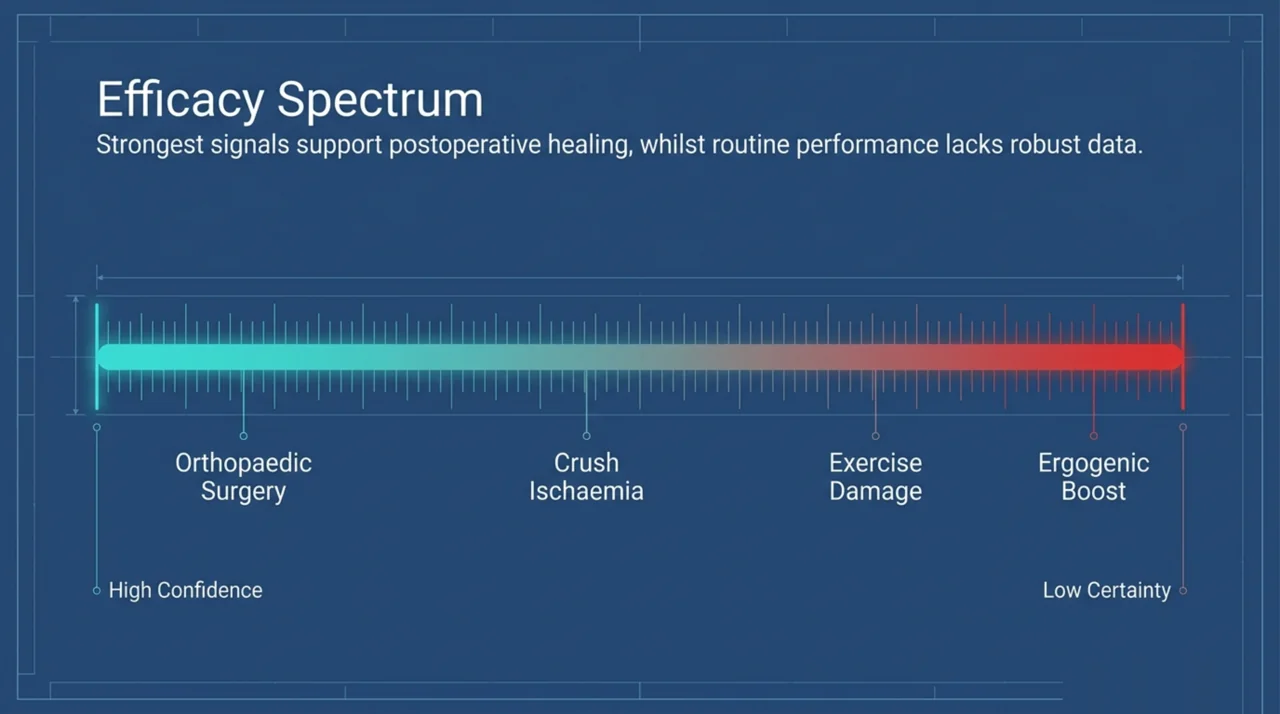
Does HBOT help athletes recover faster? The current evidence is mixed. Stronger signals exist for post-surgical tissue recovery (after orthopaedic, plastic, or reconstructive surgery) and certain musculoskeletal injuries. Weaker and contradictory signals for general training recovery and performance enhancement. Only animal-level data exists for muscle-atrophy reversal.
If you are considering HBOT for a sports-related issue:
- Post-surgical recovery (orthopaedic, plastic, reconstructive): moderate evidence of benefit when started early, with the strongest RCT-grade data from the postoperative knee-arthroplasty literature.
- Acute traumatic injury with crush component: acute traumatic ischaemia is one of the 14 recognised conditions and may be insurance-covered at a hospital programme.
- Routine training recovery or muscle soreness: current evidence does not support routine HBOT use over established modalities (cold water immersion, compression, sleep).
- Performance enhancement (ergogenic effects): no compelling RCT evidence; some signal of modest aerobic improvement in case series but no confirmation in well-powered trials.
Talk to your physician before starting any HBOT protocol. Most athletic indications would be self-pay at private clinics (typically $150 to $400 per session). Use the coverage navigator to identify your provincial path, or find a clinic on our facility directory. The evidence review below covers the published literature in detail.
Researcher + athlete audiences. Last updated 17 May 2026.
TL;DR: Hyperbaric oxygen therapy (HBOT) is investigational for athletic recovery and sports performance. The 2022-2025 evidence base is small and methodologically mixed, with signals of benefit in postoperative muscle damage and connective tissue recovery, weaker and contradictory results for ergogenic effects, and only animal-level data on muscle atrophy recovery. Larger, well-powered randomised controlled trials are the dominant research gap. In Canada, HBOT is not a recognised indication for sports recovery and remains an off-label or research-context intervention.
Hyperbaric oxygen therapy is a medical treatment in which a patient breathes 100% oxygen inside a pressurised chamber, typically at 1.5 to 3.0 atmospheres absolute (ATA). The clinical question for the sports medicine and exercise physiology community is whether the elevated tissue oxygen tension produced by HBOT can accelerate recovery from exercise-induced muscle damage, support healing of musculoskeletal injuries, or augment training adaptations. This evidence review summarises the 2022-2025 literature, identifies methodological limitations, and outlines priority research questions for Canadian investigators. Canada Hyperbarics maintains the largest publicly searchable HBOT research database in Canada and tracks new publications in this area continuously.
What does the current evidence say about HBOT and athletic performance?
The most comprehensive recent synthesis is the narrative review by Šet and Lenasi published in the Journal of Strength and Conditioning Research in 2022, which evaluated 27 studies covering exercise during HBOT, exercise following HBOT, HBOT during rest between exercise bouts, and combined HBOT plus training protocols. The authors concluded that results are contradictory, with some studies reporting positive ergogenic effects and others reporting none. They identified substantial heterogeneity in HBOT pressure, treatment duration, session count, and exercise testing protocols as the principal explanation for the inconsistent findings (Šet & Lenasi 2022, internal summary; DOI 10.1519/JSC.0000000000004281).
The review highlighted plausible mechanisms by which HBOT could affect performance, including modulation of metabolic pathways relevant to aerobic and anaerobic energy supply, antioxidant defence upregulation, and enhanced oxygen availability during the recovery window. However, the methodological quality of available trials, combined with potential placebo effects from chamber exposure, leaves these mechanistic hypotheses without definitive clinical support. The authors call for well-designed trials before routine athlete use is recommended.
How does HBOT affect exercise-induced muscle damage?
Exercise-induced muscle damage (EIMD) refers to the structural disruption and inflammatory response that follows unaccustomed or intense eccentric exercise. EIMD manifests clinically as delayed onset muscle soreness (DOMS), elevated creatine kinase, transient strength loss, and reduced range of motion. The 2022 review by Presti and colleagues in Undersea and Hyperbaric Medicine specifically examined whether HBOT can shorten the recovery trajectory after EIMD (Presti et al. 2022, internal summary).
Their conclusion was again mixed. The authors observed that early and frequent HBOT treatment appear to be the most important determinants of any measurable effect on EIMD recovery. Treatments initiated within hours of the damaging exercise bout and delivered across multiple consecutive sessions showed more consistent positive signal than single-session or delayed protocols. The review also flagged that the published trials have predominantly studied mild to moderate EIMD induced experimentally and that the effect of HBOT on severe EIMD, eccentric overload injuries, and exertional rhabdomyolysis remains untested.
Where does HBOT fit among other recovery modalities?
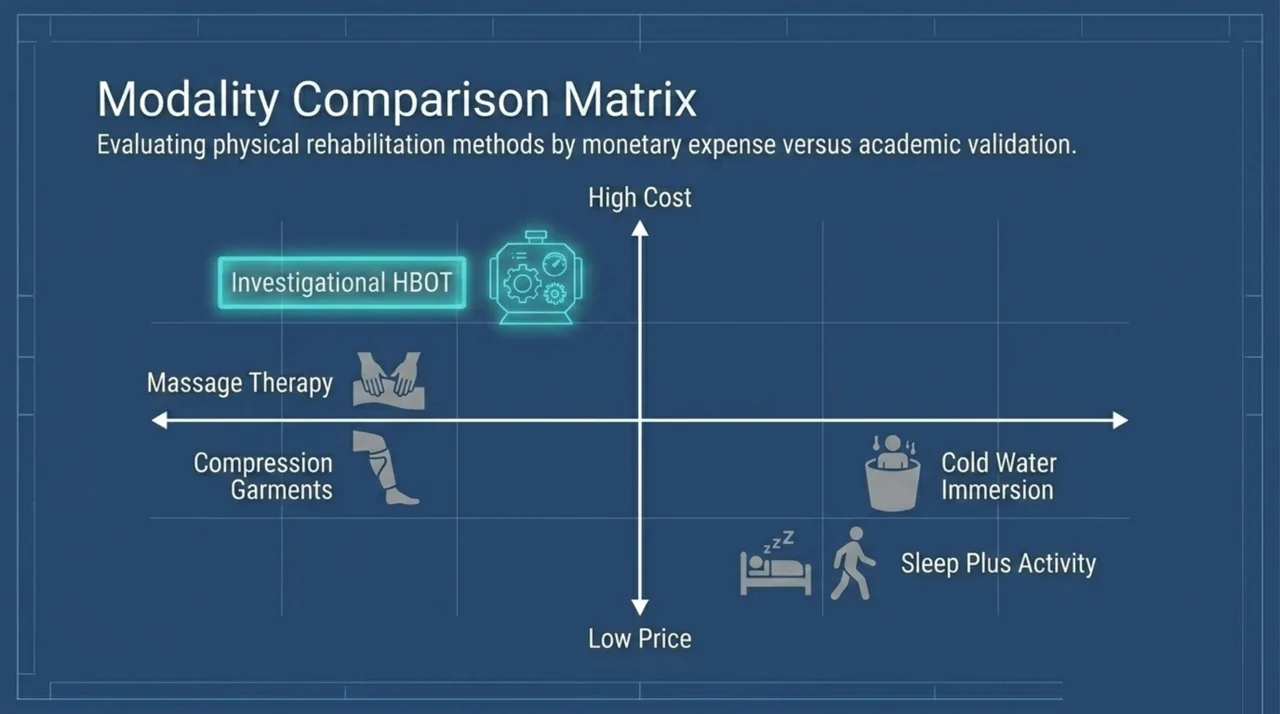
The 2021 narrative review by Cullen and colleagues in Current Sports Medicine Reports compared HBOT against other passive recovery techniques including compression garments, cold water immersion, partial body cryotherapy, percussive massage, neuromuscular electrical stimulation, and pulsed electromagnetic therapy. The authors placed HBOT in the category of modalities with some supporting evidence, alongside compression, cold water immersion, partial body cryotherapy, and vibratory therapy (Cullen et al. 2021, internal summary; DOI 10.1249/JSR.0000000000000859).
This grouping is informative but should not be interpreted as parity. The evidence base supporting cold water immersion is substantially larger and includes meta-analyses with consistent direction of effect. HBOT remains the most logistically demanding and capital-intensive modality among those reviewed, and the comparative cost-effectiveness for routine athlete use has not been formally examined in any published study.
| Modality | Evidence Strength (for athletic recovery) | Best Use Case | Typical Cost (CAD) |
|---|---|---|---|
| Hyperbaric oxygen therapy (HBOT) | Mixed / mostly investigational; stronger for post-surgical recovery | Post-surgical tissue recovery, acute traumatic ischaemia, severe frostbite tissue salvage | $150-$400 per session; $7,000-$14,000 for a typical course |
| Cold water immersion | Moderate, multiple meta-analyses support DOMS reduction | Post-exercise muscle soreness, perceived recovery | $0 (ice bath at home) to $40,000+ (commercial unit) |
| Compression garments | Mixed; modest support for perceived recovery and venous return | Travel, multi-day events, prolonged standing | $30-$200 per garment |
| Massage therapy | Moderate for DOMS reduction and short-term flexibility | General recovery, flexibility, injury rehabilitation | $80-$150 per session |
| Active recovery + sleep | Strong; foundational across all athletic recovery literature | Always; the baseline against which all other modalities are evaluated | $0 |
What do recent randomised controlled trials show?
A 2025 randomised controlled trial by Zhang and colleagues published in Scientific Reports represents one of the more methodologically robust recent additions to the literature. The trial randomised 80 patients undergoing total knee arthroplasty for primary knee osteoarthritis to standard care plus HBOT or standard care plus normobaric oxygen. The HBOT group showed statistically significant reductions in muscle damage markers at day 3 postoperatively (glutamic oxaloacetic transaminase, creatine kinase, lactate dehydrogenase, and myoglobin), accelerated quadriceps strength recovery, reduced limb swelling ratio, and lower visual analogue scale pain scores at days 2 and 3 postoperatively. No significant difference in adverse events was reported between groups (Zhang et al. 2025, internal summary; DOI 10.1038/s41598-025-06223-2).
The Zhang trial is not a sports recovery trial in the strict sense. It models a surgical insult rather than an exercise insult and recruits an older, post-arthroplasty population. However, the underlying biology (muscle damage, local inflammation, swelling, strength recovery) overlaps meaningfully with the postexercise context, and the trial supplies the kind of well-powered, prospective, randomised data that the athlete-focused literature lacks.
Does HBOT support recovery from musculoskeletal injuries?
Beyond muscle, the connective tissue and joint surface response to HBOT is relevant for any athlete recovering from ligament, tendon, or cartilage injury. The 2023 review by Leite and colleagues in the Journal of Cellular Physiology synthesised the mechanistic literature on HBOT in knee injuries specifically, including ligament reconstruction, meniscal repair, and articular cartilage damage (Leite et al. 2023, internal summary; DOI 10.1002/jcp.30947).
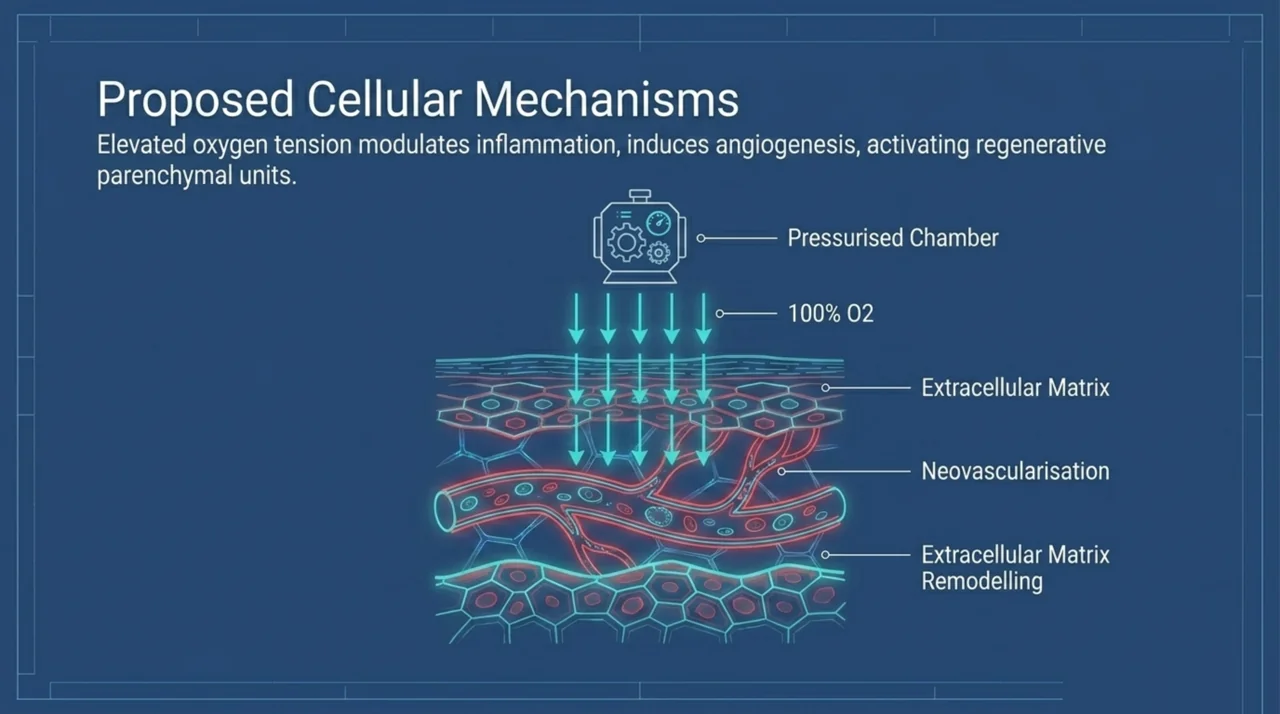
The authors describe three principal mechanisms by which HBOT may improve healing in the intra-articular environment: induction of angiogenesis to support neovascularisation of poorly vascularised tissues such as cartilage and avascular zones of meniscus and ligament; modulation of inflammation and extracellular matrix remodelling to reduce maladaptive fibrosis; and activation of parenchymal cells involved in tissue regeneration. The review acknowledges that controlled clinical evidence remains limited and that most supporting data come from animal models and small case series.
What does animal-model evidence add to the muscle recovery question?
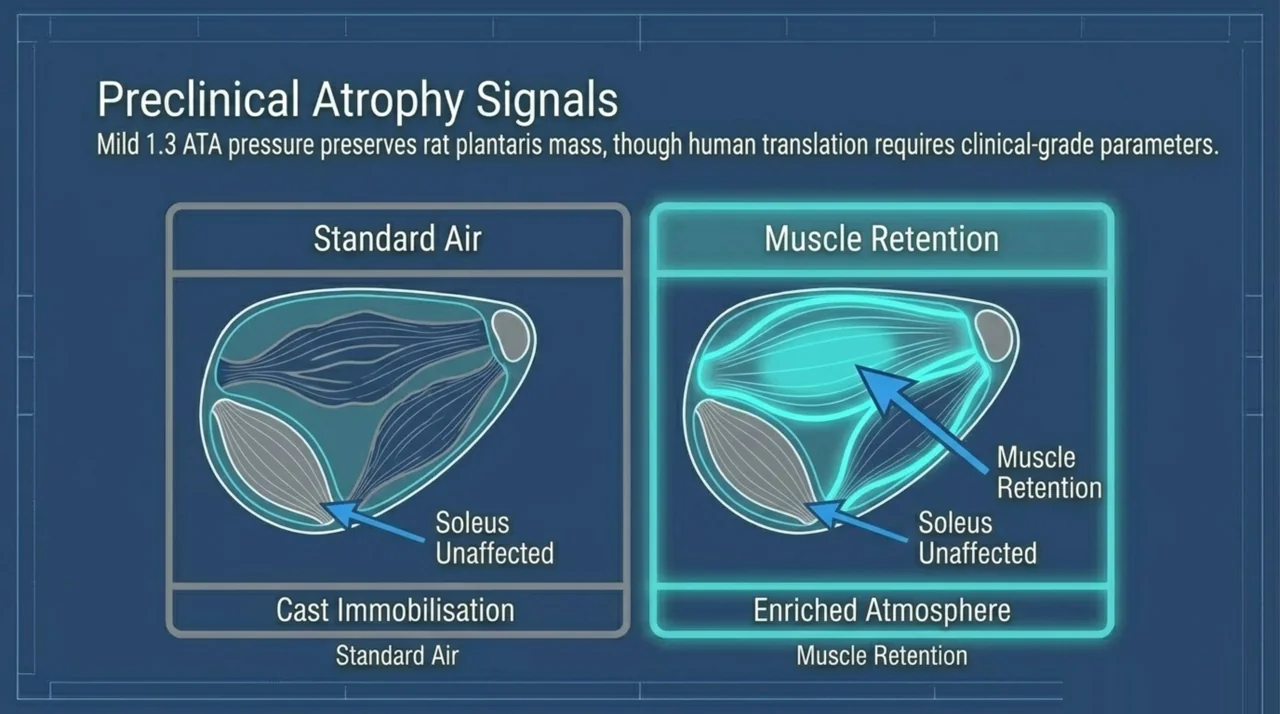
A 2025 study by Takemura and colleagues in Physiological Reports examined mild hyperbaric oxygen (1.3 ATA with 38% oxygen, well below clinical HBOT pressures) on muscle atrophy recovery after hindlimb cast immobilisation in male rats. The plantaris muscle weight, expressed as a ratio to body weight, decreased by approximately 11.5% in the cast-only group versus controls, while the cast plus mild HBOT group showed no significant difference from controls, suggesting enhanced recovery of plantaris muscle atrophy. Succinate dehydrogenase activity was also partially preserved in the HBOT group (Takemura et al. 2025, internal summary; DOI 10.14814/phy2.70350).
Two cautions apply to the translation of this finding. First, the pressure and oxygen concentration used in this study are below the 2.0 to 2.4 ATA at 100% oxygen used in most clinical HBOT protocols and bear closer resemblance to mild hyperbaric chambers marketed for wellness use than to Health Canada-licensed medical chambers. Second, soleus muscle (a slow-twitch postural muscle) did not show the same recovery effect, indicating that any benefit may be fibre-type specific. The study is hypothesis-generating, not practice-changing.
How do current studies in this area stack up methodologically?
| Study | Year | Design | Population | Primary Outcome | Direction of Effect |
|---|---|---|---|---|---|
| Šet & Lenasi | 2022 | Narrative review (27 studies) | Mixed athlete and non-athlete | Ergogenic and performance markers | Mixed / contradictory |
| Presti et al. | 2022 | Narrative review | EIMD studies, mostly young adults | Recovery from muscle damage | Mixed; favours early frequent treatment |
| Cullen et al. | 2021 | Narrative review | Athletes (comparative recovery modalities) | Recovery outcomes vs other modalities | Positive but lower-tier evidence |
| Leite et al. | 2023 | Mechanistic review | Knee injury (preclinical and clinical) | Angiogenesis, inflammation, ECM | Mechanistically supportive |
| Zhang et al. | 2025 | RCT (n=80) | Postoperative TKA patients | Muscle damage, strength, pain | Significantly positive |
| Takemura et al. | 2025 | Animal experiment | Male rats, mild HBOT (1.3 ATA) | Plantaris atrophy recovery | Positive in plantaris only |
Three observations follow from this comparison. The athlete-specific literature is dominated by narrative reviews of small heterogeneous trials, the strongest RCT-grade evidence comes from adjacent surgical populations rather than sport, and animal-model data use parameters that do not match the clinical HBOT protocols approved by Health Canada.
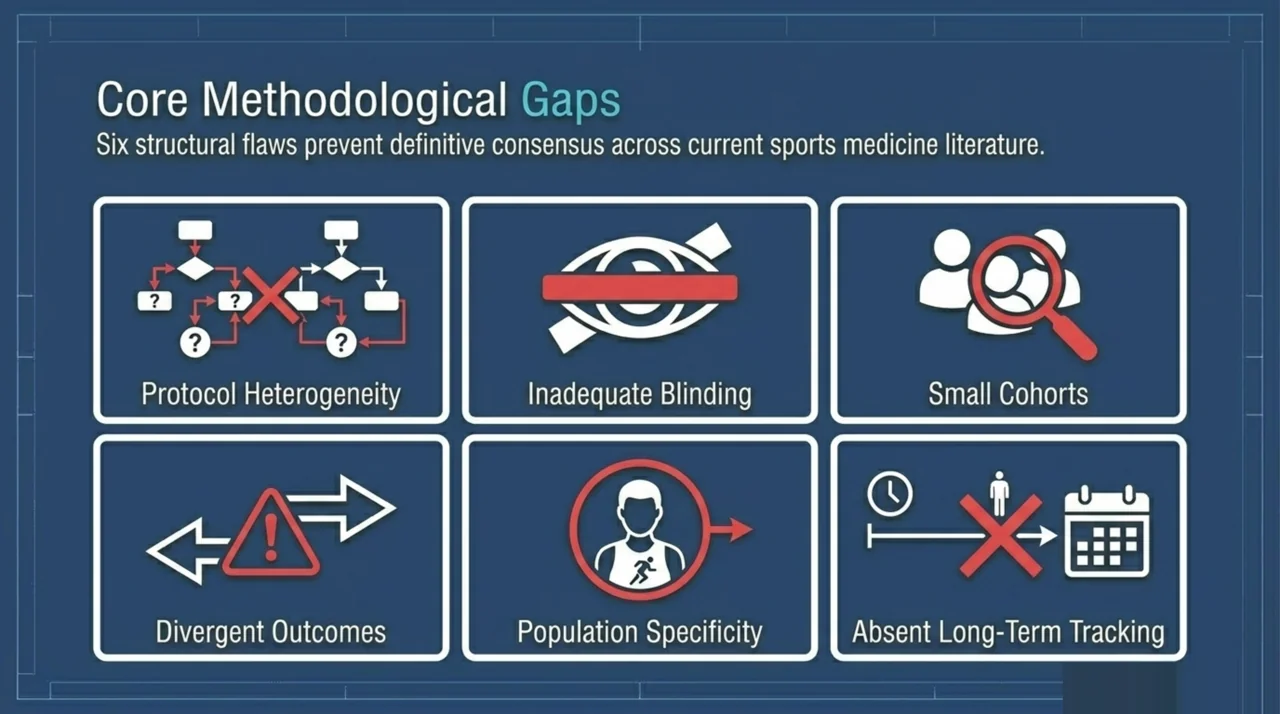
What are the principal methodological gaps?
- Protocol heterogeneity. Published trials use pressures ranging from 1.3 to 2.5 ATA, session counts from 1 to over 20, durations from 30 to 90 minutes, and inter-session intervals that vary widely. Without protocol standardisation, pooled effect estimation is not feasible.
- Inadequate blinding. True sham HBOT requires a chamber pressurisation profile and ambient cues indistinguishable from active treatment. Few sport-context trials meet this standard, leaving placebo and expectancy effects unaccounted for.
- Small sample sizes. Most trials enrol 10 to 30 participants per arm, well below the sample required to detect realistic between-group differences in athletic performance metrics, where effect sizes are typically small.
- Outcome divergence. Performance outcomes range from maximal oxygen uptake and time-to-exhaustion to subjective soreness scores and individual biomarkers. Without a consensus outcome set, cross-study comparison is constrained.
- Population specificity. Trained athletes adapt differently to recovery interventions than recreationally active populations. Few studies stratify by training status, sport, or injury severity.
- Absent long-term follow-up. The literature focuses on acute recovery markers within 72 hours. Whether HBOT alters subsequent training adaptations, injury recurrence, or season-long performance is unknown.
Where does Canadian research fit in this landscape?
Canadian contributions to the HBOT and sport recovery literature have been limited but not absent. The 2023 vascular surgery trial of HBOT for spinal cord ischaemia after complex aortic repair, conducted at Toronto General Hospital’s Hyperbaric Medicine Unit, demonstrated that Canadian academic hyperbaric centres can generate prospectively collected, well-documented HBOT data. The same infrastructure that supports surgical and wound-care research could in principle support athlete-focused trials. To date, no funded Canadian RCT of HBOT for sports recovery has been published in PubMed-indexed journals.
Researchers planning Canadian trials in this area should consider partnerships with provincial sport medicine programs, the Canadian Undersea and Hyperbaric Medical Association (CUHMA), and accredited clinical hyperbaric units. Canada has 33 hyperbaric facilities distributed across nine provinces. A directory of these hospitals and regulated facilities is maintained at our facilities page.
Canadian research contributions to athletic-recovery and post-surgical HBOT evidence
Canadian institutions have produced several studies directly relevant to athletic recovery, post-surgical tissue healing, and nerve-injury rehabilitation, even though no funded Canadian RCT of HBOT for sports recovery itself has yet been published. The Canada Hyperbarics research database currently flags 244 studies with Canadian authorship across the 14 recognised indications and adjacent research areas. The five studies below represent recent Canadian-authored or Canada-contributing investigations relevant to the athletic and post-surgical recovery context:
- Preventive surgical recovery. Boet et al, University of Ottawa anesthesiology, 2020 systematic review of randomised controlled trials evaluating whether peri-operative HBOT improves surgical patient outcomes. Can preventive HBOT optimise surgical outcome? Systematic review of randomised controlled trials (European Journal of Anaesthesiology, 2020). PMID 32355046 on our research database.
- Postoperative tissue recovery. 2025 systematic review and meta-analysis with Canadian co-authorship from McGill University, Montreal; eleven studies pooled, healing-time reduction documented. Efficacy of HBOT as an Adjunct in Aesthetic Surgery (Aesthetic Plastic Surgery, 2025). PMID 40011247 on our research database.
- Cold-injury tissue salvage. 2019 single-centre Canadian case series of 22 patients treated with HBOT for severe frostbite, directly relevant to winter sports, mountaineering, and outdoor athletes. Treatment of frostbite with HBOT: a single-centre experience of 22 cases (Wounds, 2019). PMID 31730511 on our research database.
- Post-surgical nerve recovery. 2023 Canadian scoping review evaluating HBOT for nerve injury after surgery, relevant to post-orthopaedic-surgery recovery in athletes. The role of HBOT in the management of perioperative peripheral nerve injury (Regional Anesthesia & Pain Medicine, 2023). PMID 36418044 on our research database.
- Motor function recovery (mechanism study). 2023 animal-model study examining HBOT-driven motor function recovery and pain modulation after sciatic nerve injury, with mitochondrial protection as the mechanism of action. HBO treatment enhances motor function and modulates pain development after sciatic nerve injury via protection of mitochondrial function (Journal of Translational Medicine, 2023). PMID 37582750 on our research database.
For the full searchable HBOT research database (14,400+ studies, filterable by condition, evidence tier, and country of origin), see the Canada Hyperbarics research database. The body of Canadian work in adjacent areas (post-surgical recovery, nerve regeneration, tissue salvage) suggests the infrastructure exists to support a future Canadian RCT focused specifically on athletic recovery.
What are the regulatory considerations in Canada?
HBOT for sports recovery is not on the Health Canada list of recognised indications. Recognised indications cover specific clinical conditions including decompression sickness, carbon monoxide poisoning, gas gangrene, certain non-healing wounds, radiation tissue injury, compromised grafts and flaps, severe anaemia, sudden sensorineural hearing loss, and other conditions detailed in our regulatory overview.
Researchers conducting HBOT studies in athletes must therefore work either within a research ethics board approved trial protocol or document off-label use with appropriate informed consent. Health Canada licensed chambers must be used; mild hyperbaric chambers operating below 1.4 ATA are not classified as medical chambers and are not appropriate for clinical research. UHMS guidance and CUHMA practice standards offer additional procedural context for trial design.
What does the broader rehabilitation evidence suggest?
A 2024 review of non-pharmacological interventions for traumatic brain injury in the Journal of Cerebral Blood Flow and Metabolism placed HBOT alongside hypothermia, dietary preconditioning, exercise, environmental enrichment, and deep brain stimulation as a multi-mechanism neuroprotective strategy with promising preclinical and emerging clinical signal (Davis et al. 2024, internal summary; DOI 10.1177/0271678X241234770). For sport medicine researchers concerned with concussion and repeated subconcussive impacts in contact athletes, this adjacent literature is relevant context even though it does not address acute exercise recovery directly.
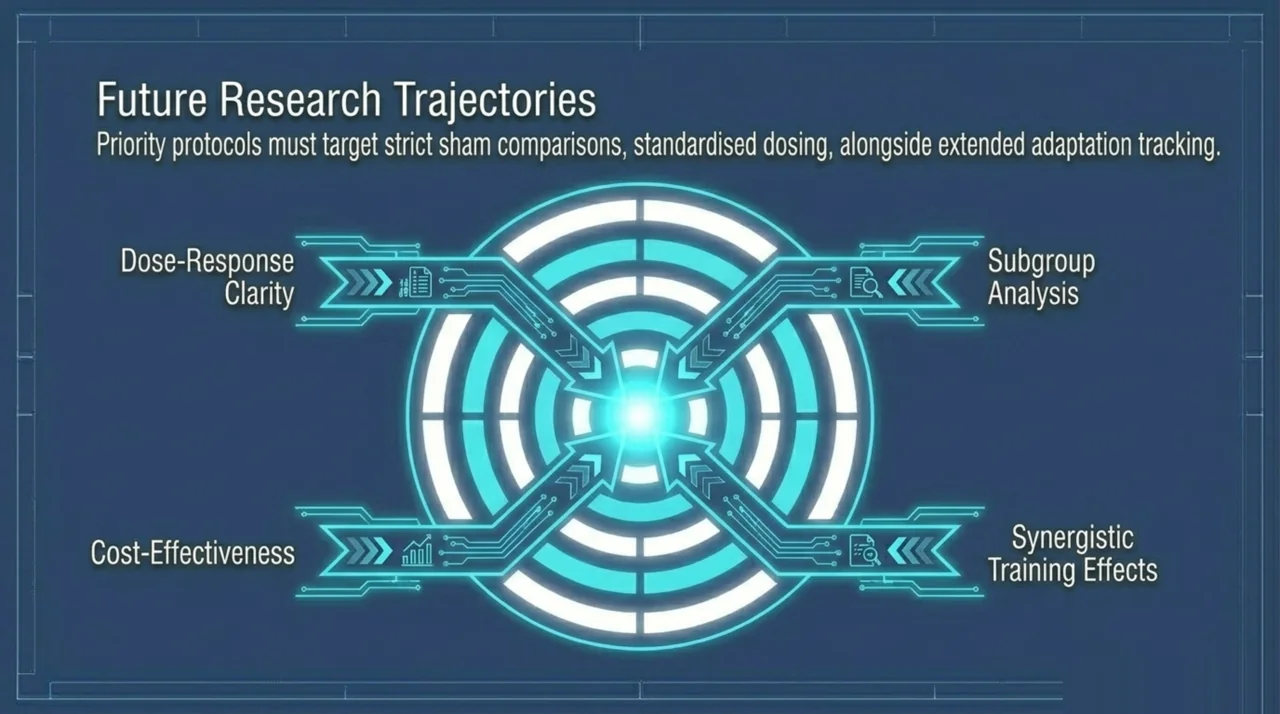
Priority research questions for 2026 and beyond
- Does HBOT initiated within 6 hours of damaging exercise produce measurable acceleration of strength and function recovery versus sham, in a blinded RCT of trained athletes?
- Does repeated HBOT during a high training load block alter cumulative fatigue, biomarker trajectories, or injury incidence over a 12 to 24 week training cycle?
- What is the dose-response relationship between session pressure, duration, frequency, and observed effect on recovery outcomes?
- Are there athlete subgroups (eg, masters athletes, high training load endurance athletes, post-injury return-to-play populations) for whom HBOT confers a clinically meaningful benefit not seen in general athlete cohorts?
- How does HBOT compare in cost-effectiveness with established recovery modalities such as cold water immersion or sleep extension protocols?
- Does combined HBOT and exercise training produce additive or synergistic adaptations versus either intervention alone?
Frequently Asked Questions
Is HBOT approved by Health Canada for sports recovery?
No. Sports recovery and athletic performance enhancement are not on the Health Canada list of approved HBOT indications. Use in this context is investigational and should occur within research ethics board approved trial protocols or as documented off-label clinical care.
What pressure protocols are typically used in HBOT sport-recovery research?
Published trials use a wide range from 1.3 to 2.5 ATA. Mild hyperbaric protocols at 1.3 ATA with enriched oxygen fall outside the clinical HBOT definition used by the UHMS, which specifies pressures of 1.4 ATA or greater with 100% oxygen. Most clinical-grade protocols target 2.0 to 2.4 ATA for 60 to 90 minutes per session.
How many HBOT sessions are needed to influence muscle recovery?
The literature is inconsistent. The 2022 Presti review suggests that early initiation (within hours) and frequent sessions (daily for several days) are the strongest predictors of measurable effect. Single-session protocols have generally not demonstrated significant benefit on EIMD outcomes.
Are the adverse event profiles documented in sport-context trials?
Documented adverse events in clinical HBOT include middle ear barotrauma, sinus barotrauma, transient myopia, oxygen toxicity, and rarely pneumothorax or seizure. The Zhang 2025 TKA trial reported no significant between-group difference in adverse events. Sport-context trials have generally reported tolerable side effect profiles, but rigorous adverse event surveillance is not uniformly applied across the literature.
Is portable mild hyperbaric chamber use supported by the same evidence?
No. The clinical HBOT evidence base, including the trials cited in this review, uses Health Canada licensed medical chambers at clinical pressures. Portable mild chambers operating below 1.4 ATA on ambient or enriched air do not meet the technical definition of clinical HBOT and are not interchangeable with medical-grade treatment in research design or clinical interpretation.
What outcomes should investigators prioritise in future trials?
A consensus outcome set has not been established. Reasonable candidates include validated strength recovery measures (eg, isokinetic peak torque), functional performance (eg, vertical jump, sprint times), inflammatory and muscle damage biomarkers (creatine kinase, interleukin-6, C-reactive protein), patient-reported soreness scales, and return-to-sport metrics. Trials should pre-register outcome hierarchies to reduce reporting bias.
Are Canadian institutions running sports HBOT trials?
No funded Canadian RCT of HBOT for sports recovery has been published in PubMed at the time of this review. Several Canadian hyperbaric medicine units, including the unit at Toronto General Hospital, have published clinical HBOT research in adjacent areas. The infrastructure exists; the protocols and funding remain to be developed.
Where can researchers find related Canadian HBOT studies?
Canada Hyperbarics maintains a searchable database of over 14,000 HBOT-related studies indexed from PubMed with editor-reviewed summaries. The database can be browsed at our research bank. Each entry links to the original PubMed citation, DOI, and an AI-assisted plain-language summary.
Bottom line for Canadian athletes
Bottom line for Canadian athletes: if you are weighing HBOT for a sports-related issue, the strongest case is for post-surgical tissue recovery (especially after orthopaedic procedures) and certain acute traumatic injuries with a crush or ischaemic component. The weakest case is for routine training recovery, general muscle soreness, and performance enhancement. Discuss your specific situation with a sport medicine physician or your treating surgeon. For private-clinic self-pay options, see the facility directory and our cost guide; for the very narrow set of recognised athletic-adjacent indications eligible for public coverage, see the coverage navigator and 14-condition list.
Bottom line for researchers
The 2022-2025 literature does not support routine clinical recommendation of HBOT for sports recovery or athletic performance. It does support continued investigation, particularly into early-initiated, protocolised regimens applied to defined populations with rigorous blinding and adequate sample size. Canadian sport medicine and hyperbaric medicine collaborations are well positioned to contribute methodologically sound trials. Investigators interested in identifying Canadian hospitals and regulated facilities with research-capable hyperbaric units can consult the Canada Hyperbarics facilities directory, which lists each accredited centre by province with verified chamber type and accreditation status.
For broader context on related research questions, the conditions overview covers HBOT evidence across recognised indications, and the FAQ section addresses common questions from referring physicians and patients. Canada Hyperbarics will continue to track new sports recovery and athletic performance publications and update this review as the evidence base matures.
External authoritative sources: Health Canada, Undersea and Hyperbaric Medical Society (UHMS), Canadian Undersea and Hyperbaric Medical Association (CUHMA).
Medical Disclaimer: This content is for informational purposes only and does not constitute medical advice. Hyperbaric oxygen therapy for sports recovery and athletic performance is investigational and not a recognised indication. Consult a qualified physician before pursuing any treatment.