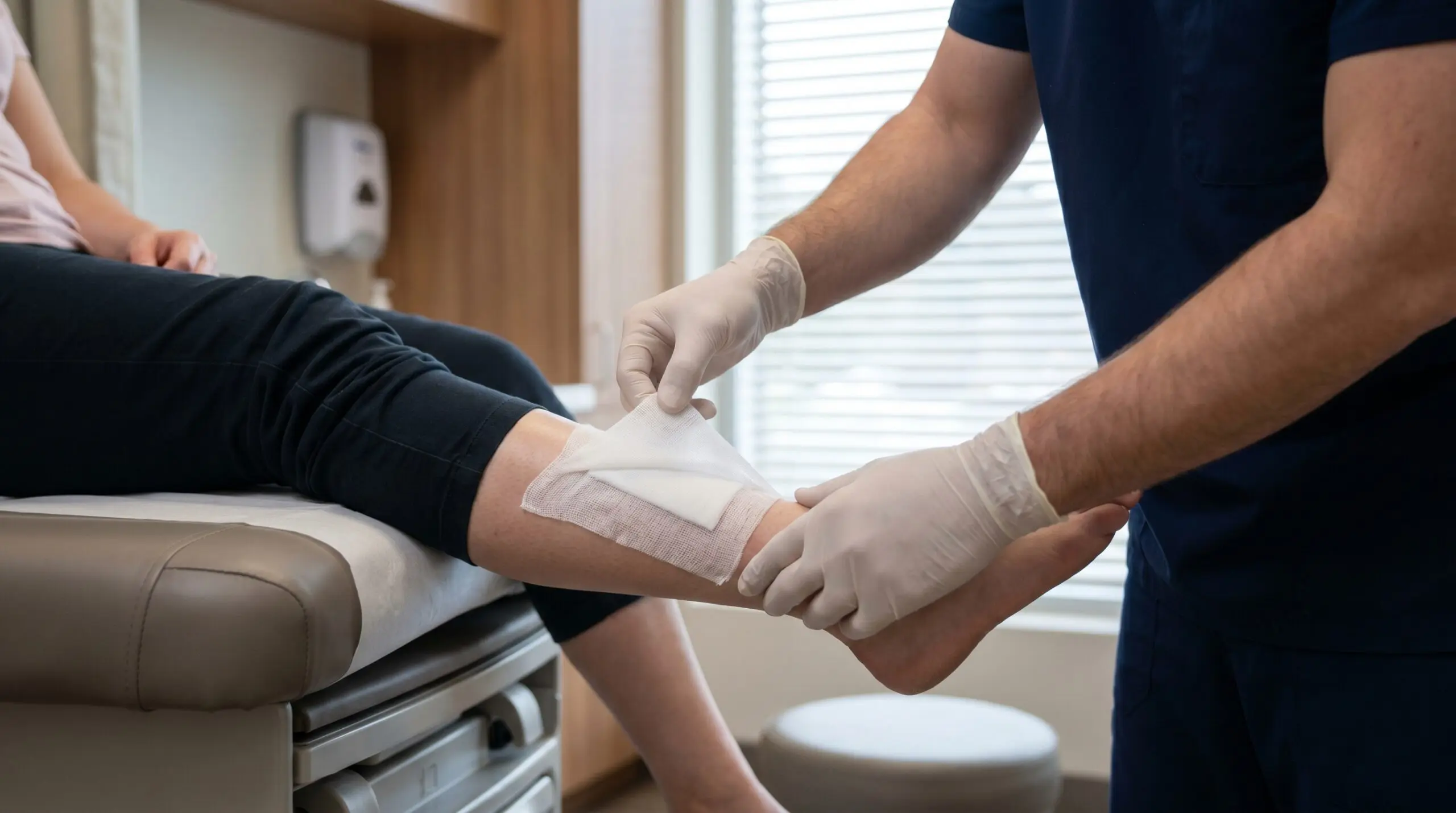
TL;DR: Hyperbaric oxygen therapy (HBOT) is an approved adjunctive treatment for chronic refractory osteomyelitis in Canada. It works alongside antibiotics and surgical debridement, not as a replacement. Treatment typically involves 20 to 40 sessions at 2.0 to 2.5 atmospheres absolute, delivered at hospitals and regulated facilities across the country.
Chronic osteomyelitis is a stubborn bone infection that can persist for months or years despite antibiotics. If your doctor has mentioned hyperbaric oxygen therapy as part of your treatment plan, you probably have questions. This FAQ answers the most common ones for Canadian patients, with information drawn from peer-reviewed research and current clinical guidelines.
Osteomyelitis is a bone infection caused by bacteria or, less often, fungi. When standard treatment of antibiotics plus surgery fails to clear the infection after 30 days, it is called chronic refractory osteomyelitis. This is the form most often treated with hyperbaric oxygen therapy as an add-on therapy.
How does hyperbaric oxygen therapy help with osteomyelitis?
During an HBOT session, you breathe 100 per cent oxygen inside a pressurised chamber. The pressure, usually 2.0 to 2.5 atmospheres absolute (ATA), forces far more oxygen into your blood plasma than normal breathing allows. That extra oxygen reaches bone tissue where circulation is poor because of infection and scarring.
A 2025 review in Undersea and Hyperbaric Medicine described three mechanisms that matter for osteomyelitis: the extra oxygen kills certain anaerobic bacteria directly, boosts the infection-fighting power of white blood cells, and supports new blood vessel growth into damaged bone (Tettelbach and Hart, 2025). The combined effect helps antibiotics work better and allows debrided bone to heal.
Is hyperbaric oxygen therapy approved for osteomyelitis in Canada?
Yes. Chronic refractory osteomyelitis is one of the conditions recognised by the Undersea and Hyperbaric Medical Society (UHMS) and supported by the Canadian Undersea and Hyperbaric Medical Association (CUHMA) as a recognised indication for adjunctive HBOT. Hospital-based hyperbaric units across Canada treat osteomyelitis routinely alongside surgery and antibiotics.
Treatment is delivered at hospitals and regulated facilities that use Health Canada-licensed chambers and follow the CSA Z275.1 engineering standard and UHMS clinical guidelines. You can find a list of Canadian programs on the Canada Hyperbarics facilities directory.
Does hyperbaric oxygen therapy actually work for bone infections?
The evidence points in a positive direction, though there are still no large randomised controlled trials specifically for osteomyelitis. The best real-world data comes from a 2023 Taiwanese cohort study published in the Journal of Infection and Public Health, which identified 5,312 patients with chronic osteomyelitis and analysed 1,259 of them (265 who received HBOT and 994 matched controls) after 1:4 propensity-score matching.
After propensity-score matching, patients who received HBOT had significantly better outcomes than those who did not:
| Outcome at one year | HBOT group | Non-HBOT group |
|---|---|---|
| 1-year all-cause mortality | 51 per cent lower risk (HR 0.49, 95% CI 0.25 to 0.95) | Reference |
| Stroke hospitalisation | 54 per cent lower risk | Reference |
| Best timing to start HBOT | Within 90 days of diagnosis | Later start linked to weaker benefit |
HBOT does not replace surgery or antibiotics; it improves their chances of working.
Who qualifies for hyperbaric oxygen therapy for osteomyelitis?
Most Canadian hyperbaric programs expect that you meet the following criteria before they will accept a referral:
- Confirmed diagnosis of osteomyelitis through imaging (MRI is the most sensitive test) or bone biopsy
- At least 30 days of combined surgical debridement and culture-directed antibiotics with no significant improvement or evidence of worsening
- A clear referral from your treating physician, infectious disease specialist, or orthopaedic or plastic surgeon
- No absolute contraindications to HBOT, such as an untreated pneumothorax
- Medical clearance for pressure exposure, including an ear exam, chest imaging when indicated, and cardiac assessment if you have underlying heart disease
Cases where extensive surgery is difficult or risky, such as skull, spine, sternum, or paediatric osteomyelitis, may be referred for HBOT earlier, before waiting the full 30 days (Tettelbach and Hart, 2025).
How many sessions will I need?
A typical HBOT course for osteomyelitis is 20 to 40 sessions. Each session lasts about 90 to 120 minutes at 2.0 to 2.5 ATA. Sessions are usually scheduled daily, Monday to Friday, over four to eight weeks.
Your hyperbaric physician will reassess your progress partway through the course using imaging, laboratory markers, and the wound or surgical site exam. If the infection is clearing, you complete the full course. If not, the plan is revised in consultation with your infectious disease and surgical team.
Is hyperbaric oxygen therapy covered by provincial health insurance?
For chronic refractory osteomyelitis treated in a hospital-based hyperbaric program, the answer is generally yes. Because this is a recognised indication, hospital treatment is covered by the provincial health plan for residents of that province:
- Ontario: OHIP
- British Columbia: MSP
- Alberta: AHCIP
- Quebec: RAMQ
- Manitoba: Manitoba Health
- Saskatchewan: Saskatchewan Health
- Nova Scotia: MSI
- New Brunswick: Medicare NB
- Newfoundland and Labrador: MCP
- Prince Edward Island: PEI Medicare
Private facility treatment, travel, and accommodation are not usually covered. Some provinces offer out-of-province or travel subsidies if the nearest hyperbaric unit is far from your home. Ask your referring physician or the hospital patient navigator what support is available where you live. For a province-by-province breakdown, see the Canada Hyperbarics coverage guide.
What does a hyperbaric session feel like?
Most patients find HBOT comfortable once they get used to it. You lie on a padded stretcher inside the chamber. As pressure increases, you will feel your ears pop, similar to an airplane descent. Technicians teach simple techniques such as swallowing, yawning, or gentle jaw movements to equalise the pressure.
Once at treatment pressure, you relax, watch a movie, listen to music, or nap. You can communicate with the hyperbaric team at any time through an intercom. Pressure is released gradually at the end of the session, and most patients walk out and go about their day.
What are the side effects of hyperbaric oxygen therapy?
Most side effects are minor and temporary:
- Ear pressure or pain during compression, usually prevented with proper equalisation technique
- Temporary nearsightedness that usually resolves within weeks of finishing treatment
- Sinus discomfort if you have a cold, allergies, or congestion on the day of treatment
- Claustrophobia in some patients, often reduced by clear-walled monoplace chambers or brief pretreatment counselling
Serious complications such as oxygen toxicity seizures or pulmonary barotrauma are rare at the pressures used for osteomyelitis. Your hyperbaric team screens for risk factors and monitors you throughout each session.
How do I get referred for HBOT in Canada?
A referral usually comes from one of these routes:
- An infectious disease physician managing your antibiotic therapy
- An orthopaedic or plastic surgeon involved in debridement or reconstruction
- A family doctor working in coordination with a specialist
- A wound care clinic or chronic care team connected to a hospital system
The referring physician sends a clinical summary, imaging, culture results, and surgical history to the hyperbaric unit. A hyperbaric physician then reviews the case, confirms eligibility, and schedules a consultation. Some programs also accept referral requests from patients directly, though a physician letter is still required.
Can I have HBOT while continuing antibiotics and other treatments?
Yes, and you should. HBOT works best when it runs alongside culture-directed antibiotics and follows surgical debridement as soon as it is clinically indicated. This combination, rather than HBOT alone, delivers the best outcomes according to the current evidence (Tettelbach and Hart, 2025).
Tell your hyperbaric team about every medication you take, including over-the-counter products and supplements. A small number of medications interact with high-pressure oxygen and may need to be adjusted or timed differently on treatment days.
What should I ask my doctor before starting HBOT?
Bring these questions to your consultation:
- Is my osteomyelitis confirmed as refractory by the 30-day criterion?
- How many sessions are you recommending, and at what pressure?
- How will we measure whether the treatment is working?
- Are there contraindications in my medical history we should review?
- What is the plan if my infection does not respond to HBOT?
- Is the closest facility hospital-based, and is treatment covered by my provincial plan?
- What transportation or accommodation support is available if I live far from the facility?
Where can I learn more about HBOT research?
Canada Hyperbarics maintains a searchable research library of more than 14,000 indexed studies on hyperbaric oxygen therapy. You can filter by condition, study type, and publication year. For broader patient questions about HBOT, see the Canada Hyperbarics patient FAQ. For international clinical guidelines, visit the Undersea and Hyperbaric Medical Society and for Canadian professional guidance, the Canadian Undersea and Hyperbaric Medical Association.
Next steps for Canadian patients
If you or a family member is dealing with osteomyelitis that has not responded to standard treatment, talk to your treating physician about whether HBOT could help. Bring the questions above, ask for a referral to the nearest hospital-based hyperbaric unit, and confirm coverage details with your provincial health plan. The sooner HBOT starts in the course of refractory osteomyelitis, the stronger the evidence for benefit (Tai and colleagues, 2023). Canada Hyperbarics can help you locate the nearest of the hospitals and regulated facilities offering this service through the facilities directory.
Key references
- Tettelbach WH, Hart BB. Refractory Osteomyelitis. Undersea and Hyperbaric Medicine. 2025;52(4):641-668. PubMed
- Tai CJ, Lu CK, Lee CY, Lee SS, Yang YH. Real-world evidence of hyperbaric oxygen therapy on cardiovascular outcomes in patients with chronic osteomyelitis. Journal of Infection and Public Health. 2023;16(5):705-712. DOI: 10.1016/j.jiph.2023.03.006
Medical disclaimer: This content is for informational purposes only and does not constitute medical advice. Always speak with a licensed Canadian physician about your individual health situation before starting any treatment. Canada Hyperbarics is an independent public information resource and does not provide medical care.