
TL;DR: Hyperbaric oxygen therapy (HBOT) is a treatment that delivers 100% oxygen at increased atmospheric pressure, most often used as an adjunct to standard wound care for diabetic foot ulcers (DFUs). The cost-effectiveness evidence for adding HBOT to a DFU program is mixed and context-dependent: some Canadian and North American cost analyses have modelled favourable results, particularly for severe Wagner grade 3-4 ulcers where amputation avoidance offsets treatment cost, while a 2022 Indian cost-utility analysis found HBOT did not clear that country’s cost-effectiveness threshold. The Dutch DAMOCLES randomised trial, designed specifically to settle the question, has since reported: across all participants it found no significant difference in costs or in quality-adjusted life years, with a more favourable result confined to severe Wagner grade 3-4 ulcers. Clinic owners should treat cost-effectiveness as case-mix and health-system dependent, not a universal guarantee.
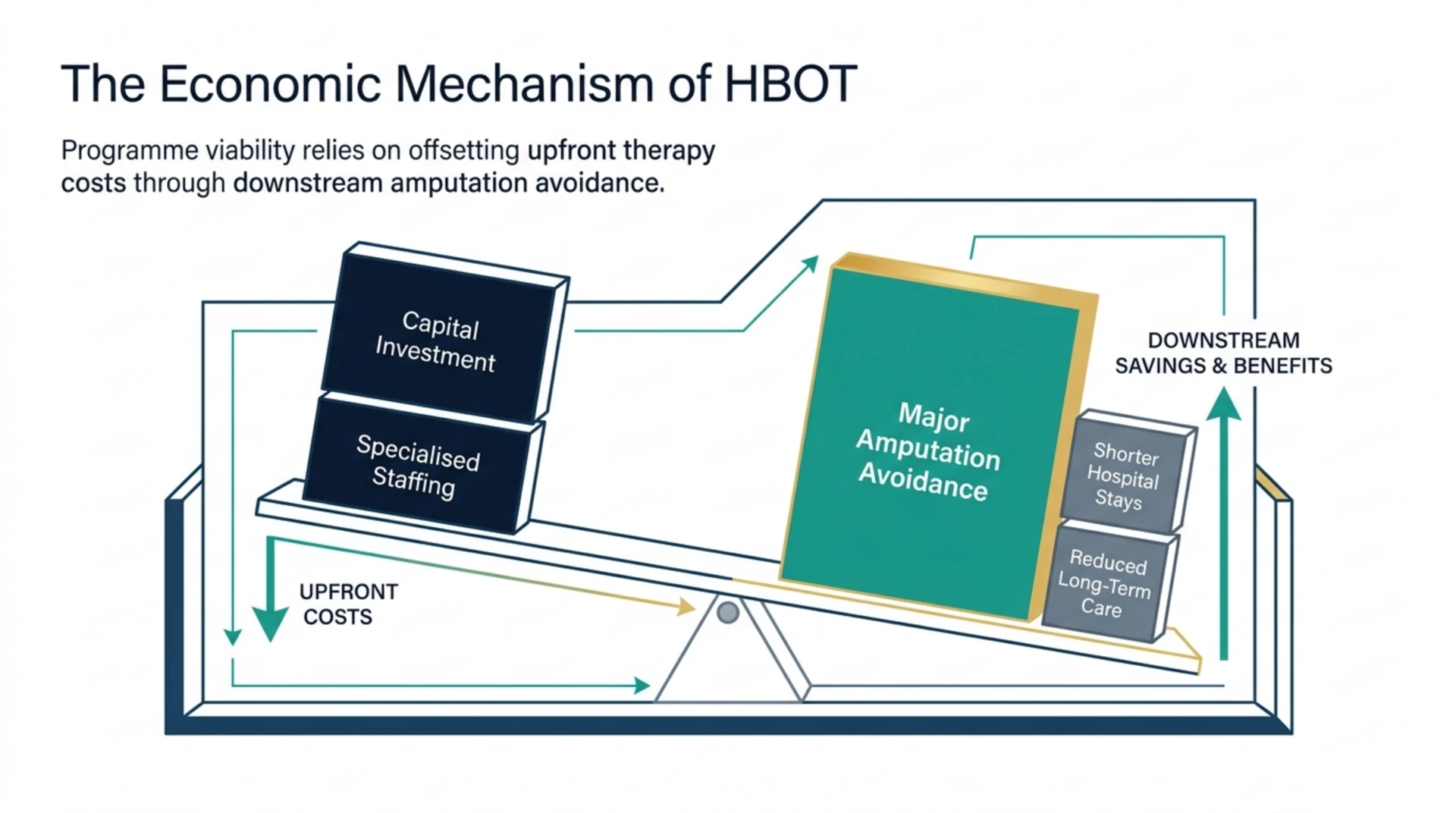
For a Canadian clinic owner or hospital administrator building a DFU program business case, hyperbaric oxygen therapy diabetic foot ulcer cost effectiveness is the question the pro forma lives or dies on. HBOT capital and staffing costs are real and upfront; the savings it might generate come later, indirectly, through fewer amputations, shorter hospital stays, and lower long-term care costs. Whether those downstream savings materialize, and whether they outweigh the cost of the therapy itself, is an empirical question, and the published evidence does not give one universal answer.
Why Cost-Effectiveness Matters for a DFU Program Business Case
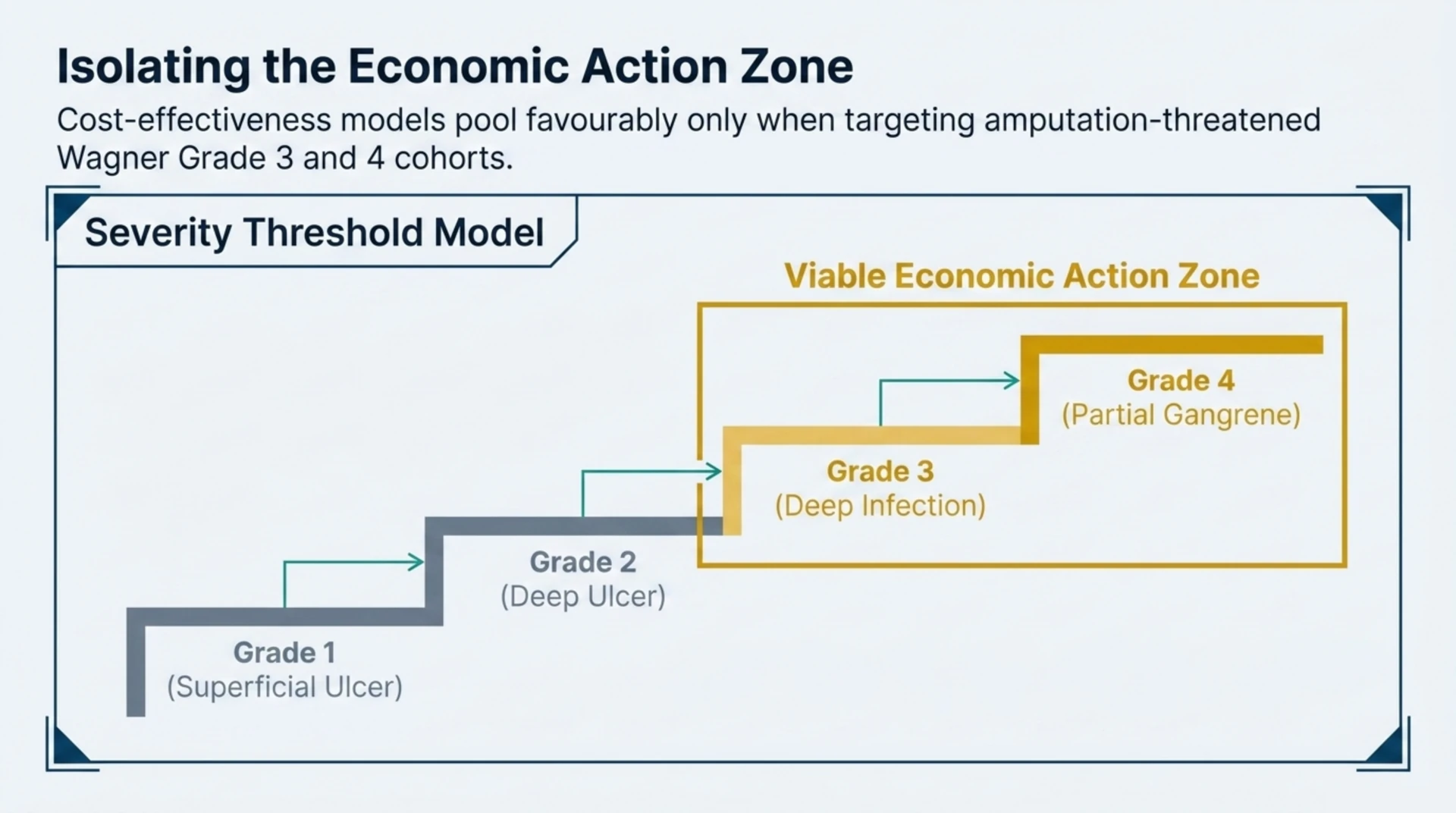
A major lower-extremity amputation is one of the most expensive events in diabetes care, driving surgery, prosthetics, rehabilitation, and often a permanent step down in a patient’s functional independence. This is why cost-effectiveness models for DFU treatments almost always focus on amputation avoidance as the main economic lever, not wound-healing speed alone. The business case for an HBOT program depends heavily on how many Wagner grade 3 and 4 ulcers, the most severe, amputation-threatened cases, the program is actually going to treat, because that is the population where the avoided-amputation math has the best chance of working in HBOT’s favour.
What Does the Evidence Say About Hyperbaric Oxygen Therapy Diabetic Foot Ulcer Cost Effectiveness?
The published literature includes decision models, retrospective cost analyses, a health technology assessment, and at least one purpose-built randomised trial protocol. Taken together, they paint a picture of conditional, not universal, cost-effectiveness.
Canadian Modelling Evidence
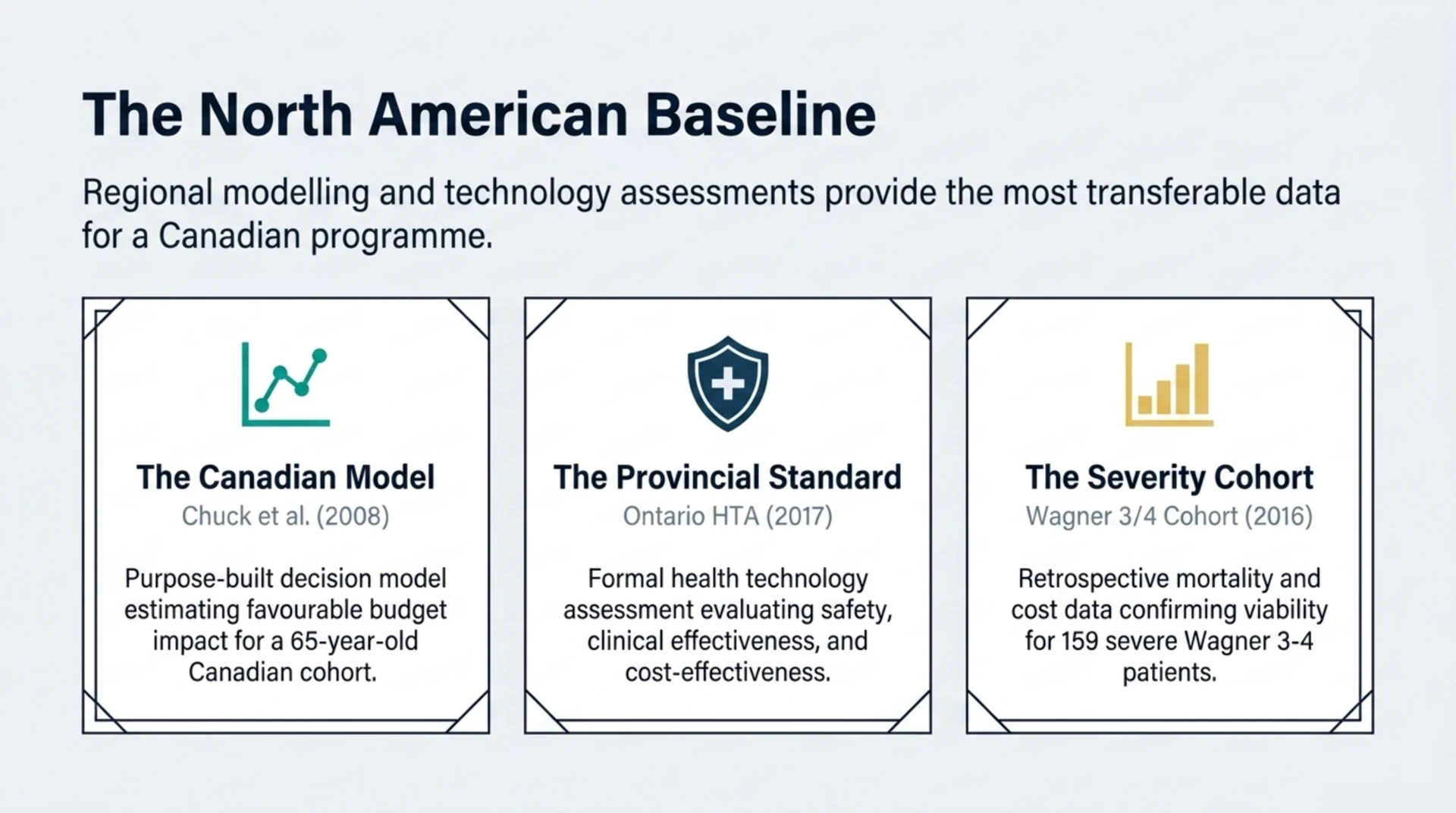
A 2008 Canadian decision-model analysis (Chuck et al., PubMed | Our Assessment) built a model specifically to estimate the cost-effectiveness and budget impact of adding HBOT to standard wound care for a 65-year-old Canadian cohort with diabetic foot ulcers. This is the closest thing in the pool to a made-for-Canada answer, and it is worth reading in full before costing a Canadian program, since it was built around Canadian pricing and a Canadian population.
A separate retrospective analysis (Cianci et al., PubMed | Our Assessment) examined the long-term durability and cost of aggressive, multidisciplinary treatment, including HBOT, for severe diabetic foot ulcers. Its own title states the conclusion plainly: the authors judged the approach to suggest significant cost-effectiveness over the long term. As a retrospective cohort rather than a randomised trial, this is associational evidence, not proof of causation, but it points in the same direction as the Canadian model.
The Ontario Health Technology Assessment
Ontario’s health technology assessment (PubMed | Our Assessment) evaluated the safety, clinical effectiveness, and cost-effectiveness of HBOT combined with standard wound care for diabetic foot ulcers. Health technology assessments exist precisely to answer the funding-worthiness question a hospital administrator is asking, which makes this one of the most directly relevant sources in the pool for a Canadian business case.
Where the Evidence Turns Less Favourable
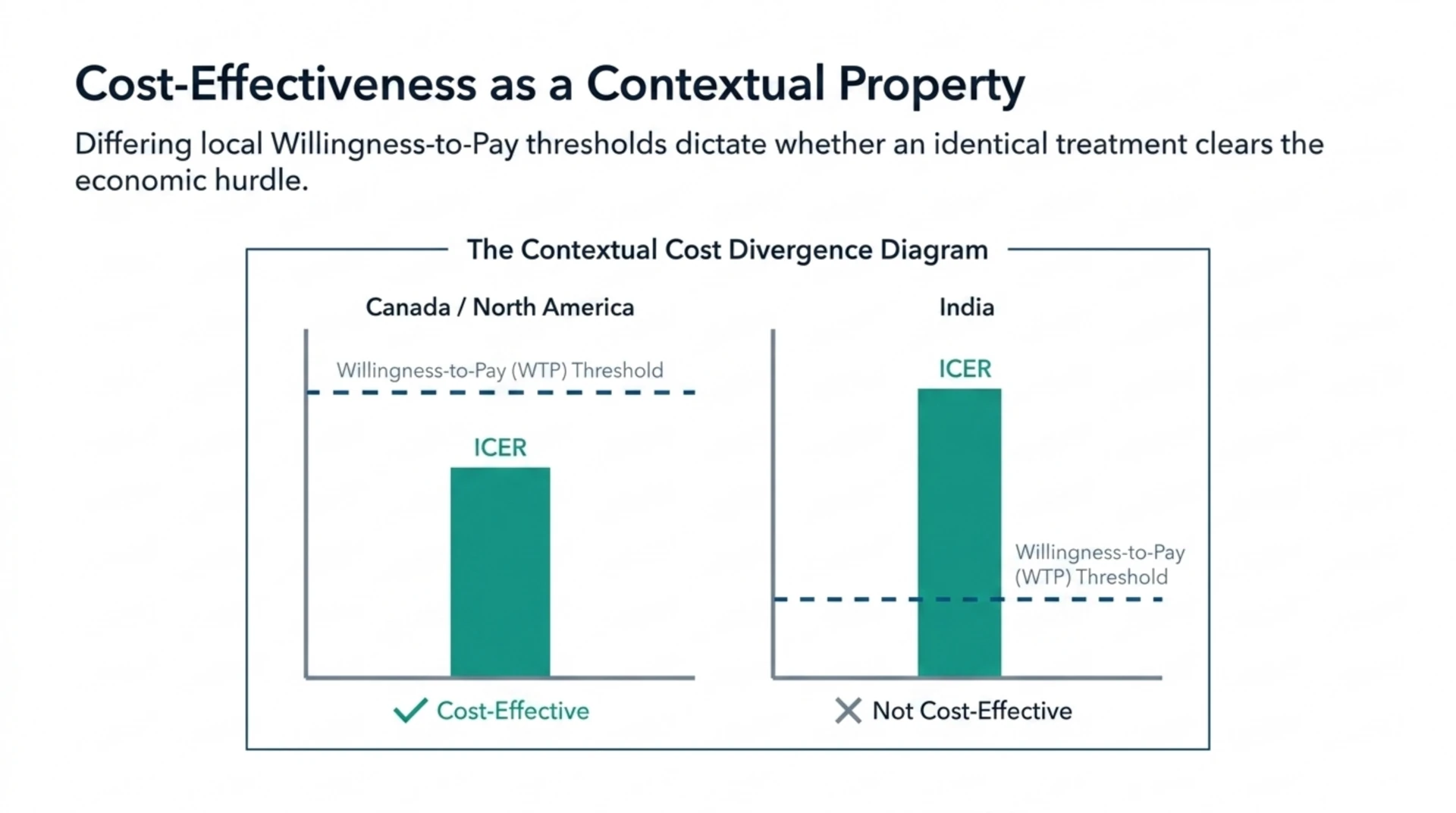
Not every model reaches the same conclusion, and a good evidence review says so plainly. A 2022 cost-utility analysis from India (Thiruvoth et al., PubMed | Our Assessment) built a Markov decision-analysis model to evaluate adding HBOT to standard wound care for diabetic foot ulcers in India. The model estimated that the incremental cost of adding HBOT exceeded what is generally accepted as a reasonable willingness-to-pay threshold in that health system, and the authors concluded that standard wound care plus HBOT was not cost-effective in the Indian context. This does not overturn the more favourable Canadian and North American findings above; it reflects a different health system, a different cost baseline for standard wound care, and a different willingness-to-pay threshold. It is a genuine reminder that cost-effectiveness is not a fixed property of a therapy, it is a property of a therapy within a specific health-economic context.
Systematic Review Evidence on Cost Outcomes
A systematic review of economic outcomes in HBOT wound-care studies (PubMed | Our Assessment) set out to summarize and evaluate the existing evidence base on the costs associated with HBOT for acute and chronic wounds, including DFUs. Reviews like this are useful precisely because they surface how thin and heterogeneous the underlying cost data still is across the field, a limitation any business case should account for rather than gloss over.
Severity-Specific Cost and Mortality Data
A retrospective analysis of a regional limb salvage program (PubMed | Our Assessment) looked specifically at cost and mortality data for 159 diabetic patients with Wagner grade 3 or 4 foot ulcers, comparing an evidence-based limb salvage protocol with adjunctive HBOT. Restricting the analysis to this severity band is exactly the approach a clinic owner should take when building their own numbers, since pooling mild and severe ulcers together tends to dilute whatever economic signal HBOT has.
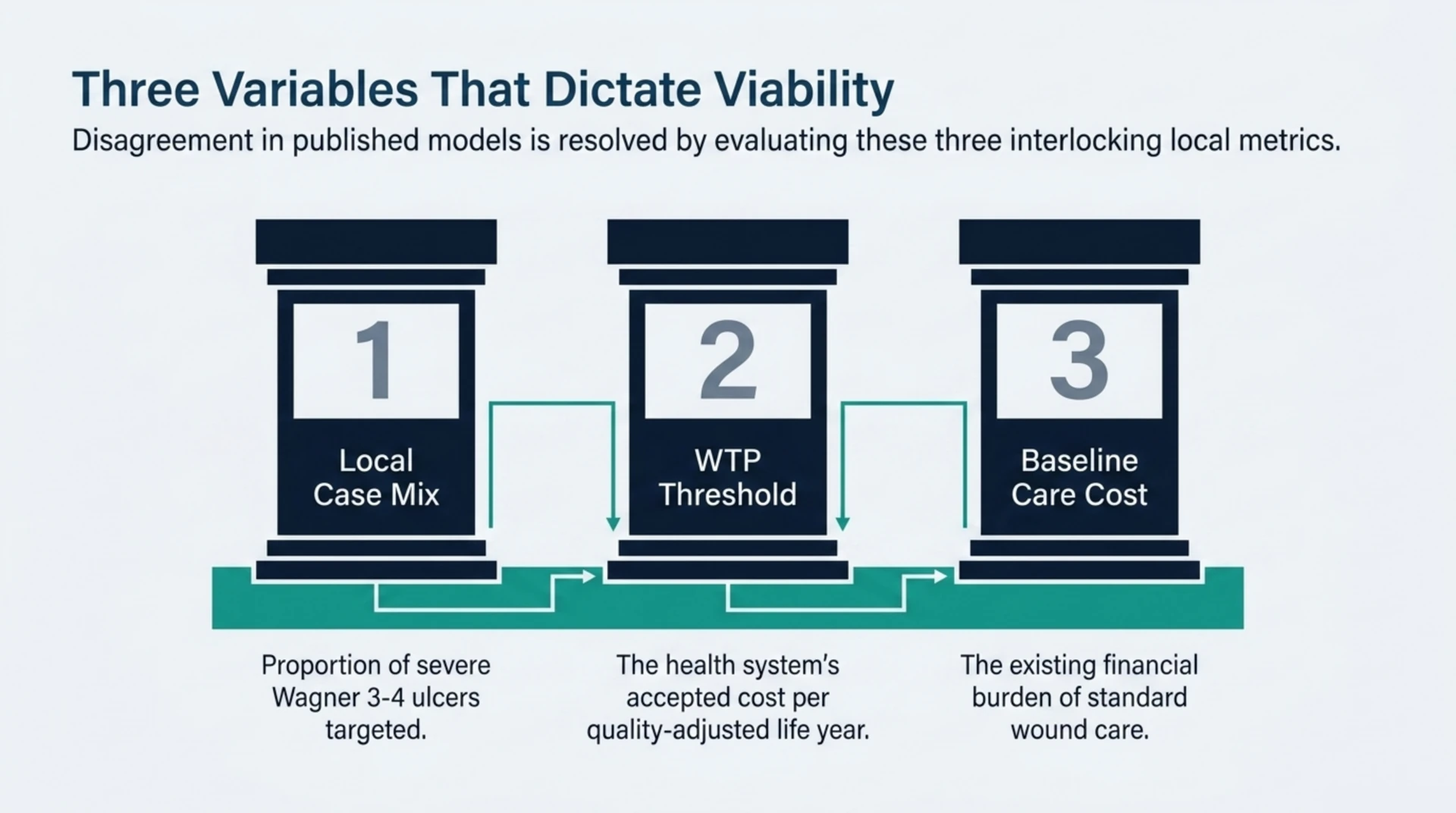
Why Do the Results Differ? Case Mix, Thresholds, and Health System Context
Three factors explain most of the disagreement between these analyses. First, case mix: models built around Wagner grade 3-4 ulcers, where amputation risk and cost are highest, tend to find a better economic case for HBOT than models built around a broader, milder DFU population. Second, the willingness-to-pay threshold: what counts as “cost-effective” is set by each health system, and a therapy that clears a Canadian or Ontario threshold will not automatically clear a lower threshold used elsewhere. Third, the cost baseline for standard wound care varies by country, which changes the size of the gap HBOT has to close.
None of this means the evidence is unusable. It means a Canada Hyperbarics program business case should be built on Canadian and North American data where possible, with the Indian cost-utility finding read as a caution against assuming cost-effectiveness transfers automatically across health systems rather than as a contradiction of the Canadian modelling.
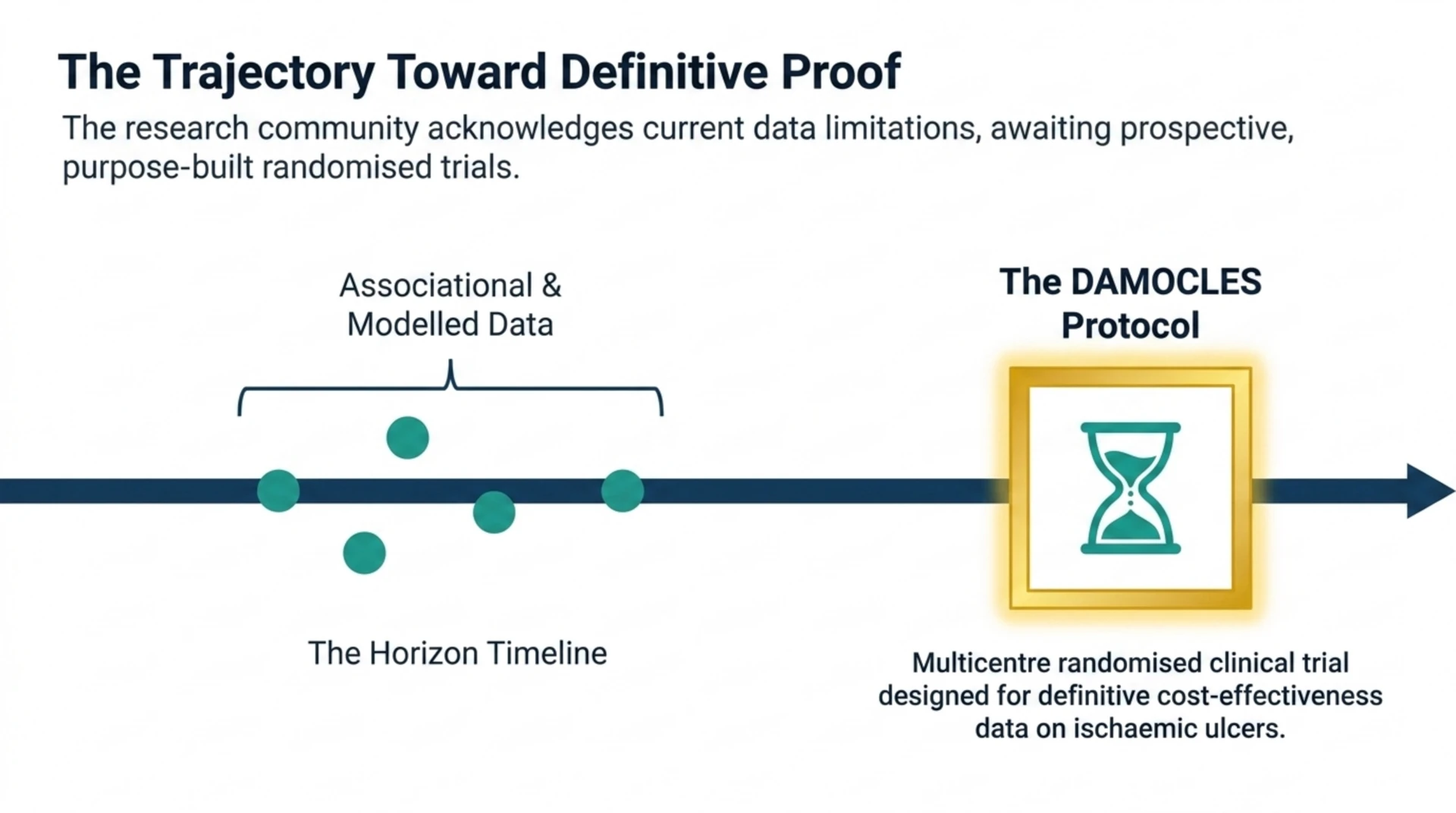
The DAMOCLES Trial: What It Set Out to Do, and What It Found
The strongest way to settle a cost-effectiveness question is a well-designed randomised trial built around it from the start. The Dutch DAMOCLES trial protocol (PubMed | Our Assessment) describes exactly that: a multicentre randomised clinical trial designed to assess whether additional HBOT is cost-effective for treating ischaemic diabetic ulcers. As a study protocol, it describes the planned methodology rather than reporting outcomes, but its existence is itself informative. It tells us the research community did not consider the cost-effectiveness question settled by the earlier retrospective and modelled evidence, and thought it important enough to warrant a dedicated, prospective, randomised answer.
That answer has since arrived. The trial’s economic analysis (PubMed | Our Assessment) reported on 120 patients with ischaemic diabetic foot ulcers over a 12-month horizon. In the intention-to-treat analysis it found no significant difference in costs and no significant difference in quality-adjusted life years between adjunctive HBOT and standard care alone, so it did not demonstrate cost-effectiveness across that population as a whole. The severity pattern seen elsewhere in this evidence base did reappear within it: the analysis reported a more favourable incremental cost-effectiveness ratio for Wagner grade 3 and 4 ulcers, and no benefit for Wagner grade 2. For a business case this is the most important caution here, because the one trial built from the start to answer the cost-effectiveness question did not return a favourable all-comers result.
Comparing the Evidence at a Glance
| Study | Design | Population / Setting | Economic Signal |
|---|---|---|---|
| Chuck et al., 2008 | Decision model | 65-year-old Canadian cohort | Purpose-built Canadian cost-effectiveness model |
| Cianci et al., 1997 | Retrospective cohort | 41 patients, severe DFU | Suggested significant long-term cost-effectiveness |
| Ontario HTA, 2017 | Health technology assessment | Ontario health system | Formal safety, effectiveness, and cost-effectiveness review |
| Bhutani et al., 2022 | Markov decision model | India | Not cost-effective versus local willingness-to-pay threshold |
| Wagner 3/4 cohort, 2016 | Retrospective analysis | 159 patients, Wagner grade 3-4 | Severity-specific cost and mortality comparison |
| DAMOCLES protocol, 2015 | RCT protocol | Dutch multicentre | Trial designed to answer the cost-effectiveness question |
| DAMOCLES economic analysis, 2024 | Randomised controlled trial | 120 patients, ischaemic DFU | No significant cost or QALY difference overall; more favourable at Wagner grade 3-4 |
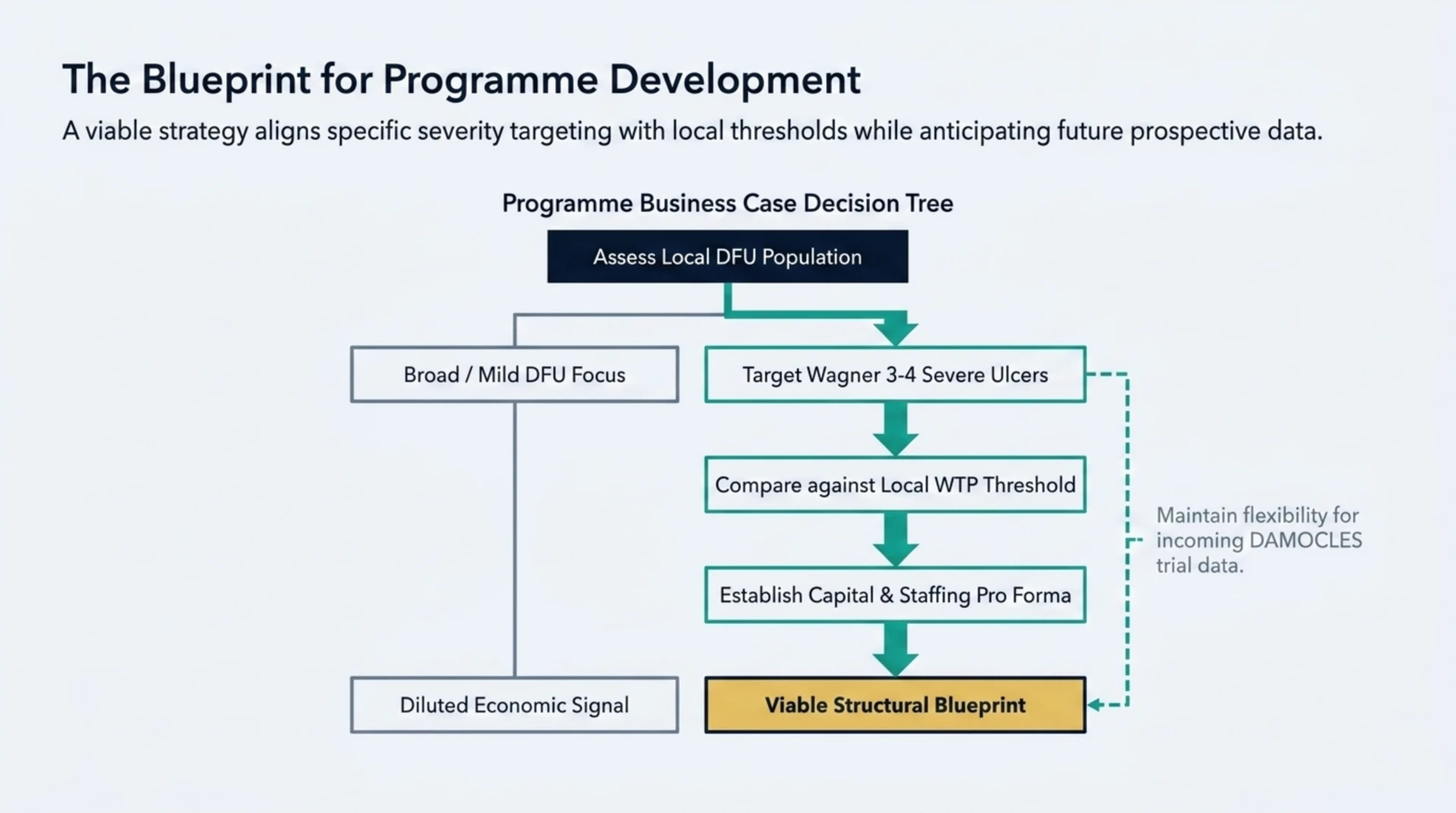
What This Means for a Clinic Business Case
Three practical takeaways follow from this evidence base. First, a generic, all-DFU-comers cost-effectiveness claim is not well supported; the more credible signal is specific to severe, amputation-threatened ulcers. Second, Canadian and Ontario-specific analyses are the most directly transferable evidence for a Canadian business case, more so than models built around a different health system’s costs and thresholds. Third, the field itself has not treated this question as closed, which is why a trial like DAMOCLES exists; a prudent business case should be built with that uncertainty in mind, not around a single favourable number pulled from one study. Canada Hyperbarics maintains detailed assessments of each of these studies so that clinic and hospital teams can review the underlying methodology, not just the headline conclusion, before it goes into a funding proposal.
Frequently Asked Questions
Is hyperbaric oxygen therapy cost-effective for diabetic foot ulcers?
It depends on the population and health system. Canadian and North American modelling and retrospective data have pointed toward favourable cost-effectiveness, particularly for severe Wagner grade 3-4 ulcers, while a 2022 Indian cost-utility model found it was not cost-effective under that country’s threshold. There is no single global answer.
Does HBOT reduce amputation rates in diabetic foot ulcers?
Amputation avoidance is the main mechanism through which cost-effectiveness models expect HBOT to generate savings, since major amputations are extremely costly. The DFU pool referenced here focuses on cost-effectiveness evidence rather than amputation-rate trial data specifically, so a business case should also review the clinical effectiveness literature separately.
What is an ICER and why does it matter for a DFU program?
An incremental cost-effectiveness ratio (ICER) is the extra cost of a treatment divided by the extra health benefit it produces, usually expressed as cost per quality-adjusted life year. Health systems compare a treatment’s ICER against a local willingness-to-pay threshold to decide whether it represents good value; this is exactly the calculation that produced a “not cost-effective” verdict in the Indian analysis and different verdicts elsewhere.
Is the cost-effectiveness evidence the same in every country?
No. Willingness-to-pay thresholds, the baseline cost of standard wound care, and patient case mix all vary by health system, which is exactly why the Canadian and Indian analyses in this evidence base reach different conclusions.
What would settle the cost-effectiveness question definitively?
A completed, adequately powered randomised trial built specifically around the cost-effectiveness question, such as the DAMOCLES trial, would provide stronger evidence than retrospective cohorts or decision models alone. That trial has now reported: its economic analysis found no significant difference in costs or quality-adjusted life years across all participants, with the more favourable signal confined to severe Wagner grade 3-4 ulcers.
Who typically qualifies for HBOT in a DFU program?
The economic case referenced in this evidence base is strongest for more severe, non-healing ulcers, particularly Wagner grade 3 and 4, where amputation risk and cost are highest. Clinical eligibility criteria should be set with a treating physician and are separate from the economic modelling discussed here.
Where can I read the full details behind each study?
Every citation above links to both the original PubMed abstract and our own internal assessment page, which summarizes the study’s methodology and findings in more depth than a single blog post can cover.
Related Reading
- Building an Academic Research Partnership for HBOT Clinics
- HBOT Informed Consent Documentation for Clinics
- Managing Claustrophobia During Hyperbaric Oxygen Therapy
This content is for informational purposes only and is not medical advice.
Considering an HBOT program for your facility? Canada Hyperbarics works with hospitals and regulated facilities to review the evidence behind a DFU program business case. Visit our facilities page to learn more.