
TL;DR: A hyperbaric clinic academic research partnership is a formal working arrangement between a hyperbaric oxygen therapy (HBOT) clinic and a university, teaching hospital, or research institute that allows both parties to collaborate on studies, quality projects, or data collection under agreed ethics and governance rules. For a Canadian clinic owner-operator, setting one up means finding the right institutional partner, aligning with a research ethics board, and putting a written agreement in place before any data changes hands.
A growing number of Canadian hyperbaric clinics are exploring formal ties with universities and hospital research units. This article walks clinic owners and operators through what a hyperbaric clinic academic research partnership actually involves, how to find and vet a partner, and what the process looks like from first email to signed agreement. It is a process guide, not a review of clinical evidence, so it stays focused on logistics rather than outcomes.
What Is a Hyperbaric Clinic Academic Research Partnership?
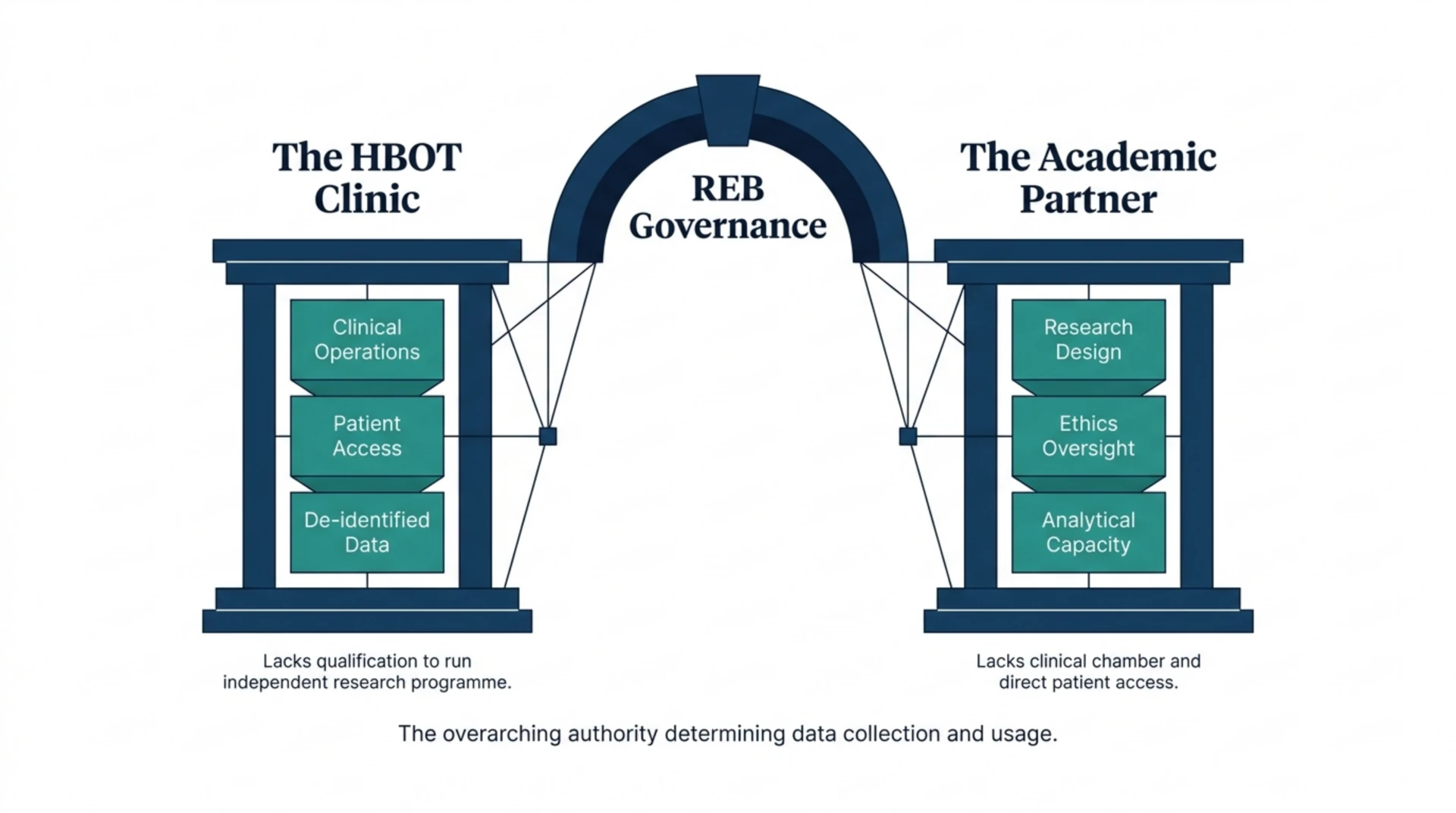
A hyperbaric clinic academic research partnership is a structured collaboration where a clinic contributes clinical operations, patient access, or de-identified data, and an academic partner contributes research design, ethics oversight, and analytical capacity. Neither side operates alone: the clinic is not qualified to run an independent research program, and the academic partner typically has no chamber of its own to work with.
These arrangements can range from a single quality-improvement project to a multi-year data-sharing agreement. The common thread is that a research ethics board, not the clinic, ultimately governs what data can be collected and how it can be used.
Why Canadian HBOT Clinics Are Pursuing Academic Partnerships
Interest in these partnerships has grown alongside the broader body of published hyperbaric research, which now runs to over 14,000 peer-reviewed studies worldwide. Clinics operating in Canada often want to contribute to that body of knowledge, improve their own operational data, or build credibility with referring physicians and regulators.
For a clinic owner, the practical motivations tend to be narrower than “advancing science.” Common reasons include:
- Improving internal quality metrics using a structured research framework rather than ad hoc tracking.
- Building a documented relationship with a teaching hospital that can support referral pathways.
- Positioning the clinic for future regulatory or accreditation conversations that ask about research involvement.
- Reducing the administrative burden of designing a study from scratch by leaning on an academic partner’s methodology expertise.
None of these reasons require the clinic to make any claim about what HBOT does clinically. The partnership itself is an operational and administrative undertaking, and clinics should keep it that way until any resulting research has been through peer review.
How Do You Find the Right Academic Partner?
Universities and teaching hospitals
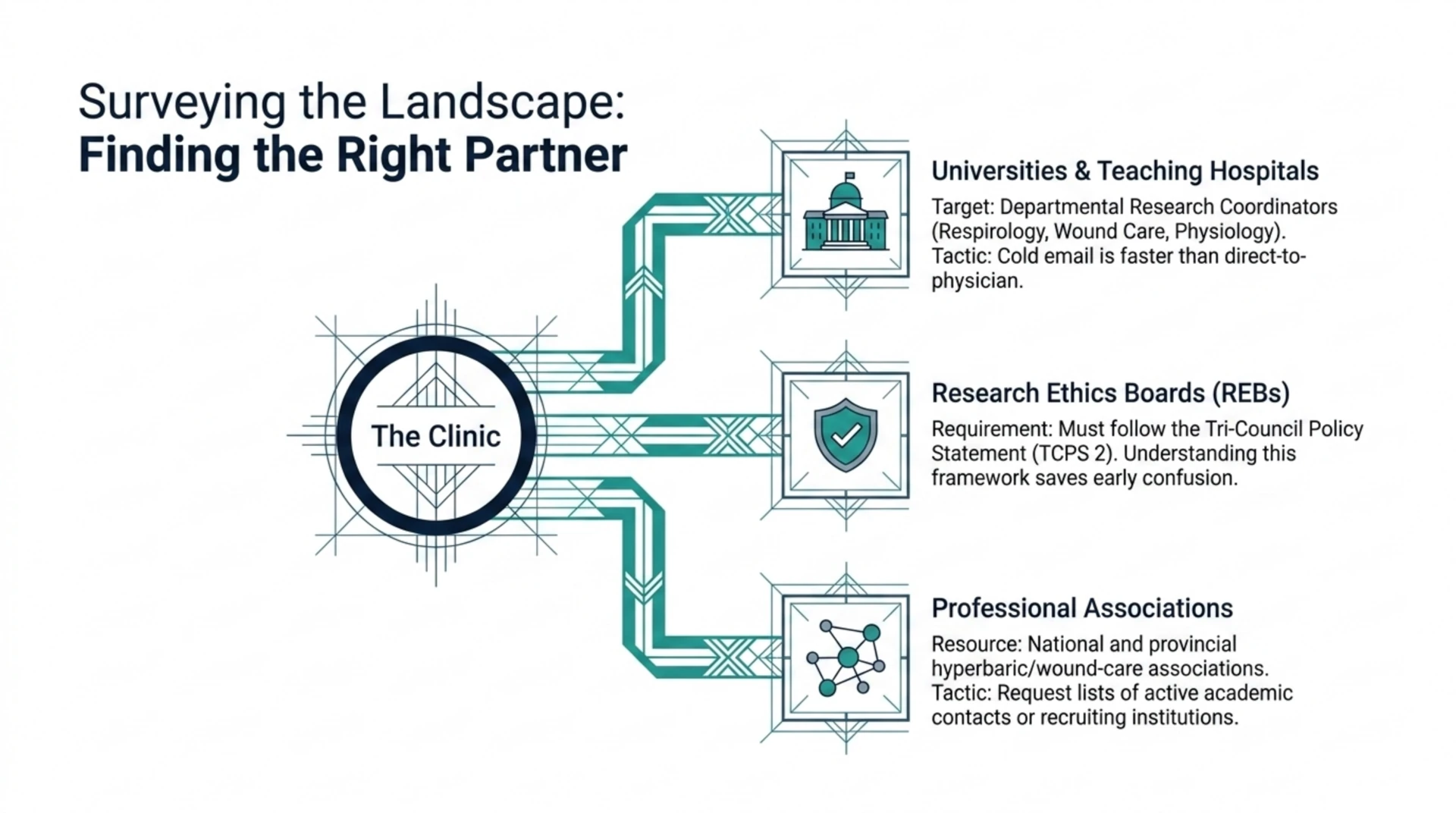
Most Canadian medical schools have a research office or a specific department, such as respirology, wound care, or physiology, where hyperbaric-adjacent interest is more likely. A cold email to a departmental research coordinator, rather than directly to a physician, is usually the fastest route to a real conversation.
Research ethics boards (REBs)
Every accredited research ethics board in Canada follows the Tri-Council Policy Statement (TCPS 2) framework. Before approaching a university, it helps to understand that any study involving your patients’ data will need REB approval regardless of which institution leads it. Knowing this in advance saves a round of confused emails later.
Professional associations
National and provincial hyperbaric and wound-care associations sometimes maintain lists of academic contacts already interested in hyperbaric-related research. These associations are also a reasonable place to ask whether any Canadian institution is currently recruiting clinical partners.
What Does the Partnership Process Actually Look Like?
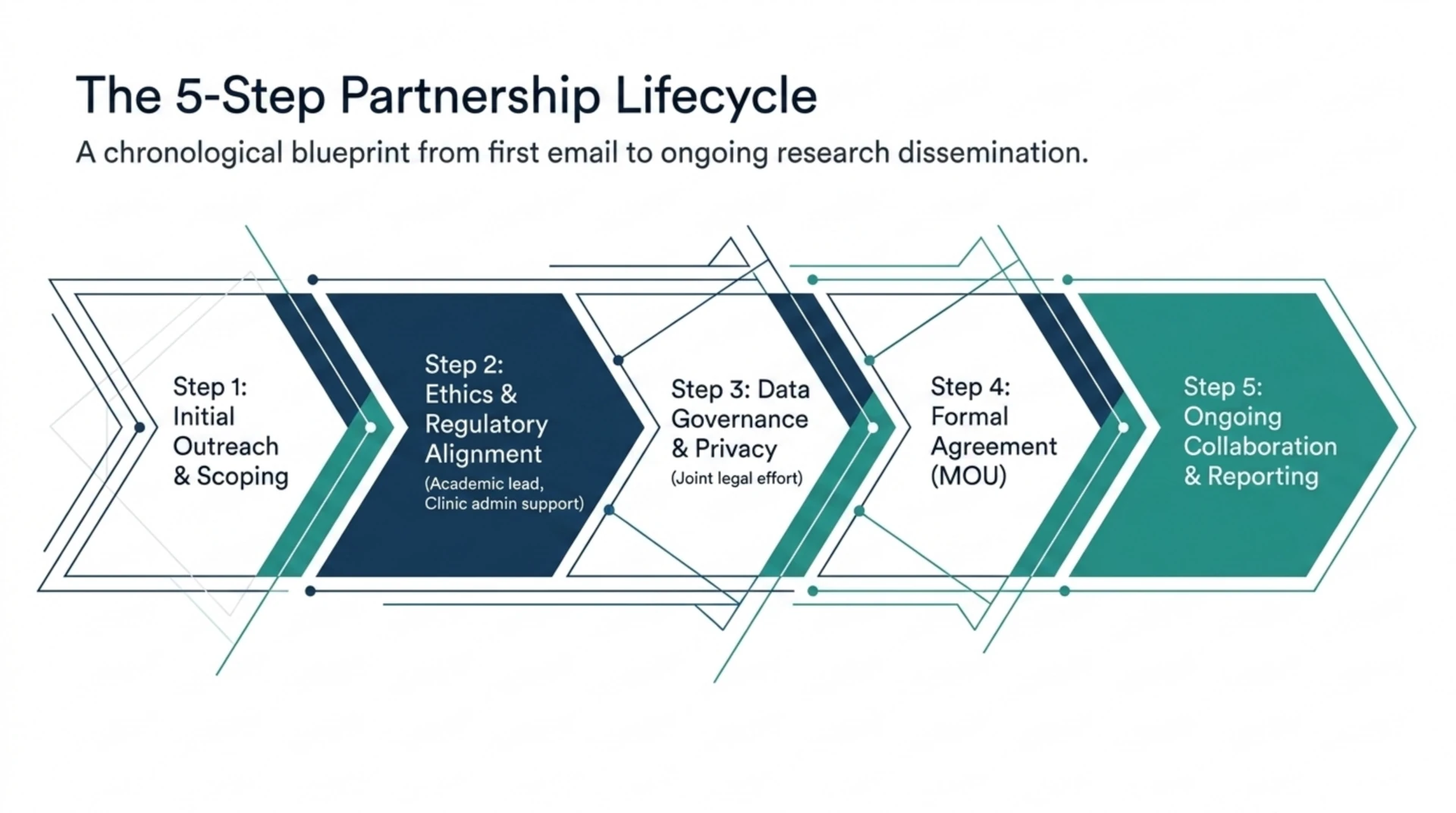
Step 1: Initial outreach and scoping
The first conversation should establish scope before anything else: is this a one-time quality project, an ongoing data-sharing relationship, or a formal clinical trial site relationship? Scoping this early avoids months of back-and-forth later.
Step 2: Ethics and regulatory alignment
Once scope is agreed, the academic partner will typically lead the ethics application. The clinic’s role at this stage is administrative: confirming what records exist, what consent processes are already in place, and whether facility-level approval (for example, from a hospital board) is also required. Clinics operating under Health Canada device licensing and provincial facility regulations should review their own compliance position before committing; our regulatory overview is a useful starting reference for that internal check.
Step 3: Data governance and privacy
Every partnership needs a written data governance plan covering what is collected, how it is de-identified, where it is stored, and who can access it. Canadian privacy law (PIPEDA and applicable provincial health-information legislation) applies regardless of whether the academic partner is publicly funded. Clinics should never share identifiable patient records without a signed data-sharing agreement reviewed by both the clinic’s own counsel and the academic institution’s privacy office.
Step 4: Formal agreement (MOU or contract)
Most partnerships are formalized through a memorandum of understanding (MOU) or a research collaboration agreement. This document should specify roles, funding (if any), publication rights, intellectual property, and an exit clause allowing either party to withdraw. A partnership without a written agreement is not a partnership, it is an informal favour that can end badly for either side.
Step 5: Ongoing collaboration and reporting
Once underway, most academic partnerships involve periodic check-ins, interim reporting to the REB, and eventually a plan for how results will be disseminated. Clinics should agree up front on whether they will be named in any resulting publication and in what role.
Comparing Partnership Models
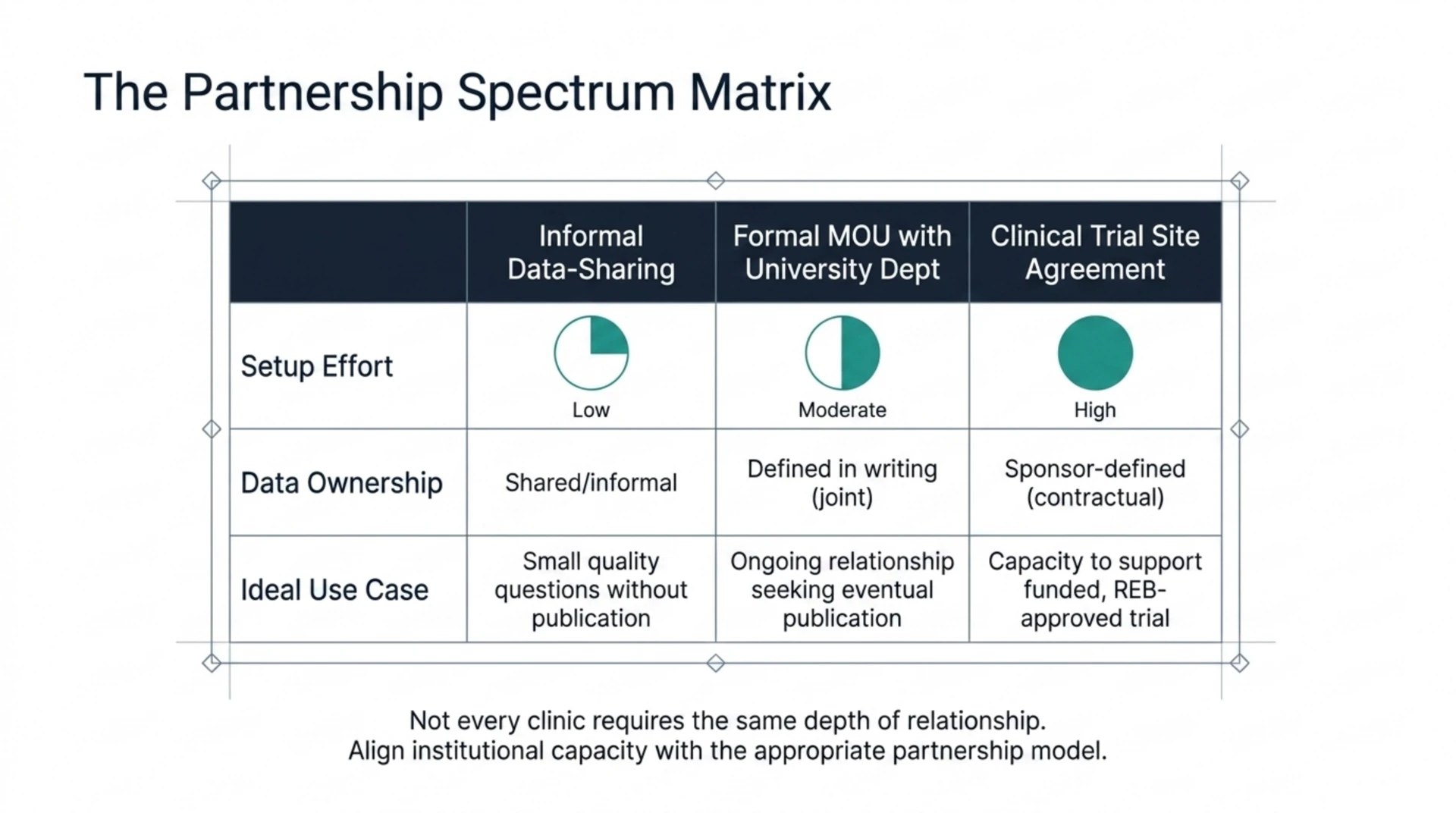
Not every clinic needs the same depth of relationship. The table below compares three common models clinic owners consider.
| Model | Setup effort | Data ownership | Best for |
|---|---|---|---|
| Informal data-sharing | Low | Shared, informally defined | Small quality-improvement questions with no publication plan |
| Formal MOU with a university department | Moderate | Defined in writing, usually joint | Clinics wanting an ongoing relationship and eventual publication |
| Clinical trial site agreement | High | Sponsor-defined, contractually specified | Clinics with capacity to support a funded, REB-approved trial |
What Should Clinic Owners Watch Out For?
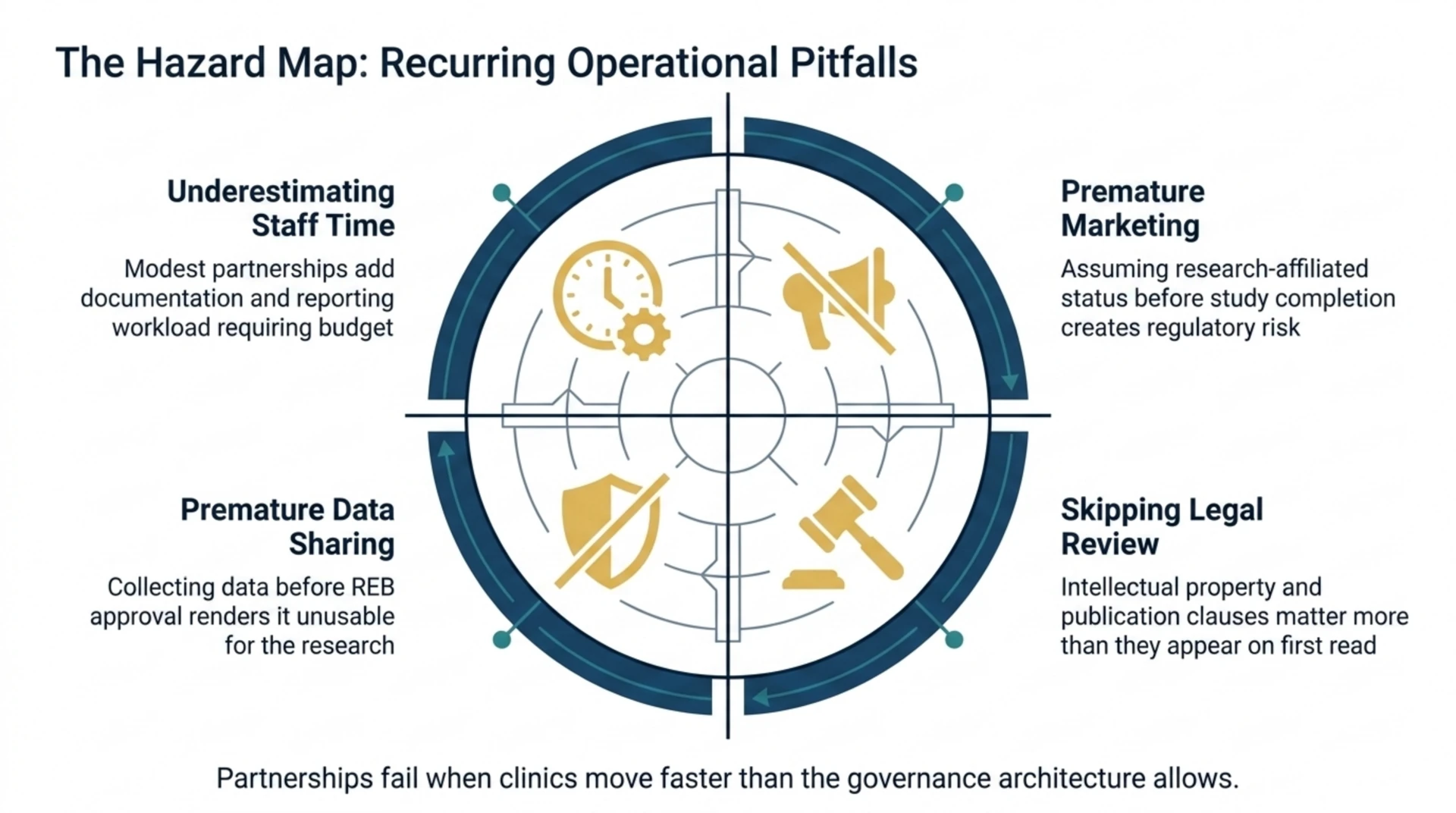
A few recurring pitfalls show up when clinics move too quickly into academic partnerships:
- Signing a data-sharing arrangement before REB approval exists. Data collected outside an approved protocol generally cannot be used in the resulting research.
- Assuming the clinic can market itself as “research-affiliated” before any study is complete. Premature marketing claims can create regulatory and credibility problems.
- Underestimating staff time. Even a modest partnership adds documentation and reporting workload that needs to be budgeted for, not absorbed informally.
- Skipping legal review of the MOU. Intellectual property and publication rights clauses matter more than they appear to at first read.
Clinic owners should also confirm, before any partnership begins, which conditions their facility is set up to treat and how that maps to what an academic partner might want to study. For background on the range of conditions where hyperbaric oxygen therapy is studied, see our conditions overview, which is a useful reference point when scoping a potential research question with an academic partner.
Frequently Asked Questions
Does a hyperbaric clinic need a research ethics board of its own?
No. Most clinics rely on the academic partner’s existing REB rather than establishing their own. This is one of the main reasons a formal academic partnership is worth pursuing in the first place.
Can a private HBOT clinic partner with a public teaching hospital?
Yes, provided both parties agree on governance, data-sharing, and ethics processes in writing. Ownership structure of the clinic does not by itself prevent a partnership, but it does affect what disclosures and conflict-of-interest documentation the REB will require.
How long does it take to set up a research partnership?
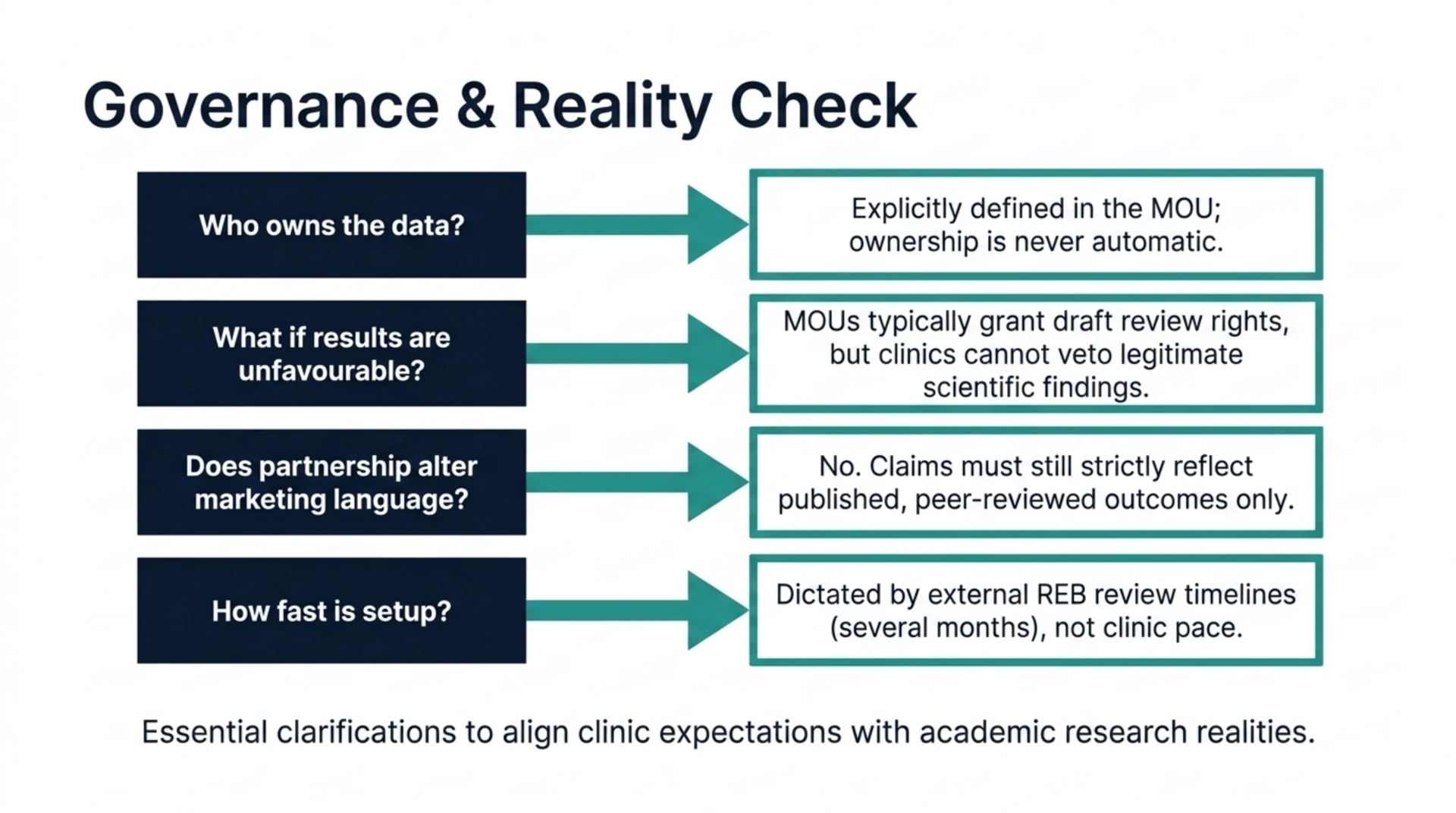
Timelines vary widely, but clinics should expect several months from first contact to a signed agreement, largely driven by REB review timelines rather than the clinic’s own pace.
Does a research partnership let a clinic use different marketing language?
No. A partnership itself does not change what a clinic can claim about outcomes. Any marketing language still needs to reflect only what has been published and peer-reviewed, not what a partnership is expected to eventually show.
Who owns the data collected during the partnership?
This should be defined explicitly in the MOU or research agreement. Data ownership is not automatic and should never be left as an unwritten assumption on either side.
What happens if the academic partner wants to publish results the clinic disagrees with?
This scenario should be addressed in the original agreement, typically through a publication review clause that allows the clinic to comment on drafts without having veto power over legitimate scientific findings.
Are there costs involved in setting up a partnership?
Often yes, particularly for legal review of agreements and any staff time dedicated to data preparation or study coordination. Some partnerships are funded through grants held by the academic partner, which can offset these costs.
Related Reading
- HBOT Informed Consent Documentation for Clinics
- Hyperbaric Oxygen Therapy Trial Methodology: Sham Control
- Hyperbaric Oxygen Dose, Pressure and Protocol Optimization
This content is for informational purposes only and is not medical advice.
Canada Hyperbarics maintains educational resources for clinicians and clinic operators navigating the hyperbaric field in Canada, including regulatory summaries and facility listings. If you operate or are considering opening a hyperbaric facility and want to understand where it fits alongside hospitals and regulated facilities, visit our facilities directory to see how Canadian HBOT providers are organized today.