
TL;DR: Claustrophobia is a fear of enclosed or confined spaces that can make a hyperbaric oxygen therapy (HBOT) session feel more stressful than it needs to be. With advance preparation, clear communication with clinic staff, and a few simple in-chamber coping techniques, most people who feel anxious about the chamber can complete their sessions comfortably.
Managing claustrophobia during hyperbaric oxygen therapy is one of the most common concerns patients raise before their first session at Canada Hyperbarics or any hyperbaric facility. The idea of lying inside a clear cylindrical chamber for an hour or more can feel intimidating, especially for anyone who already finds small or enclosed spaces uncomfortable. The good news is that claustrophobia around HBOT is manageable for the large majority of patients, and clinics have well established routines for helping people through it.
This guide walks through what to expect, how to prepare, and what you can do in the moment if anxiety shows up mid-session. None of this is about whether HBOT works for a particular condition. It is about the practical experience of the appointment itself, so you can walk in feeling ready rather than uncertain.
What Is Claustrophobia and Why Does It Come Up During HBOT?
Claustrophobia is an intense fear or discomfort triggered by enclosed or tightly confined spaces. It can range from mild unease to a full panic response, and it affects people differently depending on the space, the lighting, the noise, and how much control they feel they have over leaving.
A hyperbaric chamber checks a few of the boxes that commonly trigger this response: it is enclosed, the door seals shut for the length of the session, and the space itself is narrow. For someone who has never used one before, that combination can understandably raise anxiety before they have even arrived at the clinic.
Feeling nervous about the chamber does not mean you cannot complete hyperbaric oxygen therapy sessions. Clinic staff see this concern regularly and have specific strategies for supporting patients through it, from the first tour of the facility to the final minutes of pressurization.
Preparing for Your Session When You’re Managing Claustrophobia During Hyperbaric Oxygen Therapy
Most of the anxiety around HBOT comes from the unknown. Preparation is the single most effective logistical step you can take before your appointment.
Ask for a Tour or Walkthrough First
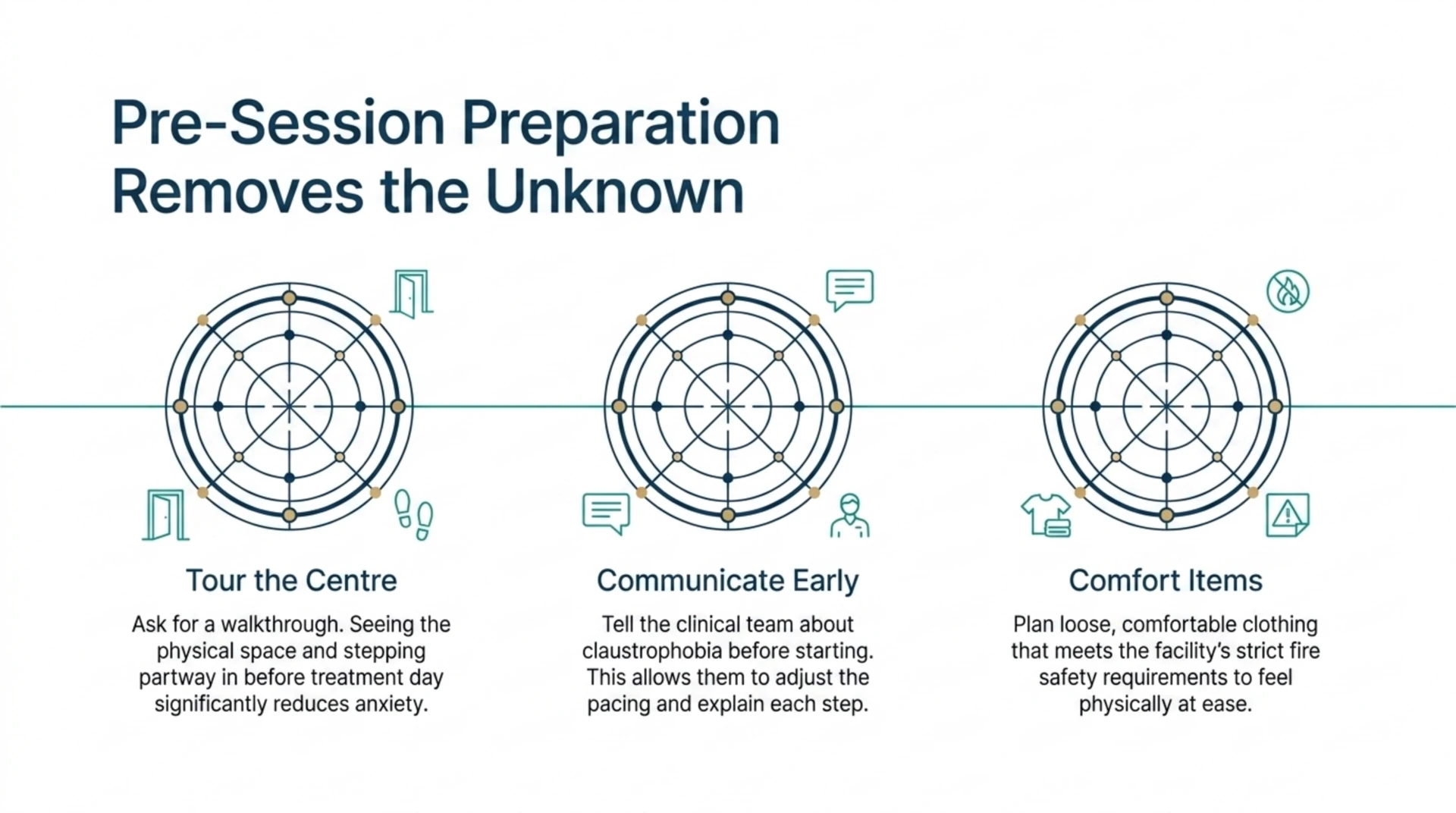
Many clinics will let you see the chamber, sit near it, or even step partway in before your actual treatment day. Seeing the physical space in advance, without the pressure of starting a session, often reduces anxiety significantly. If this is not offered, it is reasonable to ask.
Tell Staff Before You Begin
Let the technician or clinical team know about your claustrophobia before your first session, not partway through it. This lets them adjust pacing, explain each step as it happens, and check in with you more frequently during the early minutes when anxiety tends to peak.
Plan Your Clothing and Comfort Items
Loose, comfortable clothing that meets the clinic’s fire safety requirements can help you feel more physically at ease. Ask your clinic what is permitted inside the chamber, since flammability rules for hyperbaric environments are strict and vary by facility.
What Happens Inside the Chamber?
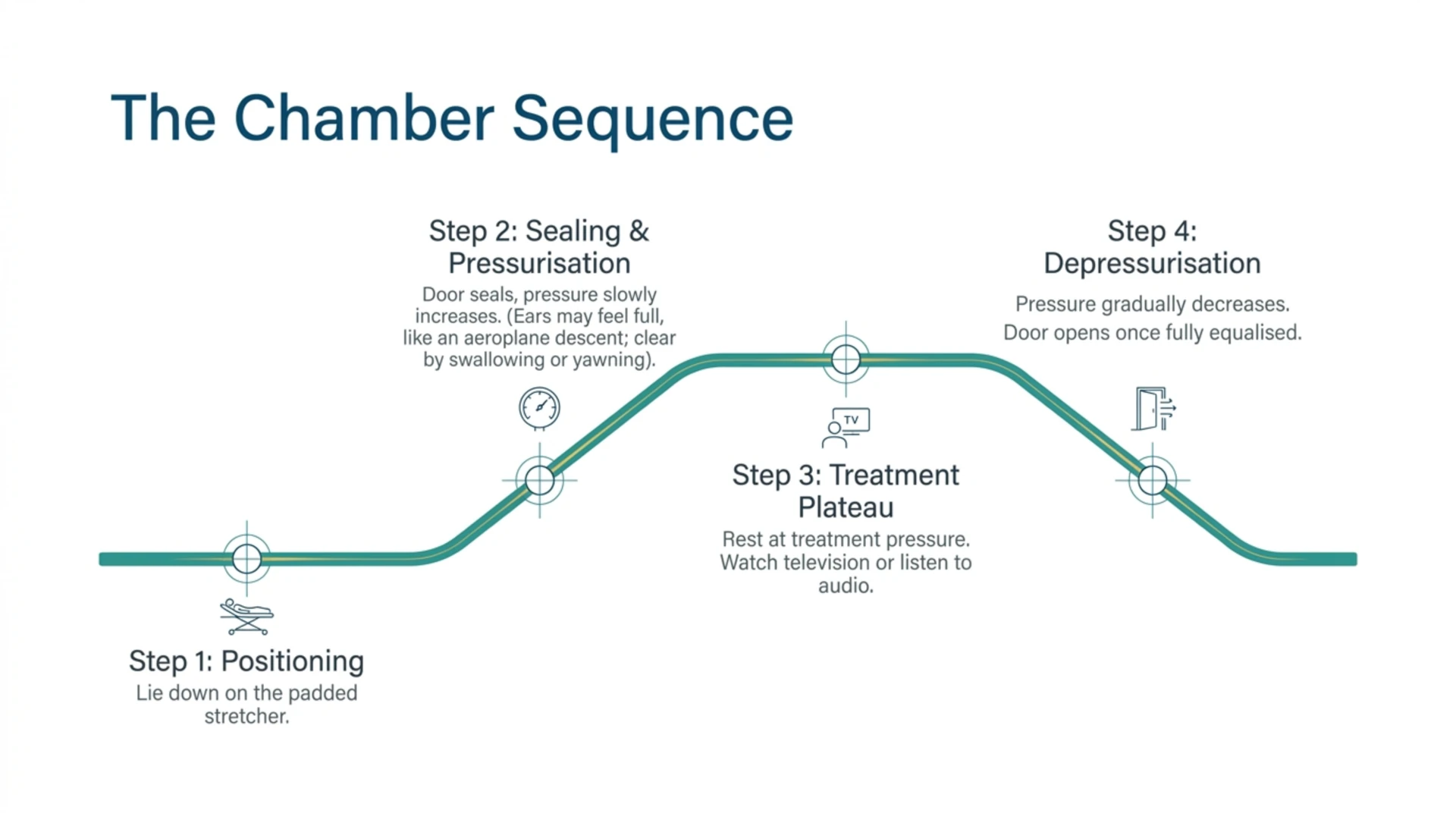
Understanding the sequence of events removes a lot of guesswork, which in turn reduces anxiety. A typical monoplace session follows a predictable pattern.
- You lie down on the padded stretcher or bed inside the chamber.
- The technician closes and seals the door, then begins slowly increasing the pressure.
- You may feel a fullness in your ears similar to descending in an airplane, which you can equalize by swallowing or yawning.
- Once at treatment pressure, you rest for the remainder of the session, often watching television or listening to audio through the chamber’s built-in system.
- The technician gradually decreases the pressure at the end, and the door opens once the chamber has fully equalized with room pressure.
Throughout the session, you remain in constant contact with clinic staff through an intercom or window, so you are never truly on your own even though the door is sealed.
In-Chamber Coping Techniques
If anxiety rises once you are inside, there are several techniques patients commonly use to settle back down.
Slow, Paced Breathing
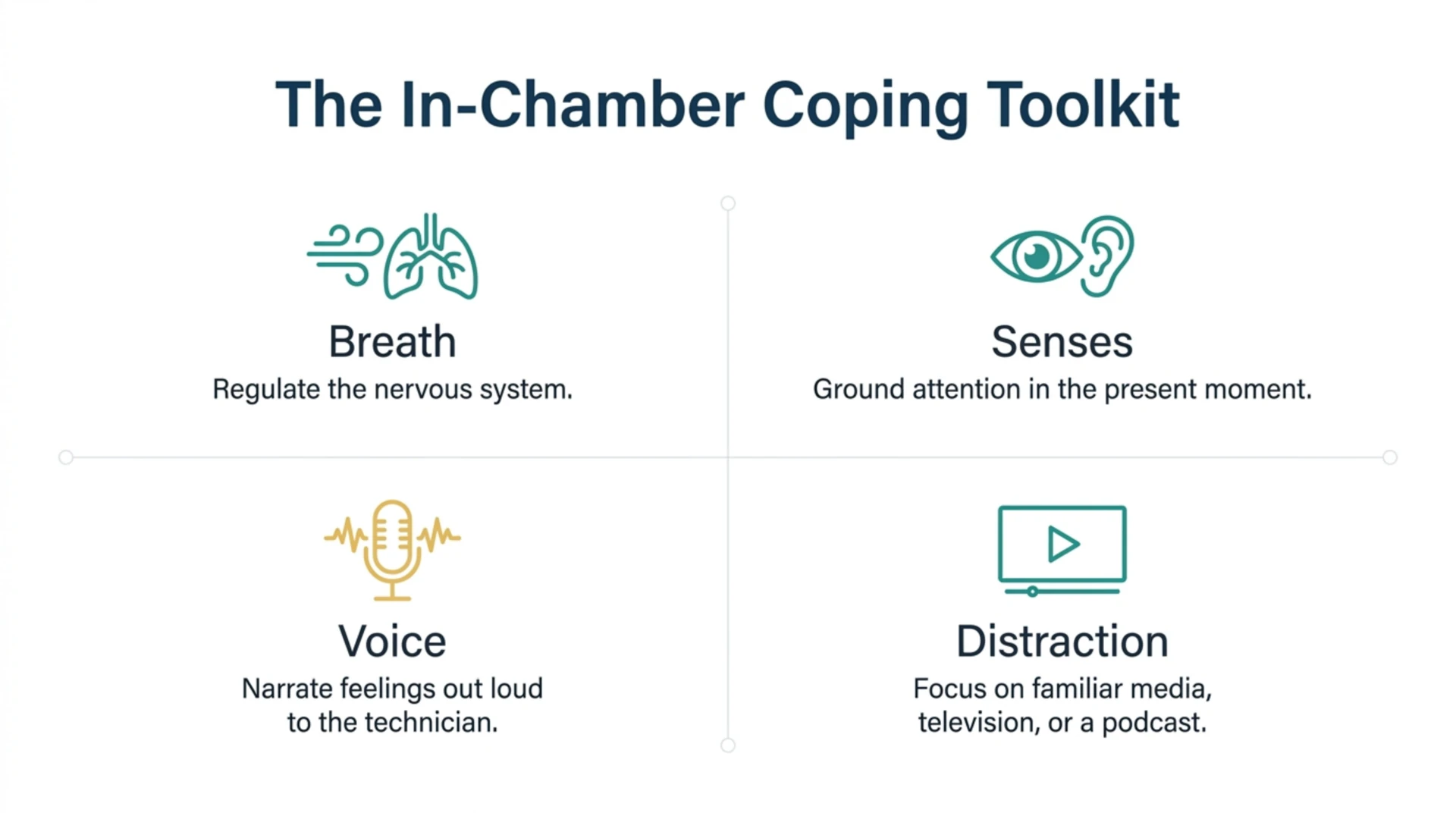
A slow inhale for four counts, a brief hold, and a slow exhale for six counts can help calm the nervous system’s stress response. This is a general anxiety management technique, not specific to HBOT, but it works well in the chamber because there is little else to focus on.
Grounding Through the Senses
Naming five things you can see, four things you can hear, and noticing the texture of the padding beneath you can pull attention away from the feeling of confinement and back into the present moment.
Using the Communication System
Knowing that you can speak to the technician at any point, and that they are actively listening, is itself a coping tool. Many patients find that simply narrating how they feel out loud, even briefly, reduces the intensity of the anxiety.
Distraction Through Media
Watching a familiar show or listening to a favourite podcast gives the mind something to attach to other than the walls of the chamber. Ask your clinic in advance what entertainment options are available so you can plan accordingly.
| Feature | Monoplace Chamber | Multiplace Chamber |
|---|---|---|
| Space | Single-person, narrower feel | Room-sized, shared with other patients |
| Company | Alone, with intercom contact only | Other patients and often a staff member present inside |
| Visibility | Clear acrylic tube, technician visible through it | Open room, direct eye contact with others |
| Typical claustrophobia consideration | May feel more confining for some patients | Some patients find the shared, open room less confining |
Neither chamber type is universally easier for every patient. Some people prefer the privacy of a monoplace chamber, while others feel calmer with people physically nearby in a multiplace room. If you know your clinic uses one type over the other, it is worth asking what the experience is like before your first appointment.
What If I Still Feel Anxious Mid-Session?
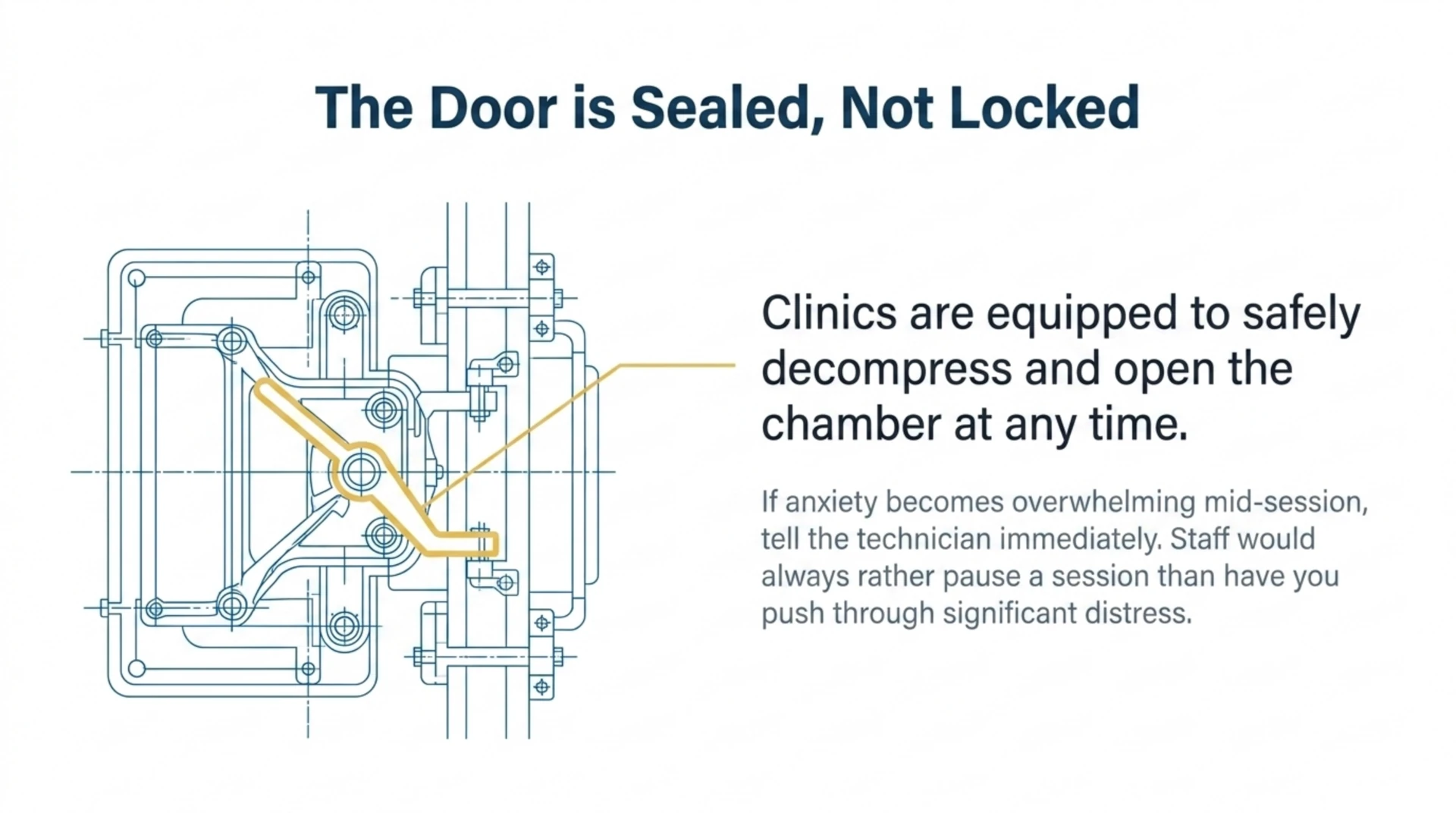
If anxiety becomes overwhelming during a session, tell the technician immediately through the intercom. Clinics are equipped to safely decompress and open the chamber if a patient needs to stop, and staff would always rather pause a session than have you push through significant distress.
You are not required to complete every session on your first attempt. Some patients need two or three sessions before their anxiety settles into a manageable routine, and that is a normal part of the adjustment process, not a failure.
If your claustrophobia is severe enough that it may interfere with treatment, it is worth discussing this with the referring clinician before your course of sessions begins. They can help you weigh options and timing that suit your situation. This falls outside the scope of a general how-to guide, so speak with your care team directly about what applies to you.
When HBOT Might Be Recommended
Hyperbaric oxygen therapy is used for a range of conditions that clinicians may consider it for, and the reasons a course of sessions is recommended vary by patient. If you want to understand the conditions where HBOT is used and the reasoning behind a referral, visit our conditions overview rather than relying on general assumptions about what the chamber does.
Canada Hyperbarics maintains educational information on treatment logistics, facility standards, and where hyperbaric oxygen therapy is delivered across the country, separate from the clinical evidence for any specific condition.
Frequently Asked Questions
Is it normal to feel claustrophobic during hyperbaric oxygen therapy?
Yes, feeling some anxiety about an enclosed chamber is a common and normal reaction, especially before your first session. Clinics are experienced in helping patients work through this.
Can I stop a session early if I feel too anxious?
Yes. Tell the technician right away, and they can safely begin decompression so the chamber can be opened. Staff would rather pause a session than have you experience significant distress.
Will the door be locked during my session?
The door seals to maintain pressure, but it is not locked in a way that prevents staff from opening it. Technicians actively monitor every session and can begin decompression whenever needed.
Are multiplace chambers less claustrophobic than monoplace chambers?
It depends on the patient. Some people prefer the open, room-like feel of a multiplace chamber, while others prefer the privacy of a monoplace unit. There is no single answer that fits everyone.
Can I bring headphones or watch something during my session?
Many clinics offer television or audio options built into the chamber. Ask your specific facility in advance what is available and what safety rules apply to personal items.
Should I tell my clinic about my claustrophobia before booking?
Yes. Letting the clinic know in advance allows staff to prepare a tour, adjust pacing, and plan extra check-ins during your early sessions.
Does anxiety medication affect hyperbaric oxygen therapy sessions?
Any medication questions, including anti-anxiety medication before a session, should be directed to your referring clinician or the hyperbaric medical team, since this depends on your individual health history.
Related Reading
- Building an Academic Research Partnership for HBOT Clinics
- Hyperbaric Oxygen Therapy in Children
- HBOT Informed Consent Documentation for Clinics
If you have questions about scheduling, facility tours, or what to expect at a specific location, our FAQ page covers many of the logistical questions patients ask most often.
Managing claustrophobia during hyperbaric oxygen therapy becomes easier with the right preparation and open communication with your care team. Canada Hyperbarics encourages anyone with concerns about enclosed spaces to raise them before their first appointment, so staff can plan accordingly. To find a location near you, visit our directory of hospitals and regulated facilities.
This content is for informational purposes only and is not medical advice.