
Reading time: about 10 minutes. Last updated: June 3, 2026.
Hyperbaric oxygen therapy (HBOT) is a hospital-delivered medical treatment in which a patient breathes 100 percent oxygen inside a pressurised chamber at 2.0 to 2.8 atmospheres absolute. In Nova Scotia, HBOT is available at one publicly funded location, the Hyperbaric Medicine Unit at the QEII Health Sciences Centre in Halifax. Coverage runs through the provincial public plan when the referral is for a recognised indication.
TL;DR: Hyperbaric oxygen therapy in Nova Scotia is delivered at one publicly funded site, the Hyperbaric Medicine Unit at the QEII Health Sciences Centre in Halifax. Treatment for recognised indications is covered by Medical Services Insurance (MSI) with a referral from a Nova Scotia physician. Wait times for elective indications such as radiation injury and chronic wounds typically run 12 to 18 months, while emergencies such as carbon monoxide poisoning, decompression sickness, and gas gangrene are treated the same day. There are no MSI-funded private HBOT clinics in Nova Scotia, so patients seeking out-of-province or private options pay out of pocket.
What is hyperbaric oxygen therapy in Nova Scotia?
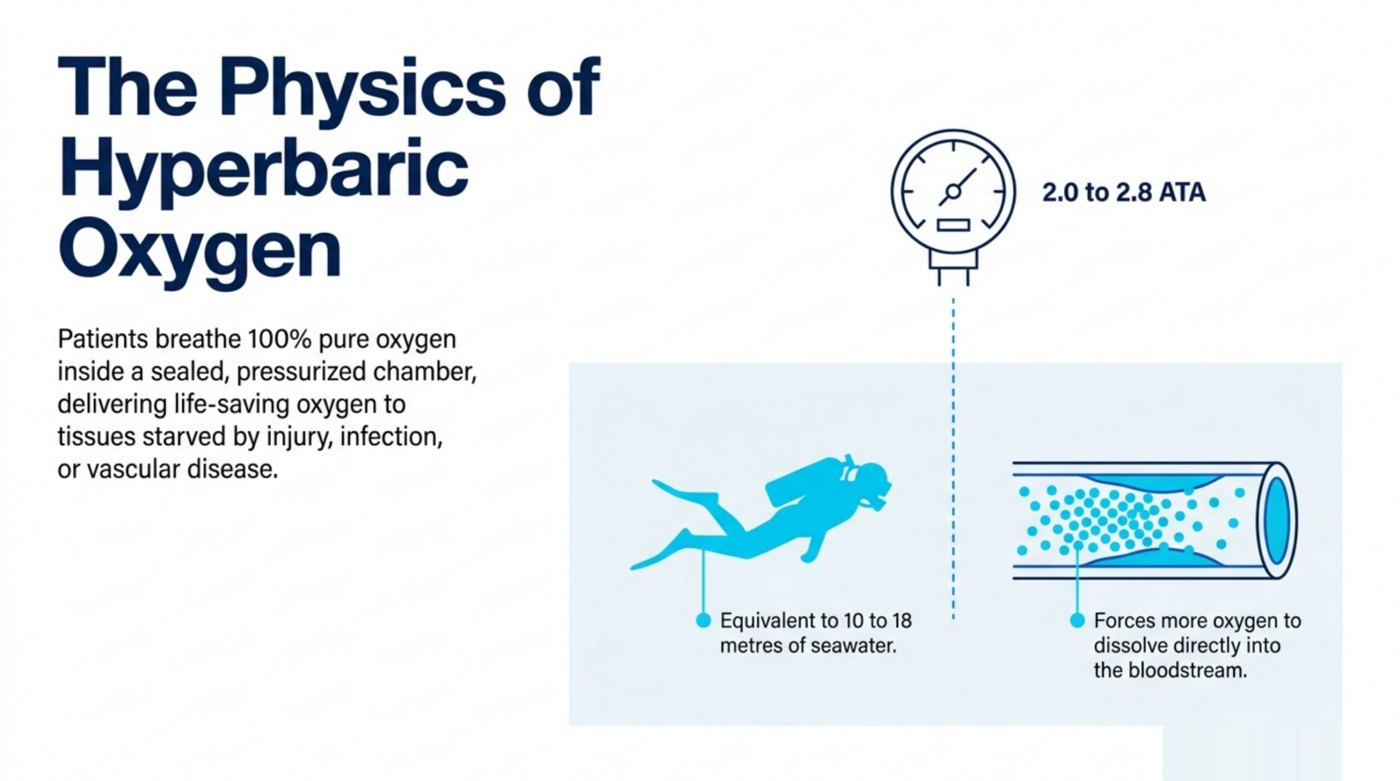
Hyperbaric oxygen therapy (HBOT) is a medical treatment in which a patient breathes pure oxygen inside a pressurised chamber. The chamber is sealed and the air pressure is raised to between 2.0 and 2.8 atmospheres absolute, which is roughly the same pressure a scuba diver feels at 10 to 18 metres of seawater. Under this pressure, much more oxygen dissolves directly into the bloodstream, reaching tissues that are starved of oxygen because of injury, infection, or vascular disease.
In Nova Scotia, HBOT is delivered exclusively at the QEII Health Sciences Centre in Halifax, which operates a multi-place chamber capable of treating several patients at once with a clinician inside. The QEII unit is part of Nova Scotia Health and is the only Maritime hyperbaric program of its kind. The list of conditions treated, the protocols used, and the safety standards followed all mirror the Undersea and Hyperbaric Medical Society (UHMS) framework that governs evidence-based hyperbaric medicine in North America.
Canada Hyperbarics maintains a Canada-wide directory of hospitals and regulated facilities that deliver hyperbaric oxygen therapy, including the QEII unit. The directory is updated monthly and reflects facility-by-facility data that we verify against provincial registries.
Is hyperbaric oxygen therapy covered by MSI in Nova Scotia?
Yes, for recognised indications. Medical Services Insurance (MSI) is the public health plan in Nova Scotia, and it covers hyperbaric oxygen therapy when the treatment is delivered at the QEII Hyperbaric Medicine Unit and the referral is for a recognised clinical indication. There is no per-session fee for MSI-covered patients and no out-of-pocket charge for the treatment itself. Patients pay the usual non-medical costs that come with any hospital appointment, including transportation, accommodation if travelling from outside the Halifax region, and any time off work.
The Nova Scotia Department of Health and Wellness administers MSI and sets the rules for what is and is not insured. Hyperbaric oxygen treatment delivered outside an approved hospital programme, or for an indication outside the recognised list, is generally not insured. Patients who want HBOT for an off-label or investigational reason should expect to pay privately and should ask the referring physician to be explicit about whether the treatment qualifies for coverage before any sessions begin.
Which conditions does MSI cover for HBOT?
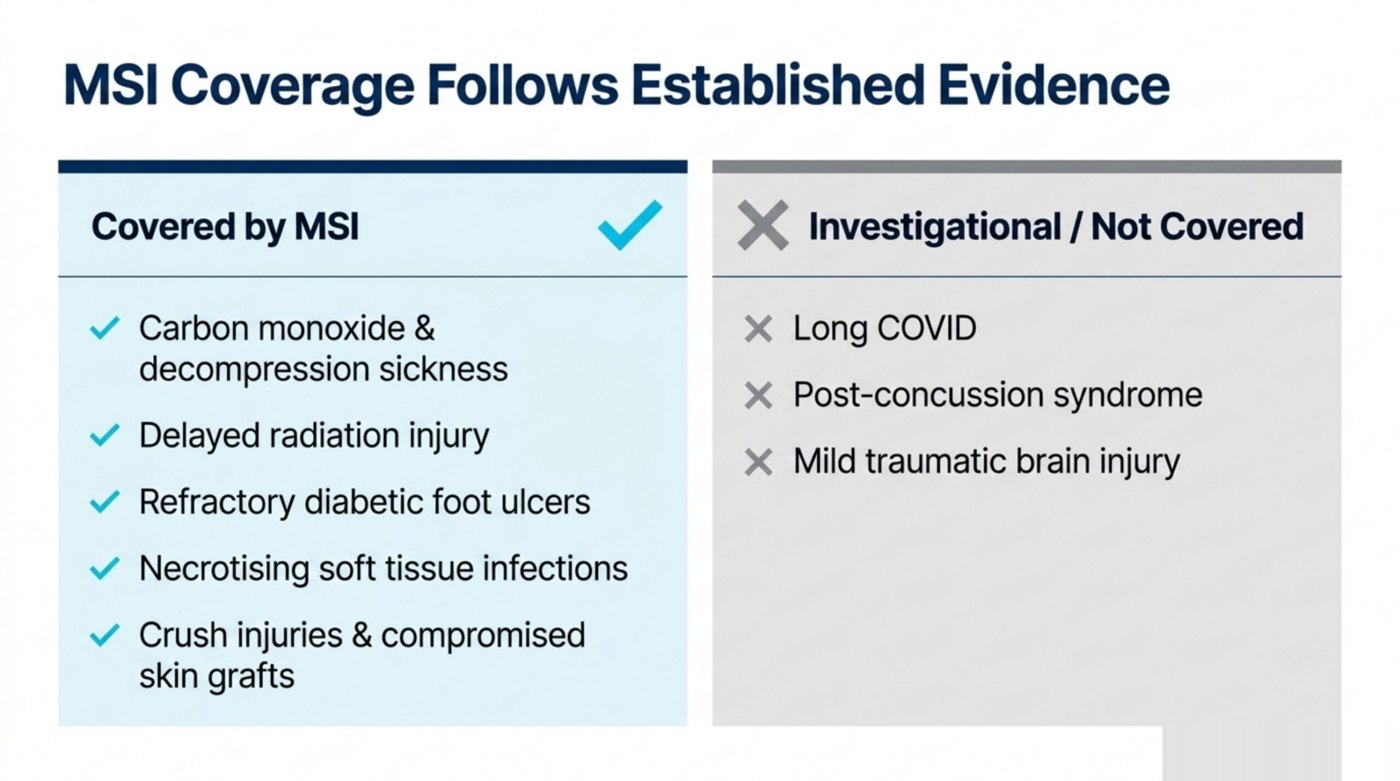
The Nova Scotia programme follows the same evidence-based indications used by Canadian hospital hyperbaric units across the country. These follow the UHMS clinical indications list. Health Canada separately recognises 14 conditions for hyperbaric chamber licensing, a partially overlapping but distinct list. Coverage applies when a Nova Scotia physician refers you for one of the following conditions:
- Air or gas embolism
- Carbon monoxide poisoning, including cases complicated by cyanide poisoning
- Decompression sickness
- Acute traumatic peripheral ischaemia, such as crush injuries and compartment syndrome
- Severe anaemia from exceptional blood loss when transfusion is not possible
- Necrotising soft tissue infections, including necrotising fasciitis
- Refractory osteomyelitis
- Delayed radiation injury, including soft tissue and bone damage following cancer radiotherapy
- Compromised skin grafts and tissue flaps
- Diabetic foot ulcers and other selected problem wounds that have failed standard care
- Sudden idiopathic sensorineural hearing loss
- Intracranial abscess
- Clostridial myonecrosis (gas gangrene)
- Thermal burns
- Central retinal artery occlusion
For chronic wound indications such as diabetic foot ulcers and delayed radiation injury, the evidence base for HBOT continues to grow. A 2026 narrative review on hyperbaric oxygen therapy in surgical wound healing and tissue salvage mapped the mechanisms by which HBOT supports compromised flaps, grafts, and infected surgical wounds, and described its role as an adjunct in selected refractory cases. A 2026 network meta-analysis on gas therapies for chronic wounds compared hyperbaric oxygen against other gas-based options for chronic wound care and noted that higher-certainty randomised evidence is still needed to firm up comparative effectiveness rankings.
A 2026 article on hyperbaric oxygen therapy for selected problem wounds in Undersea and Hyperbaric Medicine traces the use of HBOT for wound healing back to Jacques Cousteau’s divers, who reported better-than-expected wound healing while living in an underwater habitat in the Red Sea, and to Dr. T.K. Hunt’s 1964 National Science Foundation investigation that gave the field its foundational tissue-oxygenation science. Hospital programmes such as QEII apply the patient-selection criteria that built up over the decades since: a wound that has failed standard care, adequate vascular supply, and a clinical assessment that HBOT can add value.
How do I get referred for HBOT in Nova Scotia?
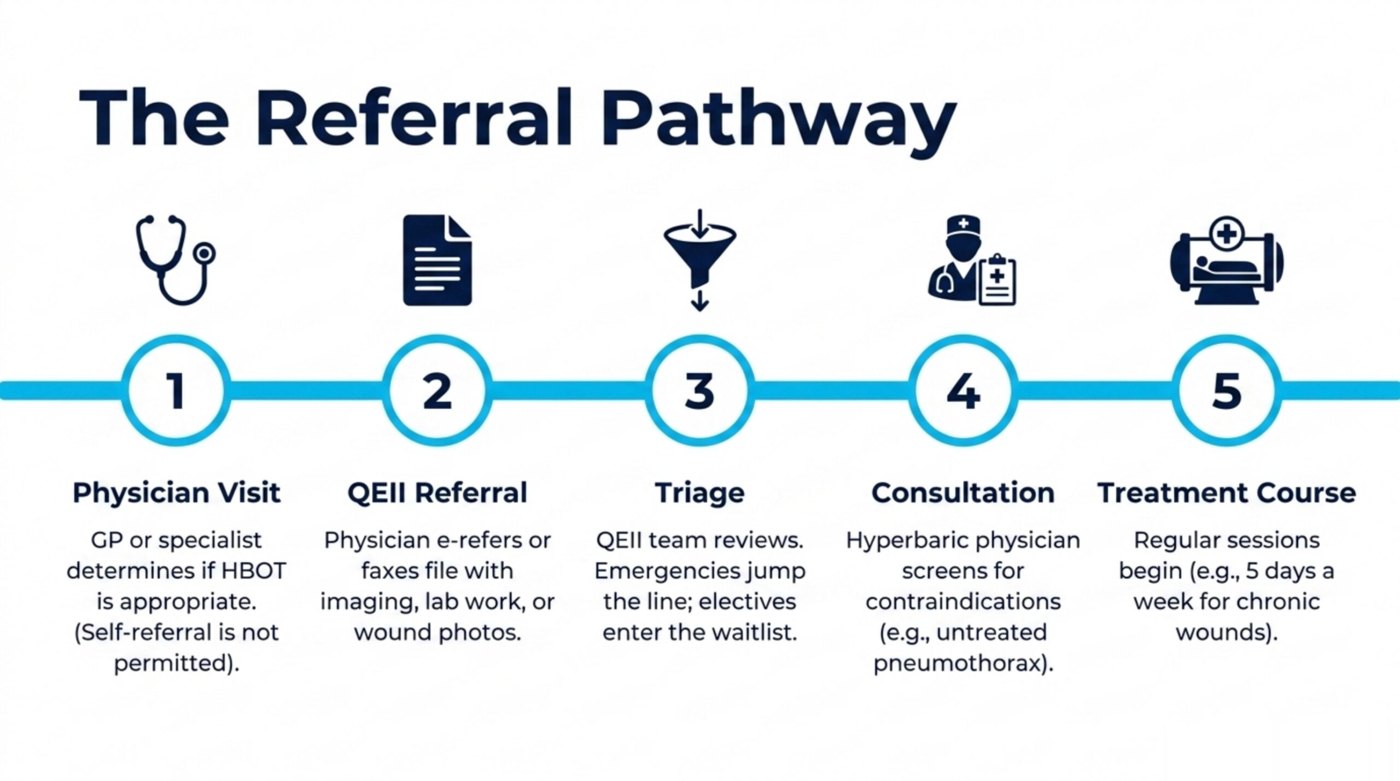
HBOT is a referral-only service in Nova Scotia. You cannot self-refer to the QEII Hyperbaric Medicine Unit. The pathway is:
- See your family physician or specialist. Discuss your condition and ask whether hyperbaric oxygen is appropriate. If you do not have a family physician, you can request a referral through a walk-in clinic, an emergency physician for urgent indications, or a Nova Scotia Health specialist who is already managing your care.
- Get the referral sent to the QEII Hyperbaric Medicine Unit. Your physician faxes or e-refers your file with relevant imaging, lab work, wound photos, or radiotherapy summaries.
- Wait for triage. The QEII team reviews the referral and decides whether you meet clinical criteria. Emergencies are accepted immediately. Elective indications enter the waitlist.
- Attend a consultation. If accepted, you meet a hyperbaric physician who confirms the diagnosis, screens for contraindications such as untreated pneumothorax or certain ear and lung conditions, and explains the treatment plan.
- Begin a course of treatment. A typical elective course for delayed radiation injury or a problem wound is 30 to 40 sessions delivered five days a week, with each session lasting about two hours including pressurisation and decompression.
If you live outside the Halifax Regional Municipality, you remain eligible for MSI-covered HBOT at QEII, but you are responsible for the travel and accommodation logistics. Many patients from Cape Breton, the South Shore, the Valley, and the North Shore arrange short-term housing in Halifax for the duration of treatment. Cancer Care Nova Scotia and several charities maintain accommodation supports that may apply if HBOT is part of a broader cancer-related care plan.
How long is the wait list for HBOT at QEII?
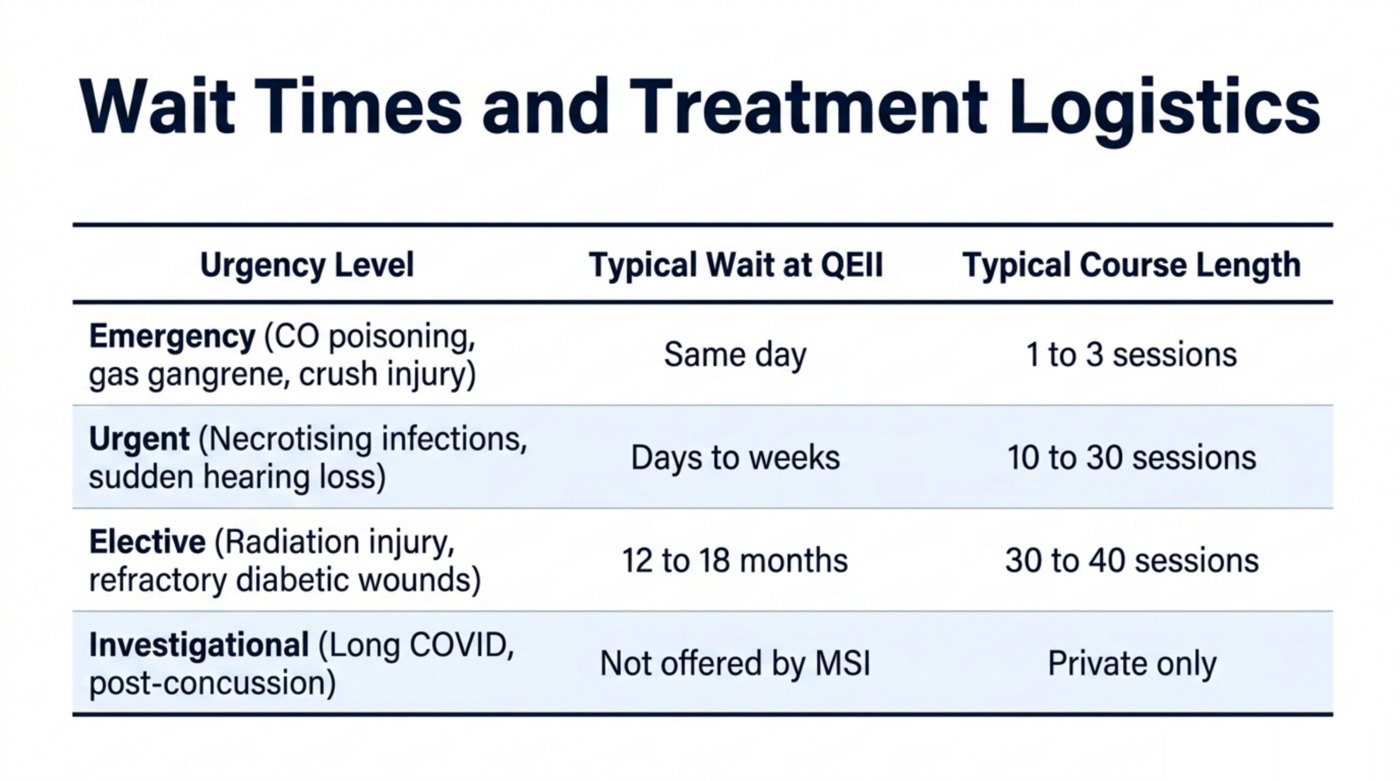
Wait times depend on the indication. Emergency referrals are seen immediately, often the same day. Carbon monoxide poisoning, decompression sickness, air or gas embolism, gas gangrene, central retinal artery occlusion, and acute crush injuries all fall into this category. The QEII team coordinates with the referring emergency department to arrange direct admission to the chamber.
For elective and chronic indications, the published wait time at QEII has historically run between 12 to 18 months, although the exact figure varies year to year based on staffing, chamber maintenance windows, and referral volume. Delayed radiation injury and refractory diabetic foot wounds are the two indications with the longest queues, because both are common and both involve long treatment courses that occupy chamber slots for several weeks per patient. If you are referred for a chronic indication, you should ask your physician for the current wait estimate at the time of referral.
| Indication category | Typical wait time at QEII | Typical course length |
|---|---|---|
| Emergency (carbon monoxide, decompression sickness, gas embolism, gas gangrene, central retinal artery occlusion, crush injury) | Same day | 1 to 3 sessions |
| Urgent (necrotising soft tissue infection, compromised flap or graft, sudden sensorineural hearing loss) | Days to weeks | 10 to 30 sessions |
| Elective (delayed radiation injury, refractory diabetic foot wound, refractory osteomyelitis) | 12 to 18 months | 30 to 40 sessions |
| Investigational (long COVID, post-concussion, mild traumatic brain injury) | Not offered by MSI | Private only |
While you wait, your referring physician should continue to manage the underlying condition. For chronic wounds, this means staying engaged with the QEII wound care service, controlling diabetes if relevant, optimising nutrition, and managing infection. A 2026 comprehensive review on inflammation and wound healing describes the layered approach that gives chronic wounds the best chance of closing with or without HBOT.
Are there private HBOT clinics in Nova Scotia?
There are no private hyperbaric clinics in Nova Scotia that are billed through MSI. Patients seeking HBOT outside the QEII programme generally have three options:
- Travel to a private clinic in another province. Quebec, Ontario, and British Columbia have a number of accredited or regulated private hyperbaric facilities. Treatment at these clinics is paid privately, and per-session fees typically range from a few hundred to several hundred dollars depending on chamber type and indication. Some extended health insurance plans reimburse a portion when the indication is approved by Health Canada or UHMS.
- Wait for a QEII slot. For elective indications, the financial cost of waiting is usually lower than the cost of paying privately out of province, especially when travel and accommodation are added in.
- Discuss whether HBOT is the right treatment at all. For investigational indications such as mild traumatic brain injury, long COVID, or post-concussion syndrome, the evidence is still emerging and the Nova Scotia public system does not generally fund treatment. Your physician can help you weigh the published evidence against the cost and time of a private course of care.
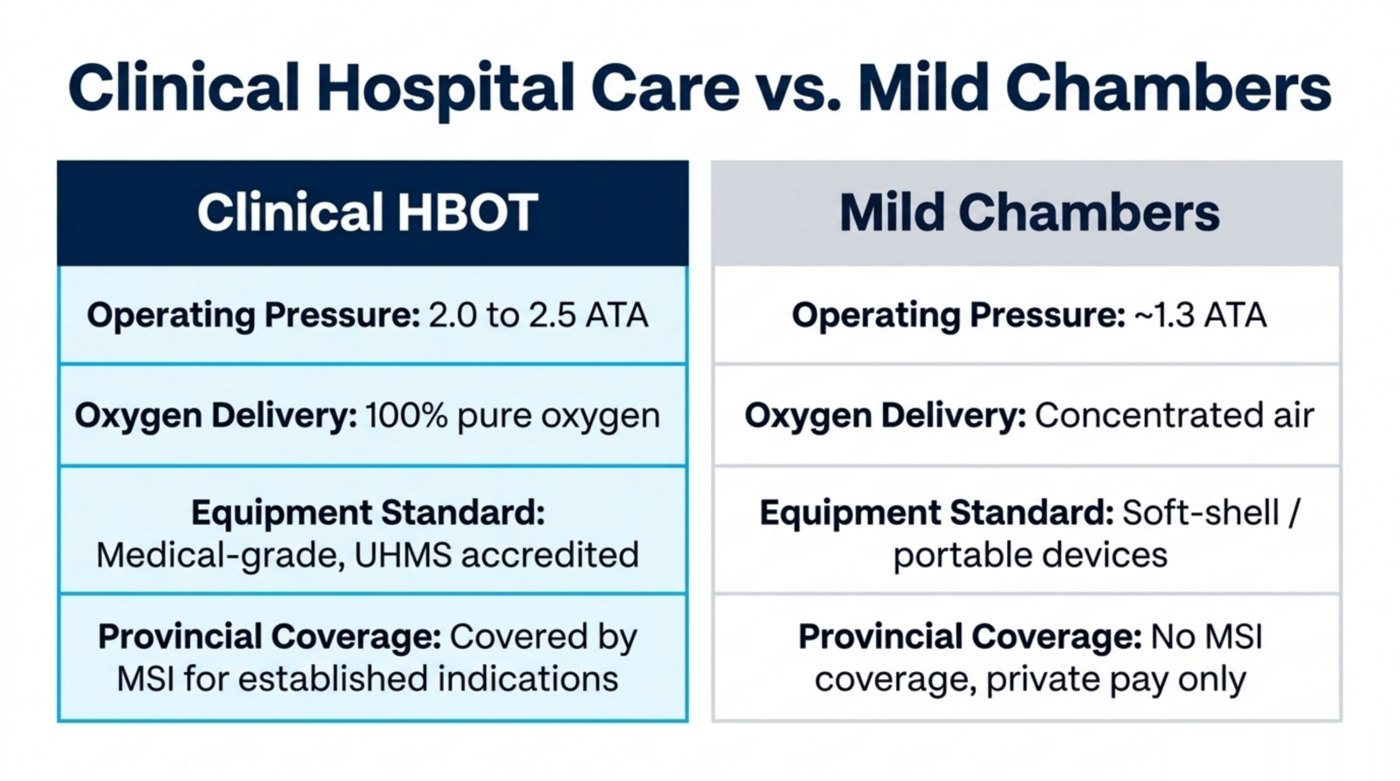
Some patients also ask about portable mild hyperbaric chambers that operate at 1.3 atmospheres absolute. These devices are not equivalent to medical-grade HBOT at 2.0 to 2.5 atmospheres, are not used for any of the MSI-covered indications, and are not regulated as medical devices in the same way as hospital chambers. A 2026 narrative review in Medical Gas Research on hyperbaric oxygen in the artificial intelligence era reaffirms that hyperbaric oxygen therapy is an established treatment for decompression illness, carbon monoxide poisoning, radiation-induced tissue injury, and diabetic foot ulcers, the same set of conditions for which QEII delivers HBOT at full therapeutic pressure.
What can I expect during a hyperbaric session at QEII?
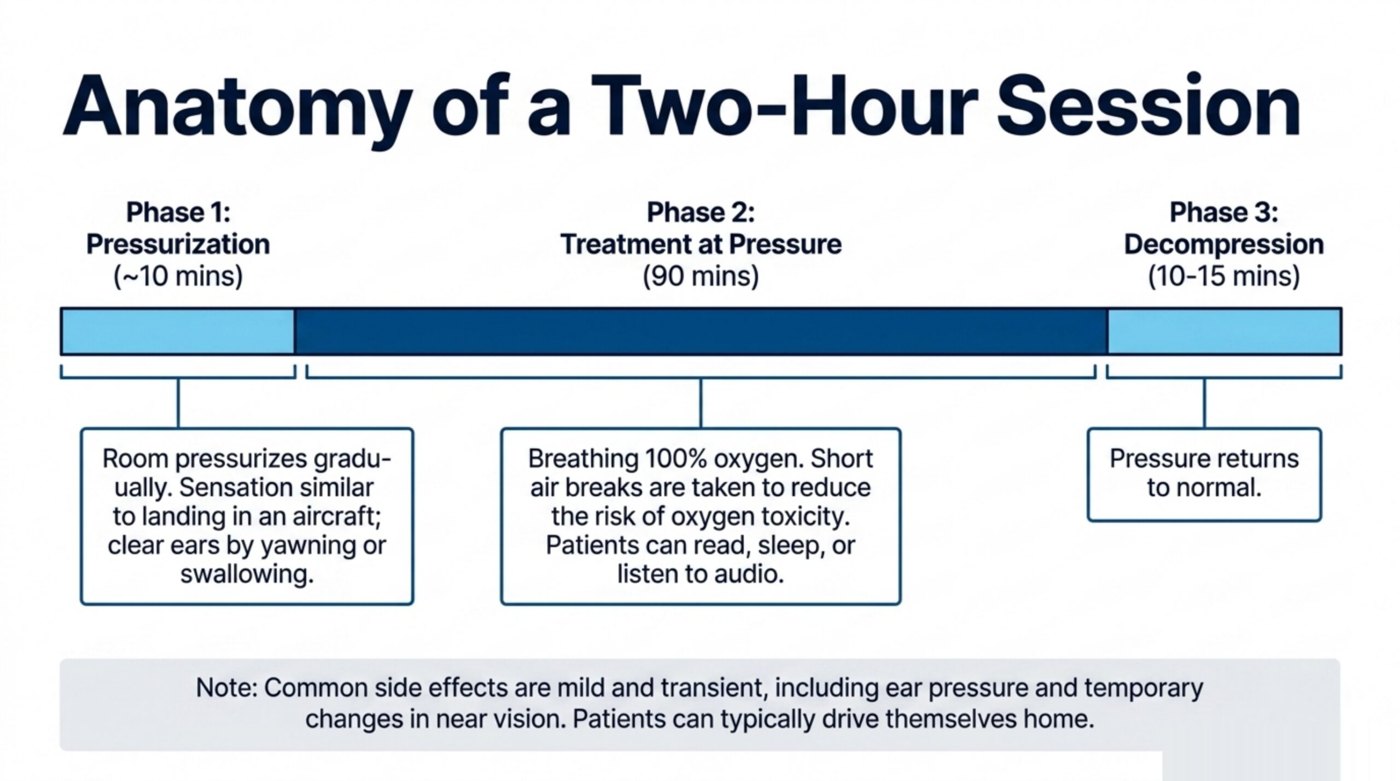
The QEII Hyperbaric Medicine Unit uses a multi-place chamber, which means several patients enter the chamber together with a chamber attendant. You wear cotton scrubs supplied by the hospital. Personal items that could generate sparks, including phones, lighters, and most cosmetics, are not allowed inside the chamber for fire-safety reasons. The room pressurises gradually over about 10 minutes, and most patients feel a sensation in their ears similar to landing in an aircraft. You clear your ears by yawning, swallowing, or doing a gentle Valsalva manoeuvre.
At treatment pressure, you breathe 100 percent oxygen through a soft hood or face mask. Most treatment plans include short air breaks during the session to reduce the risk of oxygen toxicity. Total time at pressure is usually 90 minutes, followed by a 10 to 15 minute decompression. Patients can read, listen to audio with hospital-issued headphones, sleep, or chat with the attendant. After the session you can drive home unless your physician has advised otherwise.
Common side effects are mild and short-lived. Ear pressure and sinus discomfort are the most frequent, followed by transient changes in near vision that resolve within a few weeks of finishing the course. Serious side effects, including oxygen-induced seizure and pulmonary oxygen toxicity, are uncommon at standard hospital protocols and the QEII team monitors for them. Patients with claustrophobia tolerate the multi-place chamber well in most cases because the chamber is roughly the size of a small hospital room rather than a single-person tube.
Frequently asked questions about HBOT in Nova Scotia
How much does hyperbaric oxygen therapy cost in Nova Scotia?
For MSI-covered indications delivered at QEII, treatment itself is free at the point of care. You pay incidental costs such as parking, travel, and time off work. For private out-of-province courses, the typical range is several hundred dollars per session, with a full elective course of 30 to 40 sessions running into the tens of thousands of dollars.
Can I get HBOT for long COVID in Nova Scotia?
Long COVID is not on the MSI-covered HBOT indication list. Research on hyperbaric oxygen for long COVID is ongoing and several trials have reported encouraging results, but it remains an investigational use in Canada. QEII does not currently offer HBOT for long COVID outside of formal research protocols. Patients who wish to pursue private treatment should discuss the current evidence with their family physician first.
Does MSI cover HBOT for concussion or traumatic brain injury?
Acute traumatic brain injury with associated emergency indications such as carbon monoxide poisoning or arterial gas embolism is covered. Chronic or post-acute concussion, mild traumatic brain injury, and post-concussion syndrome are not on the MSI indication list and are considered investigational in Canada. The evidence base is evolving but inconsistent. Talk to your physician about whether HBOT is the right next step or whether other treatments should come first.
How many HBOT sessions will I need at QEII?
It depends on the indication. Emergency conditions such as carbon monoxide poisoning or decompression sickness are often resolved in one to three sessions. Elective indications such as delayed radiation injury, refractory diabetic foot wounds, and compromised flaps usually take 30 to 40 sessions delivered five days a week over six to eight weeks. Your hyperbaric physician at QEII confirms the plan after the initial consultation.
Can I receive HBOT during cancer treatment?
HBOT is generally not given during active radiotherapy or to actively growing cancer because of theoretical concerns about tumour oxygenation. After cancer treatment ends, HBOT is one of the most established indications for delayed radiation injury, including soft tissue radionecrosis, radiation cystitis, and osteoradionecrosis. Discuss timing with your oncology team and your QEII hyperbaric physician.
What is the difference between mild hyperbaric chambers and clinical HBOT?
Mild or soft-shell hyperbaric chambers operate at about 1.3 atmospheres absolute and deliver concentrated oxygen. Clinical HBOT at QEII operates at 2.0 to 2.5 atmospheres absolute with 100 percent oxygen. The two are not interchangeable, and mild chambers are not used for any MSI-covered indication. UHMS-aligned hospital programmes such as QEII use only medical-grade chambers built to UHMS facility accreditation standards.
What contraindications would stop me from receiving HBOT at QEII?
Absolute contraindications are very few and include untreated pneumothorax. Relative contraindications include certain ear and sinus conditions, severe chronic obstructive pulmonary disease with air trapping, recent thoracic or middle-ear surgery, claustrophobia that does not improve with reassurance, uncontrolled seizure disorders, and pregnancy outside of life-threatening indications. The QEII team screens for these during the initial consultation. Most patients with manageable concerns can still receive treatment with adjustments to the protocol.
Where to go from here
If you are a patient in Nova Scotia who thinks hyperbaric oxygen therapy might help, the first step is a conversation with your family physician or specialist. Bring your medical history, any imaging and lab work for the underlying condition, and a clear question about whether HBOT is appropriate. If your physician agrees, the referral pathway runs to the QEII Hyperbaric Medicine Unit in Halifax through Nova Scotia Health. To explore the full Canadian landscape of hyperbaric care, visit our directory of hospitals and regulated facilities and our research bank covering more than 14,000 studies on hyperbaric oxygen therapy.
Canada Hyperbarics also maintains plain-language guides for every Canadian province. If you have family or referring physicians elsewhere in the country, our conditions index and provincial coverage pages may also help you compare access and coverage across jurisdictions.
Medical disclaimer: This article is for informational purposes only and does not constitute medical advice. Hyperbaric oxygen therapy decisions should be made in partnership with a qualified Canadian physician familiar with your case. Coverage rules, wait times, and available indications can change. Always confirm current details with Nova Scotia Health and your referring physician.