
TL;DR: New Brunswick does not have a public hospital hyperbaric oxygen therapy (HBOT) chamber. Patients who need medically necessary HBOT are usually referred to a hospital programme in another province, most often the QEII Health Sciences Centre in Halifax, Nova Scotia. Medicare NB covers insured hospital and physician services, including out-of-province treatment arranged by referral, but it does not pay for private hyperbaric clinics, so private sessions are out of pocket. Always start with your family doctor or specialist, who can confirm whether HBOT is appropriate and arrange a referral.
Hyperbaric oxygen therapy in New Brunswick is available mainly through referral to hospital programmes in nearby provinces, because the province has no public hospital chamber of its own. This guide explains what HBOT is, which conditions it treats, what Medicare NB covers, and the practical steps a New Brunswick patient takes to access care. Canada Hyperbarics keeps a national directory so you can compare every option in one place.
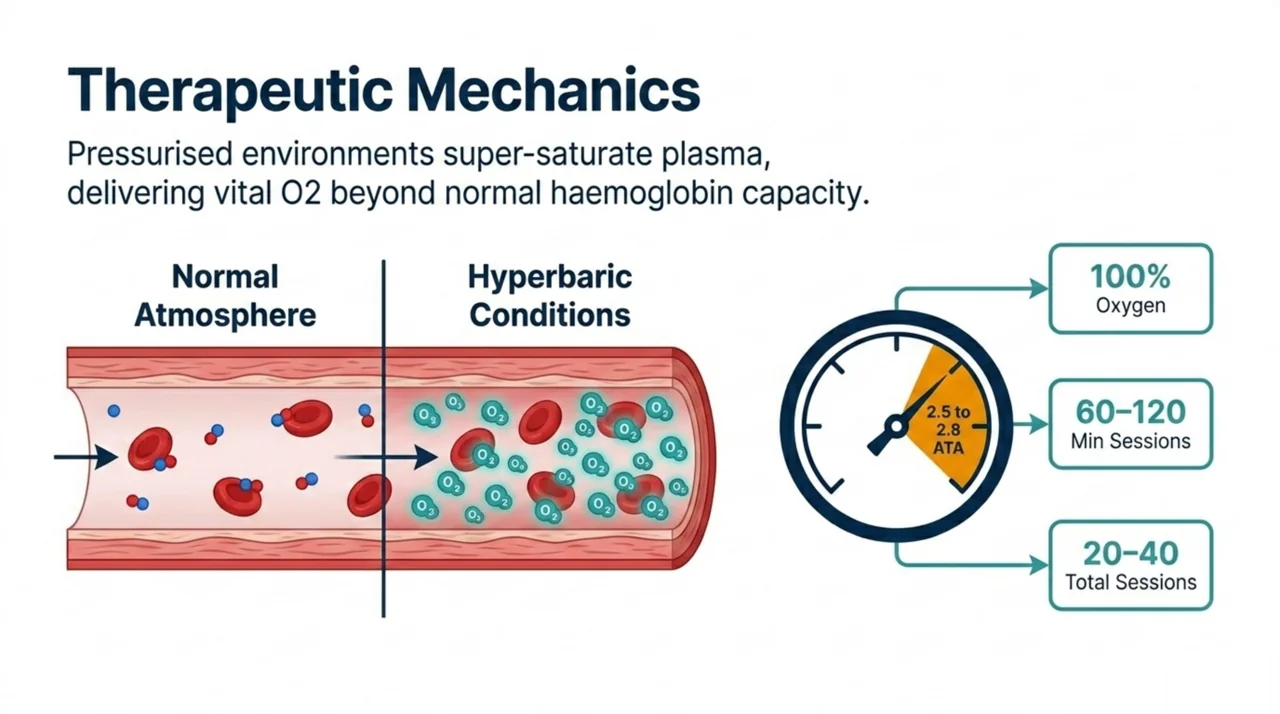
Hyperbaric oxygen therapy (HBOT) is a medical treatment in which you breathe 100 percent oxygen inside a pressurised chamber. The raised pressure lets your blood carry far more oxygen than usual, which can help damaged tissue heal and support the body in fighting certain infections. A single session usually lasts 60 to 120 minutes, and a full course often runs from 20 to 40 sessions, depending on the condition being treated. Reading time: about 7 minutes.
Is hyperbaric oxygen therapy available in New Brunswick?
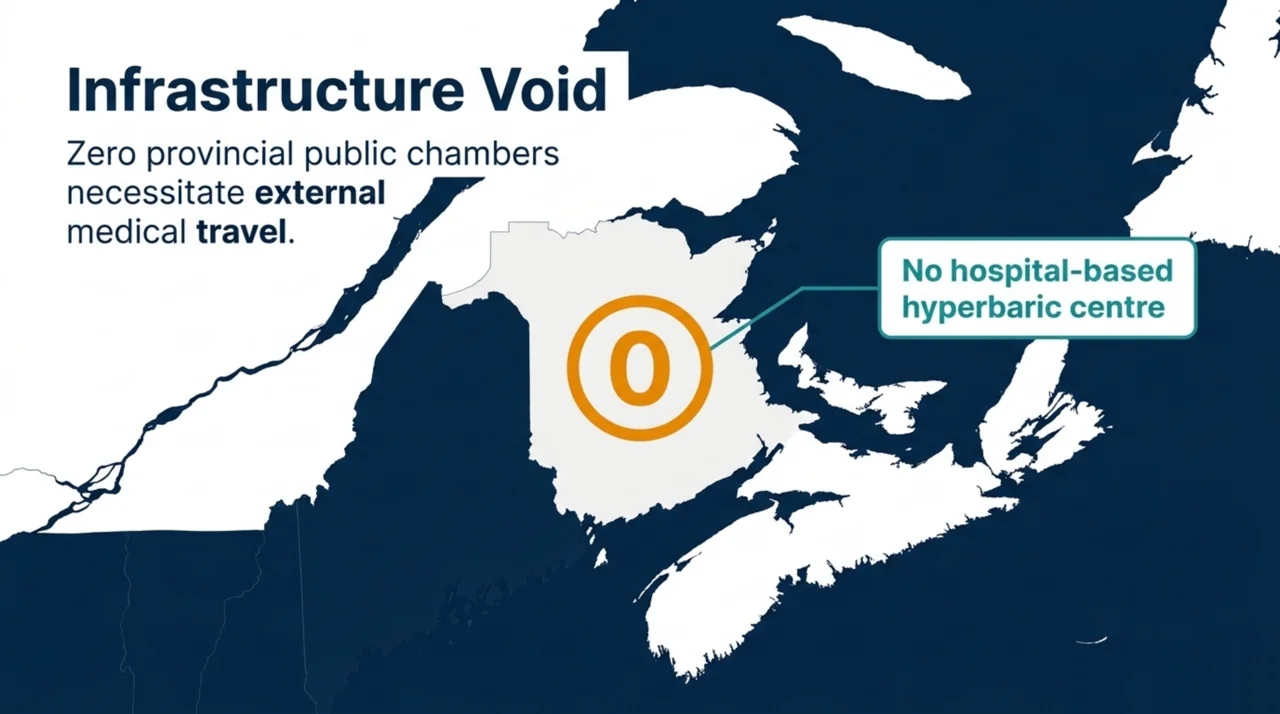
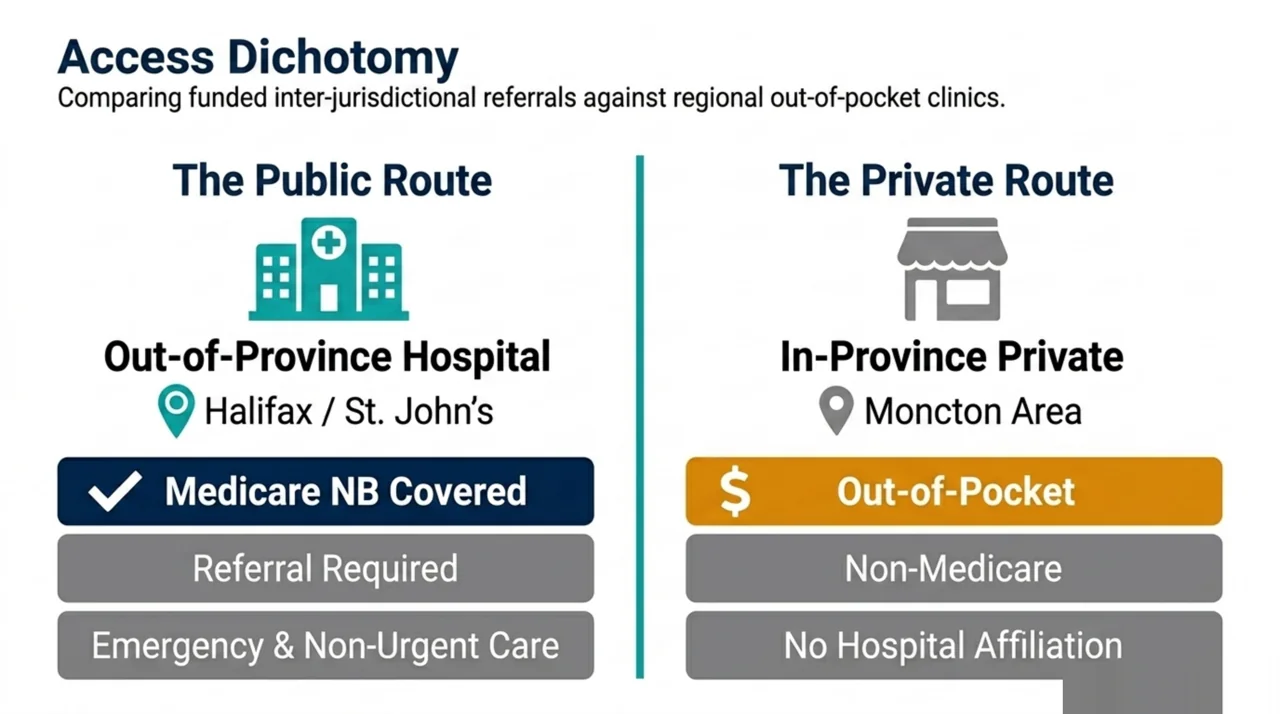
New Brunswick has no hospital-based hyperbaric chamber. A private hyperbaric centre operates in the Moncton area, but it sits outside the public system and is paid for out of pocket. Because there is no public chamber in the province, patients who need HBOT for a serious medical condition are generally referred to a hospital programme in another province.
You can review every Canadian option, including hospitals and regulated facilities in the Maritimes, in the Canada Hyperbarics facilities directory. For a wider look at how access and coverage differ across the country, see our coverage guide.
Does Medicare NB cover hyperbaric oxygen therapy?
Medicare NB covers medically necessary hospital and physician services, but it does not cover private hyperbaric clinics. Since New Brunswick has no public chamber, the question for most patients is whether out-of-province hospital treatment is covered. When your physician arranges a referral and the treatment is medically necessary, hospital HBOT delivered in another province is generally covered under interprovincial billing agreements. Coverage details and any approval steps should be confirmed directly with Medicare NB before you travel.
Private, out-of-pocket sessions are a separate matter. They are not reimbursed by Medicare NB, and the full cost is paid by the patient. It is worth asking whether your situation qualifies for a covered hospital referral before you consider private care.
What medical conditions does hyperbaric oxygen therapy treat?
Health Canada has licensed hyperbaric chambers as medical devices to treat 14 recognised medical conditions, drawing on the indications list maintained by the Undersea and Hyperbaric Medical Society (UHMS). These are the uses with the strongest evidence, and they are the conditions for which a New Brunswick physician is most likely to consider a referral. Health Canada sets out its position on this treatment on the Government of Canada website, and you can read plain-language summaries of each condition on our conditions index.
| Recognised condition | Why HBOT is used |
|---|---|
| Carbon monoxide poisoning | Speeds removal of carbon monoxide and may reduce delayed brain symptoms |
| Non-healing diabetic foot wounds | Raises tissue oxygen to support healing and lower amputation risk |
| Radiation tissue injury | Helps repair tissue damaged by earlier cancer radiation |
| Compromised skin grafts and flaps | Improves survival of at-risk surgical tissue |
| Central retinal artery occlusion | Emergency oxygen support to help preserve vision |
| Severe soft-tissue infections | Used alongside surgery and antibiotics |
A 2026 multicentre observational study (Ippolito and colleagues, PubMed | Our Assessment) followed 327 patients across 10 hyperbaric centres and described how HBOT is used in everyday practice. The most common reasons for treatment were sudden hearing loss, carbon monoxide poisoning, and soft-tissue infection. Sessions were delivered at a median of 2.5 ATA with a median of 16 sessions per patient, and no serious adverse events were reported.
Wound care is a common reason patients are referred for HBOT. A 2026 review of wound healing (Zhang and colleagues, PubMed | Our Assessment) includes hyperbaric oxygen among the interventions covered in its overview of approaches that aim to support tissue repair.
Surgical wounds can also benefit. A 2026 systematic review (Carter and colleagues, PubMed | Our Assessment) pooled 24 studies involving 2,246 patients, including 13 randomised controlled trials. Several trials showed a large benefit for flap and graft survival, and the authors made a strong recommendation to use HBOT to help heal flaps and grafts in serious soft-tissue and trauma wounds.
Carbon monoxide poisoning is a time-sensitive emergency. A 2026 retrospective study (Gur and colleagues, PubMed | Our Assessment) reviewed 312 poisoned patients and found that higher-pressure HBOT at 2.8 ATA was associated with fewer delayed neuropsychiatric problems than lower-pressure treatment, 19.3 percent compared with 36.2 percent. Because this was an observational study, it shows an association rather than proof, but it suggests that an adequate treatment pressure matters.
Sudden vision loss from central retinal artery occlusion is another emergency where HBOT is used. A 2026 systematic review and meta-analysis (ALBalawi and colleagues, PubMed | Our Assessment) combined 12 studies and found that the pooled results favoured HBOT for visual outcomes (odds ratio 0.47, 95% CI 0.26 to 0.87). Patients treated within 12 hours tended to do better, which is why this condition is treated urgently. You can explore these studies and many more in the Canada Hyperbarics research library.
How do New Brunswick patients access hyperbaric oxygen therapy?
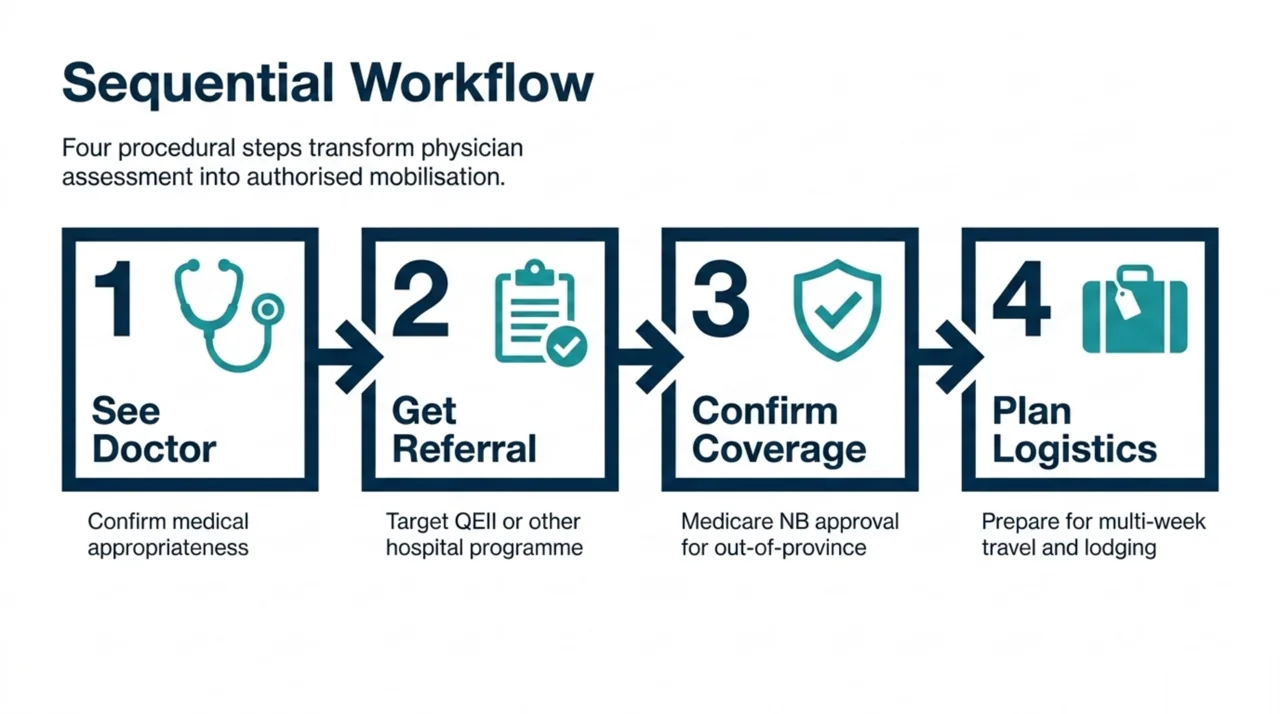
Because treatment usually happens outside the province, the process follows a few clear steps. Here is the typical pathway for a New Brunswick patient:
- See your doctor first. A family physician or specialist decides whether HBOT is medically appropriate for your condition.
- Get a referral. For a recognised indication, your doctor refers you to a hospital hyperbaric programme, most often the QEII Health Sciences Centre in Halifax.
- Confirm coverage. Contact Medicare NB to confirm that out-of-province hospital treatment is covered and to ask about any approval steps.
- Plan travel and lodging. Out-of-province treatment means travel, and a full course can take several weeks, so plan for time away from home.
- Consider private care only if advised. If a hospital referral is not appropriate, a private clinic is an out-of-pocket option to discuss with your physician.
Where are the nearest hyperbaric facilities to New Brunswick?
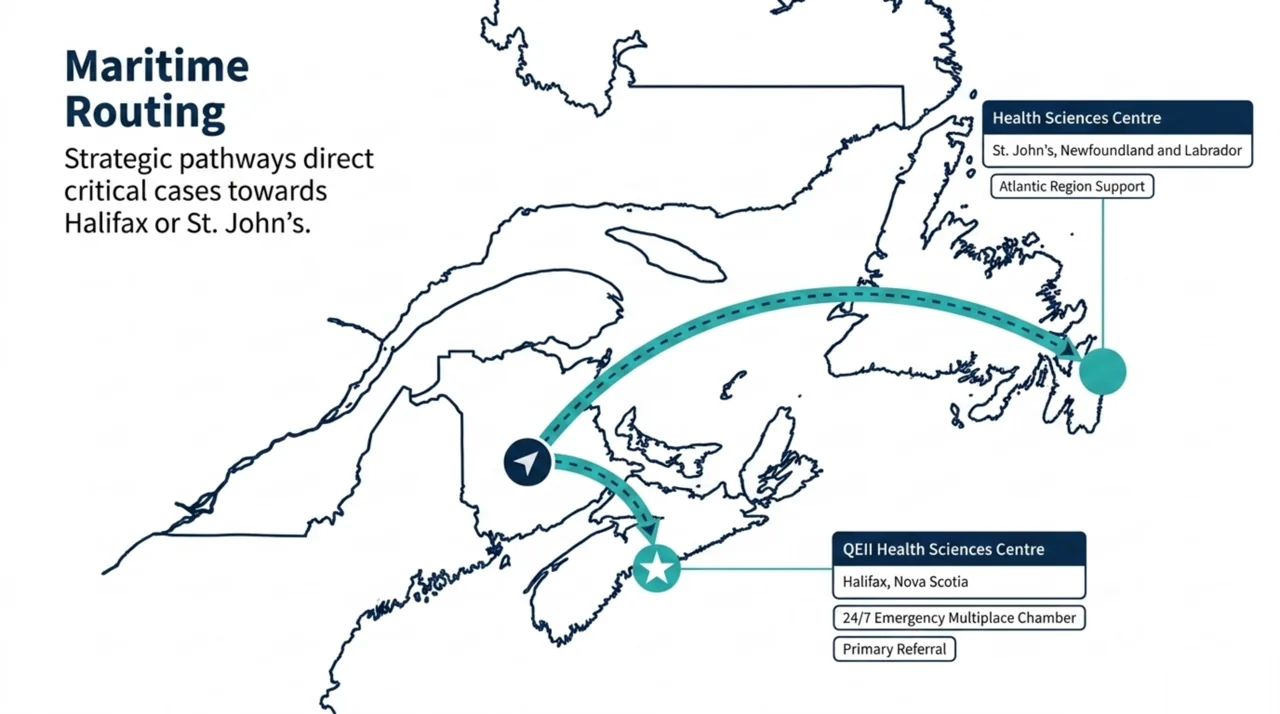
The closest public hospital chambers are in Nova Scotia and Newfoundland and Labrador. The table below shows the hospital programmes New Brunswick patients are most often referred to. For the full, regularly verified list of hospitals and regulated facilities, use the Canada Hyperbarics facilities directory. The Canadian Undersea and Hyperbaric Medicine Association also lists hospital hyperbaric programmes across Canada.
| Facility | Location | Notes |
|---|---|---|
| QEII Health Sciences Centre | Halifax, Nova Scotia | Multiplace chamber with 24/7 emergency cover; the most common referral for the Maritimes |
| Health Sciences Centre | St. John’s, Newfoundland and Labrador | Hospital chamber serving the Atlantic region |
| Private hyperbaric centre | Moncton area, New Brunswick | Private and out of pocket; not covered by Medicare NB |
Hospital programmes treat emergencies such as carbon monoxide poisoning right away, but non-urgent conditions can involve a wait, so ask your referring doctor and the hospital programme about expected timelines.
How much does hyperbaric oxygen therapy cost in New Brunswick?
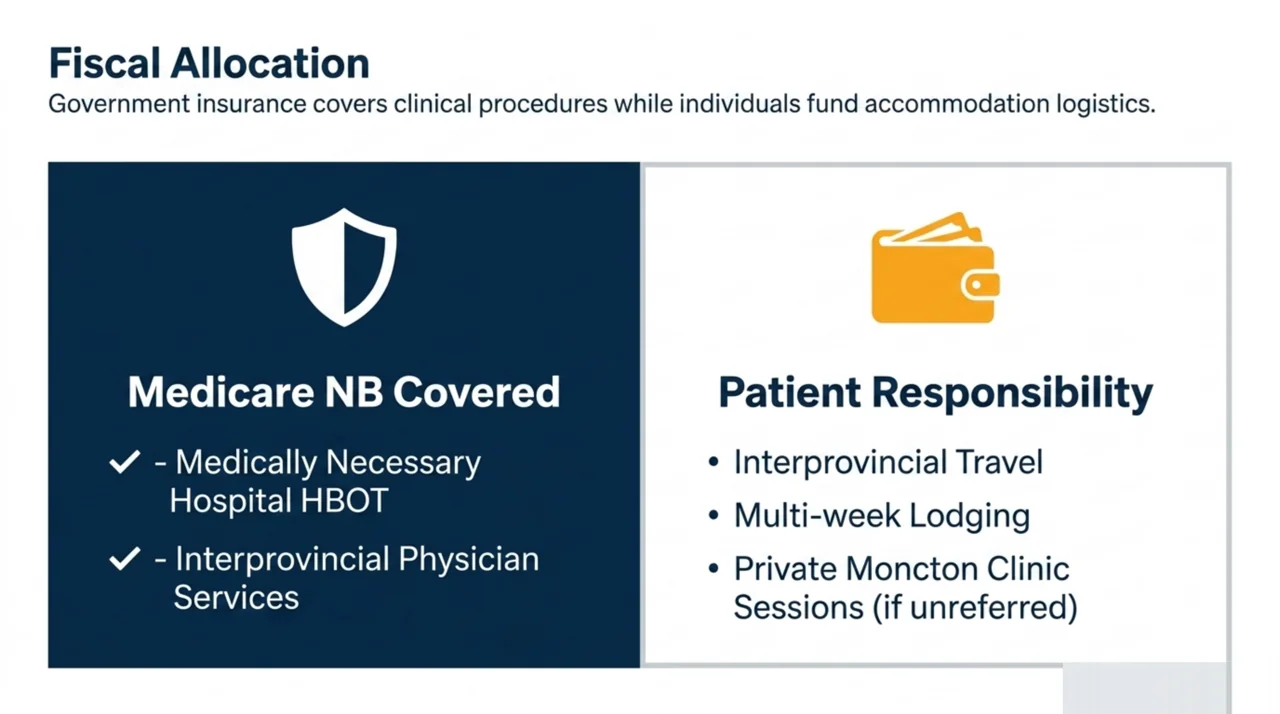
If you are treated at a hospital programme through a Medicare NB-approved referral, medically necessary HBOT is covered, so you do not pay for the treatment itself. Your main costs in that case are travel and accommodation for an out-of-province stay. Private, out-of-pocket sessions are priced per session by the clinic and are not reimbursed. Canada Hyperbarics does not publish prices for individual clinics, so contact a facility directly for current rates.
Frequently asked questions about HBOT in New Brunswick
Is there a hyperbaric chamber in New Brunswick?
There is no public hospital chamber in New Brunswick. One private centre operates in the Moncton area on an out-of-pocket basis, and patients who need covered treatment are referred to a hospital programme in another province.
Does Medicare NB pay for hyperbaric oxygen therapy?
Medicare NB covers medically necessary hospital and physician care, including out-of-province hospital HBOT arranged by referral. It does not cover private hyperbaric clinics, which are paid for out of pocket.
Where do New Brunswick patients go for HBOT?
Most patients are referred to the QEII Health Sciences Centre in Halifax, Nova Scotia. Some may be referred to the hospital chamber at the Health Sciences Centre in St. John’s, Newfoundland and Labrador.
How long is the wait for hospital HBOT?
Emergencies such as carbon monoxide poisoning are treated immediately. Non-urgent conditions can involve a wait, which varies by programme, so ask your referring doctor and the hospital about expected timelines.
Do I need a doctor’s referral for HBOT?
Yes. A physician must confirm that HBOT is appropriate and provide a referral. A referral is also needed for Medicare NB to cover out-of-province hospital treatment.
Is hyperbaric oxygen therapy safe?
HBOT has a strong safety record when delivered by trained staff in a regulated facility. Side effects are usually mild, such as temporary ear pressure. Discuss any risks with your physician, and see our frequently asked questions for more detail.
Can I use a portable or home hyperbaric chamber instead?
Mild home chambers are not the same as medical-grade hospital treatment and are not a substitute for treating recognised medical conditions. Talk to your doctor before considering one.
Finding hyperbaric care from New Brunswick
Living in a province without a public chamber makes good information essential. Start with your physician, confirm coverage with Medicare NB, and use the Canada Hyperbarics directory of hospitals and regulated facilities to find your nearest options. With the right referral and a clear plan for travel, New Brunswick patients can still access the same evidence-based hyperbaric care available elsewhere in Canada.
This content is for informational purposes only and does not constitute medical advice. Always consult a qualified healthcare professional about your specific medical situation and before making decisions about hyperbaric oxygen therapy.