TL;DR: A May 2025 industry commentary on Singapore Business Review framed the global hyperbaric oxygen therapy (HBOT) market as split between “medical” hyperbarics (clinical-grade, evidence-based, regulated) and a “created market” (wellness-positioned, often unregulated, lower-pressure chambers). Canada\’s regulatory framework, anchored by Health Canada device licensing, the 14 recognised conditions, CUHMA Standards of Practice, and provincial public coverage at 11 hospital programmes (plus select OHIP-eligible Independent Health Facilities in Ontario), places Canadian patients firmly in the medical-grade world with clear access paths for the conditions where evidence supports treatment.
The “two worlds” framing in global hyperbarics
In May 2025, the Singapore Business Review published a sponsored commentary from Istanbul-based hyperbaric chamber manufacturer HPOTech. The piece, which is paid placement rather than independent journalism, argues that the global hyperbaric industry has split into two distinct worlds: one rooted in clinical medicine and evidence-based treatment of recognised conditions, and one constructed around wellness, cosmetic, and recreational positioning that sits outside conventional medical regulation.
The underlying observation is correct and well-documented in the medical literature long before this commentary. Mayo Clinic, Cleveland Clinic, Johns Hopkins, and Cochrane Library systematic reviews all distinguish between clinical-grade hyperbaric oxygen therapy (delivered at 2.0 to 2.8 atmospheres absolute on 100 per cent oxygen, inside a regulated chamber, under physician supervision, for indications supported by clinical evidence) and so-called “mild” or “soft” hyperbaric chambers operating at 1.3 ATA or less, often with ambient air rather than concentrated oxygen, frequently marketed for conditions where the evidence base is preliminary or absent.
Where the HPOTech commentary serves an industry purpose, the distinction it draws on is a genuine clinical reality that matters for Canadian patients trying to make informed decisions.
How Canadian regulation defines “medical-grade” HBOT
Canada\’s framework is among the more clearly defined globally. Hyperbaric chambers are classified as Class III medical devices under the Canadian Medical Devices Regulations and are licensed by Health Canada (see the Medical Devices Active Licence Listing). Provincial Colleges of Physicians and Surgeons regulate clinical practice (CPSA in Alberta, CPSO in Ontario, equivalents in other provinces). CUHMA, the Canadian Undersea and Hyperbaric Medical Association, publishes Standards of Practice Guidelines that hospital programmes and CPSA-accredited private clinics follow.
Canada publicly funds 14 specific conditions for hyperbaric chamber licensing: air or gas embolism, carbon monoxide poisoning, gas gangrene, crush injury and acute traumatic ischaemia, decompression sickness, arterial inefficiencies (selected problem wounds), severe anaemia, intracranial abscess, necrotising soft tissue infections, refractory osteomyelitis, delayed radiation injury, compromised grafts and flaps, acute thermal burn injury, and idiopathic sudden sensorineural hearing loss. The Undersea and Hyperbaric Medical Society (UHMS) maintains a slightly broader 15-condition Indications Manual (15th Edition, 2024) that adds avascular necrosis as the 15th.
For each of these indications, the Canada Hyperbarics research database indexes over 14,400 peer-reviewed studies. The Canadian framework was built specifically around this evidence base.
| Country | Device Regulator | Clinical Body | Standards Reference | Indications | Funding Model |
|---|---|---|---|---|---|
| Canada | Health Canada (Class III) | CUHMA + UHMS | CUHMA Standards of Practice; UHMS Indications Manual 15th Ed (2024) | 14 recognised | Provincial public insurance + private mix |
| United States | FDA (Class II, 510(k)) | UHMS | UHMS Indications Manual 15th Ed (2024) | Indication count varies by 510(k) submission; UHMS Indications Manual 15th Ed (2024) referenced as clinical standard; CMS NCD 20.29 defines Medicare-covered conditions | Medicare / Medicaid + private insurance + self-pay |
| United Kingdom | MHRA + CQC | British Hyperbaric Association (BHA) | BHA evidence-based indications; UHMS 15th Ed referenced; NHS England service specification | NHS-commissioned for carbon monoxide poisoning, diabetic foot ulcers, soft tissue radiation damage (pelvic irradiation history), decompression illness, and gas embolism; broader off-list access typically private | NHS for commissioned; private clinics for the rest |
| Australia | TGA (Therapeutic Goods Administration) | ANZHMG | MSAC application 1054 + ANZHMG guidelines | Approximately 7 MBS-listed indications across items 13015, 13020, 13025, 13030 | Medicare rebate + private insurance + self-pay |
| Germany | BfArM | GTUM (Gesellschaft fur Tauch- und Uberdruckmedizin) | G-BA + GTUM consensus + ECHM | Diabetic foot syndrome (statutory); others case-by-case | Statutory health insurance + private mix |
| Singapore | HSA + Ministry of Health | SHUMEC | FDA-aligned + local standards | Internationally aligned (UHMS reference standard) | Public hospital + private |
The comparison above shows where Canada sits across six developed health systems. For the prose-level summary, see the section “Where Canada sits in the global landscape” below.
The 11 hospital programmes: where medical-grade lives in Canada
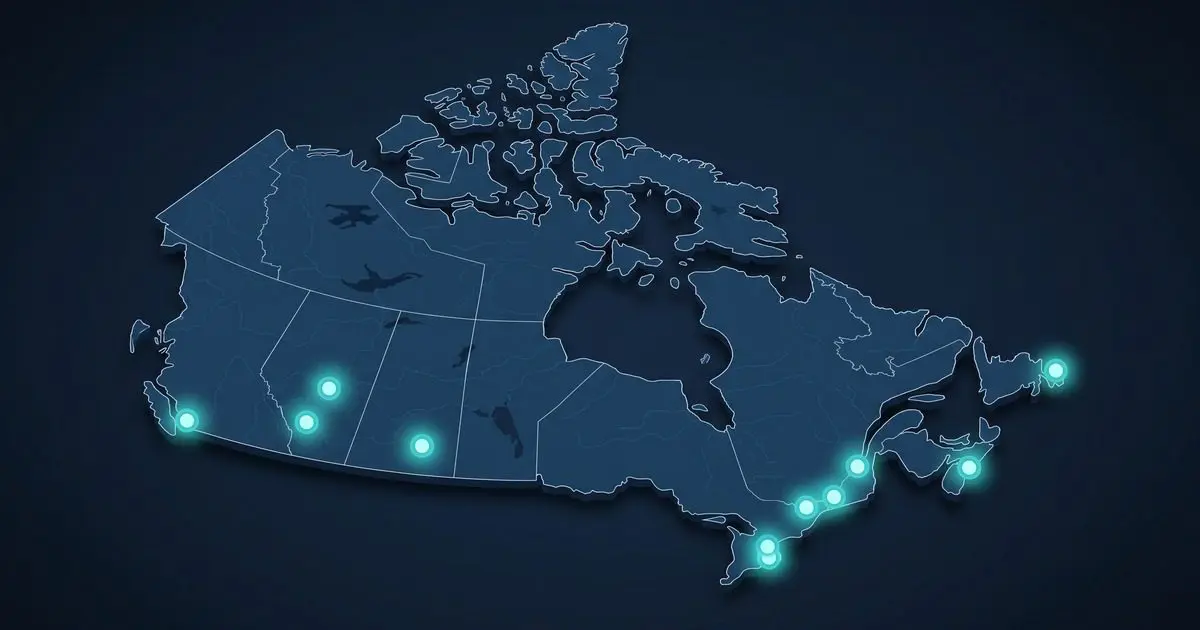
Eleven hospital-based hyperbaric programmes operate across seven Canadian provinces. Each one delivers HBOT at clinical-grade pressures (2.0 to 2.8 ATA on 100 per cent oxygen) inside Health Canada-licensed multiplace or monoplace chambers, under physician supervision, with coverage by provincial public health insurance for the 14 recognised conditions when a physician referral is in place. In Ontario specifically, select eligible Independent Health Facilities (IHFs) may also bill OHIP for recognised indications; confirm eligibility directly with the facility before booking.
| Province / Territory | Provincial Plan | Hospital HBOT Programmes | Patient Cost |
|---|---|---|---|
| Ontario | OHIP | Toronto General (UHN) + Hamilton General + The Ottawa Hospital + select eligible Independent Health Facilities (confirm with each facility) | $0 with physician referral |
| British Columbia | MSP | Vancouver General Hospital | $0 with physician referral |
| Alberta | AHCIP (billing code 13.99I) | Misericordia Edmonton + Foothills / AJECCC Calgary | $0 with physician referral |
| Quebec | RAMQ | Hotel-Dieu de Levis + Hopital du Sacre-Coeur Montreal | $0 with physician referral |
| Saskatchewan | Saskatchewan Health Authority | Wigmore Moose Jaw (reduced capacity since 2021) | $0 when available; otherwise interprovincial referral |
| Nova Scotia | MSI | QEII Halifax | $0 with physician referral |
| Newfoundland and Labrador | MCP | Health Sciences Centre, St John’s | $0 with physician referral |
| Manitoba, New Brunswick, PEI, Yukon, NWT, Nunavut | Provincial / territorial plan | No in-province programme (referred interprovincially) | $0 when referred; medical-travel grants vary |
- Ontario: Toronto General (UHN), Hamilton General Hospital, The Ottawa Hospital. Covered by OHIP.
- British Columbia: Vancouver General Hospital. Covered by MSP.
- Alberta: Misericordia Edmonton (Covenant Health), Foothills/AJECCC Calgary. Covered by AHCIP under billing code 13.99I.
- Quebec: Hotel-Dieu de Levis, Hopital du Sacre-Coeur de Montreal. Covered by RAMQ.
- Nova Scotia: QEII Health Sciences Centre, Halifax. Covered by MSI.
- Saskatchewan: Wigmore Moose Jaw (partial hours, staffing-limited since 2021). Covered by Saskatchewan Health.
- Newfoundland and Labrador: Health Sciences Centre, St. John\’s. Covered by MCP.
For the three provinces without an in-province hospital programme (Manitoba, New Brunswick, Prince Edward Island) and the three territories (Yukon, Northwest Territories, Nunavut), publicly funded patients with one of the 14 recognised conditions and a physician referral are routed interprovincially with treatment costs covered. The provincial coverage guide includes a Coverage Navigator that helps patients identify which path applies to them.
What Canadian researchers contribute to the global HBOT evidence base
Canadian institutions have produced a substantial body of high-quality hyperbaric medicine research. The Canada Hyperbarics research database currently flags 244 studies with Canadian authorship or institutional affiliation across the 14 recognised indications and adjacent research areas. The studies below represent six recent Canadian-authored systematic reviews, meta-analyses, and clinical investigations spanning the major indication categories where Canadian work has shaped the international evidence base:
- Wound & Surgical Adjunct. 2025 systematic review and meta-analysis of postoperative HBOT outcomes with Canadian co-authorship from McGill University, Montreal. Efficacy of Hyperbaric Oxygen Therapy as an Adjunct in Aesthetic Surgery (Aesthetic Plastic Surgery, 2025). PMID 40011247 on our research database.
- Sudden Sensorineural Hearing Loss. Canadian-led 2022 systematic review and meta-analysis. Hyperbaric oxygen therapy for patients with sudden sensorineural hearing loss (JAMA Otolaryngology Head & Neck Surgery, 2022). PMID 34709348 on our research database.
- Inflammatory Bowel Disease. University of Ottawa team led by McCurdy, systematic review with meta-analysis. Effectiveness and safety of HBOT in various phenotypes of inflammatory bowel disease (Inflammatory Bowel Diseases, 2022). PMID 34003289 on our research database.
- Post-Stroke Rehabilitation. Toronto General / University Health Network feasibility study. Hyperbaric oxygen and focused rehabilitation program: feasibility study in upper limb motor function after stroke (Applied Physiology, Nutrition, and Metabolism, 2020). PMID 32574506 on our research database.
- Preventive Surgical Outcomes. Boet et al., University of Ottawa anesthesiology, RCT-level systematic review. Can preventive HBOT optimise surgical outcome? Systematic review of randomised controlled trials (European Journal of Anaesthesiology, 2020). PMID 32355046 on our research database.
- Radiation Necrosis of the Brain. Princess Margaret Cancer Centre + Toronto General (UHN Toronto) retrospective review of HBOT for radiation-induced brain injury. Hyperbaric oxygen for radiation necrosis of the brain (Canadian Journal of Neurological Sciences, 2019). PMID 31466539 on our research database.
Beyond these six, foundational Canadian contributions include the Cochrane Library systematic reviews on late radiation tissue injury (multiple editions, Bennett and Lin), the work of the University of Ottawa anesthesiology HBOT research group, the Toronto General hyperbaric medicine unit, and University of British Columbia diving medicine research. Our searchable research database indexes more than 14,400 peer-reviewed HBOT studies in total, filterable by condition, evidence tier, and country of origin.
The 22 private clinics: where the line between worlds matters most
Beyond the 11 hospital programmes, 22 private hyperbaric clinics operate across six Canadian provinces. Many of these are CPSA-accredited (Alberta) or follow equivalent provincial accreditation standards elsewhere. They use the same Health Canada-licensed chamber equipment as hospital programmes, operate at the same clinical-grade pressures, and follow the same CUHMA standards.
The functional difference is payment: private clinic treatment is generally self-pay (typically $150 to $400 per session, with a 20 to 40 session course totalling approximately $3,000 to $16,000 (see our detailed cost guide)) or covered by private extended health benefits where the plan applies. A small number of Ontario clinics are eligible Independent Health Facilities that can bill OHIP for select recognised indications. See the facility directory for the complete list across all nine provinces.
This is where the global “two worlds” framing becomes most patient-relevant in Canada. A clinical-grade private clinic looks operationally similar to a hospital programme: same pressures, same equipment licensing, same standards of practice. A “mild HBOT” or wellness chamber operation operates at substantially lower pressure (1.3 ATA or less), often markets indications outside the evidence-supported 14, and may not use Health Canada-licensed clinical-grade chamber equipment. Both can technically exist in the Canadian marketplace, but only one corresponds to the body of clinical evidence behind hyperbaric oxygen therapy.
What the “created market” looks like, and what to watch for
The wellness-positioned segment of the global hyperbaric market typically uses chambers operating at 1.3 ATA or less (sometimes called “soft” or “mild” hyperbaric chambers), sometimes with ambient air rather than concentrated medical-grade oxygen. Marketing in this segment frequently targets cosmetic outcomes, anti-aging claims, athletic recovery, general wellness, or off-label uses (long COVID recovery, traumatic brain injury, autism, depression) where the clinical evidence base ranges from preliminary to absent for the specific protocol being delivered.
The clinical-grade evidence that supports hyperbaric oxygen therapy as a medical treatment for the 14 recognised conditions references treatment at 2.0 to 2.8 ATA on 100 per cent oxygen. Lower-pressure protocols do not produce the same dissolved-oxygen physiology and have not been studied to the same evidentiary standard for the indications where HBOT is recognised. This is a clinical reality, not an opinion: the dissolved-oxygen content of plasma at 1.3 ATA is approximately half what it is at 2.5 ATA, and the mechanism of action of HBOT for conditions like compromised wound healing, refractory osteomyelitis, and delayed radiation injury depends on the higher tissue oxygen partial pressures only achievable at clinical-grade pressures.
For Canadian patients, this distinction is built into the regulatory framework. Provincial health insurance covers HBOT at hospital programmes operating clinical-grade chambers (and at select OHIP-eligible Independent Health Facilities in Ontario). Private extended health insurance generally requires pre-authorisation, physician prescription, and a recognised indication. The wellness segment exists in Canada but is positioned outside of medical coverage and outside of the evidence framework most physicians use to recommend treatment.
The five questions a Canadian patient should ask
If you are considering hyperbaric oxygen therapy, these five questions help you evaluate whether you are accessing medical-grade care or the wellness segment:
- Is the chamber Health Canada-licensed? Hyperbaric chambers used clinically in Canada must be Class III medical devices licensed by Health Canada. A reputable clinic will confirm this on request. If the answer is unclear or evasive, that is a meaningful signal.
- What pressure does the clinic operate at? Clinical-grade HBOT is delivered at 2.0 to 2.8 ATA on 100 per cent oxygen. A chamber operating at 1.3 ATA or below, or one using ambient air rather than concentrated oxygen, falls into the “mild” or wellness category and is not what the clinical evidence supports for the recognised indications.
- Is my indication on the 14-condition list? If your condition is on Health Canada\’s recognised list, public coverage at a hospital programme is available with a physician referral. If it is off-list, treatment will be self-pay or extended-health (where the plan allows), and the evidence base for your specific condition deserves a careful conversation with your physician.
- Is there a physician supervising treatment? Hospital programmes have hyperbaric medicine specialists; CPSA-accredited and equivalent private clinics have physicians on staff or in oversight roles. Treatment under physician supervision is one of the markers of medical-grade care.
- What does the evidence base say for my specific condition? For recognised conditions, the evidence ranges from gold-standard randomised controlled trials (carbon monoxide poisoning, decompression sickness, diabetic foot ulcers, late radiation tissue injury) to robust observational evidence (gas gangrene, intracranial abscess, sudden hearing loss). For off-label uses, evidence is typically preliminary. The research database indexes over 14,400 peer-reviewed studies; ask your physician to walk you through what applies to your specific case.
Where Canada sits in the global landscape
Compared with other developed markets, Canada\’s framework is well-defined. In the United States, hyperbaric chambers are regulated by the FDA and clinical practice references the UHMS Indications Manual, but state-level variation in practice + insurance coverage is significant. In the United Kingdom, the National Health Service covers HBOT for a limited set of indications (decompression sickness, gas gangrene, problem wounds in some pathways), with most chronic-condition treatment moving to private practice. In continental Europe, regulation varies country by country, with some markets (Germany, France) having strong hospital-based programmes and others where the wellness segment dominates.
Canada\’s approach is comparatively conservative + structured: a defined list of recognised conditions, public coverage at a defined set of hospital programmes, provincial accreditation for private clinics, and a national professional society (CUHMA) that publishes Standards of Practice. For patients, this framework provides clearer paths to evidence-based care than many international markets, even where in-province hospital capacity is limited (the interprovincial referral pathway exists explicitly to address this).
The global commentary frames the industry as bifurcated. The Canadian framework gives patients the tools to identify which side of that split they are accessing.
For patients pursuing HBOT in Canada: next steps
If you are considering hyperbaric oxygen therapy and want to navigate the Canadian landscape with confidence:
- Use the Coverage Navigator on our provincial coverage guide to identify your province\’s plan name, hospital programmes, referral pathway, wait times, and what coverage applies to your situation (public, private extended health, workers\’ compensation, or self-pay).
- Browse the 14 recognised conditions to confirm whether your indication is on the list and what the evidence base looks like.
- Find your nearest hospital programme or clinical-grade private clinic in the 33-facility directory across nine provinces.
- Read the conditions and evidence guide for the recognised indications, the evidence behind each, and the questions to bring to your physician.
- Explore the research database for peer-reviewed studies on your specific condition.
The global hyperbaric industry contains two worlds, but the Canadian framework gives patients a clear way to identify which one they are in. That clarity is the foundation of an informed treatment decision.
This article references industry commentary published on Singapore Business Review (May 2025) as a sponsored placement by hyperbaric chamber manufacturer HPOTech. Canada Hyperbarics accepts no payment from HPOTech or any chamber manufacturer; we cite the article for its industry-positioning framing, not as an endorsement of any product. All Canadian regulatory and clinical claims in this article are sourced from Health Canada, CUHMA Standards of Practice, the UHMS HBO Indications Manual (15th Edition, 2024), and provincial health authority publications.