
TL;DR: Hyperbaric oxygen therapy is one of the safest medical treatments offered in Canada when patients are screened correctly. A small number of medical conditions, however, make HBOT genuinely unsafe (called absolute contraindications), and several others require extra precautions (called relative contraindications). The most important absolute reason to delay or avoid HBOT is an untreated pneumothorax (collapsed lung). Most other concerns – including heart failure, a history of seizures, claustrophobia, certain medications, and pregnancy – can usually be safely managed by your hyperbaric team after a proper screening assessment.
Hyperbaric oxygen therapy (HBOT) is a treatment where a patient breathes 100 percent oxygen inside a chamber pressurised above normal atmospheric pressure, usually between 2.0 and 2.4 atmospheres absolute (ATA). It is publicly funded in Canada for a defined list of conditions and used widely in hospitals and regulated facilities across Canada. Like every medical treatment, however, it is not appropriate for every patient. This guide explains who should not receive HBOT in Canada, who needs extra screening before a session, and how Canadian hyperbaric centres make these safety decisions.
What does "contraindication" mean in hyperbaric medicine?
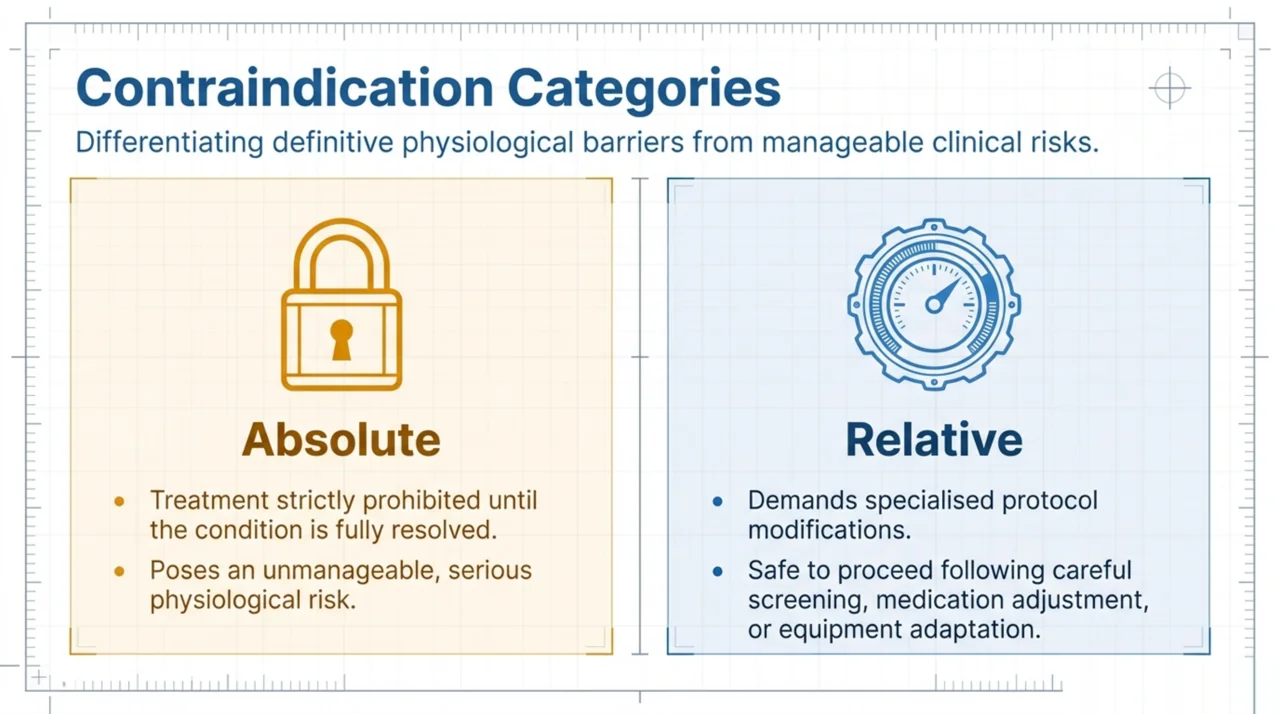
A contraindication is a specific medical reason a treatment should be delayed, modified, or avoided. In hyperbaric medicine, contraindications fall into two categories. Absolute contraindications are conditions where HBOT poses a serious risk that cannot be safely managed; the treatment must not proceed until the condition is resolved. Relative contraindications are conditions that raise the risk of an adverse event but can usually be handled with careful screening, medication adjustment, or modified protocols.
Canada Hyperbarics works with hospitals and regulated facilities that follow protocols from the Undersea and Hyperbaric Medical Society (UHMS) and the Canadian Undersea and Hyperbaric Medical Association (CUHMA). These bodies set the screening standards used at every accredited Canadian hyperbaric centre.
What is the only true absolute contraindication to HBOT?
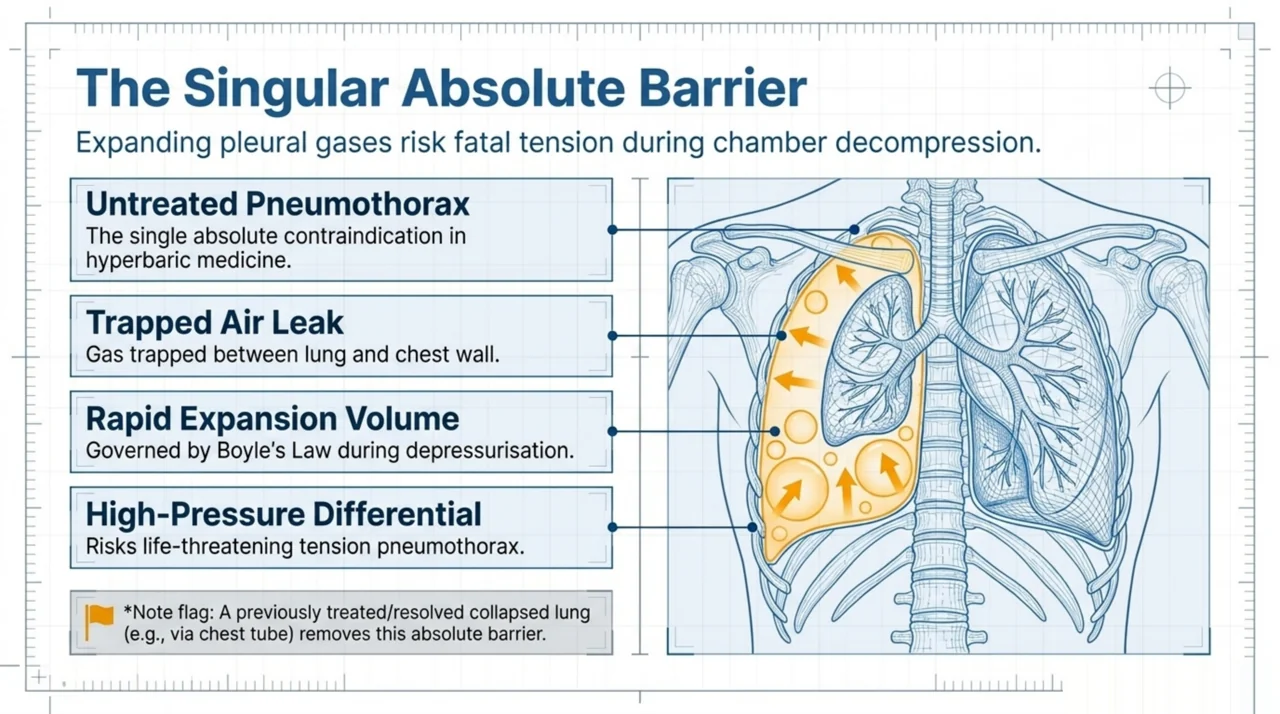
The single absolute contraindication recognised across modern hyperbaric medicine is an untreated pneumothorax – a collapsed lung in which air has leaked into the space between the lung and chest wall. When a patient with an untreated pneumothorax is pressurised in a chamber, the trapped air follows Boyle’s law and expands rapidly during decompression. This can cause a tension pneumothorax, which is a life-threatening emergency.
This is why every Canadian hyperbaric centre asks new patients about recent chest trauma, recent lung surgery, severe asthma, severe COPD, and any prior collapsed lung. A pneumothorax that has been treated and resolved (often with a chest tube) is no longer an absolute barrier to HBOT, but the patient will be reassessed before treatment begins.
What conditions are considered relative contraindications?
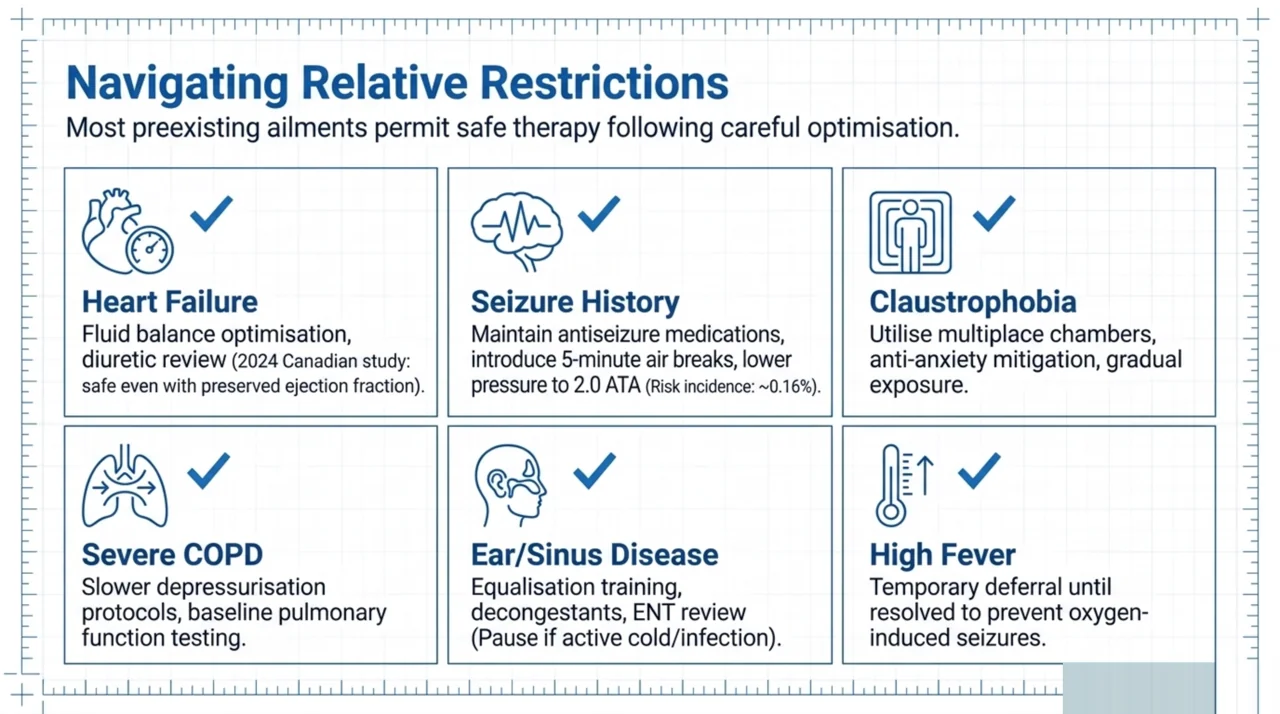
Most conditions that make patients nervous about HBOT are relative, not absolute. With the right preparation, the majority of these patients can complete a full course of treatment safely. The table below lists the most common relative contraindications encountered at Canadian hyperbaric facilities.
| Condition | Why it matters | How clinics manage it |
|---|---|---|
| Heart failure (especially reduced ejection fraction) | Pressurisation can shift fluid into the lungs | Fluid balance review, diuretic optimisation, cardiology clearance |
| History of seizures | Oxygen toxicity can lower the seizure threshold | Antiseizure medication continued, air breaks added, lower pressure protocol |
| Severe claustrophobia | Patient may be unable to tolerate the chamber | Multiplace chambers, anti-anxiety medication, gradual exposure |
| Pregnancy | Effects on foetus uncertain outside emergency indications | Treatment reserved for urgent indications such as carbon monoxide poisoning |
| Severe COPD with air trapping | Risk of pulmonary barotrauma during decompression | Pulmonary function testing, slower decompression, specialist review |
| Untreated ear or sinus disease | Pressure changes can cause barotrauma | ENT review, decongestants, equalisation training |
| Uncontrolled high fever | Increases risk of oxygen-induced seizures | Defer until fever resolved |
| Certain chemotherapy drugs (bleomycin, doxorubicin, cisplatin) | Possible interaction with high-dose oxygen | Oncology consultation, drug history review |
Can I receive HBOT if I have heart failure?
Heart failure has long been considered a relative contraindication to HBOT because pressurisation can increase the workload on the heart and shift fluid into the lungs. A 2024 Canadian retrospective study from Toronto General Hospital and Rouge Valley Hyperbaric Medical Centre reviewed 23 patients with heart failure who underwent elective HBOT. Twenty-one of the 23 patients completed treatment without complications, and the two who developed pulmonary oedema recovered and one resumed therapy successfully.
The authors concluded that patients with heart failure, including those with preserved ejection fraction (HFpEF), can receive HBOT safely after optimisation of fluid balance and close surveillance. If you have a history of heart failure, expect your hyperbaric team to review your ejection fraction, your diuretic regimen, and your daily fluid intake before scheduling. You can read the full study summary on our research page: Safety of HBOT in patients with heart failure.
Is a history of seizures a reason to avoid HBOT?
Not usually. A 2025 Canadian retrospective study, also from Toronto General and Rouge Valley, looked at 22 patients with pre-existing seizure disorders who completed 634 HBOT sessions in monoplace chambers with five-minute air breaks. Only one seizure event occurred across all 634 treatments – an incidence of roughly 0.16 percent.
The takeaway is that a history of seizures is a flag for closer monitoring, not an automatic disqualification. Antiseizure medications are continued, air breaks are scheduled into each session, and pressure may be reduced from 2.4 ATA to 2.0 ATA depending on the indication. The full study is available at Safety of HBOT in patients with a history of seizures.
What are the most common side effects of HBOT?
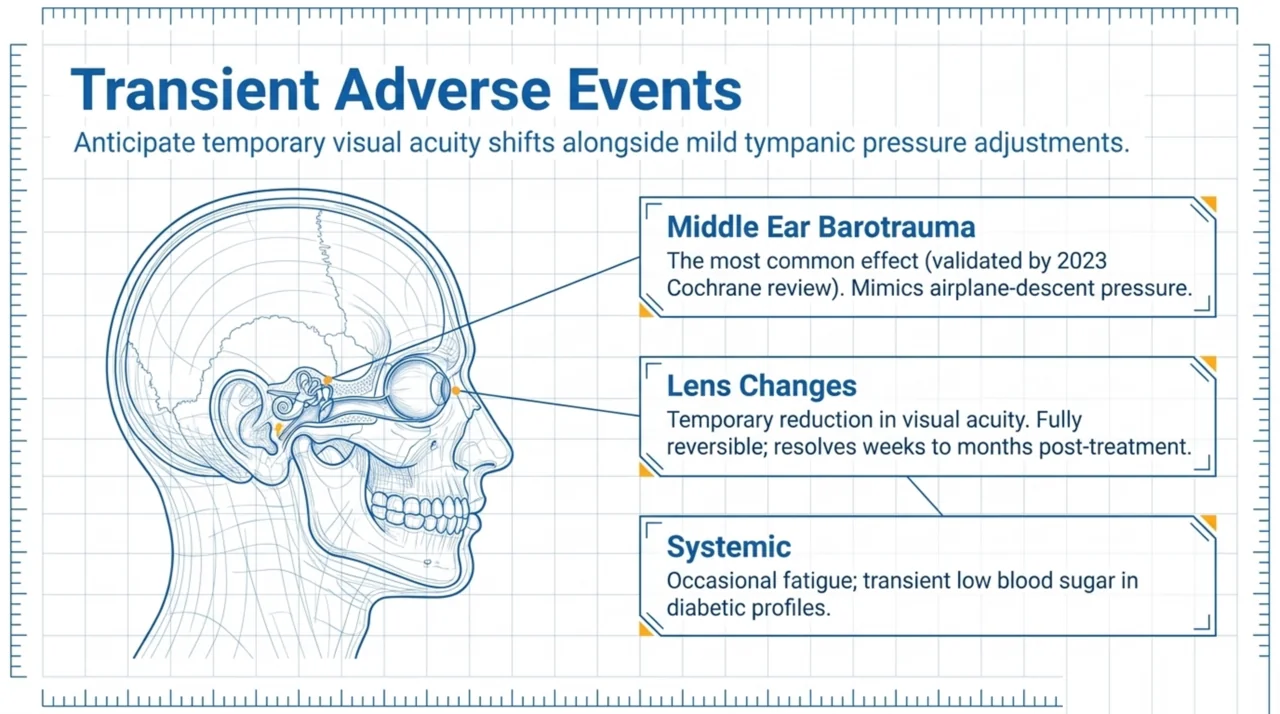
Even with proper screening, HBOT can produce side effects. The most common is middle ear barotrauma, a pressure-related discomfort in the ears similar to what you feel during airplane descent. A 2023 Cochrane systematic review of HBOT for late radiation tissue injury, covering 18 studies and over 1,000 participants, found that ear barotrauma was significantly more common in patients who received pressurisation compared to those who did not.
The Cochrane review also identified a higher risk of temporary reduction in visual acuity, typically caused by lens changes that usually reverse weeks to months after treatment ends. Other reported side effects include sinus pressure, fatigue, transient low blood sugar in patients with diabetes, and very rarely oxygen toxicity seizures. The full review is summarised at HBOT for late radiation tissue injury.
Are there special safety rules for chamber equipment and emergencies?
Yes. A 2025 scoping review of defibrillation during HBOT found strong consensus that defibrillation inside a monoplace chamber is strictly contraindicated because of fire and explosion risk in an oxygen-enriched environment. In multiplace chambers the risks and benefits are weighed case by case. This is one reason Canadian hyperbaric programs operate under detailed emergency protocols that include depressurisation procedures and clear roles for chamber staff.
If you are at higher cardiovascular risk, your hyperbaric team will review your cardiac history and decide whether a multiplace chamber is more appropriate than a monoplace chamber. Read more at Defibrillation during HBOT: a scoping review.
What about pregnancy?
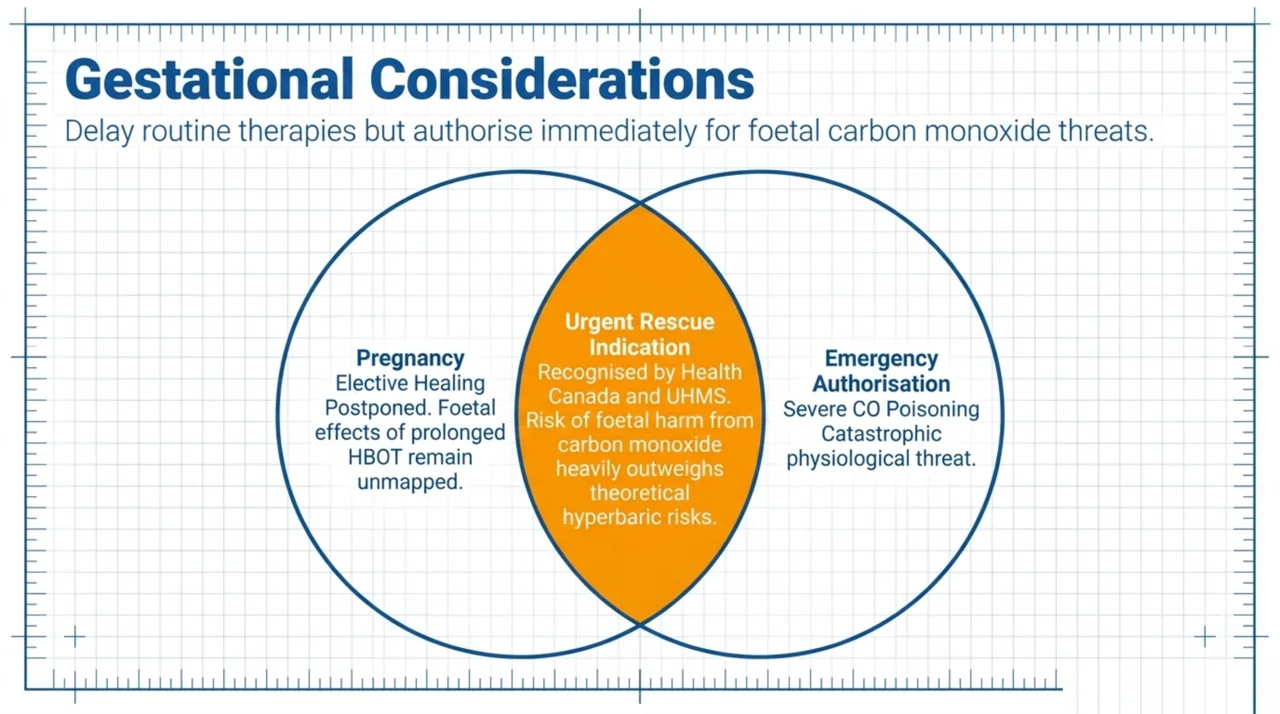
Pregnancy is generally considered a relative contraindication to elective HBOT because long-term effects on the foetus are not fully studied. In emergencies, however, HBOT is recommended in pregnancy. The clearest example is carbon monoxide poisoning, where the risk of foetal harm from carbon monoxide is far greater than any theoretical risk from hyperbaric oxygen. Health Canada and the UHMS both list maternal carbon monoxide poisoning as a recognised indication for HBOT during pregnancy.
For elective indications such as chronic wound healing or radiation injury, treatment is generally postponed until after delivery. If you are pregnant or trying to become pregnant, tell your hyperbaric team at the screening visit so they can adjust your plan.
Are there any medications that interact with HBOT?
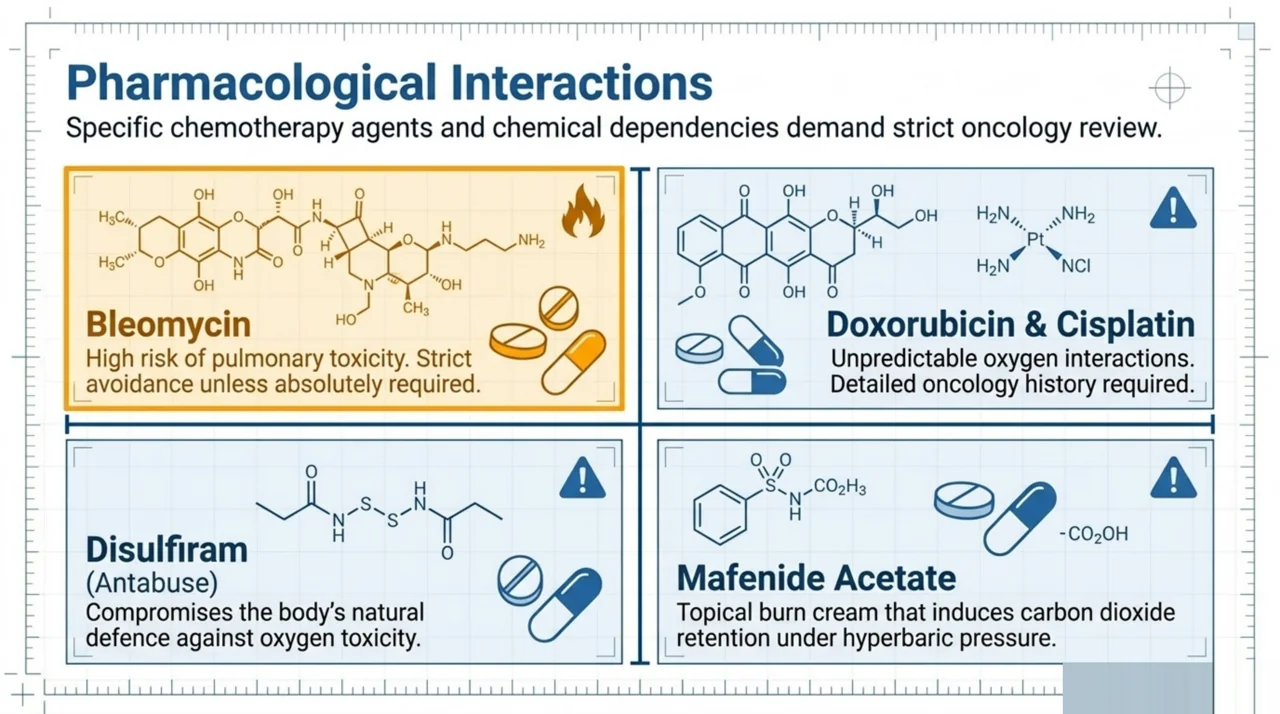
A small number of medications interact with high-dose oxygen. The best-known examples are:
- Bleomycin, a chemotherapy agent, has been linked to pulmonary toxicity in patients later exposed to high-concentration oxygen. Most hyperbaric centres avoid HBOT in patients with recent bleomycin exposure unless absolutely required.
- Doxorubicin and cisplatin may also interact with oxygen, and your oncology team will review your history before referral.
- Disulfiram (Antabuse), used in alcohol-use disorder, may interfere with the body’s defence against oxygen toxicity.
- Mafenide acetate, a topical burn cream, can cause carbon dioxide retention under hyperbaric conditions.
Always bring a complete medication list to your screening appointment. The Canadian Undersea and Hyperbaric Medical Association (CUHMA) maintains current Canadian protocols that hyperbaric physicians follow when reviewing medications.
How do Canadian clinics screen for contraindications?
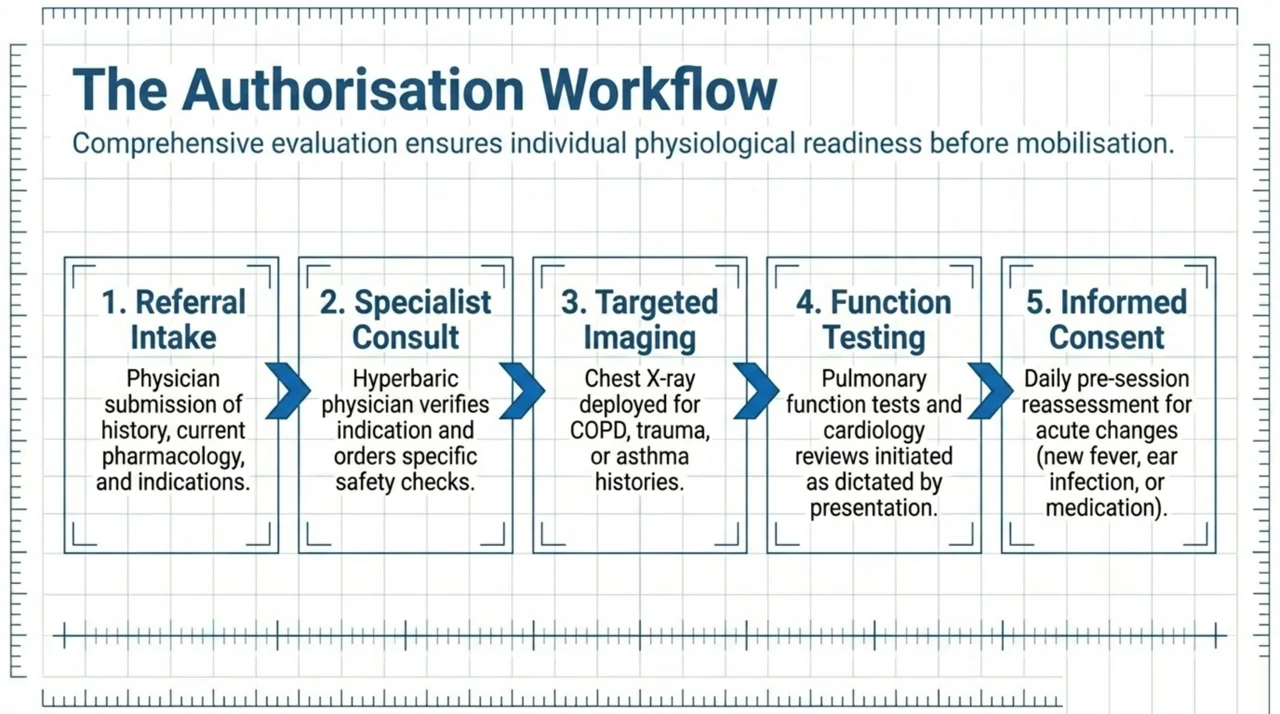
A standard pre-HBOT screening in Canada includes the following steps:
- Referral review: your referring physician sends your medical history, current medications, and the indication for treatment.
- Hyperbaric physician consultation: a hyperbaric specialist confirms the indication, reviews contraindications, and orders any needed tests.
- Chest imaging if indicated: chest X-ray for patients with COPD, asthma, prior chest trauma, or unexplained shortness of breath.
- Pulmonary function testing if indicated: for patients with COPD or other lung disease.
- Cardiology review if indicated: for patients with heart failure or significant cardiac history.
- ENT review if indicated: for patients with prior ear surgery, chronic sinusitis, or difficulty equalising pressure.
- Informed consent: a detailed conversation about benefits, risks, and side effects.
Patients are reassessed before each session for new symptoms – fever, chest pain, ear infection, new medication. A patient who passes initial screening can still have a treatment paused if a new issue arises.
What questions should I ask the clinic before starting HBOT?
Before you start a course of HBOT, ask your hyperbaric team:
- Has my full medical history been reviewed by a hyperbaric physician?
- Are any of my current medications a concern at hyperbaric pressure?
- Do I need a chest X-ray, ECG, or pulmonary function test before starting?
- What pressure (ATA) and session length is being prescribed for my condition?
- What should I report between sessions – ear pain, cough, vision change, blood sugar drop?
- What is the emergency plan if I feel unwell inside the chamber?
- Is your facility accredited and following UHMS or CUHMA protocols?
Any reputable Canadian hyperbaric centre will welcome these questions. You can also find an accredited facility on our directory of hospitals and regulated facilities offering hyperbaric oxygen therapy across the country.
Frequently asked questions
Can I receive HBOT with a cold or sinus infection?
A cold or active sinus infection is usually a reason to pause treatment, because blocked sinuses prevent equalisation and increase the risk of sinus or ear barotrauma. Once the infection clears, treatment can resume.
Can I receive HBOT if I have diabetes?
Yes. Diabetes is not a contraindication. In fact, diabetic foot ulcers are a recognised indication for HBOT. Patients with diabetes are monitored for low blood sugar during sessions, since pressurised oxygen can lower glucose levels. You may be asked to eat a small snack before treatment.
Can I receive HBOT if I have claustrophobia?
Often, yes. Severe claustrophobia is a relative contraindication and can usually be managed with a multiplace chamber (a larger room-sized chamber where you sit in a chair), gradual exposure, or short-acting anti-anxiety medication. Discuss this with your hyperbaric physician at the screening visit.
Will I need to stop my regular medications during HBOT?
Most patients continue their usual medications. Diuretics, blood pressure medications, antiseizure drugs, and diabetes medications are typically maintained, and dosing is reviewed with your hyperbaric physician. Some chemotherapy drugs, as noted above, require special consideration.
Can children receive HBOT in Canada?
Yes, children can receive HBOT for recognised indications such as carbon monoxide poisoning or selected surgical conditions. Paediatric protocols use modified pressures and shorter sessions, and treatment is delivered at hospital-based hyperbaric units with paediatric expertise.
What happens if I develop a new health problem during my HBOT course?
Tell your hyperbaric team right away. Fever, chest pain, new shortness of breath, ear pain, or a new medication can all change your screening status. Treatment can be paused while the new issue is evaluated and resumed once safe.
How is HBOT safety regulated in Canada?
Hyperbaric chambers used in Canadian hospitals and accredited facilities are classified as medical devices and must meet Health Canada requirements. Clinical protocols are guided by the UHMS and CUHMA. You can read more in our FAQ.
Find a hyperbaric facility in Canada
If your physician has recommended hyperbaric oxygen therapy and you want to find an accredited Canadian centre near you, visit our directory of hospitals and regulated facilities. Each entry lists the location, indications treated, referral pathway, and the provincial health plan coverage (such as OHIP in Ontario, MSP in British Columbia, or AHCIP in Alberta) where applicable.
You can also explore our research bank at canadahyperbarics.ca/research/ for more detail on specific conditions, or browse our conditions index for plain-language summaries.
Medical disclaimer: This content is for informational purposes only and does not constitute medical advice. Always consult a qualified healthcare professional before starting or stopping any treatment, including hyperbaric oxygen therapy. Canada Hyperbarics is an informational resource and is not a medical provider.