
TL;DR: Hyperbaric oxygen therapy in Newfoundland and Labrador is delivered through the public hospital system at the Health Sciences Centre in St. John’s. When it is medically necessary for an approved condition, the treatment is covered as insured hospital care under the Medical Care Plan (MCP), so there is no direct charge to the patient. Newfoundland and Labrador has no public-facing private HBOT treatment clinics, and patients who live far from St. John’s may qualify for help with travel costs.
Hyperbaric oxygen therapy (HBOT) is a medical treatment in which you breathe 100 percent oxygen inside a sealed chamber pressurised above normal air pressure. In Newfoundland and Labrador, HBOT for approved medical conditions is available at one public hospital in St. John’s, and the cost of that hospital care is covered by the provincial Medical Care Plan (MCP). This guide explains where to get hyperbaric oxygen therapy in Newfoundland and Labrador, which conditions it treats, how coverage works, how to get a referral, and what to do if you live outside the capital.
Canada Hyperbarics is an independent, research-based information service. We do not run any clinic, and we do not refer patients to any specific facility. Our goal is simply to help Canadians understand their options.
Is hyperbaric oxygen therapy covered by MCP in Newfoundland and Labrador?
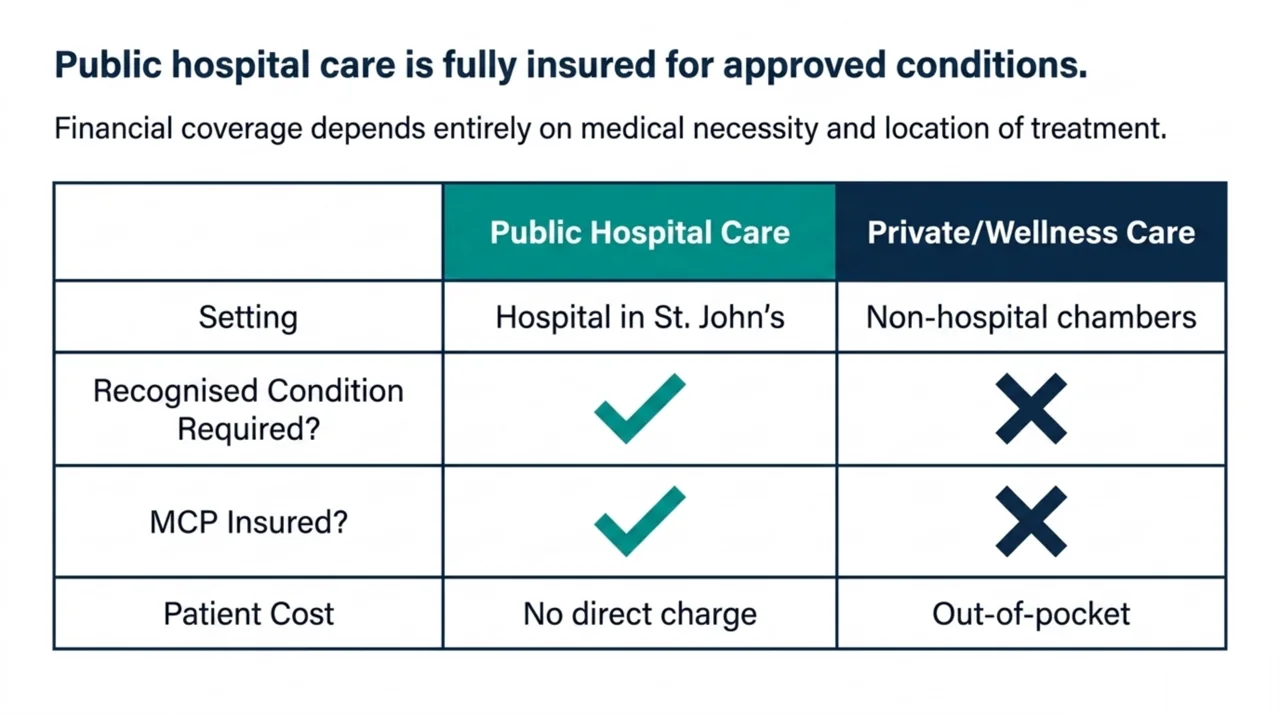
Yes, when hyperbaric oxygen therapy is medically necessary and delivered in the public hospital for an approved condition, it is covered as insured hospital care under MCP. The Medical Care Plan (MCP) is the public health insurance plan for residents of Newfoundland and Labrador. It covers medically required physician and hospital services for registered beneficiaries, and HBOT given inside the hospital for an eligible diagnosis falls within that coverage.
The key word is medically necessary. MCP covers HBOT when a physician orders it for a recognised indication, such as carbon monoxide poisoning, decompression sickness, a serious non-healing wound, or radiation tissue injury. It does not cover hyperbaric sessions sought for general wellness, anti-ageing, or conditions that are not medically approved. To be covered, you must be a registered MCP beneficiary. If you have recently moved to the province, you can register through the official MCP pages on the provincial government website.
Where can you get hyperbaric oxygen therapy in Newfoundland and Labrador?
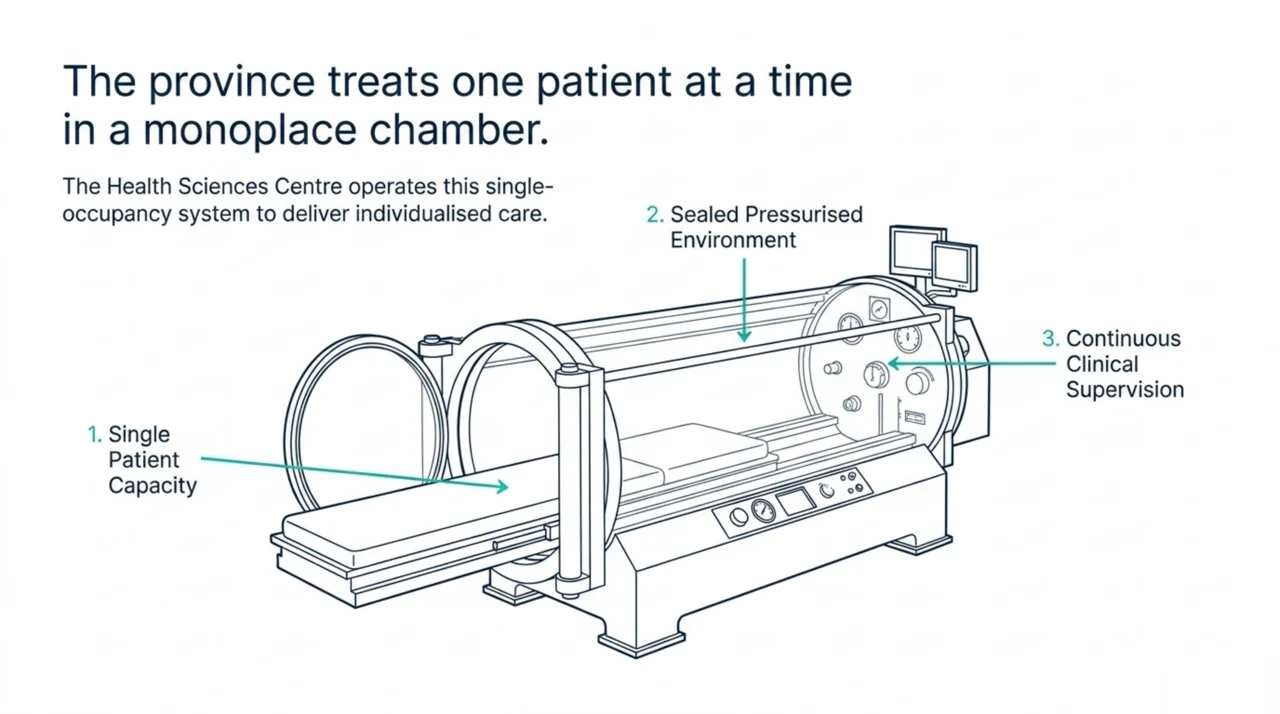
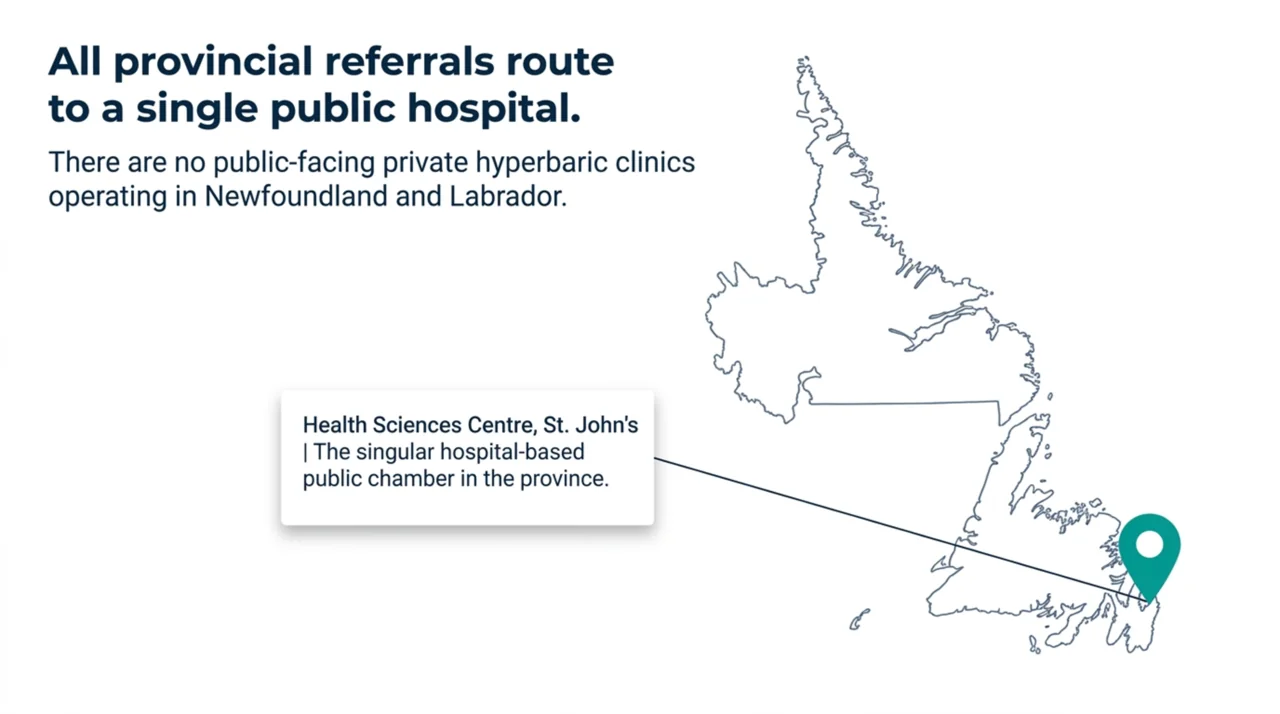
There is one hospital-based hyperbaric facility in the province: the Health Sciences Centre in St. John’s, operated within Newfoundland and Labrador Health Services. The unit uses a monoplace chamber, which treats one patient at a time, and it provides emergency hyperbaric coverage around the clock. Because it is the only chamber in the province, it serves patients referred from across Newfoundland and Labrador.
Newfoundland and Labrador does not have public-facing private HBOT clinics that bill patients for treatment. Any non-hospital chambers in the province are used for research or training rather than for insured patient care. You can find current details for the St. John’s hospital programme, along with every other verified Canadian facility, on our directory of hospitals and regulated facilities.
What conditions does hyperbaric oxygen therapy treat?
Hyperbaric oxygen therapy is an established treatment for a defined list of conditions. The Undersea and Hyperbaric Medical Society (UHMS) recognises a set of approved indications that hospital programmes across Canada follow. These include carbon monoxide poisoning, decompression sickness, air or gas embolism, gas gangrene, serious crush injuries, certain non-healing wounds such as diabetic foot ulcers, delayed radiation injury, compromised skin grafts and flaps, severe soft-tissue infections, refractory bone infection, and sudden hearing loss.
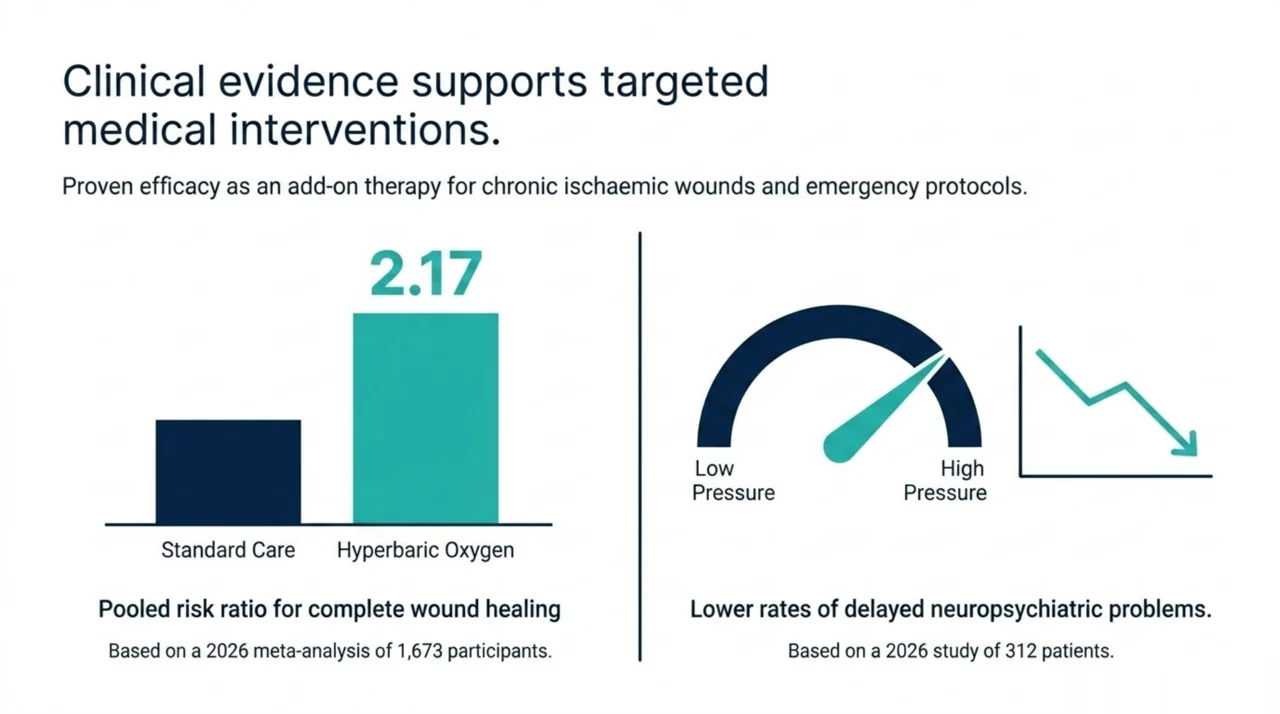
The science behind these uses rests on oxygen delivery. A 2026 review in Undersea and Hyperbaric Medicine (PubMed | Our Assessment) explains that wound healing depends on adequate tissue oxygen, which is the rationale for using pressurised oxygen on selected problem wounds. A 2026 systematic review and network meta-analysis of 27 randomised trials with 1,673 participants (PubMed | Our Assessment) reported that gas-based therapies, a group that includes hyperbaric oxygen, were associated with significantly higher complete wound-healing rates than standard care alone, with a pooled risk ratio of 2.17.
A 2026 structured narrative review (PubMed | Our Assessment) reported that clinical evidence supports HBOT as an add-on therapy for chronic ischaemic wounds such as diabetic foot ulcers, venous leg ulcers, burns, and radiation-injured tissue, as well as for compromised grafts and flaps. For carbon monoxide poisoning, a 2026 study of 312 patients (PubMed | Our Assessment) found that higher-pressure hyperbaric regimens were associated with lower rates of delayed neuropsychiatric problems than lower-pressure regimens. As with all medical evidence, these findings describe what the studies observed, and your own care should be guided by your physician.
You can read plain-language summaries of these and other uses on our conditions overview.
How do you get a referral for HBOT in Newfoundland and Labrador?
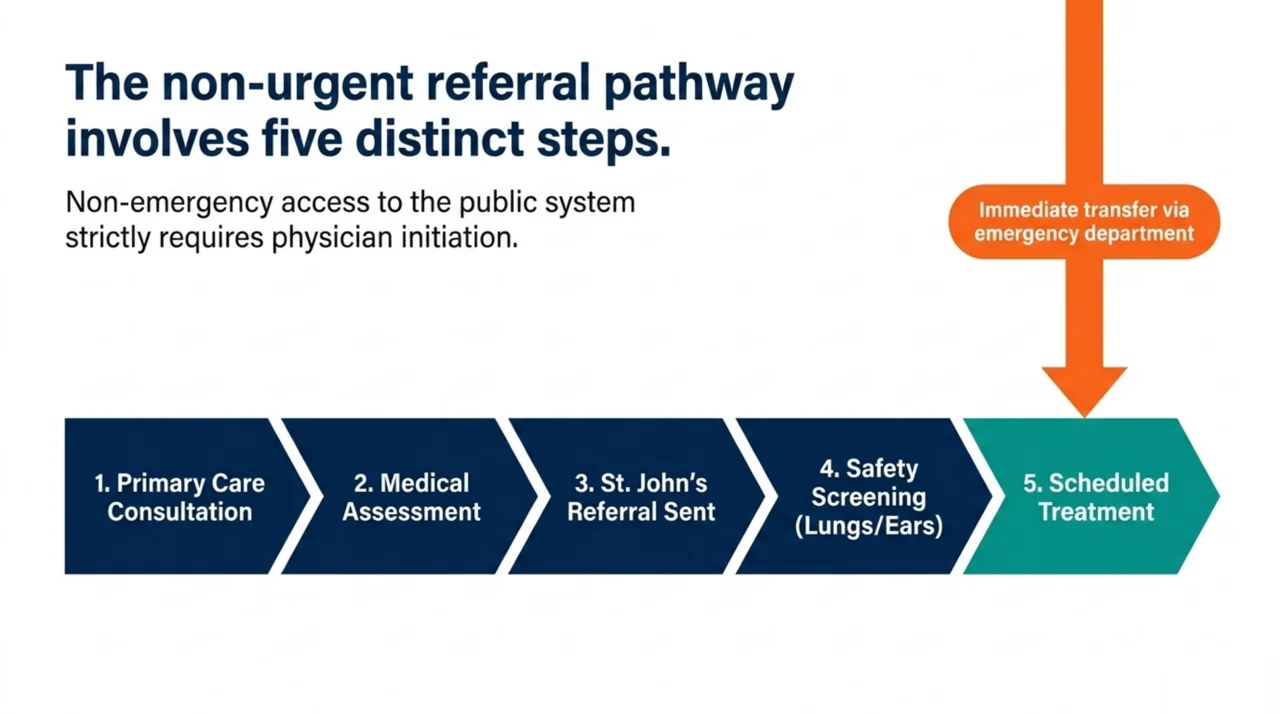
Hyperbaric oxygen therapy in the public system requires a physician referral, except in an emergency. Here is the usual pathway for a non-urgent referral:
- Talk to your family physician or specialist. Describe your condition and ask whether hyperbaric oxygen therapy is an option for you.
- Get a medical assessment. Your physician confirms the diagnosis and decides whether your condition matches an approved indication.
- Receive a referral to the St. John’s hyperbaric programme. Your physician sends the referral to the Health Sciences Centre hyperbaric unit for review.
- Complete a screening review. The hyperbaric team checks for safety considerations, such as lung or ear conditions, before treatment is scheduled.
- Begin your treatment schedule. For chronic conditions, a course often involves a series of daily sessions over several weeks. Emergency cases, such as carbon monoxide poisoning, are treated right away through the hospital.
If you arrive at any emergency department in the province with a condition that needs urgent hyperbaric treatment, the hospital team can arrange transfer to the St. John’s chamber as part of your emergency care.
What does hyperbaric oxygen therapy cost in Newfoundland and Labrador?
For an approved condition treated in the public hospital, there is no direct cost to the patient because the care is insured under MCP. The table below summarises how coverage works in the province.
| Setting | Covered by MCP? | What patients pay |
|---|---|---|
| Hospital HBOT for an approved condition (St. John’s) | Yes, as insured hospital care | No direct charge for the treatment |
| Emergency HBOT (for example, carbon monoxide poisoning) | Yes, through the public hospital | No direct charge for the treatment |
| HBOT for a non-approved or wellness use | No | Not available as an insured service |
| Private or non-hospital chambers | No | Out of pocket where offered; none provide insured public treatment in the province |
Travel, accommodation, and time away from work are separate expenses that MCP does not cover directly, although the provincial travel-assistance program described below may help. For a national overview of how public and private hyperbaric coverage differs across the country, see our coverage guide.
What if you live outside St. John’s?
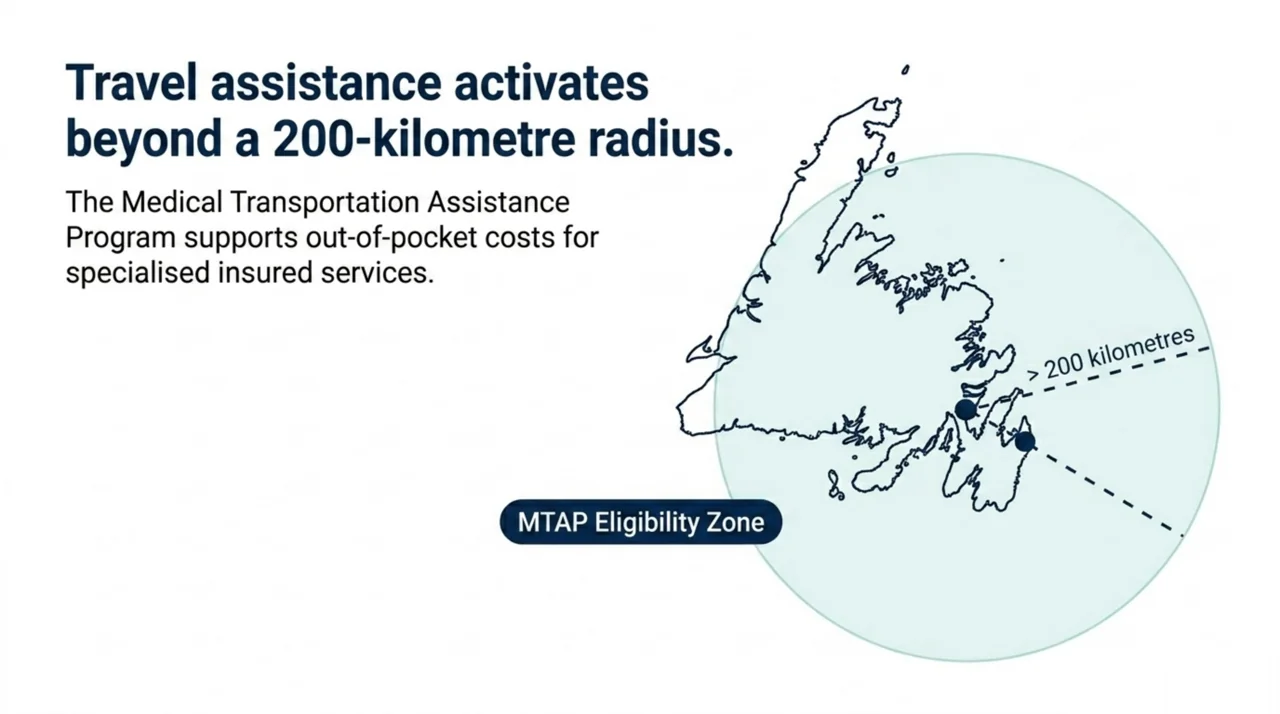
Because the only chamber is in St. John’s, many residents of central Newfoundland, the west coast, and Labrador must travel for a course of treatment. The province runs the Medical Transportation Assistance Program (MTAP), which helps MCP beneficiaries with substantial out-of-pocket travel costs when they need specialised insured services that are not available near home. To qualify, patients generally must travel more than 200 kilometres one way to reach the nearest facility that can provide the care.
If you may need a series of hyperbaric sessions, ask your referring physician and the hospital social work team early about travel support, lodging options, and how to plan a multi-week schedule. Planning ahead reduces the financial and personal strain of repeated trips to the capital.
Frequently asked questions about HBOT in Newfoundland and Labrador
Does MCP pay for hyperbaric oxygen therapy?
MCP covers hyperbaric oxygen therapy when it is medically necessary for an approved condition and delivered in the public hospital. It does not cover hyperbaric sessions used for general wellness or for conditions that are not medically recognised.
How many hyperbaric facilities are in Newfoundland and Labrador?
There is one hospital-based hyperbaric facility, located at the Health Sciences Centre in St. John’s. It is the only chamber in the province and serves referrals from every region.
Can I get hyperbaric oxygen therapy without a referral?
Non-emergency hyperbaric oxygen therapy in the public system requires a physician referral. In an emergency, such as suspected carbon monoxide poisoning, you should go to the nearest emergency department, and the hospital team will arrange urgent treatment if it is needed.
Is mild hyperbaric therapy at a wellness centre the same as hospital HBOT?
No. Medical hyperbaric oxygen therapy uses higher pressures and 100 percent oxygen under clinical supervision for approved conditions. Low-pressure chambers marketed for general wellness are different, are not insured by MCP, and should not replace medical care for a serious condition.
Will MCP help with travel costs to reach the St. John’s chamber?
MCP does not pay travel costs directly, but the Medical Transportation Assistance Program can help eligible beneficiaries with substantial travel expenses for specialised services that are not available close to home. Patients generally must travel more than 200 kilometres one way to qualify.
What should I ask my doctor about HBOT?
Ask whether your condition is an approved indication, what the evidence shows for your situation, how many sessions a course would involve, and what travel and scheduling would be required. You can review common questions on our frequently asked questions page.
Finding hyperbaric care in Newfoundland and Labrador
For most residents, the path to hyperbaric oxygen therapy in Newfoundland and Labrador starts with a conversation with your physician and, when appropriate, a referral to the St. John’s hospital programme. To compare hospital hyperbaric programmes across the country and confirm current details, visit our directory of hospitals and regulated facilities. Canada Hyperbarics keeps this directory current so patients and families can make informed decisions.
This content is for informational purposes only and does not constitute medical advice. Always speak with a qualified healthcare provider about your specific condition and whether hyperbaric oxygen therapy is right for you.