TL;DR: Decompression sickness, often called “the bends,” is a diving emergency that happens when nitrogen bubbles form in the body after surfacing too quickly. The definitive treatment is recompression in a hyperbaric chamber, and hyperbaric oxygen therapy is the established way to shrink the bubbles and restore oxygen to injured tissue. Getting on 100 percent oxygen and reaching a chamber quickly gives the best chance of full recovery. In Canada, decompression sickness is one of the established, recognised indications for hyperbaric oxygen therapy. This patient FAQ from Canada Hyperbarics explains the symptoms, the first aid steps, what treatment involves, and how to find a facility.
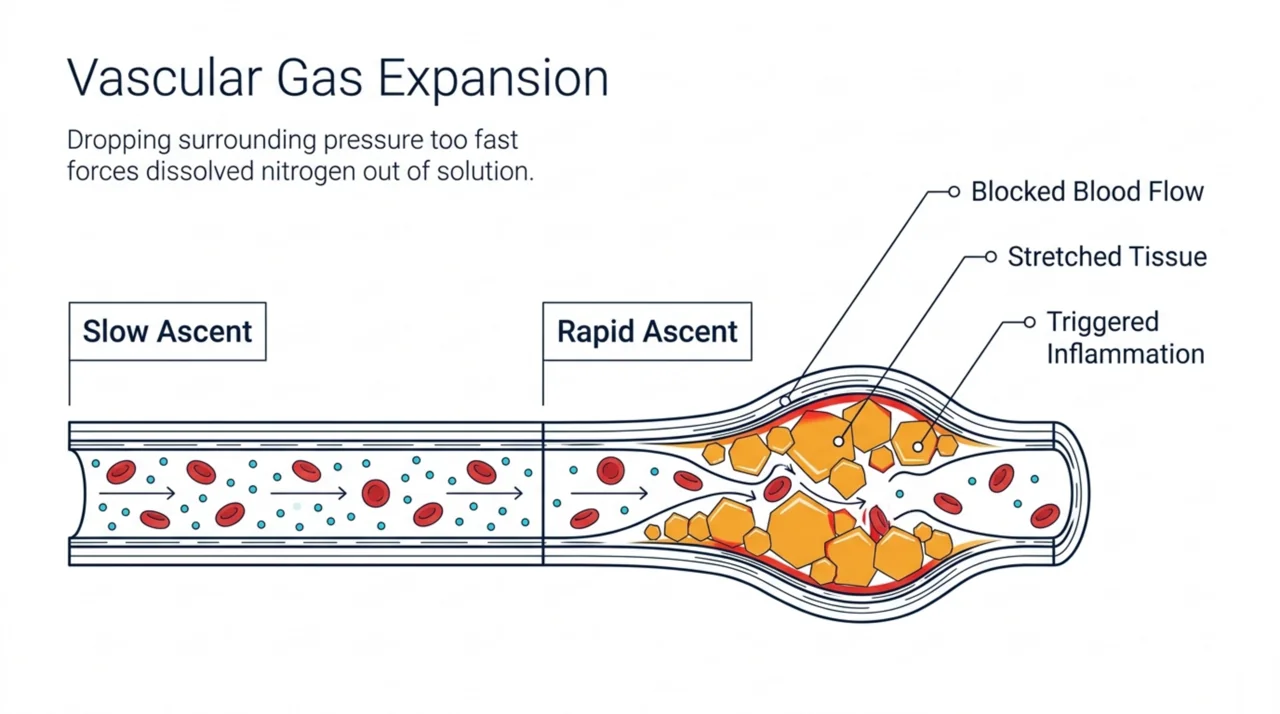
Decompression sickness is an injury caused by dissolved nitrogen gas forming bubbles in the blood and tissues when the surrounding pressure drops too fast, usually after a scuba dive. It is also known as the bends or, together with arterial gas embolism, as decompression illness. The bubbles can block blood flow, stretch tissue, and trigger inflammation. The standard, established treatment is recompression using hyperbaric oxygen therapy, which is one of the internationally UHMS-recognised indications for the therapy. This guide answers the questions Canadian divers and their families ask most.
What is decompression sickness (the bends)?
When you breathe compressed air underwater, extra nitrogen dissolves into your blood and tissues under the higher pressure at depth. If you come back to the surface slowly, that nitrogen is breathed out gradually and safely. If you ascend too quickly, the nitrogen comes out of solution and forms bubbles, the same way a fizzy drink foams when you open the bottle. Those bubbles are what cause decompression sickness. Symptoms can appear within minutes of surfacing or be delayed for several hours. It is a real medical emergency, even when the early symptoms feel mild.
What causes the bends, and who is most at risk?
The root cause is a rapid drop in pressure that does not give your body time to clear dissolved nitrogen. A 2026 review in the American Journal of Medicine (Schipke and colleagues, PubMed | Our Assessment) describes the main risk factors as rapid ascent rates, deep dives beyond about 40 metres, short surface intervals between repeated dives, and an individual heart-structure difference called a patent foramen ovale (a small opening between the heart’s upper chambers). Beyond the factors that review highlights, cold water, dehydration, hard physical effort, and flying soon after diving are also widely recognised to add to the risk. Decompression sickness is most associated with scuba diving, but it is not limited to it.
What are the symptoms of decompression sickness?
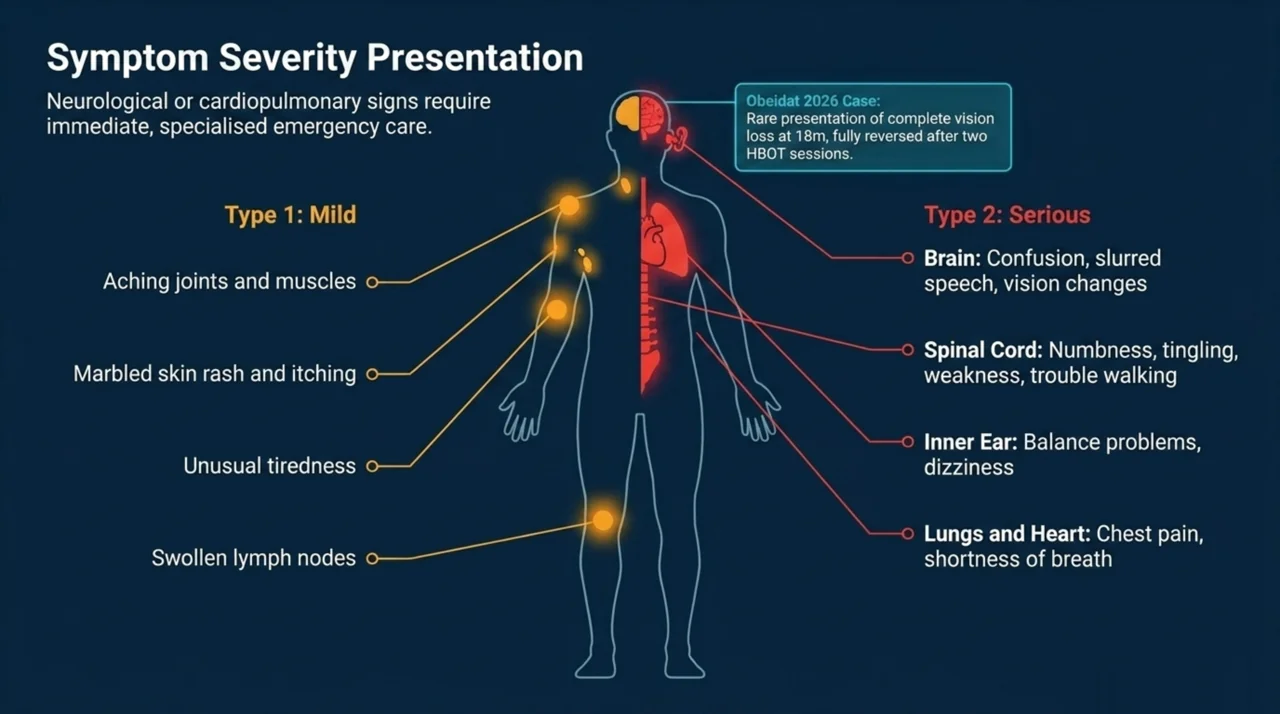
Doctors often sort the bends into two patterns. Type 1 is the milder form, with joint and muscle pain, skin itching or a blotchy rash, and tiredness. Type 2 is the serious form, affecting the brain, spinal cord, inner ear, lungs, or heart. Type 2 symptoms need emergency care without delay. The table below shows the difference, but any symptom after a dive should be checked by a medical professional.
| Type 1 (milder) | Type 2 (serious, urgent) |
|---|---|
| Aching joints and muscles | Numbness, tingling, or weakness in the limbs |
| Skin itching, marbled rash | Trouble walking, balance problems, or dizziness |
| Unusual tiredness | Confusion, slurred speech, or vision changes |
| Swelling of lymph nodes | Chest pain or shortness of breath |
Some presentations are dramatic. In one 2026 case report (Obeidat and colleagues, PubMed | Our Assessment), a novice scuba diver lost his vision completely while ascending from 18 metres. Doctors diagnosed an arterial gas embolism, and his sight fully returned after two hyperbaric oxygen sessions. Complete vision loss is rare, but it shows why any new symptom after a dive deserves urgent attention.
Is decompression sickness a medical emergency?
Yes. Decompression sickness is a time-critical emergency, and the sooner treatment starts, the better the chance of a complete recovery. Symptoms can worsen over hours, and waiting “to see if it passes” can allow lasting injury to set in. Treat any symptom that appears within 24 hours of a dive as decompression sickness until a doctor with diving-medicine experience says otherwise. Call emergency services and explain that the person has been diving.
How does hyperbaric oxygen therapy treat the bends?
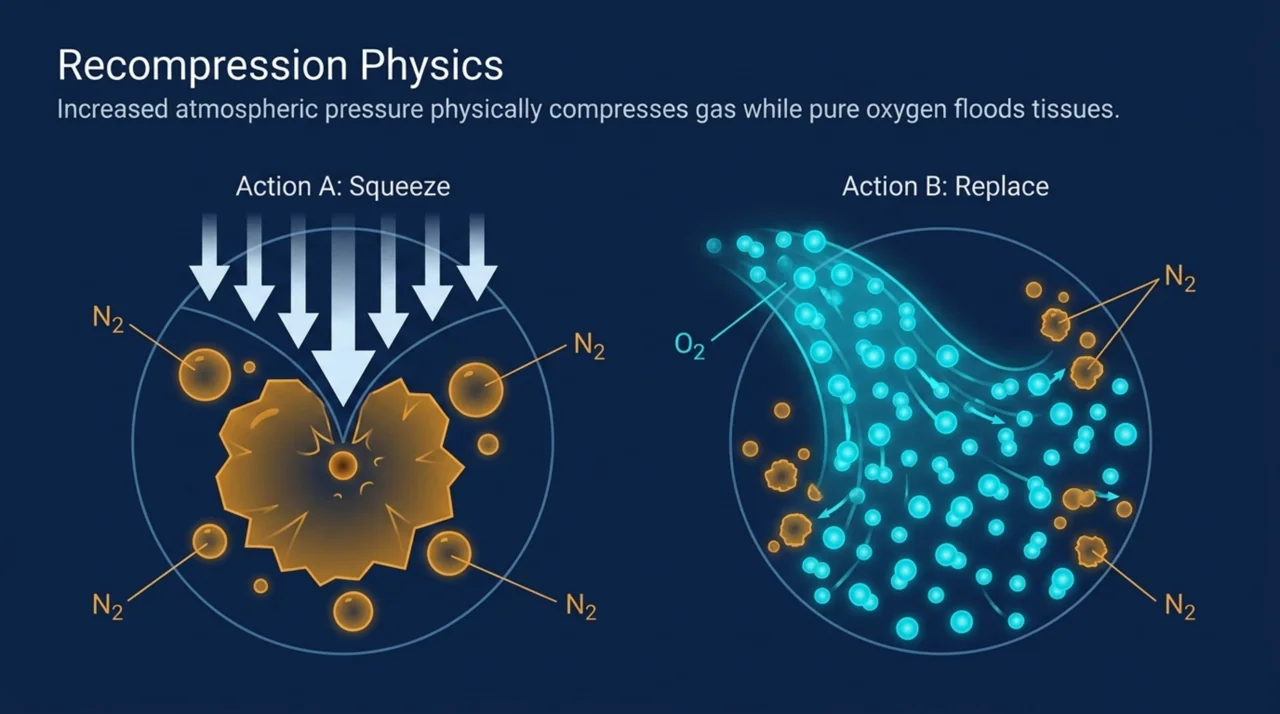
Hyperbaric oxygen therapy works in two ways at once. The increased pressure inside the chamber physically squeezes the nitrogen bubbles smaller, and breathing 100 percent oxygen replaces the trapped nitrogen and floods injured tissue with oxygen. This is called recompression, and it follows set treatment schedules such as the United States Navy tables. The 2026 American Journal of Medicine review noted that immediate high-flow oxygen and urgent hyperbaric oxygen therapy remain essential treatments for decompression sickness. Treatment usually involves one or more recompression sessions, and many divers recover fully, as the case reports and reviews below show.
Does hyperbaric oxygen therapy actually work for decompression sickness?
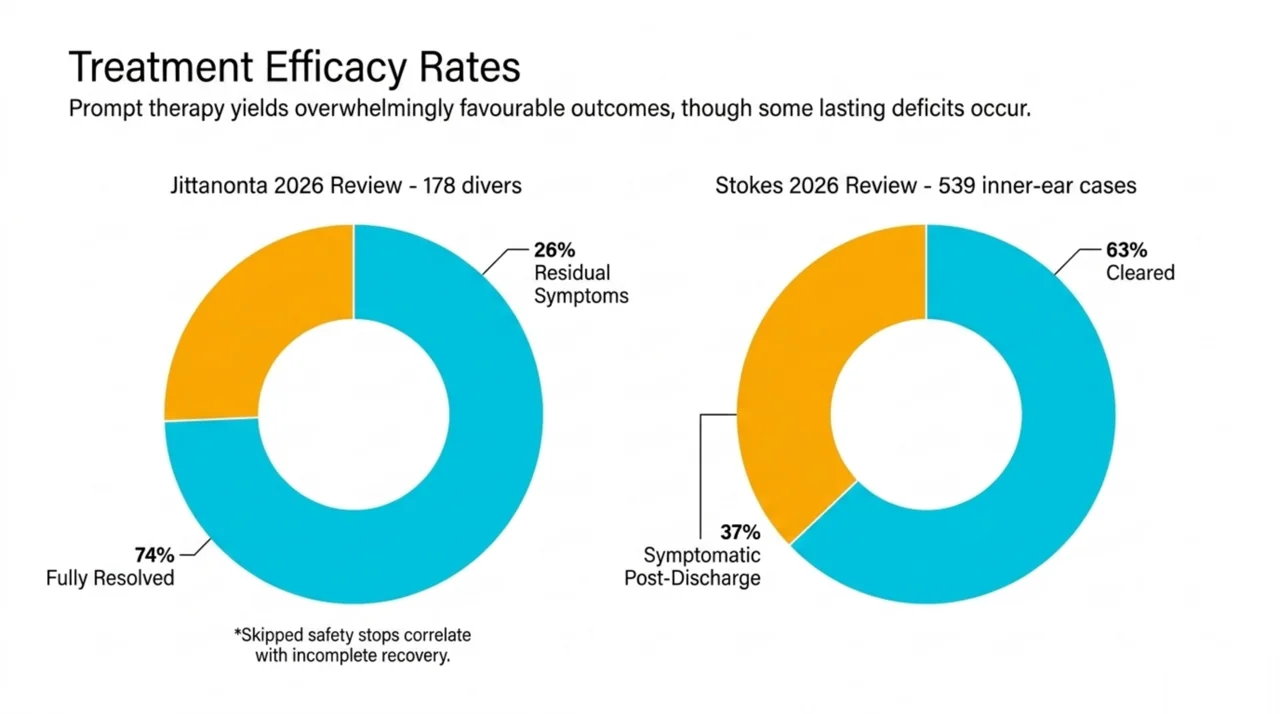
The evidence is encouraging, though most of it comes from case series and reviews rather than large randomised trials, because the bends is an emergency that cannot be ethically withheld. A 2026 systematic review (Stokes and colleagues, PubMed | Our Assessment) pooled 539 cases of inner-ear decompression sickness treated with hyperbaric oxygen. Only 37 percent of those divers still had symptoms when they were discharged. A separate 2026 review of 178 divers treated at hyperbaric centres (Jittanonta and colleagues, PubMed | Our Assessment) found that about 74 percent had their symptoms fully resolve, while around 26 percent had some lasting symptoms. In that review, divers who had skipped their safety stops were more likely to have an incomplete recovery.
What should I do first if I think I have the bends?
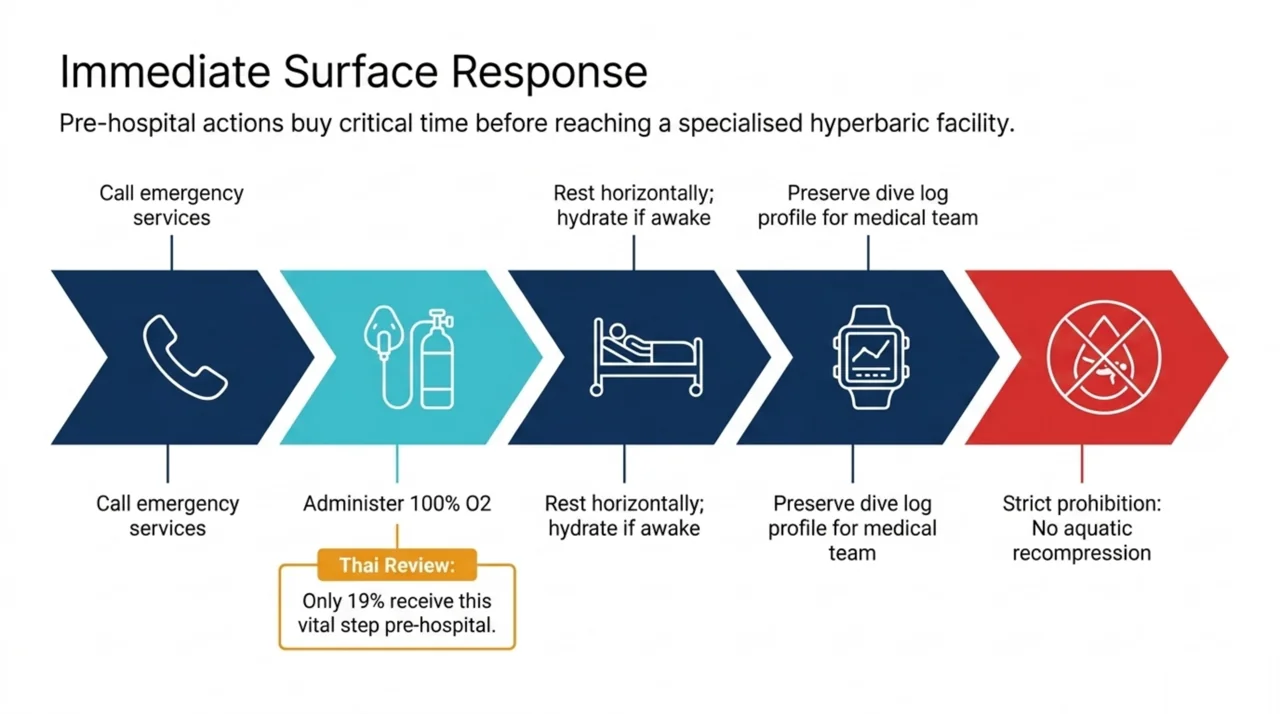
Acting quickly matters more than anything else. While arranging emergency transport, follow these steps:
- Call emergency services and say the person has been scuba diving.
- Give 100 percent oxygen by mask if it is available, even before symptoms are confirmed.
- Have the diver lie down and rest, and offer water to drink if they are awake and able to swallow.
- Keep their dive computer or dive log so the medical team can see the depth and time profile.
- Do not put the diver back in the water to “recompress,” which is dangerous and not a treatment.
First aid does not replace recompression, but it buys time. Notably, the Thai review above found that first-aid high-flow oxygen was given to only about 19 percent of patients before they reached the chamber, a reminder that this simple step is often missed.
Can freediving or breath-hold diving cause decompression sickness?
Yes, and this surprises many people. Although the bends is traditionally linked to scuba diving, it increasingly occurs in breath-hold and freediving, especially with repeated deep or shallow dives and short surface intervals. The 2026 American Journal of Medicine review found that breath-hold decompression sickness often shows up as brain symptoms that can mimic a stroke, frequently in young, healthy people. With freediving growing in popularity, the authors stress that the condition is underrecognised, so a high level of suspicion is important when a breath-hold diver develops neurological symptoms.
Can I fly after diving or after decompression sickness?
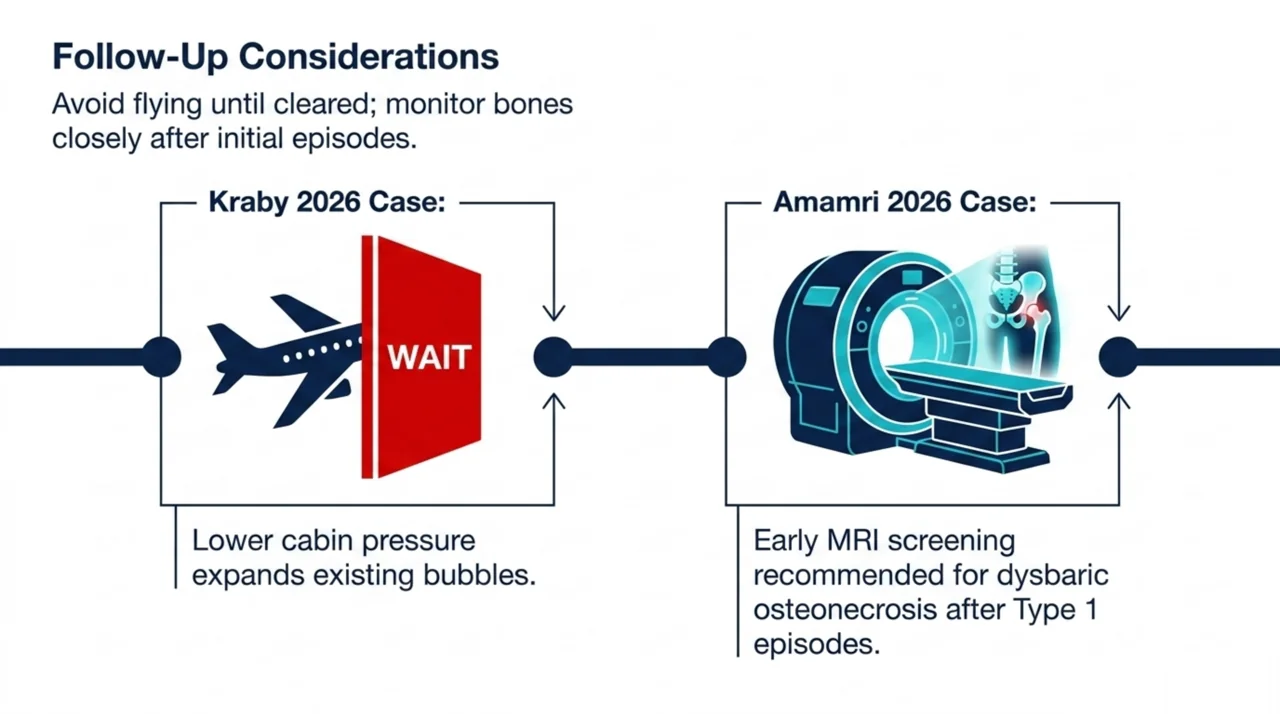
Flying lowers cabin pressure, which can make existing bubbles expand and can trigger the bends even in a diver who felt fine on the ground. Standard guidance is to wait before flying after diving, and never to board a regular flight if you have any decompression sickness symptoms. Air transport of a sick diver is a specialised medical decision. A 2026 case in the Air Medical Journal (Kraby and colleagues, PubMed | Our Assessment) described a diver with a severe arterial gas embolism whose nearest suitable chamber was hundreds of kilometres away, creating difficult transport choices for the critical-care team. The authors note that rapid hyperbaric oxygen therapy is the treatment for arterial gas embolism, so transfer decisions are made with diving-medicine specialists.
Are there long-term effects after the bends?
Most divers who are treated promptly recover well, but some are left with lasting symptoms, which is why fast treatment and follow-up matter. In the Thai review, about 26 percent of divers had residual symptoms after treatment, and spinal-cord involvement was linked to less complete recovery. A separate long-term concern is bone injury. A 2026 case series (Amamri and colleagues, PubMed | Our Assessment) described divers who developed dysbaric osteonecrosis, a form of bone damage, after earlier decompression sickness. The authors recommend close monitoring and early MRI imaging after a Type 1 episode to catch bone changes before they progress.
Where can I get treated for decompression sickness in Canada?
Emergency recompression for decompression sickness is provided through hospitals and regulated facilities that operate a medical hyperbaric chamber, not at every clinic. Because chambers are not in every city, treatment sometimes involves transfer to the nearest centre that can handle the case. You can use the Canada Hyperbarics directory of hospitals and regulated facilities to see where chambers are located, and review our decompression sickness condition page for more detail. In a real emergency, do not try to find a facility yourself first. Call emergency services, who will coordinate transport to an appropriate chamber.
Is hyperbaric treatment for the bends covered by provincial health insurance?
Decompression sickness is an established, emergency indication, so recompression treatment delivered in a hospital setting is generally covered by provincial health insurance when it is medically necessary. Coverage rules and the names of the provincial plans differ across the country, from OHIP in Ontario to MSP in British Columbia and others. For a province-by-province overview, see our guide to HBOT coverage in Canada, and browse the wider frequently asked questions for related topics. You can also explore the underlying studies in the Canada Hyperbarics research library.
How can I lower my risk of decompression sickness?
Prevention comes down to diving conservatively. Ascend slowly, complete your safety stops, stay well within your dive computer’s no-decompression limits, leave generous surface intervals between dives, stay hydrated, and avoid flying too soon after diving. If you have had decompression sickness before, or you know you have a patent foramen ovale, speak with a diving-medicine physician before returning to the water. Good training and sensible dive planning prevent the large majority of cases.
Frequently Asked Questions about Decompression Sickness
How long after a dive can decompression sickness appear?
Symptoms most often begin within an hour of surfacing, but they can be delayed for many hours afterward. Any new symptom within a day of diving should be treated as possible decompression sickness and checked by a medical professional.
Can decompression sickness be fatal?
Severe cases that affect the brain, spinal cord, lungs, or heart can be life-threatening, especially when treatment is delayed. This is exactly why the bends is always treated as an emergency, and why getting on oxygen and reaching a chamber quickly matters so much.
How many hyperbaric sessions are needed to treat the bends?
It depends on how severe the injury is and how the diver responds to recompression. Milder cases may settle after a single session, while serious cases can need several. The hyperbaric team decides based on your symptoms and your progress between treatments.
Can I scuba dive again after having decompression sickness?
Many divers do return to the water, but only after a diving-medicine physician clears them. The right waiting period, and any tests such as screening for a patent foramen ovale, depend on your individual case and how fully you recovered.
The bottom line for divers
Decompression sickness is serious, but it is also treatable, and most divers who reach hyperbaric oxygen therapy quickly do well. Recognise the symptoms, give 100 percent oxygen, call for help, and let the medical system get the diver to a chamber. To find where treatment is available, start with the Canada Hyperbarics directory of hospitals and regulated facilities across the country.
This content is for informational purposes only and does not constitute medical advice. Decompression sickness is a medical emergency. If you suspect the bends, call emergency services immediately and seek care from a qualified medical professional.