TL;DR: Hyperbaric oxygen therapy (HBOT) means breathing 100% oxygen inside a pressurised chamber. In Canada, Health Canada has not licensed HBOT to treat stroke, so using it for stroke recovery is investigational. Early, mostly small studies suggest it may help some people with post-stroke mood, thinking, and quality of life, but the evidence is not yet strong enough to call HBOT a proven stroke treatment. Always work with your stroke care team before you consider it, and be cautious of low-pressure “wellness” chambers that have not shown the same benefit in research.
Hyperbaric oxygen therapy (HBOT) is a medical treatment in which a person breathes 100% oxygen inside a sealed chamber that is pressurised above normal air pressure. Many people recovering from a stroke, and the families caring for them, ask whether this extra oxygen can help the brain heal. The honest answer in 2026 is that HBOT is not an approved or proven treatment for stroke recovery in Canada. That said, a small and growing body of research is studying whether it can support recovery of mood, memory, and daily function after a stroke. This guide from Canada Hyperbarics explains what the science actually shows, what a session involves, the risks, and how to talk with your doctor about it.
What is hyperbaric oxygen therapy, and how might it help after a stroke?
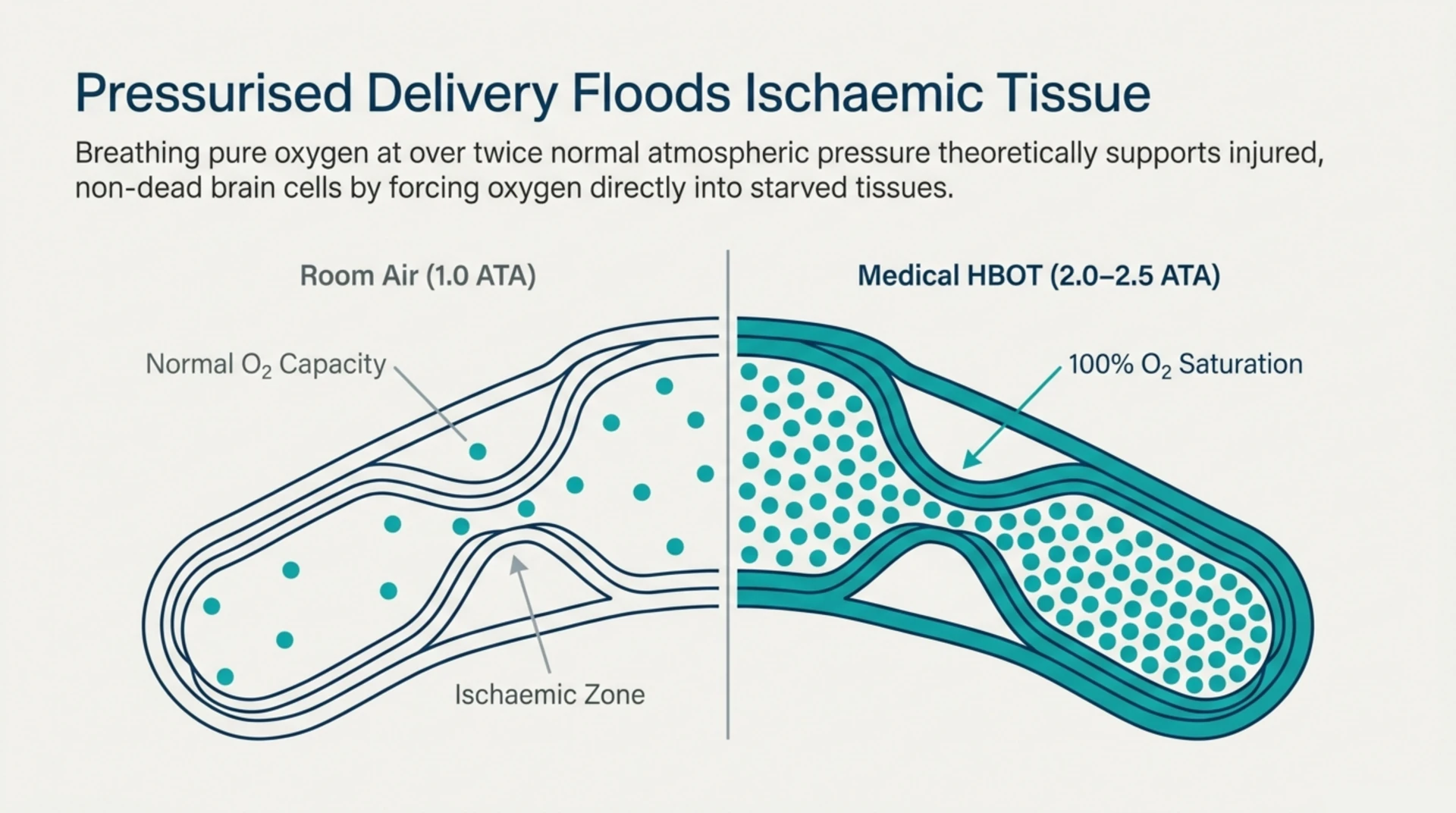
Hyperbaric oxygen therapy is a treatment that delivers pure oxygen at higher-than-normal pressure. In medical-grade HBOT, the chamber is usually pressurised to about 2 to 2.5 atmospheres, which is roughly two to two and a half times the air pressure you feel at sea level. At that pressure, your blood and body tissues can carry far more oxygen than they do when you simply breathe room air.
A stroke happens when blood flow to part of the brain is blocked or reduced, which starves brain cells of oxygen. This is called ischaemia. The idea behind HBOT for stroke is that flooding the body with extra oxygen might support tissue that is injured but not yet dead, and may encourage repair processes. A 2026 review of HBOT in oxygen-starved conditions explains that breathing pure oxygen at about 2 to 2.5 atmospheres raises oxygen levels in tissue and can provide neuroprotection after injury to the brain and spinal cord (PubMed | Our Assessment). It is important to know this is a proposed mechanism. Showing that something works in tissue or in a lab is not the same as proving it changes how a person recovers from a stroke.
Is hyperbaric oxygen therapy an approved treatment for stroke in Canada?
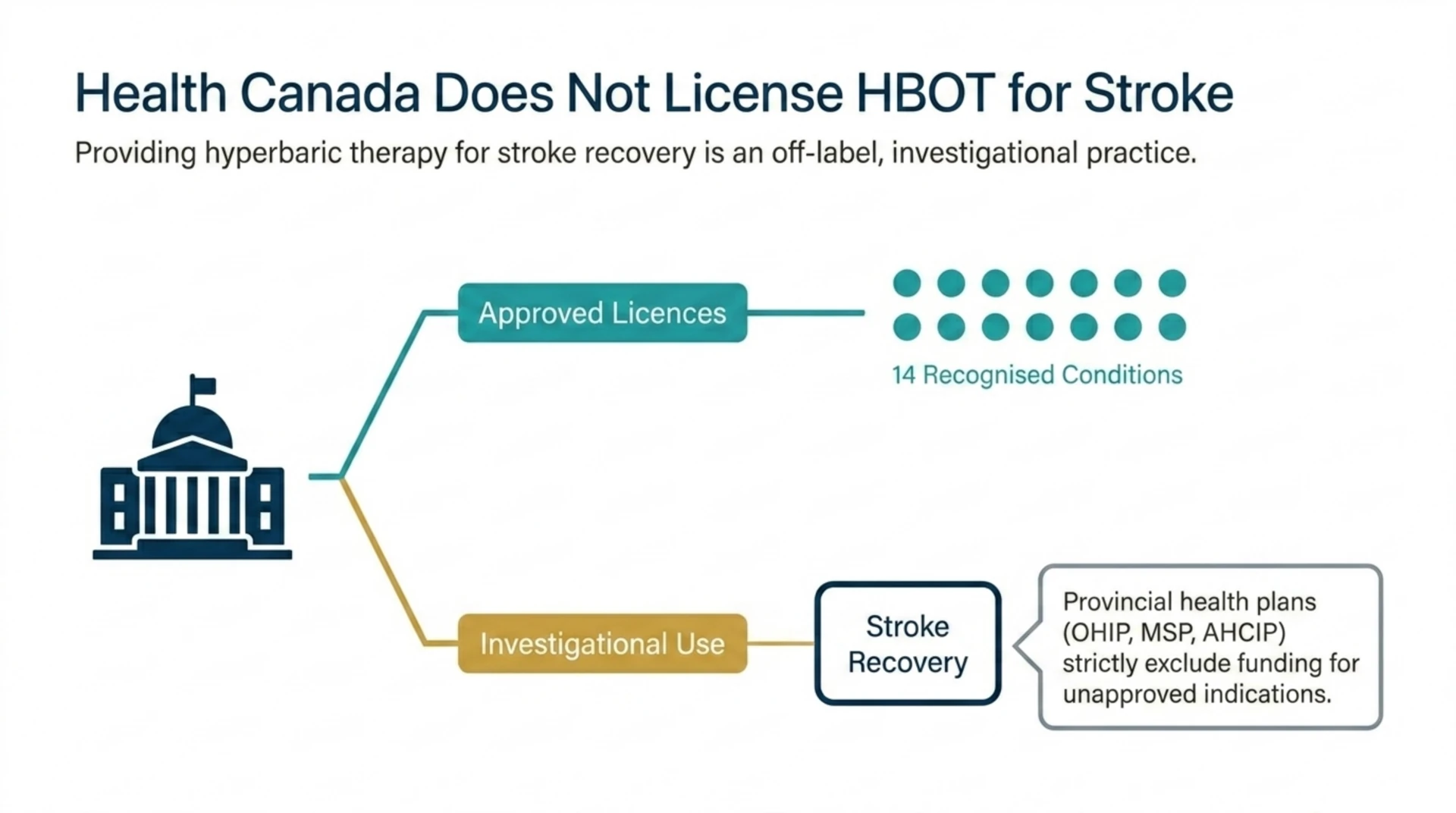
No. This is the single most important fact for any patient to understand. Health Canada has not licensed hyperbaric chambers to treat stroke. Health Canada has reviewed the evidence and issued medical device licences for hyperbaric chambers to treat 14 specific conditions, and stroke is not one of them. Health Canada states plainly that some private clinics claim HBOT can treat conditions such as multiple sclerosis, cerebral palsy, cancer, stroke, and migraine, but that there is no scientific proof to support those claims (Health Canada).
The 14 Health Canada conditions overlap with, but are separate from, the indications recognised by the Undersea and Hyperbaric Medical Society (UHMS), an international body that reviews the evidence for hyperbaric medicine (UHMS HBO Indications). Stroke does not appear on the UHMS list of recognised indications either. You can read more about how HBOT is regulated in Canada on our regulatory framework page. When a treatment is used for a condition it is not licensed for, that is called investigational or off-label use. It is not illegal for a physician to consider it, but you and your care team take on more uncertainty, and provincial health plans will not pay for it.
What does the research say about HBOT for stroke recovery?
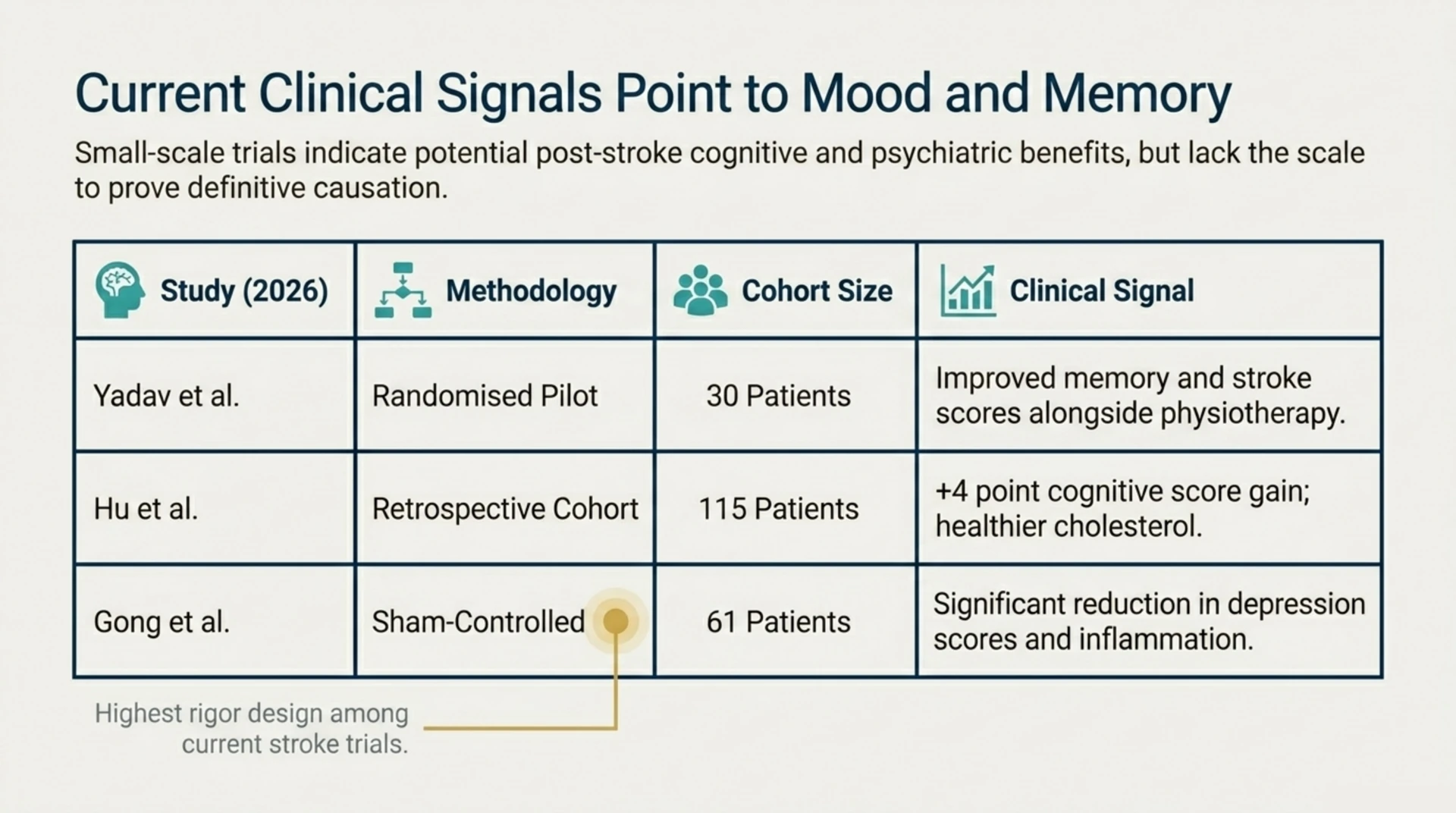
The research is early and the studies are small, but a few recent trials are worth understanding. In a 2026 randomised controlled pilot study, 30 people who had an ischaemic stroke 3 to 6 months earlier were split into two groups. One group added 24 sessions of HBOT to conventional physiotherapy, and the other received physiotherapy alone. The HBOT-plus-physiotherapy group improved on a standard stroke severity scale and on a memory test, and reported broader gains in quality of life than physiotherapy alone. Importantly, both groups improved, the study was small, and the authors describe it as a pilot, so it cannot prove that HBOT was the deciding factor (PubMed | Our Assessment).
A separate 2026 study looked at thinking and memory problems after a stroke, a common issue called post-stroke cognitive impairment. This was a retrospective cohort study of 115 patients, which means researchers looked back at records rather than running a controlled experiment. In that study, adding HBOT to usual care was associated with a greater improvement in cognitive test scores (a gain of about 4 points versus a smaller gain in the comparison group) and with healthier cholesterol levels (PubMed | Our Assessment). Because this was an observational study, it can show a link but cannot prove that HBOT caused the improvement. People who received HBOT may have differed in other ways.
Here is a simple comparison of the stroke-related studies discussed in this guide.
| Study (2026) | Study type | Who was studied | Main finding |
|---|---|---|---|
| Yadav et al. | Randomised controlled pilot (small) | 30 people, 3 to 6 months after ischaemic stroke | HBOT-plus-physiotherapy group improved on stroke and memory scores; both groups improved |
| Hu et al. | Retrospective cohort (observational) | 115 people with post-stroke thinking problems | HBOT was associated with better cognitive scores and cholesterol levels |
| Gong et al. | Randomised, sham-controlled (rigorous) | 61 people with depression after stroke | HBOT lowered depression scores more than a sham treatment in this trial |
The pattern is consistent: signals of possible benefit, but in small studies that experts agree need to be confirmed by larger, high-quality trials before HBOT could be recommended as a standard part of stroke rehabilitation. You can browse the full set of studies we track in our research library.
Can HBOT help with depression and mood after a stroke?
Depression after a stroke is common and often under-treated. It affects somewhere between roughly 29% and 52% of stroke survivors. The mood and motivation changes that follow a stroke can slow down rehabilitation, so this is an area researchers are watching closely. In a 2026 randomised, double-blind, sham-controlled trial of 61 people with post-stroke depression, the group that received HBOT had a significantly larger drop in depression scores than the sham group at both two and four weeks, and also showed lower levels of inflammation in the blood (PubMed | Our Assessment). Because this trial used a sham comparison, it is a stronger design than most HBOT studies, although it was still small and short.
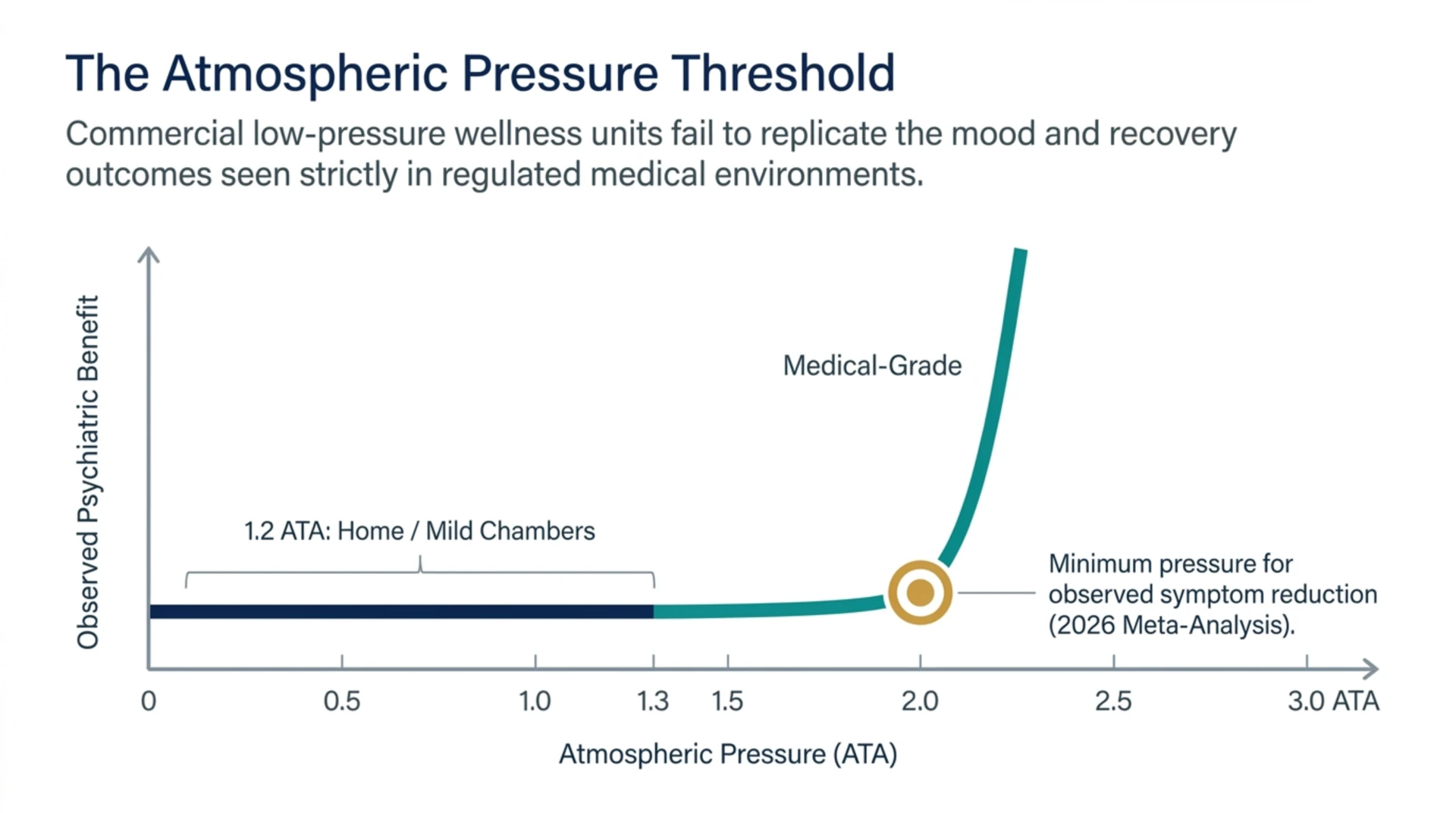
This fits a wider 2026 systematic review and meta-analysis of HBOT for psychiatric conditions, which pooled 17 studies. It found HBOT was associated with a large reduction in depression symptoms overall, but with a clear catch: the benefit appeared at a treatment pressure of 2.0 ATA and was not seen at a much lower pressure of 1.2 ATA (PubMed | Our Assessment). That pressure detail matters a great deal for patients, and we explain why in the next section.
What does a hyperbaric oxygen therapy session involve?
If you and your physician decide to explore HBOT, it helps to know what a session is like. A typical course in research settings is a series of daily sessions over several weeks. Here is what usually happens:
- You change into cotton clothing. Items that could spark or hold static, such as lighters, electronics, and some cosmetics, are not allowed in the chamber because of the oxygen-rich environment.
- You enter the chamber. A monoplace chamber holds one person, while a multiplace chamber holds several people and a medical attendant.
- The chamber is slowly pressurised. You will feel fullness in your ears, much like on an aeroplane. Staff teach you simple techniques to clear them.
- You breathe oxygen at pressure for roughly 60 to 90 minutes, depending on the protocol. You can usually rest, listen to audio, or watch a screen.
- The chamber is slowly returned to normal pressure, and your ears adjust again.
Sessions are supervised by trained staff at hospitals and regulated facilities. The treatment itself is painless, though the pressure changes take a little getting used to.
What are the risks, and who should not have HBOT?
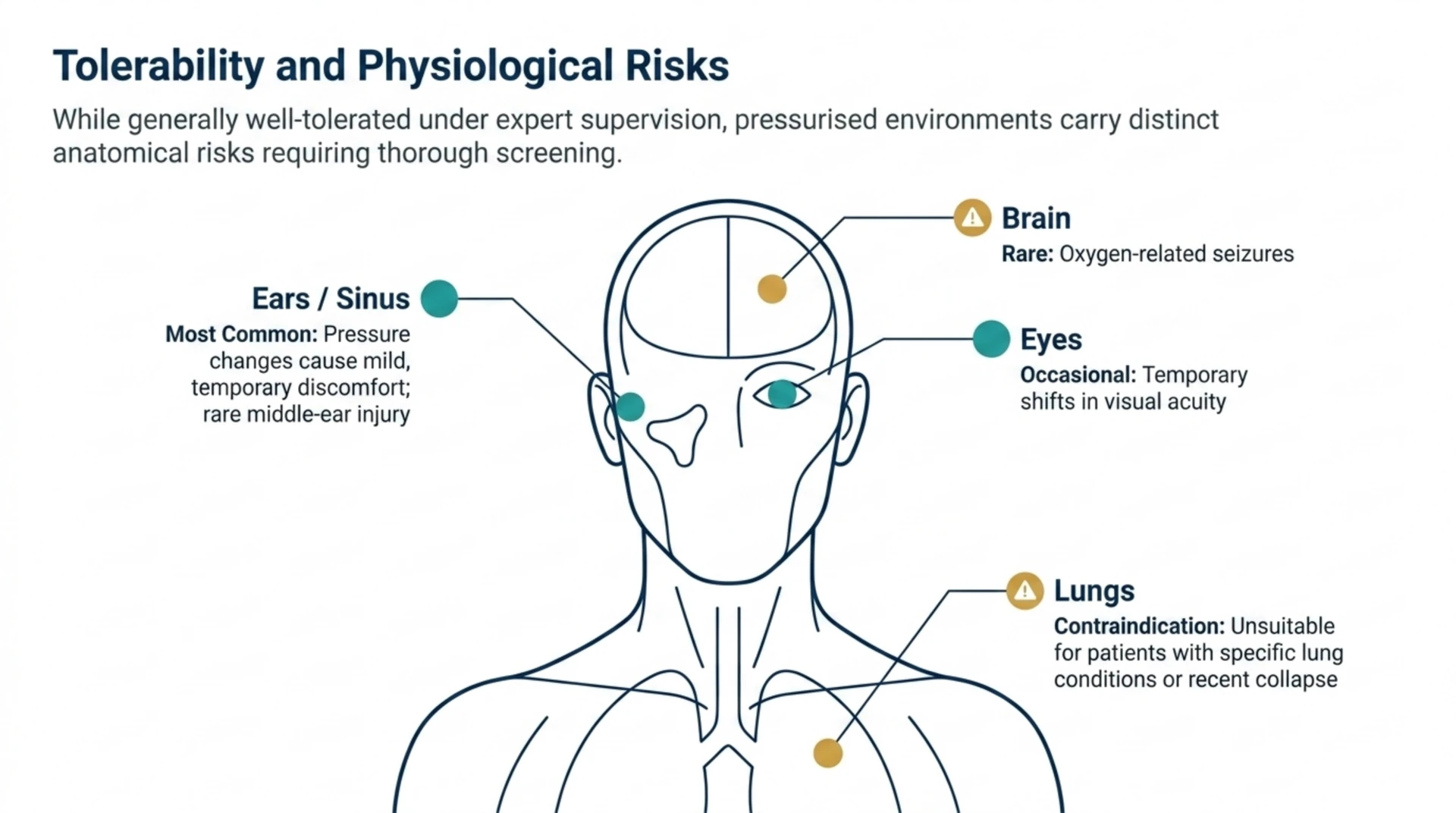
HBOT is generally well tolerated when delivered by trained staff, and in the studies above adverse events were mild and temporary. Still, it is a medical treatment with real risks. The most common side effect is ear or sinus discomfort from the pressure changes, which can occasionally cause middle-ear injury. Less common risks include temporary changes in vision, claustrophobia in the chamber, and, rarely, oxygen-related seizures. People with certain lung conditions, a recent collapsed lung, or specific ear problems may not be suitable candidates, which is why careful screening matters.
There is one more issue patients should weigh carefully: not all “hyperbaric” chambers are the same. Low-pressure or “mild” hyperbaric chambers sold for home or wellness use operate at much lower pressures, often around 1.3 ATA or less. As the 2026 meta-analysis above showed for mood, benefits that appeared at 2.0 ATA were not seen at 1.2 ATA. In other words, the low-pressure chambers marketed directly to patients have not shown the same results in research as medical-grade HBOT. Spending money on a home chamber in the hope of treating stroke is not supported by the current evidence. If you are considering HBOT, ask whether the facility is regulated and what pressure it uses.
How can I find hyperbaric oxygen therapy in Canada, and what should I ask my doctor?
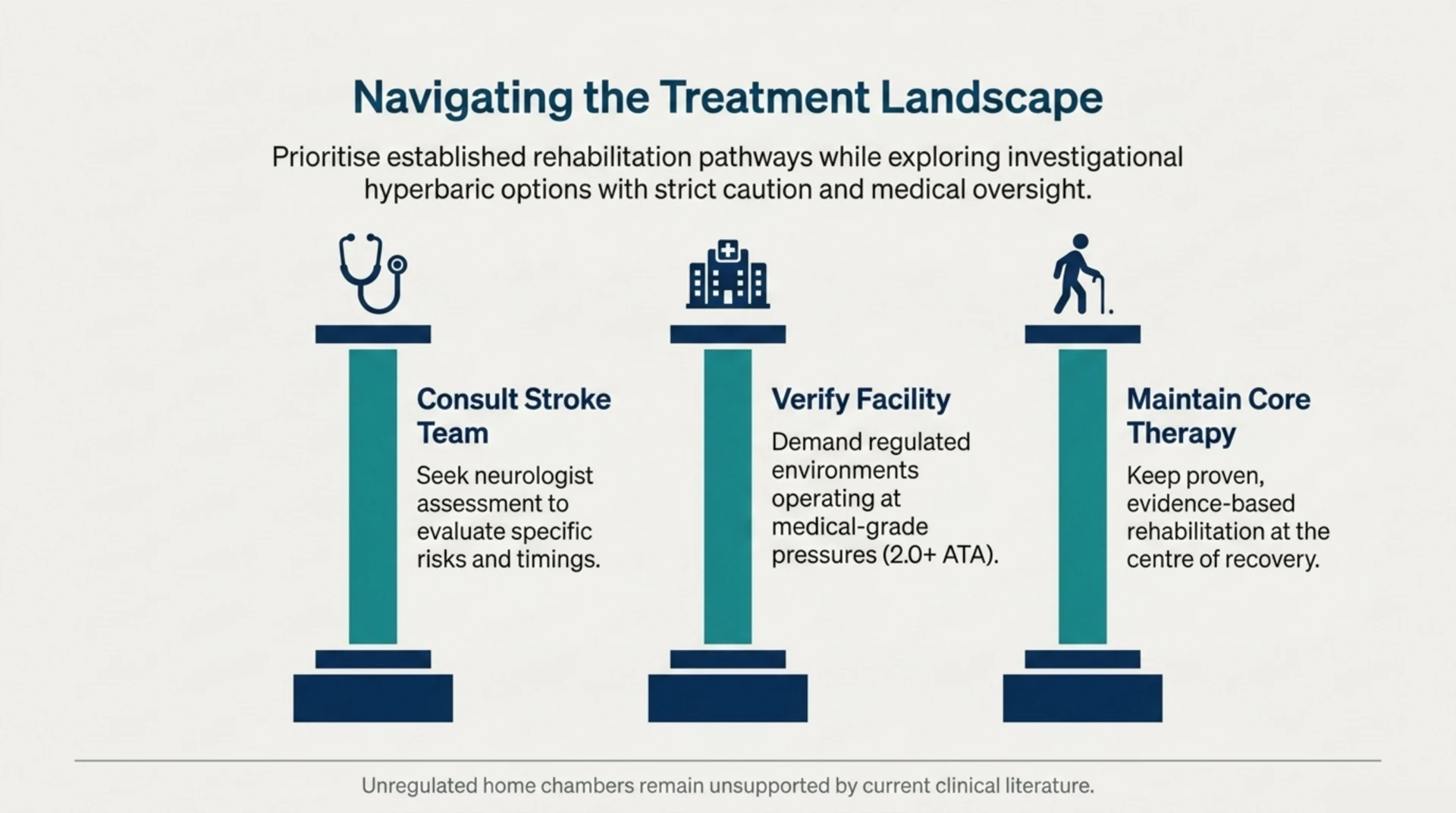
Because stroke is not an approved indication, the first and most important step is a conversation with your stroke care team. Your neurologist, family physician, and rehabilitation team know your medical history and can tell you whether HBOT is reasonable to consider, and whether any risks apply to you. National resources such as the Heart and Stroke Foundation of Canada can also help you understand proven, evidence-based stroke recovery options, which remain the foundation of care.
If you want to learn where regulated hyperbaric care exists in the country, Canada Hyperbarics maintains a directory of hospitals and regulated facilities that offer hyperbaric oxygen therapy. Helpful questions to ask any provider include: Is this facility regulated, and what pressure do you use? What does the research actually show for my situation? What are the risks for me specifically? And what will it cost, since this is not covered by provincial health insurance for stroke? You may also find our frequently asked questions page useful as you prepare.
Frequently asked questions about HBOT and stroke recovery
Is hyperbaric oxygen therapy approved for stroke in Canada?
No. Health Canada has licensed hyperbaric chambers for 14 specific conditions, and stroke is not among them. Using HBOT for stroke is investigational, and Health Canada notes there is no scientific proof to support claims that it treats stroke.
Can HBOT reverse brain damage from a stroke?
There is no good evidence that HBOT reverses established brain damage. Current research is studying whether it can support recovery of mood, thinking, and function in some people, but results come from small studies and need confirmation in larger trials.
How many HBOT sessions are used in stroke studies?
It varies by study. The 2026 pilot trial in stroke rehabilitation used 24 sessions delivered over several weeks alongside conventional physiotherapy. Research protocols differ, and there is no single agreed number of sessions for stroke recovery.
Is HBOT covered by provincial health insurance for stroke?
No. Provincial plans such as OHIP in Ontario, MSP in British Columbia, and AHCIP in Alberta cover HBOT only for approved indications. Because stroke is not approved, patients pay out of pocket if they pursue it.
Are home or “mild” hyperbaric chambers good for stroke recovery?
The low-pressure chambers marketed for home or wellness use operate well below medical-grade pressures. Research has not shown the same benefits at these low pressures, so they are not a proven option for stroke recovery.
Is hyperbaric oxygen therapy safe after a stroke?
In studies, side effects have generally been mild and temporary, with ear discomfort being the most common. However, HBOT is not suitable for everyone, and proper screening by trained staff is essential before any treatment.
When is it too late to try HBOT after a stroke?
There is no established answer. Some studies enrol people months after a stroke, but the evidence is not strong enough to define an ideal timing window. This is a question to discuss with your stroke specialist.
The bottom line for Canadian patients and families
Hyperbaric oxygen therapy is a genuine medical treatment with proven value for several conditions, but stroke recovery is not yet one of them in Canada. The research is promising in places, especially for post-stroke mood and thinking, but it is early and the studies are small. If HBOT interests you, treat it as something to explore carefully with your stroke care team rather than a proven cure, choose regulated facilities over home chambers, and keep proven rehabilitation at the centre of your recovery. Canada Hyperbarics exists to give you the clear, source-based information you need to make that decision well.
This content is for informational purposes only and does not constitute medical advice. Hyperbaric oxygen therapy is not an approved or proven treatment for stroke recovery in Canada. Always consult a qualified healthcare professional and your stroke care team before making any treatment decisions.