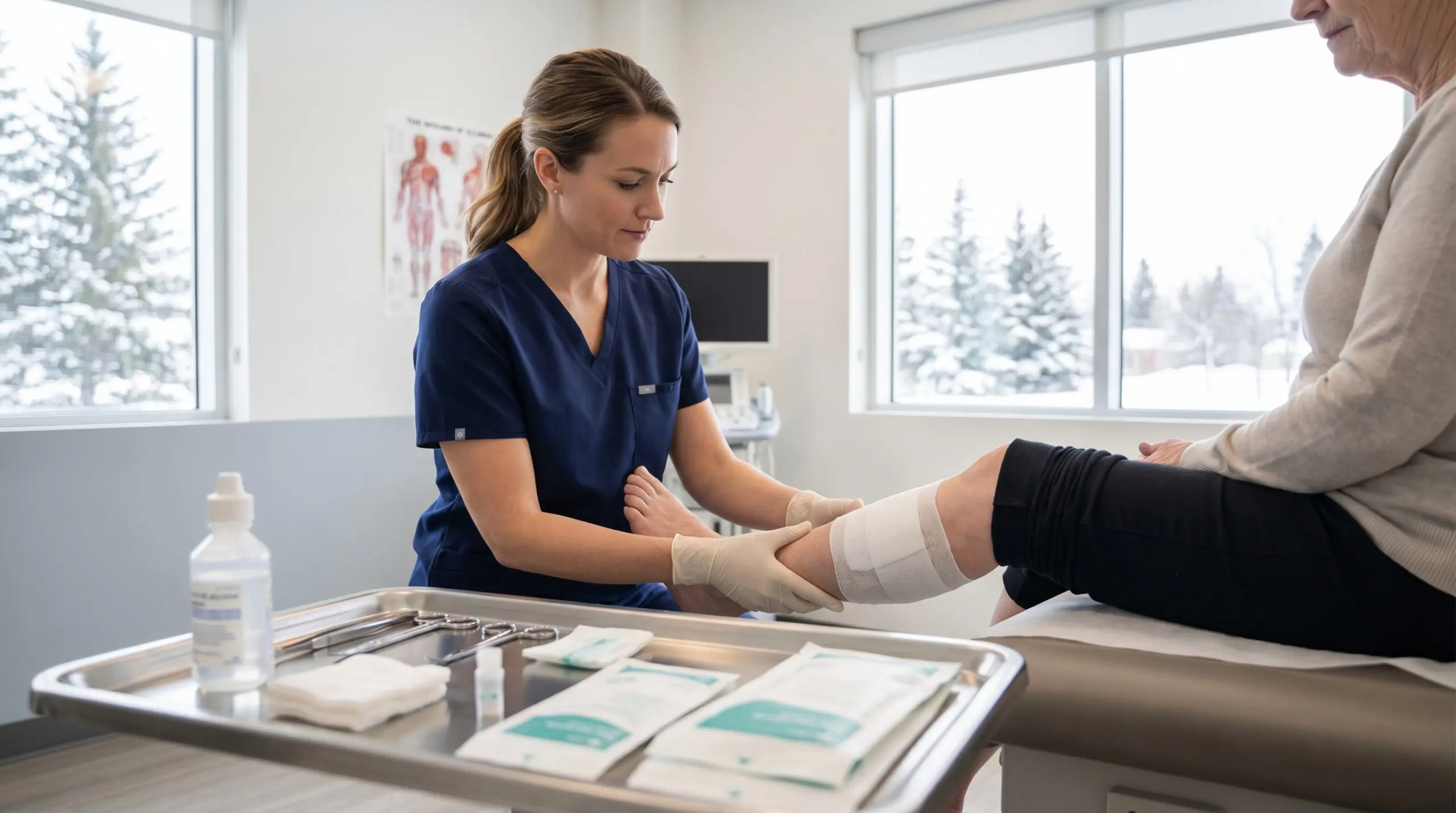
TL;DR: Hyperbaric oxygen therapy (HBOT) is a proven adjunctive treatment for chronic wounds and diabetic foot ulcers that do not respond to standard wound care. According to PubMed, a 2024 meta-analysis found HBOT more than doubled wound healing rates (RR 2.39) and reduced major amputation risk by 69%. In Canada, HBOT for wound healing is available at hospitals and regulated facilities across multiple provinces, with public coverage in Ontario, British Columbia, Alberta, Quebec, and Nova Scotia for recognised indications.
What Is Hyperbaric Oxygen Therapy for Wound Healing?
Hyperbaric oxygen therapy (HBOT) is a medical treatment in which a patient breathes 100% oxygen inside a pressurised chamber at pressures greater than normal atmospheric levels. This process dramatically increases the amount of dissolved oxygen in the blood and tissues, promoting healing in wounds that have stalled or become chronic. HBOT appears on the UHMS Indications list (15th Edition, 2024), which now covers 15 conditions and is recognised by Health Canada as an adjunctive therapy for non-healing wounds.
For patients living with diabetes, chronic wounds represent one of the most serious complications of the disease. Diabetic foot ulcers (DFUs) affect approximately 15-25% of people with diabetes at some point in their lives, and these wounds are the leading cause of non-traumatic lower limb amputation worldwide. When standard wound care fails to produce results, HBOT offers a clinically supported option to accelerate healing and potentially prevent limb loss.
How Does HBOT Promote Wound Healing?
HBOT works through several physiological mechanisms that directly address the underlying causes of chronic wound failure. Understanding these mechanisms helps explain why this therapy is particularly effective for wounds that resist conventional treatment.
Oxygen delivery to hypoxic tissue: Chronic wounds are typically oxygen-starved. The elevated pressure during HBOT dissolves oxygen directly into blood plasma, bypassing damaged blood vessels to reach tissues that need it most. Tissue oxygen levels can increase by 10-15 times normal levels during treatment.
Angiogenesis (new blood vessel growth): HBOT stimulates the formation of new capillaries in damaged tissue. This process, called angiogenesis, restores blood supply to wound beds and surrounding areas, creating a foundation for sustained healing even between treatment sessions.
Enhanced immune function: Elevated oxygen levels boost the activity of white blood cells, improving the body’s ability to fight infection in and around the wound. This is critical for diabetic patients, whose immune response is often compromised.
Reduced inflammation and swelling: HBOT reduces tissue oedema by constricting blood vessels while simultaneously increasing oxygen delivery. This combination reduces swelling without starving tissues of the oxygen they need to heal.
Collagen synthesis: Oxygen is essential for fibroblasts to produce collagen, the structural protein that forms the scaffold for new tissue. HBOT provides the oxygen levels needed for optimal collagen production and wound closure.
What Does the Research Say About HBOT for Diabetic Foot Ulcers?
According to PubMed, the evidence supporting HBOT for diabetic foot ulcers has grown substantially in recent years. Multiple systematic reviews and meta-analyses have examined the clinical outcomes of adding HBOT to standard wound care protocols.
A landmark 2024 systematic review and meta-analysis published in Plastic and Reconstructive Surgery Global Open analysed 14 studies and found that HBOT was significantly superior to other treatments across all Wagner grades of diabetic foot ulcers. The study reported a wound healing rate more than double that of standard care (RR = 2.39; 95% CI: 1.87-3.05), with significantly lower rates of both minor amputation (RR = 0.58) and major amputation (RR = 0.31) (Oley et al., 2024, DOI: 10.1097/GOX.0000000000005692).
A 2025 systematic review published in Cureus confirmed these findings, examining six studies with a total of 391 patients. The review concluded that the majority of studies demonstrated reduced major amputation rates, improved ulcer healing rates, and decreased ulcer size and depth when HBOT was used alongside standard care (Damineni et al., 2025, DOI: 10.7759/cureus.78655).
An earlier meta-analysis of 20 randomised controlled trials involving 1,263 patients found that HBOT increased the healing rate of diabetic foot ulcers by 90% (RR = 1.901), shortened healing time by an average of 19 days, and reduced major amputation incidence by nearly half (RR = 0.518) (Zhang et al., 2021, DOI: 10.1016/j.asjsur.2021.07.047).
Beyond diabetic wounds specifically, a 2024 meta-analysis of 31 randomised controlled trials examined oxygen-based therapy for all chronic wounds. The pooled analysis showed patients treated with HBOT had better short-term wound healing (RR = 1.544), lower amputation rates (RR = 0.529), and shorter wound healing times compared to control groups (Du et al., 2024, DOI: 10.1097/ASW.0000000000000131).
What Do International Clinical Guidelines Recommend?
The International Working Group on the Diabetic Foot (IWGDF), the most authoritative body for diabetic foot management worldwide, issued updated guidelines in 2023. The IWGDF made a conditional supportive recommendation for HBOT, advising its use when best standard of care alone has failed to heal a diabetic foot ulcer and where resources are available for the intervention (Chen et al., 2023, DOI: 10.1002/dmrr.3644).
In Canada, the Canadian Undersea and Hyperbaric Medical Association (CUHMA) and the UHMS both list non-healing wounds, particularly diabetic foot ulcers, among the recognised indications for HBOT. This means the therapy has been reviewed by independent medical bodies and found to have sufficient evidence to support its clinical use.
Which Types of Wounds Can HBOT Treat?
HBOT is not intended for all wounds. It is specifically indicated as an adjunctive therapy for chronic, non-healing wounds where standard care has been insufficient. The following table summarises the wound types for which HBOT is commonly used in Canadian clinical practice:
| Wound Type | UHMS Indication | Typical Treatment Protocol | Evidence Level |
|---|---|---|---|
| Diabetic foot ulcers (Wagner Grade II-IV) | Yes | 20-40 sessions at 2.0-2.4 ATA | Strong (multiple meta-analyses) |
| Chronic venous insufficiency ulcers | Yes (as non-healing wound) | 20-30 sessions at 2.0-2.4 ATA | Moderate |
| Arterial insufficiency ulcers | Yes (as non-healing wound) | 20-40 sessions at 2.0-2.4 ATA | Moderate |
| Post-surgical non-healing wounds | Yes (compromised grafts/flaps) | 20 sessions at 2.0-2.5 ATA | Moderate to strong |
| Radiation-induced tissue injury wounds | Yes | 30-60 sessions at 2.0-2.4 ATA | Strong (Cochrane review) |
| Pressure ulcers (advanced stages) | Conditional | 20-30 sessions at 2.0-2.4 ATA | Limited |
Note: Treatment protocols vary by facility and individual patient assessment. The number of sessions required depends on wound severity, patient health, and response to treatment. ATA refers to atmospheres absolute, the unit of pressure used in hyperbaric medicine.
What Should Canadian Patients Expect During HBOT for Wound Healing?
If your physician refers you for hyperbaric oxygen therapy to treat a chronic wound, here is what the treatment process typically involves at Canadian hospitals and regulated facilities:
1. Medical assessment: A hyperbaric medicine physician will evaluate your wound, review your medical history, and determine whether you are a suitable candidate. This includes checking for contraindications such as untreated pneumothorax or certain medications.
2. Transcutaneous oximetry (TcPO2): Many centres perform a baseline oxygen measurement of the tissue surrounding your wound. This test helps predict whether HBOT will benefit your specific wound and serves as a baseline to measure progress.
3. Treatment sessions: Each session typically lasts 90-120 minutes. You will breathe pure oxygen inside a pressurised chamber at 2.0-2.4 ATA. Most wound healing protocols involve daily treatments, five days per week, for four to eight weeks.
4. Ongoing wound care: HBOT is always used alongside standard wound care, not as a replacement. You will continue with regular dressing changes, debridement, offloading (for foot ulcers), infection management, and blood sugar control throughout your treatment course.
5. Progress monitoring: Your wound will be measured and documented regularly to track healing progress. If the wound is not responding after 20 sessions, the treatment team may reassess the approach.
Where Can You Access HBOT for Wound Healing in Canada?
Canada Hyperbarics maintains a comprehensive directory of hospitals and regulated facilities offering HBOT across the country. Availability and public coverage vary significantly by province:
Ontario (OHIP): OHIP covers HBOT at both hospitals and eligible private clinics for 14 recognised indications, including non-healing wounds and diabetic foot ulcers. Multiple facilities across the province offer this service.
British Columbia (MSP): Publicly funded HBOT is available at Vancouver General Hospital. Private clinics in BC offer HBOT but are not covered by MSP.
Alberta (AHCIP): Alberta Health Services operates hospital-based hyperbaric programmes in Calgary and Edmonton. Private clinics are not covered by AHCIP.
Quebec (RAMQ): Hospital-based HBOT is available, but private clinics are not covered by RAMQ.
Nova Scotia (MSI): The QEII Health Sciences Centre in Halifax provides hyperbaric services, though wait times can be significant (often several months to over a year).
For a complete list of facilities in your province, visit the Canada Hyperbarics facilities directory. For detailed provincial coverage information, see the HBOT coverage guide.
How Do You Get a Referral for HBOT Wound Treatment?
In Canada, HBOT for wound healing typically requires a physician referral. The process varies by province but generally follows these steps:
Step 1: Speak with your family physician, endocrinologist, or wound care specialist about HBOT as an option for your chronic wound.
Step 2: Your referring physician will document that standard wound care has been attempted and that the wound has not responded adequately. This documentation is typically required for both public and private coverage.
Step 3: The referral is sent to a hyperbaric medicine programme at a hospital or regulated facility. A hyperbaric physician will review the referral and determine eligibility.
Step 4: If accepted, you will be scheduled for an initial assessment and, if appropriate, begin treatment. Treatment typically starts within days to weeks at private facilities, while hospital-based programmes may have longer wait times depending on demand.
Patients with private health insurance should check their policy, as some plans cover HBOT for recognised indications. Many private facilities also offer direct billing or payment plans.
Can HBOT Prevent Amputation in Diabetic Patients?
One of the most significant benefits of HBOT for diabetic wound patients is its potential to prevent amputation. According to PubMed, the evidence on this point is compelling. The 2024 meta-analysis by Oley and colleagues found that HBOT reduced the risk of major amputation by 69% compared to standard care alone (RR = 0.31; 95% CI: 0.18-0.52). Minor amputation rates were also reduced by 42% (RR = 0.58) (Oley et al., 2024).
A 2025 meta-analysis comparing multiple advanced wound therapies confirmed that systemic HBOT demonstrated the most substantial reduction in amputation rates among all treatments analysed, including negative pressure wound therapy and platelet-rich plasma (Zhang et al., 2025, DOI: 10.62347/WVEM7973).
These findings are particularly important for Canadian patients, where diabetes affects over 3.7 million people and diabetic foot complications place a significant burden on the healthcare system. Early referral for HBOT when standard wound care is not producing results can be a critical factor in limb preservation.
What Are the Risks and Side Effects of HBOT for Wound Patients?
HBOT is generally considered safe when administered at accredited facilities by trained personnel. However, like all medical treatments, it carries some potential side effects that wound patients should be aware of:
Common side effects: Ear pressure or discomfort (similar to air travel), temporary changes in vision (usually reversible myopia), mild fatigue after sessions, and sinus pressure.
Less common side effects: Middle ear barotrauma (preventable with proper equalisation techniques), oxygen toxicity (extremely rare at therapeutic pressures), and claustrophobia in monoplace chambers.
Contraindications: Patients with untreated pneumothorax, certain chemotherapy medications (bleomycin, cisplatin, doxorubicin), or uncontrolled seizure disorders may not be candidates for HBOT. Your hyperbaric physician will screen for these conditions before treatment begins.
The 2025 systematic review by Damineni and colleagues noted that adverse events across the studies examined were generally mild and manageable, with no serious safety concerns reported in the HBOT treatment groups (Damineni et al., 2025).
Frequently Asked Questions About HBOT and Wound Healing
How many HBOT sessions are needed to heal a diabetic foot ulcer?
Most treatment protocols involve 20-40 sessions, administered daily over four to eight weeks. The exact number depends on wound severity, your overall health, and how the wound responds. Your hyperbaric medicine team will monitor progress and adjust the treatment plan accordingly. Some patients see improvement within the first 10-15 sessions.
Does HBOT replace standard wound care for chronic wounds?
No. HBOT is always used as an adjunctive (add-on) therapy alongside standard wound care. This means you will continue with regular wound dressing changes, debridement, infection management, offloading, and blood glucose control. The IWGDF 2023 guidelines specifically recommend HBOT only when best standard care alone has not been sufficient to heal the wound.
Is HBOT for wound healing covered by provincial health insurance in Canada?
Coverage varies by province. Ontario (OHIP) covers HBOT at hospitals and eligible private clinics for recognised indications including non-healing wounds. British Columbia (MSP), Alberta (AHCIP), Quebec (RAMQ), and Nova Scotia (MSI) provide coverage at hospital-based programmes only. Some private insurance plans also cover HBOT. Visit the Canada Hyperbarics coverage guide for province-specific details.
What types of chronic wounds respond best to HBOT?
The strongest evidence exists for diabetic foot ulcers, particularly Wagner Grade II-IV wounds that have not responded to at least 30 days of standard wound care. HBOT also shows benefit for radiation-induced tissue injury wounds, compromised surgical grafts and flaps, and chronic refractory osteomyelitis. Venous and arterial insufficiency ulcers may also respond when other treatments have failed.
Can I receive HBOT if I have diabetes-related complications beyond my wound?
In most cases, yes. Diabetic patients with peripheral neuropathy, peripheral vascular disease, or controlled kidney disease can still receive HBOT. However, each patient is individually assessed. Your hyperbaric physician will review all your health conditions and medications to ensure HBOT is safe for you. Certain conditions, such as uncontrolled blood sugar or active infection requiring systemic treatment, may need to be addressed before starting HBOT.
Where can I find an HBOT facility near me for wound treatment?
Canada Hyperbarics maintains a searchable directory of hospitals and regulated facilities across Canada that offer hyperbaric oxygen therapy. You can search by province to find facilities in your area. For condition-specific research, visit the Canada Hyperbarics research library, which contains over 14,000 studies on HBOT, including many on wound healing.
Taking the Next Step
If you or a loved one is living with a chronic wound or diabetic foot ulcer that has not responded to standard care, hyperbaric oxygen therapy may be a viable treatment option supported by substantial clinical evidence. The first step is to discuss HBOT with your physician or wound care specialist, who can assess whether a referral to a hyperbaric medicine programme is appropriate for your situation.
To find hospitals and regulated facilities offering HBOT in your province, visit the Canada Hyperbarics facilities directory. For more information on recognised conditions and treatment protocols, explore the conditions page.
This content is for informational purposes only and does not constitute medical advice. Always consult a qualified healthcare professional before starting any new treatment. Hyperbaric oxygen therapy should only be administered at accredited facilities by trained medical personnel.