
TL;DR: A hyperbaric chamber is a sealed, pressurized unit where a patient breathes oxygen under clinical supervision. If you live in or near Barrie, the nearest regulated hyperbaric chamber may be in another city, so this guide walks through finding a facility, booking, preparing, and what a typical visit actually involves, from intake to discharge.
A hyperbaric chamber is a sealed, pressure-controlled unit in which a patient rests while breathing oxygen at a pressure higher than normal room air, under the supervision of trained clinical staff. For patients searching for a hyperbaric chamber Barrie option, the practical reality is that Barrie itself may not have a hospital-based or regulated multiplace facility, which means the first step is often finding the closest accredited centre and understanding how the referral and booking process works before you ever arrive for a session.
This guide is written for patients and caregivers who are new to the process. It covers how to locate a facility, what a referral typically involves, how to prepare for your first appointment, and what happens step by step once you are on-site. It does not describe what hyperbaric oxygen therapy (HBOT) is used for clinically. For that, see our conditions overview, which lists the areas where clinicians may consider HBOT and links to further reading.
What Is a Hyperbaric Chamber, and Why Might Barrie Patients Travel for One?
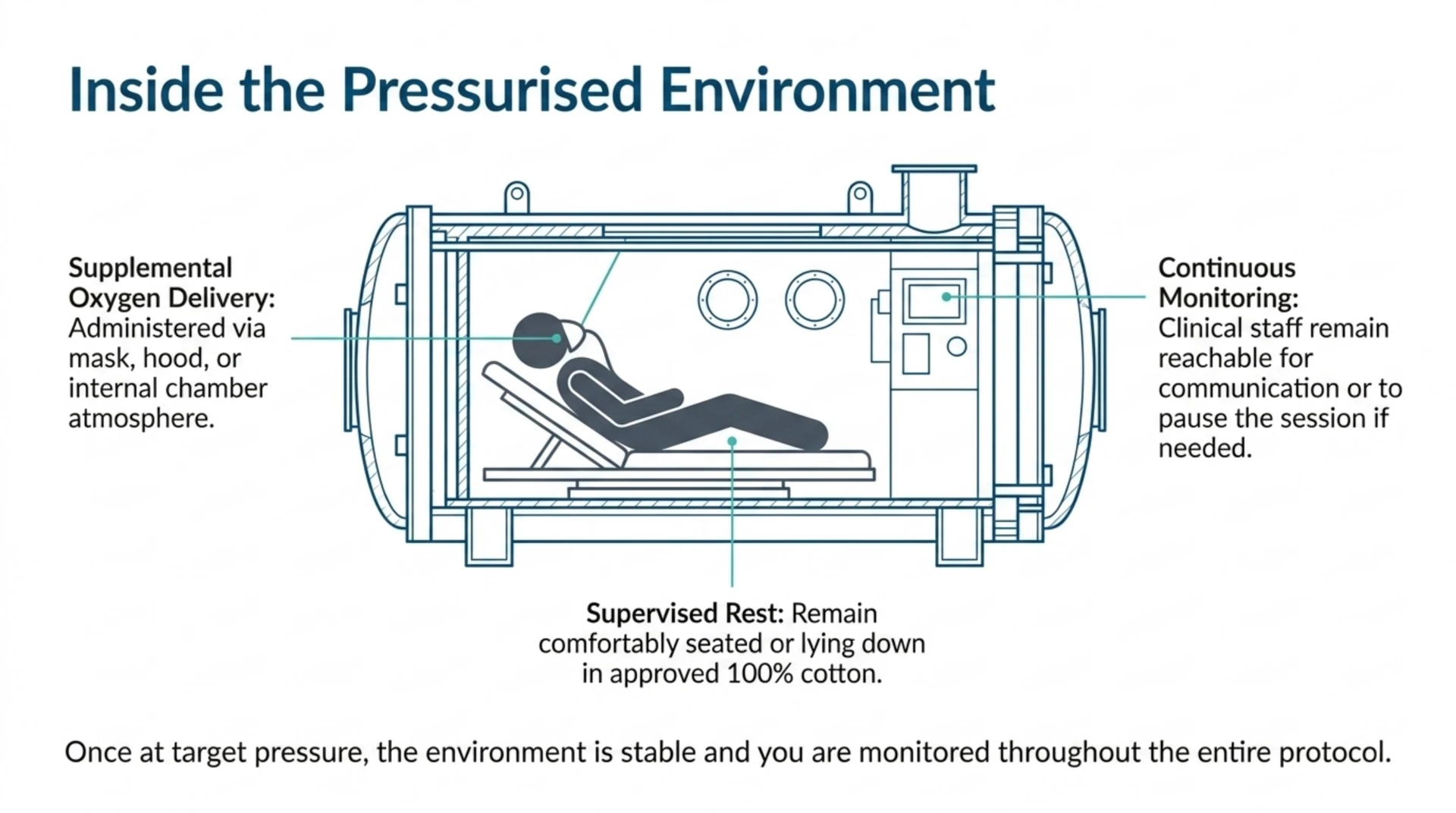
A hyperbaric chamber is a purpose-built enclosure, either a single-patient (monoplace) tube or a larger multi-patient (multiplace) room, that can be pressurized beyond normal atmospheric levels. Patients sit or lie inside while breathing supplemental oxygen delivered through a mask, hood, or the chamber’s internal atmosphere, depending on the equipment and protocol in use.
Regulated chambers are typically located at hospitals or dedicated hyperbaric centres because they require certified staff, safety systems, and ongoing maintenance oversight. Barrie residents searching locally will find two private clinics in the city itself, though anyone who specifically needs a hospital-based or regulated multiplace facility may need to look to a neighbouring city or a major urban centre. This is common across Canada, where hyperbaric capacity is concentrated in a smaller number of regulated sites. Knowing where the nearest accredited chamber is located, before you need one, saves time later.
If you are unsure where to start, our related guide on how to find a hyperbaric oxygen therapy clinic near you walks through the search process in more detail.
How Do You Book a Hyperbaric Chamber Session Near Barrie?
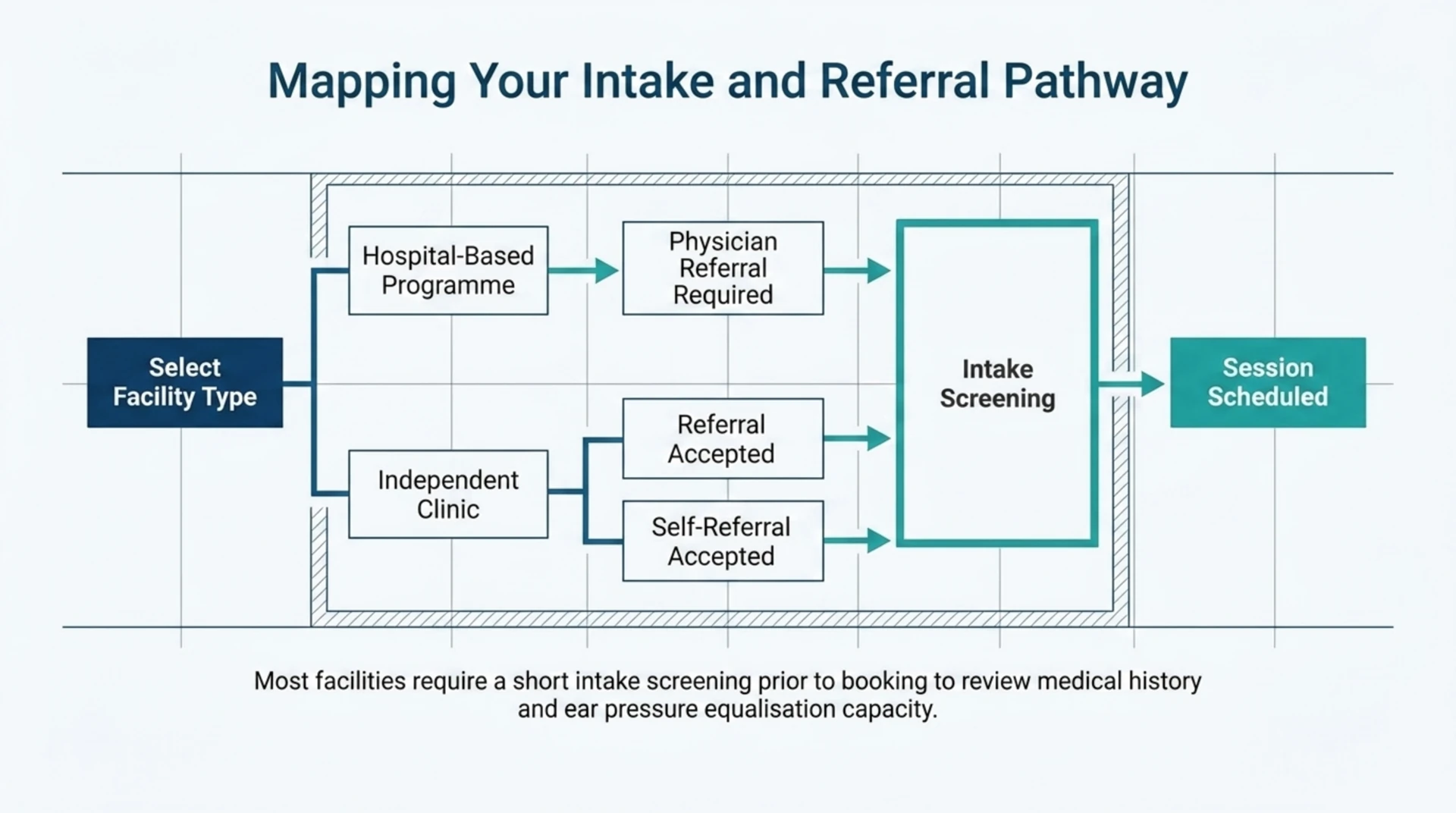
Booking usually starts with a referral from a physician or nurse practitioner, particularly when a chamber is attached to a hospital program. Some private, non-hospital facilities accept self-referrals, but they will still typically require a screening call or intake form before scheduling your first appointment.
Step 1: Confirm Whether You Need a Referral
Call the facility directly and ask whether they require physician referral, self-referral, or both. Hospital-based programs almost always require a referral. Independent clinics vary, so it is worth confirming before assuming either way.
Step 2: Complete Intake Screening
Most facilities complete a short intake screening before booking a first session, covering your medical history, current medications, and any conditions that affect ear pressure equalization or lung function. This is a logistics and safety step, not a diagnosis.
Step 3: Schedule Around Travel Time
If you are travelling from Barrie to a facility in another city, build the drive into your schedule. Sessions themselves may run under two hours, but arrival, changing, and post-session recovery time add to the total visit.
Every facility sets its own scheduling policies. Canada Hyperbarics maintains a directory to help patients compare options, and our facilities page is a useful starting point for finding hospitals and regulated centres by region.
What Should You Do to Prepare for Your First Appointment?
Preparation is mostly about logistics: what to wear, what to bring, and what to avoid in the hours before your session.
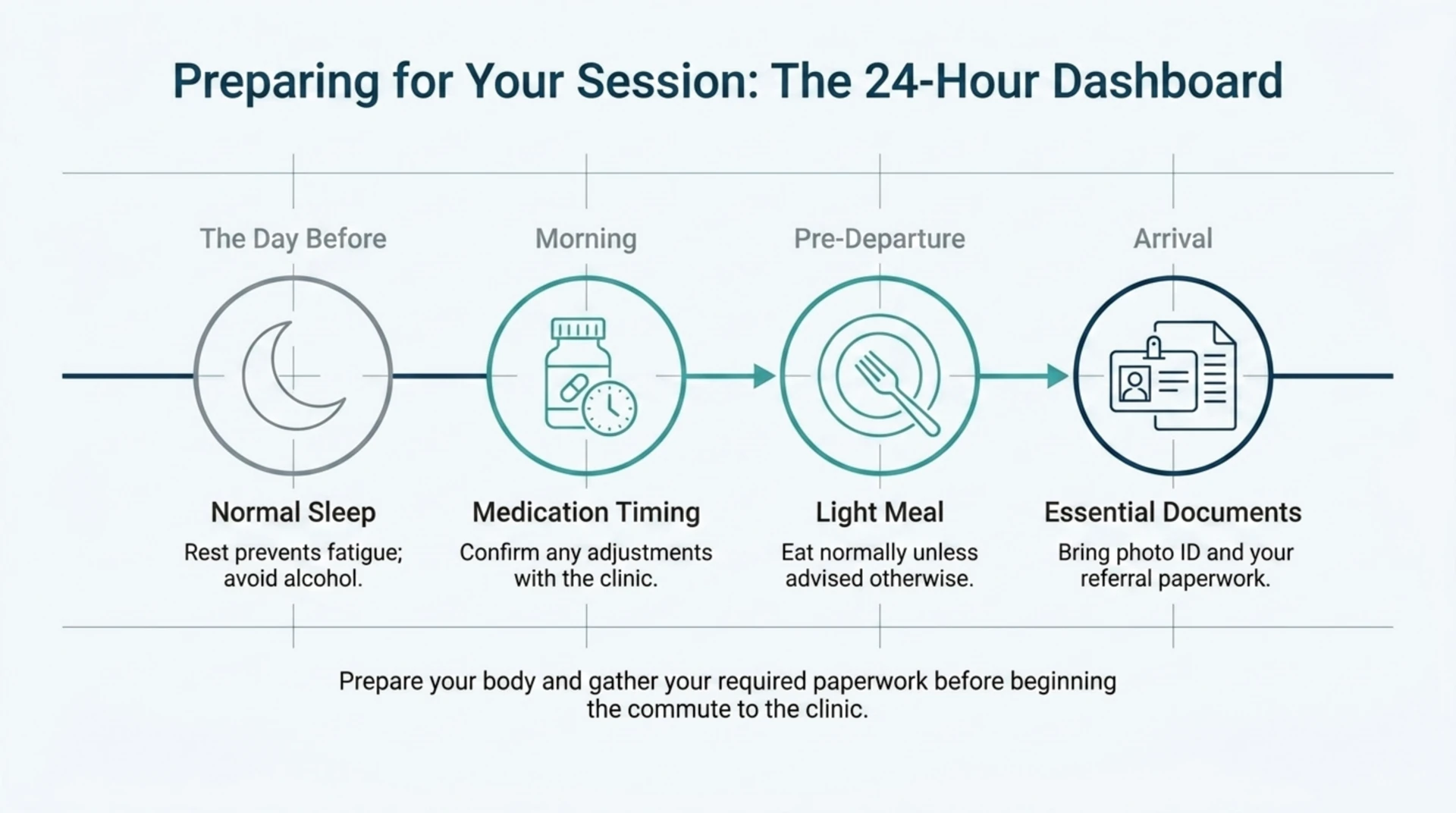
The Day Before
Avoid alcohol and confirm with the facility whether any of your regular medications need timing adjustments around your appointment. Get a normal night’s sleep if possible, since fatigue can make a longer clinic visit feel more taxing.
The Morning Of
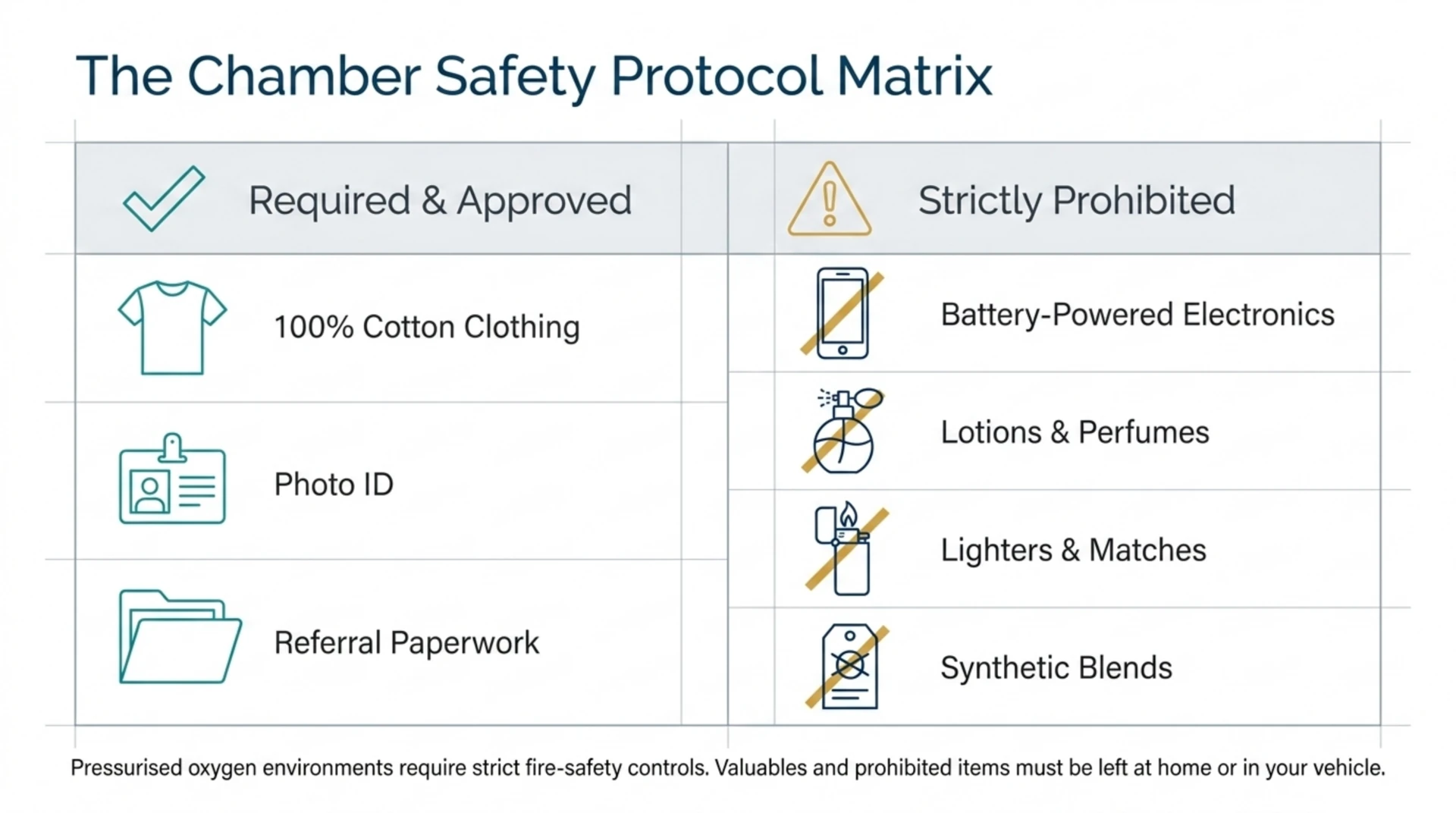
Wear loose, comfortable, 100 percent cotton clothing if you have it, since some facilities restrict synthetic fabrics inside the chamber for safety reasons. Avoid applying lotions, perfumes, or hair products, as some facilities ask patients to arrive product-free. Eat a light meal unless you have been told otherwise, and bring photo ID along with your referral paperwork.
What to Leave at Home
Lighters, electronic devices, and anything battery-powered are generally not permitted inside the chamber, since pressurized oxygen environments require strict fire-safety controls. Leave valuables in the car or at home rather than bringing them into the clinic.
What Happens Inside the Chamber, Step by Step?
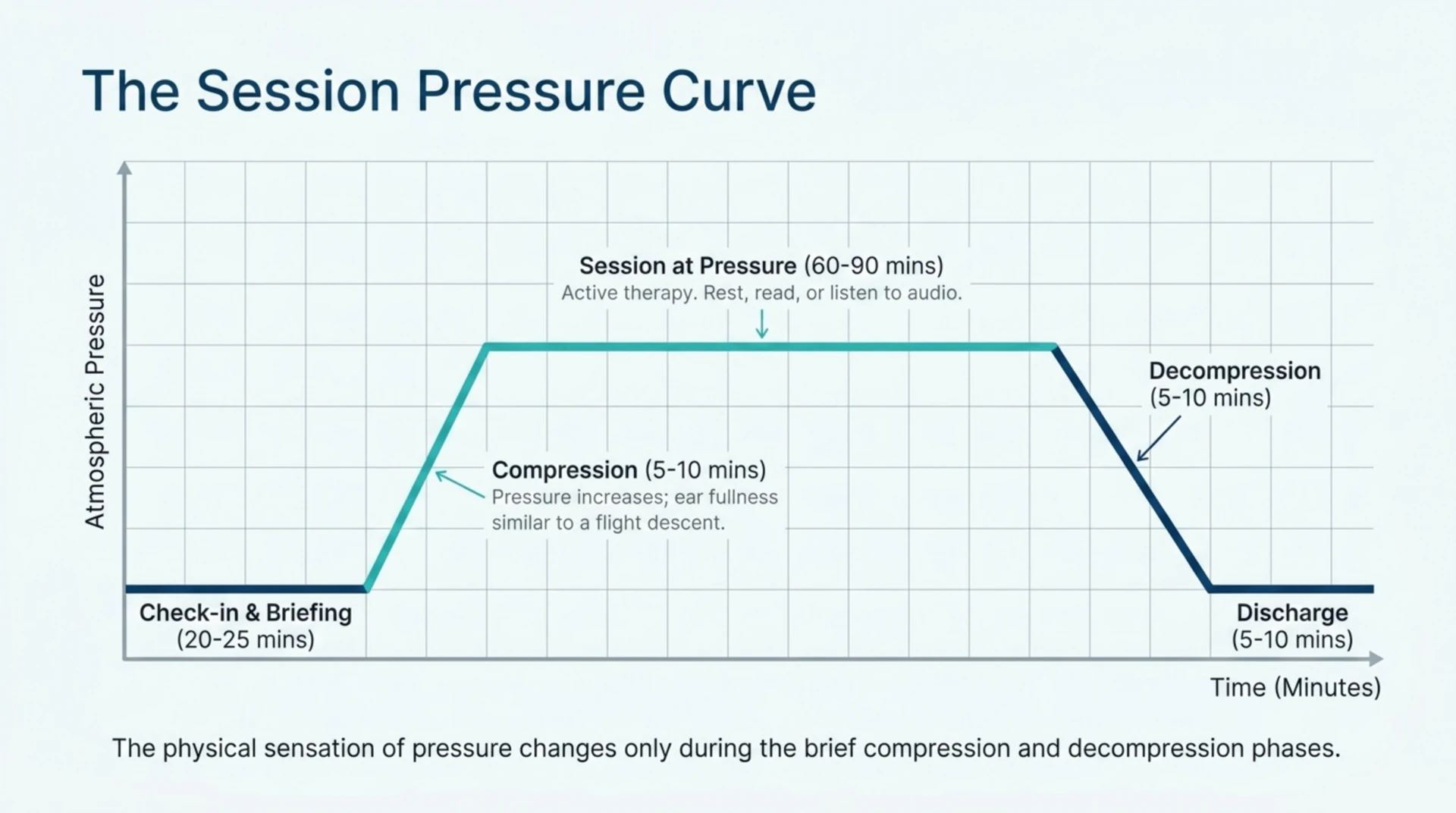
Once you arrive, staff will confirm your intake information, have you change into approved clothing, and walk you through a safety briefing. This briefing covers how to equalize ear pressure, how to communicate with staff during the session, and what the compression and decompression phases will feel like.
| Stage | Approximate Time | What Happens |
|---|---|---|
| Check-in and screening | 10 to 15 minutes | Staff confirm identity, referral, and any changes to your health history |
| Changing and briefing | 10 minutes | Change into approved clothing; staff explain the session and safety steps |
| Compression | 5 to 10 minutes | Pressure gradually increases; you may notice ear fullness, similar to a flight descent |
| Session at pressure | 60 to 90 minutes | You rest, read, or listen to audio while breathing supplemental oxygen |
| Decompression | 5 to 10 minutes | Pressure gradually decreases back to normal room level |
| Discharge | 5 to 10 minutes | Staff check in with you before you leave the facility |
Once inside, you rest in the chamber while it delivers pressurized oxygen according to the protocol your care team has set. You will be monitored throughout, and staff remain reachable if you need to signal discomfort at any point.
How Long Does a Program Typically Take, and How Many Sessions Will You Need?
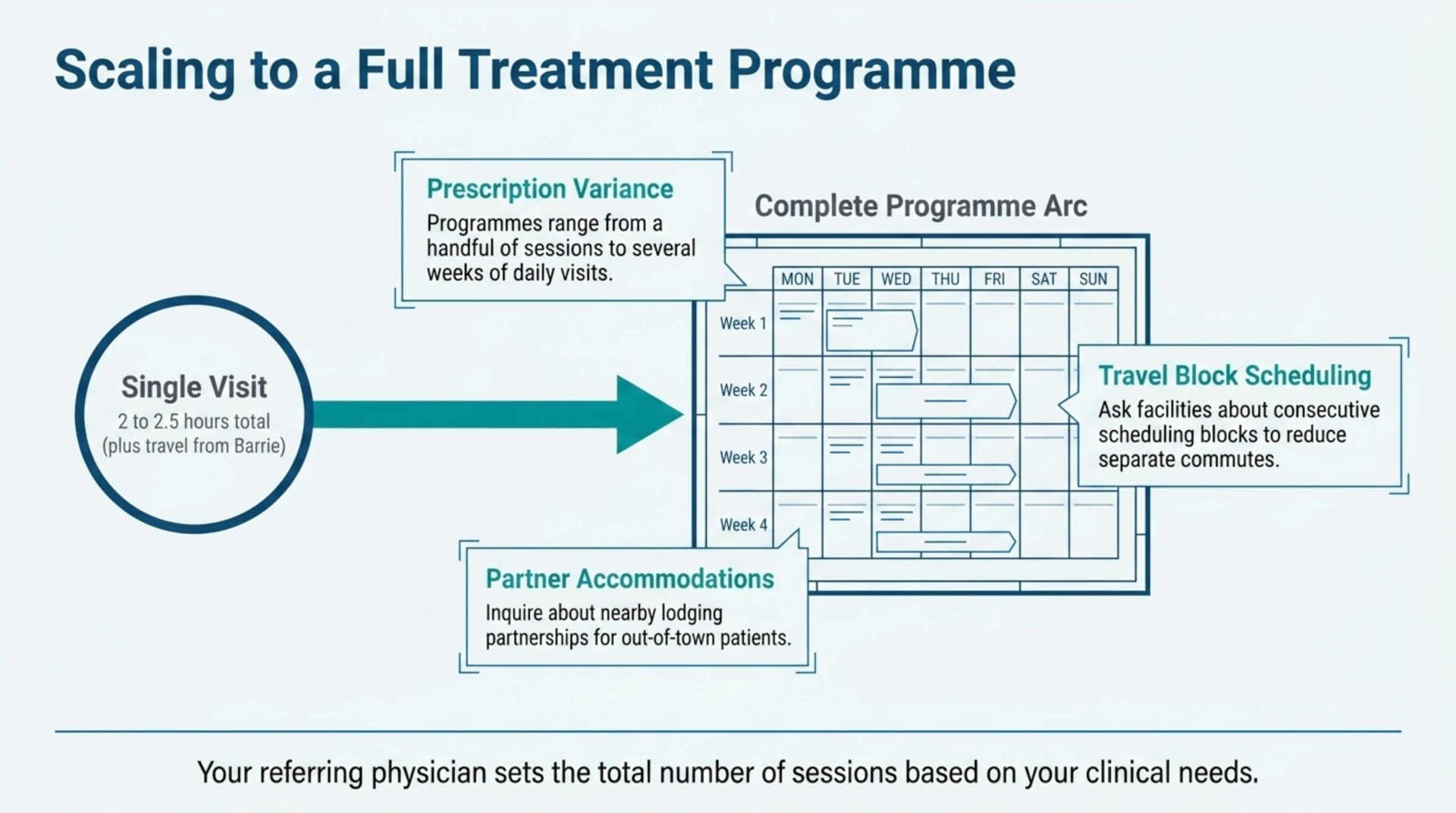
A single session generally runs 60 to 90 minutes at pressure, not counting check-in and changing time. The total number of sessions in a program is set by your referring physician or the treating facility, based on your individual plan, and can range from a handful of sessions to several weeks of daily visits depending on what has been prescribed.
If you are travelling from Barrie for a multi-week program, ask the facility whether they offer scheduling blocks that reduce the number of separate trips, or whether any partner accommodations exist nearby for patients travelling from out of town.
What Does a Hyperbaric Chamber Program Cost, and Is It Covered?
Cost and coverage vary by province, facility type, and the reason for referral. Some hospital-based programs are covered under provincial health insurance for specific approved indications, while other sessions may be private-pay or covered through extended health benefits. Confirming coverage before your first session avoids surprises at checkout.
Our coverage page outlines general information on how funding and insurance typically work for hyperbaric sessions in Canada. For details on how facilities are regulated and accredited, see our regulatory overview.
Frequently Asked Questions
Is there a hyperbaric chamber located directly in Barrie?
Two private hyperbaric clinics operate in Barrie itself: Barrie HBOT (234 Lockhart Road) and Simcoe Hyperbarics. Coverage and eligibility vary by clinic and by condition, so confirm both directly with the facility before arranging treatment. Many patients in the Barrie area travel to a nearby regulated centre; our facilities page can help you check what is currently listed for your region.
Do I need a doctor’s referral to book a session?
Hospital-based programs typically require one. Some private clinics accept self-referral after an intake screening. Call ahead to confirm the specific facility’s policy.
What should I wear to my appointment?
Loose, comfortable clothing made of 100 percent cotton is generally preferred. Avoid synthetic fabrics, lotions, and fragrances unless the facility tells you otherwise.
Can I bring my phone into the chamber?
Generally, no. Most facilities restrict electronic devices and anything battery-powered inside the chamber for fire-safety reasons. Ask staff about secure storage for your belongings during your session.
How long does the whole appointment take from arrival to leaving?
Including check-in, changing, the session itself, and discharge, plan for roughly two to two and a half hours total, plus travel time if you are commuting from Barrie.
What if I feel unwell during a session?
Staff brief every patient on communication signals before compression begins, and you are monitored throughout. Tell staff immediately if anything feels wrong; sessions can be paused or ended if needed.
Will my referral paperwork transfer between provinces?
Not automatically. If you are referred in one province but the closest facility is across a provincial line, confirm with both the referring provider and the receiving facility about what paperwork and coverage rules apply.
Related Reading
- How to Find a Hyperbaric Oxygen Therapy Clinic Near Me
- HBOT Referral Pathway for Patients Without a Local Chamber
- Inside the Hyperbaric Chamber: A Patient FAQ Guide
Every patient’s situation is different, and the logistics above are general guidance rather than a substitute for direct communication with your care team. If you are in or near Barrie and trying to plan a first visit, Canada Hyperbarics can help point you toward hospitals and regulated facilities where accredited chambers operate, and our FAQ page and about page have more background on how the network is organized. Start with our facilities directory to find hospitals and regulated facilities near you.
This content is for informational purposes only and is not medical advice.