
TL;DR: A hyperbaric chamber is a sealed, pressurized enclosure used to deliver hyperbaric oxygen therapy (HBOT). Recent research on the hyperbaric chamber itself, not just the therapy, covers patient experience, infection control, safety monitoring, and even how critically ill patients on life support equipment can be treated inside one. This FAQ answers the questions patients ask most before a first session, drawing only on studies in Canada Hyperbarics’ research library of over 14,400 peer-reviewed studies.
What Is a Hyperbaric Chamber?
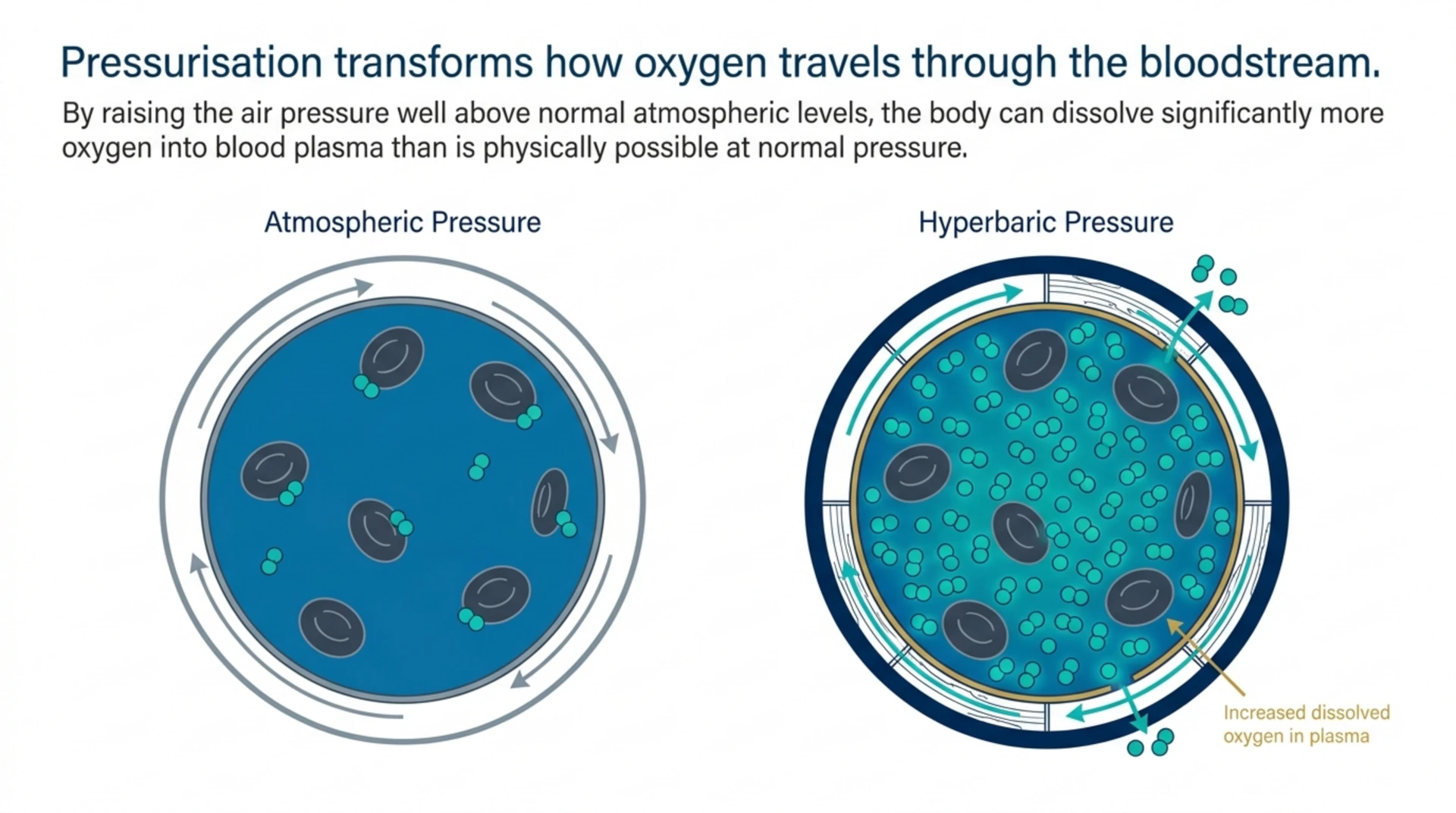
A hyperbaric chamber is a sealed enclosure that allows a patient to breathe oxygen while the air pressure inside is raised well above normal atmospheric pressure. The increased pressure helps the body dissolve more oxygen into blood plasma than it could at normal pressure, which is the basis of hyperbaric oxygen therapy.
Chambers come in two main designs, monoplace (one patient, usually a clear acrylic tube) and multiplace (a larger steel room that holds several patients and often an attending staff member). Both are used across Canadian hospitals and regulated hyperbaric facilities, and the choice between them usually depends on the patient’s condition and how closely they need to be monitored.
What Does It Feel Like Inside a Hyperbaric Chamber?
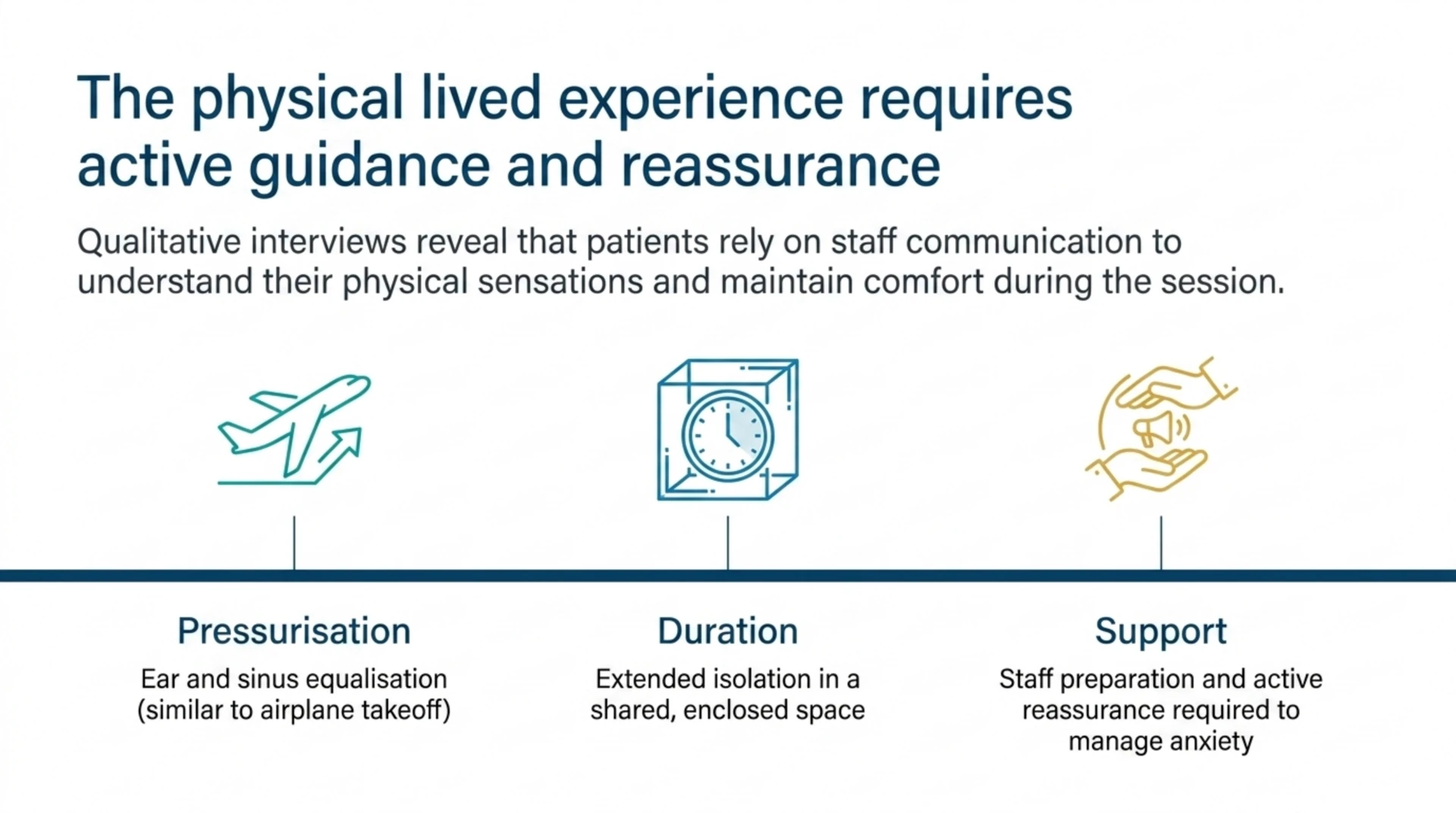
Patients often want to know what the experience actually feels like before they agree to treatment. A qualitative study (Nurs Rep, 2026, PubMed | Our Assessment) interviewed 12 patients undergoing HBOT in a multiplace chamber to understand their experiences and needs during treatment.
The researchers used the patients’ own words to capture what it is like to be sealed inside a pressurized room for an extended session, and what kind of reassurance and information patients wanted from staff along the way. This kind of first-person account is useful because it reflects lived experience rather than only the physiology of treatment, and it helps clinics like Canada Hyperbarics shape how staff prepare and support patients through each session.
How Do Hyperbaric Teams Keep the Chamber Clean and Safe?
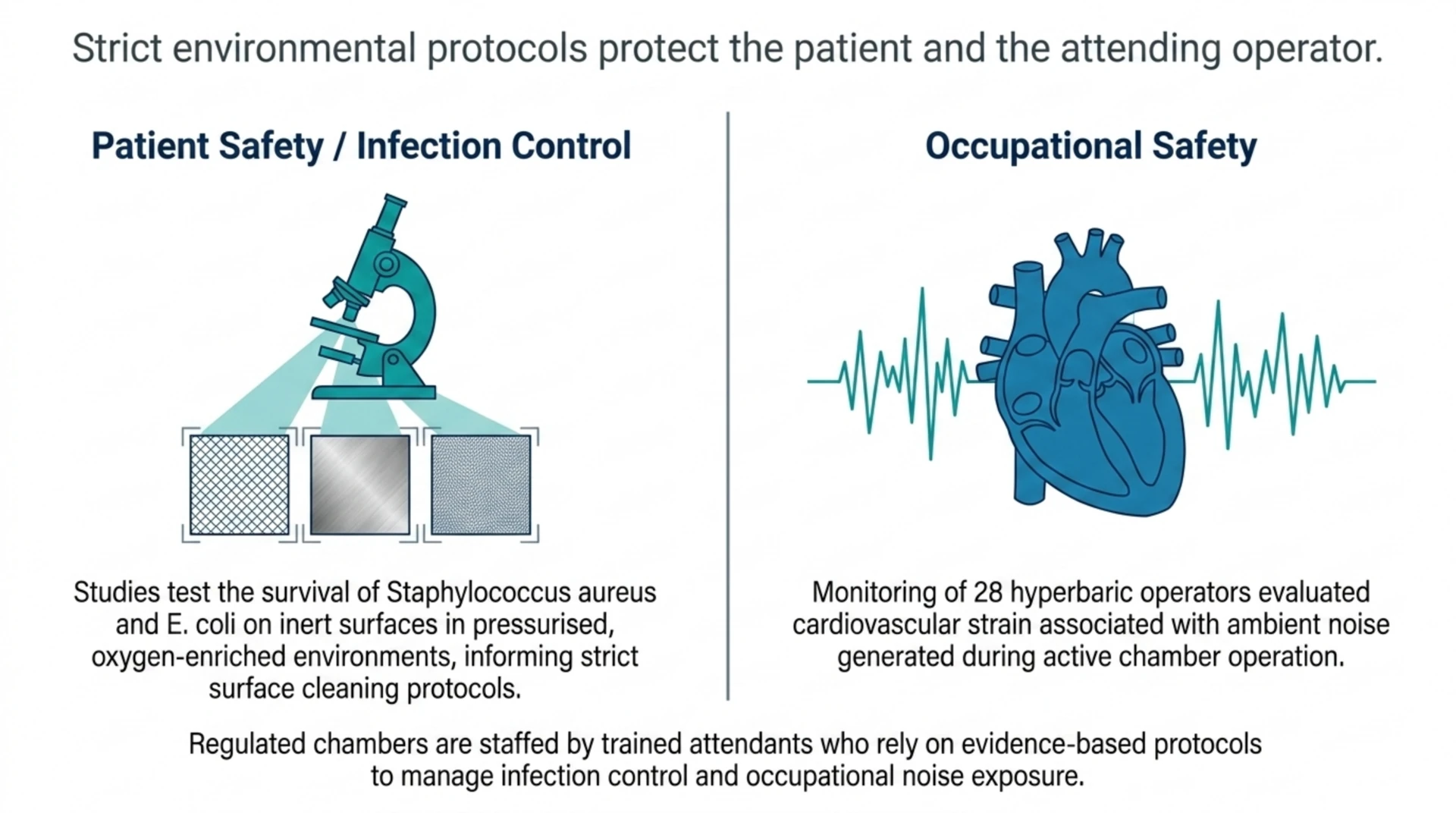
Because a chamber is a shared, enclosed space, infection control is a reasonable question for any patient. Researchers examined this directly in a study testing whether the pressurized environment inside a hyperbaric chamber affects the survival of two common bacteria, Staphylococcus aureus and E. coli, on typical chamber surfaces such as plastic, metal, and seat upholstery (Diving Hyperb Med, 2025, PubMed | Our Assessment). Studies like this one inform the surface cleaning protocols regulated facilities use between patients.
Chamber safety is not only about the patient. A separate occupational study monitored the heart rate and blood pressure of 28 hyperbaric chamber operators to evaluate whether noise generated during chamber operation was associated with measurable cardiovascular strain (2025, PubMed | Our Assessment). This kind of occupational-safety research is part of why regulated chambers are staffed by trained attendants, not just automated equipment.
What Safety Monitoring Happens During a Session?
Modern hyperbaric teams monitor patients closely throughout a chamber session. One study explored whether critical flicker fusion frequency, a simple test of visual and cognitive processing, could be measured reliably on a group of male divers through a hyperbaric chamber porthole at different pressures, as a potential tool for tracking alertness during pressurized exposure (Diving Hyperb Med, 2025, PubMed | Our Assessment).
Emergency preparedness is also an active area of research. A scoping review examined the published literature on the safety and feasibility of defibrillating a patient who goes into cardiac arrest while inside a hyperbaric chamber (Diving Hyperb Med, 2025, PubMed | Our Assessment), reflecting the protocols regulated facilities maintain for rare in-chamber emergencies.
Complications can still occur even with careful monitoring. A case report described a patient receiving HBOT for facial osteoradionecrosis, bone death of the jaw caused by earlier radiation treatment, who developed periorbital emphysema, air trapped under the skin around the eye, during a dry hyperbaric chamber exposure (Diving Hyperb Med, 2025, PubMed | Our Assessment). The case underscores why patients are asked about ear, sinus, and facial pressure equalization before and during every session, and why staff watch for these signs rather than assuming a session is routine.
Can Critically Ill Patients Be Treated in a Hyperbaric Chamber?
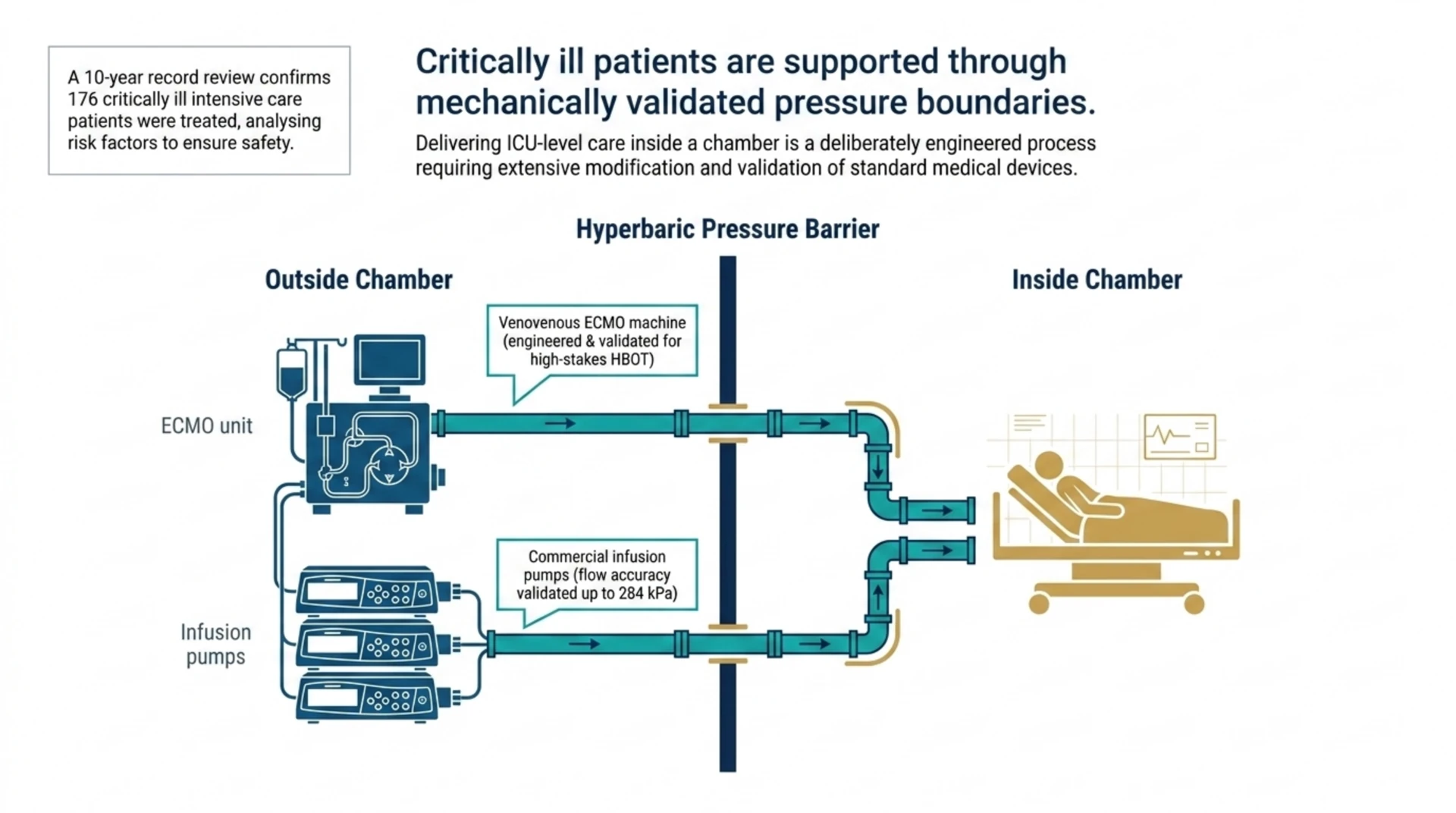
Some patients assume a hyperbaric chamber is only for stable, walk-in treatment, but the research shows a far wider range of use. A ten-year record review of 176 critically ill intensive care patients who received HBOT at one hospital examined which risk factors were associated with complications during hyperbaric sessions (Sci Rep, 2025, PubMed | Our Assessment), showing that ICU-level HBOT is being formally studied for safety rather than treated as routine.
At the more complex end of care, a clinical team described the governance, risk management, and operational planning behind delivering 13 HBOT sessions to a critically ill patient who remained on a venovenous ECMO (heart-lung bypass) machine inside the chamber (Diving Hyperb Med, 2025, PubMed | Our Assessment). A companion technical report described how engineers and clinicians modified and validated the ECMO device itself so it could be used safely under hyperbaric pressure during those same sessions (Diving Hyperb Med, 2025, PubMed | Our Assessment).
Even routine intensive care equipment behaves differently under pressure. Researchers evaluated the accuracy of three commercial infusion pump models under hyperbaric conditions up to 284 kPa, testing flow accuracy so that ICU-level medication delivery stays reliable inside a monoplace chamber (Diving Hyperb Med, 2025, PubMed | Our Assessment). Together, these studies show that treating critically ill patients inside a hyperbaric chamber is a deliberately engineered process, not an improvised one.
Does Pressurization Affect the Eyes?
Patients sometimes ask whether time inside a pressurized chamber can affect vision. Researchers used optical coherence tomography, a detailed eye-imaging technique, to measure structural changes in the retina and choroid of 42 healthy volunteers before and after a single hyperbaric chamber session pressurized to 2.4 ATA (Invest Ophthalmol Vis Sci, 2025, PubMed | Our Assessment). Research like this is part of how the eye-related effects of hyperbaric exposure continue to be characterized in healthy volunteers, separate from the therapeutic effects of HBOT on specific eye conditions.
How Are Hyperbaric Teams Trained on the Chamber Itself?
Operating a hyperbaric chamber safely takes hands-on training, and that training is evolving too. A team of researchers built and tested a web-based simulator that replicates the controls and operation of a clinical hyperbaric oxygen chamber, then piloted it with healthcare professionals as a training tool (Sci Rep, 2025, PubMed | Our Assessment). Tools like this let staff practice chamber operation and emergency response before ever running a live session with a patient inside.
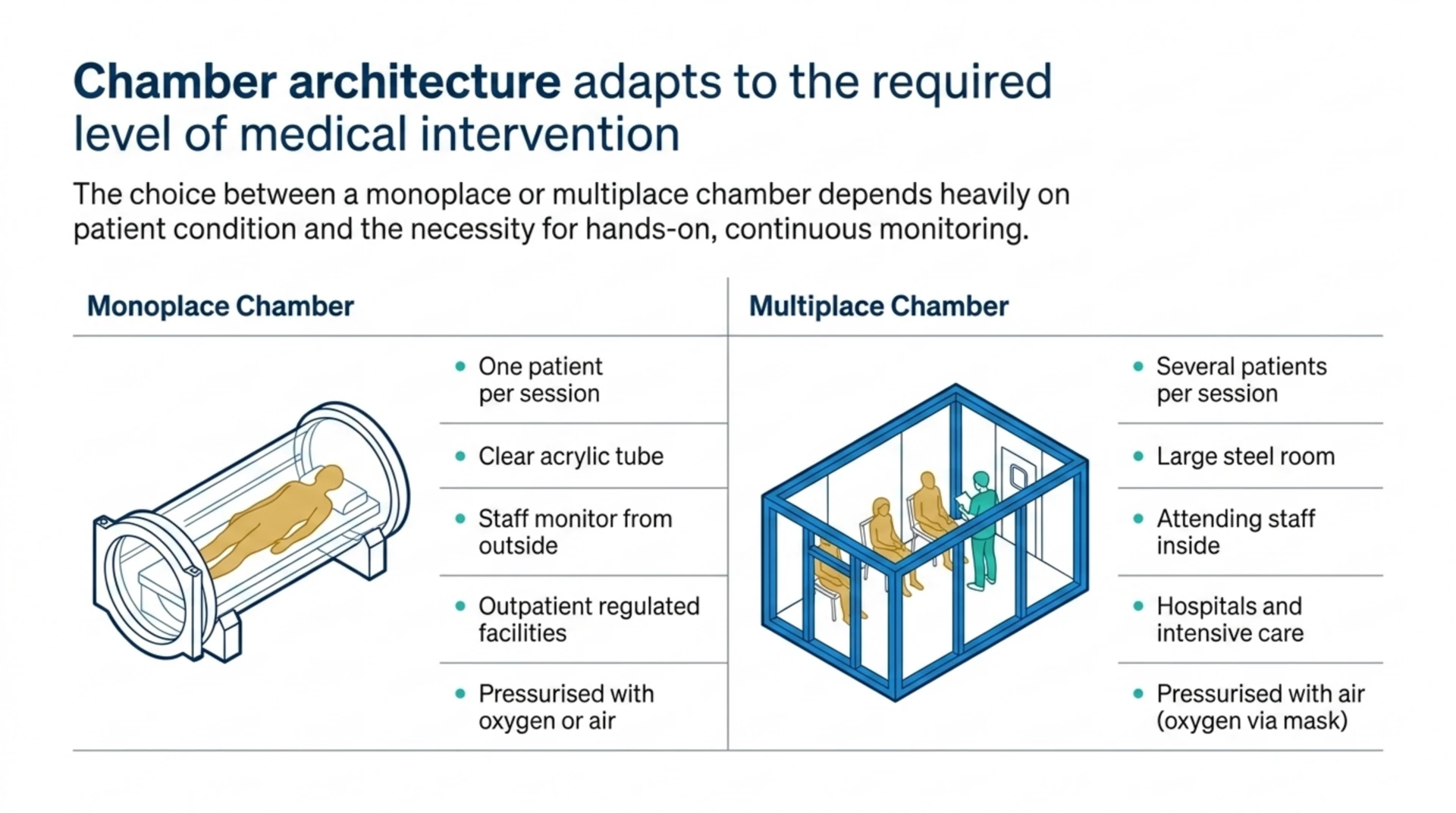
Monoplace vs. Multiplace Chambers: What Is the Difference?
Patients preparing for a first appointment often want to know what type of chamber they will actually be treated in. The table below summarizes the practical differences.
| Feature | Monoplace Chamber | Multiplace Chamber |
|---|---|---|
| Number of patients | One patient per session | Several patients per session |
| Typical construction | Clear acrylic tube | Larger steel room |
| Staff presence | Staff monitor from outside | An attendant may be inside with patients |
| Common setting | Outpatient regulated facilities | Hospitals, including intensive care use |
| Typical pressurizing gas | Oxygen or air, depending on protocol | Air, with oxygen delivered by mask or hood |
Frequently Asked Questions
Is being inside a hyperbaric chamber painful?
Most patients describe pressurization and decompression as similar to the ear pressure felt during airplane takeoff and landing. Staff teach patients equalization techniques and watch closely for discomfort, since case reports show that pressure-related complications, while uncommon, do happen and require prompt attention.
How long does a typical hyperbaric chamber session last?
Session length varies by protocol and by patient, and is set by the treating team rather than by a fixed rule, so patients should confirm expected duration with their own clinic.
What is the difference between a monoplace and a multiplace hyperbaric chamber?
A monoplace chamber treats one patient at a time in a clear acrylic tube, while a multiplace chamber is a larger room that can hold several patients and sometimes an attending staff member, as summarized in the table above.
Can critically ill or intensive care patients be treated in a hyperbaric chamber?
Yes. Hospital-based research has examined HBOT delivery to ICU patients, including patients on ECMO life support and infusion pumps, with careful attention to equipment validation and complication risk, as described above.
How is the hyperbaric chamber kept clean between patients?
Regulated facilities follow cleaning protocols informed by research into how bacteria survive on chamber surfaces such as plastic, metal, and upholstery, helping reduce infection risk between sessions.
What happens if someone needs emergency care while inside the chamber?
Regulated hyperbaric facilities maintain specific emergency protocols, including plans for defibrillation, that have been examined in the published hyperbaric literature and are built into staff training.
Understanding the hyperbaric chamber itself, not just the therapy delivered inside it, helps patients know what to expect and why safety protocols exist. Canada Hyperbarics reviews research across the full range of chamber-related evidence, from patient experience to intensive care use, so patients and clinicians can make informed decisions.
Related Reading
- Hyperbaric Clinic Accreditation Pathways in Canada
- Traveling for Hyperbaric Oxygen Therapy in Canada: FAQ
- Which HBOT Service Lines Have the Strongest 2026 Evidence? An Industry Briefing for Canadian Clinic Owners
If you are considering hyperbaric oxygen therapy, treatment should always take place in a hospital or regulated facility with trained staff and proper safety protocols. Learn more about vetted providers on the Canada Hyperbarics hospitals and regulated facilities page.
This content is for informational purposes only and is not medical advice.