
TL;DR: The HBOT referral pathway for patients without a local chamber usually means matching the patient to the nearest regulated facility, confirming clinical appropriateness, and planning around travel, wait times, and coverage before the first session. Referring physicians can shorten this process by starting facility research early, documenting the clinical rationale clearly, and setting realistic expectations with patients about distance and cost.
An HBOT referral pathway for patients without a local chamber is the sequence of steps a referring physician follows to connect a patient with hyperbaric oxygen therapy when no hyperbaric facility exists in their immediate community. This is a common situation in Canada, where regulated chambers are concentrated in larger urban centres. Understanding the pathway helps physicians reduce delays, avoid unregulated options, and prepare patients for what treatment coordination actually involves.
This guide walks through the practical steps of building a referral pathway, what to evaluate in a distant facility, and how to keep patients informed along the way. It is written for referring physicians, nurse practitioners, and clinic staff who coordinate care for patients considering HBOT.
What Is an HBOT Referral Pathway?
An HBOT referral pathway is the clinical and logistical route a patient takes from initial consideration of hyperbaric oxygen therapy to actually receiving treatment. It includes confirming that HBOT is appropriate for the patient’s condition, identifying a facility capable of delivering treatment, and coordinating documentation, transportation, and follow-up.
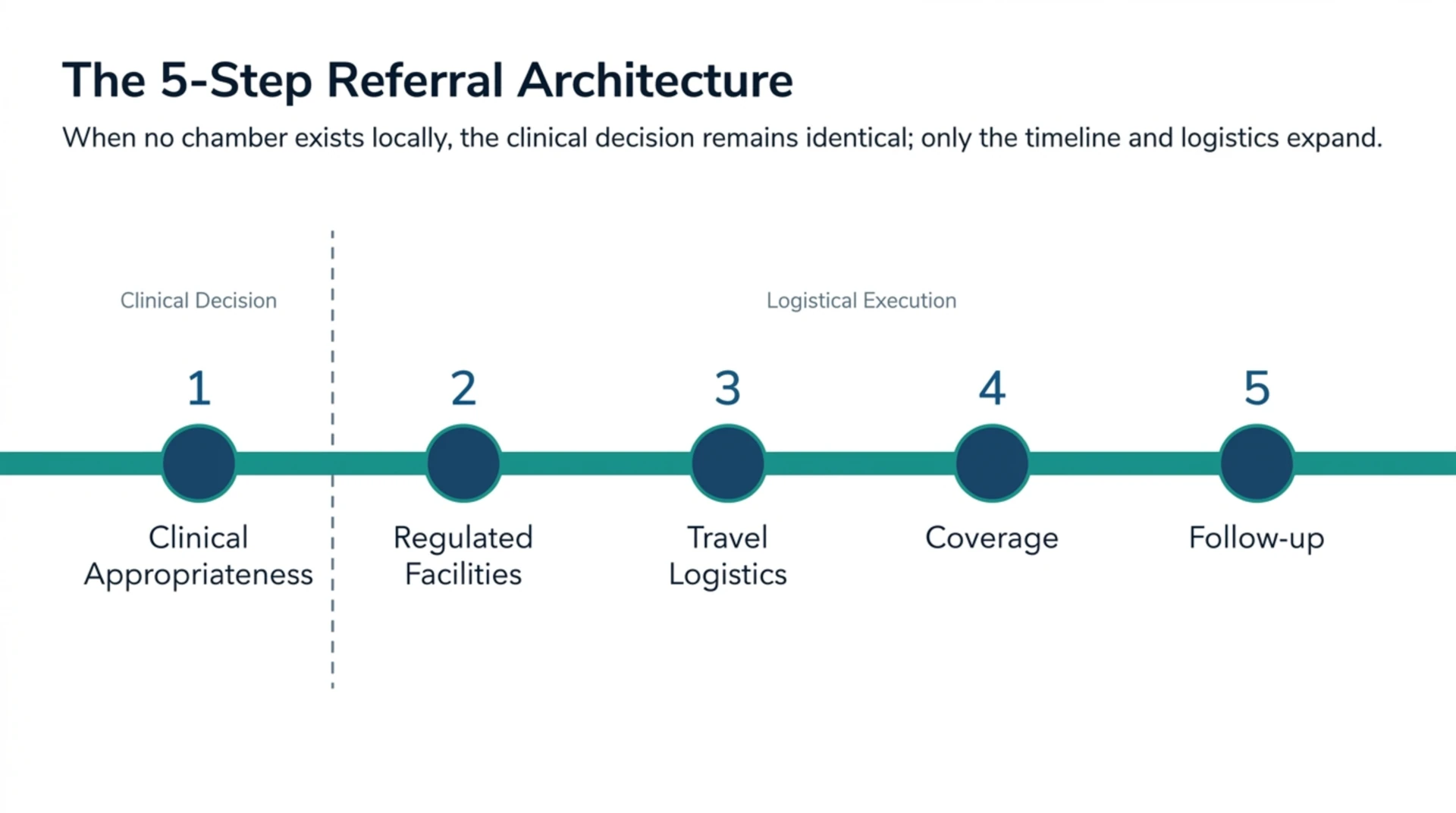
When no chamber exists locally, the pathway becomes longer and requires more planning, but the underlying steps are the same. The difference is mainly in timeline and logistics, not in the clinical decision-making itself.
Why Do Some Patients Not Have a Local Chamber?
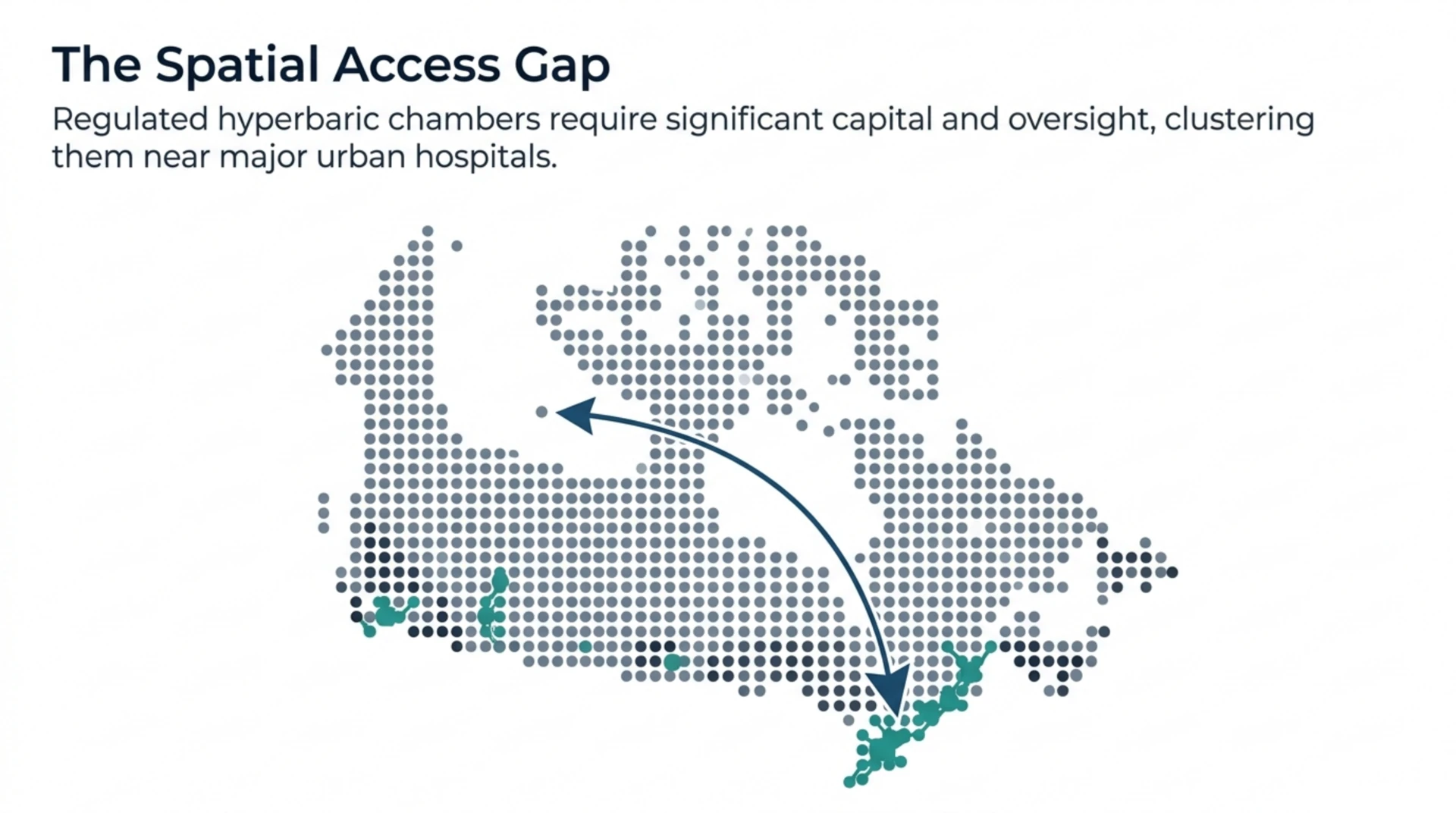
Hyperbaric chambers require significant capital investment, trained staff, and ongoing safety oversight, which means they tend to cluster around larger population centres and major hospitals. Rural and remote communities across Canada, including much of northern Ontario, the Prairies, and the Maritimes, often have no chamber within several hours’ drive.
This gap does not mean HBOT is unavailable to these patients. It means the referral process needs to plan for travel, temporary relocation, or a treatment schedule that accounts for distance from the outset.
How Should a Referring Physician Start the Process?
The referral pathway generally unfolds in five stages. Each stage involves a different set of questions and a different type of coordination.
Step 1: Confirm Clinical Appropriateness
Before identifying a facility, confirm that the patient’s condition falls within an accepted indication for HBOT and that there are no contraindications, such as untreated pneumothorax or certain chemotherapy regimens that require timing coordination. A clear clinical rationale is the single most important document in the referral package. Reviewing the relevant patient-facing overview on the Canada Hyperbarics conditions page can help physicians frame the discussion with patients before a formal referral is sent.
Step 2: Identify Regulated Facilities
Once appropriateness is confirmed, the next step is locating a regulated facility. Physicians should verify that a chamber is staffed by trained hyperbaric personnel and operates under recognised safety oversight, rather than relying on informal listings. A facility directory, such as the one maintained on the Canada Hyperbarics facilities page, is a reasonable starting point for narrowing down options by region.
Step 3: Address Distance and Travel Logistics
For patients without a local chamber, distance is often the biggest barrier to completing a full treatment course. HBOT protocols frequently call for daily sessions over several weeks, which means occasional travel is rarely practical. Physicians should discuss with patients whether temporary relocation near the facility, staying with family, or short-term accommodation is feasible before treatment begins.
Step 4: Coordinate Coverage and Cost Expectations
Coverage for HBOT varies significantly depending on the indication, the province, and whether the facility is hospital-based or private. Some indications are covered under provincial health plans when delivered in an approved hospital chamber, while others may require private payment or extended health benefits. Reviewing the general information on the Canada Hyperbarics coverage page before the referral is sent can help set realistic expectations and reduce mid-treatment surprises for the patient.
Step 5: Arrange Follow-up and Documentation
Because the treating facility is often outside the referring physician’s own health region, clear communication channels matter. Confirm how progress notes, session counts, and any adverse events will be relayed back to the referring practice, and how follow-up care will be handled once the patient returns home.
What Should Physicians Look for in a Hyperbaric Facility?
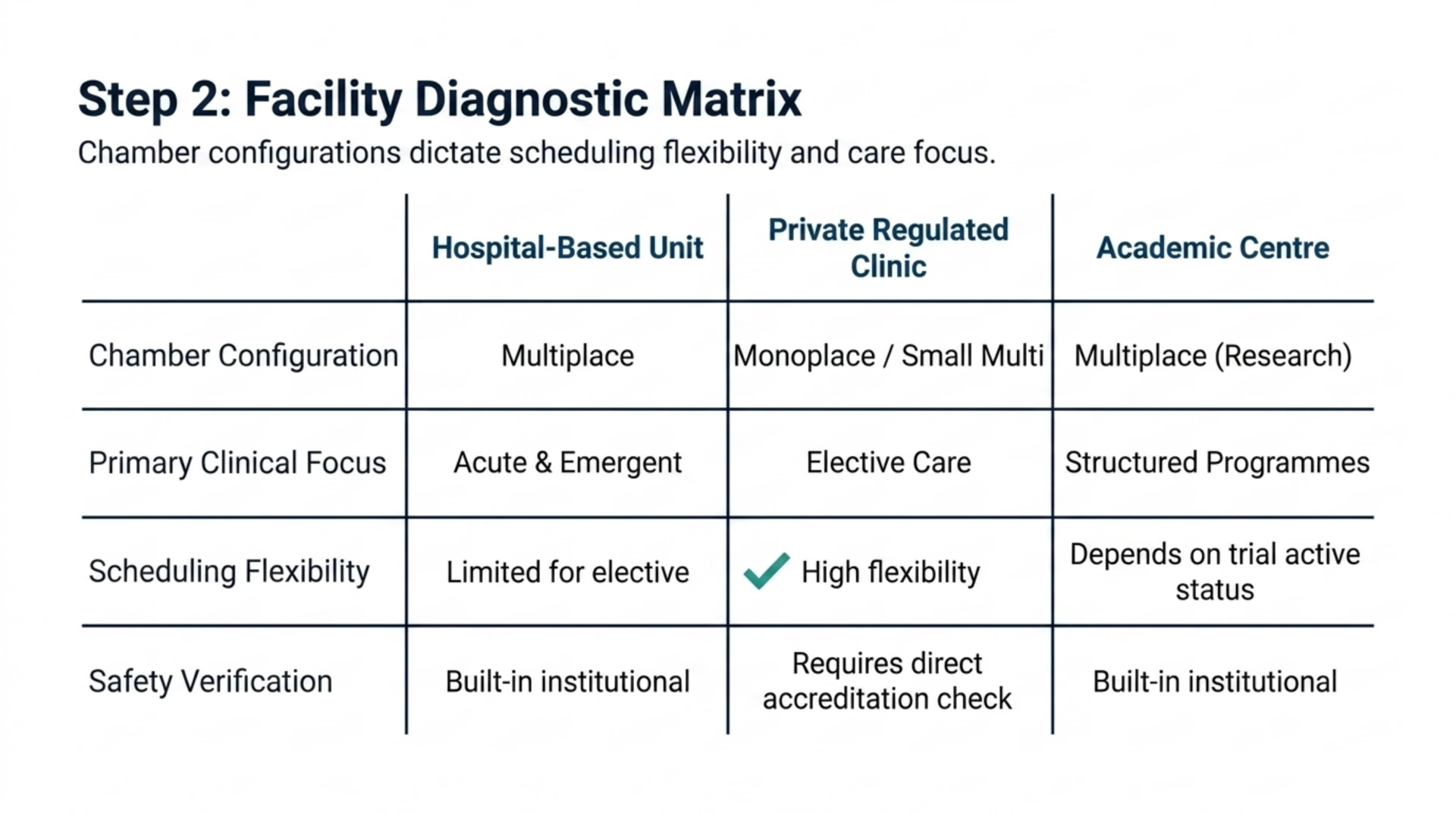
Not all chambers are configured the same way, and the differences matter for referral planning. The table below summarizes the main facility types a physician may encounter when searching outside the patient’s immediate area.
| Facility Type | Typical Setting | Chamber Type | Common Considerations |
|---|---|---|---|
| Hospital-based unit | Regional or academic hospital | Multiplace, often used for wound care and emergencies | May prioritize acute and emergent cases; scheduling can be less flexible for elective referrals |
| Private regulated clinic | Standalone community clinic | Monoplace or small multiplace | Often more scheduling flexibility; verify staff training and safety accreditation directly |
| University or research-affiliated centre | Academic institution | Multiplace, research-capable | May offer structured programs; availability can depend on active research protocols |
Whichever facility type a patient is referred to, physicians should confirm current accreditation status directly with the facility rather than assuming it from a website listing alone. Details on accreditation expectations for Canadian facilities are outlined on the Canada Hyperbarics regulatory page.
How Does Distance Affect Treatment Adherence?
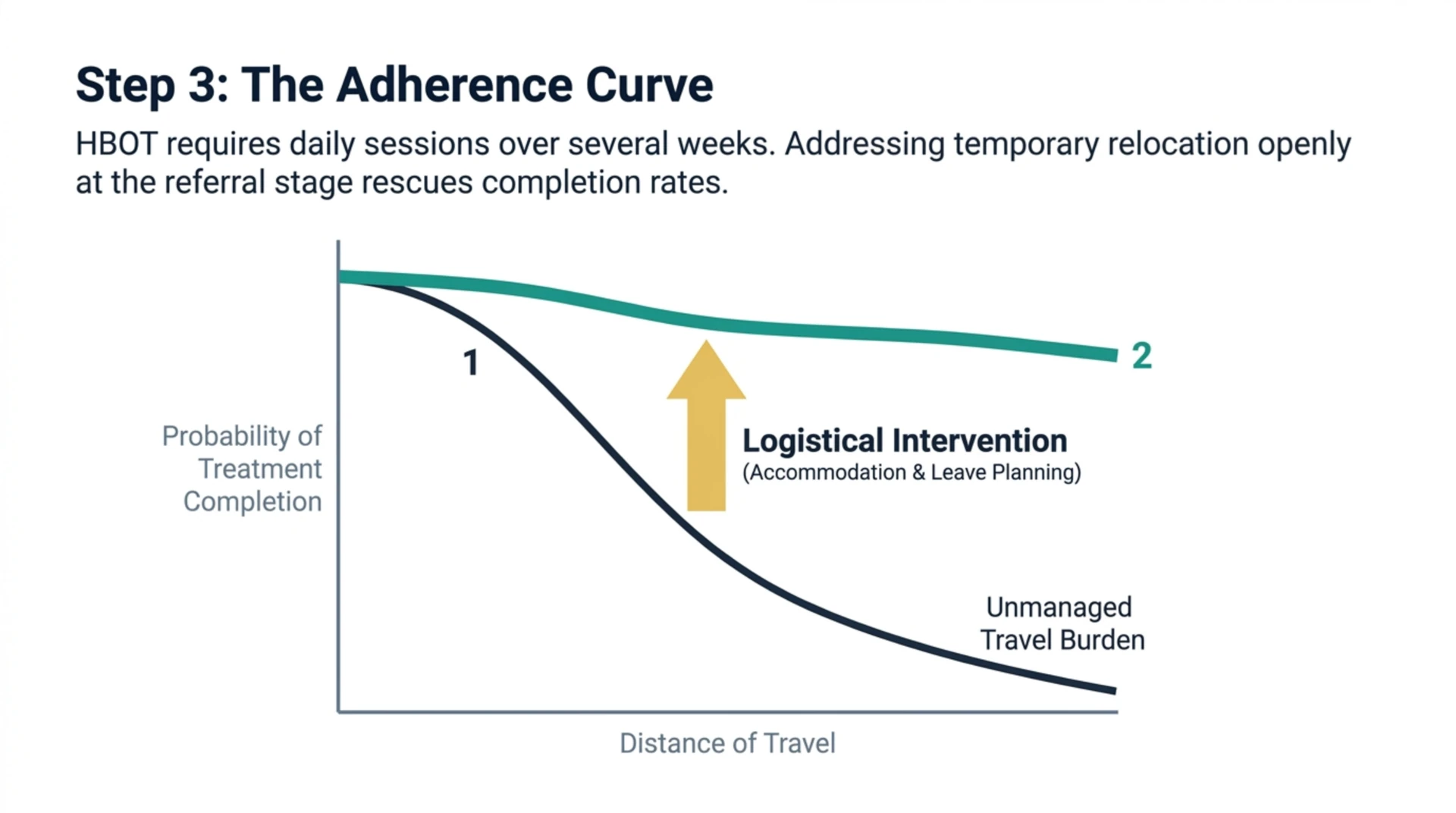
Distance is consistently one of the main reasons patients discontinue HBOT partway through a recommended course. A patient who must drive two hours each way, or relocate for several weeks, faces a very different burden than one with a chamber down the street.
Physicians who address logistics openly at the referral stage tend to see better follow-through than those who leave travel planning until after the first session. Simple steps, such as connecting patients with local accommodation options near the facility or coordinating with employers on leave timing, can materially improve completion rates.
It also helps to set the patient’s expectations about total time commitment early. A course that runs daily for four to six weeks is a meaningfully different ask than a handful of sessions, and patients weigh that differently when deciding whether to travel.
What Role Does Canada Hyperbarics Play in This Process?
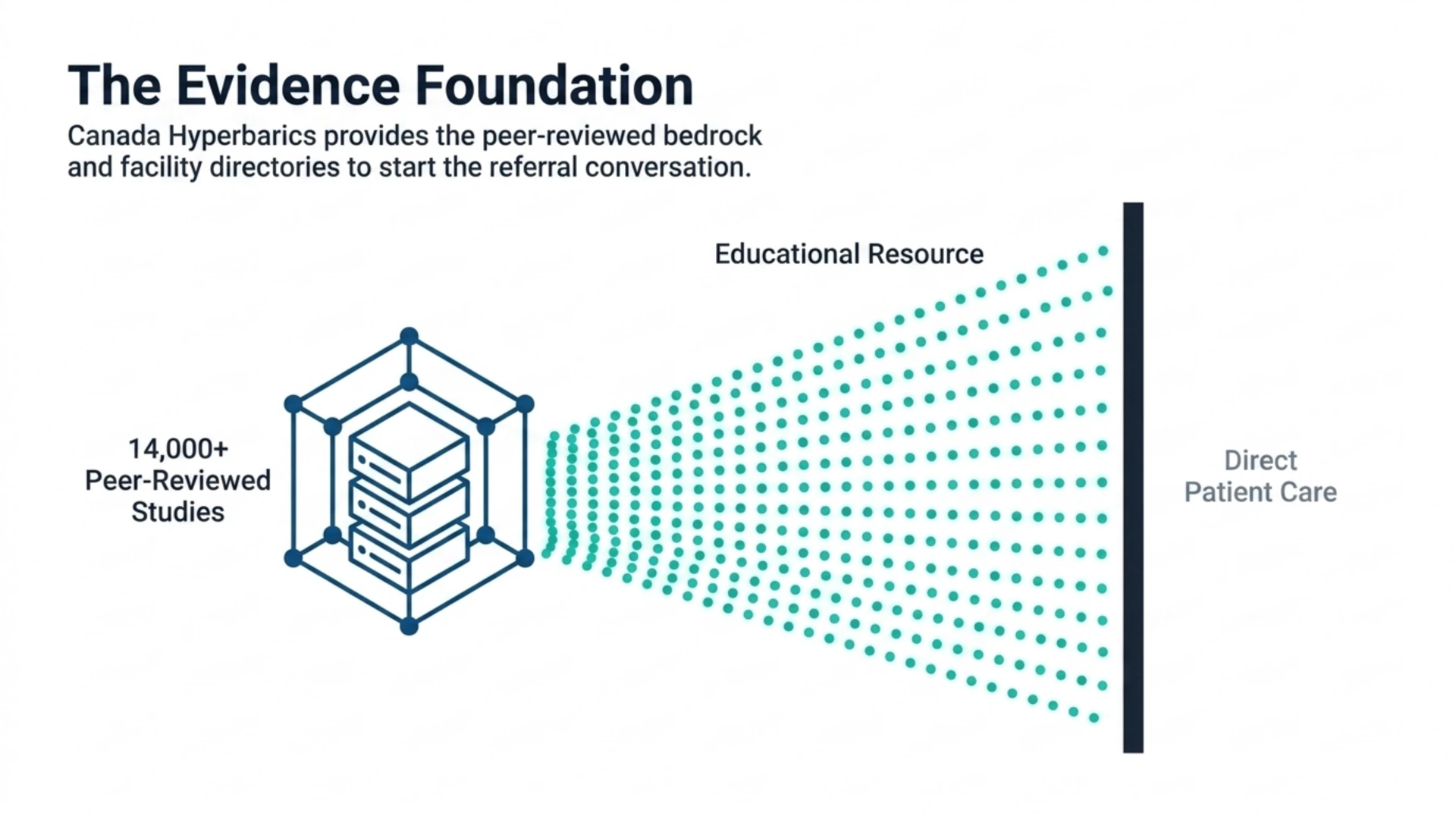
Canada Hyperbarics is an educational resource, not a treatment provider, and it does not replace direct communication between a referring physician and a hyperbaric facility. Its role in the referral pathway is to give physicians and patients a starting point for understanding HBOT generally, locating facility information, and reviewing plain-language summaries of relevant conditions.
The site maintains a library referencing over 14,000 peer-reviewed studies on hyperbaric oxygen therapy, organized to help clinicians and patients orient themselves before a formal consultation. For questions that come up repeatedly during referral conversations, the Canada Hyperbarics FAQ page and about page provide additional background on how the resource is compiled and maintained.
Frequently Asked Questions
What is the first step in referring a patient without a local HBOT chamber?
The first step is confirming clinical appropriateness, including reviewing indications and ruling out contraindications, before identifying a specific facility.
How far might a patient need to travel for HBOT in Canada?
This varies widely by region. Patients in major cities may have a chamber nearby, while patients in rural or remote areas may need to travel several hours or arrange temporary relocation.
Is HBOT always covered by provincial health insurance?
No. Coverage depends on the indication, the province, and whether the facility is hospital-based or private. Physicians should confirm coverage details with the specific facility and the patient’s plan before referral.
How can a physician verify that a hyperbaric facility is properly regulated?
Ask the facility directly about staff training, medical oversight, and safety accreditation, rather than relying solely on marketing materials or online listings.
What can physicians do to improve treatment adherence for patients travelling long distances?
Discuss travel logistics and time commitment openly at the referral stage, help identify accommodation near the facility if needed, and coordinate documentation so follow-up care is seamless once the patient returns home.
Should physicians refer patients to unregulated hyperbaric providers if no regulated chamber is nearby?
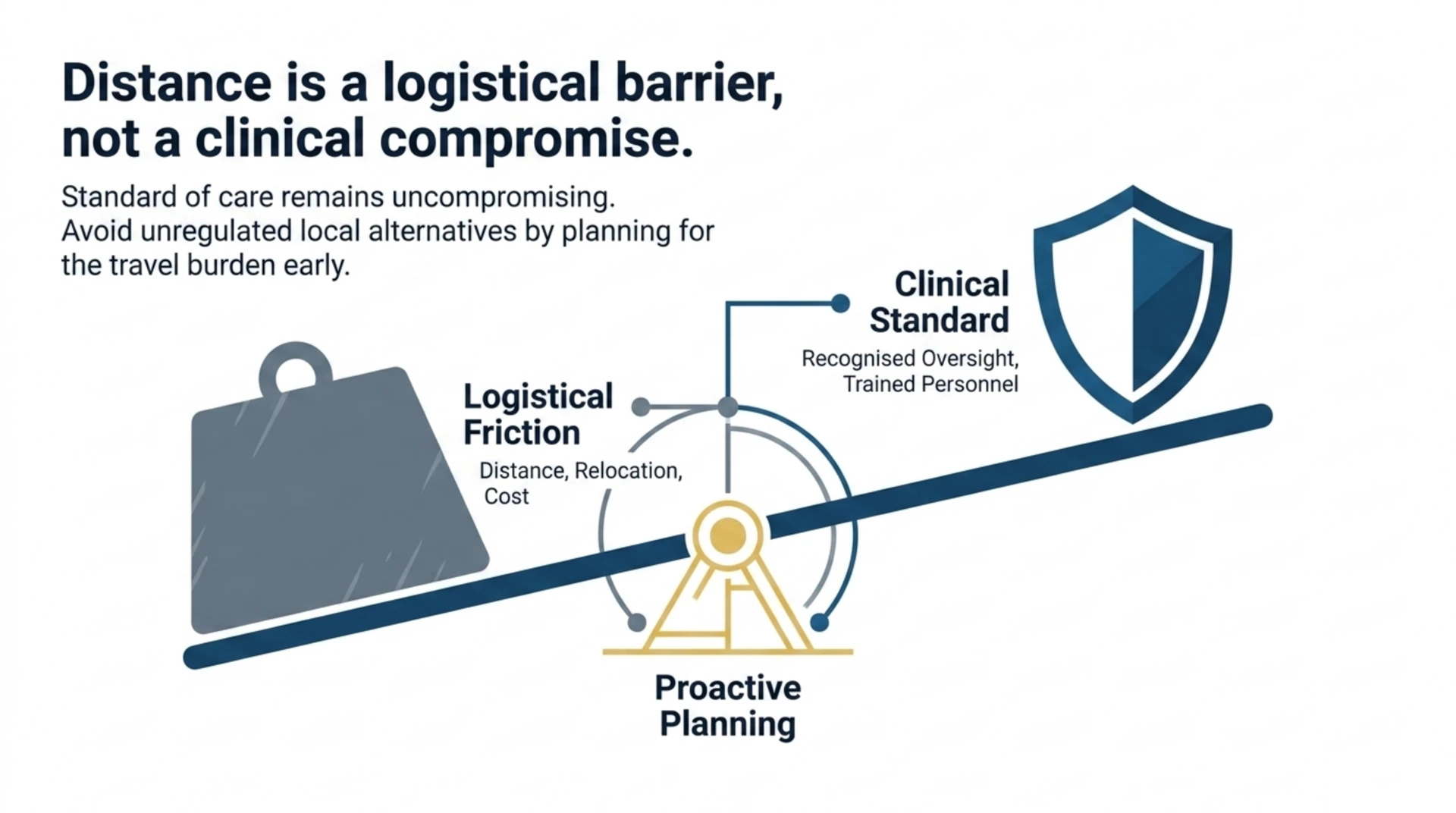
No. Distance is a logistical barrier, not a reason to lower the standard of care. Physicians should prioritize regulated, properly staffed facilities even if that means a longer travel distance.
Related Reading
- Hyperbaric Clinic Accreditation Pathways in Canada
- Traveling for Hyperbaric Oxygen Therapy in Canada: FAQ
- Inside the Hyperbaric Chamber: A Patient FAQ Guide
Referring a patient for HBOT when there is no local chamber takes more coordination than a same-city referral, but the process is manageable when broken into clear steps: confirm appropriateness, identify a regulated facility, plan for distance, clarify coverage, and set up follow-up communication early. Canada Hyperbarics maintains information on hospitals and regulated facilities across the country to help physicians and patients start that process with accurate, up-to-date information.
This content is for informational purposes only and is not medical advice.