
TL;DR: Traveling for hyperbaric oxygen therapy in Canada means planning around a treatment course that usually runs daily for several weeks, not a single appointment. Because regulated hyperbaric chambers are concentrated in a small number of Canadian cities, many patients travel from smaller communities or other provinces to reach one. This guide covers what to expect, how to plan the trip, what it may cost, and the questions worth asking before you book.
Traveling for hyperbaric oxygen therapy in Canada is the process of arranging transportation, lodging, and time off to attend a course of hyperbaric oxygen therapy (HBOT) at a facility located outside your home community. Because regulated chambers are not evenly spread across the country, patients referred for an approved indication sometimes need to travel to a hospital or private clinic in another city or province. Planning ahead for the logistics can make a multi-week treatment course far less stressful.
This FAQ is written for patients and families who are weighing a trip for HBOT, whether that trip is across town or across the country. Canada Hyperbarics is an educational resource, not a clinic, so nothing here should be read as a recommendation for a specific provider. Always confirm details directly with the facility and your referring physician.
Why Do Patients Travel for Hyperbaric Oxygen Therapy in Canada?
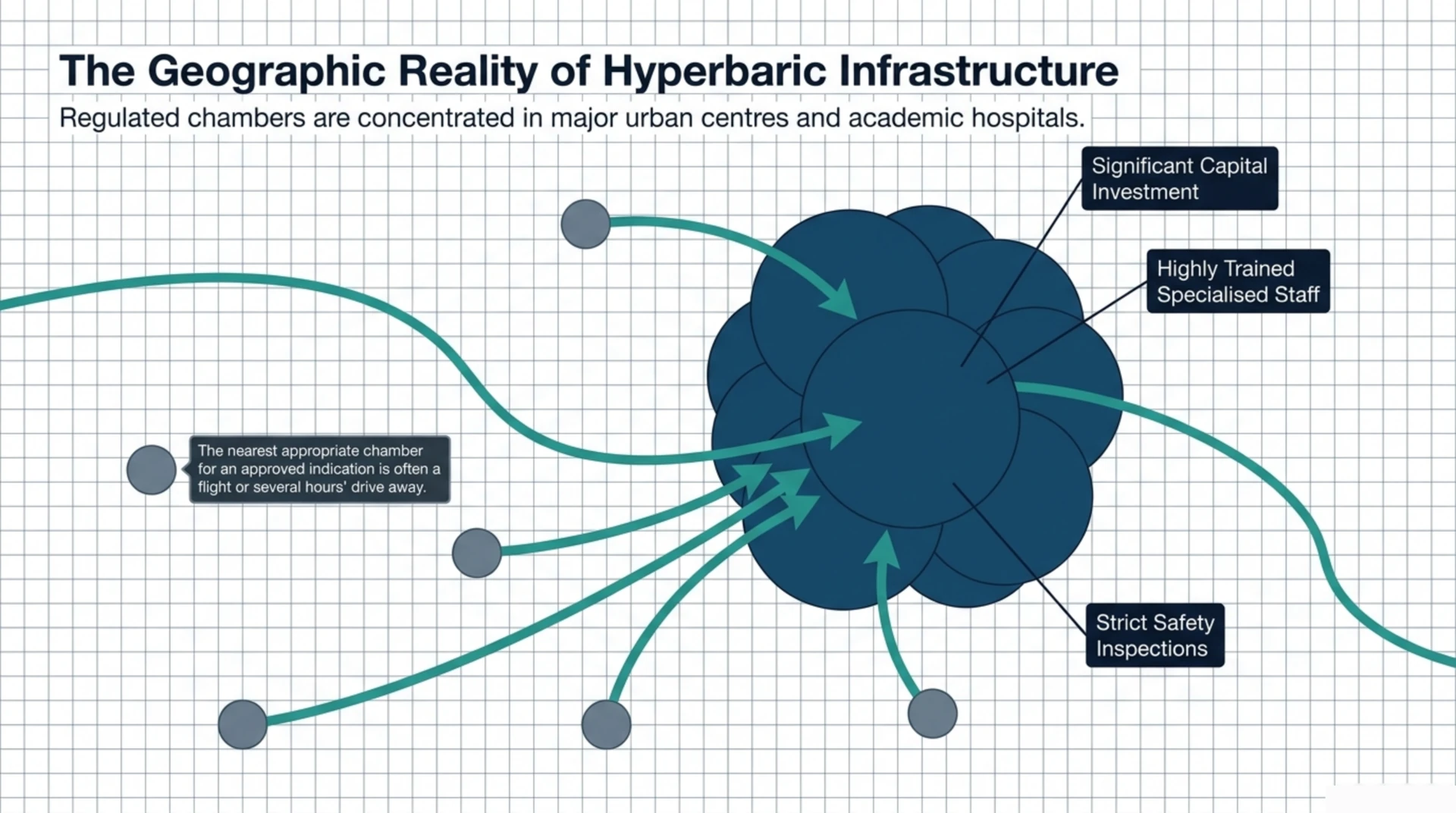
Hyperbaric chambers require significant capital investment, trained staff, and ongoing safety inspections, so they tend to cluster in larger urban centres and academic hospitals. Rural and remote patients, and even people in mid-sized cities, may not have a facility nearby. The nearest appropriate chamber for an approved indication is sometimes several hours away by car or a flight away.
Patients with conditions on the Health Canada or Undersea and Hyperbaric Medical Society (UHMS) approved indication lists, such as certain non-healing wounds, decompression illness, or radiation tissue injury, are the ones most likely to be referred to a distant facility. For a fuller picture of which conditions are typically supported by a referral, see our conditions overview.
Distance Is Not the Only Factor
Even patients who live near a chamber sometimes travel elsewhere because of wait times, the type of chamber available, or specialty expertise for a particular diagnosis. A monoplace chamber may not be appropriate for every case, and a multiplace hospital-based unit may be the better clinical fit even if it means a longer trip.
How Long Is a Typical Hyperbaric Treatment Course?
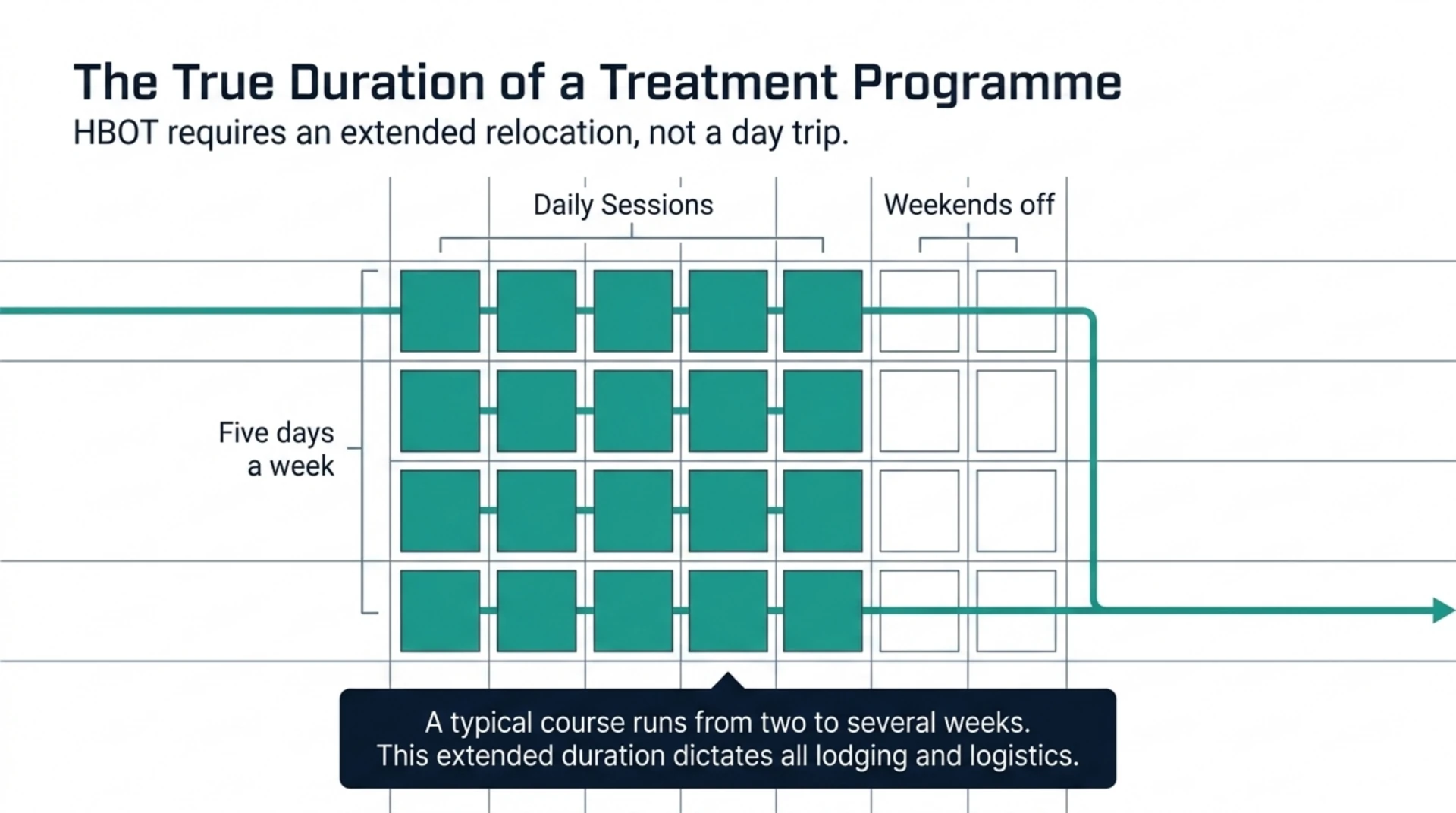
Most approved indications call for a series of daily sessions rather than a single visit. Depending on the condition, a course can run anywhere from about two weeks to several weeks, usually five days a week with weekends off. This is the single biggest factor that shapes travel planning, because it means arranging weeks of accommodation, not just a day trip.
Some facilities offer weekend or reduced scheduling for patients who have traveled a long distance, but this varies by clinic and by clinical protocol. Confirm the expected number of sessions and the schedule directly with the treating facility before booking travel or lodging.
What Should I Pack and Prepare Before Traveling for HBOT?
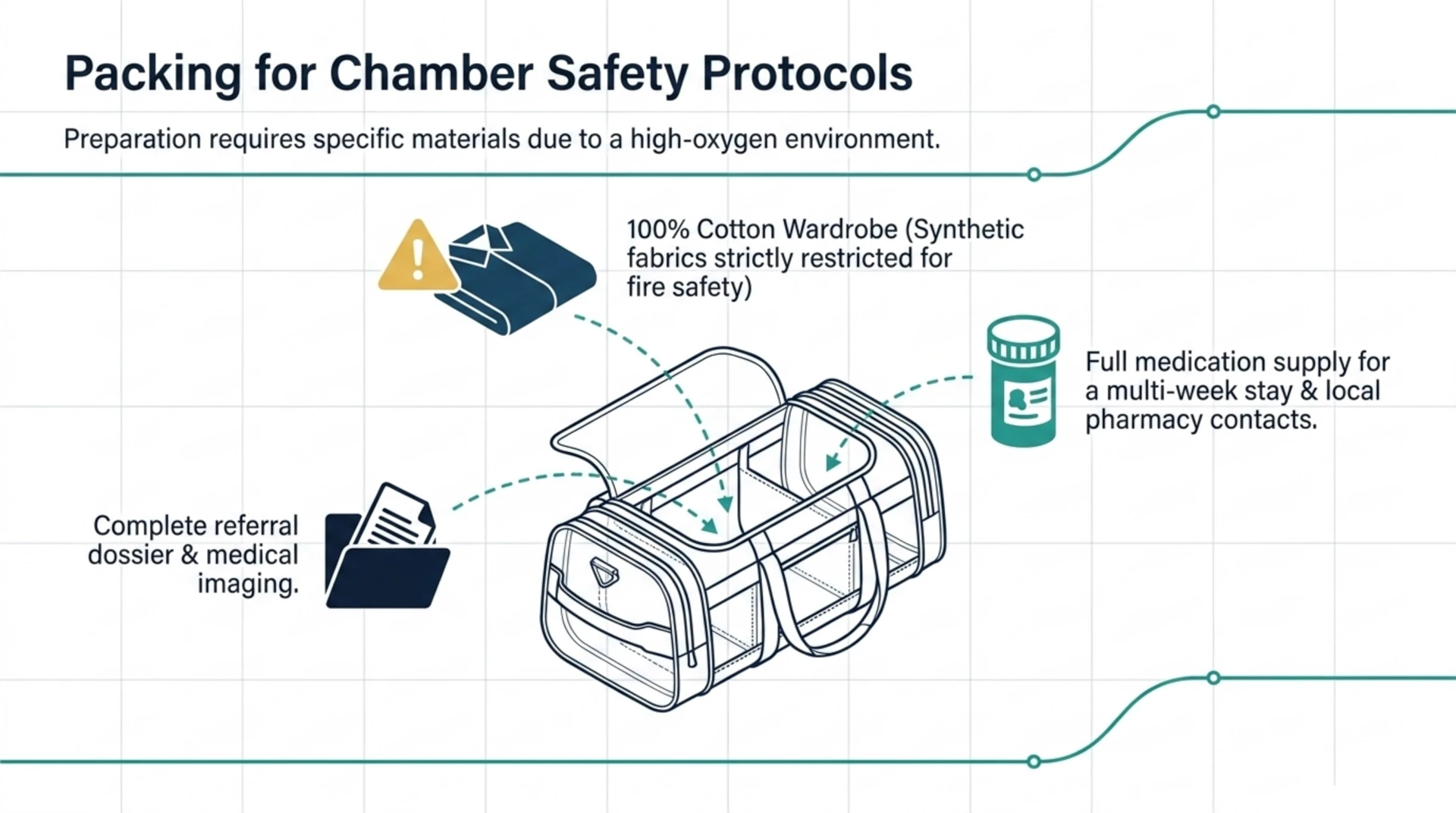
Preparation for a hyperbaric course is different from preparing for a typical medical appointment because you are settling in for an extended stay. A short checklist can help:
- Referral paperwork, imaging, and a list of current medications
- Comfortable, all-cotton clothing (synthetic fabrics are usually restricted inside the chamber for fire safety)
- A supply of any regular medications for the full length of the stay
- Contact information for a local pharmacy and, if relevant, a family physician near the treatment site
- A plan for lodging that is close enough to the facility for daily visits
Flying Before or After a Hyperbaric Session
Air travel involves lower cabin pressure than sea level, and hyperbaric medicine deals directly with pressure changes, so patients often ask whether it is safe to fly on treatment days. Most facilities advise against flying on the same day as a hyperbaric session and recommend a period of rest between the last treatment and a flight home. Ask your treating facility for their specific guidance, since practices can differ.
How Much Does It Cost to Travel for Hyperbaric Oxygen Therapy?
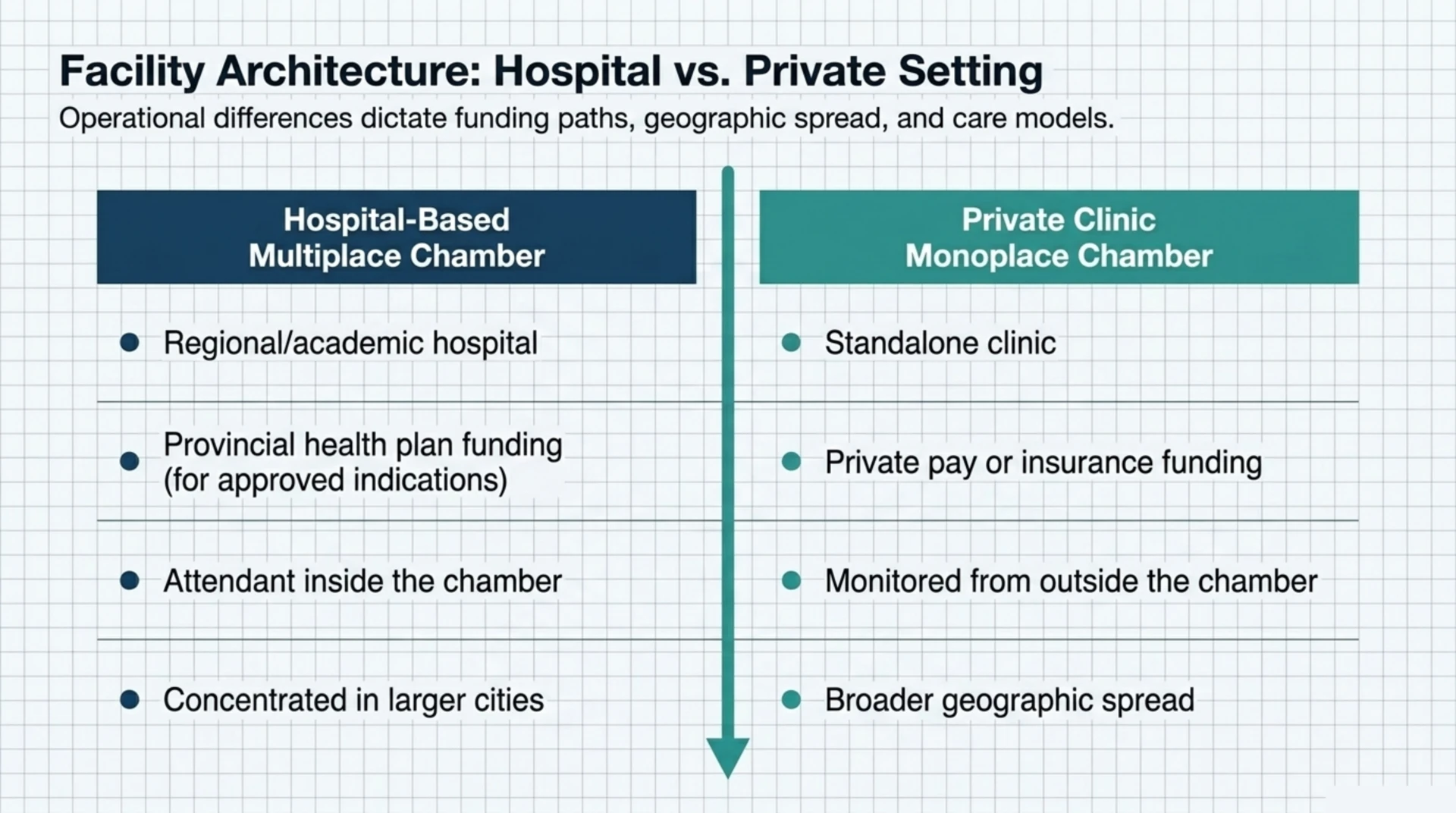
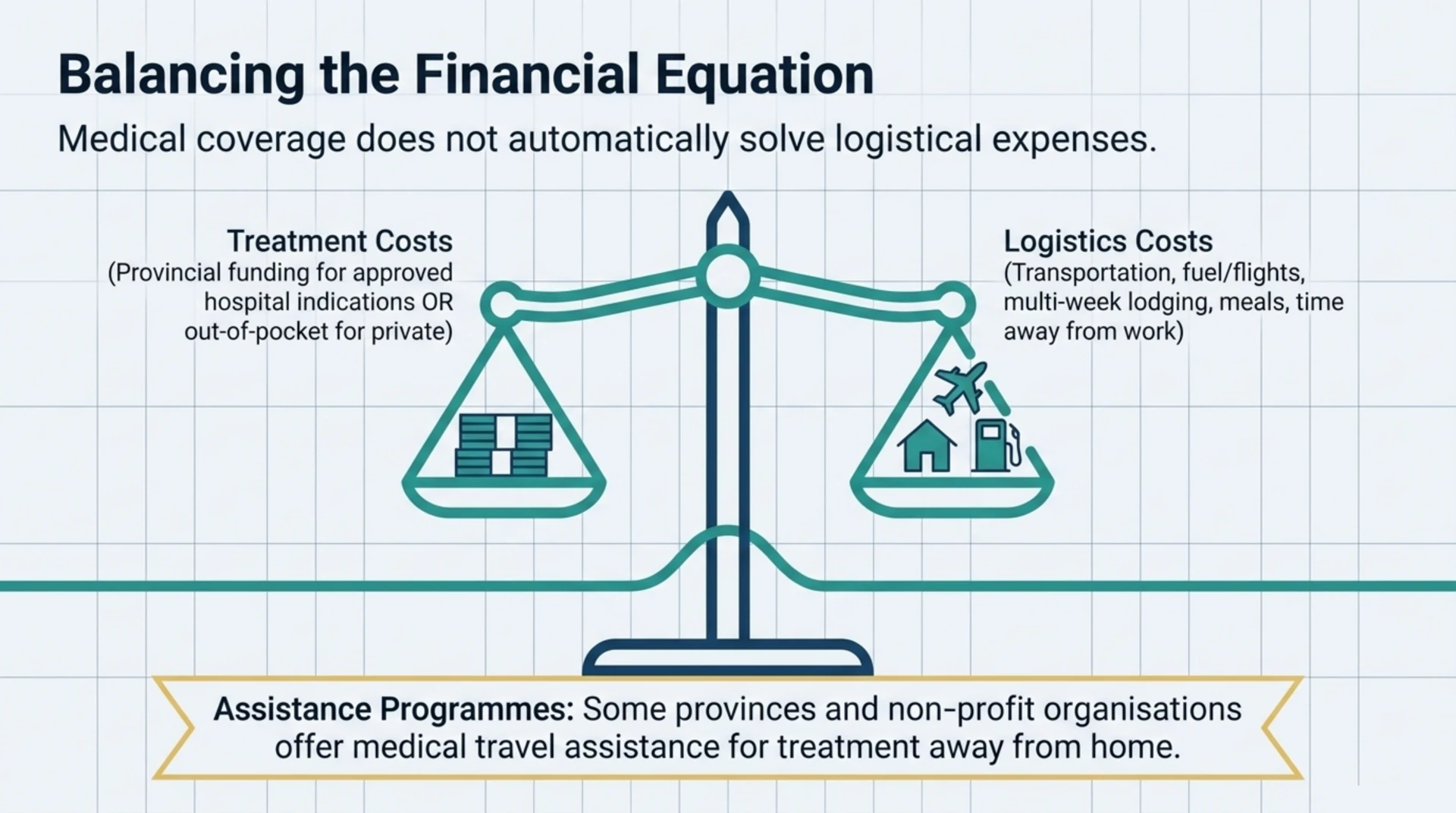
Costs generally fall into two categories: the treatment itself and the travel logistics around it. Treatment funded through a provincial health plan for an approved indication at a hospital-based unit typically has different cost implications than treatment at a private clinic, so it is worth clarifying this before you commit to a trip.
Travel-related costs usually include transportation (fuel, flights, or rail), lodging for the full treatment course, meals, and time away from work. Some provinces and non-profit organizations offer travel and accommodation assistance for medical treatment away from home, so it is worth asking your referring physician or the treating facility whether you qualify. For general background on how hyperbaric treatment is funded in Canada, see our coverage overview.
| Factor | Hospital-Based Multiplace Chamber | Private Clinic Monoplace Chamber |
|---|---|---|
| Typical setting | Regional or academic hospital | Standalone clinic |
| Common funding path | Often provincial health plan for approved indications | Varies; may be private pay or insurance |
| Staff on site during sessions | Attendant inside the chamber with the patient | Staff monitor from outside the chamber |
| Typical availability | Concentrated in larger cities | Somewhat broader geographic spread |
| What to confirm before travel | Referral requirements, wait list, session schedule | Credentials, oversight, and total cost of the course |
This table is a general orientation, not a guarantee of what any specific facility offers. Confirm every detail directly with the clinic or hospital department before you finalize travel plans.
How Do I Find a Regulated Facility Before I Travel?
Because hyperbaric chambers are medical devices operating under specific safety oversight, it is worth confirming that a facility is properly regulated before you commit to travel. Our regulatory overview explains how oversight generally works for hyperbaric facilities in Canada, and our facilities directory can help you locate hospitals and regulated clinics that offer hyperbaric oxygen therapy.
Questions Worth Asking Before You Book
A short call to the facility before booking travel can save a great deal of stress later. Consider asking:
- Is a physician referral required, and has mine been received?
- How many sessions will my course likely involve?
- Is there a waitlist, and how long is it currently running?
- Does the facility have any list of nearby accommodation for traveling patients?
- What is the expected out-of-pocket cost, if any?
What Happens If I Need to Travel Between Provinces for Treatment?
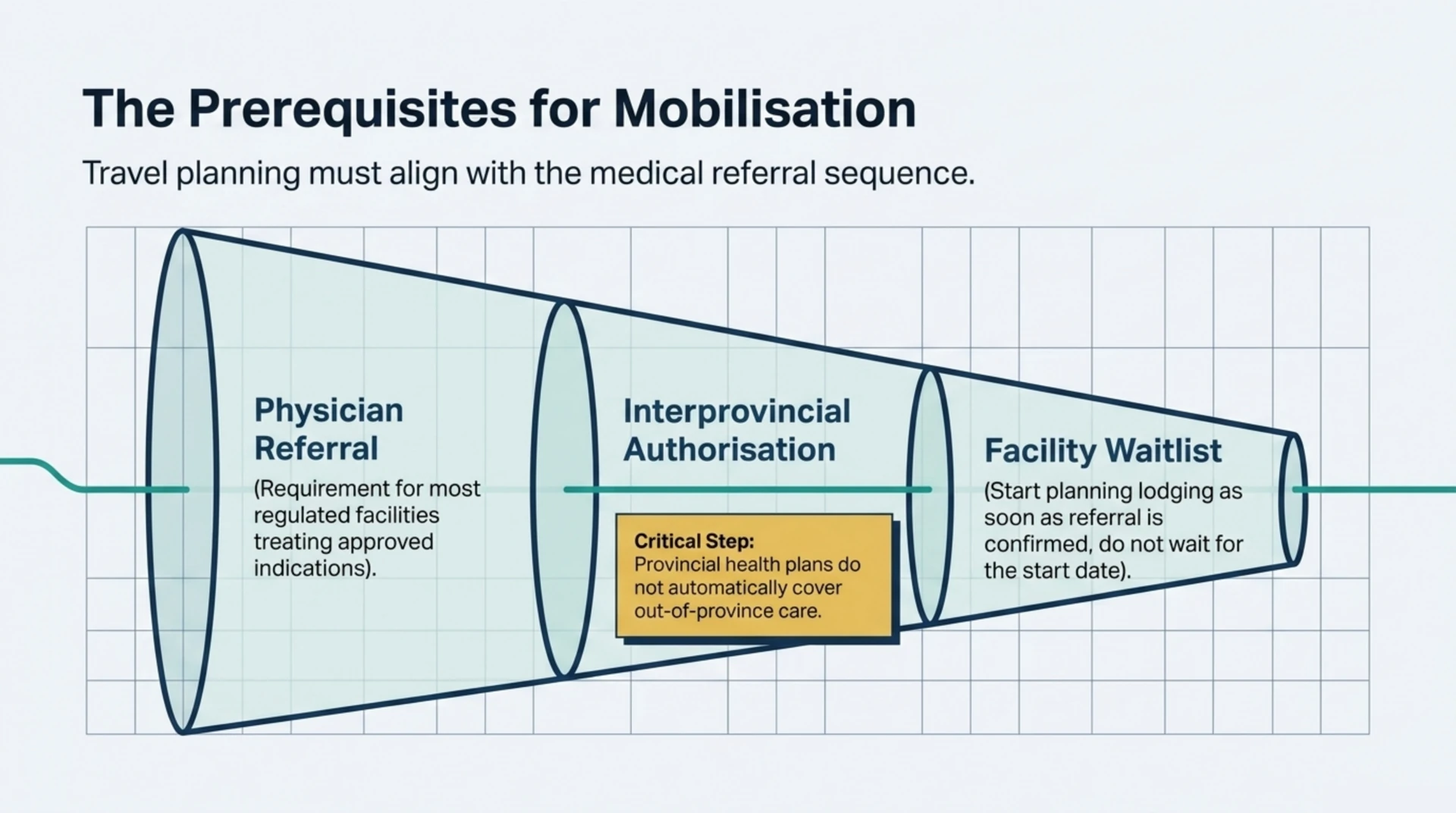
Interprovincial travel for medical care can involve extra paperwork, particularly around health coverage. Provincial health plans do not automatically cover treatment received in another province the same way they cover in-province care, so this is an important detail to confirm with your provincial health authority well before you travel. Your referring physician’s office is often the best starting point for this conversation, since they can advise on the referral and pre-authorization process specific to your case.
Frequently Asked Questions
Do I need a doctor’s referral to travel for hyperbaric oxygen therapy?
In most cases, yes. Regulated facilities treating an approved indication generally require a physician referral before scheduling a patient, and this is especially true for hospital-based programs.
Can I drive myself home after a hyperbaric session?
Most patients are able to resume normal activity shortly after a session, but this can vary based on your specific condition and how you respond to treatment. Ask the treating facility about their post-session guidance before you plan your return trip.
Is there financial help available for travel and lodging during treatment?
Some provinces and charitable organizations offer medical travel assistance programs. Availability and eligibility rules vary widely, so ask your referring physician’s office or the treating facility what options exist in your situation.
How far in advance should I book travel for a hyperbaric treatment course?
Because many facilities have a waitlist and a course can run for several weeks, it is wise to start planning travel and lodging as soon as a referral is confirmed rather than waiting until a start date is assigned.
What should I do if the nearest facility does not have availability?
Ask your referring physician whether another regulated facility further away might have earlier availability. Our general FAQ page covers additional questions patients often have when comparing facilities.
Can family members stay with me during a multi-week treatment course?
This depends entirely on the lodging you arrange, not the facility itself. Many patients traveling for extended treatment bring a family member or caregiver, particularly if daily transportation to and from the clinic is needed.
Related Reading
- Hyperbaric Oxygen Therapy for Stroke Recovery: A Patient’s Guide for Canadians
- Hyperbaric Oxygen Therapy for Radiation Proctitis
- HBOT for Exceptional Blood Loss Anaemia
Traveling for hyperbaric oxygen therapy in Canada takes real planning, but a clear picture of the schedule, the costs, and the regulatory landscape makes the process far more manageable. Canada Hyperbarics maintains this content as an educational resource to help patients ask better questions before they travel, not to replace advice from a referring physician or treating facility.
If you are ready to start comparing options, browse our directory of hospitals and regulated facilities to see what may be available near your destination.
This content is for informational purposes only and is not medical advice.