TL;DR: Hyperbaric oxygen therapy (HBOT) is a treatment that delivers 100% oxygen at increased air pressure and has been studied, almost always alongside corticosteroids, as an add-on treatment after sudden noise-related hearing injuries. Most of the research in the Canada Hyperbarics library on this topic looks at acute acoustic trauma (a single loud blast or impulse noise event, largely in military populations) rather than gradual, years-long occupational noise-induced hearing loss, and most studies are retrospective rather than randomised. The evidence is suggestive but not conclusive, and one animal study in the pool found the untreated control group actually recovered better than the oxygen-treated groups at several points, a reminder that the picture is mixed.
Noise-induced hearing loss (NIHL) describes hearing damage caused by exposure to loud sound, ranging from a single deafening blast to years of occupational noise. When people search for hyperbaric oxygen therapy and noise-induced hearing loss together, they are usually asking whether HBOT can help hearing recover after a noise injury. The research base compiled by the Canada Hyperbarics research library mostly addresses one specific slice of that question: sudden hearing loss following acute acoustic trauma, such as gunfire, an explosion, or another single intense noise exposure, typically treated with HBOT in combination with corticosteroids. This article reviews what that evidence actually shows, and where it stops short.
What Is Noise-Induced Hearing Loss?
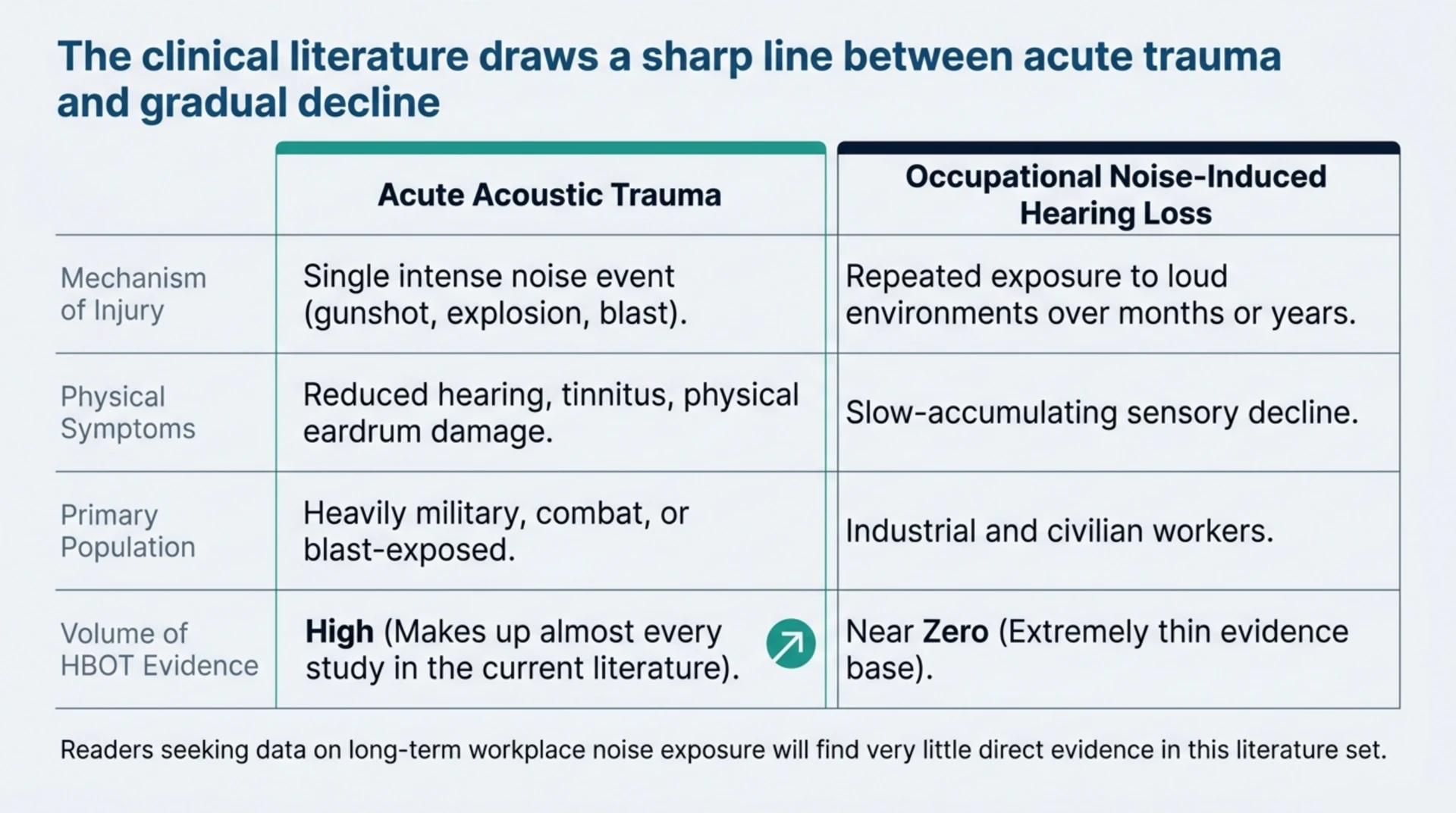
Noise-induced hearing loss is damage to the inner ear’s sensory hair cells caused by exposure to sound levels the ear cannot safely tolerate. It can happen two ways: gradually, from repeated exposure to loud environments over months or years (the classic occupational form), or suddenly, from a single very intense noise event such as a gunshot, explosion, or blast, which clinicians usually call acute acoustic trauma. The symptoms can include reduced hearing, tinnitus (ringing), a feeling of ear fullness, or, in blast injuries, physical damage to the eardrum itself.
This distinction matters for evidence review. The two forms have different injury mechanisms, different urgency, and, as it turns out, different research bases. Almost every study in this review addresses the sudden, acute form, not the slow-accumulating occupational form. Readers looking for evidence on long-term workplace noise exposure will not find much of it in this particular literature set.
What Does the Research on Hyperbaric Oxygen Therapy for Noise-Induced Hearing Loss Actually Show?
Taken together, the studies compiled by Canada Hyperbarics form a fairly consistent research pattern: mostly retrospective, mostly military or occupational populations, and mostly testing HBOT as an addition to standard corticosteroid treatment rather than as a therapy on its own.
Acute Acoustic Trauma Is the Real Focus of This Evidence Base
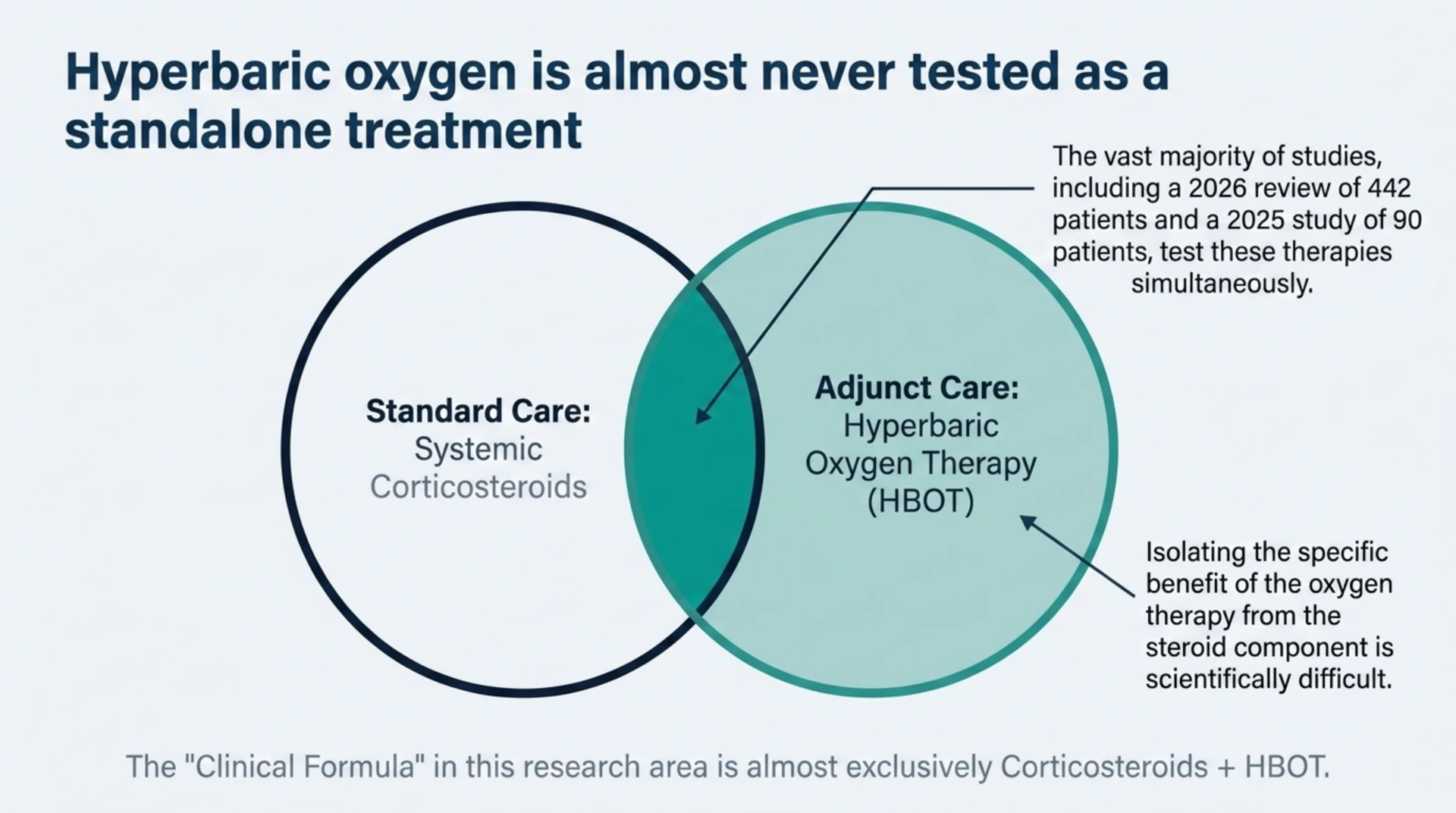
A 2026 retrospective study in Hearing Research reviewed 442 patients with sensorineural hearing loss following either gunfire or blast exposure, comparing baseline characteristics and treatment response between the two injury types when both were treated with combined hyperbaric oxygen therapy and systemic glucocorticoids (Comparing the effectiveness of the combination of hyperbaric oxygen therapy and systemic glucocorticoids, PubMed | Our Assessment). Studies like this illustrate that when researchers say “noise-induced hearing loss and HBOT,” they are usually describing this acute, injury-triggered scenario, not gradual hearing decline.
A related 2025 study combining steroids and HBOT for acute acoustic trauma reviewed 90 patients (118 ears) treated after loud blast or impulse-noise exposure (Hyperbaric oxygen therapy and corticosteroids as combined treatment for acute acoustic trauma, PubMed | Our Assessment). These are the kinds of populations, largely military and largely blast or impulse-noise related, that make up the bulk of the direct evidence.
Retrospective Comparisons Between Treated and Untreated Groups
A 2025 study in Noise Health followed 51 patients with noise-induced hearing loss who received HBOT against 43 patients who received conventional treatment only, tracking hearing recovery and quality of life over 12 months (Analysis of the positive influence of hyperbaric oxygen therapy on the prognosis and hearing control of patients with noise-induced hearing loss, PubMed | Our Assessment). A 2024 study in the same journal compared 220 patients, 158 of whom received a retroauricular steroid injection combined with HBOT and 62 of whom received the steroid injection alone (Analysis of Therapeutic Options for Noise-Induced Hearing Loss, PubMed | Our Assessment). Comparative designs like these are common in this literature, but nearly all are retrospective rather than randomised, which means treatment groups were not assigned by chance and other unmeasured differences between patients could be associated with the outcomes observed.
Does Timing of Treatment Matter?
Several studies in the pool specifically examine whether starting treatment sooner after a noise injury changes outcomes. A 2025 study in Diving and Hyperbaric Medicine analyzed hearing outcomes in 129 ears from 103 military personnel treated with HBOT plus corticosteroids, comparing those started within 7 days of the injury against those started later (Effects of hyperbaric oxygen therapy initiation latency on auditory outcomes following acute acoustic trauma, PubMed | Our Assessment). An earlier 2021 case series, titled plainly around the idea that early treatment with HBOT and corticosteroids is important in acute acoustic trauma, reinforces the same theme across the literature (It’s all about timing, early treatment with hyperbaric oxygen therapy and corticosteroids is essential in acute acoustic trauma, PubMed | Our Assessment). Timing since injury is a recurring theme in this research area, even though the exact outcome differences by timing are not uniformly reported across studies.
Where the Evidence Gets Mixed: Animal Data
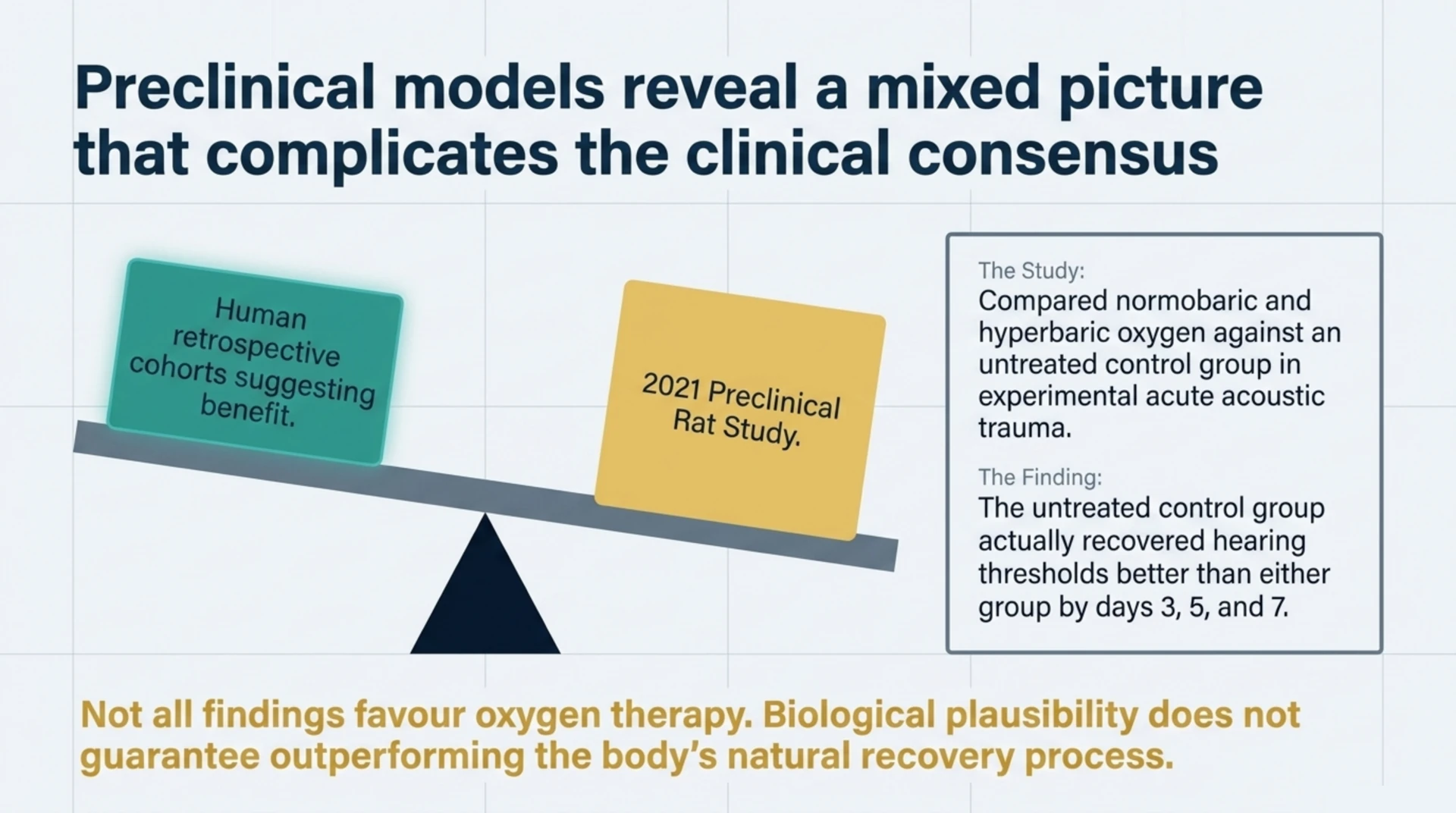
Not every study in this pool points the same direction. A 2021 preclinical study in rats compared normobaric and hyperbaric oxygen therapies after experimentally induced acute acoustic trauma against an untreated control group. At several tested frequencies, the untreated control group actually recovered hearing thresholds better than either the hyperbaric or the normobaric oxygen groups by days 3, 5, and 7 (Effects of Oxygen Therapies in Experimental Acute Acoustic Trauma, PubMed | Our Assessment). This is a single animal study and does not necessarily translate to combined human steroid-and-HBOT protocols, but it is an honest part of the evidence picture: not all findings in this research area favour oxygen therapy, and readers deserve to see the studies that complicate the story, not just the ones that support it.
A 2020 systematic review and meta-analysis in Otology & Neurotology set out to determine the efficacy of various treatment modalities for acute noise-induced hearing loss, pooling outcomes across a range of studies and treatment approaches (Hearing Outcomes of Treatment for Acute Noise-induced Hearing Loss, PubMed | Our Assessment). Reviews like this highlight just how heterogeneous the treatment literature is: different regimens, different timing windows, and different outcome measures make direct comparisons across studies difficult, which is itself an important limitation to understand before drawing firm conclusions.
What About Chronic, Non-Traumatic Hearing Loss?
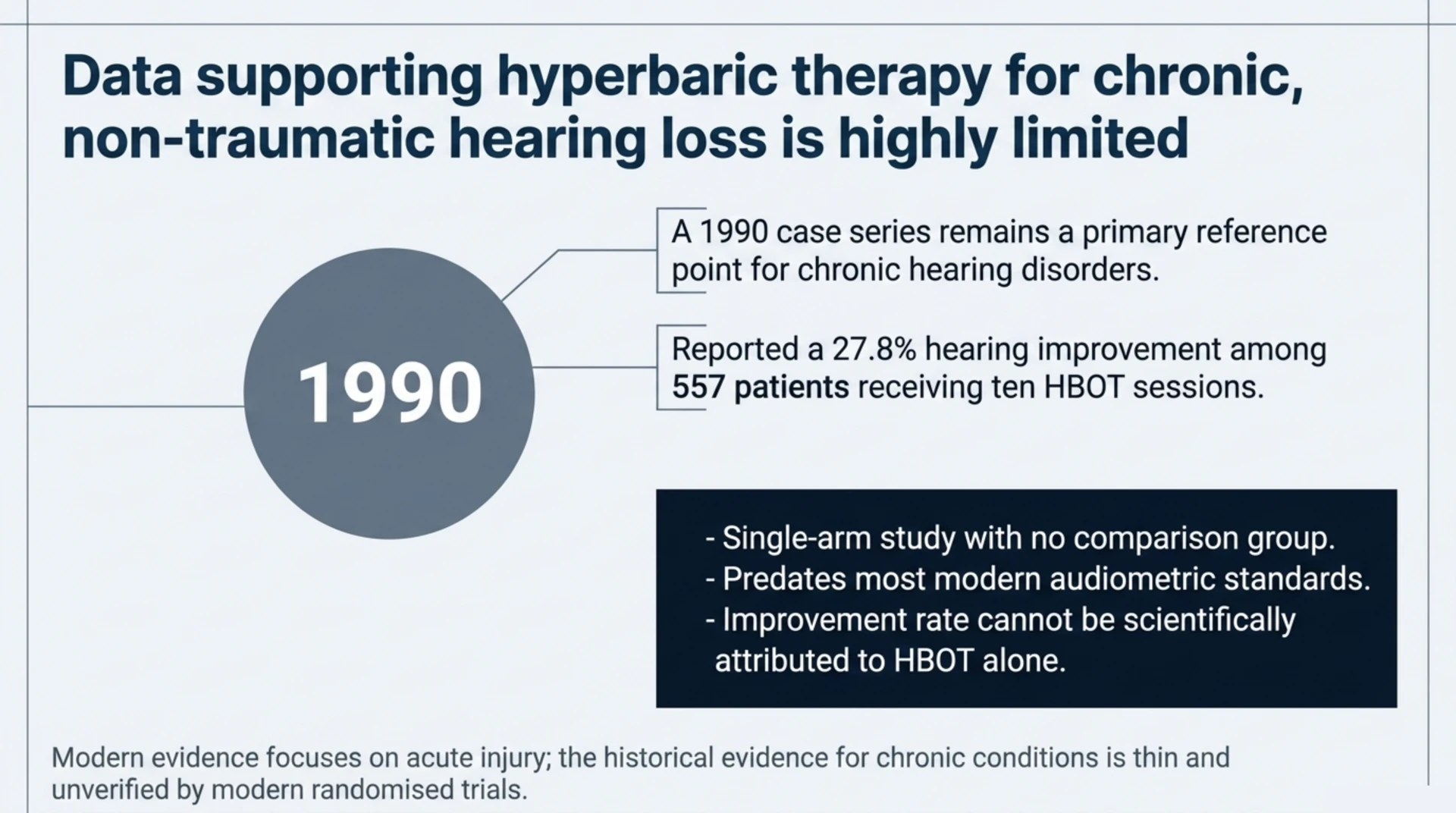
The evidence for HBOT in longer-standing, non-acute hearing disorders is thinner and older. A 1990 case series reported that among 557 patients with chronic hearing disorders who received ten hyperbaric oxygen sessions, 27.8% experienced a hearing improvement (Effect and effectiveness of hyperbaric oxygen therapy in chronic hearing disorders, PubMed | Our Assessment). This was a single-arm case series with no comparison group, so the improvement rate cannot be attributed to HBOT alone, and it predates most modern audiometric standards. A 2019 narrative review of 68 clinical studies examined the broader rationale for HBOT in both acute acoustic trauma and idiopathic sudden sensorineural hearing loss, and is a useful starting point for readers who want the wider context rather than a single study (The use of hyperbaric oxygen therapy in acute hearing loss: a narrative review, PubMed | Our Assessment).
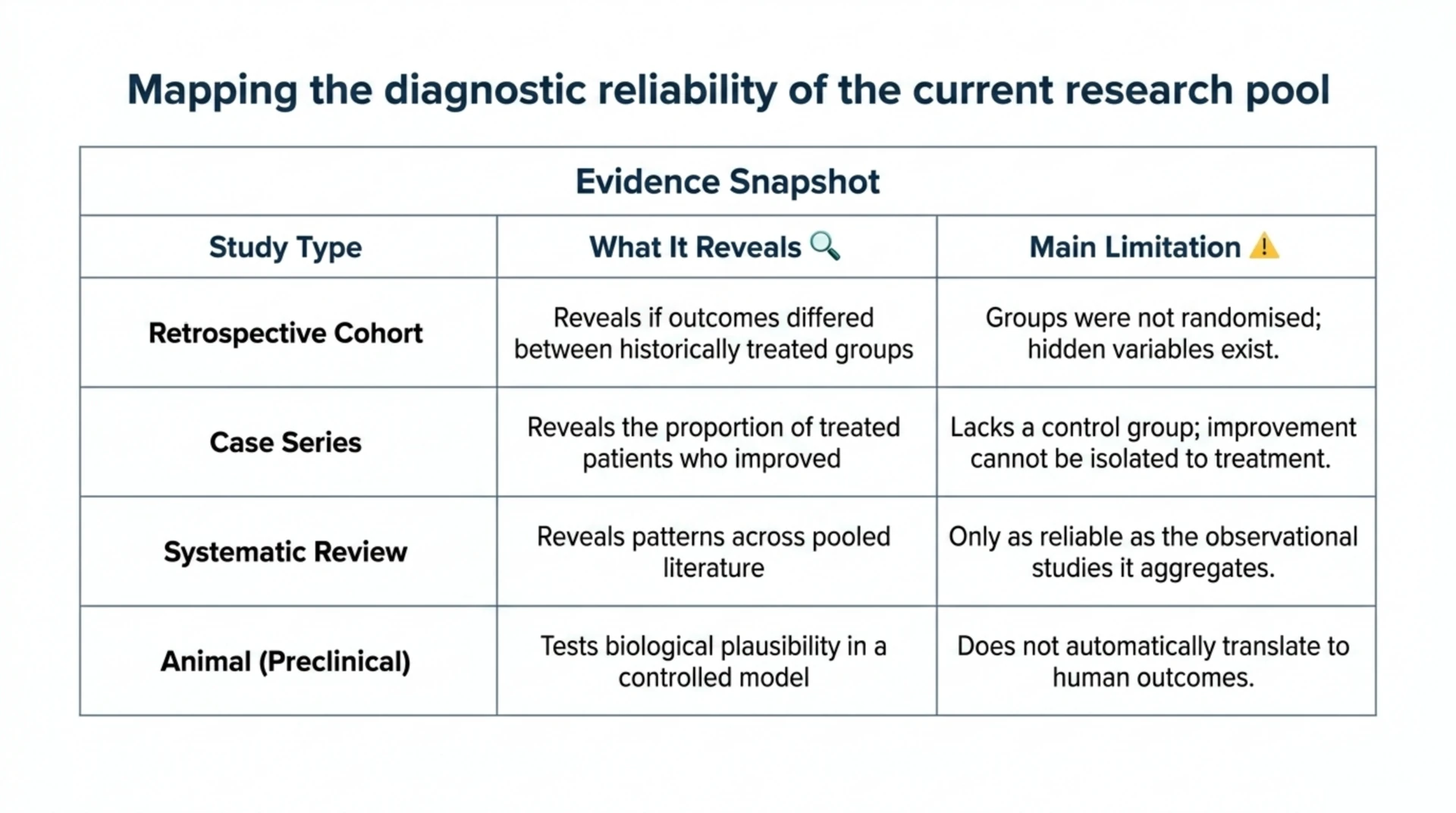
Evidence Snapshot: Study Types in This Research Area
| Study type | What it can tell us | Main limitation |
|---|---|---|
| Retrospective cohort (steroid + HBOT vs. steroid alone) | Whether outcomes differed between groups that happened to receive different treatments | Patients were not randomly assigned; other differences between groups may be associated with outcomes |
| Case series (single treatment group only) | What proportion of treated patients improved | No comparison group, so improvement cannot be attributed to the treatment alone |
| Systematic review / meta-analysis | Patterns across many pooled studies | Only as reliable as the individual studies it pools, which are mostly observational here |
| Animal (preclinical) study | Biological plausibility in a controlled model | Does not automatically translate to human outcomes; this pool’s animal study favoured the control group |
How Might Hyperbaric Oxygen Therapy Plausibly Help After a Noise Injury?
The proposed rationale in this literature is biological: acute acoustic trauma can injure the delicate hair cells and blood supply of the inner ear, and increasing the oxygen available to that tissue under pressure is thought to support recovery of the affected structures, generally alongside corticosteroids aimed at reducing inflammation. This is a plausible mechanism discussed across the reviewed studies, but plausibility is not the same as proof, and, as the animal study above shows, biological plausibility does not guarantee that oxygen therapy outperforms the body’s own recovery process in every model.
What Are the Limits of the Current Evidence?
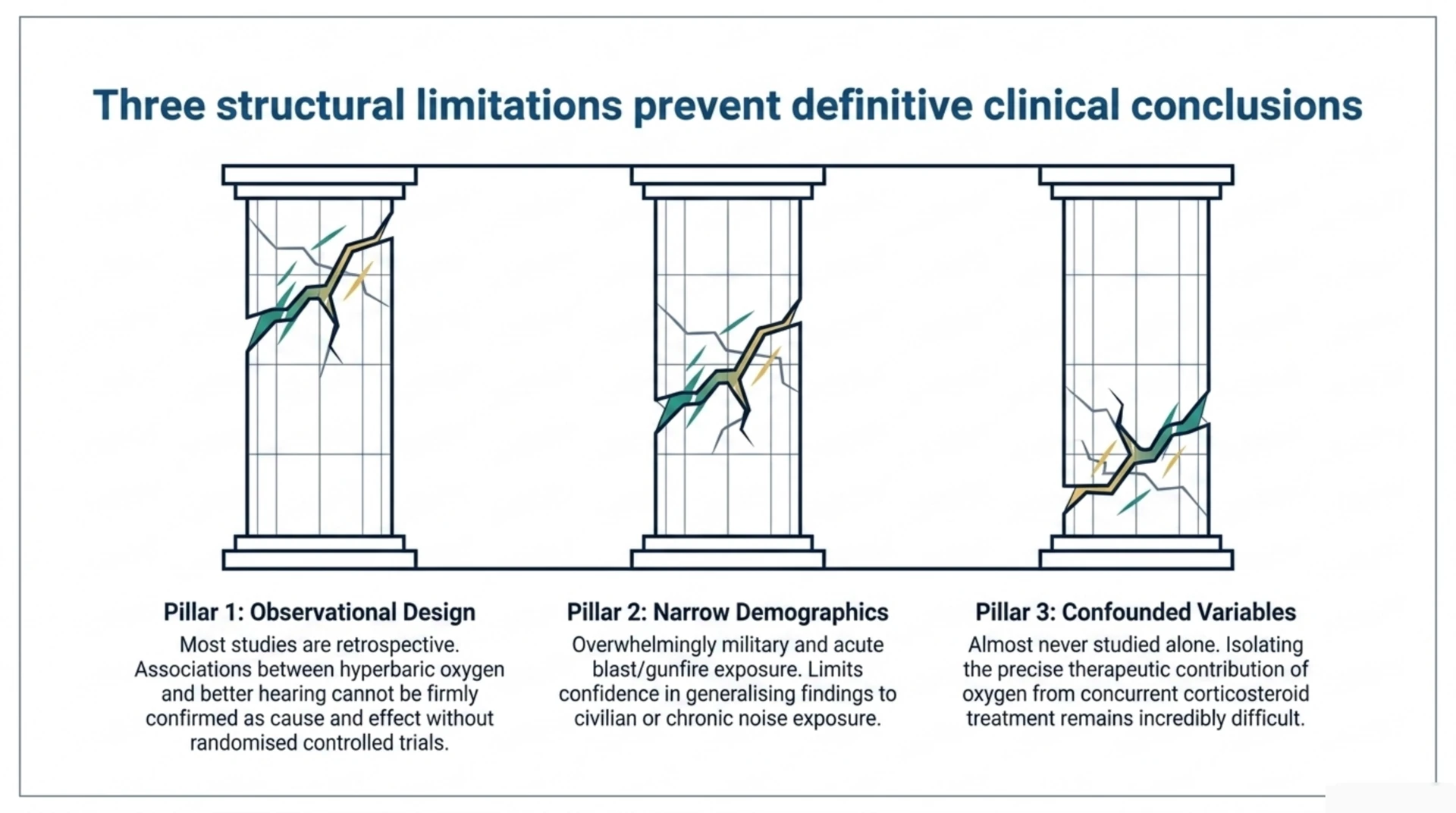
Three limitations stand out across this literature. First, most studies are retrospective and observational, not randomised controlled trials, so associations between HBOT and better hearing outcomes cannot be confirmed as cause and effect. Second, the population studied is overwhelmingly military and overwhelmingly acute (blast, gunfire, or impulse-noise exposure), which limits how confidently these findings generalize to civilian, occupational, or chronic noise exposure. Third, HBOT is almost never studied alone; it is typically combined with corticosteroids, so isolating the specific contribution of oxygen therapy from the steroid component is difficult in most of these designs. The Canada Hyperbarics research library is built from over 14,000 peer-reviewed studies across many conditions, and this particular subset, while sizeable for a niche topic, still falls short of the randomised, large-scale trials that would be needed to settle the question definitively.
Frequently Asked Questions
Is hyperbaric oxygen therapy proven to treat noise-induced hearing loss?
No single study in this pool proves that HBOT reliably restores hearing after noise-induced hearing loss. The evidence is largely retrospective and observational, with one animal study actually favouring the untreated control group at several timepoints. It is an area of ongoing research, not a settled treatment with proven efficacy.
Does the evidence apply to gradual, occupational noise-induced hearing loss?
Mostly not directly. The bulk of the research reviewed here concerns acute acoustic trauma, a single loud noise event such as a blast or gunfire, rather than years of gradual occupational noise exposure. Readers with chronic occupational hearing loss should not assume this evidence applies to their situation.
Is HBOT used by itself for noise-induced hearing loss?
In almost every study reviewed, HBOT was combined with corticosteroids or another standard treatment, not used as a standalone therapy. This makes it difficult to know how much of any observed benefit comes from the oxygen therapy specifically.
Does starting HBOT sooner after a noise injury make a difference?
Timing since injury is a recurring theme in this literature, with several studies specifically comparing earlier versus later treatment initiation. However, the specific outcome differences attributable to timing are not consistently quantified across the available studies.
Are there risks to hyperbaric oxygen therapy?
HBOT carries recognised risks, including barotrauma to the ears and sinuses, temporary vision changes, and, rarely, oxygen toxicity. Anyone considering it should discuss these risks against any potential benefit with a physician familiar with their specific hearing injury.
Is hyperbaric oxygen therapy covered by insurance in Canada for hearing loss?
Coverage in Canada depends on the condition being treated and the province; noise-induced hearing loss is not among the standard federally recognised indications for HBOT. Details on approved indications and coverage are outlined at HBOT Coverage in Canada.
Related Reading
- Hyperbaric Oxygen for Non-Union Fracture Healing: Evidence
- HBOT for Bell’s Palsy: Facial Nerve Referral Evidence
- HBOT for Sickle Cell Crisis: What the Evidence Shows
Noise-induced hearing loss, especially the sudden kind that follows a blast or very loud impulse noise, is a medical injury worth prompt attention regardless of which treatments are eventually considered. The Canada Hyperbarics research library will keep tracking new studies as they publish, but for now, this evidence is exploratory rather than definitive. Anyone affected by sudden or gradual hearing loss should talk to their physician about whether any treatment, including hyperbaric oxygen therapy, is appropriate for their specific situation.
This content is for informational purposes only and is not medical advice.