
TL;DR: Hyperbaric oxygen therapy for complex regional pain syndrome (CRPS) does not yet have direct clinical trial evidence behind it in our research library. What we do have is evidence from closely related areas, a randomised trial on hyperbaric oxygen for fibromyalgia (a different chronic pain condition with some overlapping features), and mechanistic reviews on how oxygen delivery affects injured nerve tissue and hypoxic cell damage. Together these offer a plausible rationale for researching HBOT in CRPS, but they are not proof that it works for CRPS specifically. Anyone considering it should talk to their physician first.
Hyperbaric oxygen therapy for complex regional pain syndrome is a treatment approach some patients and clinicians are exploring, but it is important to be direct about where the evidence currently stands: no study in Canada Hyperbarics’ research library has tested HBOT in a group of patients diagnosed specifically with CRPS. This article lays out what CRPS is, why researchers have theorized that oxygen-based therapy could be relevant, and what the closest available evidence, drawn from related chronic pain and nerve injury research, actually shows.
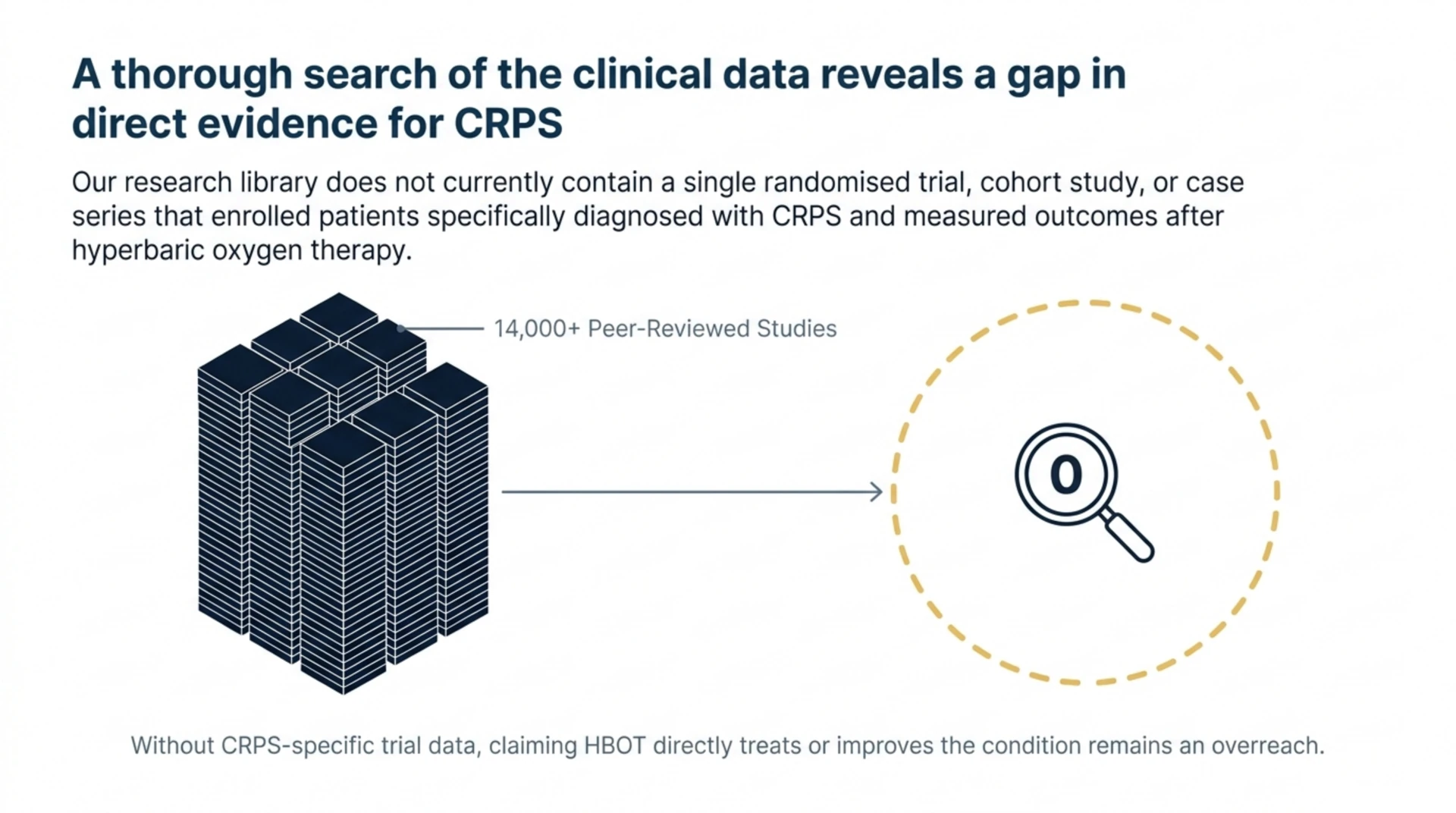
Canada Hyperbarics maintains a library of over 14,000 peer-reviewed studies on hyperbaric oxygen therapy, spanning conditions from stroke recovery to wound healing. When we searched that library for CRPS specifically, we found a gap. Rather than force a connection that the data doesn’t support, this post reframes the discussion honestly around the adjacent evidence that does exist.
What Is Complex Regional Pain Syndrome?
Complex regional pain syndrome (CRPS) is a chronic pain condition that usually develops after an injury to a limb, such as a fracture, sprain, or surgery, where the pain that follows is disproportionate to the severity of the original injury. The affected limb can become swollen, unusually sensitive to touch, discoloured, or noticeably warmer or colder than the opposite limb.
Researchers believe CRPS involves a combination of nerve dysfunction, abnormal inflammatory signalling, and changes in local blood flow to the affected area. CRPS is not fully understood, and its underlying mechanisms overlap with several other chronic pain and nerve injury conditions, which is part of why researchers sometimes look to therapies studied in those adjacent conditions for clues.
What Does the Research Say About Hyperbaric Oxygen Therapy for Complex Regional Pain Syndrome?
Directly: very little, at least in terms of controlled clinical trials that we can point to. Our research library does not currently contain a randomised trial, cohort study, or case series that enrolled patients specifically diagnosed with CRPS and measured their outcomes after hyperbaric oxygen therapy.
That gap matters. Without CRPS-specific trial data, any claim that HBOT treats or improves CRPS would be an overreach. What follows instead is a look at the nearest related evidence: a trial on a different chronic pain condition with some shared features, and mechanistic research on how oxygen affects injured nerve tissue.
Why Might Oxygen Therapy Be Relevant to a Nerve-Related Pain Condition?
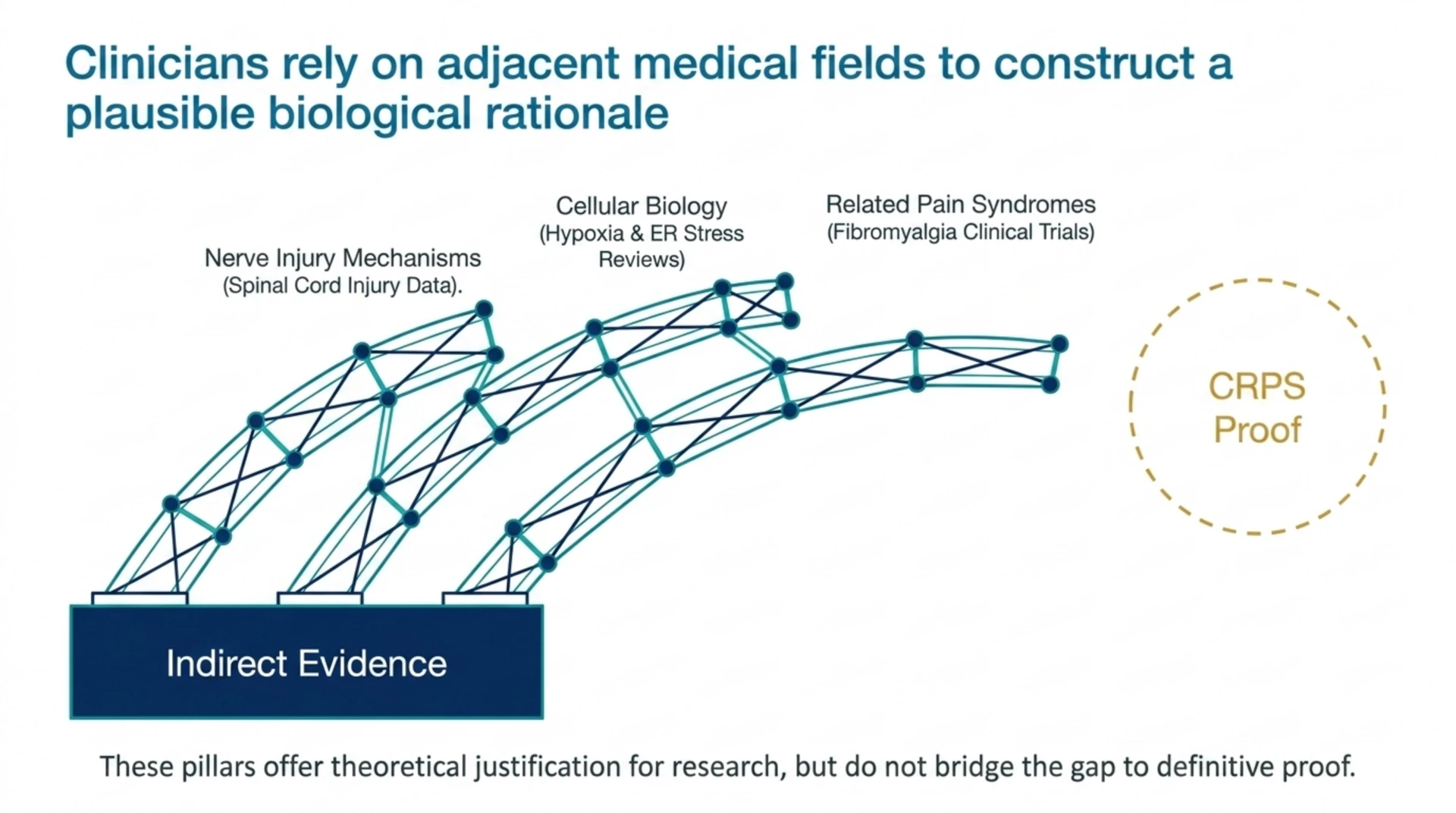
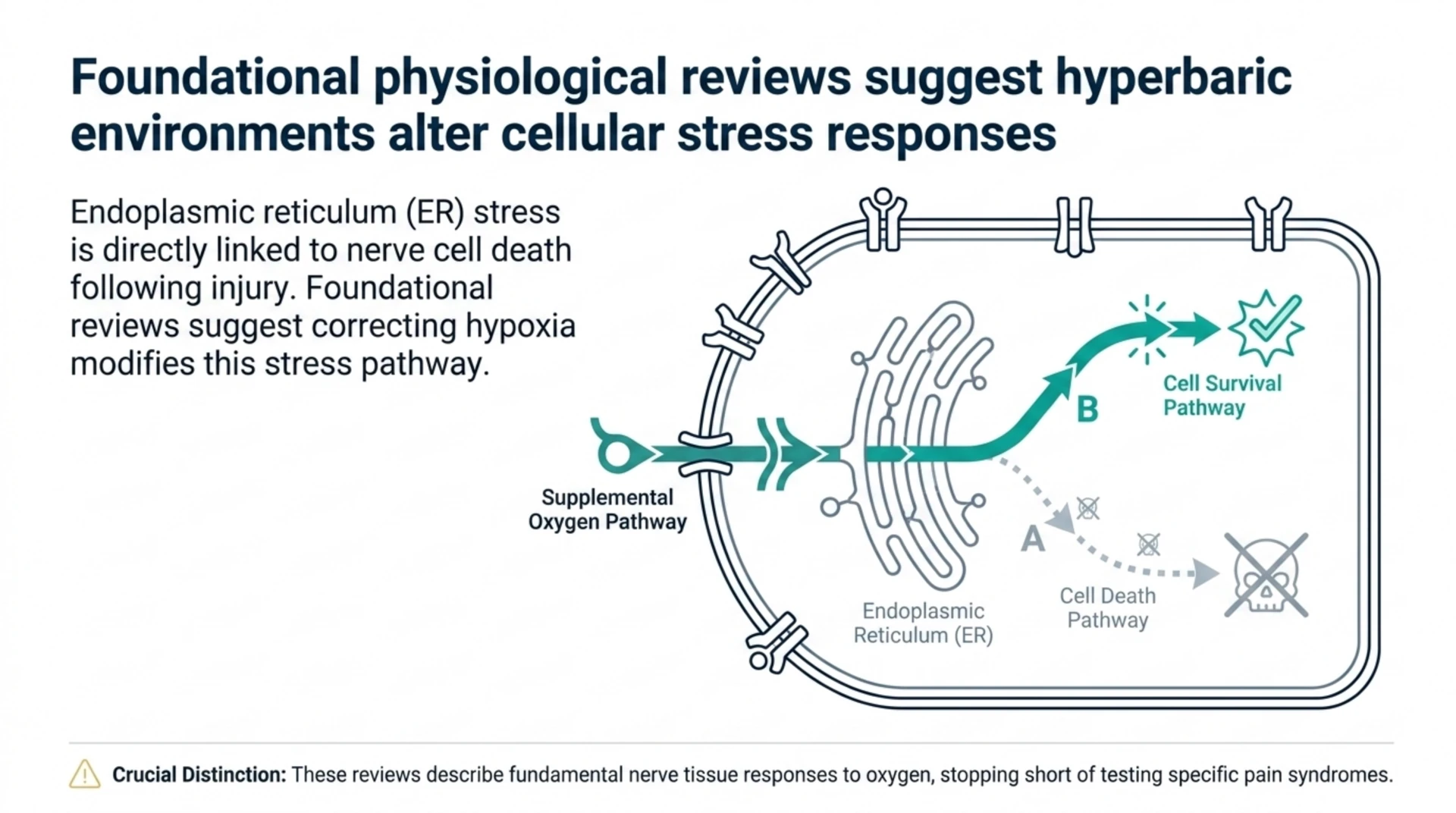
One line of reasoning connecting HBOT to conditions like CRPS comes from research into nerve injury more broadly. A review examining the role of hyperbaric oxygen therapy for treating spinal cord injury (PubMed | Our Assessment) described how HBOT is thought to work in injured nervous tissue: by increasing oxygen delivery to compromised areas, the therapy may help reduce secondary tissue damage and support the body’s own repair processes. This is a mechanistic explanation, not a CRPS outcome study, but it speaks to why researchers consider HBOT plausible for nerve-related pain conditions in general.
A separate review looked at endoplasmic reticulum stress, a form of cellular stress linked to nerve cell death after spinal cord injury (PubMed | Our Assessment). It surveyed potential therapeutic approaches targeting this cellular stress pathway, again at the level of underlying biology rather than tested treatments for a specific pain syndrome. These mechanistic reviews describe how nerve tissue responds to oxygen and injury, but they stop short of testing HBOT in patients with chronic regional pain.
A broader investigative review of hyperbaric oxygen’s role in hypoxia-induced conditions (PubMed | Our Assessment) summarized existing clinical evidence for HBOT’s physiological effects across a range of conditions where tissue oxygen levels are compromised. This kind of foundational review helps explain the biological rationale behind exploring HBOT in poorly understood pain conditions, though it does not substitute for a trial in CRPS patients themselves.
What Does the Fibromyalgia Evidence Suggest?
Fibromyalgia is not CRPS, but the two conditions share some features worth noting: both are chronic pain syndromes without a single clear structural cause, and both are thought to involve altered pain processing in the nervous system. Because of this partial overlap, the fibromyalgia trial evidence is the closest thing in our library to an answer about HBOT’s potential in a nervous-system-mediated chronic pain condition.
The HOTFy trial, a randomised clinical trial conducted in Brazil (PubMed | Our Assessment), gave women with fibromyalgia hyperbaric oxygen sessions at 2.3 atmospheres absolute for 90 minutes, five days a week, over eight weeks. Because this was a randomised trial, we can speak somewhat more confidently about its own results: within this study population, HBOT improved fibromyalgia symptom measures compared to the study’s control condition.
It is important to be precise about what this does and does not tell us. This result applies to fibromyalgia, in the specific dosing protocol and patient population studied. It cannot be read as evidence that HBOT improves CRPS symptoms, since CRPS was not the condition under study. It is, however, a data point suggesting that HBOT can measurably affect chronic pain symptoms in at least one nervous-system-mediated pain condition, which is part of the rationale for further research in related syndromes like CRPS.
Comparing the Available Evidence
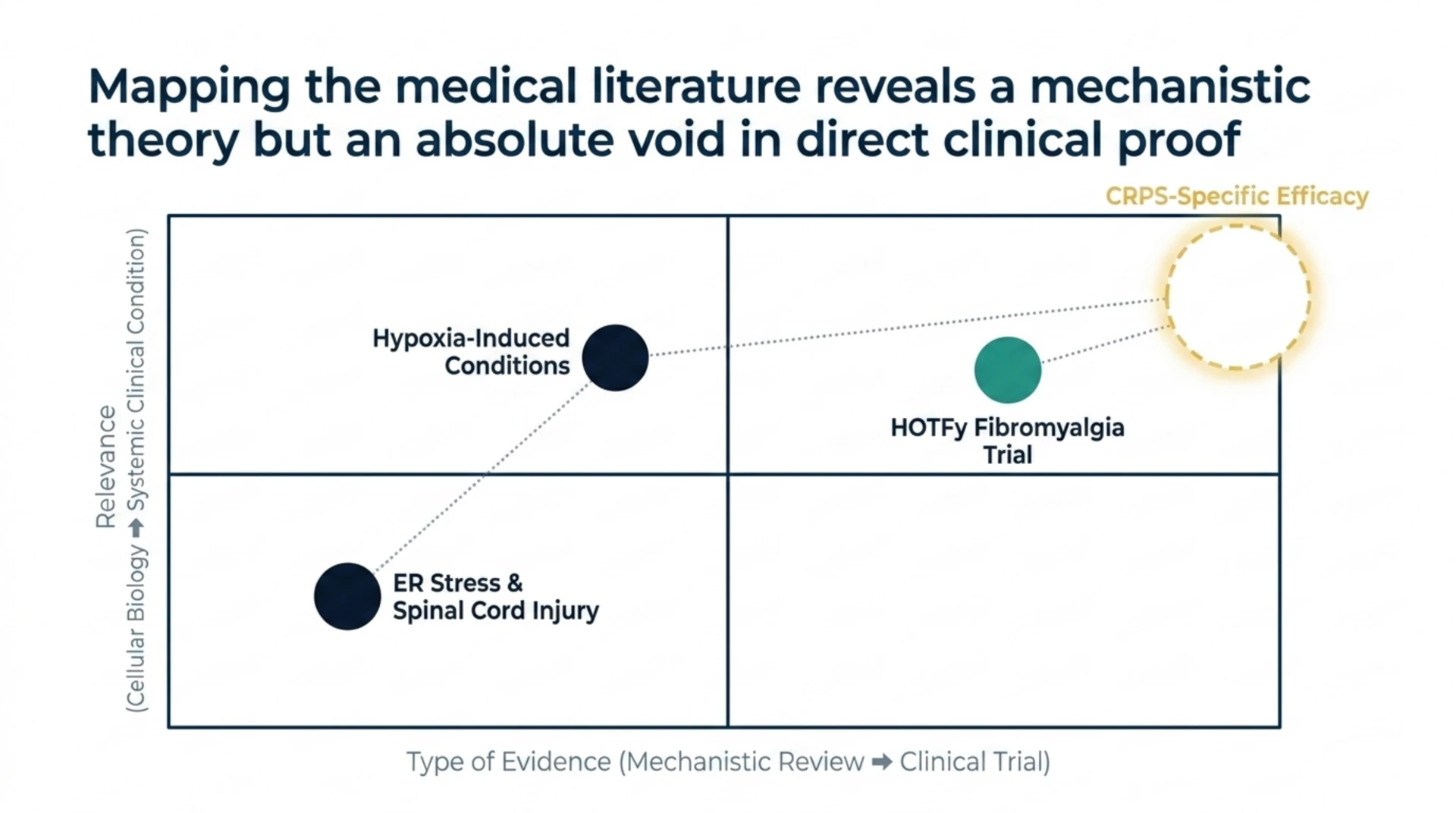
The table below summarizes what each cited study actually examined, so the distinction between direct and indirect evidence stays clear.
| Study | Design | Condition Studied | Relevance to CRPS |
|---|---|---|---|
| HOTFy Trial | Randomised controlled trial | Fibromyalgia | Indirect; related chronic pain condition |
| HBOT in Spinal Cord Injury | Narrative review | Spinal cord injury (mechanisms) | Indirect; nerve injury mechanism rationale |
| ER Stress in Spinal Cord Injury | Narrative review | Spinal cord injury (cell biology) | Indirect; cellular mechanism rationale |
| HBOT in Hypoxia-Induced Conditions | Investigative review | Various hypoxia-related conditions | Indirect; general physiological rationale |
Is Hyperbaric Oxygen Therapy Covered for CRPS in Canada?
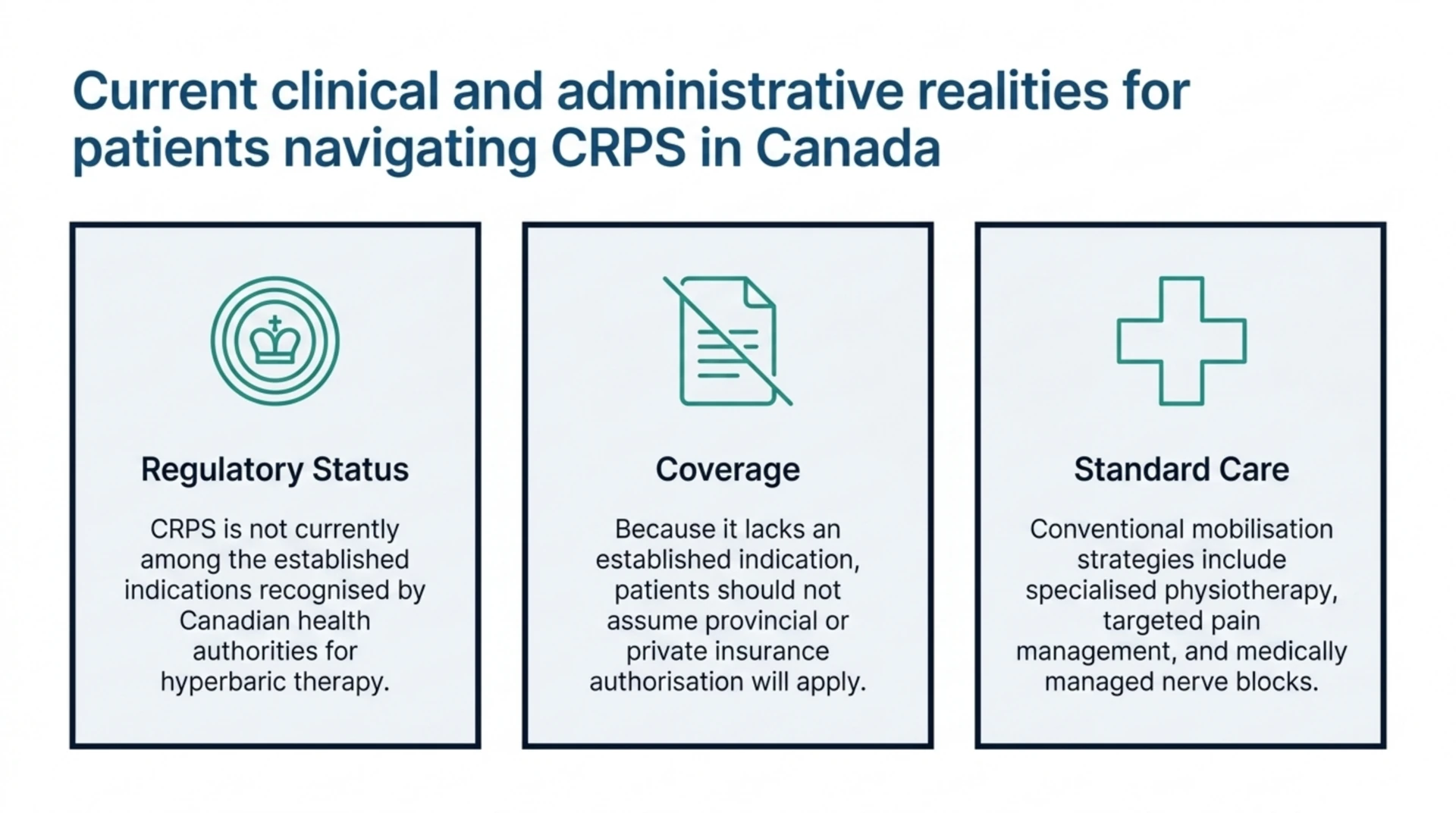
CRPS is not among the conditions with established HBOT indications recognised by Canadian health authorities, so patients considering this route should not assume provincial or private insurance coverage applies. For a general overview of how HBOT coverage works in Canada and which conditions are typically recognised, see our page on HBOT coverage in Canada.
Frequently Asked Questions
Is there a clinical trial proving hyperbaric oxygen therapy works for complex regional pain syndrome?
No. Based on the research available to us, there is currently no published clinical trial that enrolled patients specifically diagnosed with CRPS and tested HBOT against a control condition.
Why would anyone consider HBOT for CRPS if there’s no direct evidence?
The rationale is largely mechanistic: HBOT increases oxygen delivery to tissue, and researchers have studied its effects on nerve injury and hypoxia-related cell damage in other conditions, including spinal cord injury. This is a plausible research direction, not proof of benefit in CRPS.
Does the fibromyalgia research apply directly to CRPS?
Not directly. Fibromyalgia and CRPS are different diagnoses with different physical presentations. The HOTFy trial’s results are specific to fibromyalgia patients under its studied protocol and should not be generalized to CRPS.
What are the standard treatments for CRPS while more research is done?
Standard approaches to CRPS typically include physiotherapy, pain management strategies, and in some cases nerve blocks or medication, managed by a physician or pain specialist. This article does not cover those in detail; a physician can walk through appropriate options.
Is hyperbaric oxygen therapy safe to try for CRPS even without direct evidence?
HBOT has a generally well-characterized safety profile when administered appropriately for its recognised indications, but using it for an unproven indication is a decision that should involve a physician who understands the patient’s full medical history and can weigh the absence of CRPS-specific evidence.
Will Canada Hyperbarics update this page if new CRPS-specific research is published?
Our research library is reviewed on an ongoing basis. If a study specifically testing HBOT in CRPS patients is published and verified, we will revisit and update this evidence review.
Related Reading
- HBOT for Chronic Fatigue Syndrome: A Service-Line Briefing
- HBOT for Radiation-Induced Dry Mouth: The Evidence Gap
- Is Hyperbaric Oxygen Therapy Covered by Insurance?
If you are living with complex regional pain syndrome and are curious about hyperbaric oxygen therapy, the most useful next step is an honest conversation with your physician about your specific case, the current state of the evidence, and whether HBOT is an appropriate option for you.
This content is for informational purposes only and is not medical advice.