
Hub and Spoke Hyperbaric Chamber Networks in Canada
TL;DR: A hub and spoke hyperbaric chamber network is a service delivery model where one central, fully staffed facility (the hub) supports a group of smaller satellite sites (the spokes) with shared medical oversight, standardised protocols, and centralized scheduling. For Canadian clinic owners and operators, this structure is becoming a practical way to extend hyperbaric oxygen therapy (HBOT) access to more communities without duplicating the full cost of a stand alone chamber program at every location. This article walks through how the model works, what it takes to set one up, and what to watch for operationally.
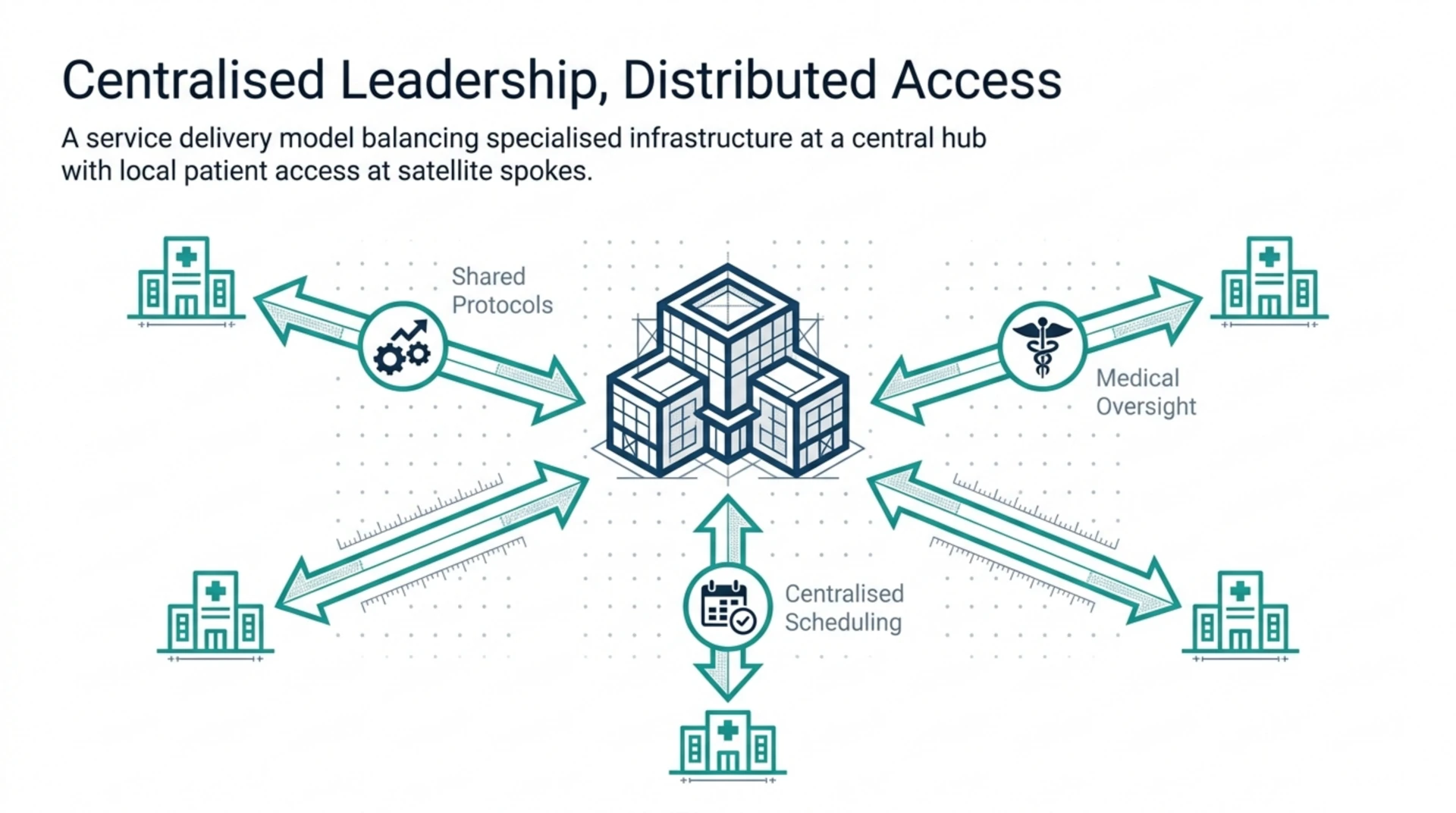
Across Canada, interest in a hub and spoke hyperbaric chamber network has grown as clinic groups look for ways to serve patients outside major urban centres without opening a fully independent chamber facility in every town. Rather than each location carrying its own medical director, full equipment inventory, and independent safety program, a hub and spoke model concentrates specialized leadership and complex equipment at one site while satellite locations operate under shared protocols and remote oversight.
This article is written for clinic owners, operators, and administrators who are evaluating whether a networked approach makes sense for their organization. It covers logistics, staffing, scheduling, and regulatory coordination. It does not evaluate clinical outcomes of hyperbaric oxygen therapy itself; for that kind of evidence based discussion, our conditions overview is the right starting point.
What Is a Hub and Spoke Hyperbaric Chamber Network?
In practical terms, the hub is usually the site with the most chambers, the broadest technical capability, and the senior clinical and safety leadership. The spokes are smaller sites, sometimes with a single chamber, that rely on the hub for training, equipment servicing coordination, protocol updates, and clinical governance.
This is not a new idea in Canadian healthcare. Hub and spoke structures are already common in diagnostic imaging, dialysis, and rural surgical outreach programs, where a central site supports distributed access points. Hyperbaric programs are simply the latest service line to apply the same logic to a highly regulated, equipment intensive therapy.
Why the Model Fits Hyperbaric Services Specifically
Hyperbaric chambers are expensive to install, require ongoing certified maintenance, and depend on consistently trained operators. Few communities outside major centres can justify a fully independent program on patient volume alone. A hub and spoke structure lets smaller sites share the overhead of training, protocol development, and safety auditing with a central facility that already carries that infrastructure.
How Does Staffing Work Across a Hub and Spoke Network?
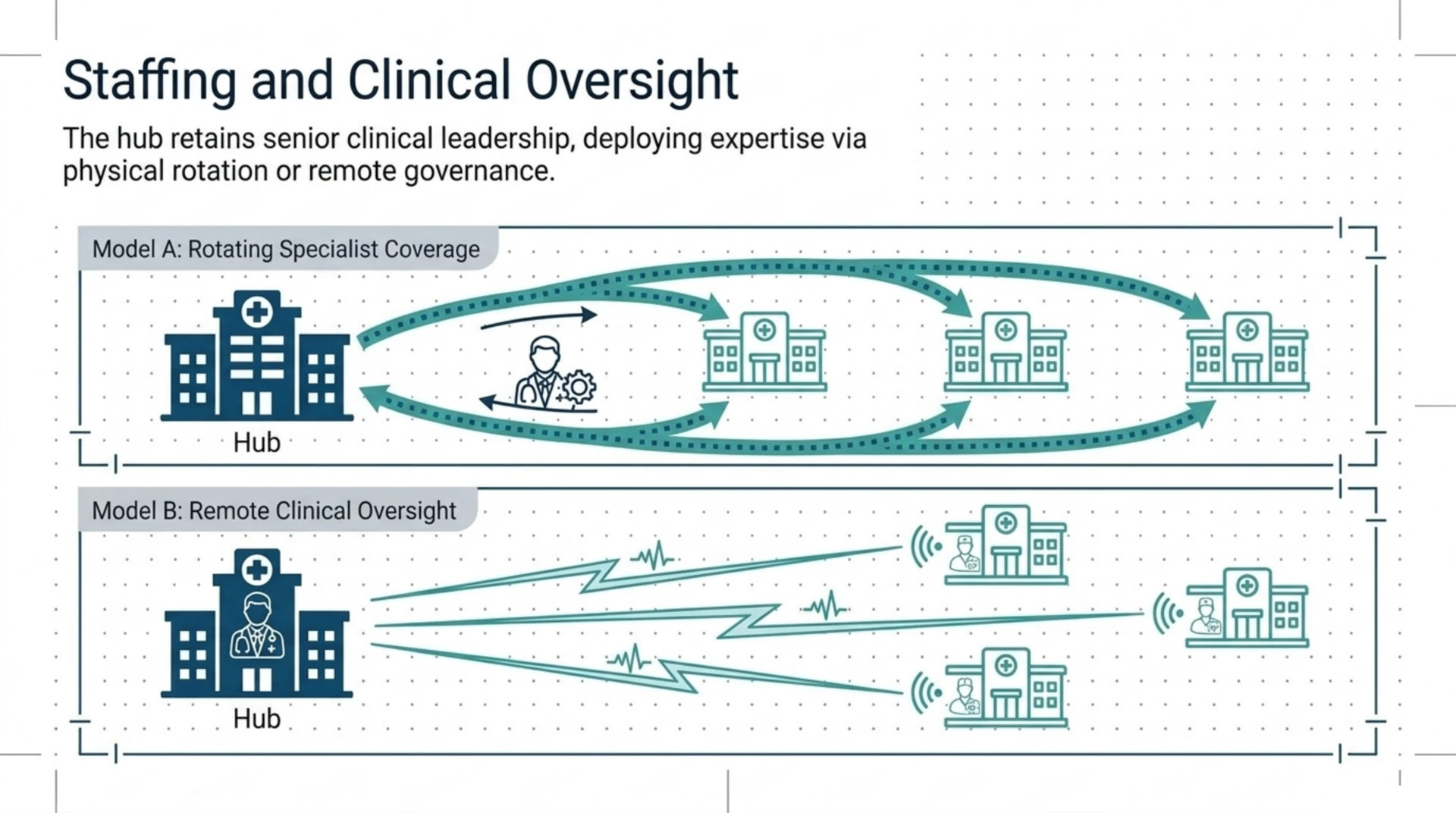
Staffing is usually the first operational question clinic owners raise. In most Canadian implementations, the hub maintains the senior clinical and safety roles, while spoke sites employ locally based operators and attendants who are trained and periodically re-certified through the hub.
Scheduling across sites tends to follow one of two patterns:
- Rotating specialist coverage, where senior staff travel between spoke sites on a fixed cadence.
- Remote clinical oversight, where day to day sessions run under locally trained staff with the hub’s medical leadership available for consultation and periodic in person review.
Training and Re-certification
Because safety protocols must stay consistent across every site, training materials, checklists, and emergency procedures are usually standardised once at the hub and then rolled out to each spoke. This reduces the risk of drift between locations and makes it easier to update a procedure in one place when guidance changes.
What Does Scheduling and Patient Flow Look Like?
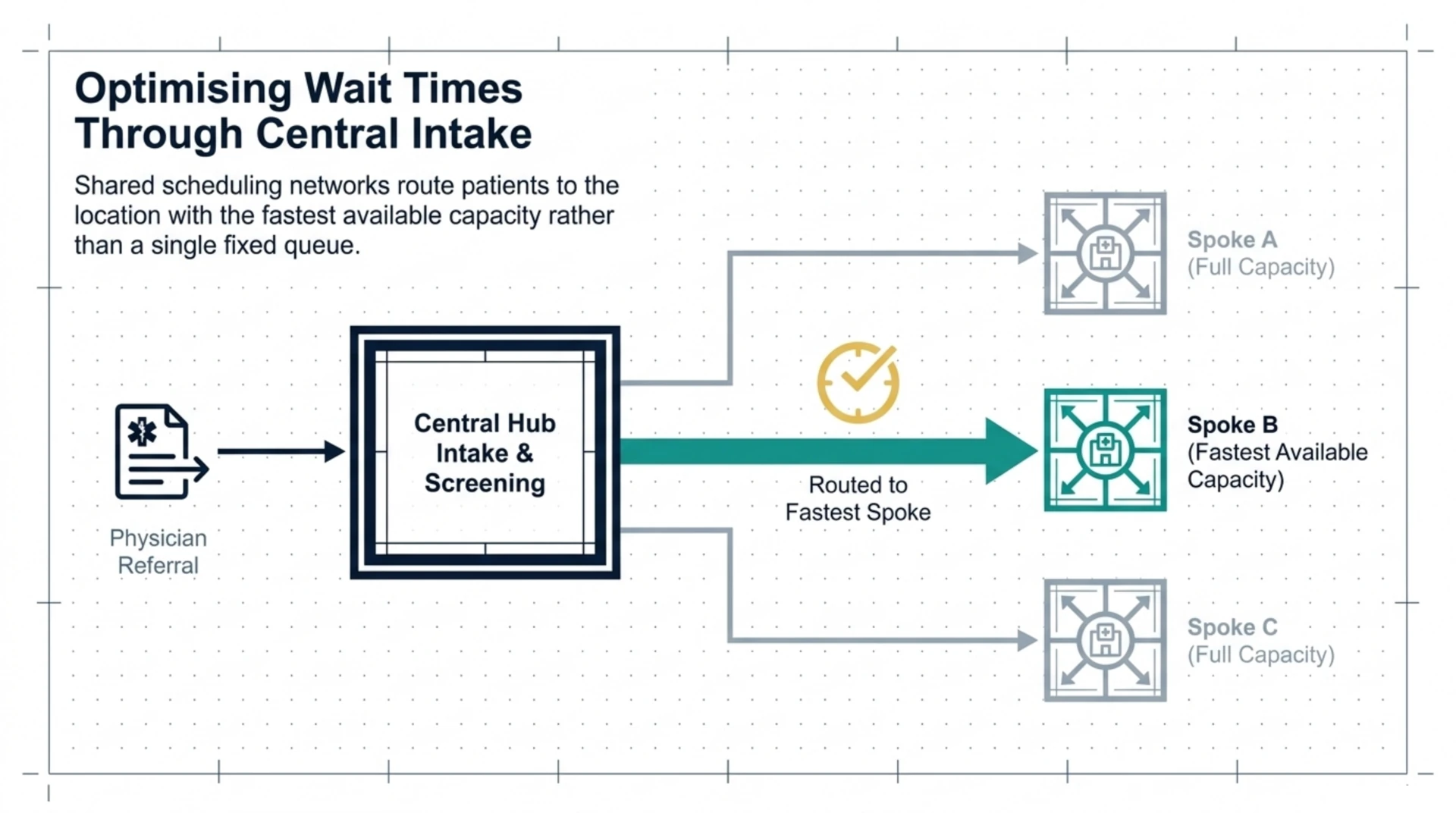
One of the clearest logistical benefits clinic operators report is the ability to centralize booking. Rather than each site running its own independent calendar, a shared scheduling system lets staff see capacity across the whole network and route patients to whichever site has the shortest wait.
This has a direct, measurable logistics benefit: a networked booking system can reduce wait times for an initial consultation by giving patients a choice of location rather than a single fixed queue. This is a scheduling and capacity outcome, not a claim about the therapy itself.
Referral Pathways
Patients are often referred into the network by a physician who may be located at neither the hub nor the spoke. A clear intake process, usually managed at the hub, helps make sure referral paperwork, any required medical screening, and consent documentation follow the patient to whichever site they are ultimately scheduled at. For background on how facilities are classified and regulated in Canada, see our regulatory overview.
Comparing Hub and Spoke to a Stand Alone Clinic Model
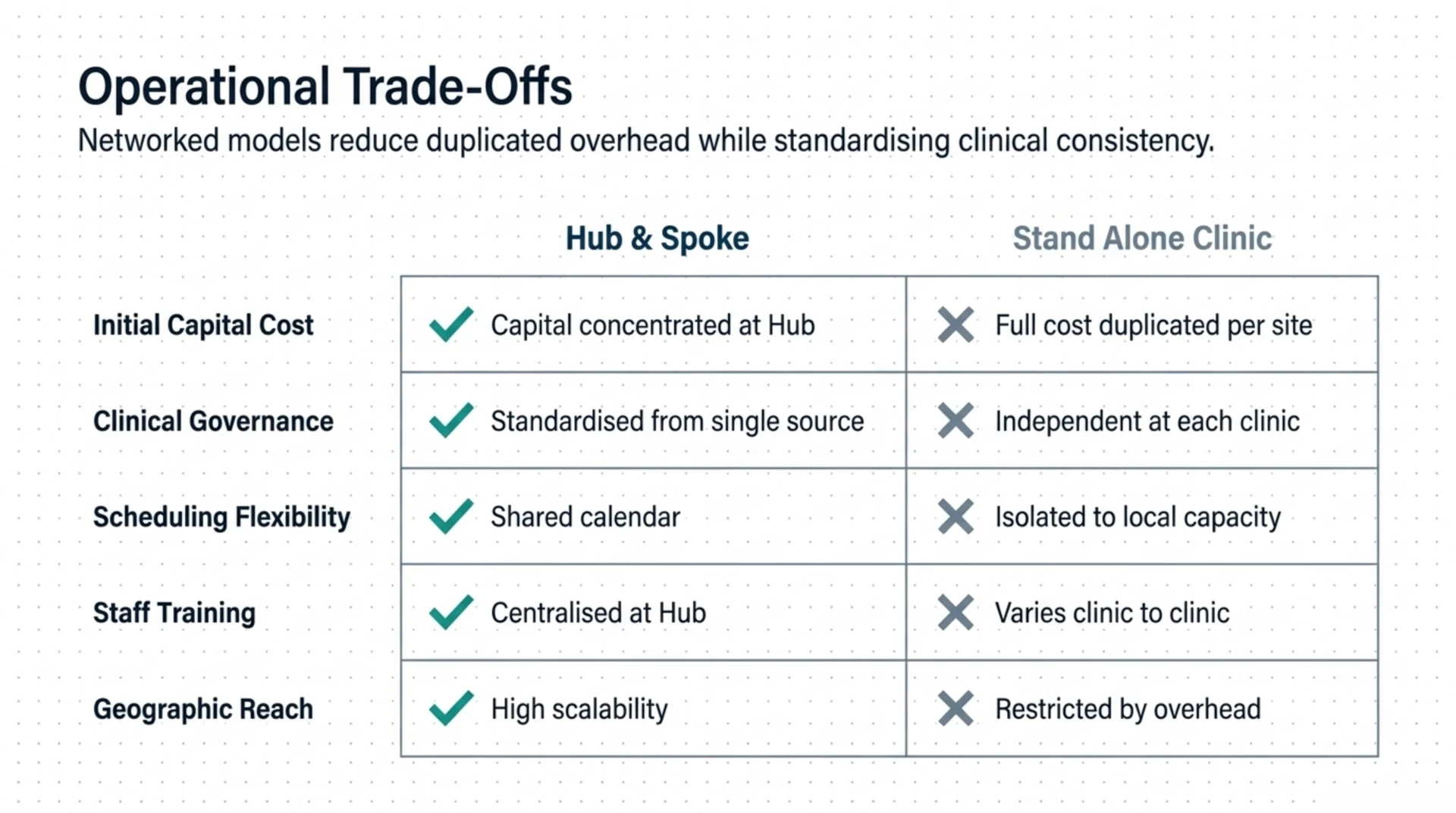
The table below summarizes the main operational differences clinic owners typically weigh when deciding between models.
| Factor | Hub and Spoke Network | Independent Stand Alone Clinic |
|---|---|---|
| Initial capital cost per site | Lower at spoke sites; concentrated at hub | Full cost duplicated at every site |
| Clinical governance | Centralized at hub, shared across sites | Independent at each clinic |
| Scheduling flexibility | Shared calendar across locations | Limited to local capacity |
| Staff training consistency | Standardised from a single source | Varies clinic to clinic |
| Geographic reach | Can extend into smaller communities | Limited to where a full program is viable |
What Are the Operational Risks of a Networked Model?
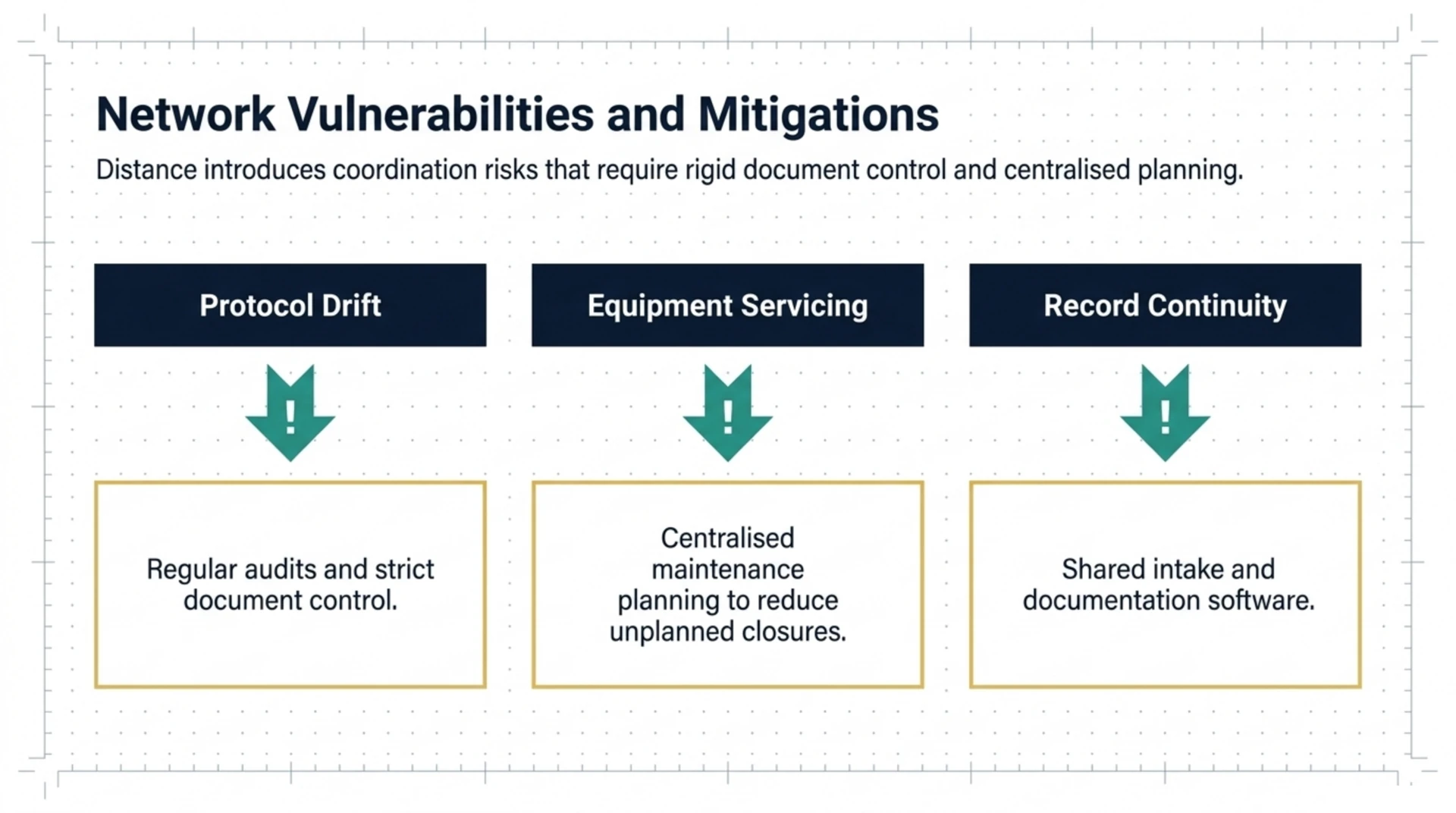
A hub and spoke structure is not without its own coordination challenges. The biggest operational risk is protocol drift, where a spoke site gradually departs from the hub’s standard procedures because of distance, staff turnover, or informal local workarounds. Regular audits and a clear document control process between the hub and each spoke help keep this in check.
Equipment Servicing Logistics
Certified maintenance providers are not always local to a spoke site, so network planning usually has to account for travel time and scheduling around maintenance windows. Clinics that plan this centrally, through the hub, tend to have fewer unplanned closures than clinics managing servicing independently.
Documentation and Record Continuity
When a patient moves between sites within the same network, for example starting at a spoke and later needing equipment only available at the hub, record continuity matters. A shared intake and documentation system, rather than separate paper or software systems per site, reduces the chance of information being lost in transfer.
How Does This Fit Into the Canadian Regulatory Landscape?
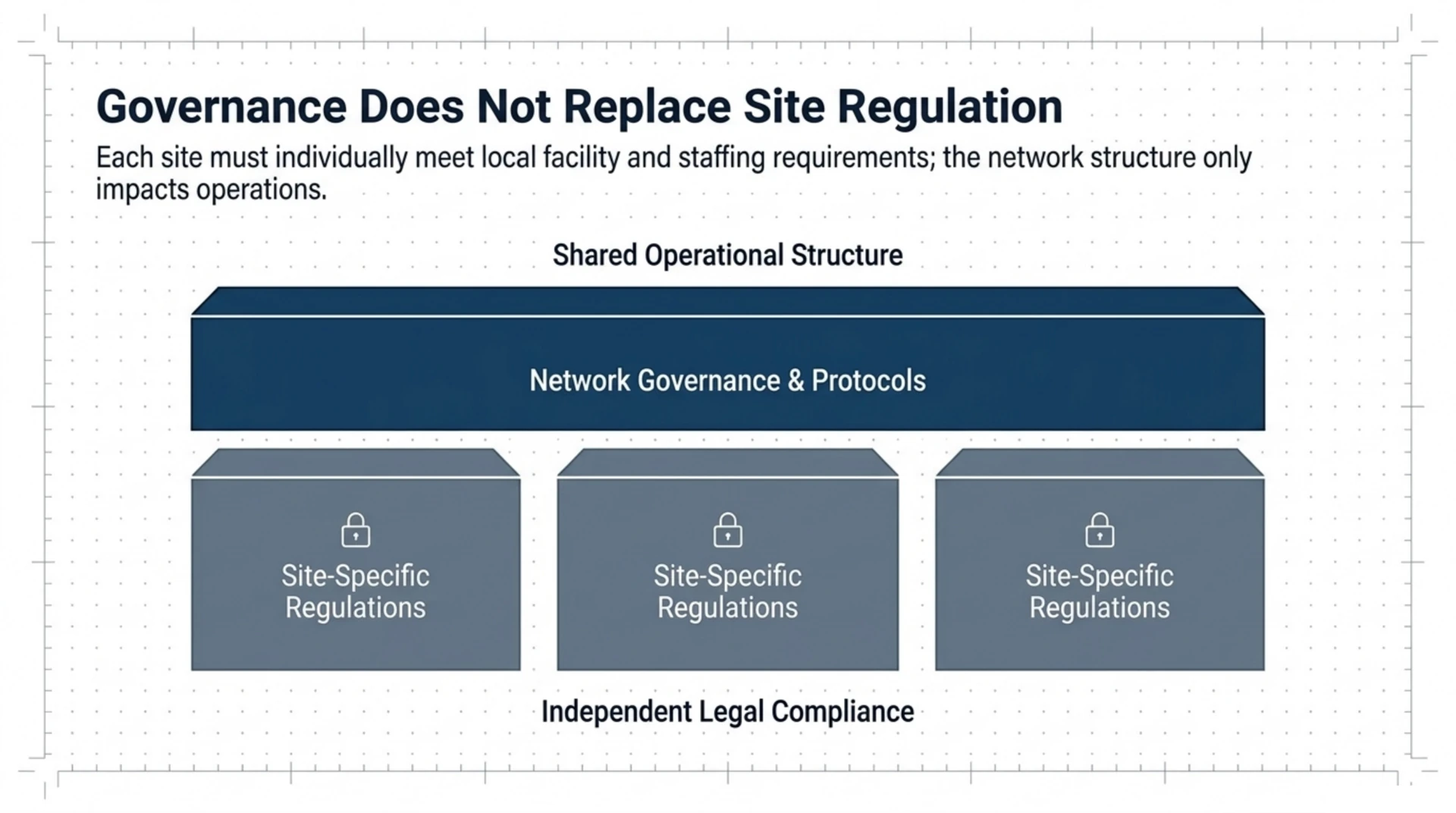
Facility classification, staffing requirements, and oversight obligations in Canada vary by province and by how a facility is structured. A hub and spoke network does not change the underlying regulatory obligations of any individual site; each location still needs to meet the requirements that apply to it directly. Clinic owners building a network should review how regulated facilities are classified before finalizing a staffing or governance plan. Canada Hyperbarics maintains a general overview of this landscape for operators planning new sites.
Frequently Asked Questions
What is the difference between a hub and a spoke in this model?
The hub is typically the central site with the broadest clinical leadership, equipment capacity, and oversight responsibility. A spoke is a smaller, often single chamber site that operates under the hub’s shared protocols and training.
Does a hub and spoke network reduce the cost of opening a new hyperbaric site?
It can reduce certain costs, particularly around training development and protocol creation, because those are built once at the hub rather than independently at each new site. Equipment and facility costs still apply at every location.
Who provides clinical oversight at a spoke site?
This varies by organization, but oversight is usually provided by the hub’s clinical leadership, either through scheduled visits, remote consultation, or a combination of both.
Can patients be referred between sites in the same network?
Yes, this is one of the practical advantages of the model. A shared intake and scheduling system allows a patient to be directed to whichever site in the network has availability.
Is a hub and spoke model regulated differently than a single clinic?
No. Each site within the network is still subject to the same facility and staffing requirements that would apply if it operated independently. The network structure affects operations and governance, not the underlying regulatory obligations.
How many sites does a typical Canadian hyperbaric network include?
This varies widely depending on the organization and the geography it serves. Some networks are built around a single hub supporting two or three spokes, while others extend further.
Planning a Network: What Clinic Owners Should Review First
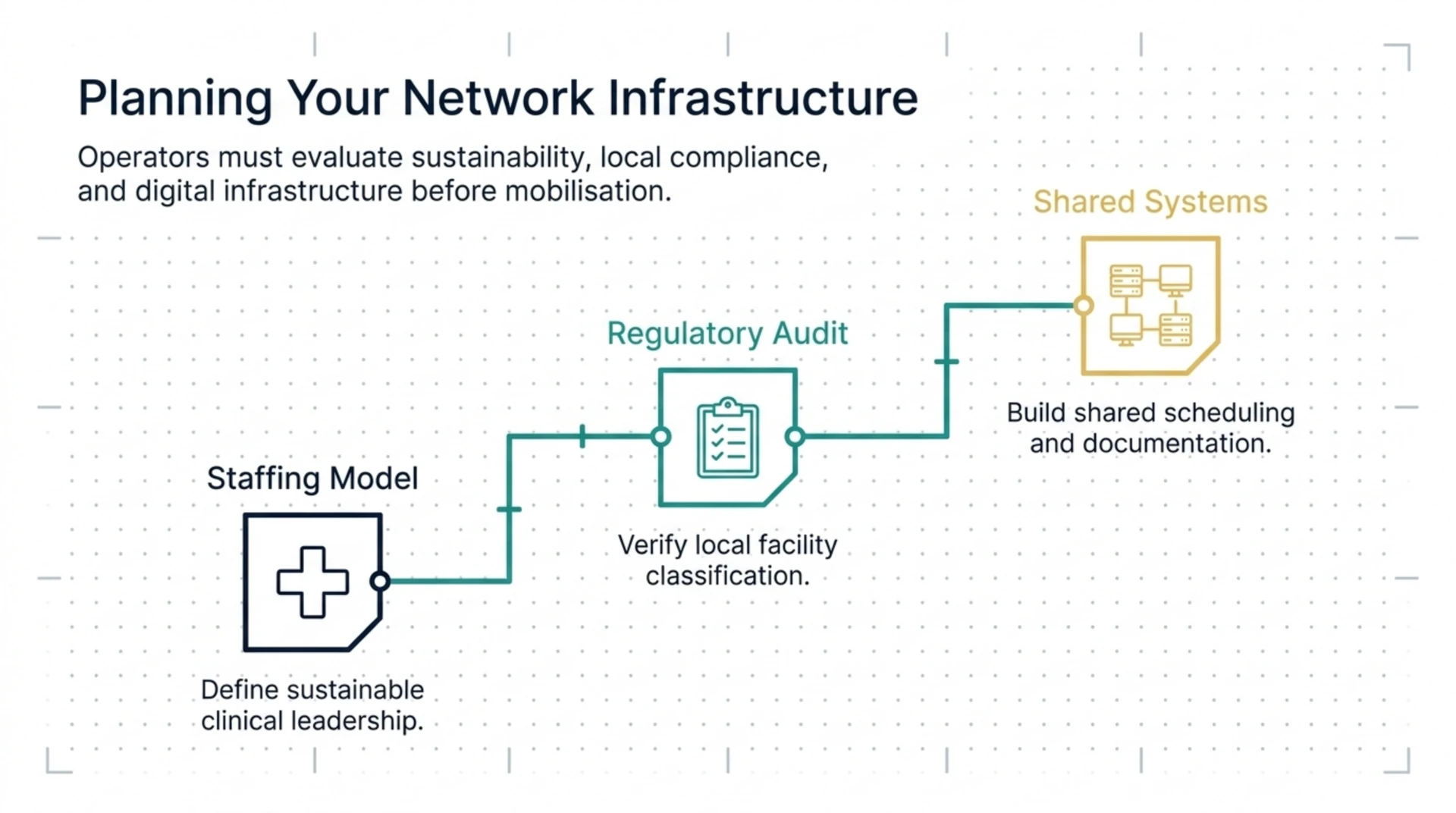
Before committing to a hub and spoke structure, operators generally benefit from reviewing three things: the staffing model they can realistically sustain, the regulatory requirements at each proposed site, and how a shared scheduling and documentation system will be built and maintained across locations. Canada Hyperbarics works from a large and growing base of peer reviewed hyperbaric research, with more than 14,000 studies in our reference database, to support the educational content we publish for clinics and the public, though program design decisions like these are primarily operational rather than clinical.
Related Reading
- Hyperbaric Medical Director Requirements in Canada
- Hyperbaric Chamber Decommissioning and End of Life
- Medications to Hold Before Hyperbaric Oxygen Therapy
If you are evaluating where hyperbaric services are currently delivered in Canada, including which locations operate as part of a larger network, visit our hospitals and regulated facilities page for a current overview.
This content is for informational purposes only and is not medical advice.