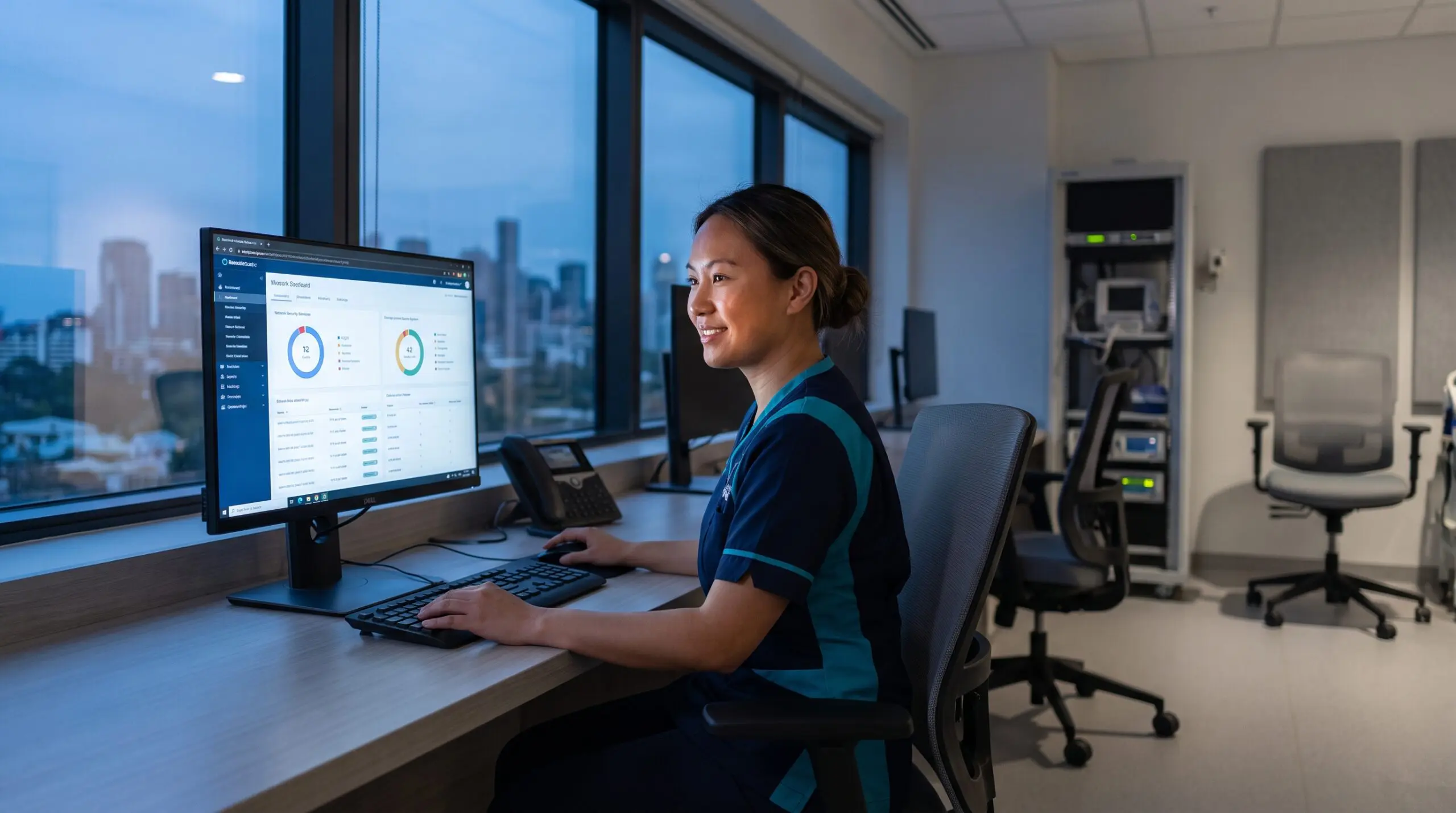
TL;DR: Hyperbaric chamber cybersecurity is the set of practices a clinic uses to protect networked chamber controls, monitoring equipment, and patient data systems from unauthorized access and disruption. For clinic owners and operators, medical device network security is now a day to day operational concern, not just an IT afterthought.
Hyperbaric chamber cybersecurity has become a practical concern for Canadian clinics as more chamber consoles, oxygen delivery monitors, and scheduling systems connect to a facility network. This post walks clinic owners and operators through what hyperbaric chamber cybersecurity and medical device network security actually involve, the risks a networked facility faces, and the concrete steps a clinic can take to reduce them. Canada Hyperbarics publishes this kind of operational and logistical guide to help clinic teams plan with confidence, separate from any discussion of clinical evidence.
What Is Hyperbaric Chamber Cybersecurity?
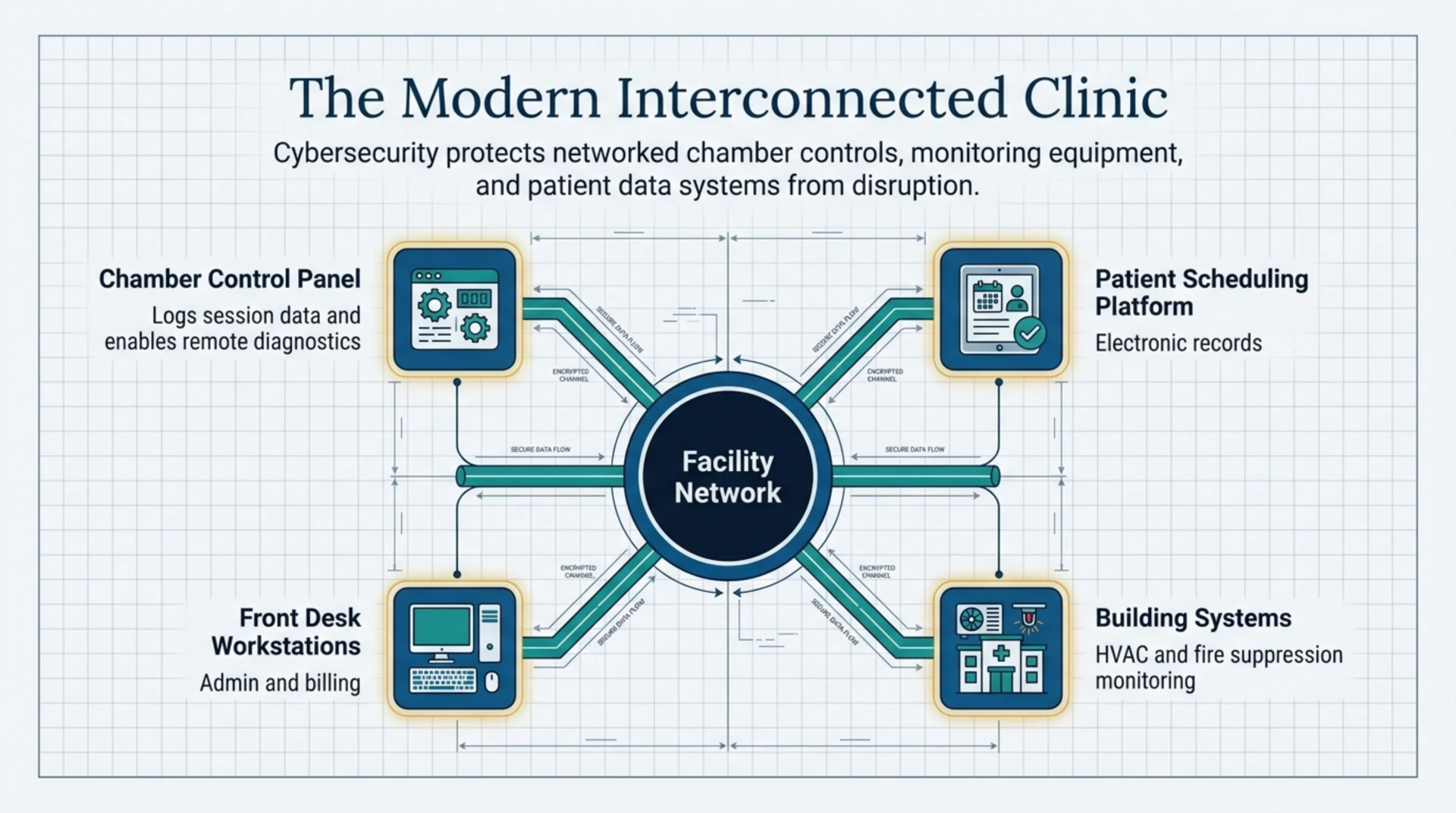
Hyperbaric chamber cybersecurity covers everything a clinic does to keep its networked equipment, software, and patient records safe from tampering, theft, or outage. Modern monoplace and multiplace chambers often pair with digital control panels, pressure and oxygen monitoring displays, and sometimes remote diagnostic connections back to the manufacturer. Each of these is a potential entry point on a clinic’s network, whether or not staff think of it that way day to day.
The goal is not to stop using connected equipment. It is to structure the network, the access controls, and the backup routines so that a single compromised device cannot take down scheduling, patient records, or chamber operations all at once.
Why Does Medical Device Network Security Matter for a Hyperbaric Facility?
A hyperbaric facility usually runs several systems side by side: the chamber control system, a patient scheduling and records platform, front desk workstations, and sometimes building systems like HVAC or fire suppression monitoring. When these all sit on the same flat network, a problem in one area can spread to the others faster than staff can respond.
Connected Chamber Controls
Many newer chamber consoles log session data digitally and some support remote diagnostics from the manufacturer. That connection is useful for maintenance and troubleshooting, but it also means the console is a network endpoint that needs the same access controls as any other device on site.
Patient Records and Scheduling Systems
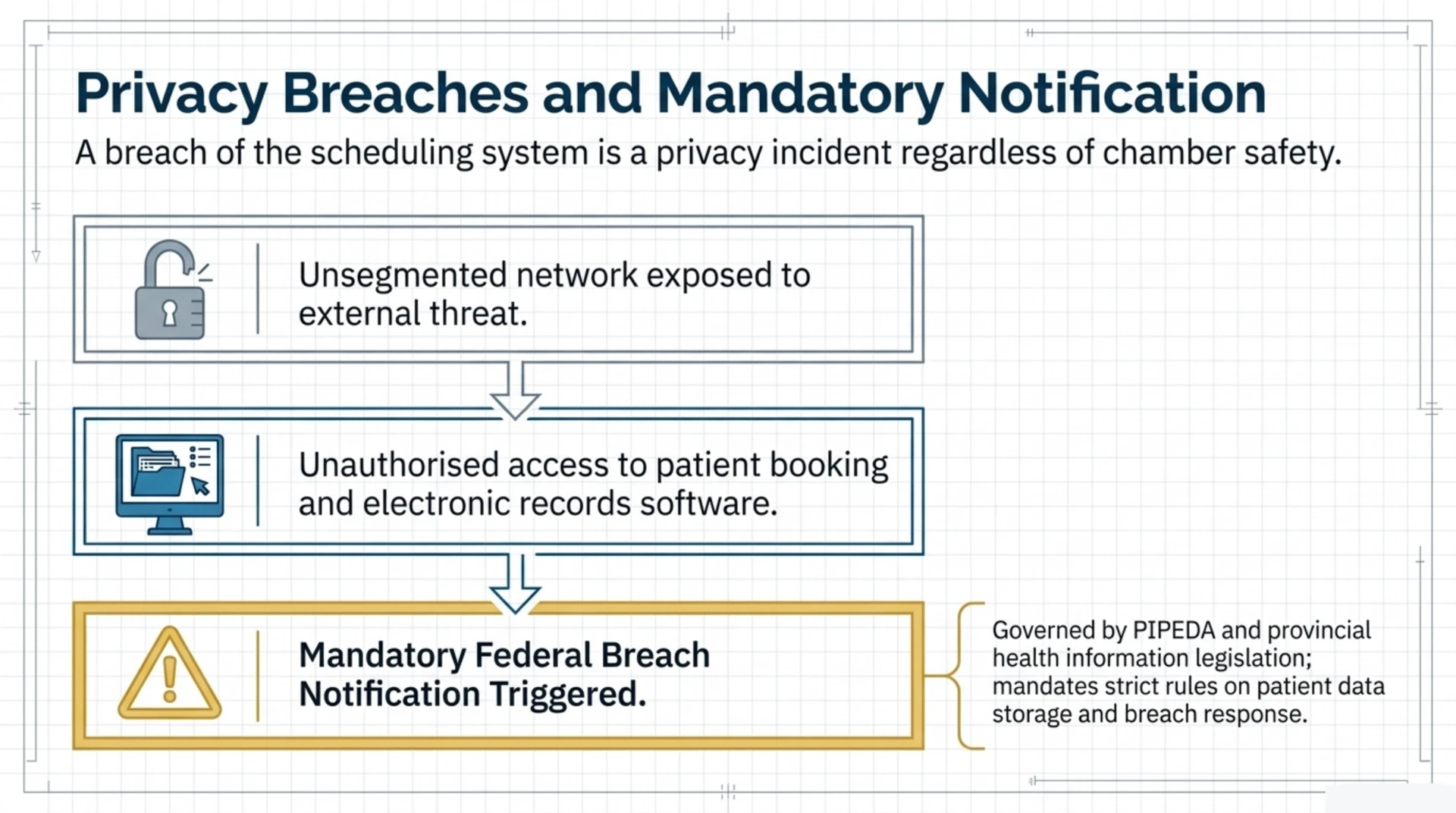
Booking software and electronic records hold identifying information that clinics are obligated to protect. A breach of the scheduling system is a privacy incident even if the chamber hardware itself was never touched. Owners sometimes assume cybersecurity is only about the equipment; in practice the records system is usually the bigger exposure.
What Are the Biggest Cybersecurity Risks for Hyperbaric Clinics?
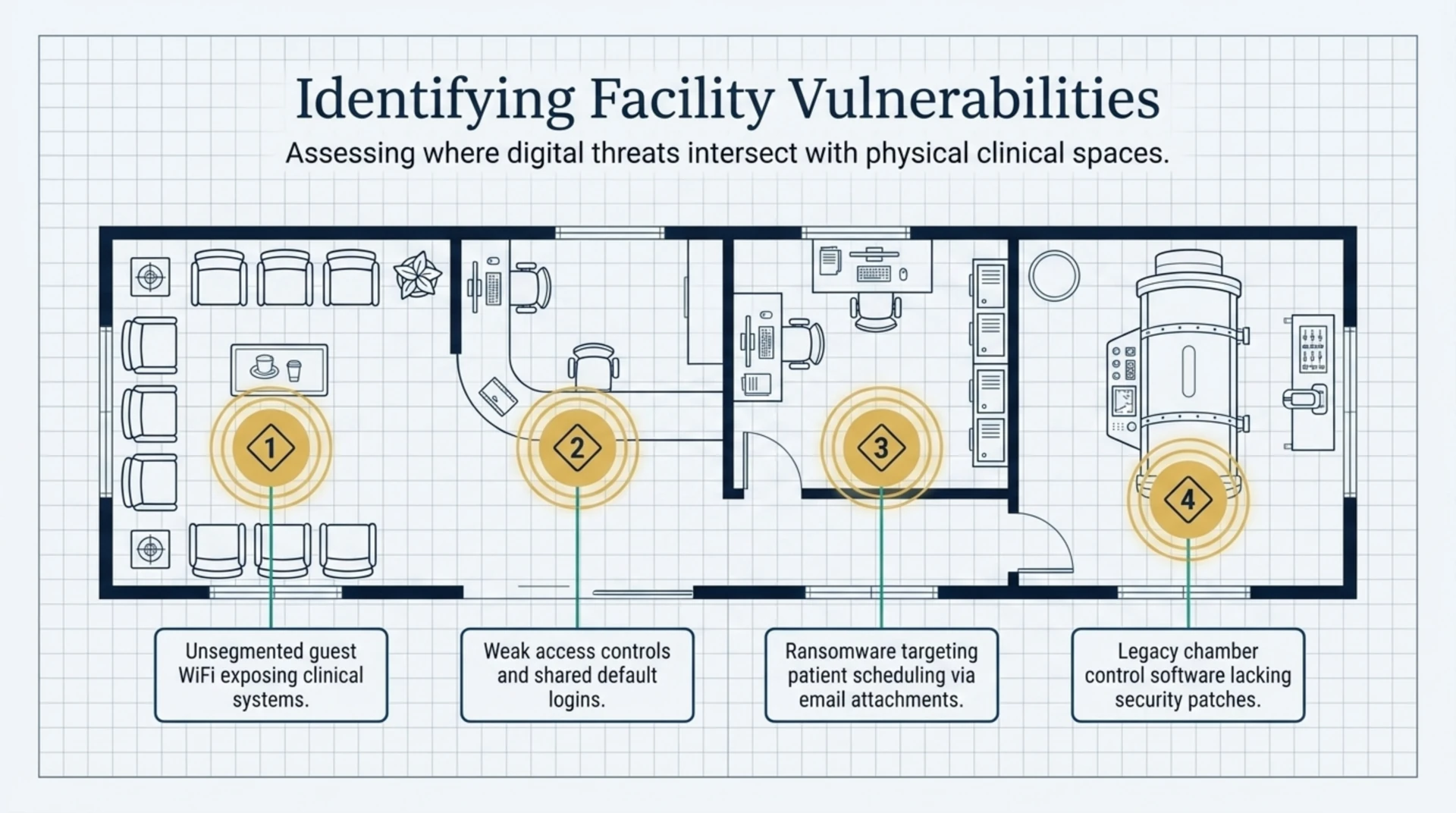
Most incidents at small and mid sized medical facilities fall into a short list of recurring categories. Understanding them helps a clinic owner prioritize where to spend a limited IT budget.
Ransomware and Scheduling Disruption
Ransomware locks a clinic out of its own files until a ransom is paid, and it does not usually target hyperbaric equipment specifically. It targets whatever workstation opens an infected attachment first. The practical risk for a clinic is a scheduling and billing outage, not a chamber malfunction. Losing booking access for even a day can back up a treatment calendar for weeks and create a backlog that is hard to recover from.
Unsegmented Networks
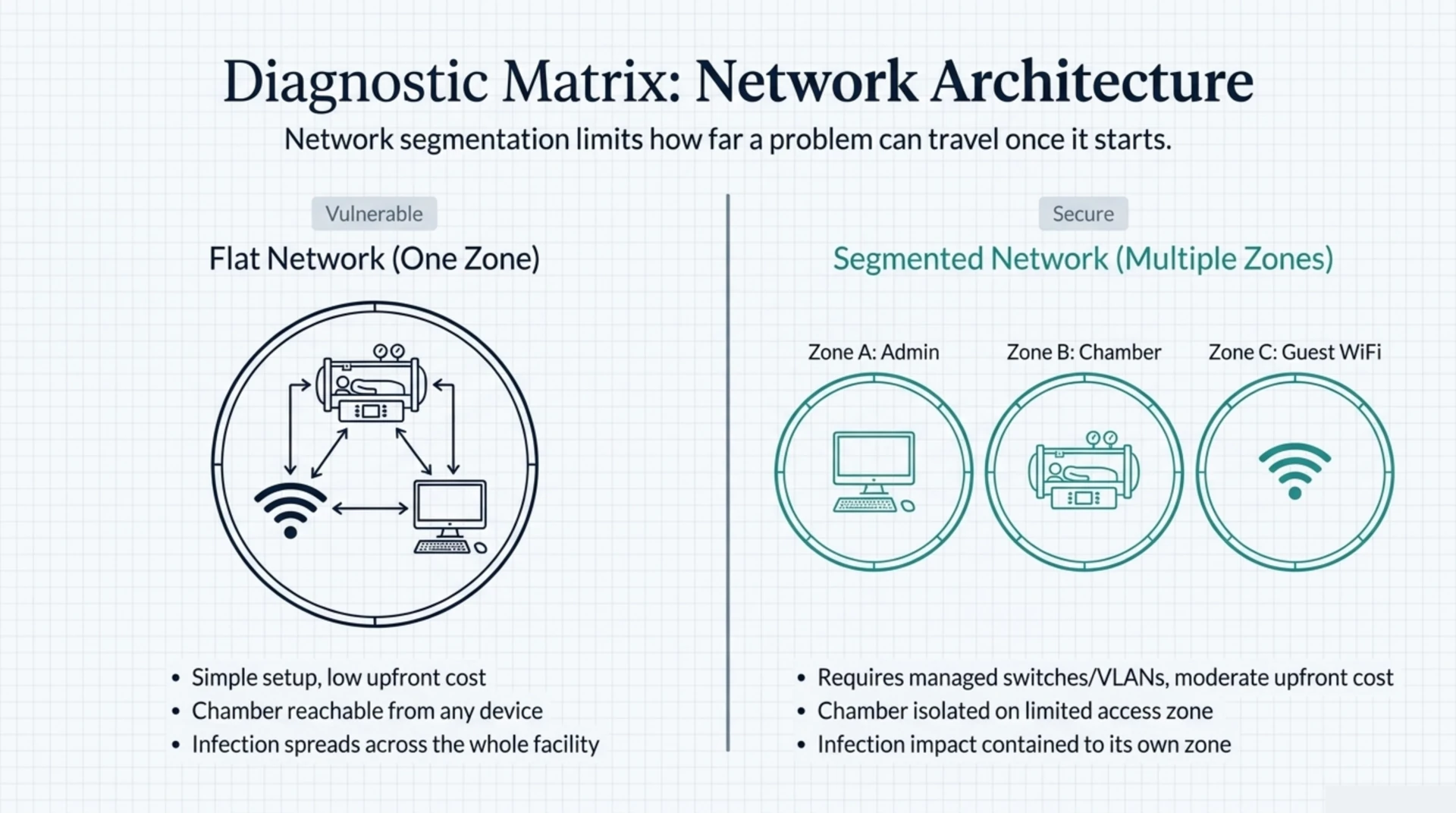
When the front desk computer, the chamber console, and the guest waiting room WiFi all share one network, a weakness in any one of them exposes the rest. Network segmentation, meaning the practice of splitting a network into isolated zones by function, limits how far a problem can travel once it starts.
Legacy Chamber Control Software
Older chamber control systems sometimes run on operating systems the manufacturer no longer patches. These systems can still work reliably for delivering pressurized sessions, but they need extra isolation from the internet because they cannot receive security updates the way newer devices can.
Weak Access Controls
Shared logins, default passwords left in place after installation, and staff accounts that are never deactivated after someone leaves are common findings in facility security reviews. Individual accounts with role based access are a basic and inexpensive fix that most clinics can implement without new hardware.
How Should a Clinic Structure Its Network?
A segmented network keeps clinical equipment, administrative systems, and public WiFi separated so that an incident in one zone does not automatically reach the others. The table below compares a typical flat network to a segmented one.
| Feature | Flat Network (One Zone) | Segmented Network (Multiple Zones) |
|---|---|---|
| Chamber console exposure | Reachable from any device on site | Isolated on its own zone, limited access |
| Guest WiFi risk | Shares the same network as clinical systems | Fully separate from clinical and admin zones |
| Impact of one infected device | Can spread across the whole facility | Generally contained to its own zone |
| Setup complexity | Simple, minimal configuration | Requires managed switches or a firewall with VLANs |
| Typical cost | Low upfront cost | Moderate upfront cost, lower long term risk |
What Regulatory and Privacy Obligations Apply in Canada?
Canadian clinics handling patient information are subject to federal privacy law (PIPEDA) and, depending on the province, additional health information legislation. These rules govern how patient data is stored, who can access it, and what a clinic must do if a breach occurs. A cybersecurity incident that exposes patient records can trigger mandatory breach notification obligations, separate from any equipment downtime the incident also causes.
Clinic owners who want to understand how these obligations intersect with facility operations and accreditation can review our regulatory overview for more detail on the standards Canadian hyperbaric facilities are expected to meet.
What Should a Clinic Look for in an IT or Security Provider?
Few hyperbaric clinics have an in house IT department, so most of this work is contracted out. Choosing the right partner matters as much as the technical controls themselves.
Healthcare Experience
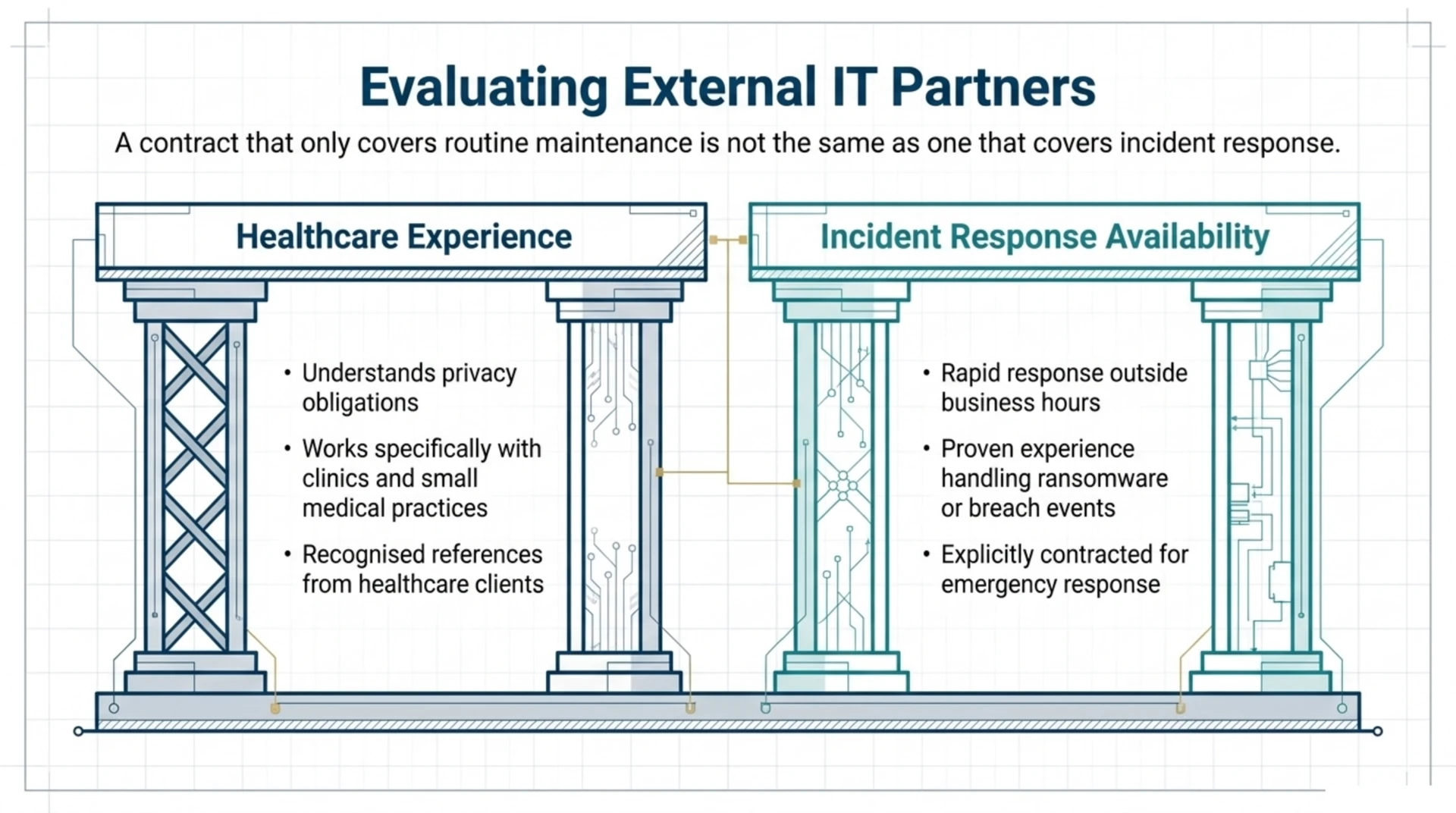
A provider that already works with clinics or small medical practices will understand patient privacy obligations without needing them explained from scratch. Ask for references from other healthcare clients specifically, not general small business clients.
Incident Response Availability
Ask how quickly the provider responds outside business hours and whether they have handled a ransomware or breach event before. A contract that only covers routine maintenance is not the same as one that covers incident response. Clarify this distinction before signing.
Building a Cybersecurity Checklist for Your Facility
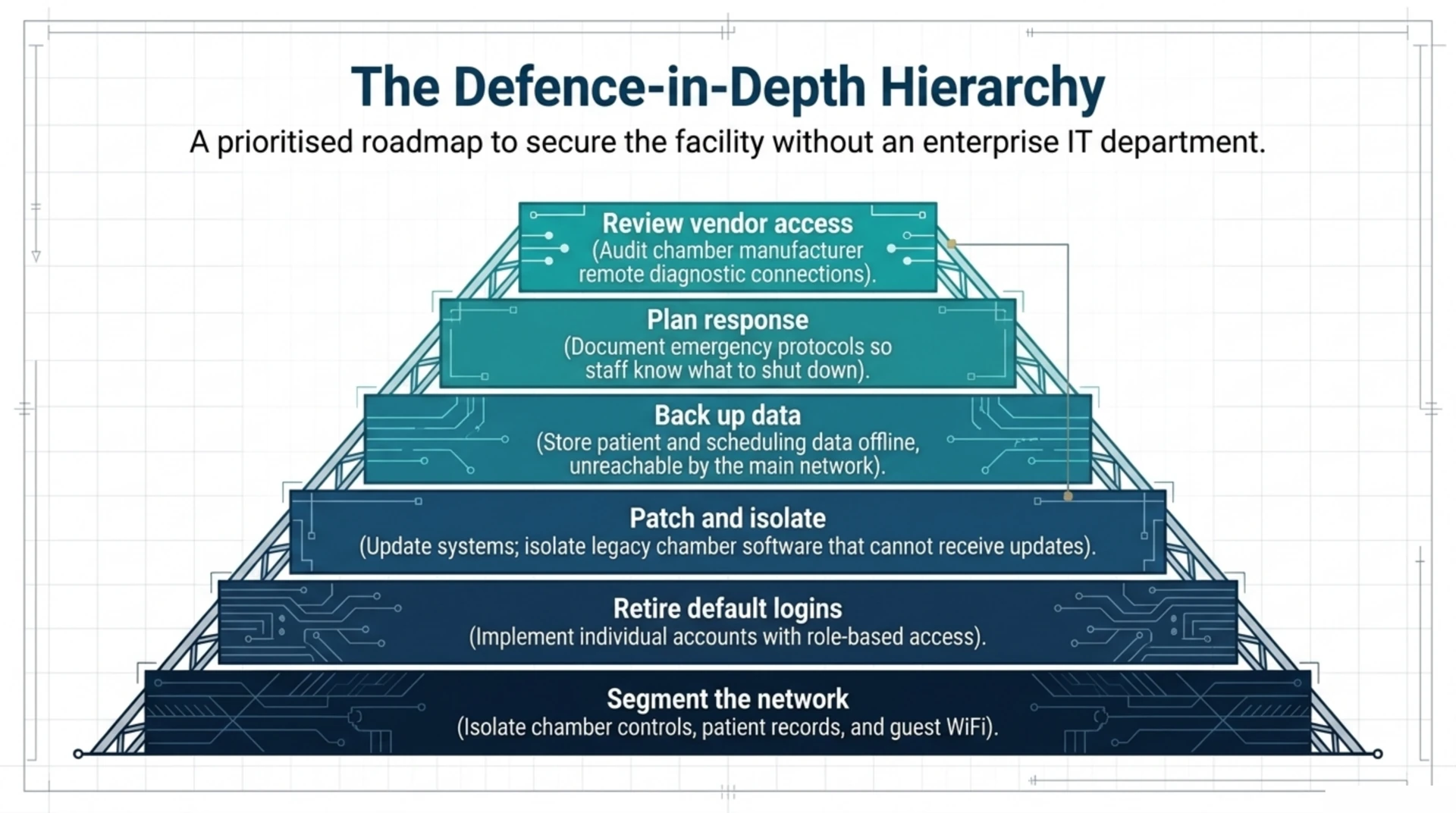
A clinic does not need an enterprise IT department to make meaningful progress. A short, prioritized list covers most of the practical gap between an unsecured facility and a reasonably protected one.
- Segment the network so chamber controls, patient records, and guest WiFi sit on separate zones.
- Retire shared and default logins in favour of individual accounts with role based access.
- Patch what can be patched and isolate legacy systems that cannot receive updates.
- Back up patient and scheduling data on a routine schedule, stored somewhere the main network cannot reach.
- Document an incident response plan so staff know who to call and what to shut down first if something goes wrong.
- Review vendor remote access for chamber manufacturers and confirm when and how their diagnostic connections are used.
Clinics considering these steps as part of a broader facility readiness plan may also find it useful to review the conditions typically referred for hyperbaric consideration on our conditions overview, since scheduling and intake planning often follow directly from that clinical scope. Canada Hyperbarics treats this kind of operational planning as a normal part of running a well organized facility, alongside staffing and scheduling.
Frequently Asked Questions
Does hyperbaric chamber cybersecurity affect how a chamber delivers a session?
No. Cybersecurity practices govern the network, software, and data around the chamber. They do not change how a session is delivered or supervised by clinical staff.
Do older, non-networked chambers need cybersecurity measures?
A chamber with no network connection at all has a much smaller attack surface, but the clinic around it, including scheduling and records systems, is almost always networked and still needs protection.
How often should a clinic review its network security?
Most facility security reviews recommend at least an annual review, with additional checks whenever new equipment, staff, or vendor connections are added.
Who is responsible for cybersecurity at a small hyperbaric clinic?
Responsibility usually sits with the clinic owner or operator, even if the day to day work is contracted to an outside IT provider. The obligation to protect patient data does not transfer away with the contract.
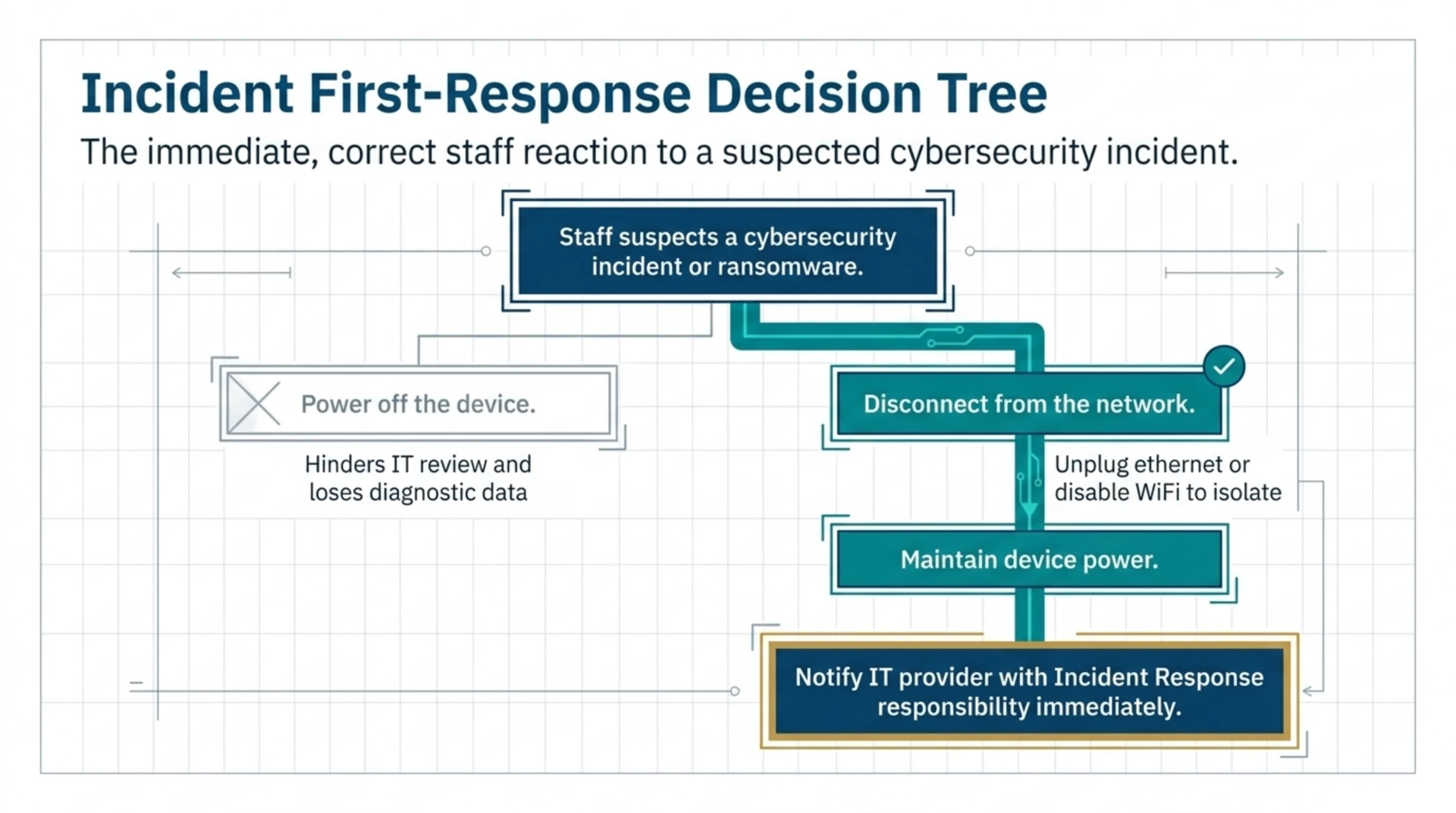
What should staff do if they suspect a cybersecurity incident?
Staff should be trained to disconnect the affected device from the network, avoid powering it off before IT review if possible, and notify whoever holds incident response responsibility immediately.
Does network segmentation slow down chamber operations?
Properly configured segmentation does not add noticeable delay to daily operations. It mainly changes what a device can reach on the network, not how fast it runs.
Related Reading
- Hyperbaric Clinic Liability Insurance & Malpractice Risk
- Hyperbaric Technologist Staffing Ratios & Scheduling
- Hyperbaric Clinic Clinical Trial Site Participation in Canada
Facility operators can also review the frequently asked questions page for common intake and scheduling questions patients ask before their first visit.
This content is for informational purposes only and is not medical advice.
Canada Hyperbarics works with clinics that operate within a structured, secure facility environment. To learn more about where these standards are put into practice, visit our hospitals and regulated facilities page.