
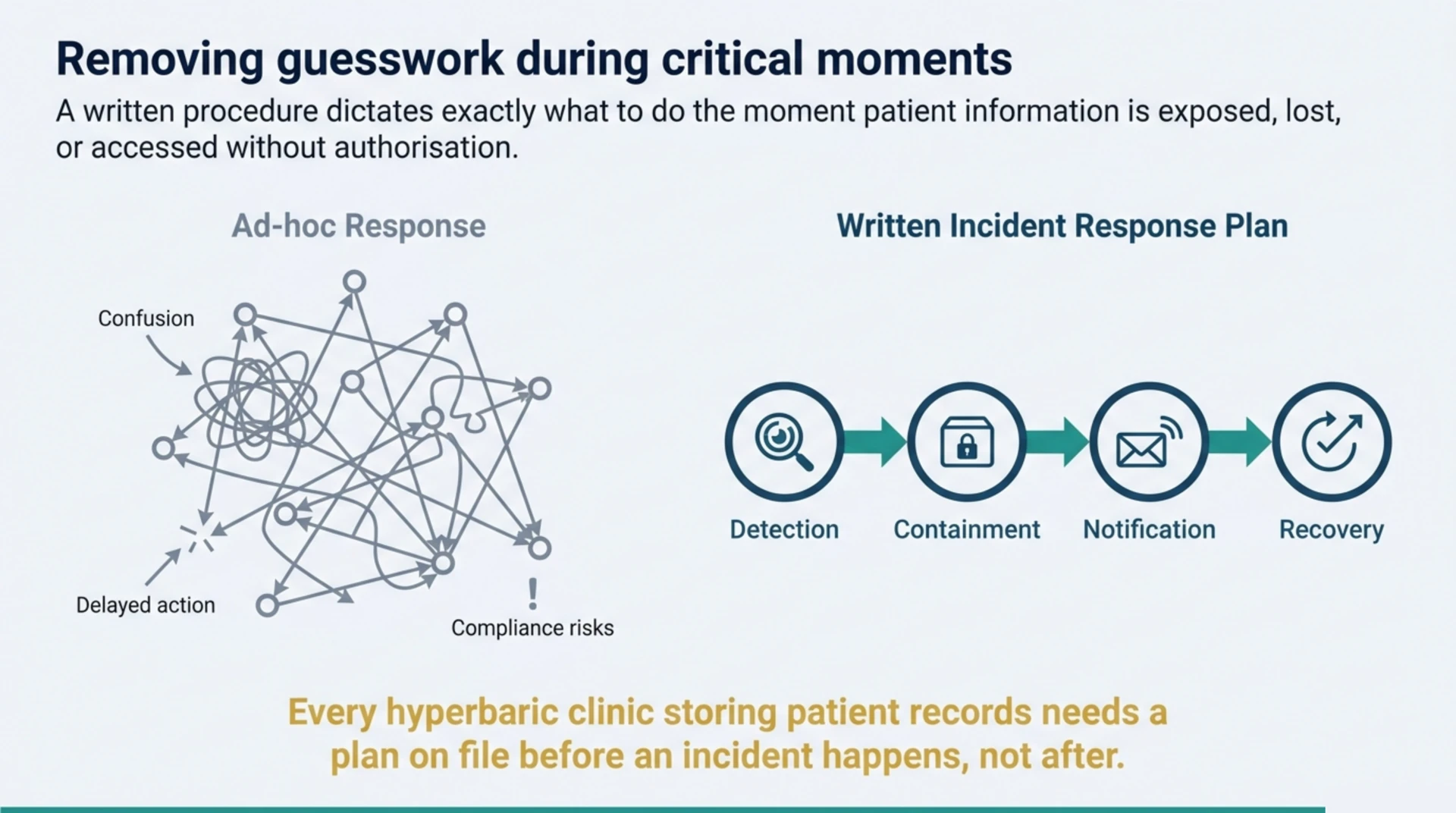
TL;DR: A hyperbaric clinic data breach incident response plan is a written procedure that tells clinic staff exactly what to do the moment patient information may have been exposed, lost, or accessed without authorization. It covers detection, containment, notification, and recovery, and it lines up with Canadian privacy law rather than replacing it. Every hyperbaric clinic that stores patient records, including chamber logs and appointment histories, needs one on file before an incident happens, not after.
A hyperbaric clinic data breach incident response plan matters for a simple reason: clinics hold sensitive health information, and Canadian privacy law treats that information with extra care. Whether a clinic operates one chamber or several, a clear response plan reduces confusion, shortens the time an incident stays unresolved, and helps a clinic meet its legal reporting duties. This post walks through what a plan should contain, who needs to be notified, and how the pieces fit together for a Canadian hyperbaric practice.
What Is a Hyperbaric Clinic Data Breach Incident Response Plan?
A hyperbaric clinic data breach incident response plan is a step-by-step document that a clinic follows when patient data may have been compromised. This can include a stolen laptop, a phishing email that exposes a staff login, a misconfigured booking system, or a lost paper file left in a waiting room.
The plan assigns roles, sets timelines, and lists who must be contacted internally and externally. The goal is to remove guesswork during a stressful moment, so staff are not deciding on the fly whether or how to report an incident.
Why Do Hyperbaric Clinics Face Unique Privacy Risks?
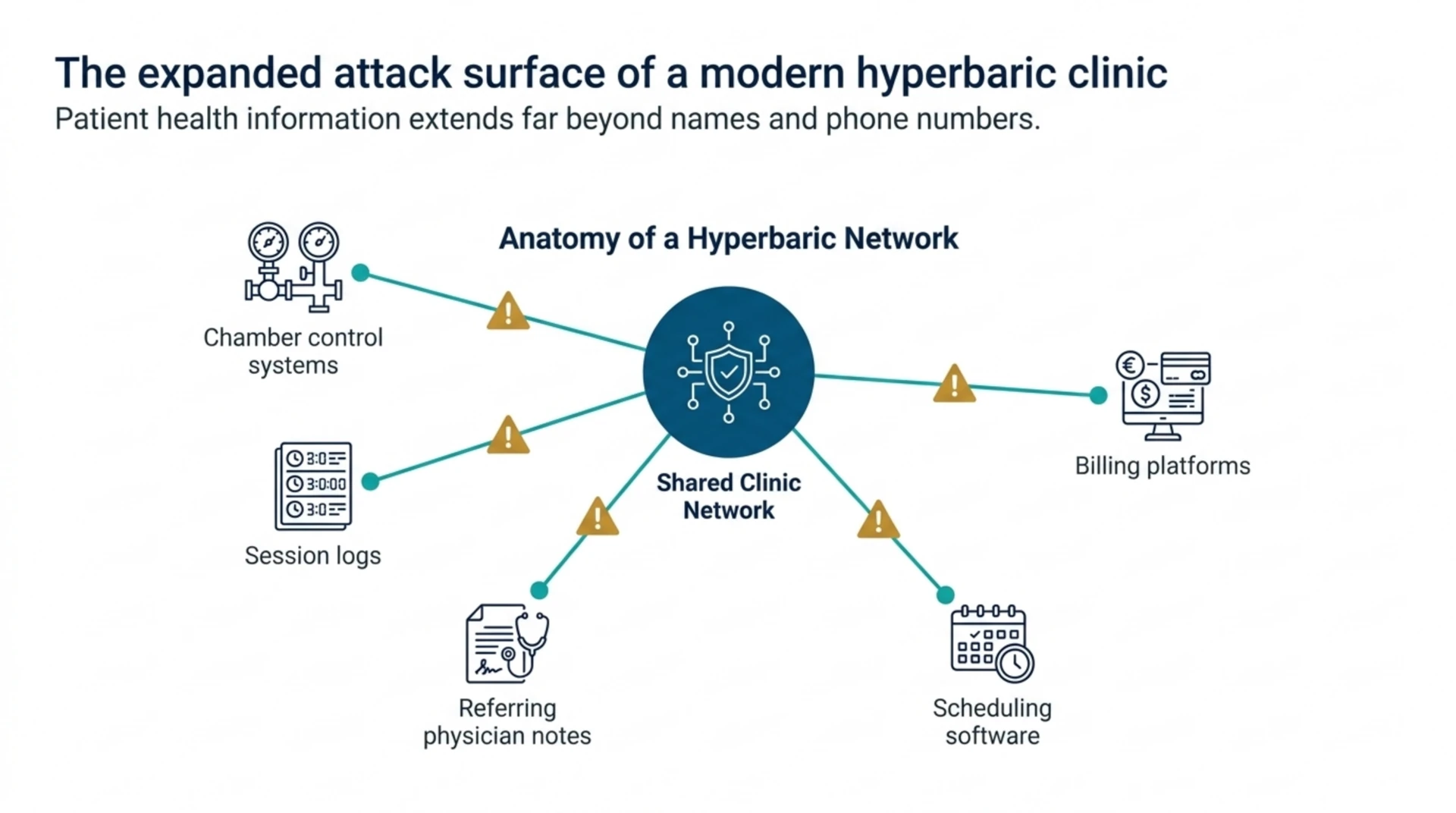
Hyperbaric clinics often collect more than a name and phone number. Chamber session logs, referring physician notes, and monitoring equipment data can all count as personal health information under Canadian law.
Many clinics also connect chamber control systems, scheduling software, and billing platforms to shared networks. That connectivity is convenient, but it widens the number of places a breach could start. Clinics that want a deeper look at securing connected chamber equipment can review our related post on hyperbaric chamber cybersecurity below.
If a breach ever touches records tied to a specific condition a patient was referred for, keep that detail out of any public statement. Point readers instead to our conditions overview for general information rather than describing an individual case.
What Are the Legal Reporting Obligations in Canada?
Canadian clinics generally answer to two layers of privacy law: the federal Personal Information Protection and Electronic Documents Act (PIPEDA), and provincial health-specific privacy legislation where it applies, such as Ontario’s Personal Health Information Protection Act. Which one governs a given clinic depends on the province and the type of organisation.
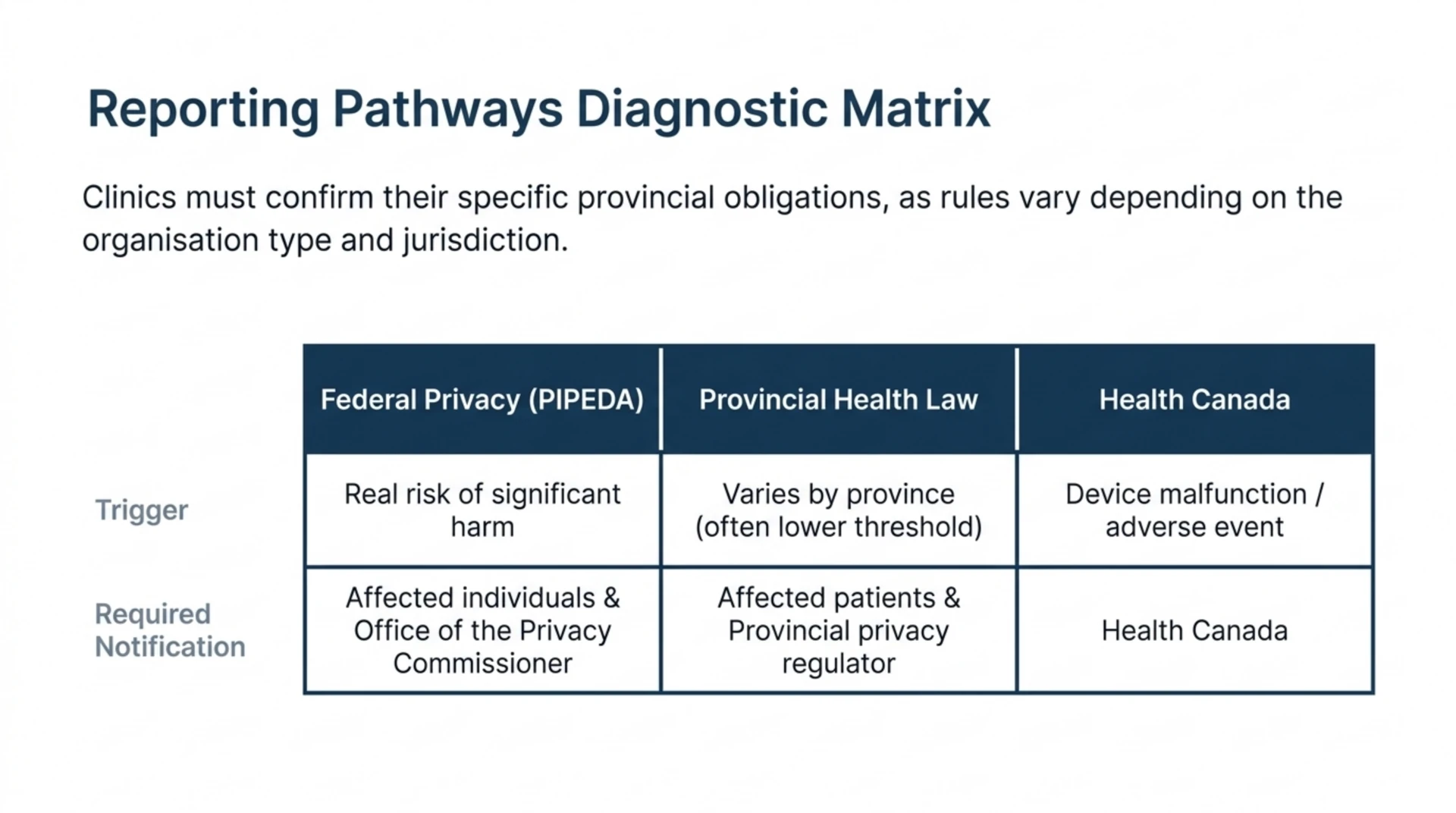
Both frameworks share a common thread: if a breach creates a real risk of significant harm to an individual, the clinic must notify that individual and, in most cases, the relevant privacy regulator. Some medical device incidents may also carry separate reporting duties to Health Canada, which is distinct from a privacy breach report. Clinics unsure which rules apply to them should confirm their obligations through our regulatory resources rather than assuming one law covers everything.
| Reporting Path | Who Is Notified | General Trigger |
|---|---|---|
| Federal privacy law (PIPEDA) | Affected individuals, Office of the Privacy Commissioner of Canada | Real risk of significant harm |
| Provincial health privacy law (where applicable) | Affected patients, provincial privacy regulator | Varies by province, often a lower threshold than PIPEDA |
| Health Canada medical device reporting | Health Canada | Incident involving a licensed medical device malfunction, separate from a data privacy breach |
What Are the Immediate Steps After a Suspected Breach?
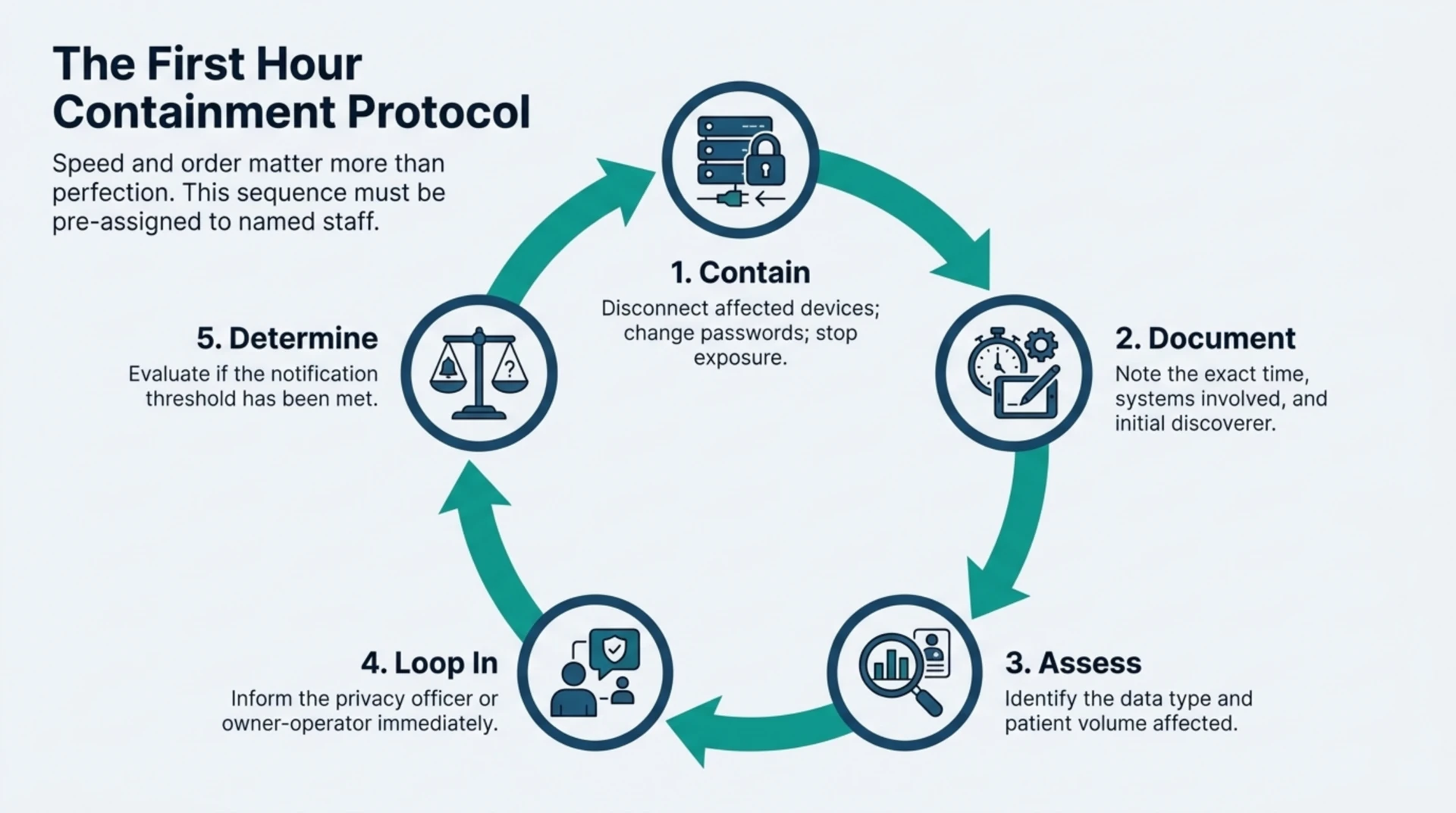
Speed and order matter more than perfection in the first hour. A workable sequence looks like this:
- Contain the incident. Disconnect the affected device or account, change passwords, and stop further data exposure.
- Document what happened. Note the time, the systems involved, and who first noticed the issue.
- Assess the scope. Identify what type of information was involved and how many patients are affected.
- Loop in decision-makers. The clinic’s privacy officer or owner-operator should be informed immediately, not after the fact.
- Determine notification duty. Decide whether the risk threshold for notifying patients and regulators has been met.
This sequence should already be written into the clinic’s plan, with named staff attached to each step, before it is ever needed.
How Should a Clinic Notify Patients and Regulators?
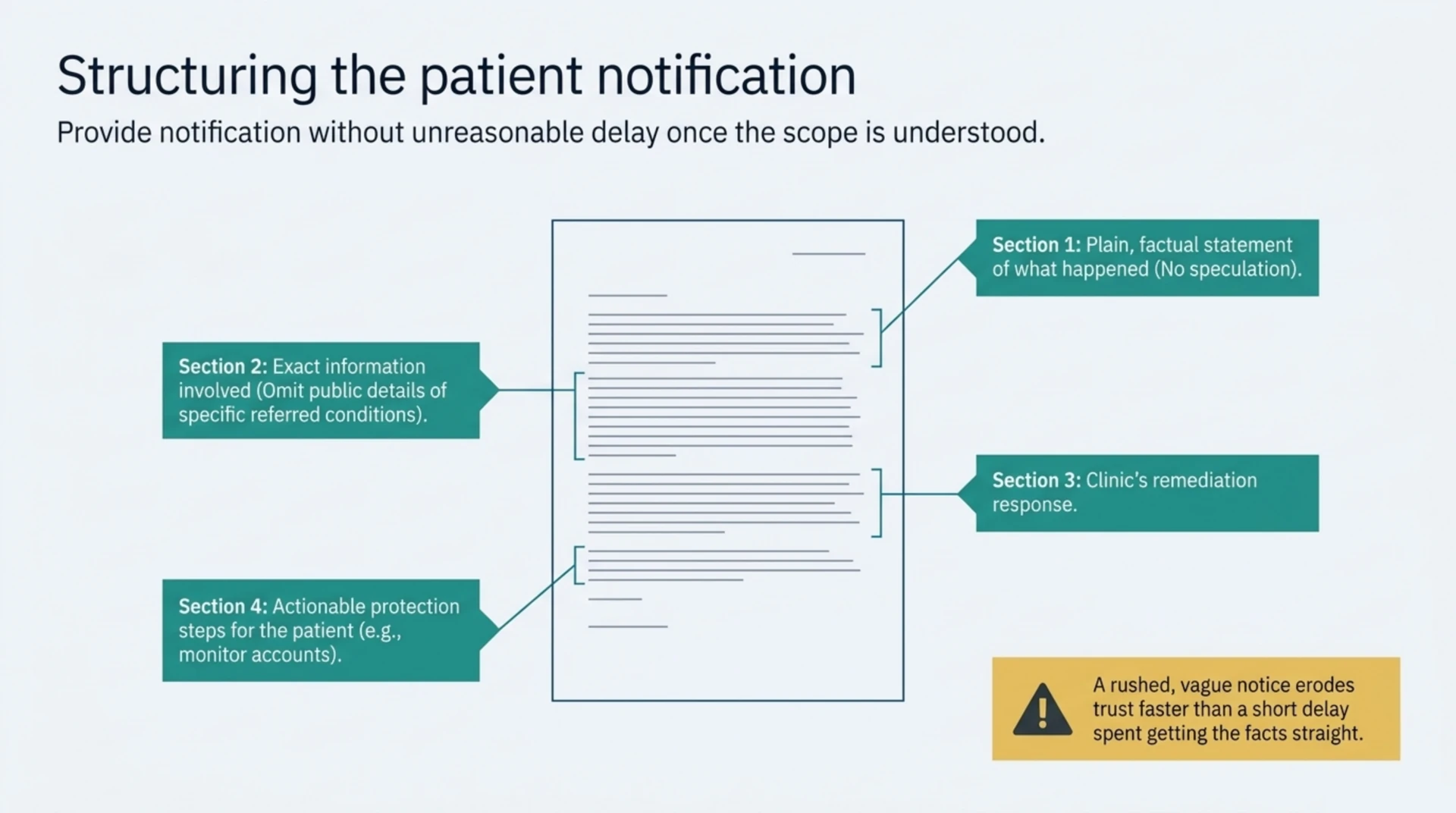
Notification letters or calls should be plain, factual, and free of speculation. Tell affected patients what happened, what information was involved, what the clinic has done in response, and what steps the patient can take to protect themselves, such as watching for unusual account activity.
A rushed, vague notice erodes trust faster than a short delay spent getting the facts straight. That said, most privacy laws expect notification without unreasonable delay once the clinic understands the scope of the incident.
Regulator notification usually follows a similar format but includes more technical detail: how the breach occurred, how many records were affected, and what remediation steps are underway.
How Does This Connect to Insurance and Facility Standing?
Cyber liability insurance and general business insurance policies often specify breach reporting timelines as a condition of coverage. A clinic that delays internal reporting can unintentionally jeopardize a claim. Reviewing policy language alongside the clinic’s incident response plan is worth doing before, not during, an active incident. Our coverage information page outlines how these considerations fit into overall clinic operations.
Facilities operating within hospitals or other regulated environments may also have separate institutional reporting chains layered on top of clinic-level obligations. Coordinating with those chains ahead of time avoids duplicated or conflicting notifications.
Frequently Asked Questions
What counts as a reportable breach under Canadian privacy law?
Generally, a breach is reportable when it creates a real risk of significant harm to an individual, such as identity theft, financial loss, or humiliation. Not every lost file or misdirected email meets that threshold, but each incident should be assessed individually rather than assumed to be minor.
How quickly must a clinic notify affected patients?
Federal and provincial rules generally require notification “as soon as feasible” or “without unreasonable delay” once the risk has been assessed. There is no fixed number of days set out uniformly across all Canadian jurisdictions, which is why an internal plan with clear timelines is useful.
Does Health Canada need to be notified about a data breach?
Health Canada’s incident reporting requirements generally apply to medical device malfunctions or adverse events, which is a separate track from a privacy breach report to a privacy commissioner. A clinic should check both tracks rather than assuming one covers the other.
What should be in a clinic’s incident response plan?
At minimum, a plan should name a privacy lead, outline containment steps, set notification timelines, list regulator contact information, and include a template for patient notification letters. Reviewing the plan annually keeps it current as systems and staff change.
Can a data breach affect a clinic’s insurance coverage?
It can, particularly if a policy requires prompt internal reporting as a condition of coverage. Clinics should confirm their policy’s specific timelines and documentation requirements ahead of any incident.
Who is responsible for privacy compliance at a hyperbaric clinic?
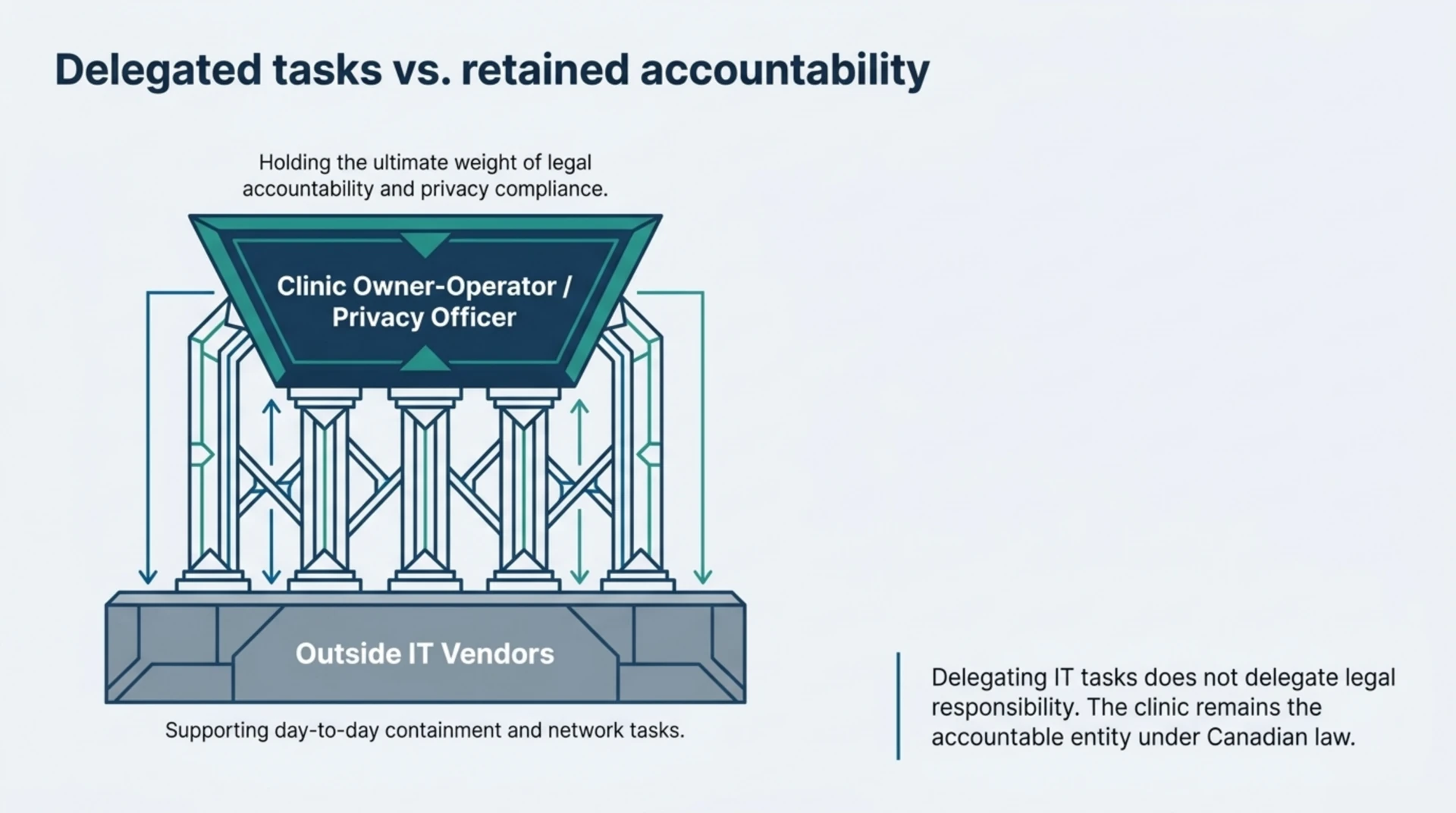
Ultimately, the clinic owner-operator or a designated privacy officer holds responsibility, even when day-to-day IT tasks are handled by outside vendors. Delegating tasks does not delegate legal accountability.
Building the Habit, Not Just the Document
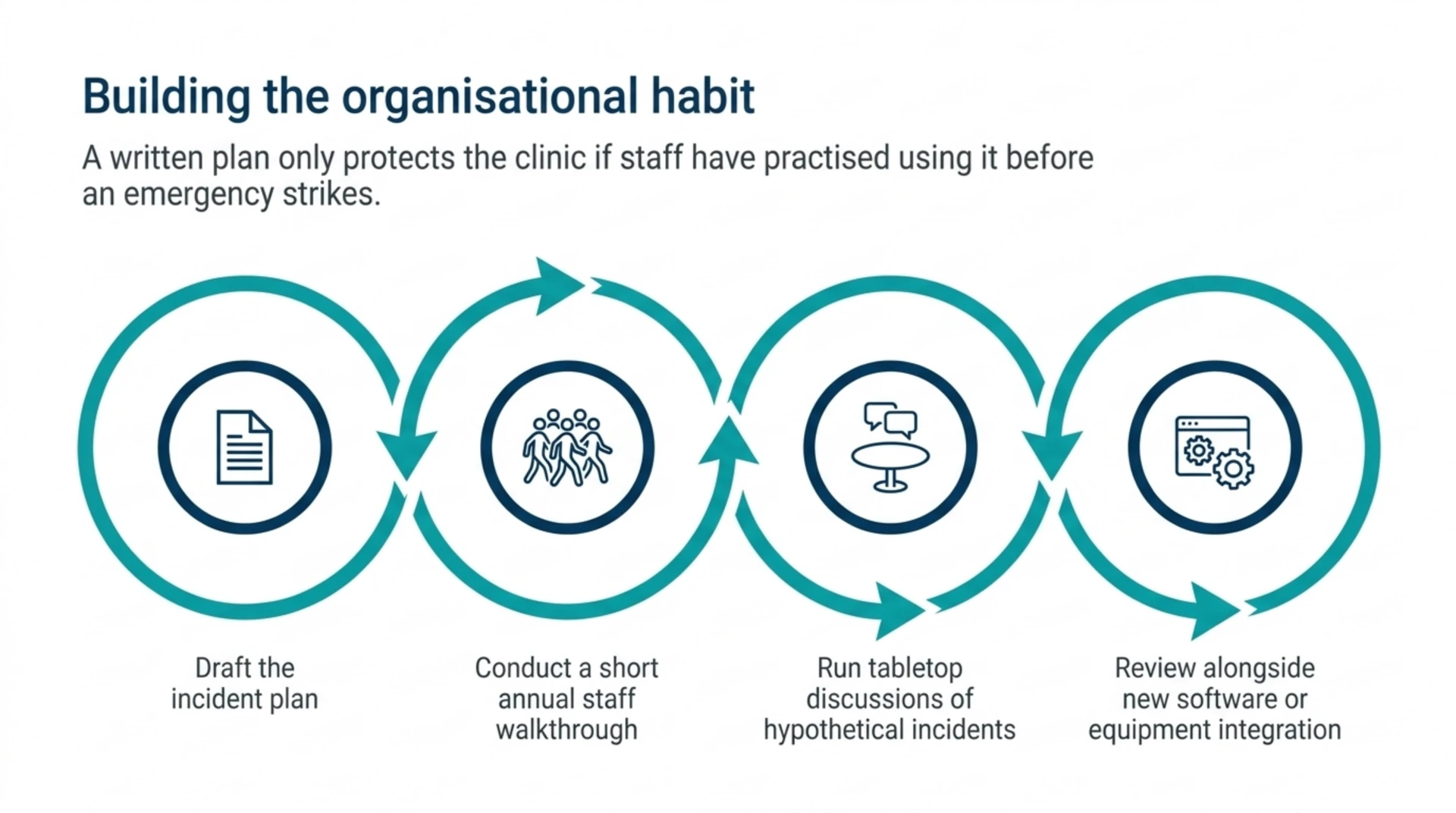
A written plan only helps if staff know it exists and have practised using it. Canada Hyperbarics recommends a short annual walkthrough with clinic staff, even a tabletop discussion of a hypothetical incident, so the plan is familiar rather than theoretical when it is actually needed.
Keeping the plan alongside other operational documents, and reviewing it whenever the clinic adds new software or equipment, keeps it aligned with how the clinic actually operates day to day. Canada Hyperbarics continues to track regulatory updates relevant to Canadian clinics as part of its ongoing educational resources.
Related Reading
- Hyperbaric Chamber Cybersecurity: Medical Device Security
- Hyperbaric Chamber Decommissioning and End of Life
- Medications to Hold Before Hyperbaric Oxygen Therapy
Clinics looking to understand how these standards apply across hospitals and regulated facilities can review our facilities page for further detail.
This content is for informational purposes only and is not medical advice.