
TL;DR: Hyperbaric chamber decommissioning is the structured process a clinic follows to retire a hyperbaric chamber safely at the end of its service life, covering regulatory notification, depressurization, records handling and final disposal or resale. Most multiplace and monoplace chambers reach end of life once certification, parts availability or manufacturer support run out. This guide walks Canadian clinic owners and operators through the steps, costs and record-keeping involved in hyperbaric chamber decommissioning end of life planning.
Every hyperbaric chamber has a working lifespan, and planning for hyperbaric chamber decommissioning end of life is part of running a compliant clinic, not an afterthought. Whether you operate a single monoplace unit or a multiplace chamber serving several patients at once, the equipment eventually reaches a point where continued operation is no longer safe, supportable or cost-effective. Canada Hyperbarics put this guide together for clinic owners and operators who are starting to think about that transition, whether it is five years away or already underway.
What Does Hyperbaric Chamber Decommissioning End of Life Look Like?
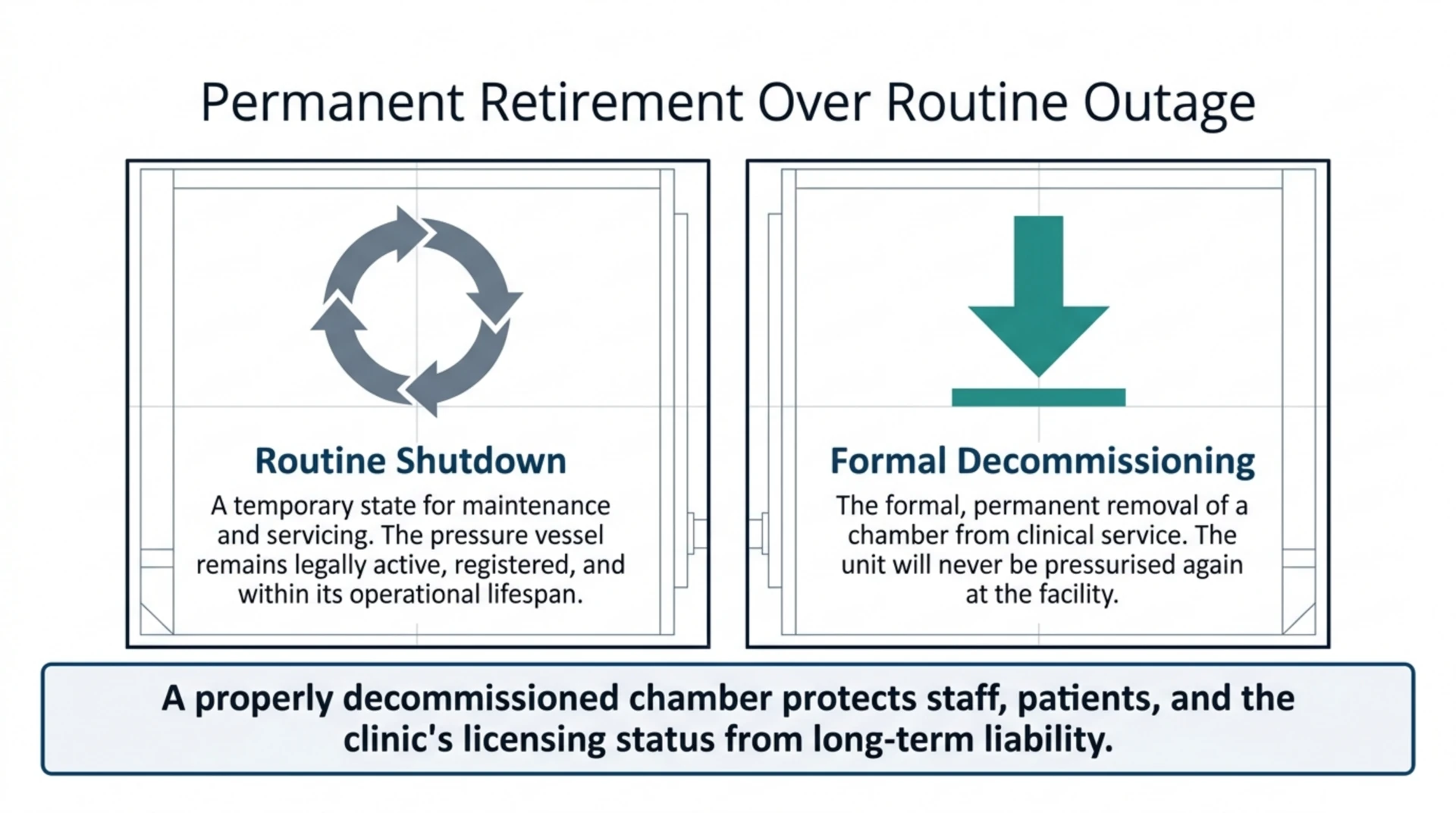
Hyperbaric chamber decommissioning is the formal process of taking a chamber permanently out of clinical service. It is different from a routine shutdown or a maintenance outage. Decommissioning means the chamber will not be pressurized again at your facility, and it triggers a specific sequence of regulatory, mechanical and administrative steps.
A properly decommissioned chamber protects staff, patients and the clinic’s licensing status, even after the equipment itself is gone. Skipping steps, such as failing to notify your regulatory body or leaving gas lines pressurized, can create liability that outlasts the chamber by years.
Why Do Chambers Reach End of Life?
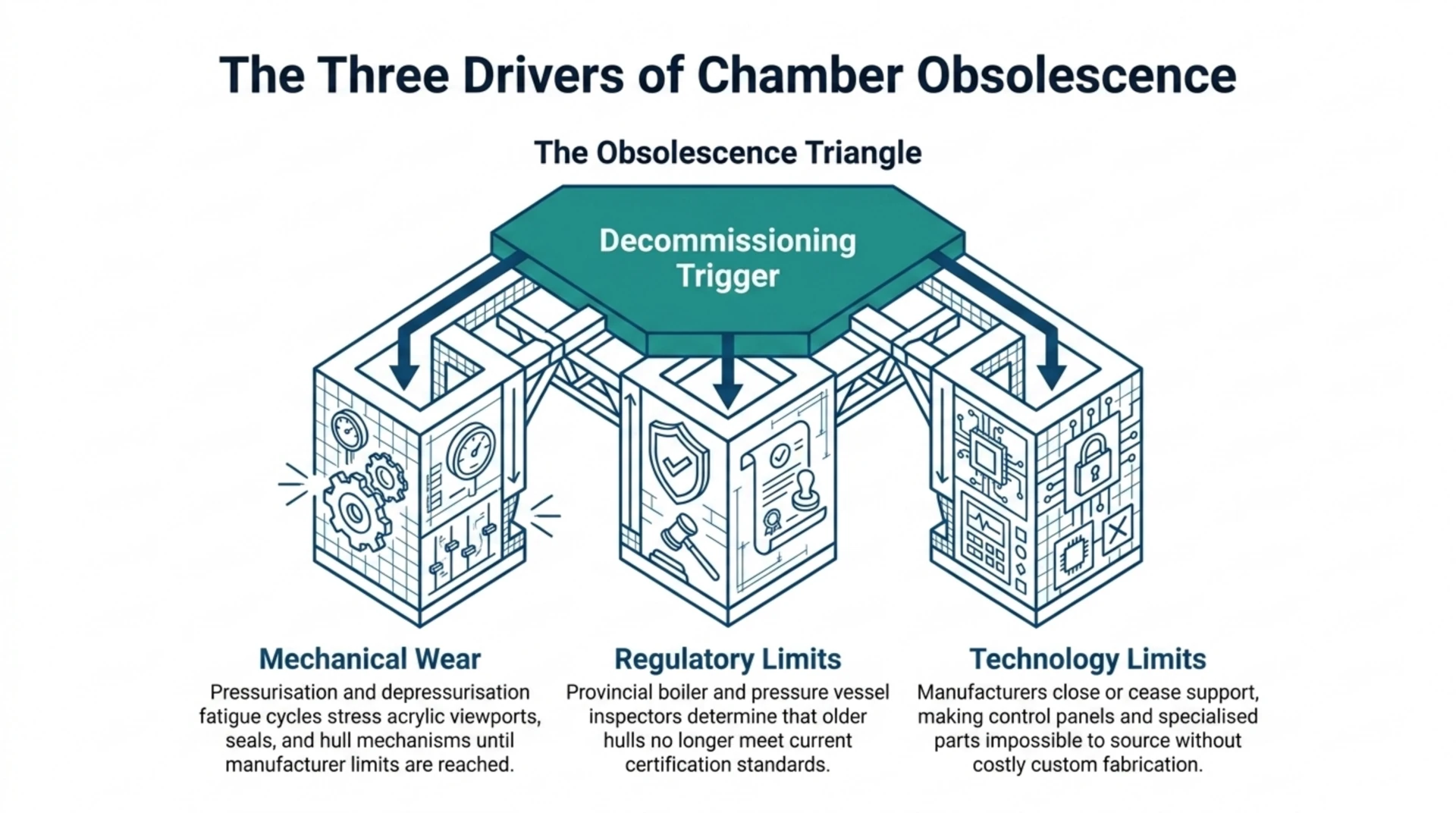
Chambers are pressure vessels, and like any pressure vessel, they have a finite service life. A handful of factors typically drive the decision to decommission.
Mechanical wear and fatigue cycles
Every pressurization and depressurization cycle puts stress on the acrylic viewports, seals, hull and door mechanisms. Manufacturers rate chambers for a certain number of cycles or years, whichever comes first. Once a chamber approaches that limit, continued use requires increasingly frequent inspection and part replacement.
Regulatory and certification limits
In Canada, hyperbaric chambers are pressure vessels subject to provincial boiler and pressure vessel regulations, in addition to medical device oversight. An inspector may determine that a chamber’s hull or fittings no longer meet current certification standards, particularly for older chambers built before current codes were adopted.
Technology and parts obsolescence
Older chambers, especially those from manufacturers that have since closed or stopped supporting a model line, can become difficult to service. When a control panel, oxygen delivery system or seal is no longer manufactured, a clinic may face a choice between a costly custom fabrication and retiring the unit.
When Should a Clinic Start Planning Decommissioning?
Most operators start planning well before a chamber is forced out of service by a failed inspection. A good rule of thumb is to begin decommissioning planning three to five years before a chamber’s rated service life ends, so the clinic has time to budget for a replacement, arrange financing and avoid a gap in service.
Signs that it is time to start the conversation include repeated part sourcing delays, inspection findings that require exceptions or waivers, rising annual maintenance costs relative to chamber value, and a manufacturer discontinuing support for your model.
How Do You Decommission a Hyperbaric Chamber Safely?
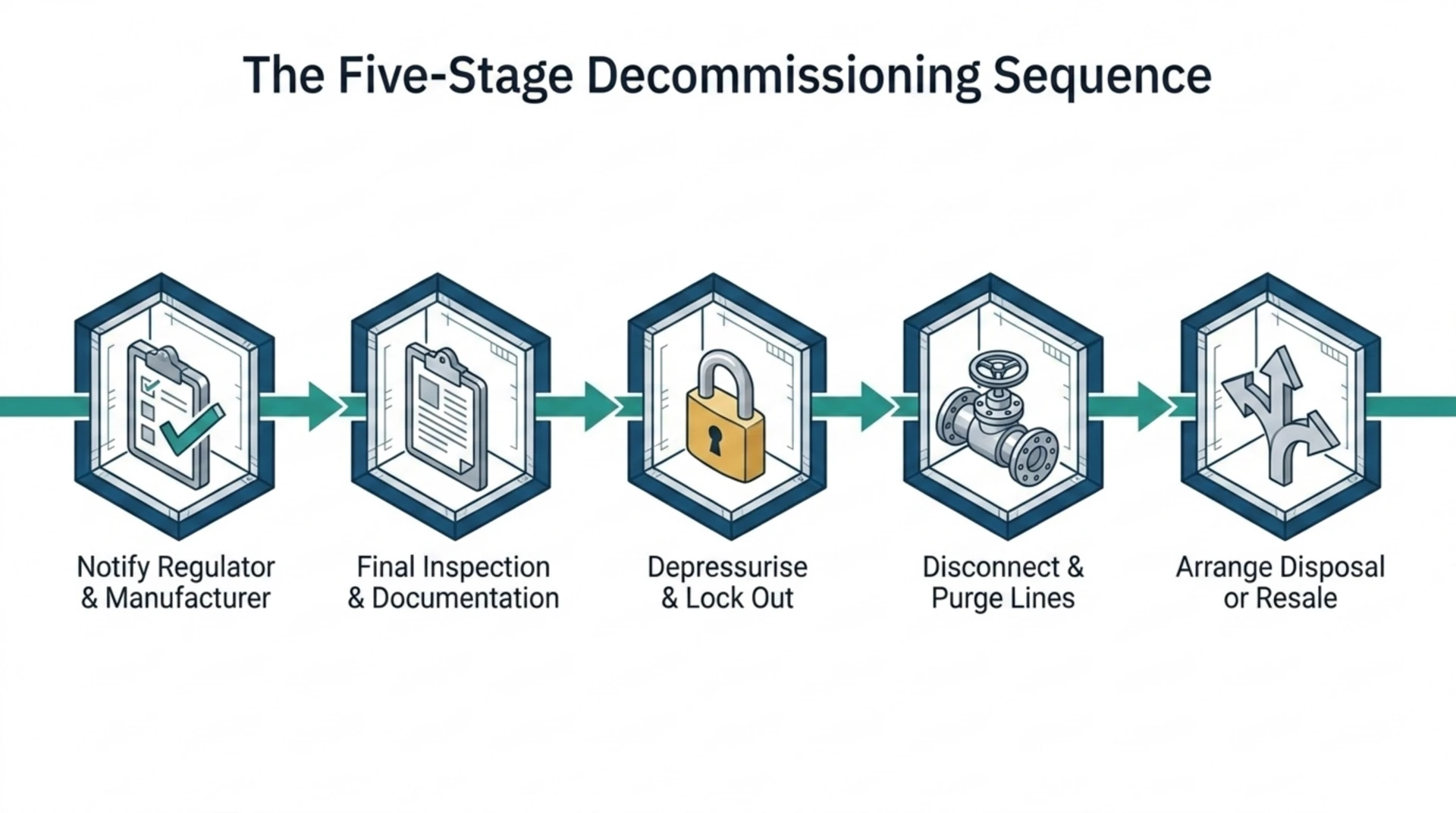
The exact sequence varies by province and by chamber type, but the core steps are consistent across Canadian clinics.
Step 1: Notify your regulator and manufacturer
Contact your provincial pressure vessel authority and your chamber manufacturer or service provider to confirm the notification requirements for taking a unit permanently out of service. Some jurisdictions require formal deregistration of the pressure vessel.
Step 2: Complete a final inspection and documentation review
Before shutdown, schedule a final inspection with your certified hyperbaric technician. This creates a clean record of the chamber’s condition at the time of retirement, which matters for both liability and, if you plan to resell, for the buyer’s due diligence.
Step 3: Depressurize and lock out the system
The chamber must be fully depressurized and mechanically locked out before any disconnection work begins. This includes isolating and bleeding down the oxygen supply, shutting off compressed air lines, and physically tagging the control panel to prevent accidental startup.
Step 4: Disconnect and purge oxygen and gas lines
Oxygen supply lines, whether from cylinders, a bulk tank or a concentrator bank, need to be safely purged and capped by a technician familiar with medical gas systems. This step should never be handled as a general facilities task, since residual oxygen in lines presents a fire risk.
Step 5: Arrange certified disposal, resale or storage
Once the chamber is safe and disconnected, the clinic decides whether to scrap, resell or place the unit in storage. Each path has different documentation and liability implications, covered in the comparison table below.
Should You Refurbish, Resell or Scrap the Chamber?
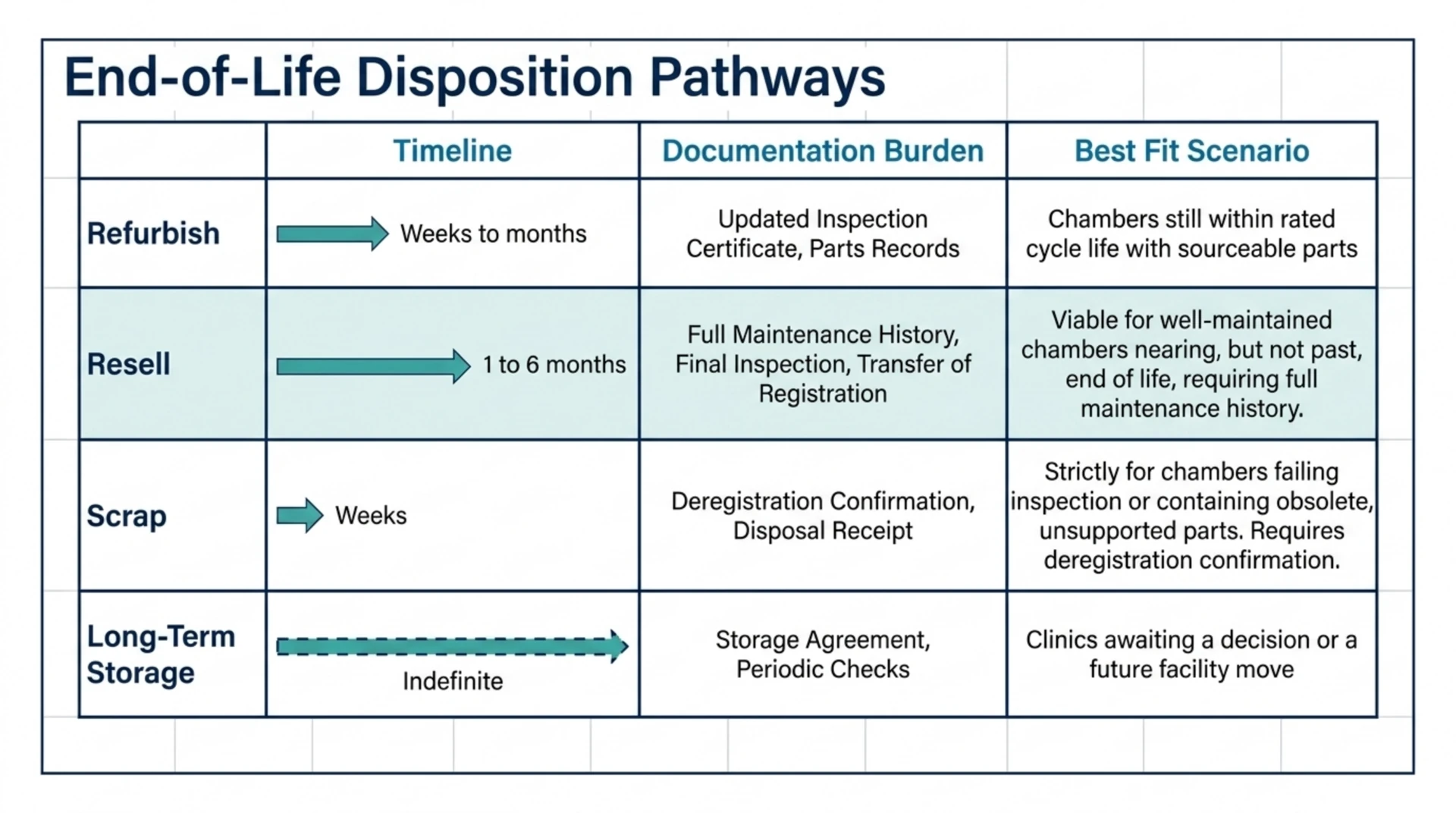
The right path depends on the chamber’s age, condition and your clinic’s timeline. The table below summarizes the trade-offs Canadian clinic owners typically weigh.
| Option | Typical timeline | Documentation needed | Best fit |
|---|---|---|---|
| Refurbish and continue using | Weeks to months | Updated inspection certificate, parts records | Chambers still within rated cycle life with sourceable parts |
| Resell to another facility | 1 to 6 months | Full maintenance history, final inspection report, transfer of registration | Chambers in good mechanical condition nearing, but not past, end of life |
| Scrap and dispose | Weeks | Deregistration confirmation, disposal or recycling receipt | Chambers that failed inspection or have obsolete, unsupported parts |
| Long-term storage | Indefinite | Storage agreement, periodic condition checks | Clinics awaiting a decision or a future facility move |
Resale is often overlooked, but a well-maintained multiplace chamber can have real value to another clinic or training facility, provided the maintenance records are complete and the pressure vessel registration can be transferred cleanly.
What Happens to Chamber Records and Patient Data?
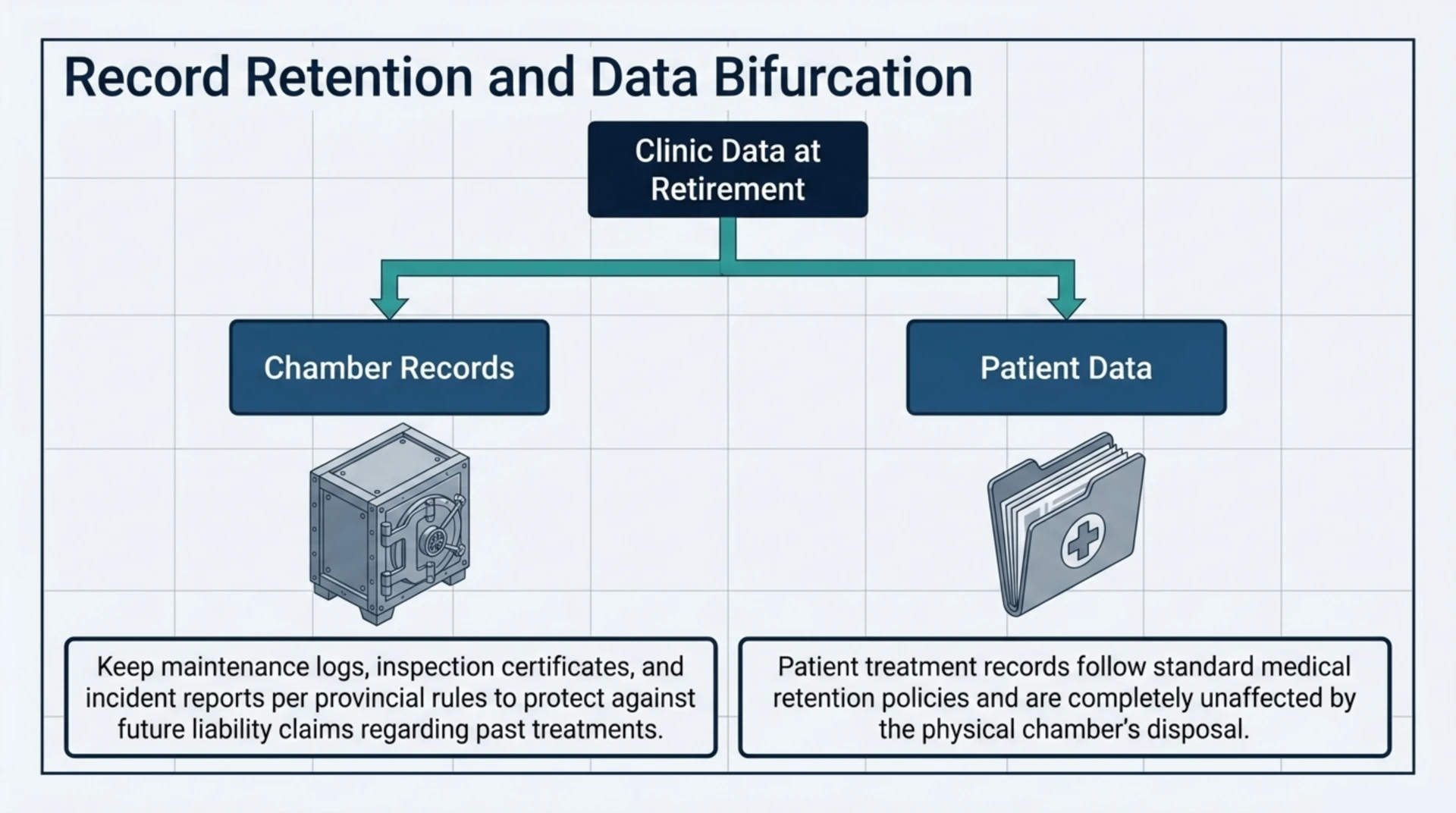
Chamber decommissioning is about the equipment, not patient files, but the two intersect. Maintenance logs, inspection certificates and incident reports tied to the chamber should be retained according to your provincial record retention rules, separate from any clinical patient records. Keep chamber-specific records even after the unit is gone, since a regulator or an insurer may request them years later if a question arises about a treatment delivered while the chamber was in service.
Patient treatment records follow your clinic’s standard medical records retention policy and are not affected by the chamber’s disposal.
What Does Decommissioning Cost a Clinic?
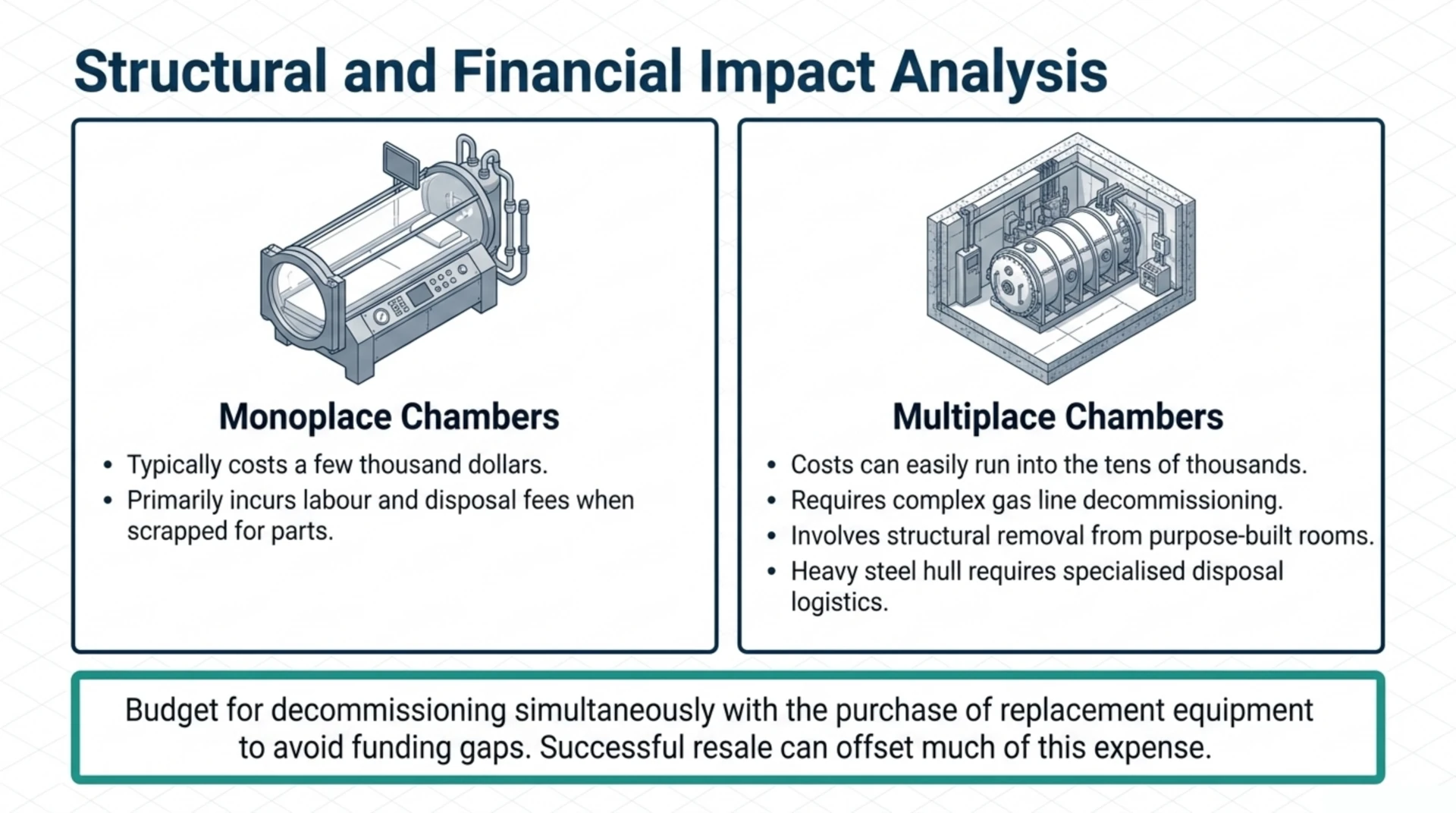
Costs vary widely depending on chamber size and disposal route. A monoplace chamber scrapped for parts typically costs a few thousand dollars in labour and disposal fees. A multiplace chamber, particularly one requiring structural removal from a purpose-built room, can run into the tens of thousands once you account for gas line decommissioning, structural work and disposal of the steel hull.
Resale can offset much of this cost, and in some cases fully covers the decommissioning expense if the chamber is still in demand. Budgeting for decommissioning alongside a replacement chamber purchase, rather than treating it as a separate surprise cost, is the approach most Canadian clinics find works best.
How Does Decommissioning Affect Accreditation and Coverage?
If your clinic holds facility accreditation, your accrediting body will typically want documentation that the retired chamber was properly deregistered and that any replacement equipment meets current standards before it is brought into service. Review your facility’s specific requirements on our regulatory information page.
Decommissioning can also intersect with insurance and billing coverage questions, particularly during the transition period between chambers. Clinics working through funding or coverage arrangements should check our coverage overview before a gap in service occurs.
For clinicians and facility operators researching where HBOT is used clinically, a condition clinicians may consider HBOT for is covered on our conditions pages, which draw on Canada Hyperbarics’ library of over 14,000 peer-reviewed studies indexed by condition. Decommissioning a chamber does not change what conditions are studied, only which facility can currently provide treatment, so patients and referring clinicians should confirm active service status directly with a facility. See our conditions overview for that background.
Frequently Asked Questions
How long does a hyperbaric chamber last before decommissioning?
Most chambers are rated for 15 to 25 years of service, or a set number of pressurization cycles, whichever limit is reached first. Actual service life depends on maintenance history, usage frequency and manufacturer support.
Can a decommissioned hyperbaric chamber be resold?
Yes, provided the chamber passed its final inspection, has complete maintenance records, and the pressure vessel registration can be transferred to the new owner under your provincial rules.
Who is allowed to disconnect a chamber’s oxygen supply?
Disconnection and purging of medical gas lines should only be performed by a certified hyperbaric technician or medical gas systems specialist, never as a general facilities or maintenance task.
Do we need to notify a regulator before decommissioning a chamber?
In most Canadian provinces, yes. Pressure vessels are registered with a provincial authority, and taking one permanently out of service usually requires formal deregistration or notification.
What records should a clinic keep after a chamber is decommissioned?
Retain maintenance logs, inspection certificates, incident reports and deregistration confirmation according to your province’s record retention requirements, even after the chamber is removed from the facility.
Is decommissioning covered by a facility’s existing insurance policy?
This varies by policy and insurer. Confirm with your broker whether decommissioning, transport and disposal are covered separately from your standard facility policy.
Related Reading
- Hyperbaric Chamber Cybersecurity: Medical Device Security
- Hyperbaric Clinic Clinical Trial Site Participation in Canada
- Medications to Hold Before Hyperbaric Oxygen Therapy
Retiring a chamber is a milestone in a clinic’s life cycle, not a failure of planning. With the right notification, documentation and disposal steps, hyperbaric chamber decommissioning end of life can be handled safely and without disruption to patient care. To see how currently operating chambers are run day to day, visit Canada Hyperbarics’ overview of hospitals and regulated facilities.
This content is for informational purposes only and is not medical advice.