
TL;DR: Hyperbaric clinic liability insurance is a category of business coverage that protects a hyperbaric facility, its physicians, and its technologists against malpractice and negligence claims tied to chamber operations. For a Canadian clinic, an adequate policy typically bundles general liability, professional or malpractice liability, and equipment-specific riders, with premiums shaped by staffing ratios, documented safety protocols, and Health Canada device compliance.
Hyperbaric clinic liability insurance is the coverage a hyperbaric oxygen therapy (HBOT) facility carries to manage its exposure to malpractice claims, equipment incidents, and patient safety events. For clinic owners and operators weighing hyperbaric clinic liability insurance malpractice risk against their operating budget, the decision touches staffing, documentation, and how the facility is described to patients. Canada Hyperbarics covers this topic because insurance decisions sit alongside clinical and regulatory choices, not apart from them.
This article is a process guide, not a clinical review. It walks through what liability coverage typically includes, what drives premiums up or down, and where a clinic’s own protocols intersect with its insurability.
What Is Hyperbaric Clinic Liability Insurance?
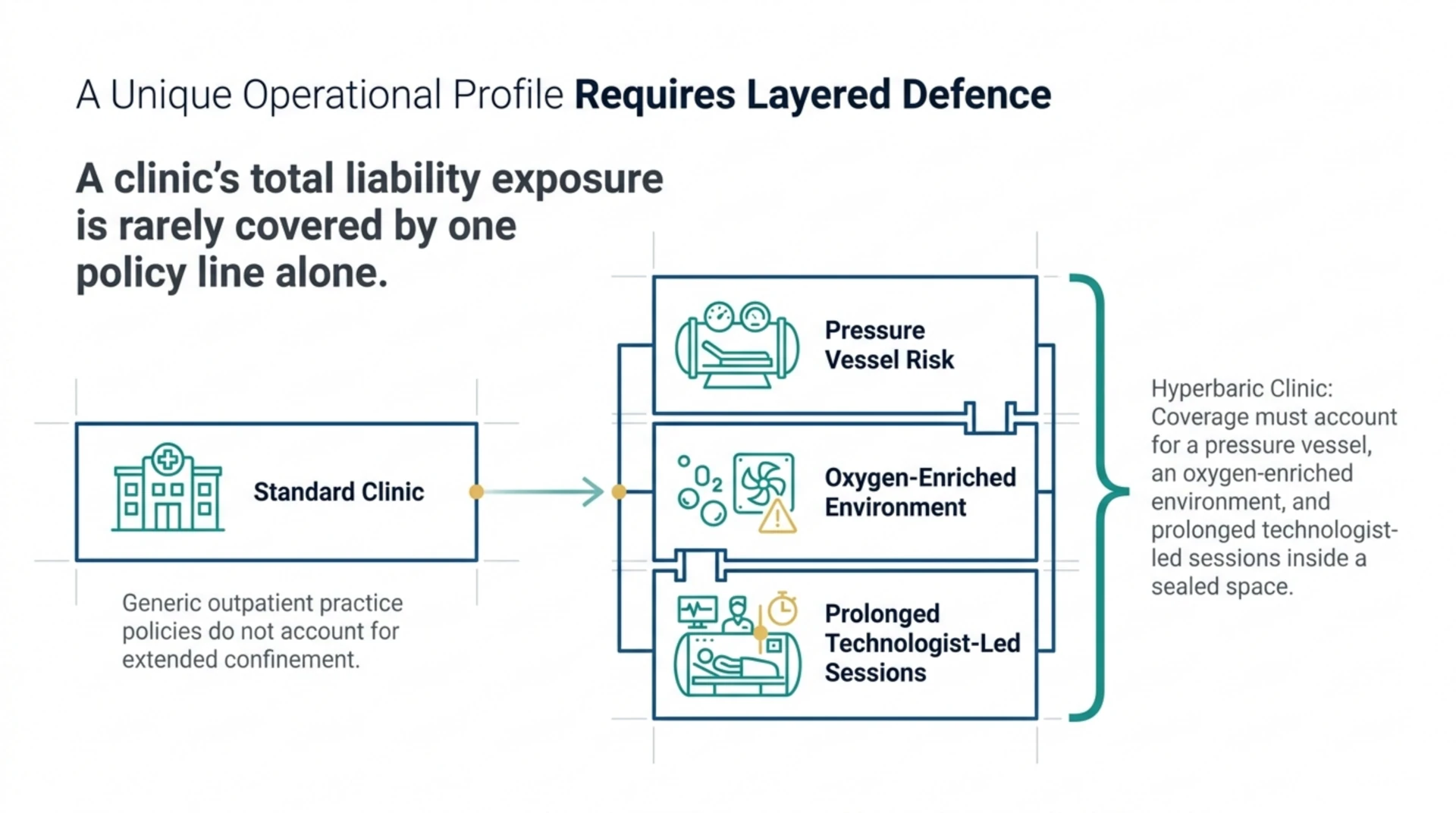
Hyperbaric clinic liability insurance is a package of business coverage designed around the specific operating profile of a pressurized chamber facility. It differs from a generic medical clinic policy because it has to account for a pressure vessel, an oxygen-enriched or oxygen-delivery environment, and technologist-led sessions that run for extended periods with a patient inside a sealed space.
Most policies combine several layers rather than a single blanket product. A clinic’s total liability exposure is rarely covered by one policy line alone, it is usually a stack of general liability, professional liability, and equipment coverage working together.
Why the Coverage Stack Matters
Each layer responds to a different kind of claim. General liability responds to a slip-and-fall in the waiting room. Professional liability responds to a claim that a technologist or supervising physician deviated from an accepted protocol. Equipment coverage responds to chamber malfunction or fire suppression system failure. Missing any one layer leaves a gap that a single incident can expose.
Why Hyperbaric Facilities Face Unique Insurance Considerations
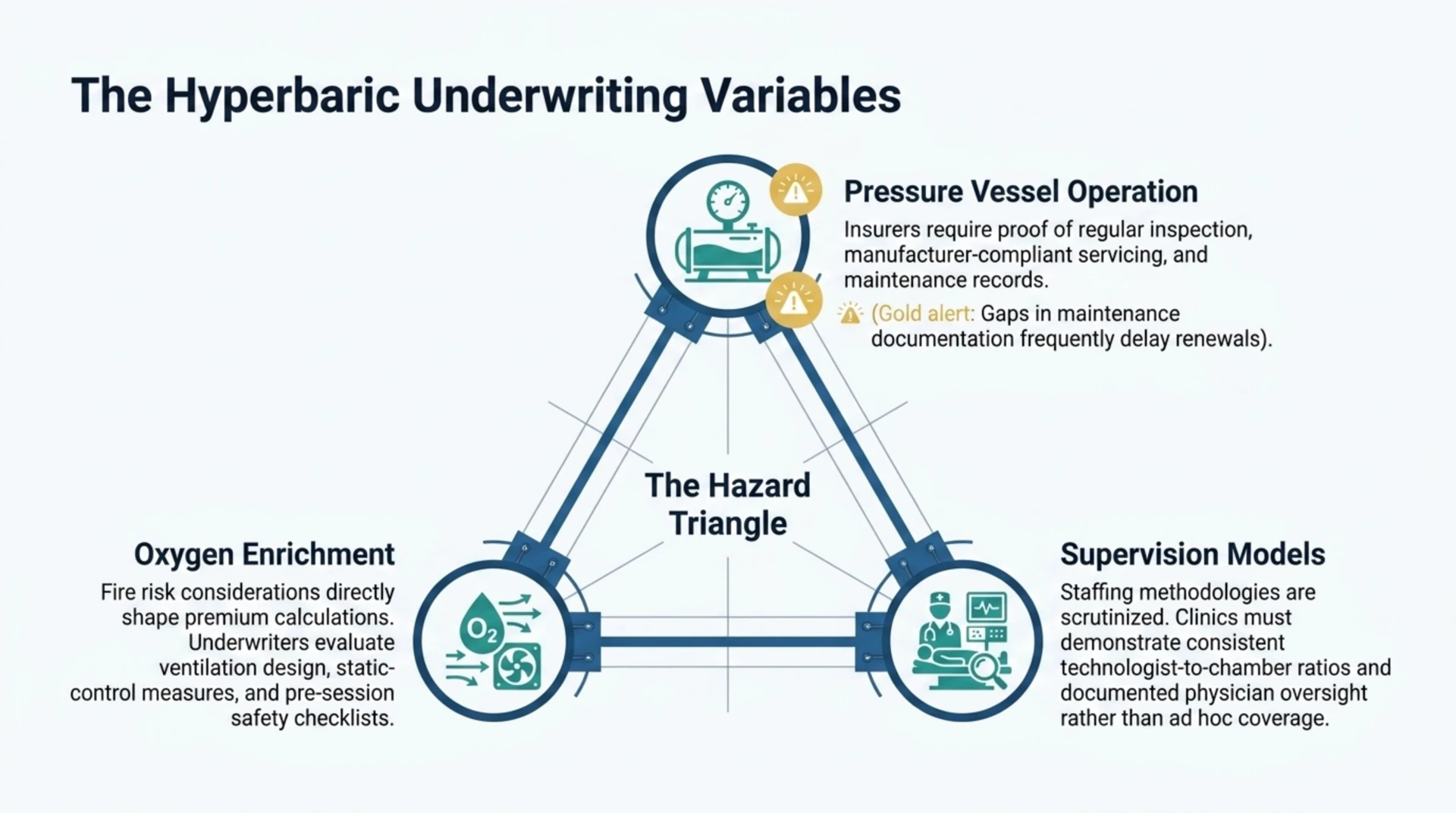
Insurers price hyperbaric clinics differently from a general outpatient practice because the operating environment carries distinct hazards. Pressure changes, oxygen concentration, and confined-space protocols are all underwriting variables that a standard clinic policy does not price for.
Pressure Vessel Operation
A hyperbaric chamber is a pressure vessel, and insurers typically require proof of regular inspection, maintenance records, and manufacturer-compliant servicing before extending or renewing coverage. Gaps in maintenance documentation are one of the more common reasons a renewal gets delayed.
Oxygen Enrichment and Fire Risk
Oxygen-enriched environments carry fire risk considerations that factor directly into premium calculations. Underwriters look at ventilation design, static-control measures, and whether staff follow a documented pre-session safety checklist.
Staffing and Supervision Model
How a clinic staffs its sessions, including technologist-to-chamber ratios and physician oversight, is one of the first things an underwriter reviews. A facility that can show consistent staffing ratios and documented supervision tends to present a clearer risk profile than one with ad hoc coverage.
What Types of Coverage Do Hyperbaric Clinics Typically Carry?
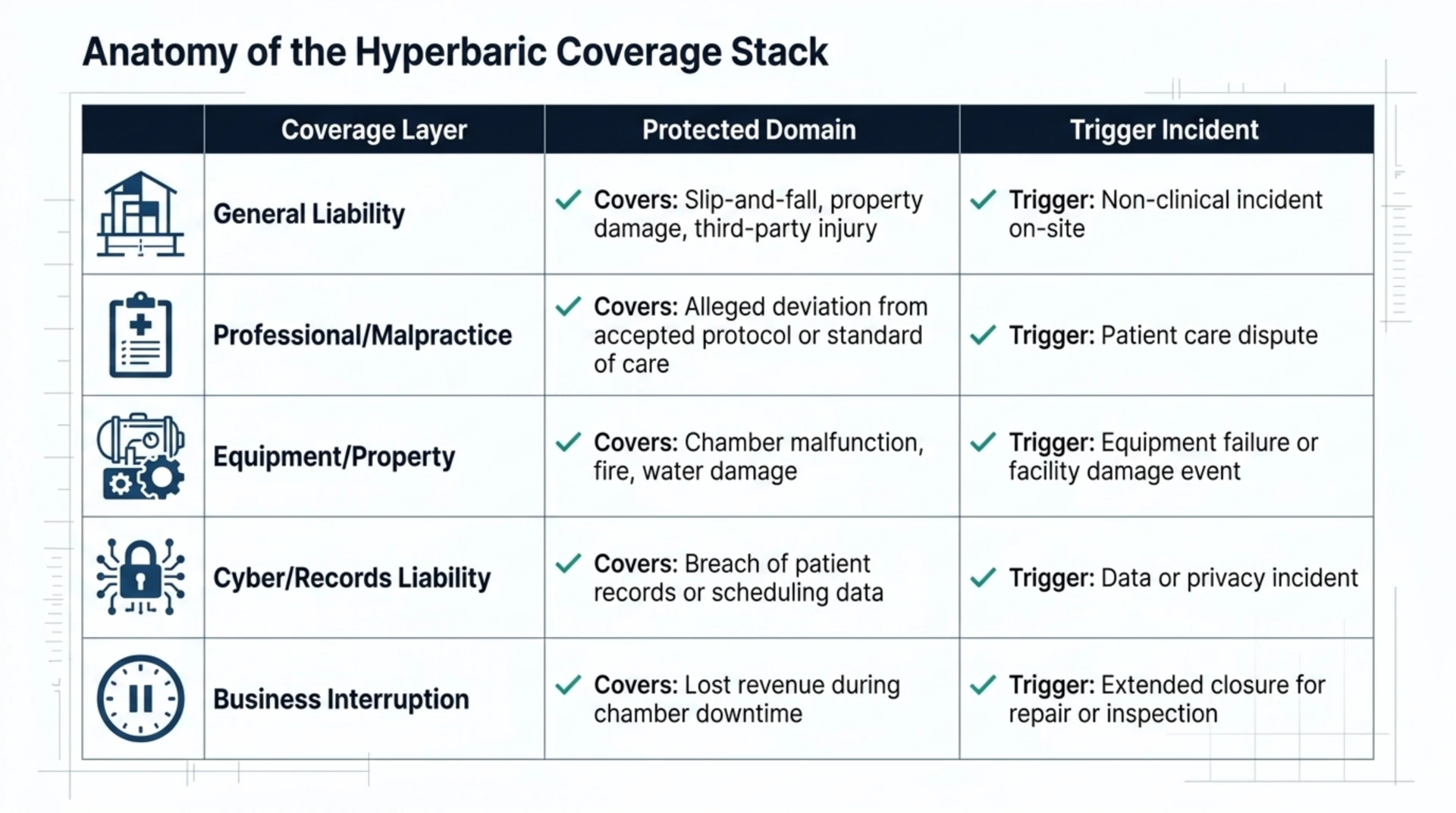
The table below summarizes the common coverage layers a Canadian hyperbaric facility typically evaluates. It is a general overview, not a recommendation for any specific policy or insurer.
| Coverage Type | What It Typically Covers | Common Trigger |
|---|---|---|
| General liability | Slip-and-fall, property damage, third-party injury on premises | Non-clinical incident on-site |
| Professional/malpractice liability | Claims alleging deviation from accepted protocol or standard of care | Patient care dispute |
| Equipment/property coverage | Chamber malfunction, fire, water damage to equipment | Equipment failure or facility damage event |
| Cyber/records liability | Breach of patient records or scheduling data | Data or privacy incident |
| Business interruption | Lost revenue during a chamber downtime event | Extended closure for repair or inspection |
How Do Canadian Regulatory Requirements Affect Coverage?
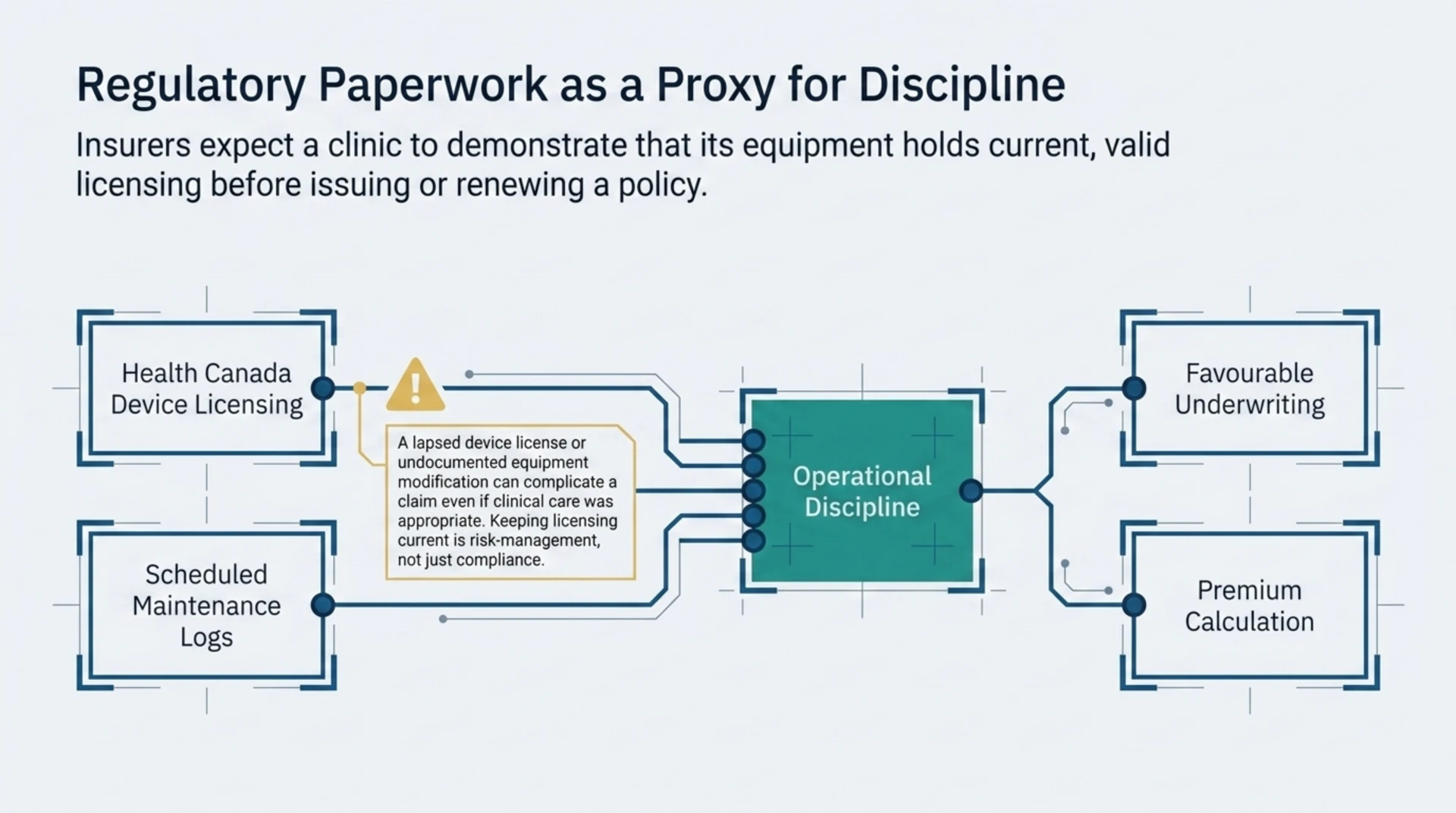
Health Canada licenses hyperbaric chambers as medical devices, and insurers generally expect a clinic to demonstrate that its equipment holds current, valid licensing before issuing or renewing a policy. Our regulatory overview outlines how device licensing, facility accreditation, and provincial health authority requirements interact for Canadian operators.
A lapsed device license or an undocumented equipment modification can complicate a claim even when the clinical care itself was appropriate. Underwriters treat regulatory paperwork as a proxy for operational discipline, so keeping licensing current is as much a risk-management task as a compliance one.
What Drives Malpractice Risk in a Hyperbaric Setting?
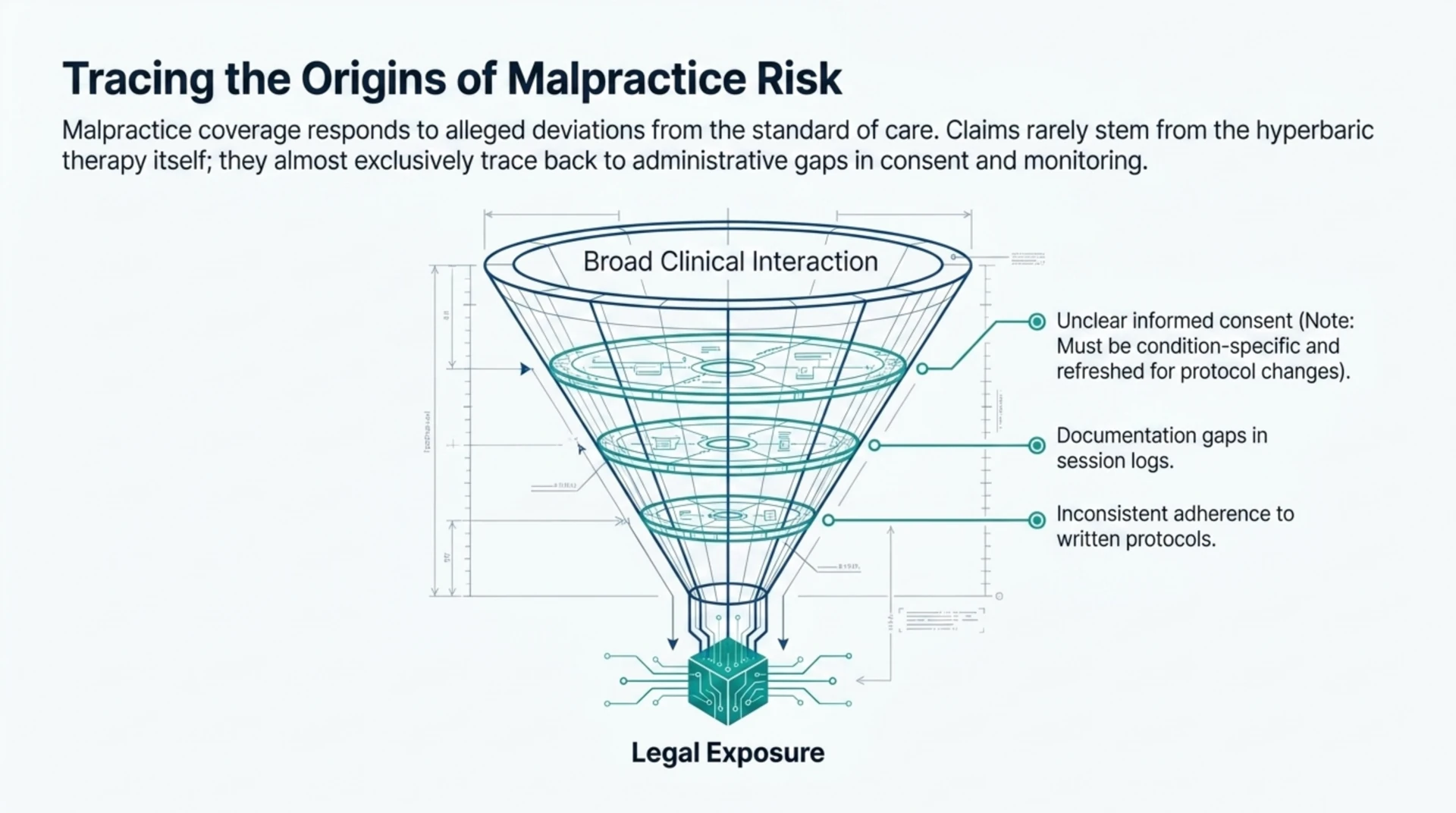
Malpractice risk in an HBOT facility generally traces back to documentation gaps, unclear informed consent, or inconsistent adherence to a written protocol rather than the therapy itself. Clear intake records, session logs, and a documented consent process are the pieces an insurer and, if needed, a legal reviewer will look for first.
Clinics often treat a range of conditions that clinicians may consider HBOT for, and each condition carries its own consent and monitoring considerations. Rather than characterizing what a given condition responds to, our conditions overview is the reference point for the specific presentations a facility treats, and clinics should route patient-facing claims through that page rather than through insurance-focused content.
Documentation as a Risk Control
A session log that records chamber pressure, duration, patient response, and any deviation from the planned protocol is one of the simplest ways a clinic can reduce its exposure. Insurers frequently ask for sample documentation during underwriting specifically because thorough records shorten and simplify a claims process if one arises.
How Can a Clinic Reduce Its Liability Exposure?
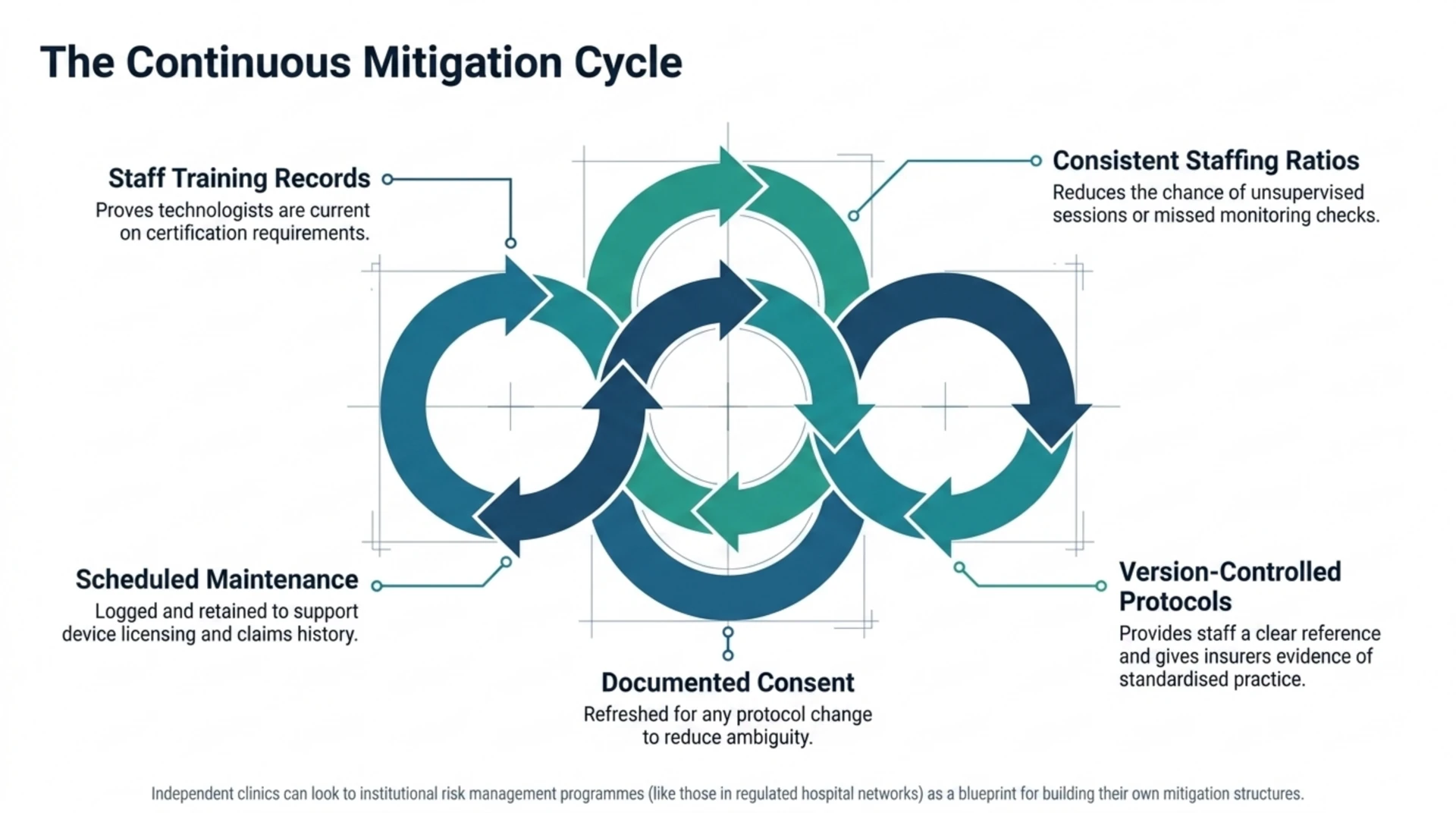
Several operational choices influence both premium cost and actual risk exposure, independent of each other.
- Consistent staffing ratios reduce the chance of an unsupervised session or a missed monitoring check.
- Written, version-controlled protocols give staff a clear reference and give an insurer evidence of standardised practice.
- Documented informed consent, refreshed for any protocol change, reduces ambiguity if a dispute arises.
- Scheduled equipment maintenance, logged and retained, supports both device licensing and claims history.
- Staff training records that show technologists are current on certification requirements.
Facilities that operate within a hospital or regulated multi-site network, such as those listed on our facilities directory, often have institutional risk management and insurance structures already in place, which independent clinics can use as a reference point when building their own program.
Frequently Asked Questions
Does hyperbaric clinic liability insurance cover chamber malfunction?
Equipment or property coverage, a separate line from professional liability, typically addresses chamber malfunction, fire, or damage to the device itself. Confirm with your insurer whether this is bundled or purchased separately.
Is malpractice insurance mandatory for hyperbaric clinics in Canada?
Requirements vary by province and by the licensing body governing the supervising physician or nurse. Clinics should confirm requirements with their provincial regulator and review our regulatory page for a general overview.
How do staffing ratios affect insurance premiums?
Insurers generally view consistent, documented staffing ratios as evidence of lower operational risk, which can be a factor in premium calculation alongside claims history and facility type.
What documentation should a clinic keep for insurance purposes?
Session logs, maintenance records, staff certification files, and signed consent forms are the documents most commonly requested during underwriting or a claims review.
Does insurance cover claims related to a specific medical condition treated with HBOT?
Malpractice coverage responds to alleged deviation from standard of care rather than to a specific condition. For information on which conditions a clinic treats and how, see our conditions overview.
Where can I learn more about Health Canada’s role in hyperbaric device licensing?
Health Canada licenses hyperbaric chambers as medical devices; see our regulatory overview for how licensing fits into overall facility compliance.
Related Reading
- Hyperbaric Technologist Staffing Ratios & Scheduling
- Hyperbaric Chamber Downtime: Business Continuity Plan
- HBOT Adverse Event Reporting: What Systematic Reviews Show
Plan Your Visit
Canada Hyperbarics maintains an overview of hospitals and regulated facilities offering hyperbaric oxygen therapy across the country. Visit our facilities directory to find a hospital or regulated facility near you, or review our FAQ for common patient questions before booking.
This content is for informational purposes only and is not medical advice.