
TL;DR: Clinical trial site participation is the formal process by which a Canadian hyperbaric clinic becomes an approved location where a sponsor can enrol patients into a research study. For clinic owners and operators, it means added regulatory paperwork, a research ethics board review, and closer coordination with a study sponsor, not a change to the chamber itself.
Interest in hyperbaric clinic clinical trial site participation in Canada has been climbing as more sponsors look for chambers with steady patient flow, trained staff and clean documentation practices. For a clinic owner or operator, the question is rarely “should we get involved with research” and more often “what does becoming a trial site actually require.” This short update walks through the process step by step, from the first sponsor conversation to the paperwork a clinic keeps on file.
Canada Hyperbarics tracks industry and regulatory developments like this one so that clinic operators can plan ahead rather than react. Nothing here is a promise of outcomes from any trial or from hyperbaric oxygen therapy (HBOT) itself. It is a plain description of process and logistics.
What Does It Mean for a Hyperbaric Clinic to Become a Clinical Trial Site?
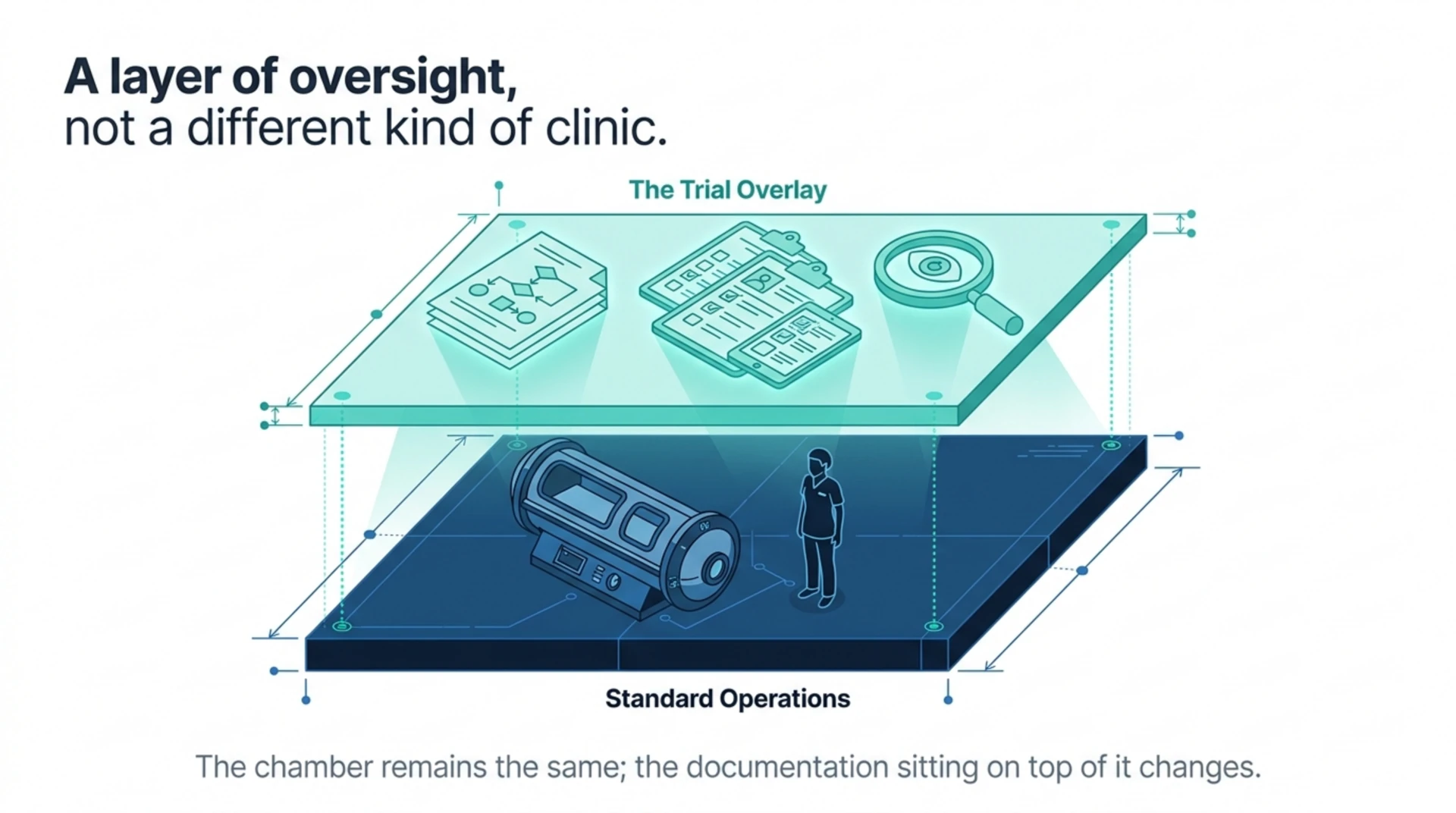
Becoming a clinical trial site means a clinic agrees, under a written contract with a study sponsor, to deliver a defined protocol to a defined group of participants, and to record everything that happens along the way. The chamber itself does not change. What changes is the documentation layer sitting on top of normal operations.
A trial site is a clinic operating under an additional layer of oversight, not a different kind of clinic. Staff still run sessions the way they always have. The difference is that every session tied to the study now has to match a protocol document, and every deviation has to be recorded and reported.
Why Are More Canadian Hyperbaric Clinics Considering Trial Site Participation?
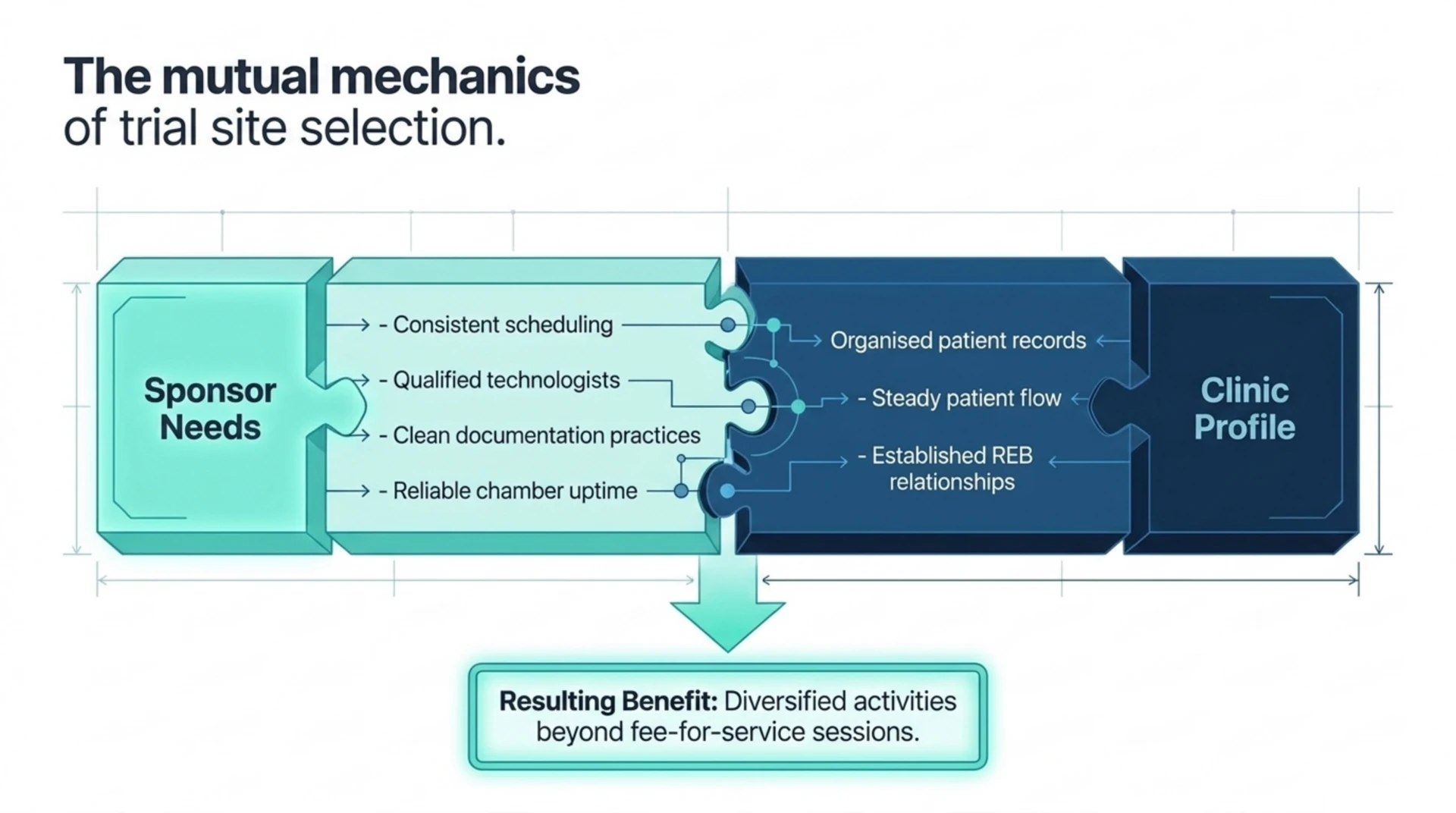
Sponsors running multi-site studies need locations with consistent scheduling, qualified technologists and reliable chamber uptime. Independent and hospital-affiliated hyperbaric clinics across Canada increasingly fit that profile, particularly clinics that already maintain organised patient records and have a working relationship with a local research ethics board.
For clinic owners, trial participation can also diversify a clinic’s activities beyond fee-for-service sessions. That said, it adds real administrative load, and a clinic considering it should weigh staffing capacity honestly before signing a sponsor agreement.
What Regulatory Steps Are Involved?
Trial site participation in Canada runs through a few distinct regulatory tracks, and it helps to keep them separate rather than treating “getting approved” as one single step.
Health Canada Device Licensing
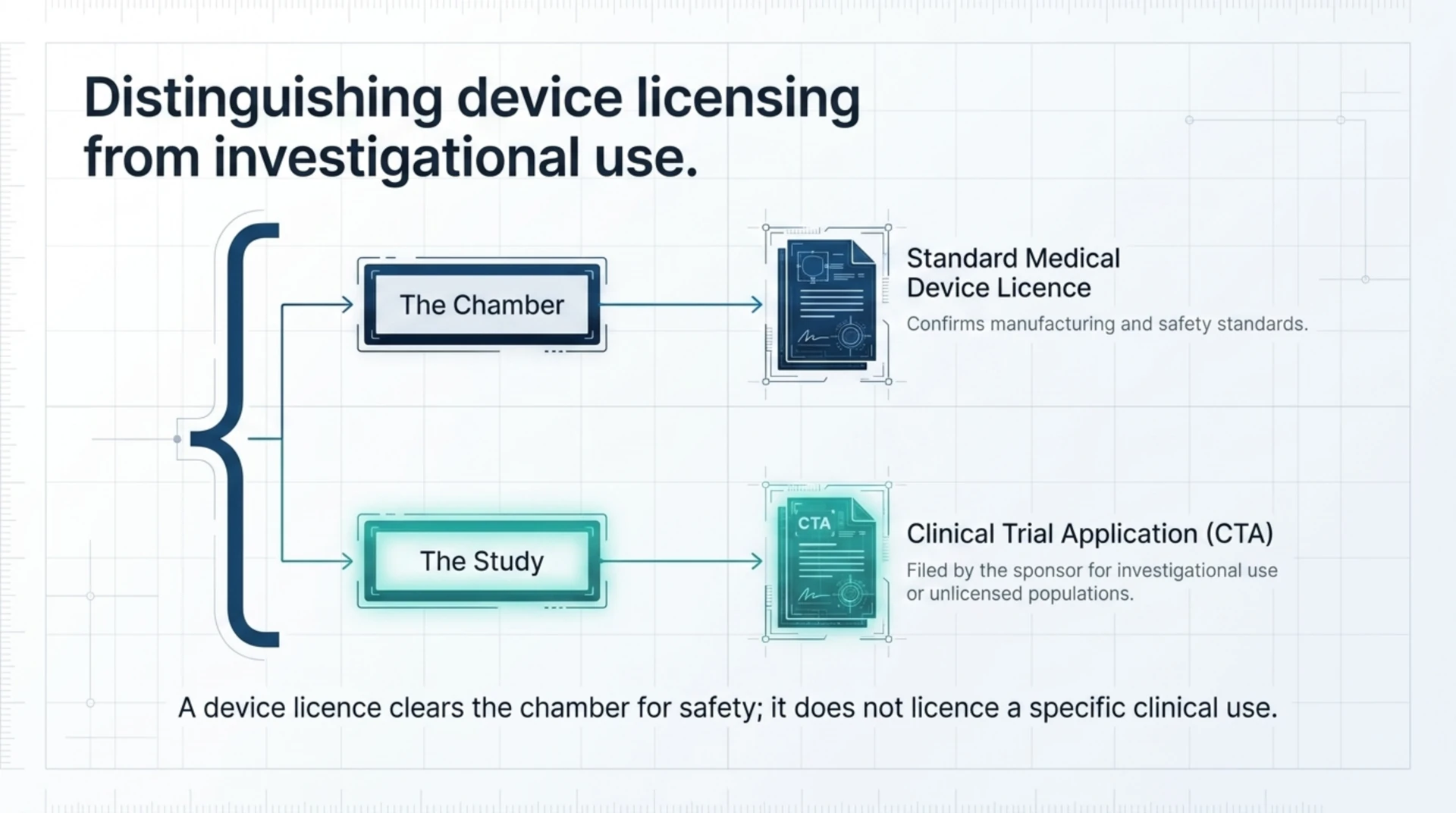
Health Canada licenses medical devices, including hyperbaric chambers, under the Medical Devices Regulations. A device licence confirms the chamber itself meets manufacturing and safety standards. It does not licence any particular clinical use, so clinic owners should be careful with language here: a chamber can be Health Canada licensed as a device while the conditions clinicians consider it for remain a separate, ongoing question addressed through the published evidence base rather than the device licence. For a plain-language summary of where HBOT is currently studied, see our conditions overview.
Clinical Trial Applications and Ethics Review
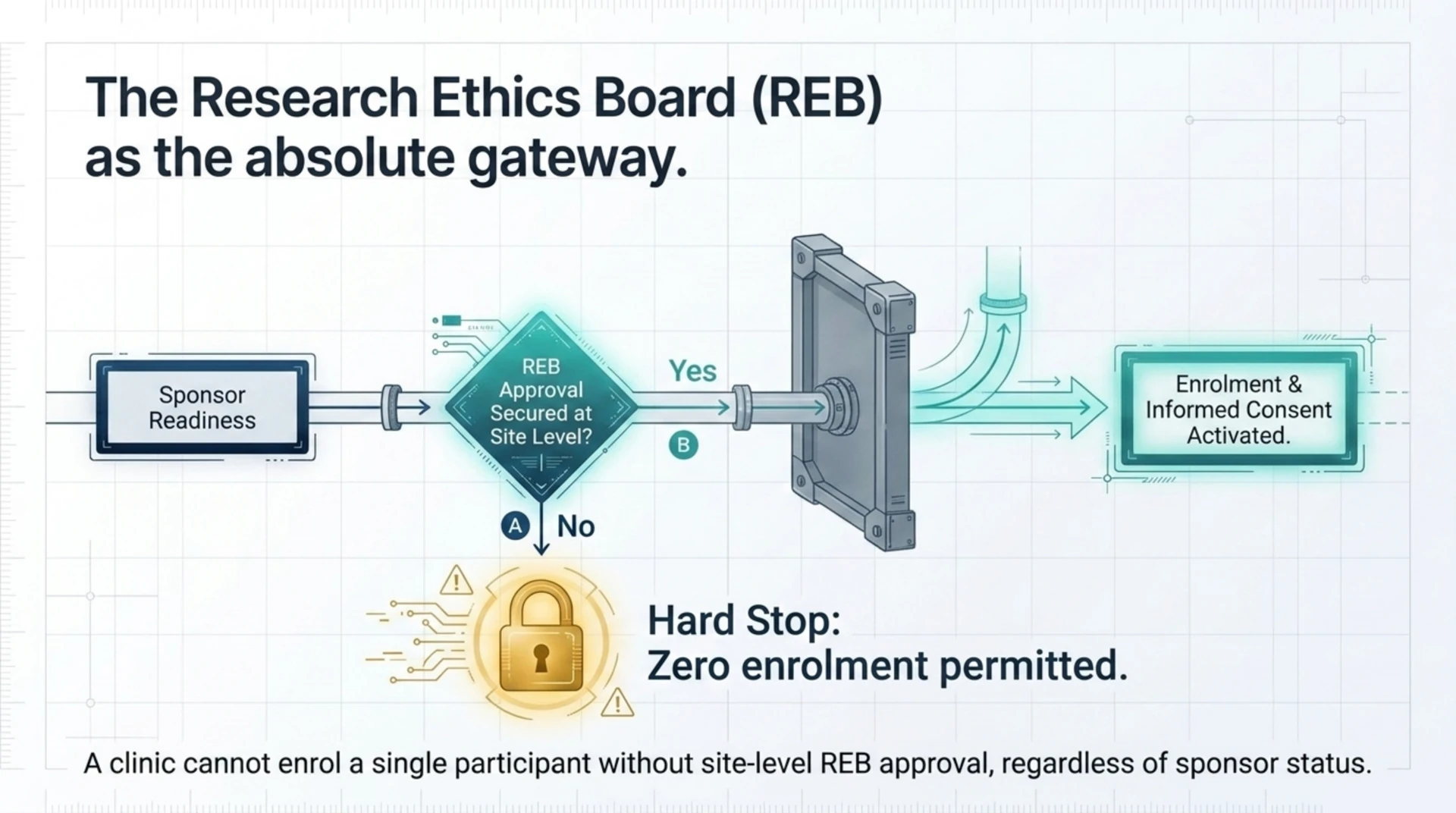
If a study involves an investigational use or a device not yet licensed for the studied population, the sponsor typically files a Clinical Trial Application with Health Canada before enrolment begins. Separately, a Research Ethics Board (REB) reviews the protocol for participant safety and informed consent at the site level. A clinic cannot enrol a single participant until its REB approval is in place, regardless of where the sponsor stands with Health Canada.
Sponsor Agreements and Site Contracts
The sponsor and clinic sign a site agreement covering budget, staffing responsibilities, monitoring visits, data reporting timelines and record retention. Clinic owners should read this document closely, since it usually sets out who is liable for protocol deviations and how long records must be kept after the study closes, often several years beyond the last patient visit.
Clinics that already operate inside Canada’s medical device framework can review general regulatory context on our regulatory information page before a sponsor conversation begins.
How Does Trial Site Operation Differ From Standard Clinic Operations?
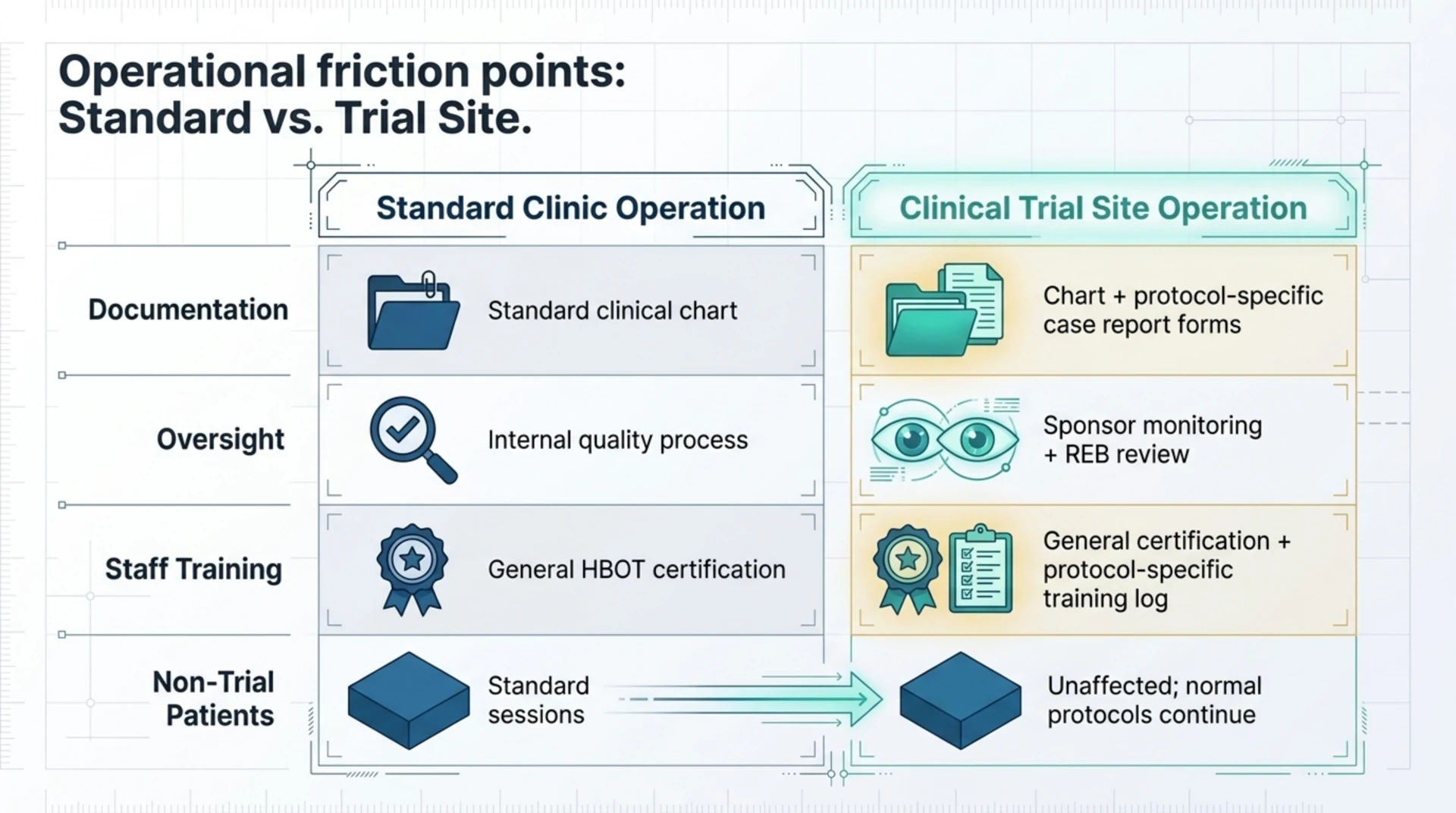
The table below summarizes the practical differences a clinic owner should plan for.
| Area | Standard Clinic Operation | Clinical Trial Site Operation |
|---|---|---|
| Documentation | Standard clinical chart | Chart plus protocol-specific case report forms |
| Oversight | Clinic’s own quality process | Sponsor monitoring visits and REB review |
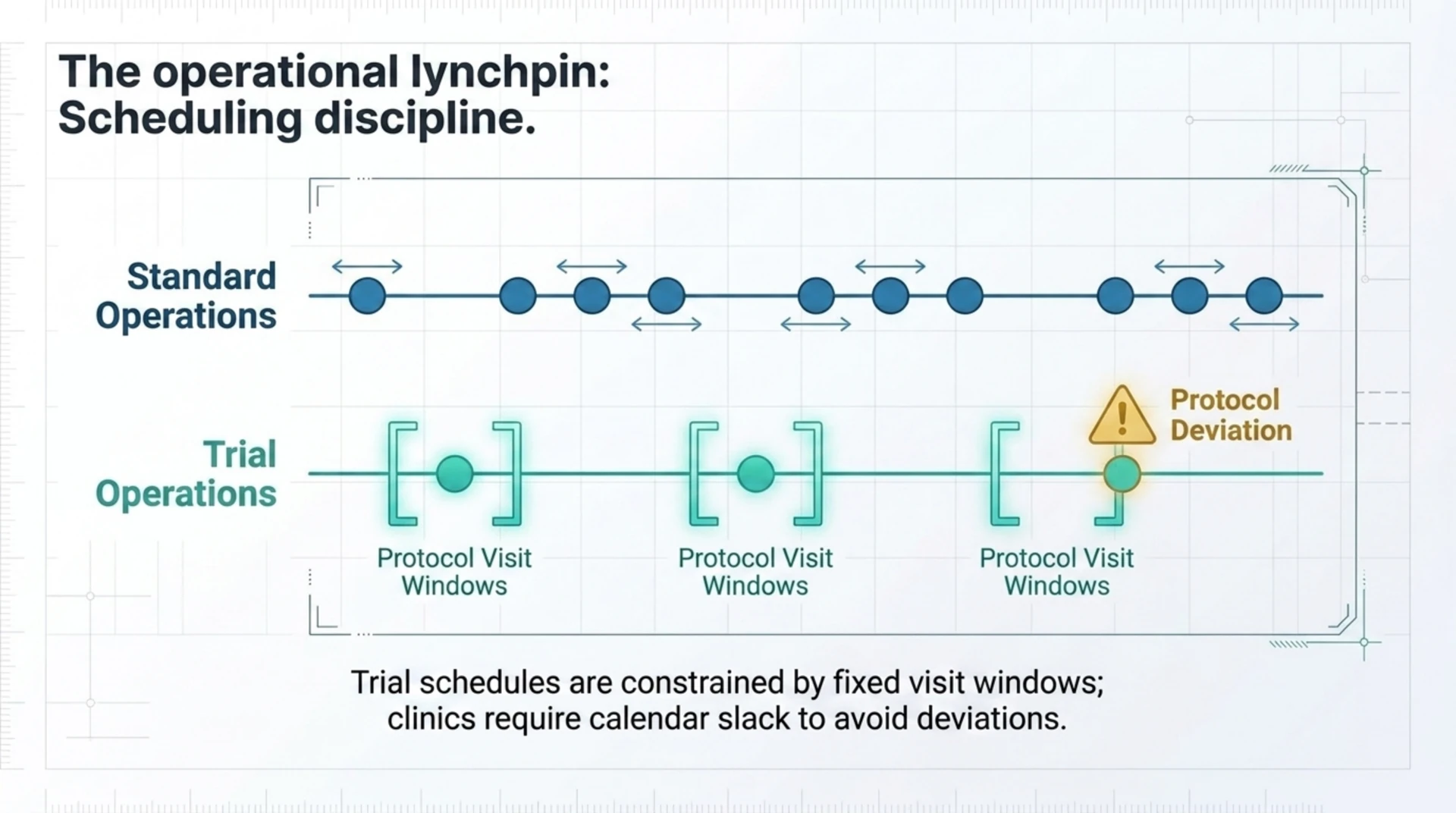
| Scheduling | Set by clinic and patient | Constrained by protocol visit windows |
| Staff training | General HBOT certification | General certification plus protocol-specific training log |
| Record retention | Provincial health record rules | Provincial rules plus sponsor contract terms, often longer |
The biggest operational shift is scheduling discipline. Protocol visit windows are usually fixed, so a clinic running a trial needs slack in its calendar to avoid missed windows that count as protocol deviations.
What Should a Clinic Prepare Before Applying?
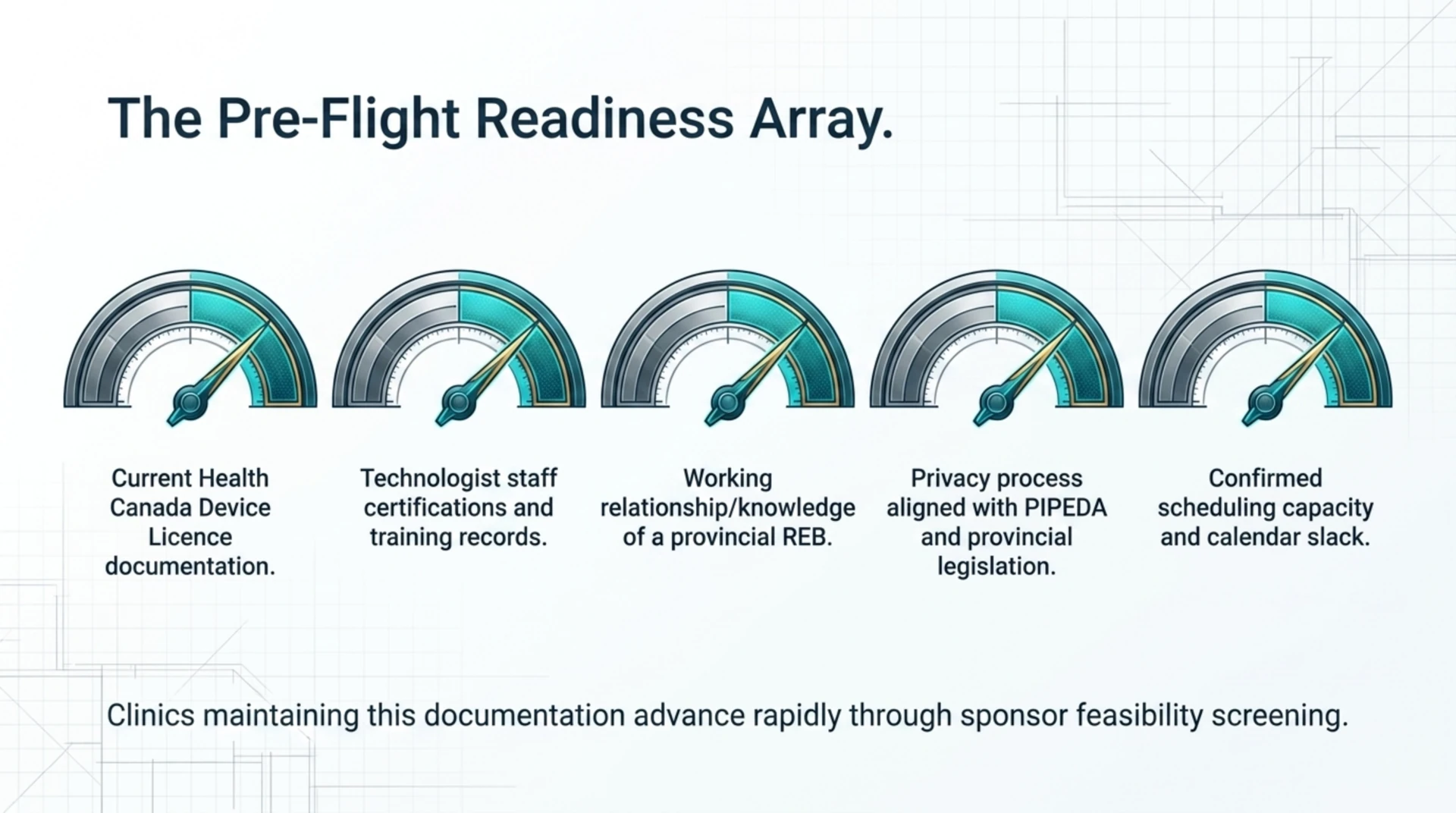
Before approaching a sponsor or a contract research organisation, a clinic owner should have the following in reasonably good order:
- Current Health Canada device licence documentation for the chamber
- Staff certifications and training records for all hyperbaric technologists
- A working relationship with, or knowledge of, a Research Ethics Board in the clinic’s province
- A privacy and data handling process consistent with PIPEDA and applicable provincial health information legislation
- Clear scheduling capacity for protocol visit windows alongside existing patient volume
Clinics that keep this documentation current tend to move through sponsor feasibility questionnaires faster, since most of the early screening questions from a sponsor are really asking whether this paperwork already exists.
Where Can Patients Learn More About Conditions Studied With HBOT?
Patients sometimes ask their clinic whether a trial relates to their own condition. Clinic staff should direct that question to the study’s own consent materials rather than answering informally, since only the approved consent document can describe what a specific trial is testing. For general background on the range of conditions clinicians consider HBOT for, our conditions page is a useful starting point, and it links out to the underlying published literature rather than summarizing outcomes itself.
Frequently Asked Questions
What is hyperbaric clinic clinical trial site participation?
It is the process by which a hyperbaric clinic signs on with a study sponsor to deliver a research protocol to enrolled participants under Research Ethics Board oversight and sponsor monitoring.
Does a hyperbaric clinic need a special Health Canada licence to run a trial?
The chamber itself needs a standard Health Canada medical device licence. Whether a Clinical Trial Application is also required depends on the specific study and is determined by the sponsor in consultation with Health Canada.
How long does site approval usually take?
Timelines vary by province and by REB workload. Clinics that already hold current staff training records and device documentation typically move through feasibility and ethics review faster than clinics starting from scratch.
Who pays for a clinic’s participation in a trial?
Sponsor agreements typically include a per-participant or milestone-based budget covering staff time, supplies and administrative overhead. The specific terms are negotiated in the site contract.
Can a clinic decline to continue after signing on as a site?
Yes, site agreements generally include withdrawal provisions, though a clinic should review the contract’s terms on data handling and participant transition before signing.
Does trial participation change how HBOT sessions are delivered to non-trial patients?
No, standard patient sessions continue under the clinic’s normal protocols. Only participants enrolled in the specific study follow the trial protocol’s visit schedule and documentation requirements.
Related Reading
- Hyperbaric Clinic Liability Insurance & Malpractice Risk
- Hyperbaric Technologist Staffing Ratios & Scheduling
- Hyperbaric Chamber Downtime: Business Continuity Plan
Canada Hyperbarics will continue covering regulatory and industry developments like this one as they affect clinic owners and operators across the country. Clinics considering trial site participation, or simply looking to understand how hospitals and regulated facilities structure their hyperbaric programs, can review our directory of hospitals and regulated facilities for context on how established programs are organised.
This content is for informational purposes only and is not medical advice.