
TL;DR: Hyperbaric oxygen therapy (HBOT) is a medical treatment that delivers close to 100 percent oxygen inside a pressurized chamber to raise the amount of oxygen dissolved in blood plasma and tissue. This hyperbaric oxygen radiation enteritis evidence review finds a growing but still modest body of research, anchored by one 2025 systematic review and meta-analysis of six randomised controlled trials, alongside several retrospective cohorts and case reports, that together suggest a possible benefit for bowel symptoms after pelvic or abdominal radiotherapy, with direct high-quality trial evidence still limited.
Radiation enteritis is intestinal injury that develops after radiotherapy to the pelvis or abdomen, most often following treatment for cervical, prostate, rectal, or other pelvic cancers. This hyperbaric oxygen radiation enteritis evidence review draws exclusively on the studies held in the Canada Hyperbarics research library and asks a narrow question: what does the available literature actually show about HBOT for this condition, and where does the evidence stop?
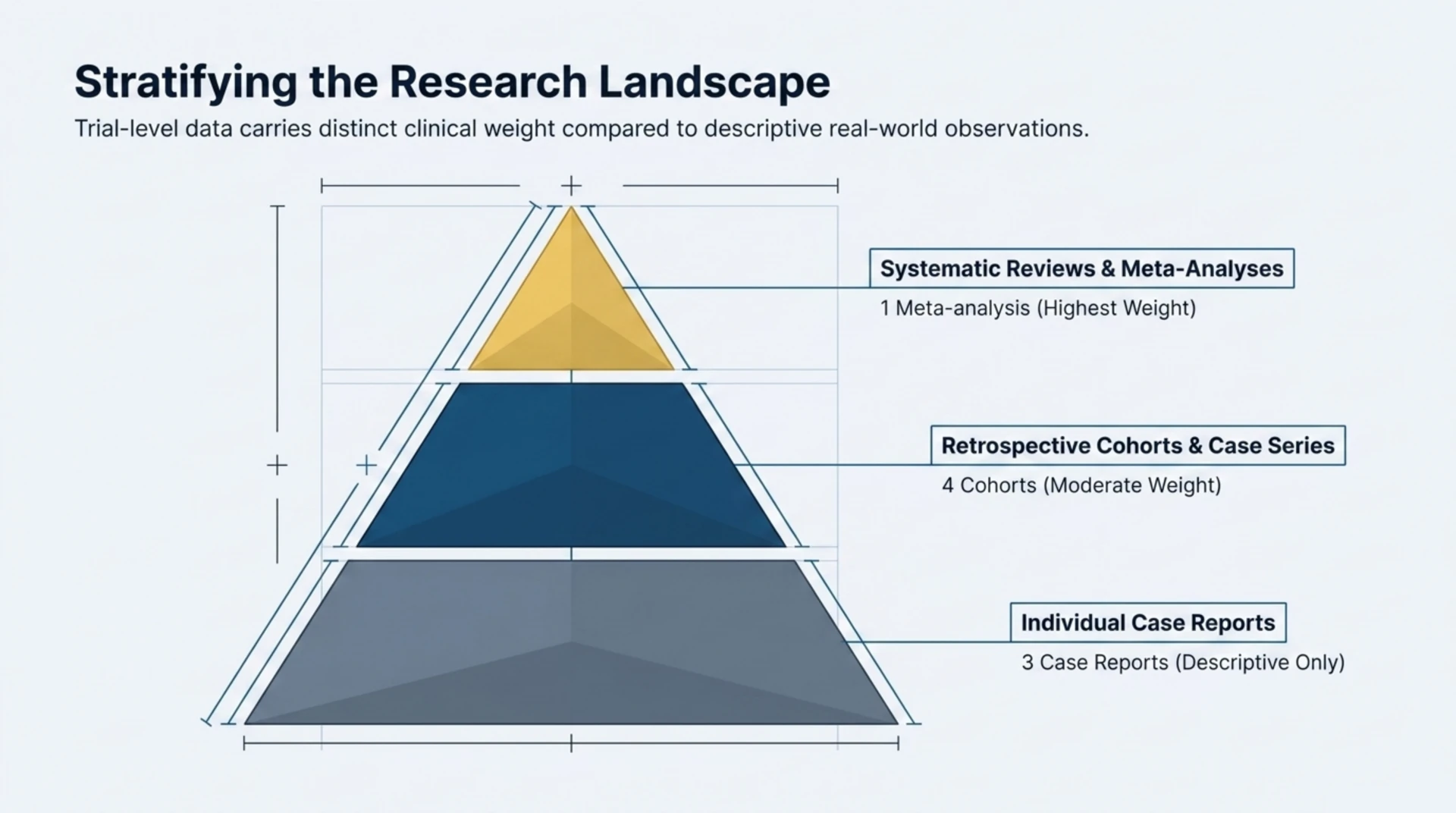
The short answer is that the evidence base is real but uneven. It ranges from a 2025 meta-analysis pooling more than a thousand patients down to single case reports. Researchers evaluating HBOT for radiation-induced bowel injury need to know which claims rest on trial-level data and which rest on descriptive case series, because the two carry very different weight.
What Is Radiation Enteritis?
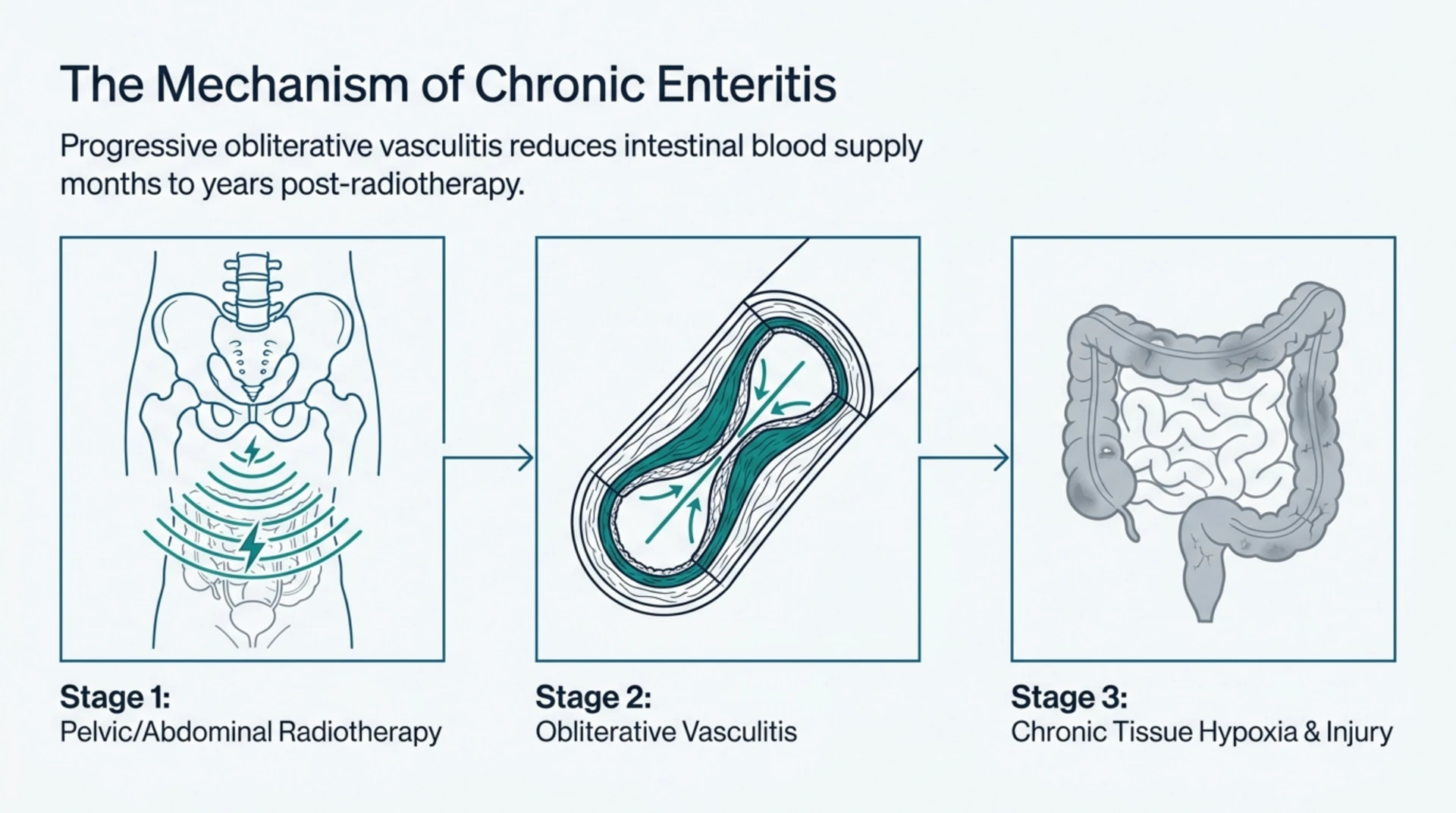
Radiation enteritis refers to damage to the small or large bowel caused by ionizing radiation used to treat cancers in the pelvis and abdomen. It is typically classified as acute, occurring during or shortly after treatment, or chronic, appearing months to years later as the tissue develops progressive vascular injury.
Why Chronic Cases Are Harder to Treat
A review of chronic radiation enteritis (Author et al., PubMed | Our Assessment) discussed predisposing factors for the condition; the underlying process is understood in the literature to involve a slowly progressive obliterative vasculitis that reduces blood supply to the bowel wall over time. This mechanism, rather than direct radiation exposure at the moment of treatment, is thought to drive many of the late complications clinicians see years after radiotherapy has ended.
A related review of gastrointestinal toxicity associated with radiation therapy (Author et al., PubMed | Our Assessment) discussed how modern conformal radiotherapy techniques, including 3D-CRT, aim to reduce this toxicity, while noting that a meaningful proportion of patients still develop symptomatic bowel injury requiring active management.
A further review focused specifically on radiation-induced small bowel disease (Author et al., PubMed | Our Assessment) summarized pathogenesis and clinical management strategies, noting that many patients who received abdominal or pelvic radiotherapy go on to experience some degree of chronic bowel dysfunction.
What Does the Hyperbaric Oxygen Radiation Enteritis Evidence Review Show?
The strongest single source in this evidence base is a 2025 systematic review and meta-analysis (Author et al., PubMed | Our Assessment), published in Frontiers in Medicine. It pooled 22 clinical studies, including six randomised controlled trials, covering 1,318 subjects, to evaluate the efficacy and safety of HBOT for radiation enteritis and related clinical parameters. Because this analysis incorporated RCT-level data, its pooled findings carry more weight than any single cohort or case report in this review, though the authors themselves noted variability in the quality and design of the included trials.
Retrospective Cohort Data
Below the RCT tier sits a set of retrospective cohort studies. A 2022 retrospective analysis of 88 patients treated for late radiation lesions at a hospital hyperbaric medicine unit between October 2014 and September 2019 (Author et al., PubMed | Our Assessment) tracked clinical outcomes in a real-world hyperbaric unit setting rather than a controlled trial.
A 2007 review examined 159 patients treated with HBOT for radiation enteritis, proctitis, or cystitis, and was specifically designed to test whether the rate of oxygen delivery, rather than the total number of sessions, affected treatment response (Author et al., PubMed | Our Assessment). This cohort found that delivery rate did not meaningfully change outcomes, a finding relevant to how hyperbaric protocols are scheduled in practice.
A separate 2007 case series followed 65 patients treated with HBOT for chronic radiation enteritis (Author et al., PubMed | Our Assessment), reporting symptomatic improvement in a majority of the group, while the authors described this as a descriptive case series rather than a controlled comparison.
An older but frequently cited retrospective study followed 36 patients with chronic radiation-induced digestive disorders (Author et al., PubMed | Our Assessment), noting improvement in symptoms shortly after treatment in this uncontrolled cohort.
Older Systematic Reviews and Surveys
A 2002 systematic review evaluated 74 publications on HBOT for the prevention and treatment of delayed radiation injuries broadly, not limited to the bowel (Author et al., PubMed | Our Assessment). Because it covered radiation injury across tissue types rather than the bowel specifically, it is best read as supporting context rather than direct enteritis-specific evidence.
A 2004 clinical study similarly reported consistent benefits of HBOT across a range of delayed radiation injuries, again spanning multiple tissue types rather than the bowel alone (Author et al., PubMed | Our Assessment).
A 2016 literature review published in Cancer Radiotherapie summarized indications for HBOT in radiation-induced late toxicities and surveyed French radiation therapists on their knowledge and practice patterns (Author et al., PubMed | Our Assessment). This same review classified the evidence specifically for enteritis, along with several other indications, as more questionable since study results were conflicting. Its survey component is a useful signal of clinical awareness rather than a measure of treatment efficacy.
Case Reports Illustrating Individual Presentations
Case reports cannot establish efficacy, but they illustrate the range of presentations clinicians encounter. A 2025 case report described an atypical presentation of delayed radiation-induced enteritis following low-dose radiotherapy, successfully managed with HBOT (Author et al., PubMed | Our Assessment), published in ACG Case Reports Journal.
A 2006 case report described a 44-year-old woman with radiation-damaged short bowel syndrome and severe hypomagnesaemia who improved following 25 HBOT sessions (Author et al., PubMed | Our Assessment). A single case cannot show causation, but it documents one detailed clinical trajectory.
Not every case in this pool reflects a favourable HBOT outcome directly. A 1996 case report described the surgical diagnosis and management of an ileovesical fistula, a severe complication that developed 18 years after pelvic radiotherapy for uterocervical cancer (Author et al., PubMed | Our Assessment). The patient improved temporarily after hyperbaric oxygen therapy but later died of a gastric haemorrhage. This report centres on surgical management rather than HBOT, and it is included here to illustrate the severity some chronic radiation bowel injuries can reach, not as evidence of hyperbaric benefit.
| Study | Year | Design | Sample | Evidence Tier |
|---|---|---|---|---|
| Frontiers in Medicine meta-analysis | 2025 | Systematic review + meta-analysis (6 RCTs) | 1,318 | Highest |
| Clinical & Translational Oncology cohort | 2022 | Retrospective cohort | 88 | Moderate |
| Undersea & Hyperbaric Medicine delivery-rate review | 2007 | Retrospective cohort | 159 | Moderate |
| Undersea Hyperb Med case series | 2007 | Case series | 65 | Moderate |
| Presse Medicale retrospective study | 1999 | Retrospective cohort | 36 | Moderate |
| Undersea & Hyperbaric Medicine systematic review | 2002 | Systematic review (broad radiation injury) | 74 publications | Supportive context |
| ACG Case Reports Journal, Eur J Gastroenterol Hepatol, Nihon Hinyokika Gakkai | 1996 to 2025 | Case reports | 1 each | Descriptive only |
How Might Hyperbaric Oxygen Affect Radiation-Damaged Bowel Tissue?
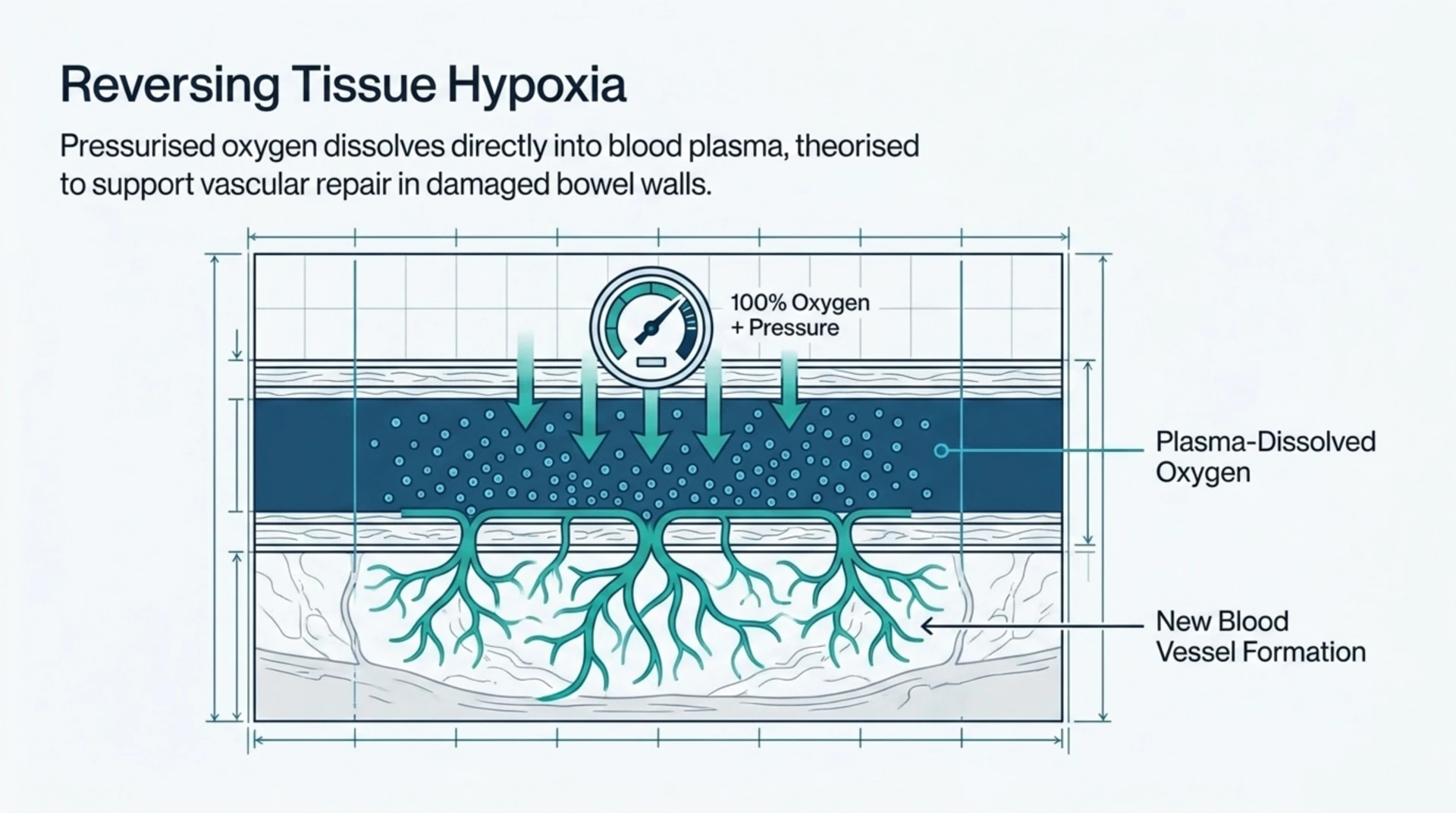
The proposed mechanism in this literature centres on the vascular injury described earlier: radiation damages small blood vessels supplying the bowel wall, progressively reducing local oxygen delivery. Increasing plasma-dissolved oxygen under hyperbaric pressure is theorized to support new blood vessel formation and tissue repair in chronically under-oxygenated tissue, a mechanism discussed across several of the reviews above rather than measured directly in a bowel-specific trial in this pool.
It is important to be precise about what the RCT-level meta-analysis actually measured versus what the mechanistic reviews propose, since the two are not the same type of evidence.
What Are the Limitations of the Current Evidence?
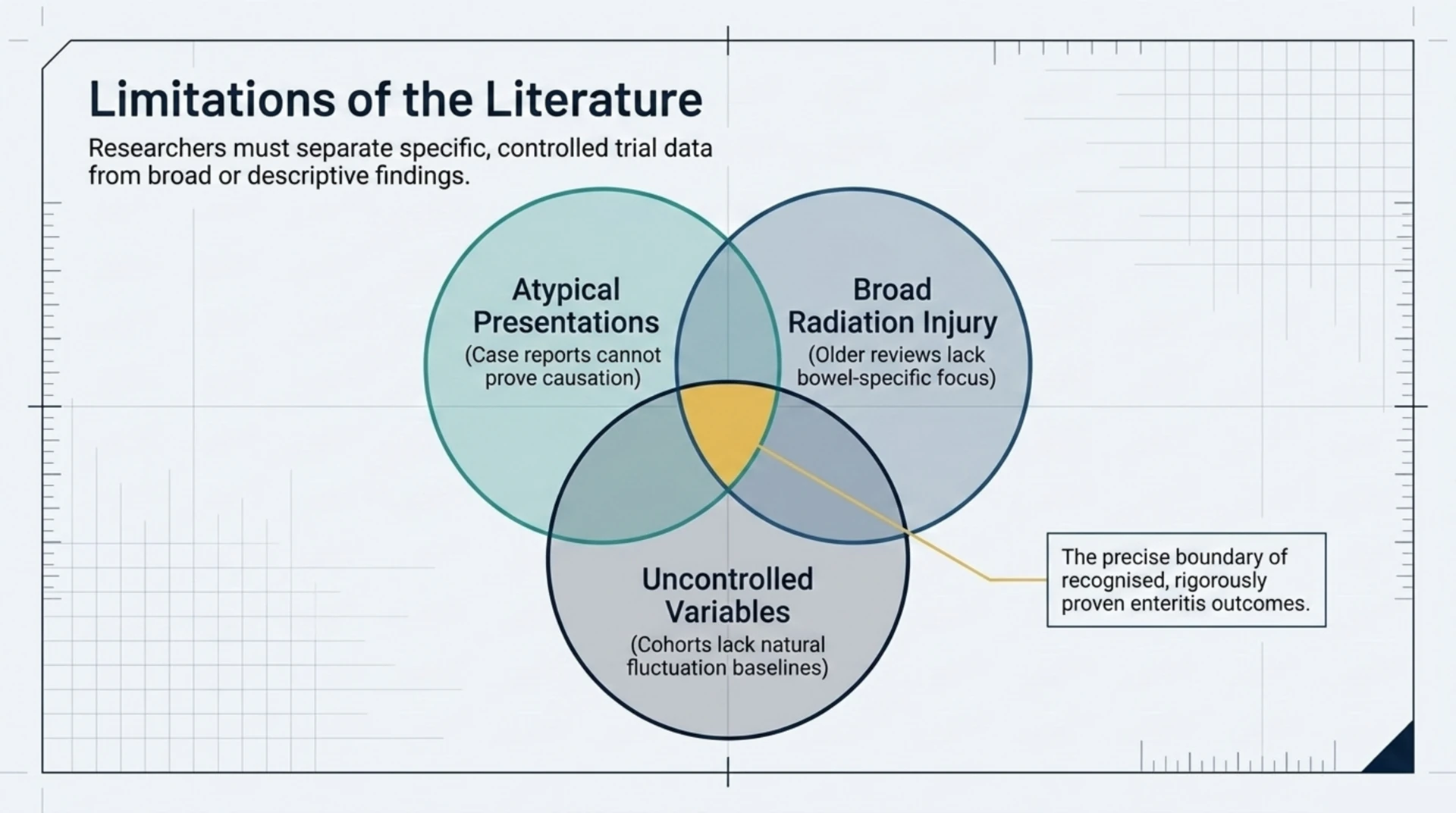
Several limitations run through this hyperbaric oxygen radiation enteritis evidence review. First, most of the enteritis-specific data below the 2025 meta-analysis comes from retrospective cohorts and case series without control groups, meaning improvement cannot be cleanly separated from natural symptom fluctuation or other concurrent treatment.
Second, some of the broader systematic reviews and clinical studies in this pool address delayed radiation injury generally, spanning tissues such as soft tissue and bone, rather than the bowel specifically, so their findings should be read as contextual support rather than direct bowel-specific proof.
Third, case reports, while clinically informative for atypical presentations, cannot demonstrate that HBOT caused the observed improvement. Researchers should weigh the 2025 RCT-based meta-analysis most heavily and treat the surrounding cohort and case literature as hypothesis-generating rather than confirmatory.
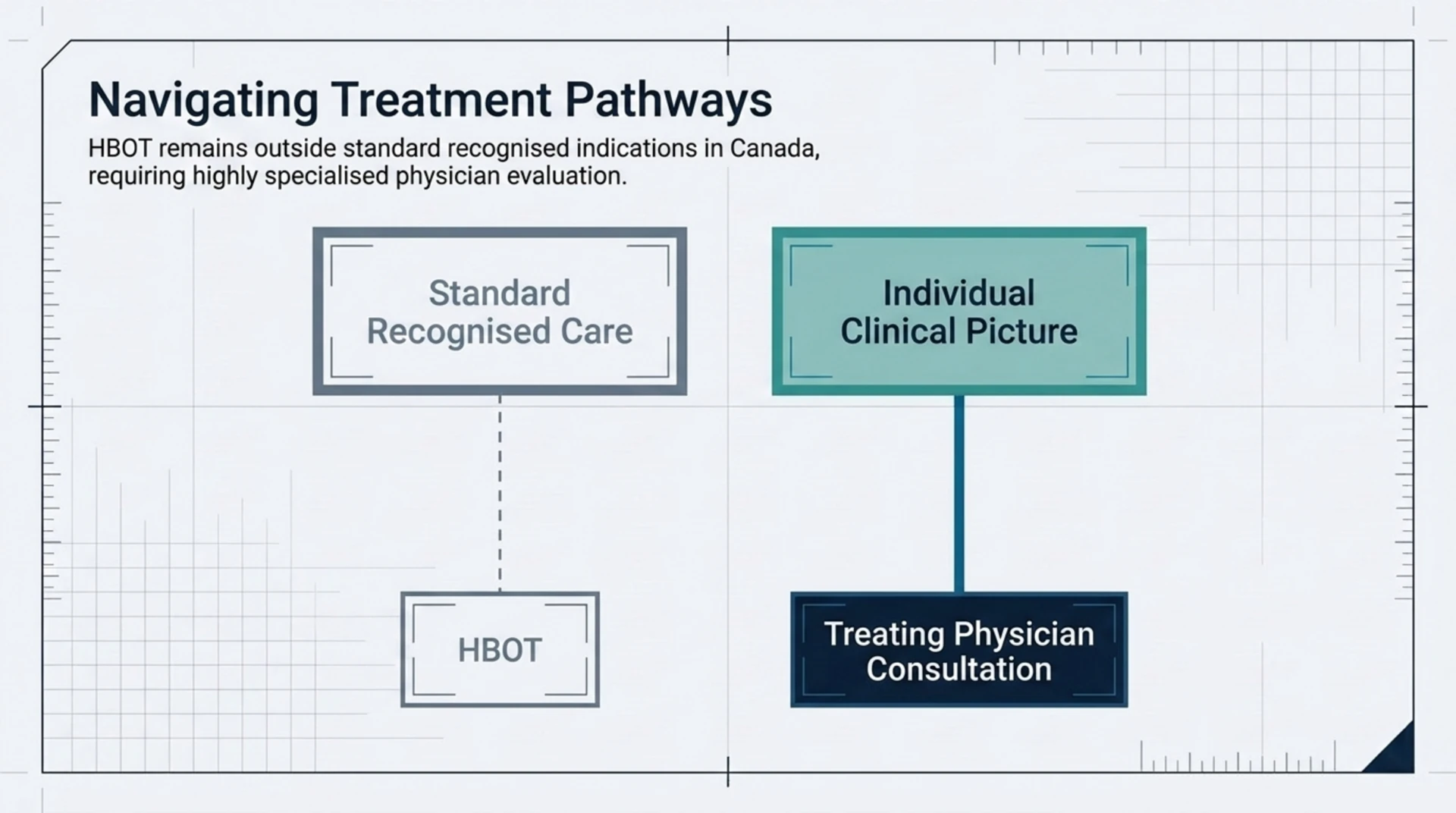
This is also a condition where HBOT sits outside standard first-line recognised care in Canada, so any decision about pursuing it belongs in a conversation with a treating physician rather than in the research literature alone. Readers researching HBOT coverage and recognised indications in Canada may find the HBOT coverage overview a useful starting reference.
Frequently Asked Questions
What is radiation enteritis?
Radiation enteritis is bowel injury that develops after radiotherapy to the pelvis or abdomen, ranging from acute inflammation during treatment to chronic vascular injury appearing years later.
Is hyperbaric oxygen therapy an approved treatment for radiation enteritis in Canada?
HBOT for radiation enteritis is not among the standard recognised indications in Canada, which is why this review frames the topic as an evidence question rather than a treatment recommendation.
What is the strongest study in the hyperbaric oxygen radiation enteritis evidence review?
The 2025 Frontiers in Medicine systematic review and meta-analysis, which pooled six randomised controlled trials and 1,318 subjects, is the highest-quality source currently in this evidence base.
Do case reports prove that HBOT works for radiation enteritis?
No. Case reports describe individual patient trajectories and can illustrate atypical presentations, but they cannot establish that HBOT caused an observed improvement.
Does the number of hyperbaric sessions or the rate of delivery affect outcomes?
One retrospective review of 159 patients found that the rate of delivery of hyperbaric oxygen treatments did not affect response in radiation enteritis, proctitis, or cystitis cases.
How large is the overall hyperbaric research literature?
The Canada Hyperbarics research library spans over 14,000 peer-reviewed studies, of which the radiation enteritis subset discussed here represents a small, specific slice.
Related Reading
- Publication Bias in HBOT Meta-Analyses: Funnel Plots
- Hyperbaric Clinic Clinical Trial Site Participation in Canada
- HBOT Adverse Event Reporting: What Systematic Reviews Show
The Canada Hyperbarics research library compiled this review to give researchers and clinicians a clear map of what the radiation enteritis literature currently supports, and where it stops. As with any emerging application, the Canada Hyperbarics editorial team encourages readers to weigh study design carefully before drawing conclusions.
If you or a patient are considering hyperbaric oxygen therapy for radiation enteritis, the appropriate next step is a conversation with the treating physician about whether it is appropriate given the individual clinical picture.
This content is for informational purposes only and is not medical advice.