
TL;DR: Hyperbaric oxygen therapy (HBOT) is a treatment that delivers 100% oxygen at increased atmospheric pressure to raise oxygen levels in damaged tissue. Radiation-induced brachial plexopathy (RIBP) is an uncommon, delayed nerve injury that can develop in the arm and shoulder years after radiotherapy to the chest, breast, or axilla. The direct evidence for HBOT in RIBP is thin, limited to a single small randomised trial and scattered case reports, and the one controlled trial did not show a clear benefit on its primary measure, so this remains an unproven, physician-guided option rather than an established treatment.
Hyperbaric oxygen radiation brachial plexopathy is a narrow but important intersection in the oncology support literature. Radiation-induced brachial plexopathy (RIBP) is a rare, late complication of radiotherapy in which the network of nerves running from the spine to the arm becomes progressively damaged, usually years after treatment for breast cancer, lung cancer, or lymphoma near the chest wall and armpit. Because RIBP has no reliably effective treatment, hyperbaric oxygen therapy has occasionally been proposed as a supportive option. This review, compiled by the Canada Hyperbarics research library, looks specifically at what the published evidence on HBOT for RIBP actually shows, and where it falls short of being conclusive.
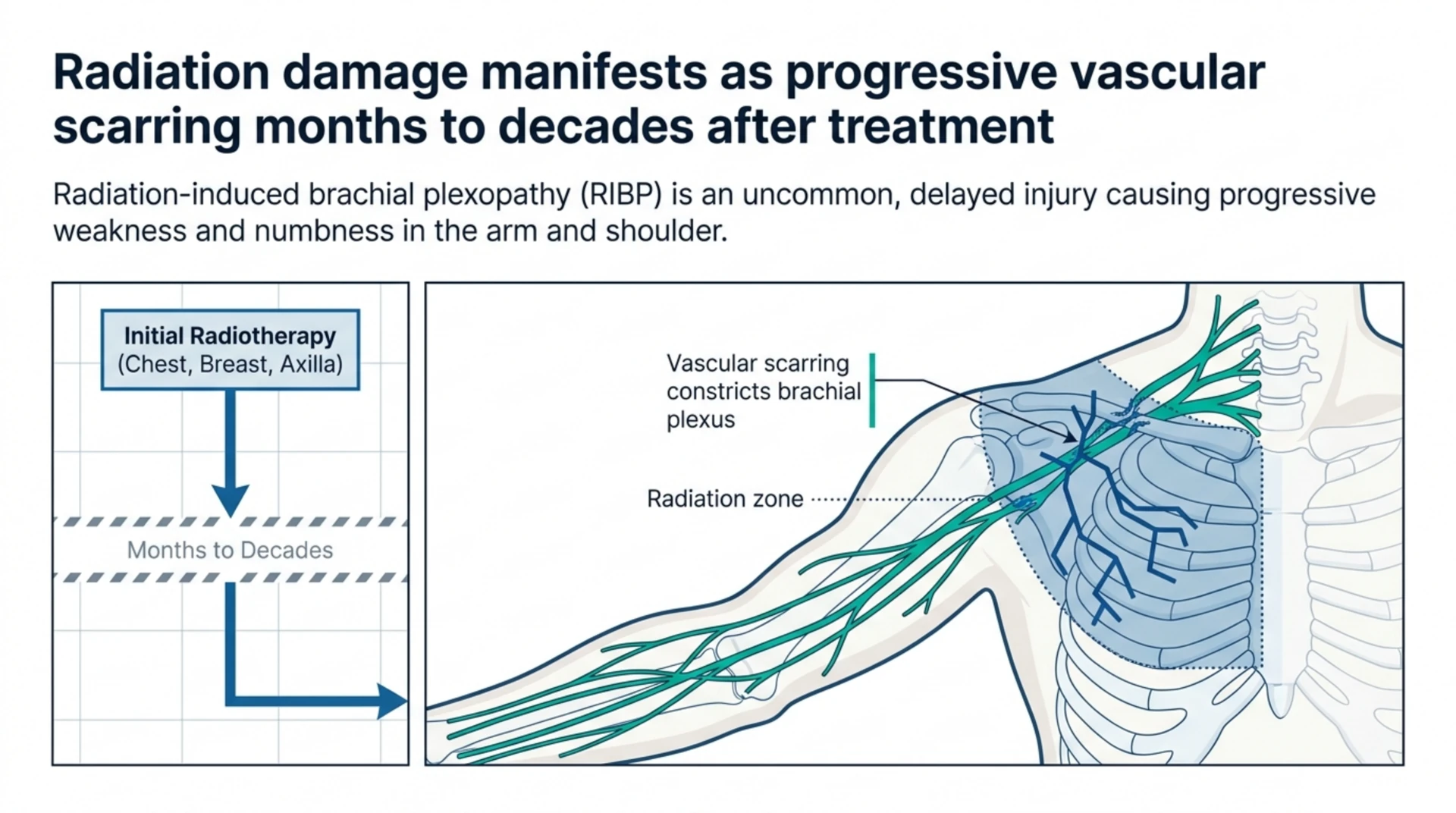
What Is Radiation-Induced Brachial Plexopathy?
The brachial plexus is the bundle of nerves that controls movement and sensation in the shoulder, arm, and hand. Radiation therapy aimed at the chest wall, breast, or underarm lymph nodes can, over months to decades, cause progressive scarring and microvascular damage around these nerves. A review of radiation myelopathy and plexopathy (Yamazaki et al., PubMed | Our Assessment) describes RM and its related plexopathy as a relatively rare but recognised category of delayed radiation injury to the nervous system, with a pathophysiology distinct from tumour recurrence.
This distinction matters clinically, because RIBP can mimic cancer coming back in the arm, which is why patients with new arm weakness or numbness after radiotherapy need careful specialist assessment before any treatment, including HBOT, is considered.
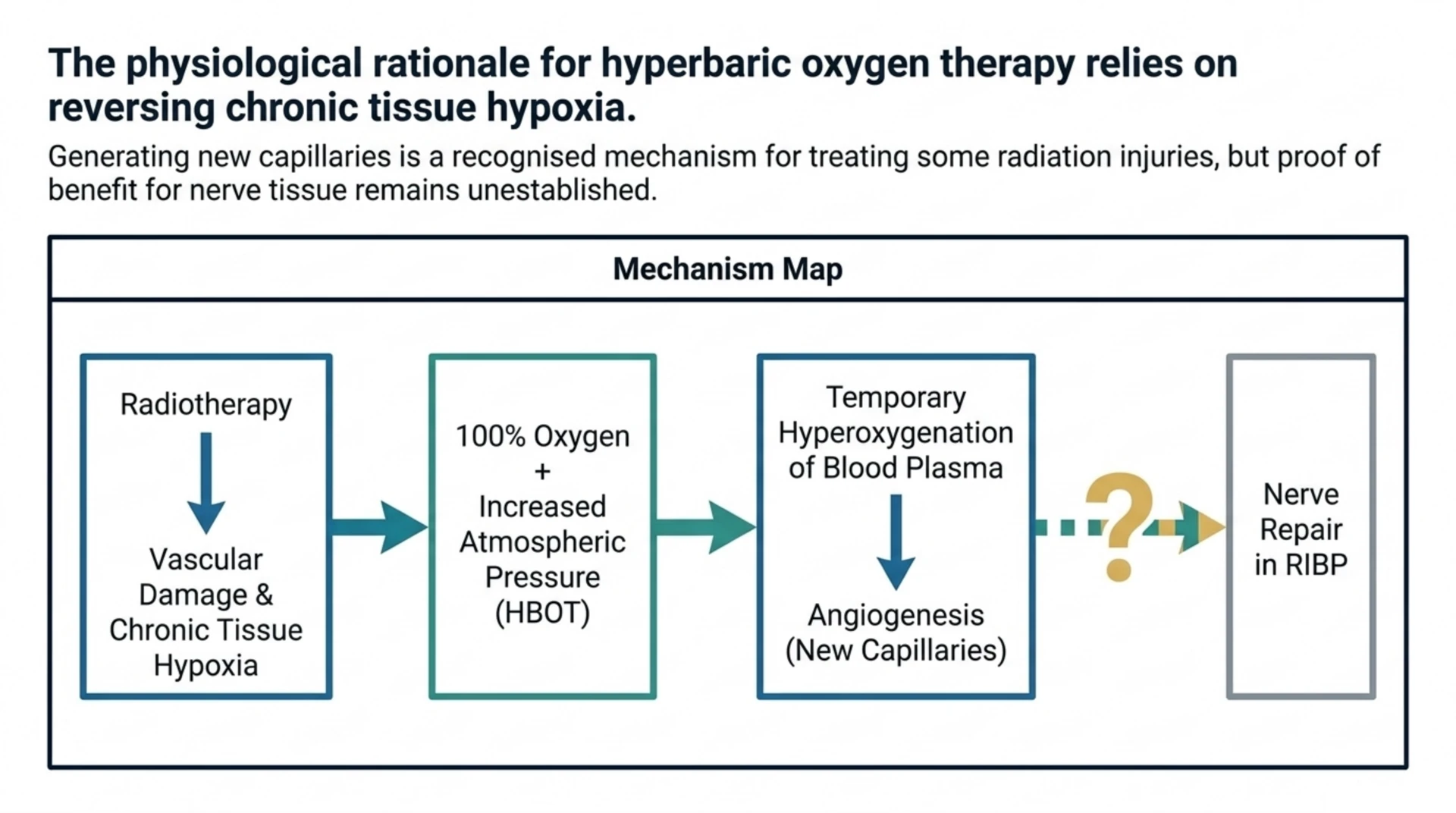
How Might Hyperbaric Oxygen Therapy Help?
The proposed mechanism behind HBOT for radiation injuries is vascular. Radiotherapy can damage small blood vessels and leave tissue chronically short of oxygen (hypoxic). Breathing 100% oxygen at increased pressure temporarily raises the amount of oxygen dissolved in blood plasma, which, in theory, can support the growth of new capillaries into damaged, poorly perfused tissue over a course of treatment. This mechanism underlies HBOT’s recognised use in other late radiation injuries, such as certain cases of osteoradionecrosis and radiation cystitis, but a plausible mechanism is not the same as proof of benefit for every radiation-damaged tissue, including nerve tissue.
What Does the Direct Evidence Say About HBOT for Radiation Brachial Plexopathy?
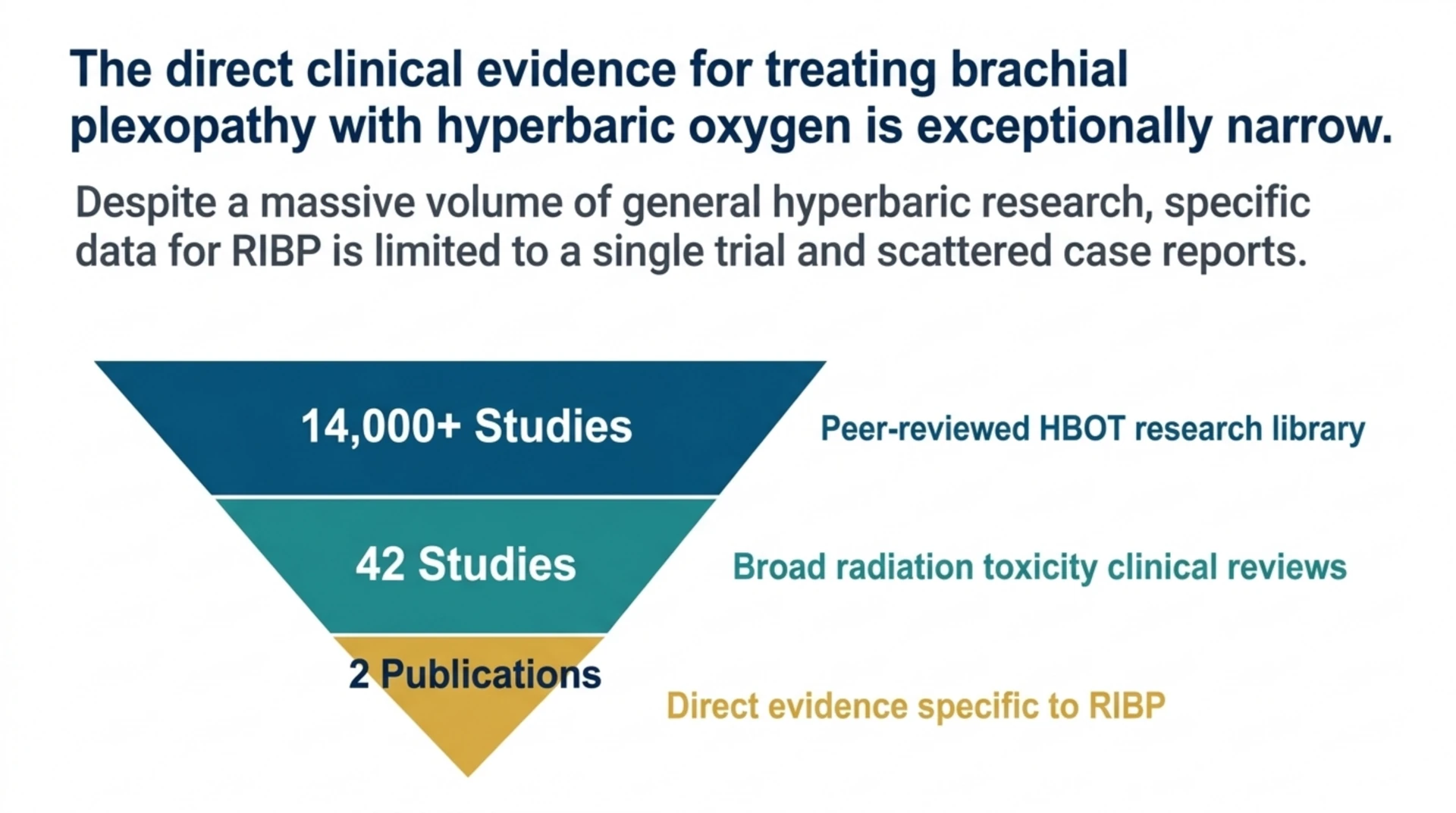
The evidence base specific to RIBP is small. Two publications in the Canada Hyperbarics library address it directly: one randomised controlled trial and one case report with literature review.
| Study | Year | Design | What It Looked At |
|---|---|---|---|
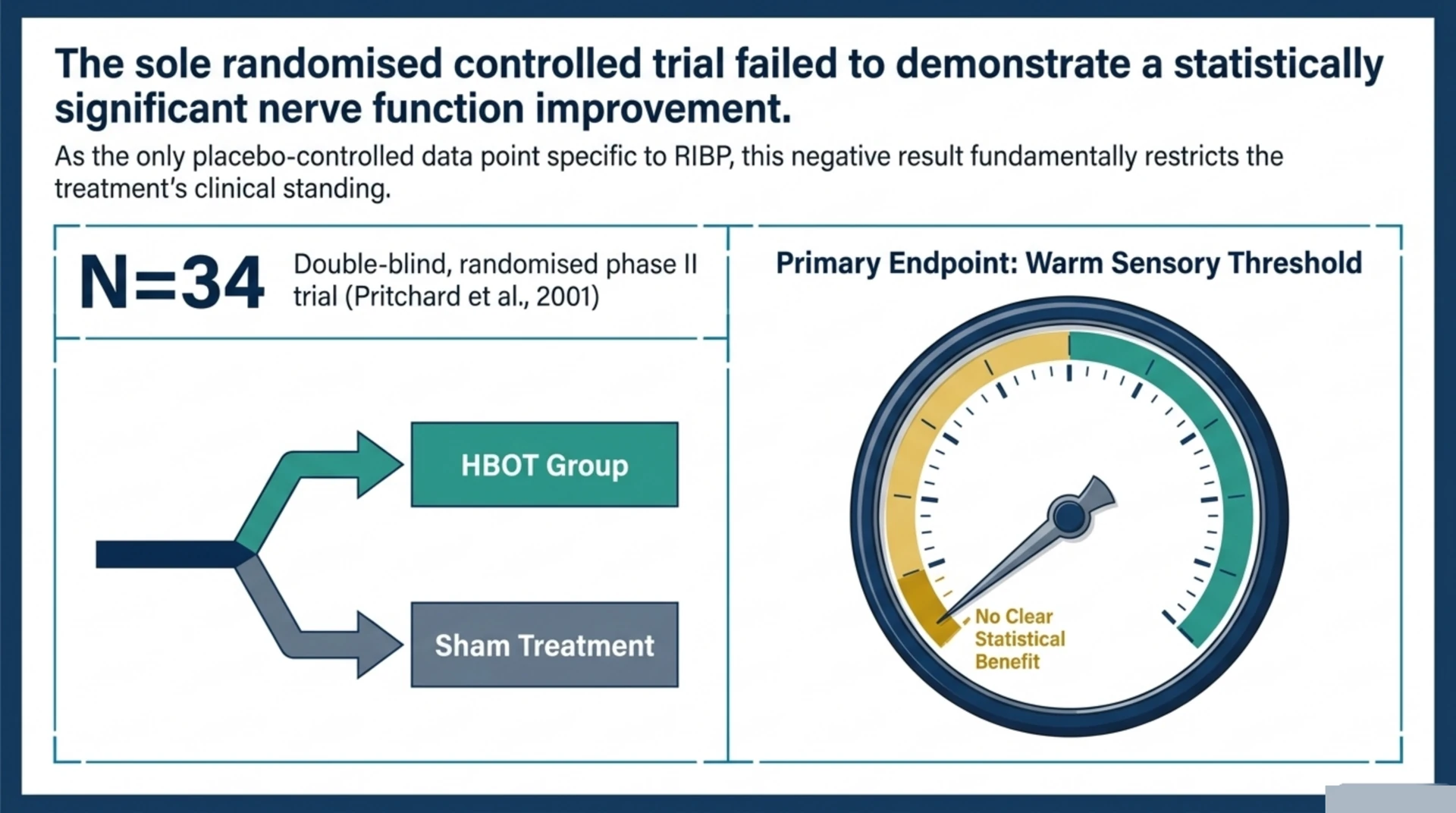
| Pritchard et al. | 2001 | Double-blind, randomised, phase II trial (n=34) | HBOT versus sham, with warm sensory threshold as the primary endpoint in patients with RIBP |
| Case report and literature review | 2019 | Single case report plus review | A 45-year-old man with RIBP treated with HBOT, situated against prior published cases |
The Randomised Trial
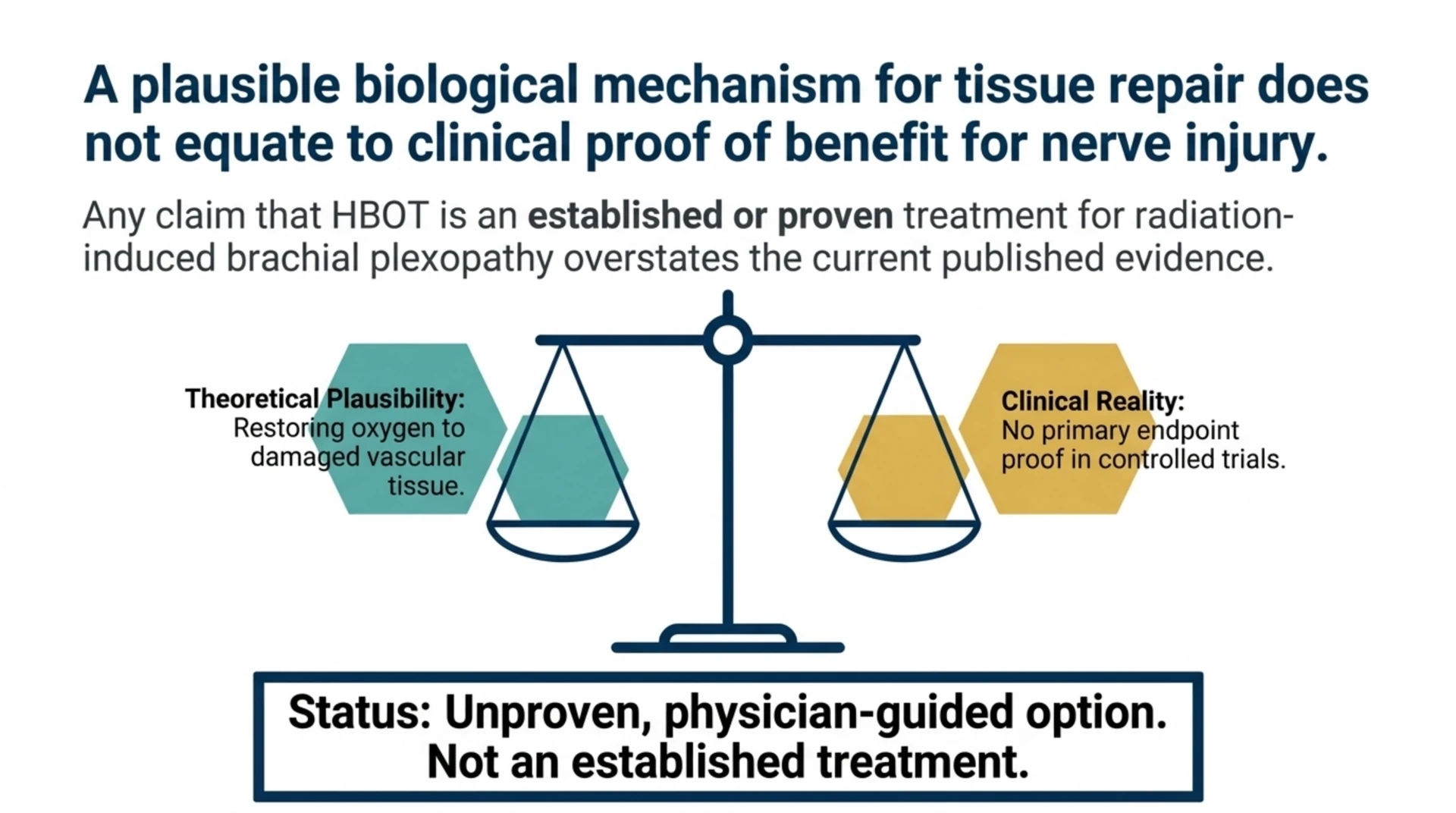
A double-blind, randomised phase II trial (Pritchard et al., PubMed | Our Assessment) remains the only controlled trial of HBOT for RIBP. It enrolled 34 patients and used warm sensory threshold, an objective nerve-function test, as its primary endpoint. The trial did not demonstrate a clear, statistically significant improvement in warm sensory threshold for the hyperbaric oxygen group compared with sham treatment. This is a critical finding: it is the only randomised, placebo-controlled data point specific to RIBP, and it was a negative result on its primary measure, not a confirmed benefit.
The Case Report
A 2019 case report and literature review (PubMed | Our Assessment) described a 45-year-old man who developed symptoms consistent with RIBP after radiotherapy and subsequently received HBOT. The authors situated this case within the broader, sparse literature of published RIBP cases. A single case report, however favourably it reads, cannot establish whether a treatment caused an outcome, because RIBP symptoms can fluctuate or plateau on their own, and case reports are more likely to be published when a course seems notable than when it does not.
Why Is the Wider Radiation-Injury Evidence Relevant Here?
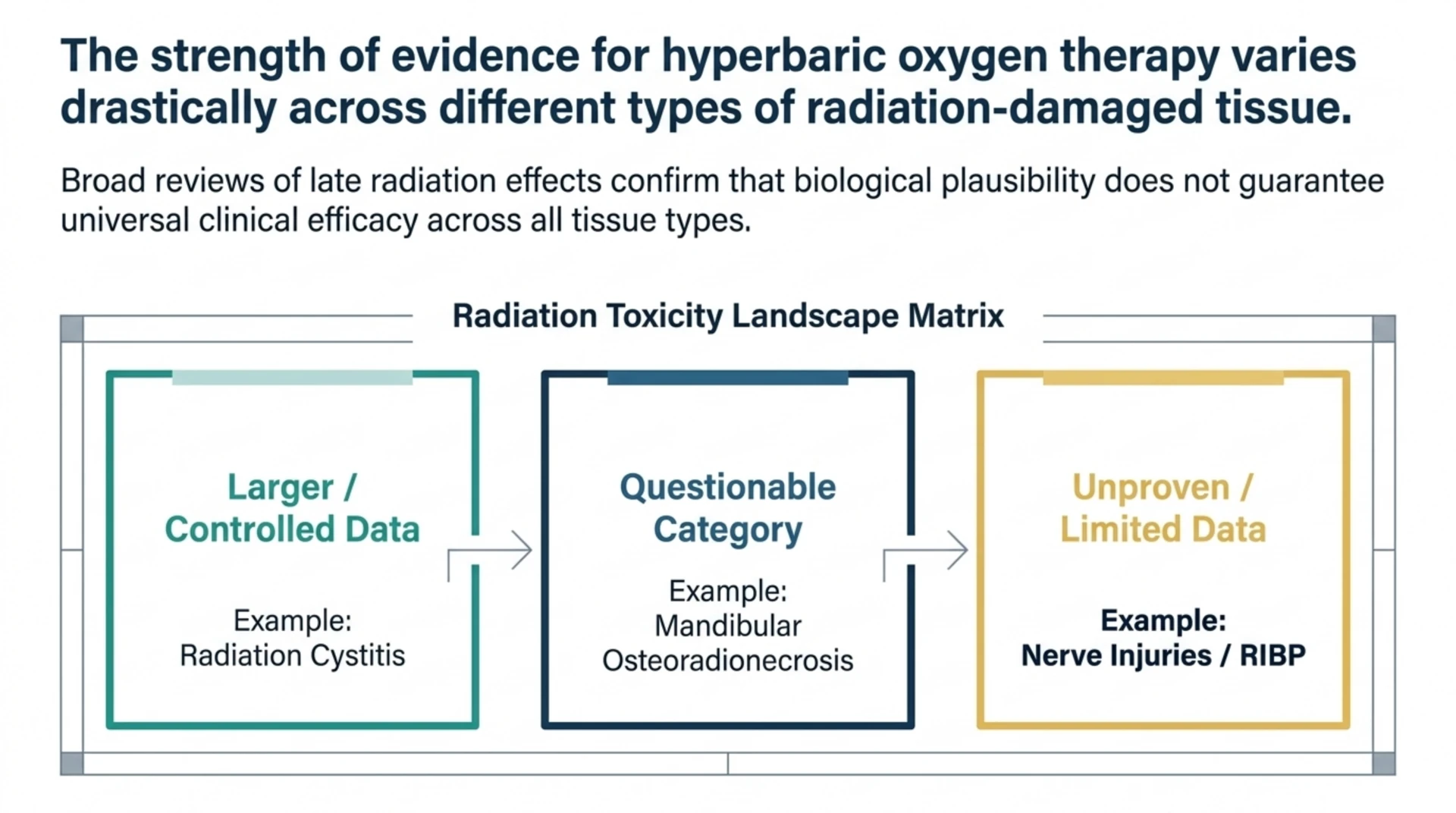
Beyond RIBP specifically, several broader reviews help put this narrow evidence base in context. A literature review examining HBOT’s role across late radiation toxicities, paired with a survey of French radiation oncologists’ knowledge and practice (Bennett et al., PubMed | Our Assessment) found that the strength of evidence varies considerably by indication. Notably, that review placed evidence for mandibular osteoradionecrosis, a bone complication, in a more questionable category rather than an established one, which illustrates that HBOT’s evidence base for late radiation effects is uneven across different tissues and conditions rather than uniformly strong. Nerve injuries such as RIBP were not among the better-supported indications in that landscape.
A more recent systematic review covering 42 studies and 2,785 patients on HBOT for radiotherapy side effects broadly (PubMed | Our Assessment) is itself titled around the uncertainty in this field, reflecting that even across radiation-effect indications generally, the evidence is mixed rather than settled. Similarly, a clinically focused review of HBOT for chronic radiotherapy-related adverse effects (PubMed | Our Assessment) set out specifically to critically evaluate this evidence rather than assume it, which is the appropriate posture for a nerve condition like RIBP where the only controlled trial available was negative on its primary endpoint.
How Strong Is the Evidence, Honestly?
For radiation-induced brachial plexopathy specifically, the evidence supporting HBOT is limited and does not currently establish a clear benefit. There is one small randomised trial that did not meet its primary endpoint, and one case report that cannot show causation. This stands in contrast to some other late radiation effects, such as certain presentations of osteoradionecrosis or radiation cystitis, where larger or controlled studies exist within the Canada Hyperbarics research library, drawn from a collection of over 14,000 peer-reviewed studies the library tracks and reviews.
Readers should take two things from this: first, a plausible biological mechanism (restoring oxygen to damaged, scarred tissue) does exist for why HBOT might theoretically help RIBP. Second, plausibility is not the same as proof, and the single controlled trial conducted so far did not confirm a benefit. Any claim that HBOT is an established or proven treatment for RIBP would overstate what this evidence shows.
Frequently Asked Questions
What is radiation-induced brachial plexopathy?
Radiation-induced brachial plexopathy is a delayed nerve injury affecting the shoulder and arm nerve network, occurring as a late complication of radiotherapy delivered near the chest, breast, or underarm region.
Is hyperbaric oxygen therapy a proven treatment for RIBP?
No. The only randomised controlled trial of HBOT for RIBP did not show a significant improvement on its primary endpoint, and the remaining evidence consists of a single case report, which cannot establish cause and effect.
How is RIBP different from cancer returning in the arm?
Both can cause similar symptoms, including weakness, pain, and numbness, which is why specialist evaluation, often including imaging, is needed to distinguish RIBP from tumour recurrence before any treatment decision is made.
Why might oxygen therapy be considered for a nerve injury caused by radiation?
The proposed mechanism relates to radiation’s damage to small blood vessels, which leaves tissue chronically low in oxygen. HBOT temporarily raises circulating oxygen levels, a mechanism studied more thoroughly in other late radiation effects than in RIBP.
Does the evidence for HBOT differ across types of radiation injury?
Yes. Reviews of the broader radiation-injury literature describe the evidence as uneven, with some indications better supported than others, and nerve injuries like RIBP among the least studied with controlled data.
Should someone with RIBP ask about hyperbaric oxygen therapy?
That is a conversation to have with a treating physician or radiation oncologist, who can weigh the limited evidence against the individual’s specific case and other treatment options.
Related Reading
- Hyperbaric Oxygen and Mitochondrial Biogenesis Mechanisms
- Medications to Hold Before Hyperbaric Oxygen Therapy
- Hyperbaric Oxygen Therapy Pregnancy Safety: FAQ
Anyone considering hyperbaric oxygen therapy for radiation-induced brachial plexopathy, or any other late effect of radiotherapy, should discuss the limited and mixed evidence with their physician to decide whether it is appropriate for their specific situation. The Canada Hyperbarics research library will continue to track this topic as new studies are published.
This content is for informational purposes only and is not medical advice.