
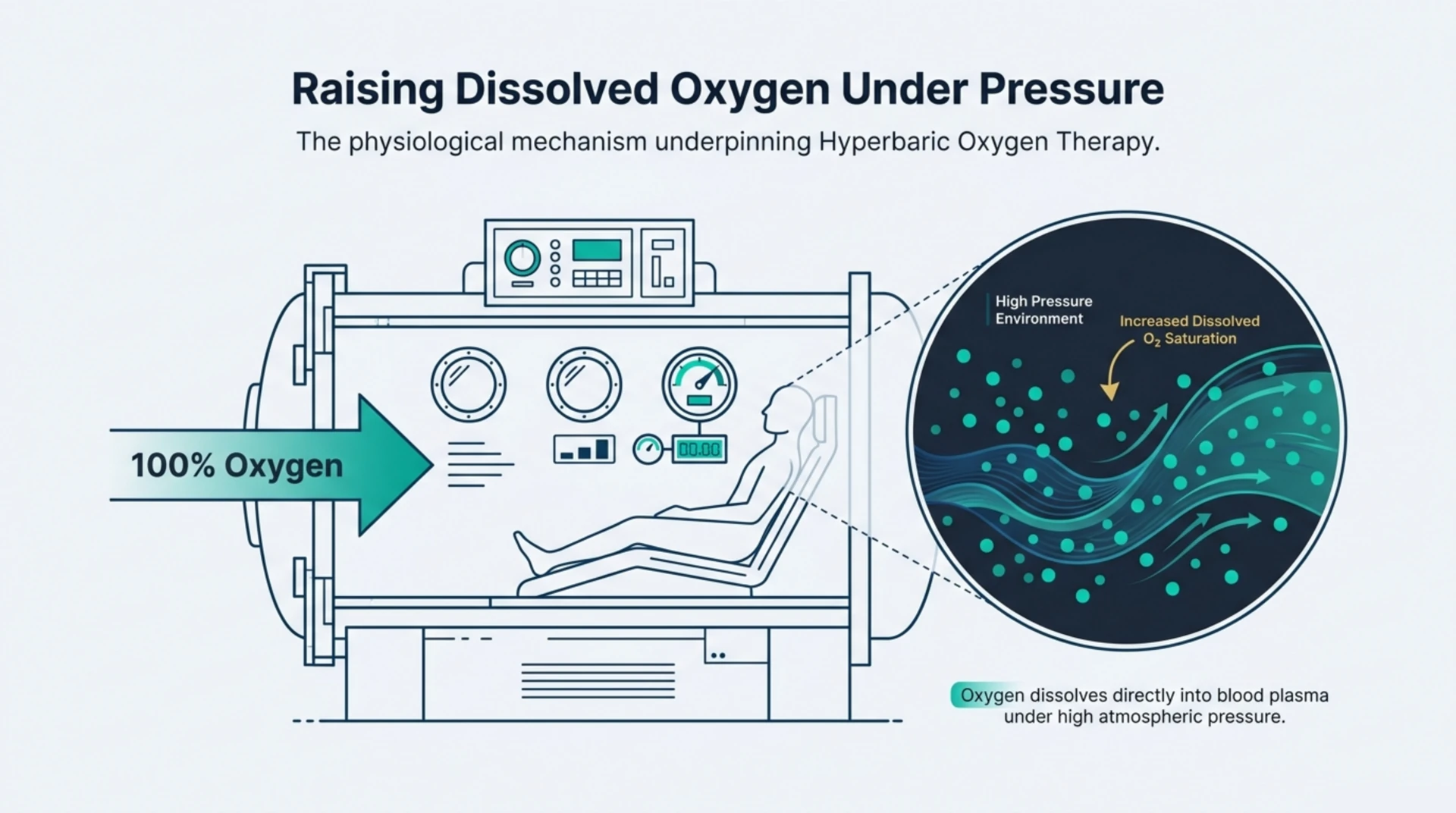
TL;DR: Hyperbaric oxygen therapy (HBOT) is a treatment that delivers 100% oxygen to a patient inside a pressurized chamber to raise the amount of oxygen dissolved in the blood. Adverse event reporting quality in HBOT research is uneven: a large systematic review of ear-related side effects gives researchers a solid, quantified picture, while many condition-specific meta-analyses and Cochrane reviews name safety as an evaluated outcome without always publishing granular event-level detail, and individual case reports fill some of the remaining gaps. Anyone using this literature to weigh risk should read past the headline efficacy numbers to see how, and how completely, harms were actually tracked.
Hyperbaric oxygen therapy adverse event reporting quality is a systematic review question in its own right, separate from whether HBOT works for a given condition. A treatment can look effective in trial after trial while the underlying safety data stays thin, inconsistent, or buried in supplementary tables. For researchers and clinicians deciding how much weight to put on a given piece of HBOT evidence, the completeness of its adverse event reporting matters as much as its effect size. The Canada Hyperbarics research library exists to make that kind of scrutiny easier, and this review pulls together what the available systematic reviews, meta-analyses, and case-level reports actually show about how well HBOT safety data gets documented.
What Is Hyperbaric Oxygen Therapy?
Hyperbaric oxygen therapy (HBOT) is a medical treatment in which a patient breathes 100% oxygen inside a chamber pressurized above normal atmospheric pressure. The increased pressure and oxygen concentration raise the amount of oxygen dissolved directly in blood plasma, which is the mechanism researchers point to when studying its effects on wound healing, tissue injury, and a range of other conditions. Because HBOT is delivered in a controlled clinical setting over a defined number of sessions, it is, in principle, well suited to structured adverse event tracking. Whether that potential is realized in the published literature is a separate question.
Why Does Adverse Event Reporting Quality Matter in HBOT Research?
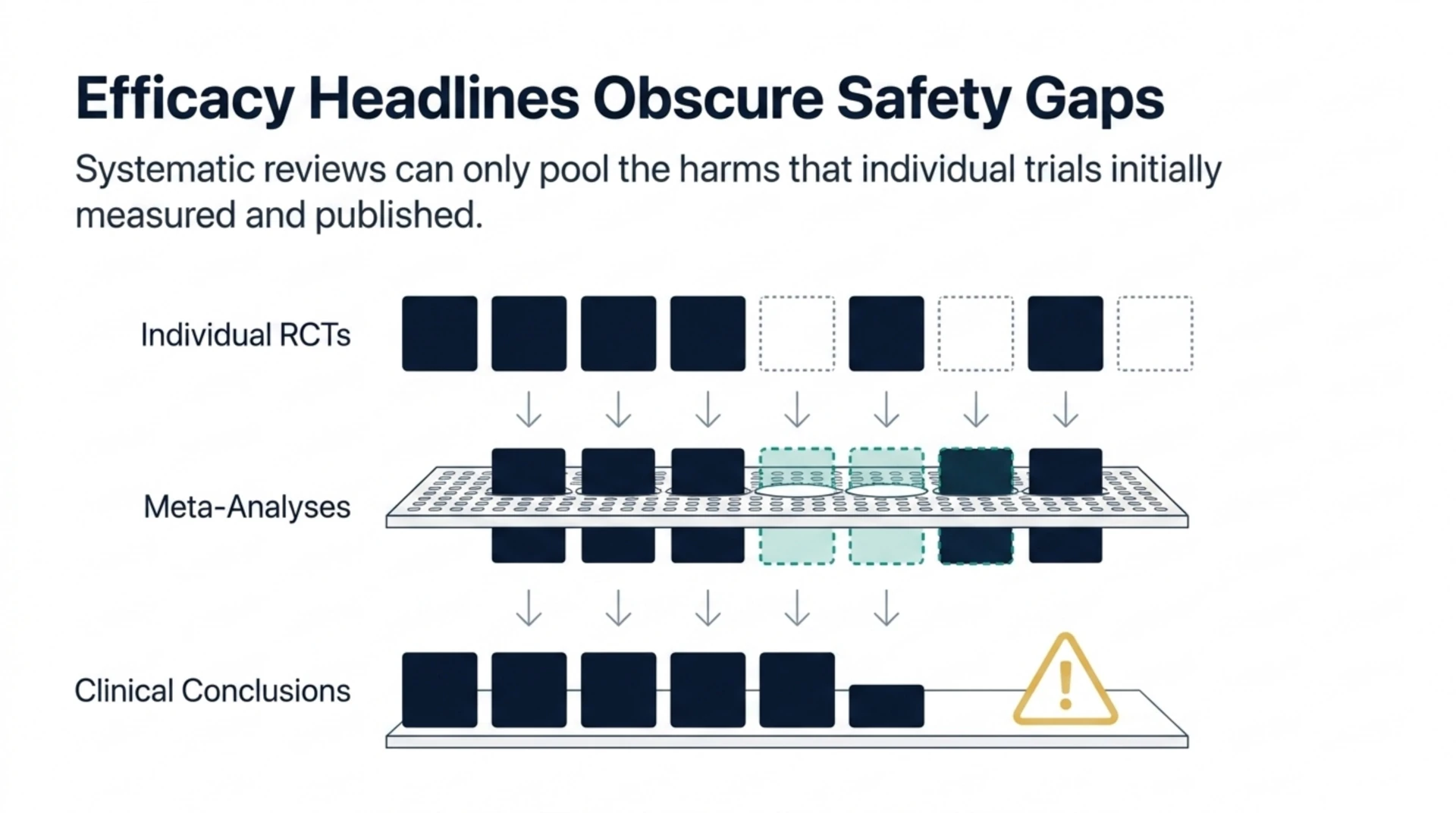
Adverse event reporting quality shapes what a reader can actually conclude from a trial or review. If a study reports efficacy in detail but safety only in a single sentence, the true risk profile of the treatment stays hidden. The strength of a systematic review’s safety conclusions depends entirely on how consistently the underlying studies collected and reported harms in the first place. A review can only pool what individual trials measured, so gaps at the trial level become gaps at the review level.
This matters more for HBOT than for many drugs, because HBOT is used across a wide range of unrelated conditions, from wound care to sensorineural hearing loss to radiation injury. Each application has its own trial tradition, its own reporting norms, and its own sample sizes, which means adverse event data does not arrive in one tidy, comparable stream.
What Does the Largest Systematic Review of HBOT Adverse Events Show?
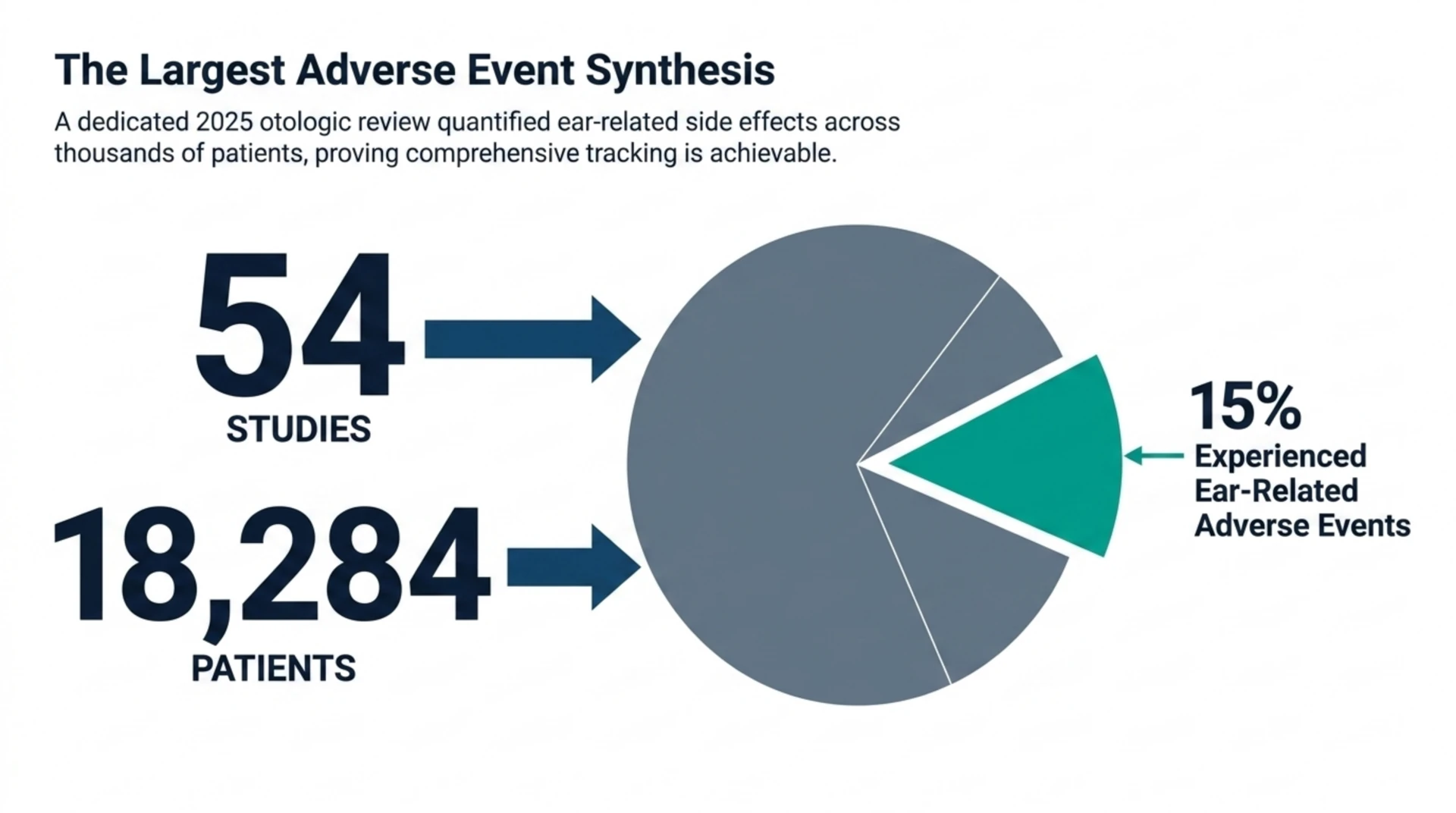
The most directly relevant evidence on this question comes from a 2025 systematic review (Undersea Hyperb Med, PubMed | Our Assessment) that set out specifically to catalogue ear-related adverse events from HBOT. It is, by its own description, the largest review of its kind, pooling 54 studies covering 18,284 patients. The review found that overall, roughly 15% of patients experienced some form of ear-related adverse event across the pooled studies.
That figure is useful precisely because it exists at all. Most HBOT literature does not attempt this kind of dedicated, organ-system-specific adverse event synthesis. The otologic review shows what becomes possible when researchers treat adverse event reporting as the primary object of study rather than a secondary footnote to an efficacy analysis, and it sets a benchmark for what thorough HBOT safety reporting can look like.
How Is Safety Reported Across Other HBOT Applications?
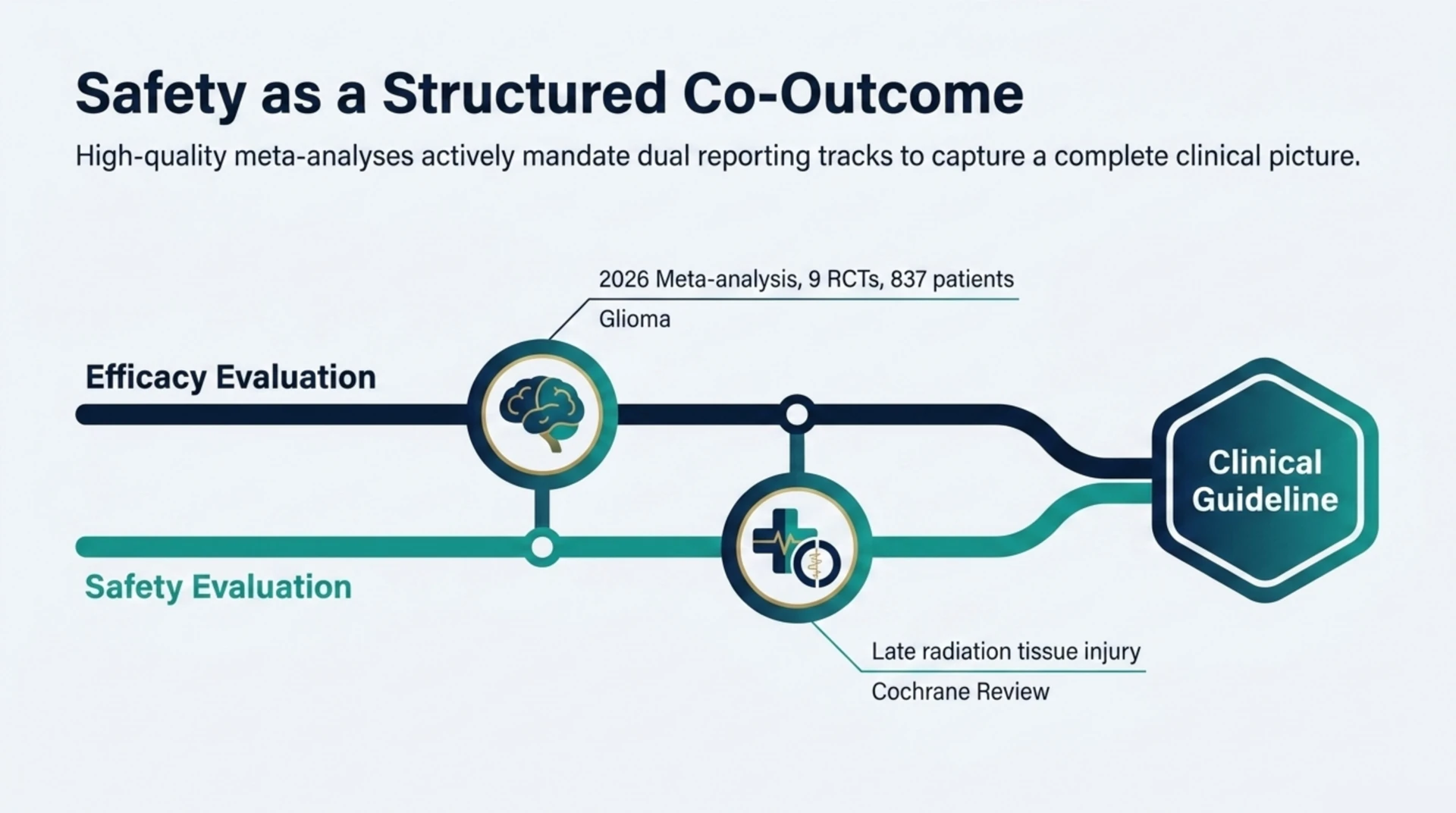
Outside of the dedicated otologic review, safety data in HBOT research more often appears as a co-outcome alongside efficacy, with reporting depth that varies by condition and study design.
Oncology and Radiation-Related Indications
A 2026 meta-analysis of concurrent HBOT with chemoradiotherapy for glioma (Clinical & Translational Oncology, PubMed | Our Assessment) pooled nine randomised controlled trials involving 837 patients, with both efficacy and safety named as evaluation targets. Naming safety as a co-primary outcome in a meta-analysis protocol is itself a marker of reporting intent, even before considering how each included trial documented harms individually.
Similarly, the Cochrane review of HBOT for late radiation tissue injury (PubMed | Our Assessment) was explicitly structured to assess both the benefits and the harms of treatment, which is the Cochrane collaboration’s standard practice and generally produces more consistent adverse event documentation than a narrower efficacy-only review.
A 2025 randomised controlled trial, the RICH-ART study on radiation-induced cystitis (EClinicalMedicine, PubMed | Our Assessment), followed patients for five years after randomisation to HBOT versus standard care. Long-term follow-up of this length is one of the stronger designs for catching delayed or cumulative adverse events, something shorter trials simply cannot detect regardless of how carefully they report.
Hearing Loss and Wound Care
A 2025 systematic review and meta-analysis of HBOT combined with corticosteroids for sudden sensorineural hearing loss (European Archives of Oto-Rhino-Laryngology, PubMed | Our Assessment) pooled 14 randomised controlled trials with 794 participants specifically to evaluate the combination’s efficacy and safety together, again treating harms as a defined outcome rather than an afterthought.
In wound care, a 2025 meta-analysis built for the Italian Guidelines for the Treatment of Diabetic Foot Syndrome (Acta Diabetol, PubMed | Our Assessment) compared HBOT against skin substitutes, negative pressure wound therapy, platelet-rich plasma, and growth factors across 51 randomised controlled trials. Guideline-development meta-analyses like this one are generally held to a higher reporting standard than a single-condition efficacy review, because the output is meant to directly inform clinical practice recommendations.
What Role Do Case Reports and Small Case Series Play in Adverse Event Detection?
Systematic reviews and meta-analyses are not the only source of adverse event information in the HBOT literature. Individual case reports and small retrospective series fill in detail that pooled analyses miss, though they carry their own limitations.
One 2025 case report (Undersea Hyperb Med, PubMed | Our Assessment) documented a 43-year-old patient who developed dermatologic complications after ozone therapy and was subsequently treated with HBOT. This is not a report of an HBOT adverse event, but it illustrates how single-patient case reporting operates as a parallel channel to systematic reviews: granular, immediate, but not generalisable on its own.
A 2025 retrospective analysis of 19 patients with late radiation tissue injury of the vagina (Gynecol Oncol, PubMed | Our Assessment) followed patients who received an average of 40 HBOT sessions. Small retrospective series like this one can surface real-world treatment patterns that trials miss, but their limited sample size means they are poorly suited to establishing how common any given adverse event actually is.
Where Are the Gaps in Current Adverse Event Reporting for HBOT?
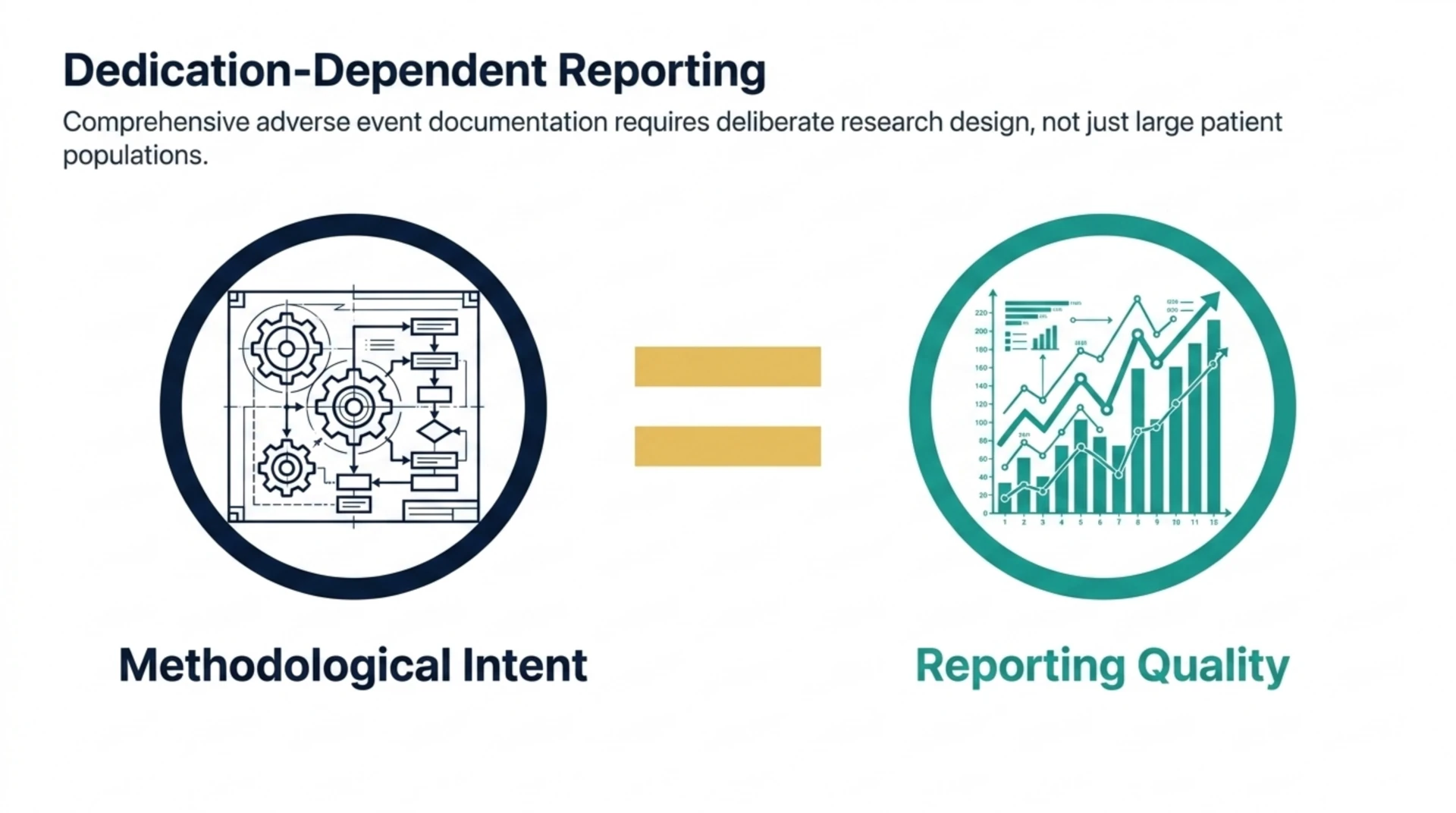
Taken together, the picture is one of uneven depth rather than uniform neglect. The otologic adverse event review shows that comprehensive, quantified safety synthesis is achievable for HBOT when researchers design a review specifically to produce it. Most condition-specific reviews, by contrast, list safety as an evaluated outcome without always breaking out event rates, severity grading, or time-to-onset in a way that supports cross-study comparison.
The honest conclusion for a researcher weighing this evidence base is that adverse event reporting quality in HBOT research is dedication-dependent, not automatic. Reviews built around safety as the primary question, like the otologic review, and trials with long structured follow-up, like RICH-ART, currently set the standard. Efficacy-first reviews and single case reports fill important gaps but should not be read as offering the same level of systematic safety assurance.
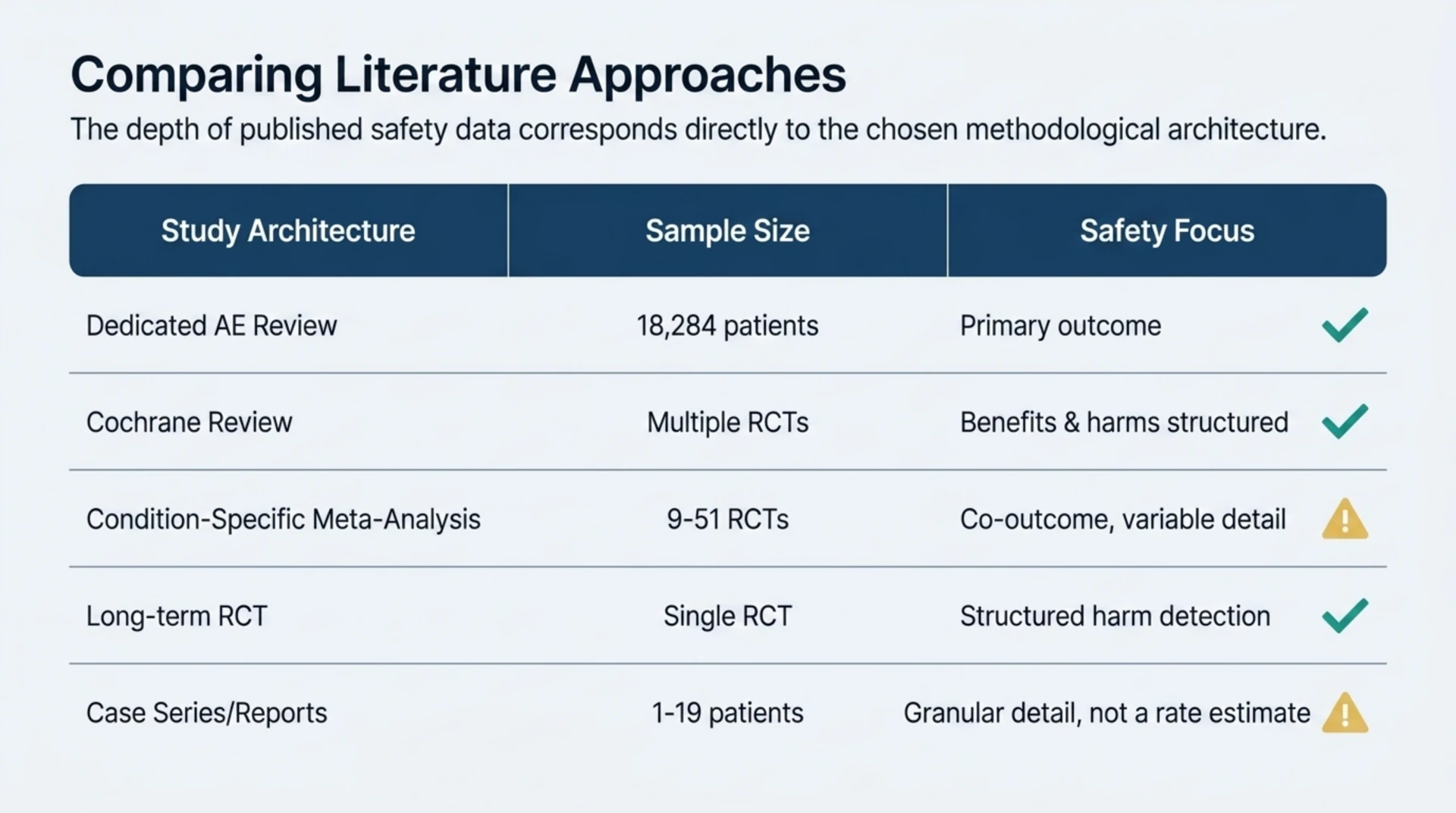
Comparing Reporting Approaches Across the HBOT Literature
| Study Type | Example | Sample Size | Safety Reporting Focus |
|---|---|---|---|
| Dedicated adverse event systematic review | Otologic adverse events review | 54 studies, 18,284 patients | Primary outcome, quantified rate reported |
| Cochrane review | Late radiation tissue injury | Multiple RCTs | Benefits and harms both structured as outcomes |
| Condition-specific meta-analysis | Glioma chemoradiotherapy, SSNHL, diabetic foot ulcers | 9 to 51 RCTs per review | Safety named as co-outcome, detail varies |
| Long-term RCT follow-up | RICH-ART trial | Single RCT, 5-year follow-up | Structured long-term harm detection |
| Retrospective case series | Vaginal late radiation injury | 19 patients | Real-world pattern, limited generalisability |
| Single case report | Ozone therapy complication treated with HBOT | 1 patient | Granular detail, not a rate estimate |
Frequently Asked Questions
What is hyperbaric oxygen therapy adverse event reporting quality?
It refers to how completely and consistently studies of HBOT document, quantify, and publish the harms or side effects observed during treatment, as distinct from how well they document benefits.
What is the most common adverse event studied in HBOT research?
Ear-related adverse events are the most systematically studied to date. The dedicated otologic review found that approximately 15% of patients across 54 pooled studies experienced some form of ear-related adverse event.
Do HBOT trials generally report safety data alongside efficacy?
Many condition-specific meta-analyses and Cochrane reviews name safety as an evaluated outcome, but the depth of that reporting, such as specific event rates or severity grading, varies considerably between reviews.
Are case reports useful for understanding HBOT adverse events?
Case reports and small retrospective series can surface specific real-world events in detail, but their small sample sizes mean they cannot establish how frequently an event occurs across the broader patient population.
Why does adverse event reporting quality matter for researchers?
A systematic review can only summarise what its included studies measured. If trial-level adverse event reporting is thin or inconsistent, the resulting review’s safety conclusions inherit that same limitation, regardless of how large the pooled patient count looks.
Is there a single systematic review of adverse event reporting quality across all HBOT applications?
Not currently in the available literature. The closest available evidence is a dedicated review focused specifically on otologic adverse events, alongside safety data embedded within condition-specific meta-analyses and Cochrane reviews covering other applications.
Related Reading
- HBOT for Malignant Otitis Externa: Evidence Review
- Hyperbaric Oxygen Therapy for ALS: The Evidence
- Hyperbaric Chamber Downtime: Business Continuity Plan
For readers looking at HBOT for a specific medically recognised indication in Canada, the HBOT coverage in Canada overview outlines which uses are established and how coverage works. This review, compiled from the Canada Hyperbarics research library of more than 14,000 peer-reviewed studies, is not a substitute for individual medical guidance. Anyone considering HBOT, or trying to interpret what its safety literature does and does not say, should talk to their physician about whether it is appropriate for their specific situation.
This content is for informational purposes only and is not medical advice.