
TL;DR: Hyperbaric oxygen therapy (HBOT) is a medical treatment in which a person breathes near-100% oxygen inside a pressurized chamber, and a growing body of preclinical research is asking whether this changes how cells build, repair, and clear their mitochondria, the structures that generate cellular energy. The clearest evidence so far comes from animal and cell studies showing HBOT can restore mitochondrial function after injury or stress, with one human randomised controlled trial measuring mitochondrial respiration directly. Some of the same research also shows that hyperoxia can stress mitochondria if the dose or context is wrong, so this is not a one-directional story.
Hyperbaric oxygen therapy (HBOT) is a treatment that delivers oxygen at pressures greater than normal atmospheric pressure, typically while a patient sits or lies in a sealed chamber. One of the more mechanistically interesting questions in current HBOT research is whether this pressurized oxygen exposure influences mitochondrial biogenesis, the process by which cells build new mitochondria to meet energy demand or replace damaged ones. This article reviews what the available studies in the Canada Hyperbarics research library actually show about hyperbaric oxygen and mitochondrial biogenesis mechanisms, and where the evidence is direct versus where it is still indirect.
What Is Mitochondrial Biogenesis, and Why Does It Matter?
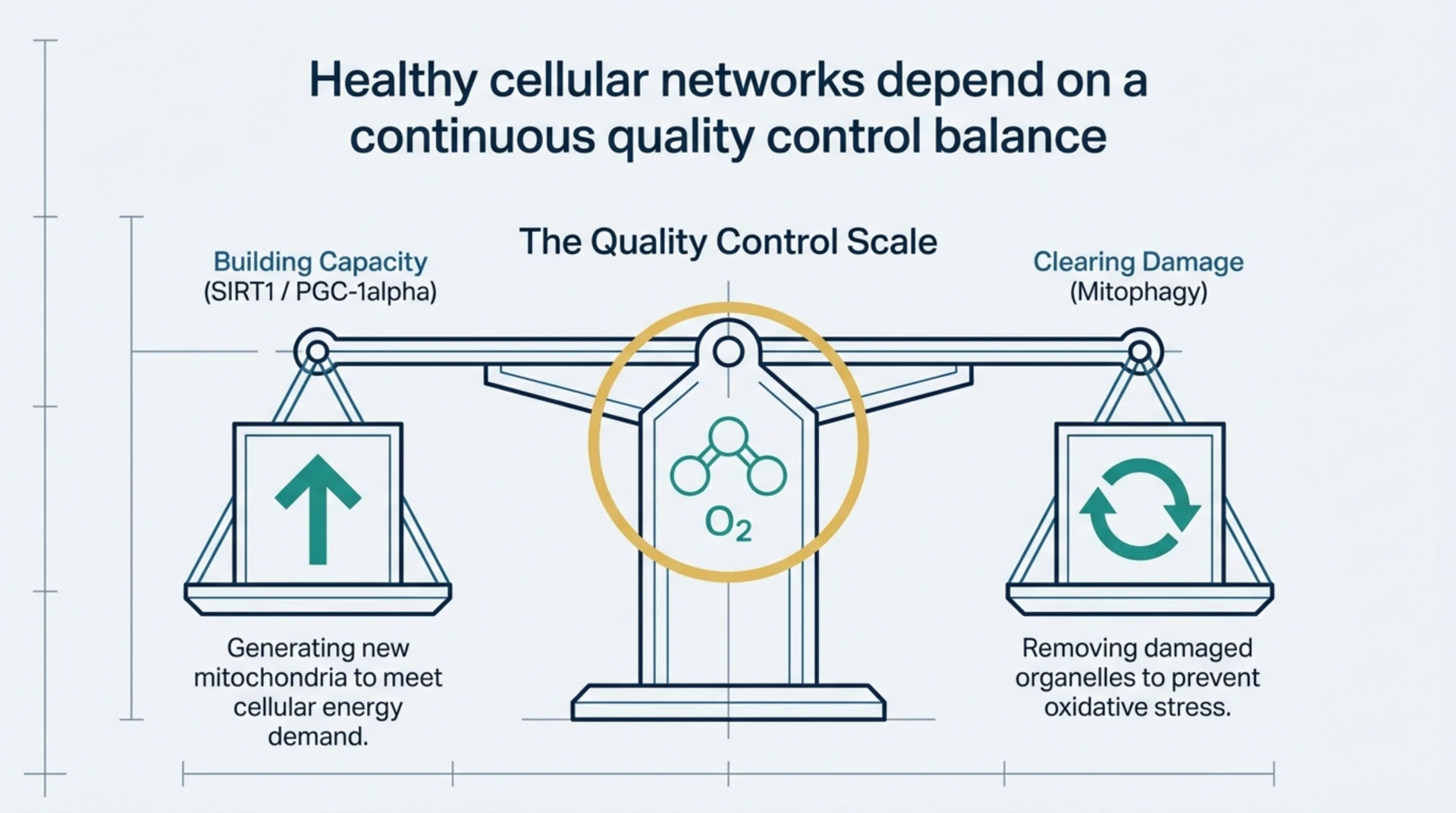
Mitochondria are the organelles that convert nutrients and oxygen into usable cellular energy (ATP). Mitochondrial biogenesis is the coordinated process cells use to grow their mitochondrial network, driven largely by signalling pathways such as SIRT1 and PGC-1alpha. A related but distinct process, mitophagy, clears out damaged mitochondria so they do not accumulate and cause oxidative damage. Both processes together determine whether a tissue’s mitochondrial pool is healthy, aging, or under stress, which is why researchers studying oxygen-based therapies are interested in whether HBOT can influence either side of this balance.
How Might Hyperbaric Oxygen Influence Mitochondrial Health?
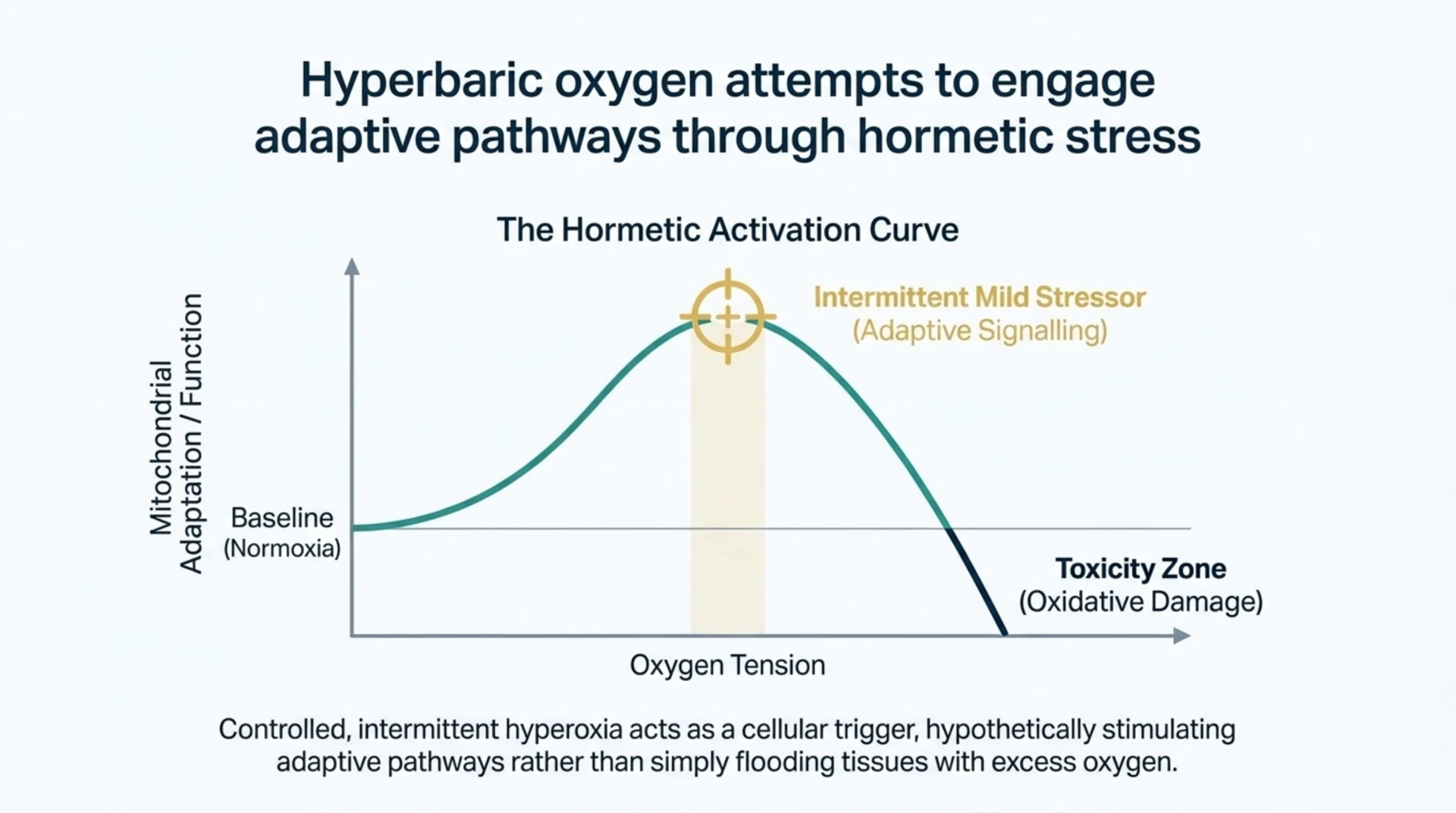
The proposed mechanism is a hormetic one: a controlled, intermittent increase in oxygen tension is thought to act as a mild stressor that triggers adaptive signalling, rather than simply flooding tissue with oxygen. A 2021 review in Biomolecules (PubMed | Our Assessment) summarized the existing literature on how hyperbaric oxygen treatment affects mitochondrial function and oxidative stress, describing this as an active and still-developing research area rather than a settled mechanism.
Within that framework, two mitochondrial quality-control pathways come up repeatedly in the pool of studies reviewed here: the SIRT1 activation pathway, which is upstream of biogenesis signalling, and mitophagy, the clearance pathway. Preclinical studies suggest HBOT can engage both, though the downstream, confirmed effect in each study is tissue- and model-specific.
What Does the Direct Evidence Show in Animal and Cell Models?
Restoring SIRT1 and mitochondrial function after ischaemia
A 2025 study in Free Radical Biology & Medicine (PubMed | Our Assessment) investigated hyperbaric oxygen therapy in high-fat-diet mice with limb ischaemia and in human endothelial cells, focusing on SIRT1 activation. In this model, HBOT attenuated limb ischaemia by restoring SIRT1 activity and mitochondrial function, a finding scoped specifically to this mouse and cell-culture study rather than a general claim about humans with vascular disease.
Mitophagy pre-activation and oxygen toxicity protection
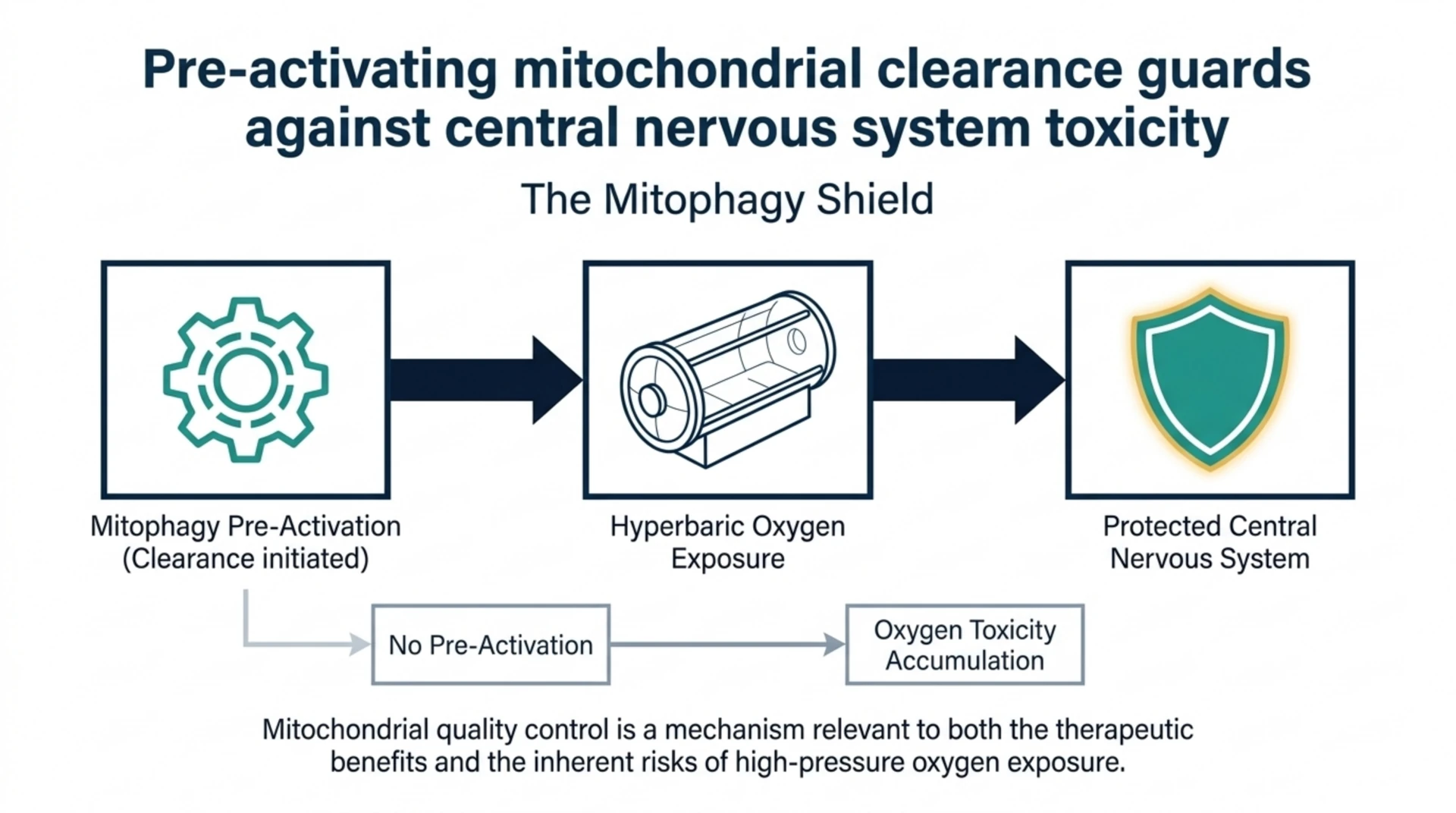
A 2026 study in the International Journal of Molecular Sciences (PubMed | Our Assessment) examined whether activating mitophagy, the mitochondrial clean-up process, before hyperbaric oxygen exposure could protect brain cells from central nervous system oxygen toxicity. In this study, pre-activating mitophagy protected against HBOT-induced oxygen toxicity, pointing to mitochondrial quality control as a mechanism relevant to both the benefits and the risks of high-pressure oxygen exposure.
Mitochondrial function in an aging cardiac model
A 2021 study in Aging (PubMed | Our Assessment) tested whether HBOT could alleviate D-galactose-induced, age-related cardiac dysfunction in pre-diabetic rats by improving mitochondrial function. This is another preclinical, disease-model result: it was associated with improved mitochondrial parameters in that specific rat model, not a demonstrated outcome in people with diabetes or heart disease.
Where the Direct Human Evidence Stands
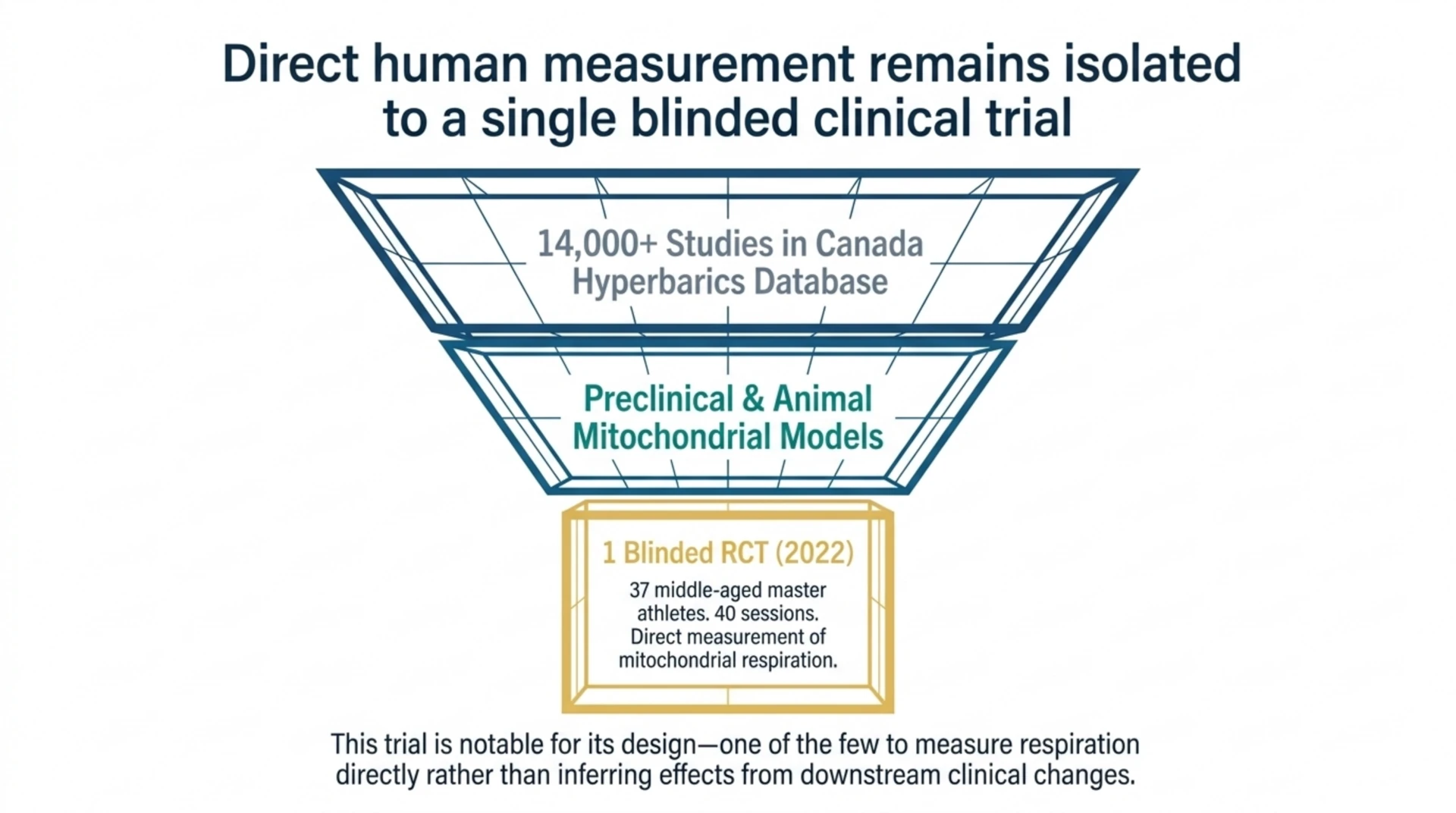
Human RCT-level evidence that directly measures mitochondrial outcomes under HBOT is limited. The clearest example in this pool is a blinded, randomised, placebo-controlled trial in Sports Medicine – Open (PubMed | Our Assessment), which enrolled 37 middle-aged master athletes to evaluate 40 sessions of HBOT against placebo, with mitochondrial respiration and physical performance as the measured outcomes. This trial is notable mainly for its design: it is one of the few controlled, blinded human studies to measure mitochondrial respiration directly rather than inferring mitochondrial effects from downstream clinical outcomes.
Is the Neurodegenerative Disease Literature Relevant Here?
A 2025 review in Sheng Li Xue Bao (PubMed | Our Assessment) reviewed the literature on how HBOT may affect the brain in neurodegenerative diseases such as Alzheimer’s, Parkinson’s, and ALS, discussing several proposed mechanisms, including effects on mitochondria and on inflammation. This is a narrative review of mechanistic themes across a broad disease category, not a study that isolates mitochondrial biogenesis as a primary, independently measured endpoint, so it should be read as supporting context for the plausibility of a mitochondrial mechanism rather than direct proof of one.
A Necessary Caution: Hyperoxia Can Also Stress Mitochondria
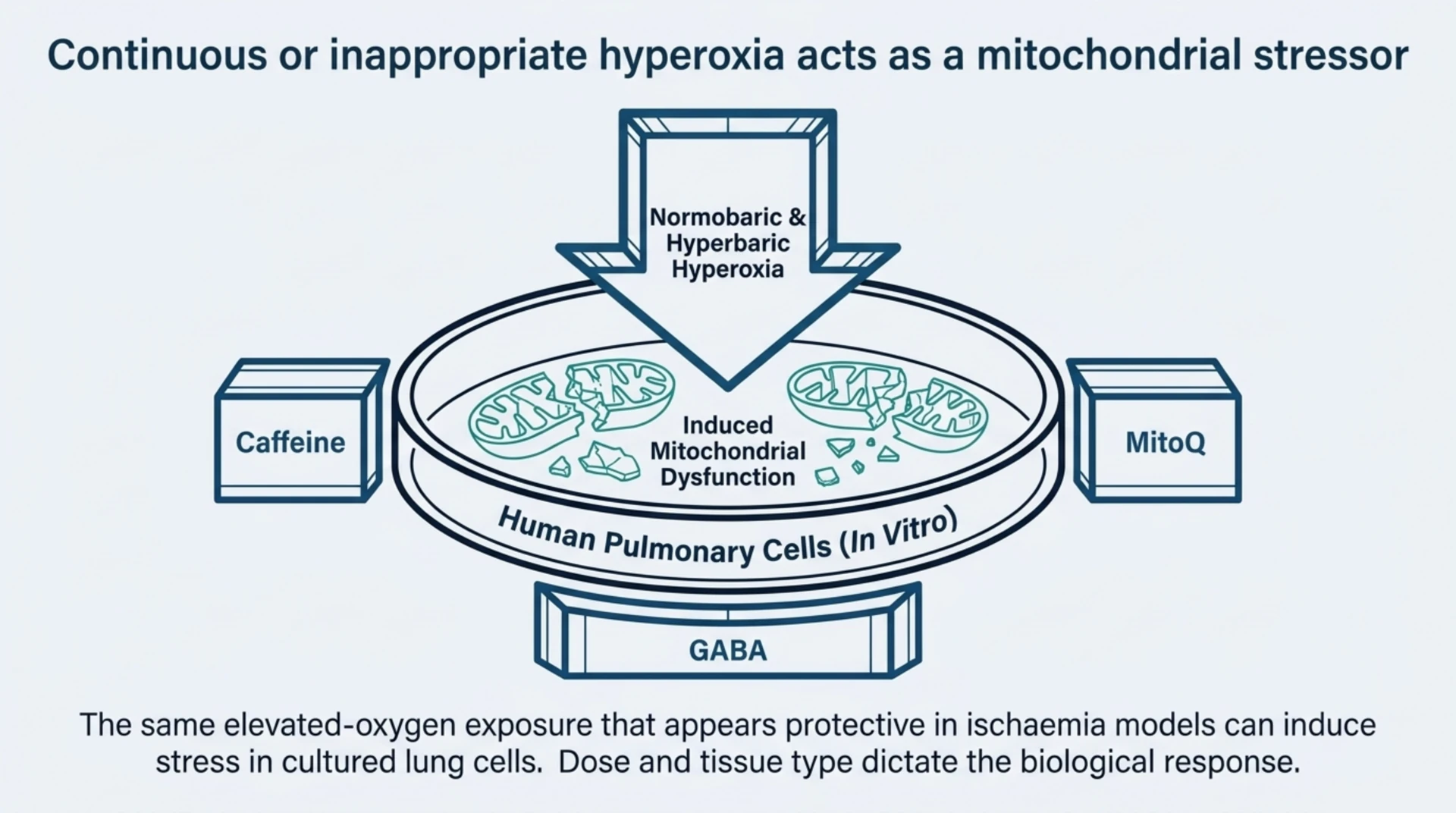
An honest evidence review has to include the countervailing findings. A study in Oxidative Medicine and Cellular Longevity (PubMed | Our Assessment) tested caffeine, MitoQ, and GABA as prophylactic agents against mitochondrial alterations induced in human pulmonary cells, in vitro, by both normobaric and hyperbaric hyperoxia. The underlying premise of this study is that hyperoxia, including hyperbaric hyperoxia, can itself induce mitochondrial dysfunction in cultured human lung cells, which is why researchers were testing whether antioxidant compounds could prevent it. This is a useful counterweight: the same elevated-oxygen exposure that appears protective in some ischaemia and injury models can be a mitochondrial stressor in other cell types and contexts. Dose, tissue type, and pre-existing condition all appear to matter.
| Study | Design | Mitochondrial finding |
|---|---|---|
| SIRT1 / limb ischaemia (2025) | Mouse + human cell model | SIRT1 and mitochondrial function restored after HBOT |
| Mitophagy pre-activation (2026) | Preclinical, CNS oxygen toxicity model | Mitophagy activation protected against HBOT-induced toxicity |
| D-galactose cardiac model (2021) | Rat model | Mitochondrial function improved in aging cardiac tissue |
| Athlete RCT (2022) | Blinded RCT, humans (n=37) | Mitochondrial respiration directly measured as an outcome |
| Pulmonary cell hyperoxia study | In vitro, human cells | Hyperoxia induced mitochondrial dysfunction; antioxidants tested as protection |
How Strong Is This Evidence, Overall?
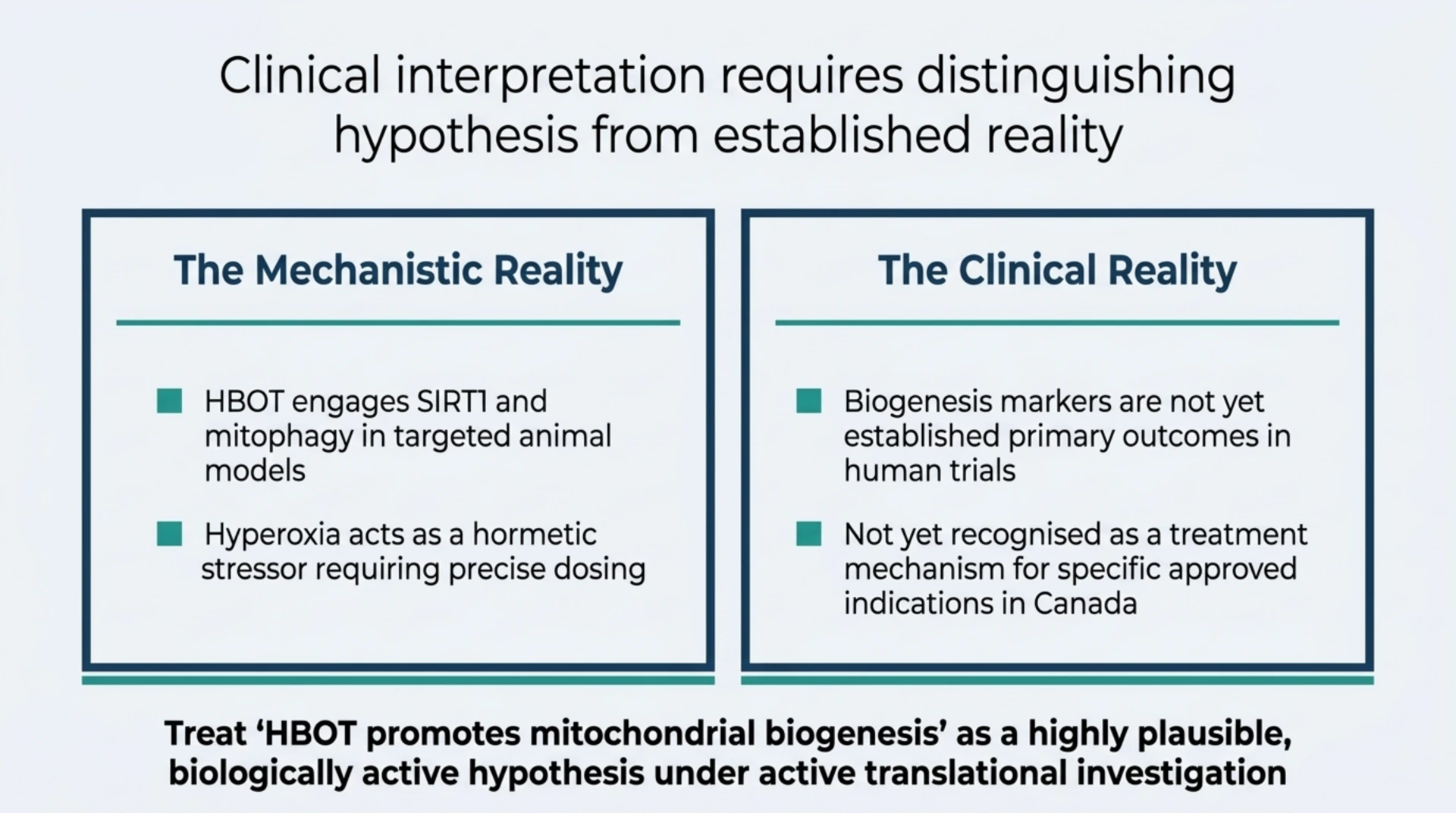
Most of the mechanistic evidence connecting HBOT to mitochondrial biogenesis and mitochondrial quality control comes from animal models and cell culture, with a single blinded RCT measuring mitochondrial respiration in humans and no study in this pool isolating biogenesis markers (such as PGC-1alpha expression) as a primary human outcome. The direction of effect is also not uniformly protective: the same pressurized-oxygen exposure that supports mitochondrial function in some ischaemia and aging models can stress mitochondria in other cell types. Readers, especially researchers, should treat “HBOT promotes mitochondrial biogenesis” as a plausible, mechanistically motivated hypothesis under active preclinical investigation, not as an established clinical effect. For background on which HBOT uses are currently recognised in Canada, see our overview of HBOT coverage in Canada.
Frequently Asked Questions
What is mitochondrial biogenesis?
Mitochondrial biogenesis is the process by which cells generate new mitochondria, regulated by signalling pathways including SIRT1 and PGC-1alpha, in response to energy demand, exercise, or cellular stress.
Does hyperbaric oxygen therapy directly increase mitochondrial biogenesis in humans?
Direct human evidence measuring biogenesis markers under HBOT is limited in the current literature. The strongest human data point in this review is a blinded RCT that measured mitochondrial respiration, a related but distinct outcome, in middle-aged athletes.
Can hyperbaric oxygen ever harm mitochondria instead of helping them?
Some in vitro research shows hyperoxia, including hyperbaric hyperoxia, can induce mitochondrial dysfunction in cultured human pulmonary cells, which is why that research also tested protective antioxidant compounds. Context, tissue type, and dosing appear to matter.
What is mitophagy, and how does it relate to biogenesis?
Mitophagy is the process that clears damaged mitochondria from a cell. It works alongside biogenesis to maintain a healthy mitochondrial pool; one preclinical study found that pre-activating mitophagy protected against HBOT-induced oxygen toxicity in the central nervous system.
Is this research relevant to a specific medical condition?
The studies reviewed here span limb ischaemia, cardiac aging, CNS oxygen toxicity, and athletic performance in different animal, cell, and human models. None of them establishes mitochondrial biogenesis as a treatment mechanism for a specific approved indication, so this should be read as basic and translational mechanism research rather than condition-specific clinical guidance.
Where can I read the full studies?
Each study cited above links to its original PubMed listing and to its assessment page in the Canada Hyperbarics research library, which currently indexes more than 14,000 peer-reviewed studies related to hyperbaric and hyperoxic research.
Related Reading
- Medications to Hold Before Hyperbaric Oxygen Therapy
- Hyperbaric Chamber Decommissioning and End of Life
- Hyperbaric Oxygen Therapy Pregnancy Safety: FAQ
A Note for Researchers and Clinicians
The Canada Hyperbarics research library compiles and assesses this kind of mechanistic literature specifically so that clinicians and researchers can trace a claim back to its source study and its actual design. If you are considering hyperbaric oxygen therapy for yourself or a patient, talk to a physician about whether it is appropriate for your specific situation.
This content is for informational purposes only and is not medical advice.