TL;DR: A hyperbaric oxygen response biomarker is a measurable biological signal, such as a blood test result, that might show who needs hyperbaric oxygen therapy (HBOT) or who is likely to respond to it. Most of the studies in our pool examine markers that predict the need for HBOT in carbon monoxide (CO) poisoning, not markers that confirm a treatment response. Evidence for true response markers in other conditions is early, indirect or limited to animal and review work.
Hyperbaric oxygen therapy (HBOT) is a treatment in which a person breathes oxygen at pressures above normal atmospheric pressure. Researchers have long wanted hyperbaric oxygen response biomarkers: lab values that could guide who should be treated and show whether the treatment is working.
This review from the Canada Hyperbarics research library looks at what ten selected studies actually support. The honest answer is narrower than the keyword suggests, and we say so plainly below.
What are hyperbaric oxygen response biomarkers?
A biomarker is a measurable characteristic that reflects a biological state. In HBOT research, it can play three different roles.
- Selection markers are measured before treatment and may predict who needs or benefits from HBOT.
- Exposure markers change after an HBOT session and show a biological effect, such as oxidative stress.
- Outcome markers track whether a patient improved after treatment.
These roles are often blurred in discussion. A marker that predicts who receives HBOT is not the same as a marker that proves HBOT worked. Keeping them apart is the main discipline of this post.
What does the evidence say about markers that predict the need for HBOT?
The strongest cluster in the pool comes from emergency medicine. Several studies asked whether routine blood tests at presentation could predict which CO-poisoned patients were treated with HBOT. These are predictive studies, and none of them tests whether a marker shows a patient responded to treatment.
Lactate and lactate clearance
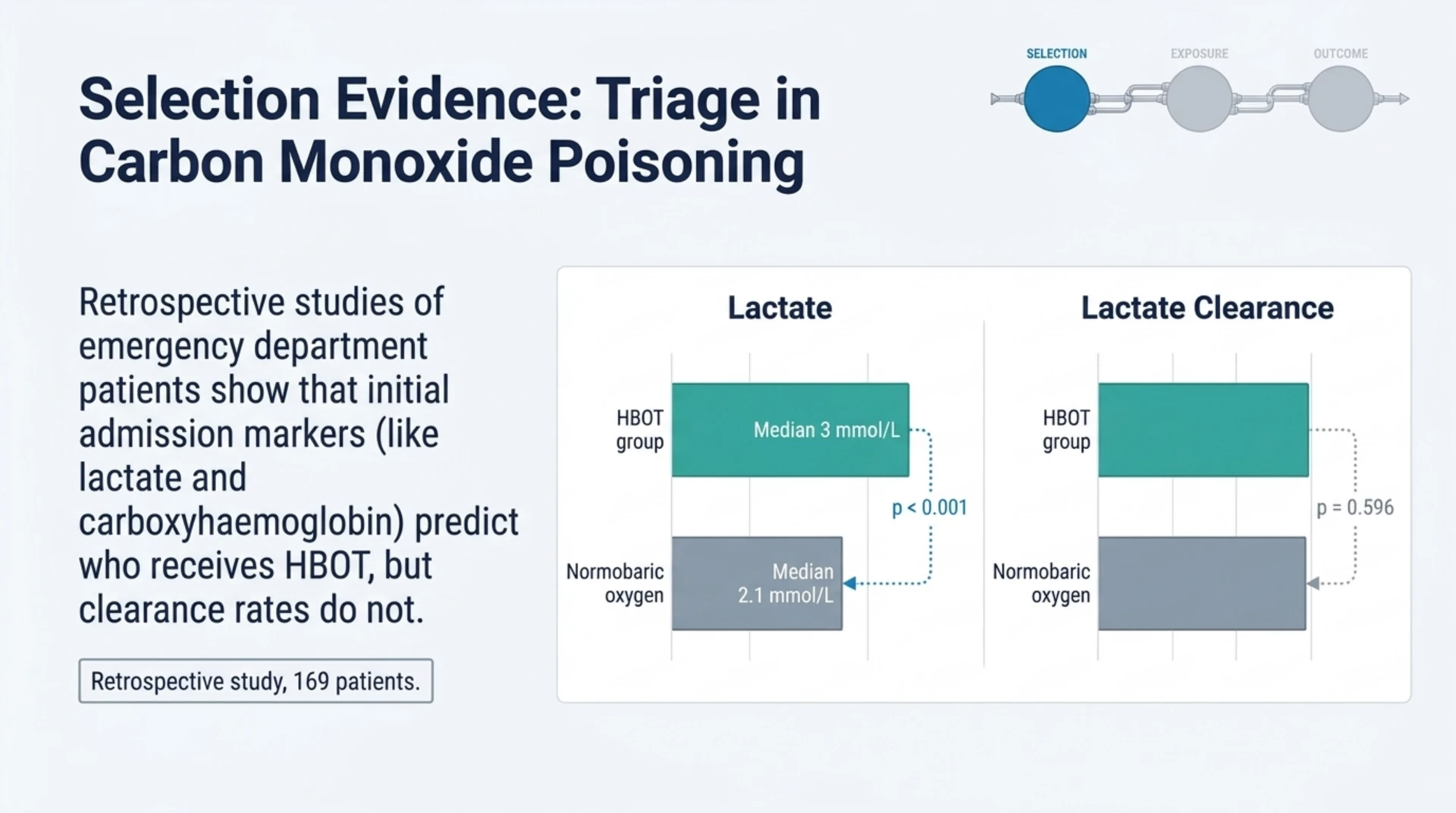
A retrospective study of 169 emergency department patients with CO poisoning (Clin Lab, 2026; PubMed | Our Assessment) compared patients given normobaric oxygen with those given HBOT. Median lactate was significantly higher in the HBOT group (3 mmol/L versus 2.1 mmol/L, p < 0.001). Lactate clearance did not differ meaningfully between groups, with no significant association between clearance and treatment type (p = 0.596).
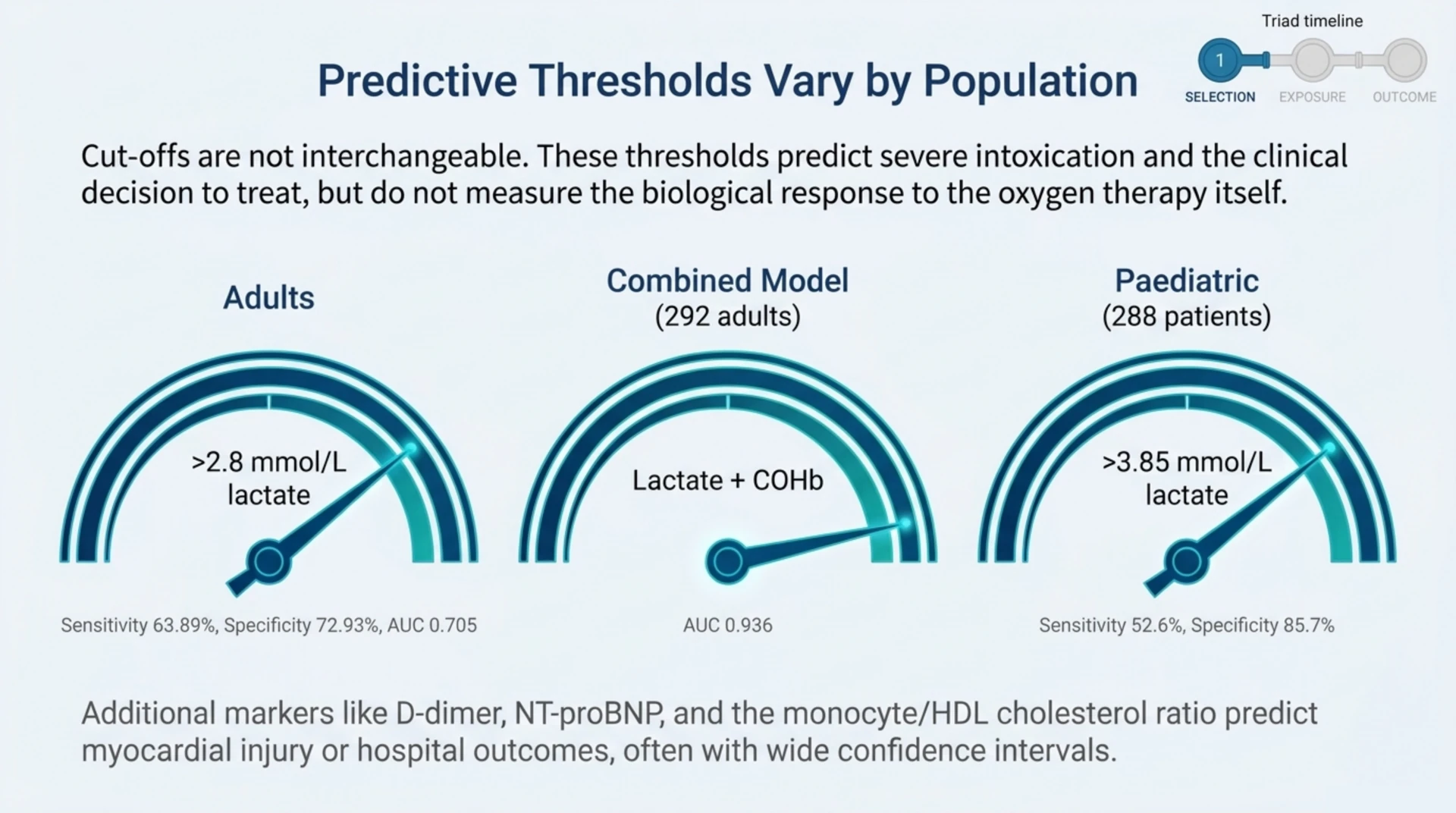
A lactate above 2.8 mmol/L predicted HBOT need with 63.89% sensitivity and 72.93% specificity (AUC 0.705). The authors concluded that initial lactate may better indicate HBOT need than clearance.
A second retrospective cross-sectional study of 292 adults (BMC Emerg Med, 2025; PubMed | Our Assessment) found that serum lactate and carboxyhemoglobin (COHb) were significantly higher in the 94 patients who received HBOT. Both were independent predictors of HBOT requirement. Lactate alone had an AUC of 0.754, and a model combining lactate and COHb reached 0.936. Hematologic markers alone showed limited predictive value.
A prospective study of 288 hospitalized children with CO intoxication (Pediatr Emerg Care, 2016; PubMed | Our Assessment) reported that a lactate of 3.85 mmol/L predicted severe intoxication with 52.6% sensitivity and 85.7% specificity. A carboxyhemoglobin level of 27.1% gave 70.5% sensitivity and 59.6% specificity. HBOT was necessary in only 2 children admitted with coma, so this study says little about HBOT selection in itself.
Inflammatory and cardiac markers
A prospective observational study of 82 patients with CO poisoning (Intern Emerg Med, 2025; PubMed | Our Assessment) found that the neutrophil-to-lymphocyte ratio (NLR) was an independent predictor of myocardial injury. For predicting HBOT need, D-dimer (AUC 0.737) and NT-proBNP (AUC 0.702) were significant predictors. These are moderate AUC values, and the study’s primary aim was injury prediction.
A retrospective cross-sectional study of 119 older adults with CO-induced myocardial injury (Medical gas research, 2025; PubMed | Our Assessment) examined a different question: in-hospital cardiovascular adverse events. A higher monocyte/HDL cholesterol ratio was identified as an independent risk factor, with a very wide confidence interval (OR 109.783, 95% CI 2.644 to 4557.834). That width signals considerable imprecision. This study predicts hospital outcomes, not HBOT response.
Which markers change after hyperbaric oxygen exposure?
A different kind of evidence looks at what HBOT itself does to the body. In a study of 19 healthy men (The British journal of nutrition, 2007; PubMed | Our Assessment), participants were exposed to 100% oxygen at 240 kPa, with exposure to 21% oxygen at 100 kPa as the intra-individual control.
Compared with control, a single HBOT exposure was associated with lower plasma vitamin C (P = 0.027), higher lipid peroxides (P = 0.0008) and higher urinary 8-oxo-deoxyguanosine excretion (P = 0.006). A four-week vitamin C and E supplement did not prevent this oxidative stress. The authors concluded that HBOT is a suitable model for oxidative stress in healthy volunteers.
This shows that HBOT produces measurable biochemical changes. It does not show that those changes predict benefit. The participants were healthy, and no clinical outcome was tested.
An animal study points the same way. In 32 rats with bile duct ligation (Journal of investigative surgery, 2017; PubMed | Our Assessment), HBOT at 2.5 atmospheres for 90 minutes on 14 consecutive days decreased protein carbonyl levels and prolidase activity and increased total thiol and total antioxidant capacity in liver tissue. Sialic acid did not differ between groups. This is rodent work and cannot be applied directly to people.
Can biomarkers show who responds to HBOT?
This is the question the keyword really asks, and the direct evidence in our pool is thin. The clearest human example is a long-term follow-up of the RICH-ART trial in chronic radiation-induced cystitis (EClinicalMedicine, 2025; PubMed | Our Assessment).
RICH-ART was a multicentre, open-label, phase 2-3 randomised trial. Its primary outcome, change in EPIC urinary total score at 6 months, was reported previously and is not the subject of this paper. This report covers a secondary outcome: change in score from baseline to 5 years in patients who received HBOT, so it is not a comparison against a control group at 5 years. Adverse events were recorded only while patients received HBOT, and follow-up ended 6 months early because of funding limits.
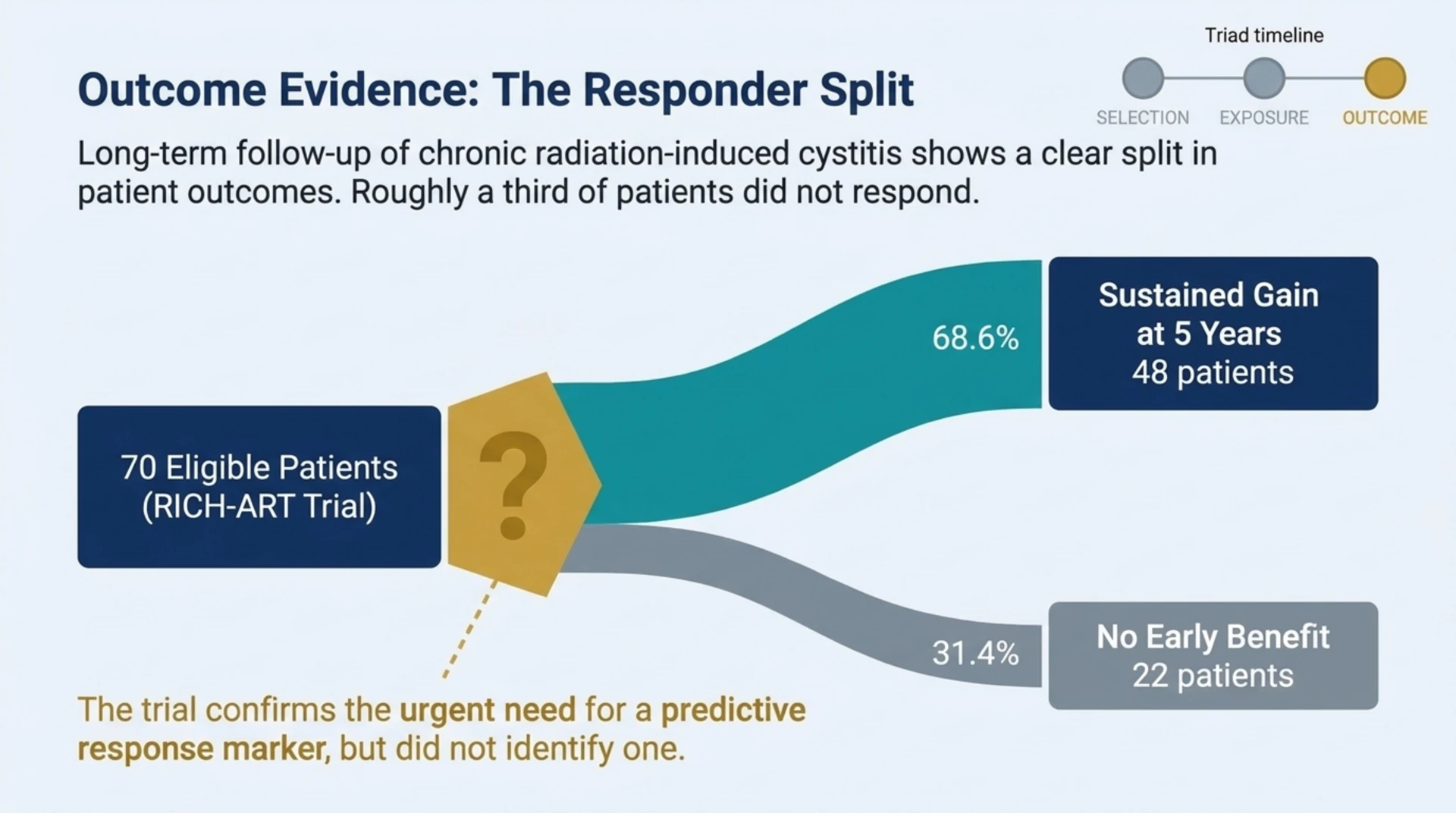
Among 70 eligible patients, the mean score improved 18.0 points at 6 months and 19.1 points at year 5. Responders, defined as a 9-point or greater improvement (48 patients, 68.6%), kept their gain. Non-responders (22 patients, 31.4%) showed no early benefit. Nine of 70 patients received additional HBOT for recurring symptoms.
The relevant point here is that roughly a third of patients did not respond, and the authors state that further studies should identify predictive biomarkers. The trial did not identify one. It shows the need for response markers, not their existence.
What do the reviews add?
A narrative review of oxygen therapy in diabetic foot ulcers (Biomolecules, 2021; PubMed | Our Assessment) states that molecular biomarkers relating to inflammation, repair and healing have been identified, and that predictive biomarkers could identify patients most likely to benefit. It also notes that oxygen therapy is currently assessed from clinical examination and imaging. As a narrative review, it summarizes the literature and does not test a marker prospectively.
A review of tumour hypoxia (Clinical oncology, 2007; PubMed | Our Assessment) reached a similar position. Several genes and proteins involved in the hypoxia response were identified as candidates for predictive assays. Although some markers showed potential, the authors said their clinical usefulness needs validation in prospective trials.
How do the study types compare?
| Evidence type | Example in this pool | What it can support | What it cannot support |
|---|---|---|---|
| Retrospective CO studies | Lactate and COHb in 169 and 292 patients | Association between admission markers and HBOT being given | Whether HBOT worked, or whether the marker should drive treatment |
| Prospective observational | Plasma markers in 82 patients | Predictive accuracy for injury and HBOT need | Treatment response |
| Healthy volunteer experiment | Oxidative stress in 19 men | Biochemical effects of exposure | Clinical benefit |
| Animal study | Liver markers in 32 rats | Mechanistic signals | Human outcomes |
| Trial follow-up | RICH-ART, 70 patients | Sustained improvement among treated patients, and a responder split | An identified response biomarker |
| Narrative reviews | Diabetic foot ulcers, tumour hypoxia | Candidate markers and research gaps | Validated markers |
Why does the difference between prediction and response matter?
When lactate is higher in patients who got HBOT, one plausible reason is that sicker patients were selected for treatment. That is an association inside a retrospective dataset. It does not mean that high lactate patients benefit more from HBOT, or that a low lactate patient should be denied it.
The CO studies also vary in what they use as the reference standard. Some predict treatment given, others predict injury, and others predict hospital outcomes. Cut-offs such as 2.8 mmol/L and 3.85 mmol/L come from different populations and are not interchangeable.
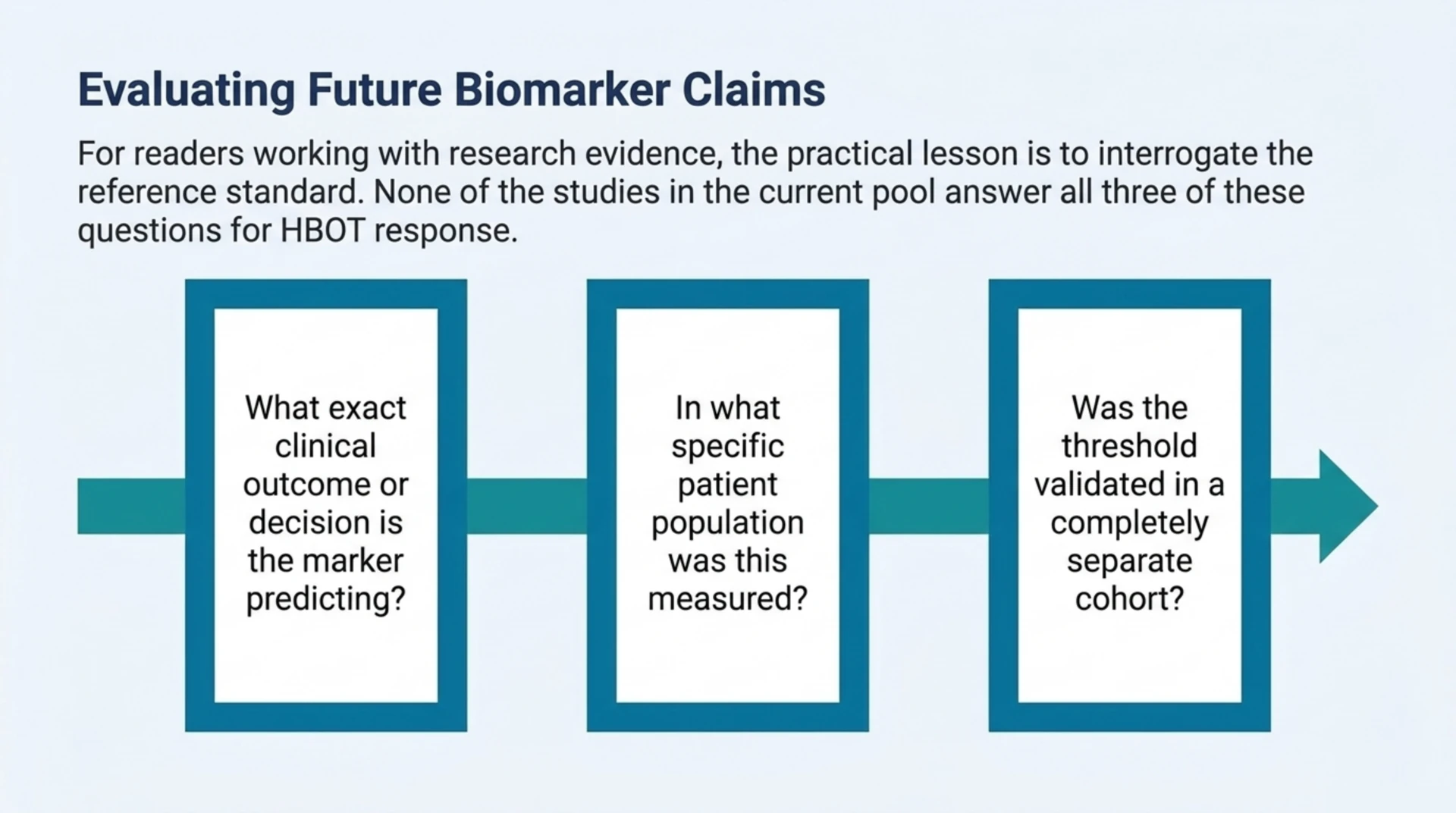
For readers who work with research evidence, the practical lesson is to ask three questions of any biomarker claim. What was the marker predicting? In what population? Was it validated in a separate group? None of the studies in this pool answers all three for HBOT response.
What does this mean for the broader HBOT literature?
The Canada Hyperbarics library indexes over 14,000 studies, and the pool for this post is a small, selected slice. Within it, the dominant pattern is that biomarkers are better studied as triage tools in acute poisoning than as response monitors for chronic conditions.
Two further reviews in the pool mention biomarkers only in passing. A 2025 review of cancer therapy (Biomedicine and pharmacotherapy; PubMed | Our Assessment) says advances in multi-omics profiling and adaptive trial designs are expected to help identify predictive biomarkers, and notes open controversies about dose-response and long-term safety. A 2025 gastric cancer immunotherapy review (Cancer medicine; PubMed | Our Assessment) lists HBOT among approaches still under investigation, and says many remain in early-stage development. These are forward-looking statements, not evidence that a response marker exists.
Frequently Asked Questions
Is there a proven blood test for HBOT response?
Not in the studies reviewed here. The pool contains prediction studies in CO poisoning and exposure studies of oxidative stress, but none validates a marker that confirms a patient responded to HBOT.
Does a high lactate mean someone needs HBOT?
In two retrospective CO poisoning studies, higher lactate was associated with receiving HBOT. That is an association with treatment decisions, not proof that lactate should dictate care. Treatment decisions belong to the treating clinicians.
Does HBOT cause oxidative stress?
In 19 healthy men, a single exposure at 240 kPa was associated with higher lipid peroxides and urinary 8-oxodG compared with control air exposure. This was a short experiment in healthy volunteers, and it does not describe what happens in patients over a course of treatment.
Why did some RICH-ART patients not respond?
The abstract reports that 22 of 70 patients (31.4%) showed no early benefit, and it does not explain why. The authors call for further studies to identify predictive biomarkers.
Are animal biomarker results relevant to people?
They can suggest mechanisms, such as changes in antioxidant capacity in rat liver tissue. They cannot be assumed to apply to human patients without human studies.
Is the neutrophil-to-lymphocyte ratio a response marker?
In the studies reviewed, NLR was examined as a predictor of myocardial injury and in-hospital events in CO poisoning. It was not evaluated as a measure of HBOT response.
Related Reading
- Hyperbaric Oxygen and Mitochondrial Biogenesis Mechanisms
- Hyperbaric Oxygen for Radiation Brachial Plexopathy
- Hyperbaric Oxygen Chemical Burns Referral: Evidence Review
Next step
Anyone wondering whether HBOT is appropriate for a specific condition should talk to their physician. Recognised and publicly funded indications, jurisdiction by jurisdiction, are outlined on our HBOT coverage in Canada page.
This content is for informational purposes only and is not medical advice.