
TL;DR: Hyperbaric oxygen therapy (HBOT) is a treatment in which a patient breathes near-pure oxygen inside a pressurized chamber. For chemical burns, direct evidence for a hyperbaric oxygen referral is limited. The studies we reviewed include one randomised burn trial with no demonstrated benefit, a retrospective registry study with higher mortality in HBOT-treated patients, and a few case-level reports. Acute decontamination, irrigation and standard burn care come first.
Hyperbaric oxygen chemical burns referral questions reach physicians in an awkward spot. Chemical injury is a recognised reason people ask about HBOT, yet the research pool we assessed contains very little that studies chemical burns directly. This article sets out what that evidence does and does not support, so a referral decision rests on what is known.
The sections below are written for referring physicians. They separate direct evidence from indirect evidence and flag where the data are too thin to guide practice. Nothing here replaces the judgment of the treating burn or emergency team.
What does the evidence say about hyperbaric oxygen for chemical burns?
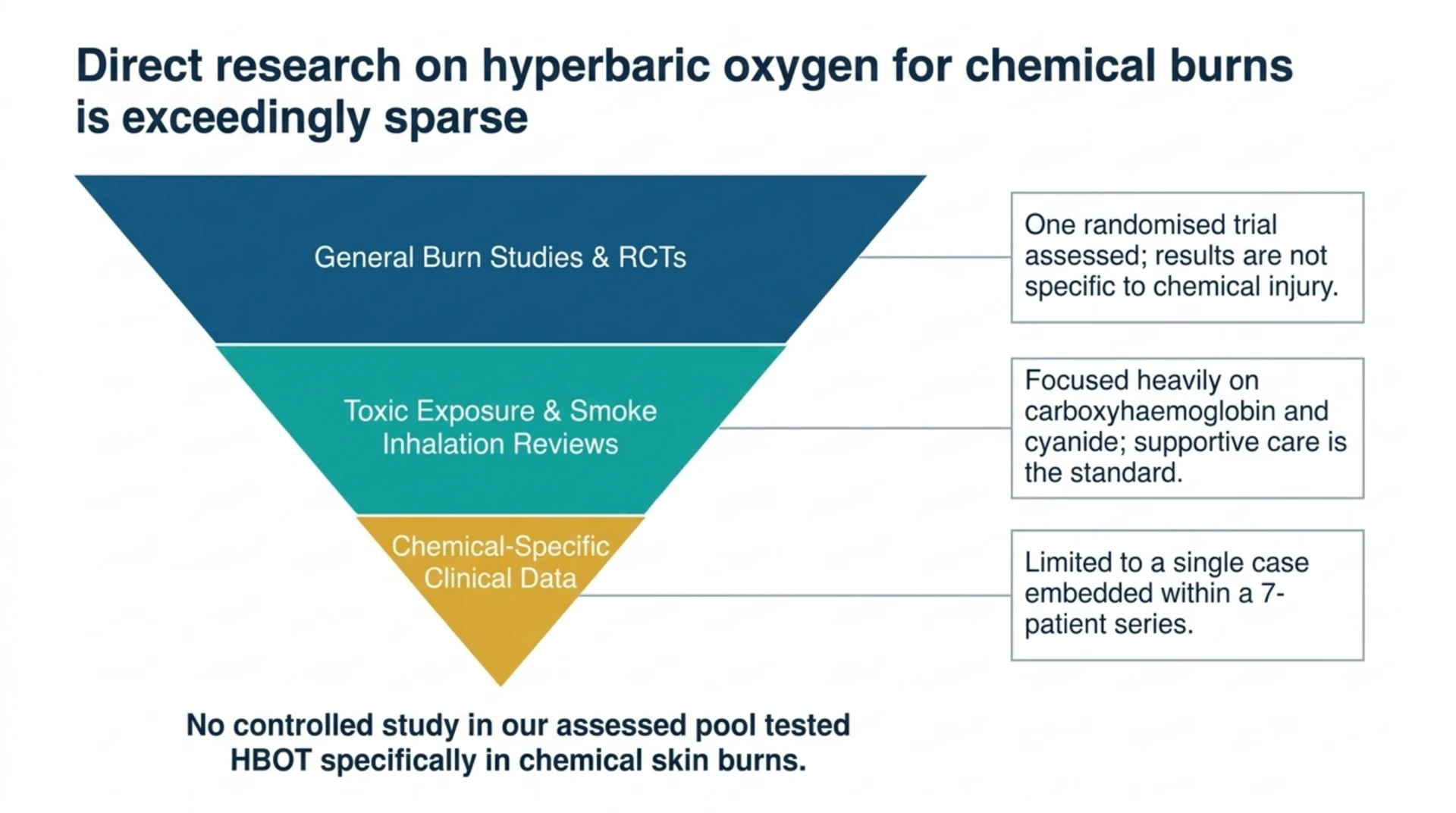
The short answer is that the evidence is sparse and mostly indirect. In the pool we reviewed, no controlled study tested HBOT specifically in chemical skin burns. What exists falls into four groups: general burn studies, case-level reports that include a chemical burn, topical oxygen research in animals, and reviews of toxic exposures.
That matters for referral. A study of thermal burns does not automatically apply to a caustic or acid injury, because the mechanism of tissue damage differs. We therefore treat every finding below as indirect for chemical burns unless stated otherwise.
Case-level evidence that includes a chemical burn
A case series (PubMed | Our Assessment) described seven lower extremity trauma cases treated with HBOT. The cases were soft tissue loss, neglected chronic burn injury, high-voltage electrical burn, gas gangrene, crush injury, chemical burn and excoriation with skin loss. The authors concluded that HBOT has many benefits in lower extremity trauma.
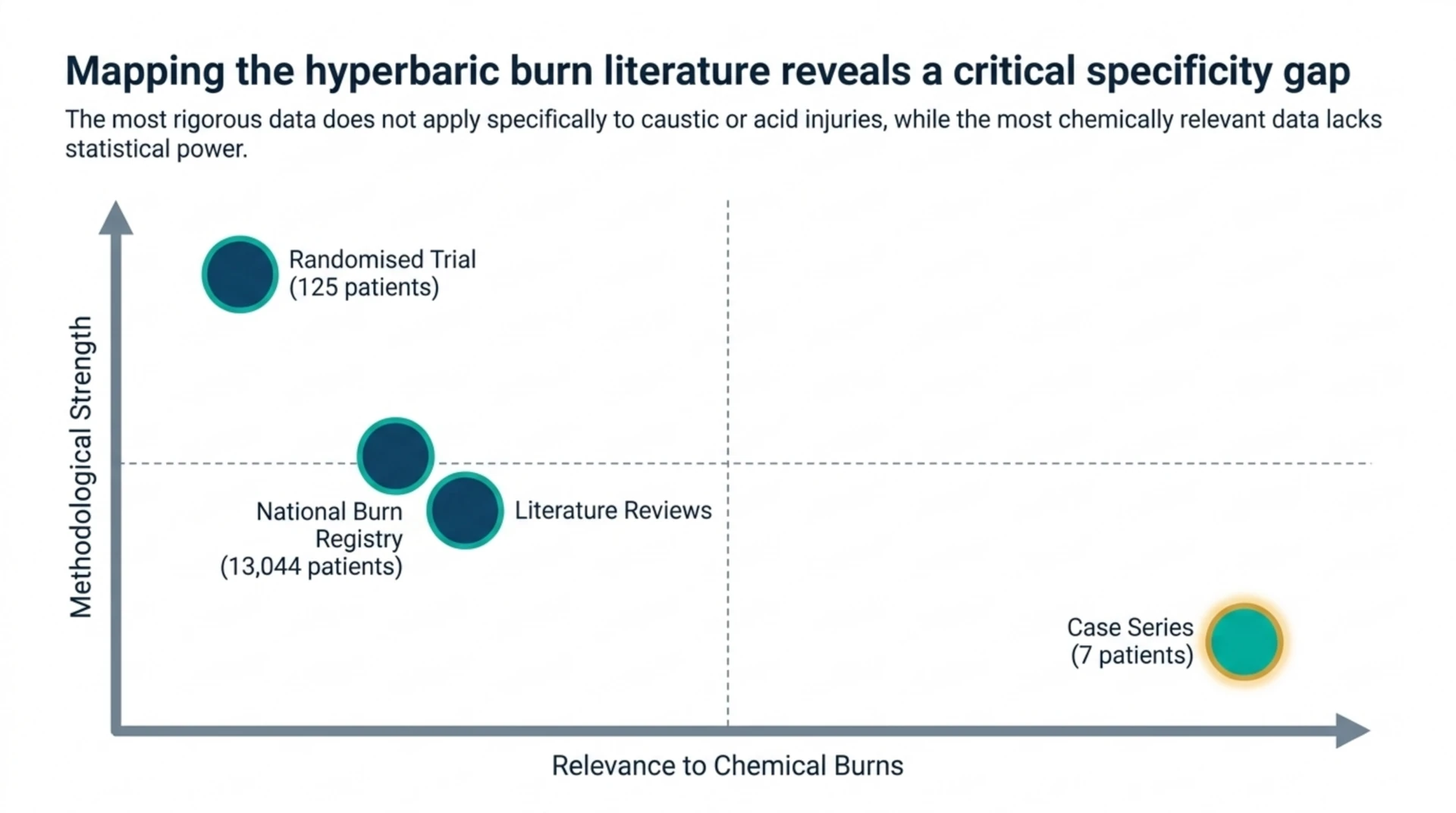
A seven-patient case series has no comparison group. The abstract does not report the outcome of the chemical burn case separately, so it cannot tell a referring physician how a chemical burn patient is likely to do. It shows that such patients have been referred, not that referral works.
Is there trial evidence for HBOT in burns generally?
Within our pool, one randomised trial addressed burns. Other burn trials may exist in the wider literature, and this article does not claim otherwise. We describe only the studies we assessed.
The randomised trial in this pool
A randomised prospective trial (PubMed | Our Assessment) enrolled 125 burn patients admitted within 24 hours of injury. Groups were matched by age, burn size and presence or absence of inhalation injury. The treatment arm received oxygen at two atmospheres for 90 minutes twice a day, while controls were treated similarly without HBOT.
The principal result was null. There were no statistically significant differences between groups for mortality, number of operations or length of stay among survivors. The authors reported being unable to demonstrate any significant benefit to burn patients from HBOT. The abstract does not state how many patients had chemical injuries.
A registry study with a cautionary signal
A retrospective study of the National Burn Repository (PubMed | Our Assessment) identified 13,044 patients with both cutaneous burn and inhalation injuries. Only 67 received HBOT. Those patients were older but had smaller burns and a similar Baux score.
Mortality was higher in the HBOT group (29.9% versus 17.5%), and HBOT was an independent predictor of mortality on multivariate regression (odds ratio 2.484). This is an association, not proof that HBOT caused harm. The authors noted that patients receiving HBOT could theoretically have had more severe inhalation injury, which the database could not clearly show.
What do the reviews conclude?
A literature review of HBOT as an adjunct in burns (PubMed | Our Assessment) found current research findings conflicting. It called the use of HBOT in burn management still controversial and said more data are needed.
| Evidence type | What it shows | Limit for chemical burn referral |
|---|---|---|
| Randomised trial, 125 burn patients | No significant difference in mortality, operations or length of stay | Not specific to chemical injury |
| Retrospective registry, 13,044 patients | HBOT associated with higher mortality | Confounding by severity possible; inhalation injury focus |
| Literature review | Findings conflicting; use controversial | No chemical burn conclusion |
| Case series, 7 patients | Includes one chemical burn case | No comparator; no separate outcome reported |
Is topical oxygen for chemical eye injury the same as HBOT?
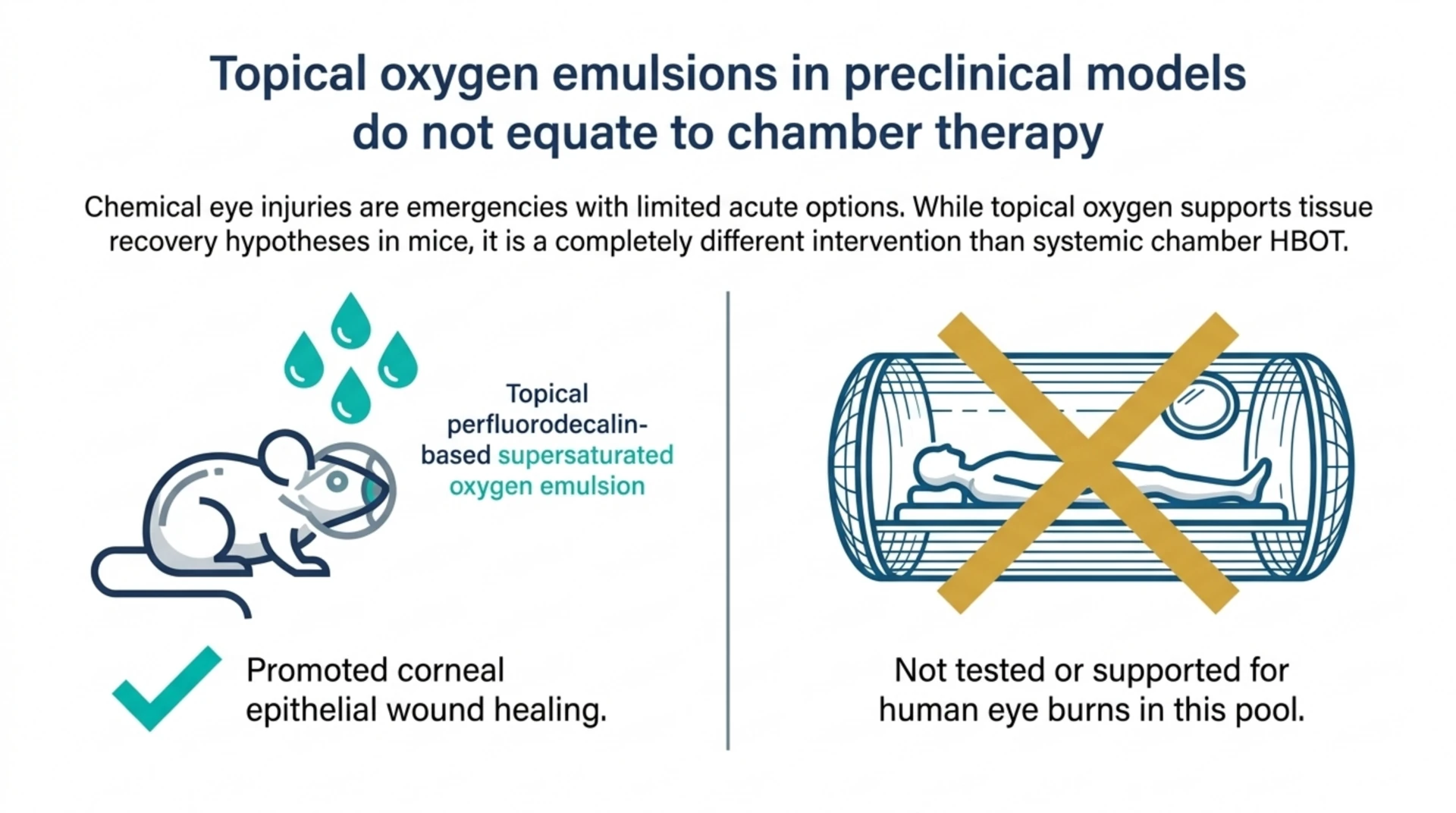
No. It is a different intervention, and it was tested in mice. Researchers developed a perfluorodecalin-based supersaturated oxygen emulsion for chemical eye injury (PubMed | Our Assessment). The emulsion is manufactured under hyperbaric conditions, but it is applied to the eye as a topical product rather than delivered in a chamber.
In mice with alkali injury, a single topical application significantly promoted corneal epithelial wound healing and reduced optical opacity and cataract formation. The abstract describes chemical eye injuries as emergencies with limited acute options beyond prompt irrigation. This is preclinical work. It supports a role for oxygen in tissue recovery after chemical injury as a hypothesis, but it does not support chamber-based HBOT for human eye burns.
What about hydrofluoric acid and other toxic exposures?
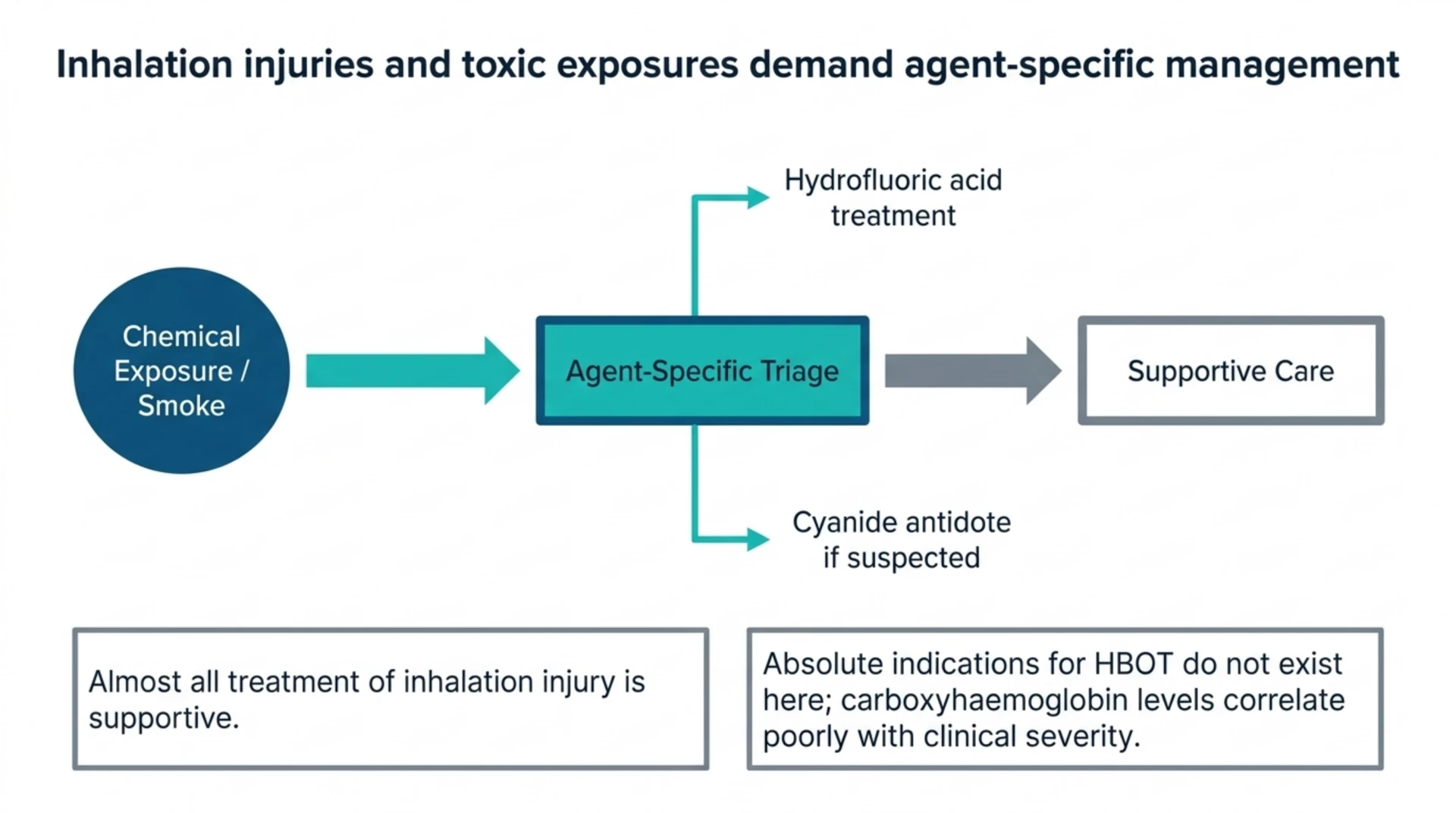
A German-language review of dermal and inhalation poisoning (PubMed | Our Assessment) describes diagnostics and specific toxicological treatment for hydrofluoric acid burns. It also covers smoke inhalation, including cyanide and carbon monoxide management. Its abstract gives special attention to HBOT for carbon monoxide poisoning, not for hydrofluoric acid burns.
The practical point is that chemical burns often call for agent-specific toxicological treatment. HBOT is not described there as a substitute for it.
Inhalation injury is where HBOT questions are most specific
A review of assessing inhalation injury in the emergency room (PubMed | Our Assessment) states that almost all treatment of inhalation injury is supportive. It notes that absolute indications for HBOT do not exist, because carboxyhemoglobin levels correlate poorly with clinical severity. It advises a cyanide antidote when cyanide poisoning is clinically suspected.
If a chemical exposure involves smoke or combustion products, these points apply before any HBOT discussion.
Are there safety considerations when referring a burn patient?
Yes. Two items in the pool are worth a referring physician’s attention.
Haemostasis monitoring
A study of nine severely burned patients (thermal trauma over 32% of body surface, with burn shock) compared hemostasis parameters immediately before and after HBOT sessions (PubMed | Our Assessment). The authors reported increased activity of antithrombin III and protein C and decreased viscoelastic blood properties, with some undesirable deviations that were not accompanied by thrombogenic complications. They concluded that hemostasis should be monitored during HBOT.
This was a small before-and-after comparison without a control group. It describes laboratory changes, not clinical outcomes such as healing.
Critical illness in the chamber
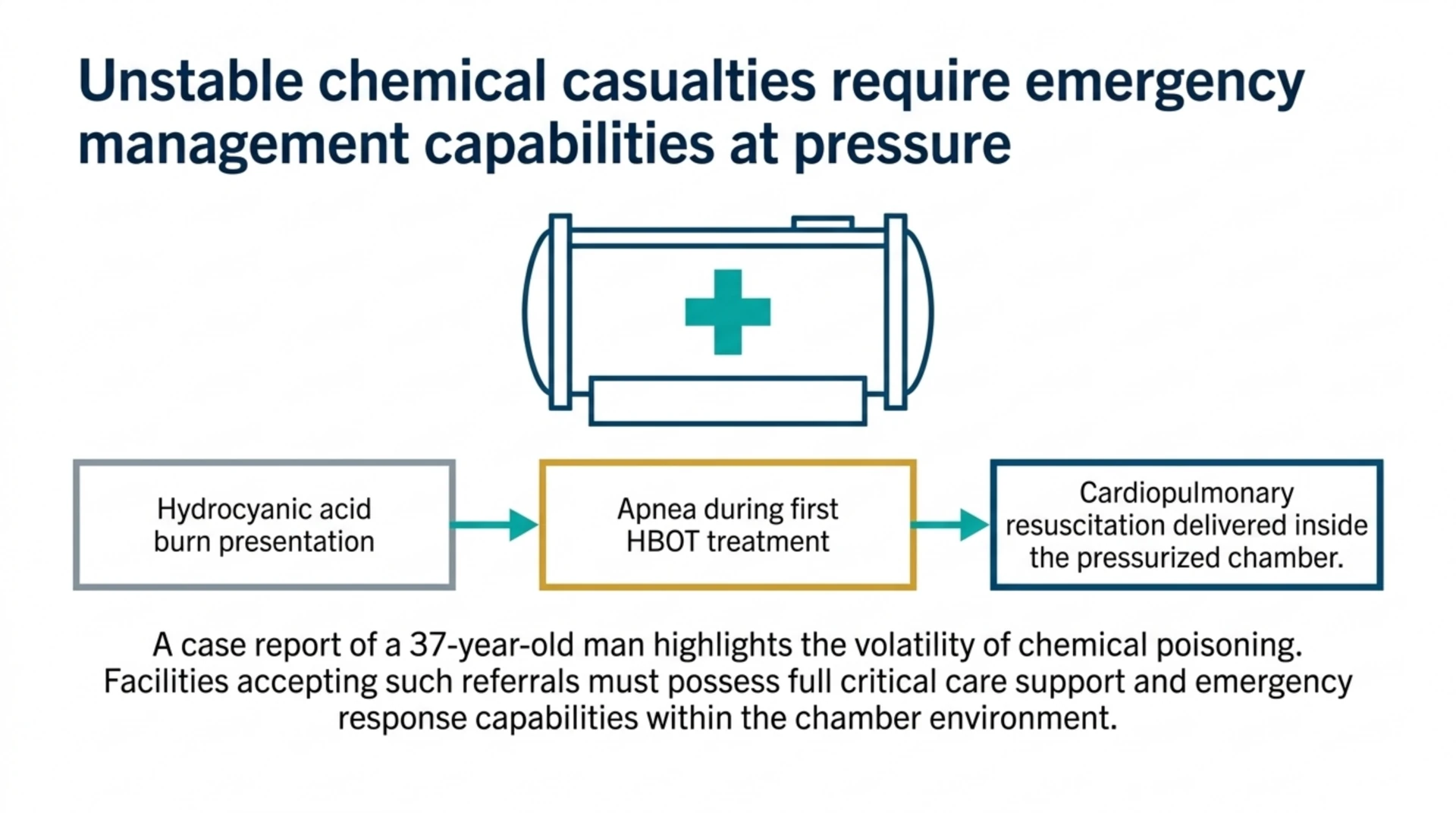
A case report of severe hydrogen cyanide poisoning with a hydrocyanic acid burn (PubMed | Our Assessment) described a 37-year-old man treated with antidotes and other measures plus HBOT. He became apneic during the first treatment and received cardiopulmonary resuscitation in the chamber. He recovered, but a large amount of keloids developed on his back and buttocks. One case cannot establish cause, yet it shows that unstable chemical casualties need a facility able to manage emergencies at pressure.
Heat sources and chamber fire safety
A bench test of air-activated chemical warming devices (PubMed | Our Assessment) found a maximum temperature of 269 degrees F (132 degrees C) at 3 atm abs and over 95% oxygen, with no spontaneous ignition. The authors noted that the risk of thermal burn injury to adjacent skin may be increased significantly under hyperbaric oxygen conditions. Patients should not bring such devices into a chamber.
When might a referral conversation still make sense?
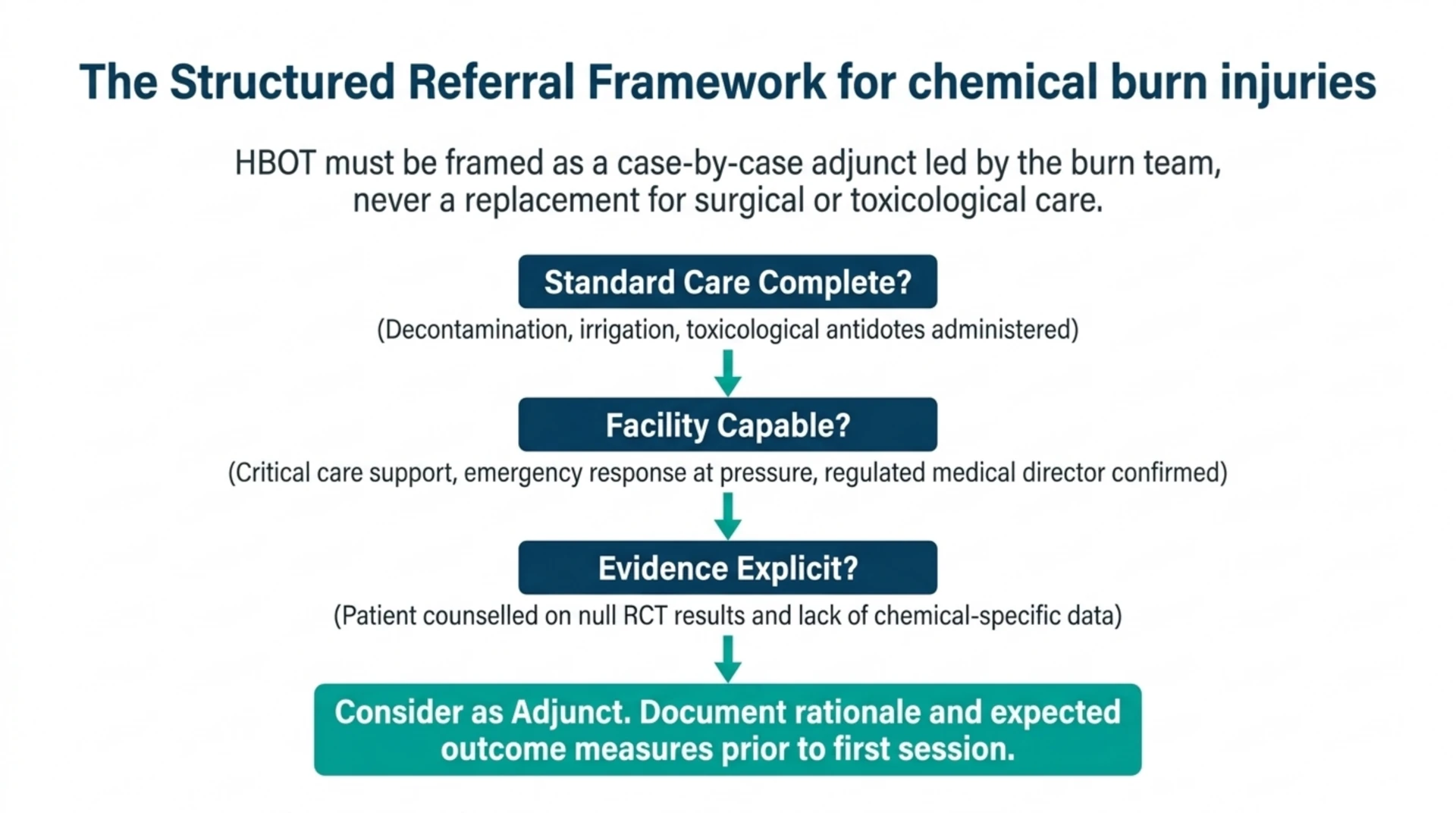
The pool does not support a routine HBOT referral for chemical burns. It does support a structured conversation in selected situations, led by the treating burn team and a hyperbaric physician.
- Standard care first: decontamination, irrigation, antidotes where indicated and burn unit management are the foundation in the reviews above.
- Be explicit about the evidence: the one randomised burn trial we assessed showed no demonstrated benefit, and the registry association pointed the other way.
- Frame HBOT as an adjunct, considered case by case, never as a replacement for surgical or toxicological care.
- Confirm facility capability: critical care support, emergency response in the chamber and a regulated medical director.
- Document the rationale and the expected outcome measures before the first session.
A 2026 narrative review of HBOT in surgical practice (PubMed | Our Assessment) stated that HBOT benefits burn management in reconstructive and plastic surgery. It also said evidence interpretation is limited by heterogeneity in protocols, endpoints and patient selection. It called for multicentre randomised trials. Read that alongside the null trial above, not instead of it.
Frequently Asked Questions
Is HBOT an established treatment for chemical burns?
Not on the evidence we reviewed. No controlled study in the pool tested HBOT in chemical skin burns, and the burn literature we assessed is conflicting.
Did the randomised burn trial show a benefit?
The trial of 125 burn patients found no significant differences in mortality, operations or length of stay among survivors. Its authors could not demonstrate a significant benefit.
Does the registry study mean HBOT harms burn patients?
No. It found an association with higher mortality, and the authors noted that HBOT patients may have had more severe inhalation injury. Retrospective data cannot settle cause.
Can oxygen help chemical eye injuries?
A topical oxygen emulsion improved healing in a mouse model of alkali injury. It is not chamber HBOT and has not been shown in humans in this pool.
What should I check before referring?
Confirm that decontamination and standard care are complete, that the facility can manage emergencies in the chamber, and that the patient understands the limited evidence.
Where does Canada Hyperbarics fit in?
Canada Hyperbarics is an educational resource. It summarizes published research and does not provide treatment or individual referral advice.
Related Reading
- Hyperbaric Medical Director Requirements in Canada
- Hub and Spoke Hyperbaric Chamber Networks in Canada
- Hyperbaric Oxygen and Mitochondrial Biogenesis Mechanisms
To explore options for a specific patient, see our directory of hospitals and regulated facilities and discuss candidacy with a hyperbaric physician. Canada Hyperbarics keeps this evidence review current as new studies appear.
This content is for informational purposes only and is not medical advice.