
TL;DR: Hyperbaric oxygen therapy (HBOT) is a treatment in which a patient breathes oxygen inside a pressurised chamber. A cold or sinus congestion can make it hard to equalize the pressure in your ears and sinuses during a session, so many facilities, including Canada Hyperbarics, ask congested patients to wait and reschedule. This guide explains why congestion matters, what staff typically look for, and simple steps you can take before you call your clinic.
If you have a cold or sinus congestion before hyperbaric oxygen therapy, you are not alone in wondering whether you should still show up for your appointment. Pressure changes inside an HBOT chamber affect your ears and sinuses the same way a flight or a scuba dive would, and a blocked nose can turn a routine session into an uncomfortable one. This article walks through the reasoning, gives you practical questions to ask your care team, and points you toward the resources Canada Hyperbarics provides for scheduling and preparation.
What Is Hyperbaric Oxygen Therapy?
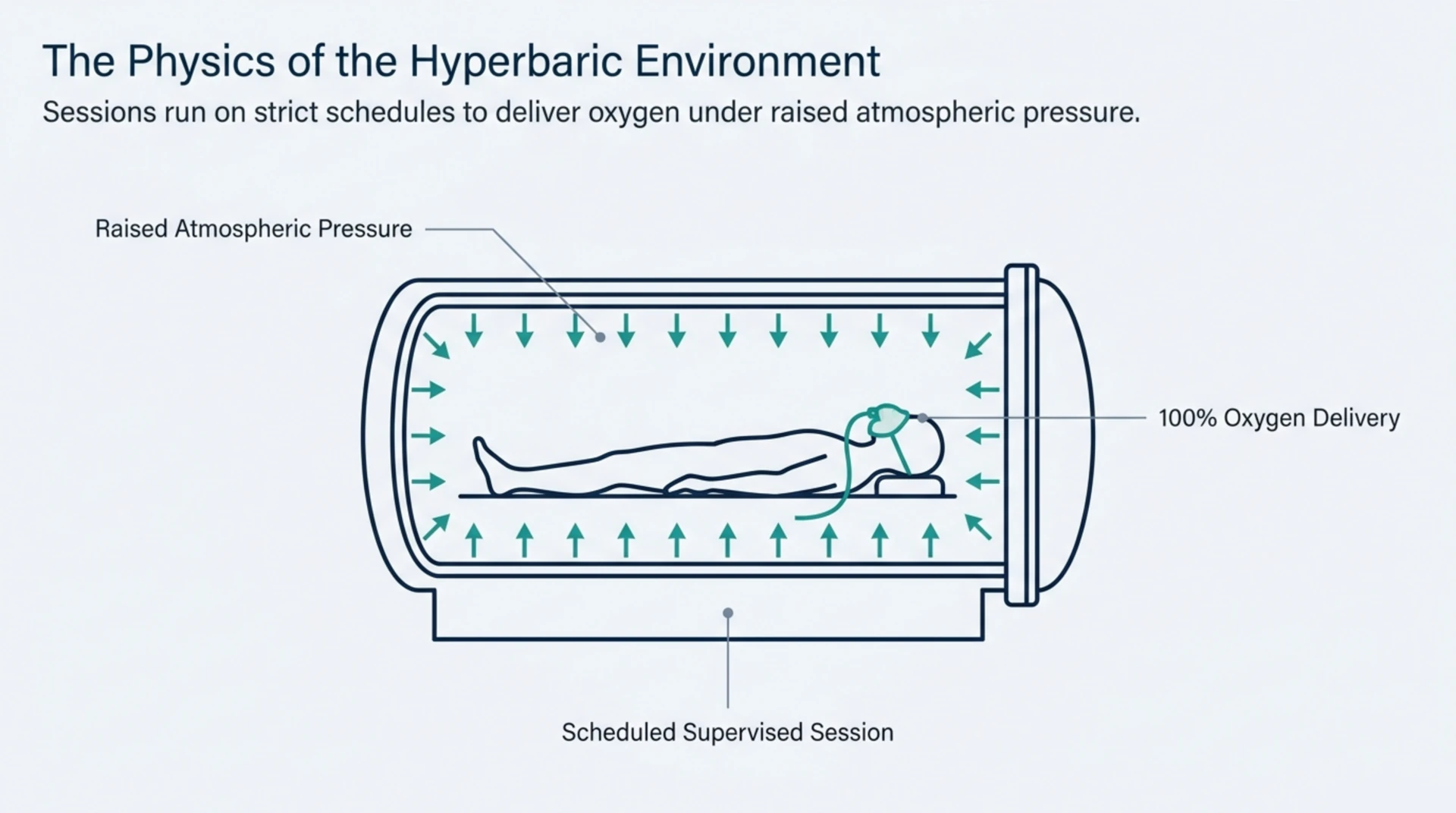
Hyperbaric oxygen therapy is a supervised session where a patient sits or lies inside a chamber while the air pressure around them is raised above normal atmospheric pressure. Patients breathe oxygen delivered through a mask or hood while the chamber is pressurised and then gradually returned to normal. Sessions are booked in advance and run on a schedule, which is why timing and readiness (including whether you currently have a cold) matter for both you and the clinic. To see the range of conditions clinicians consider HBOT for, visit the conditions overview at Canada Hyperbarics.
Why Does a Cold or Sinus Congestion Matter Before Hyperbaric Oxygen Therapy?
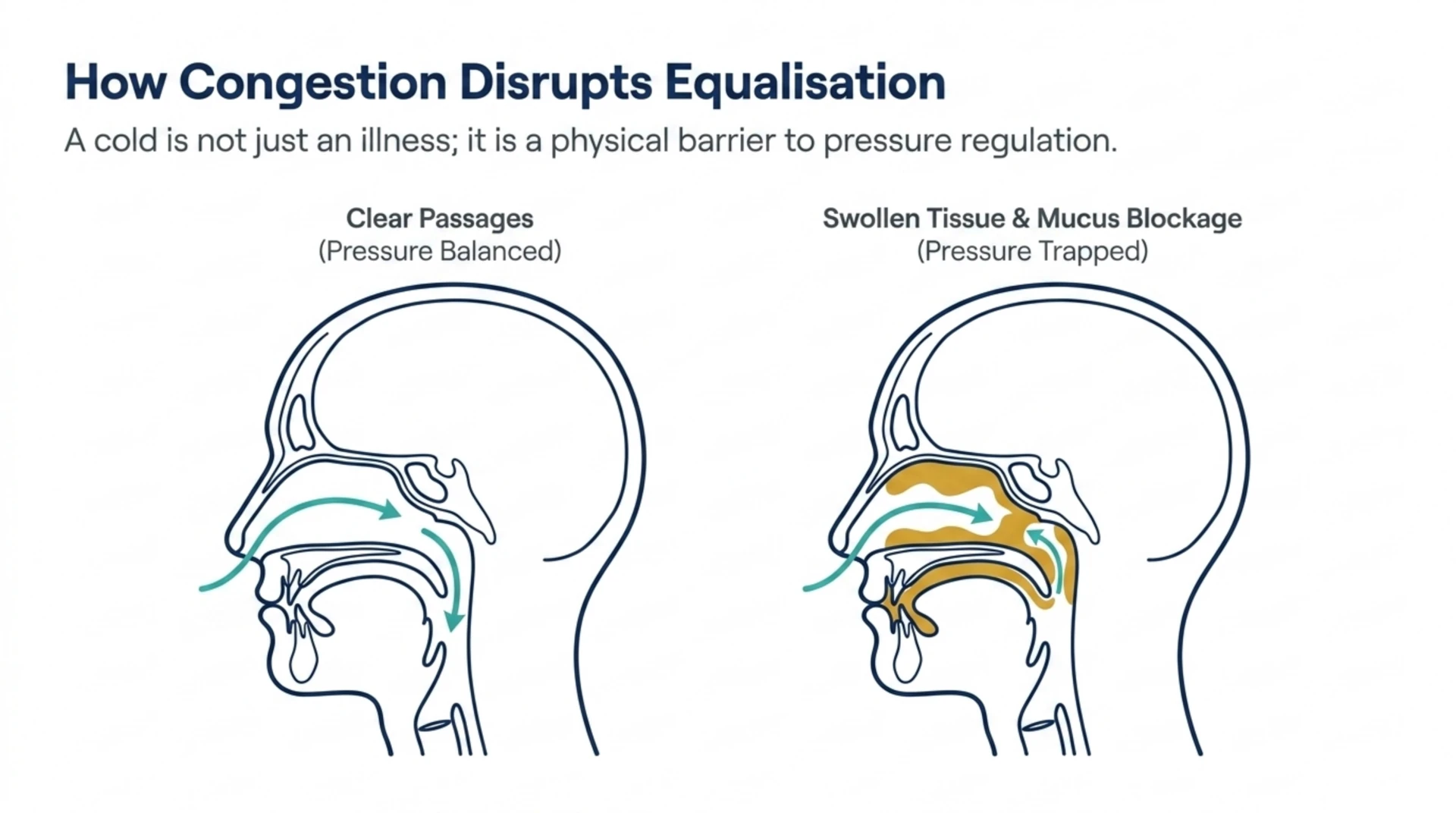
The main concern with a cold or sinus congestion before hyperbaric oxygen therapy is not the cold itself. It is what congestion does to the small air-filled spaces in your head during pressure changes.
Pressure changes and your ears and sinuses
As the chamber pressurises, the air pressure pressing on your eardrum and sinus linings increases. Normally, your Eustachian tubes and sinus openings let air pass through to equalize that pressure automatically, the same reflex that makes your ears “pop” on an airplane. When you have a cold, swollen tissue and mucus can block those narrow passages, so the pressure cannot equalize as easily.
Why staff ask about congestion at check-in
A blocked nose or stuffy ears make it harder to equalize pressure safely, which is why clinics screen for cold symptoms before every session. This is a logistics and safety screening step, not a comment on what HBOT does for any condition. Staff are trained to ask about congestion, recent colds, and ear discomfort because that screening protects your comfort and keeps the session on schedule for everyone booked that day.
Signs You Should Reschedule Your Session
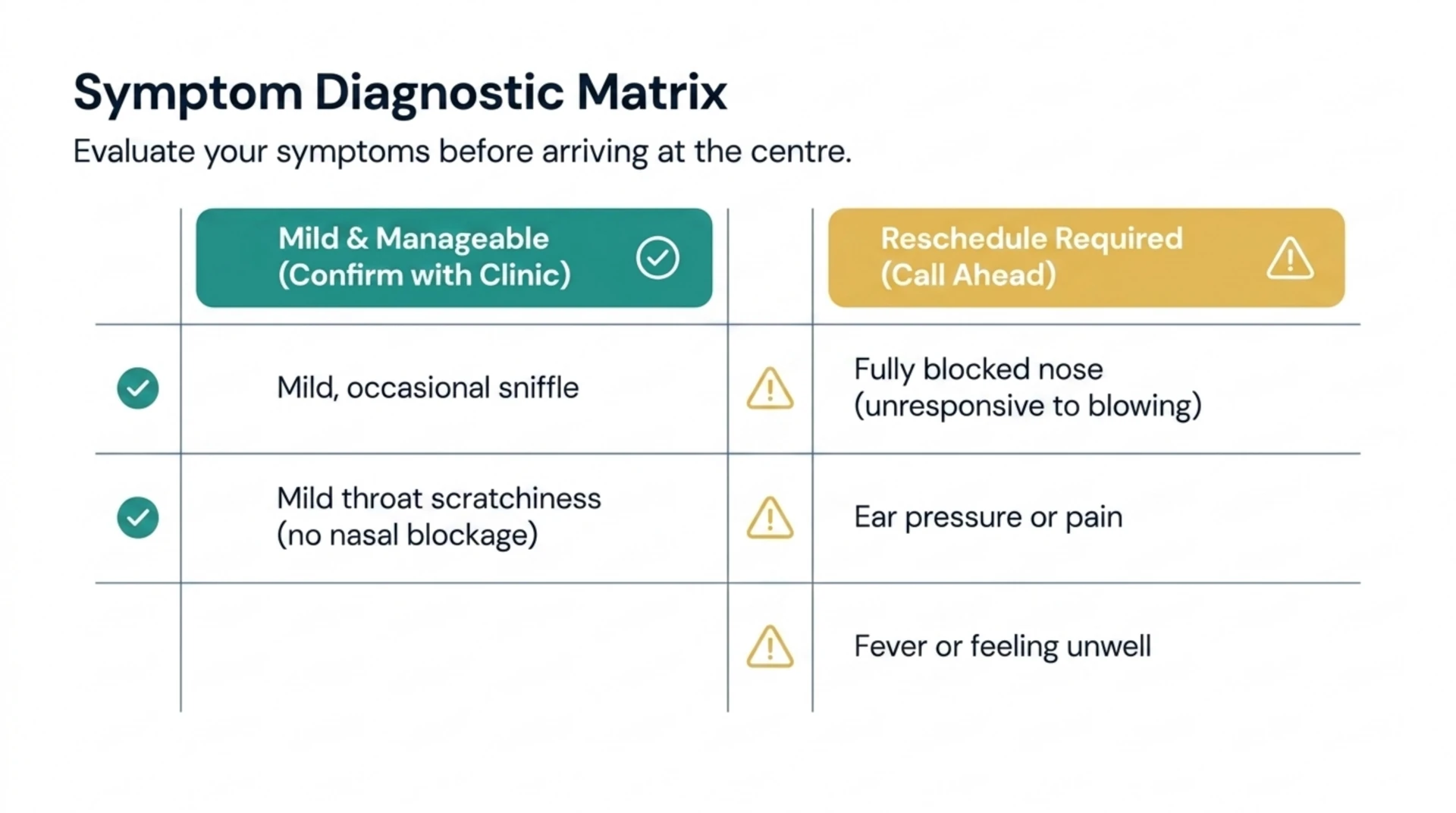
Not every sniffle means you need to cancel. But certain signs are a reasonable reason to call ahead and reschedule rather than show up and find out mid-session.
- A stuffy or fully blocked nose that does not clear when you gently blow it
- Ear pain, pressure, or a feeling of fullness that started with your cold
- Thick nasal discharge or a sinus headache that worsens when you bend forward
- A fever or feeling generally unwell, separate from the congestion itself
If any of these apply, contact your clinic before your appointment time rather than waiting until check-in. Most clinics, including Canada Hyperbarics facility partners, would rather rebook you a day or two later than have you struggle to equalize pressure mid-session.
Can You Take Decongestants Before a Hyperbaric Session?
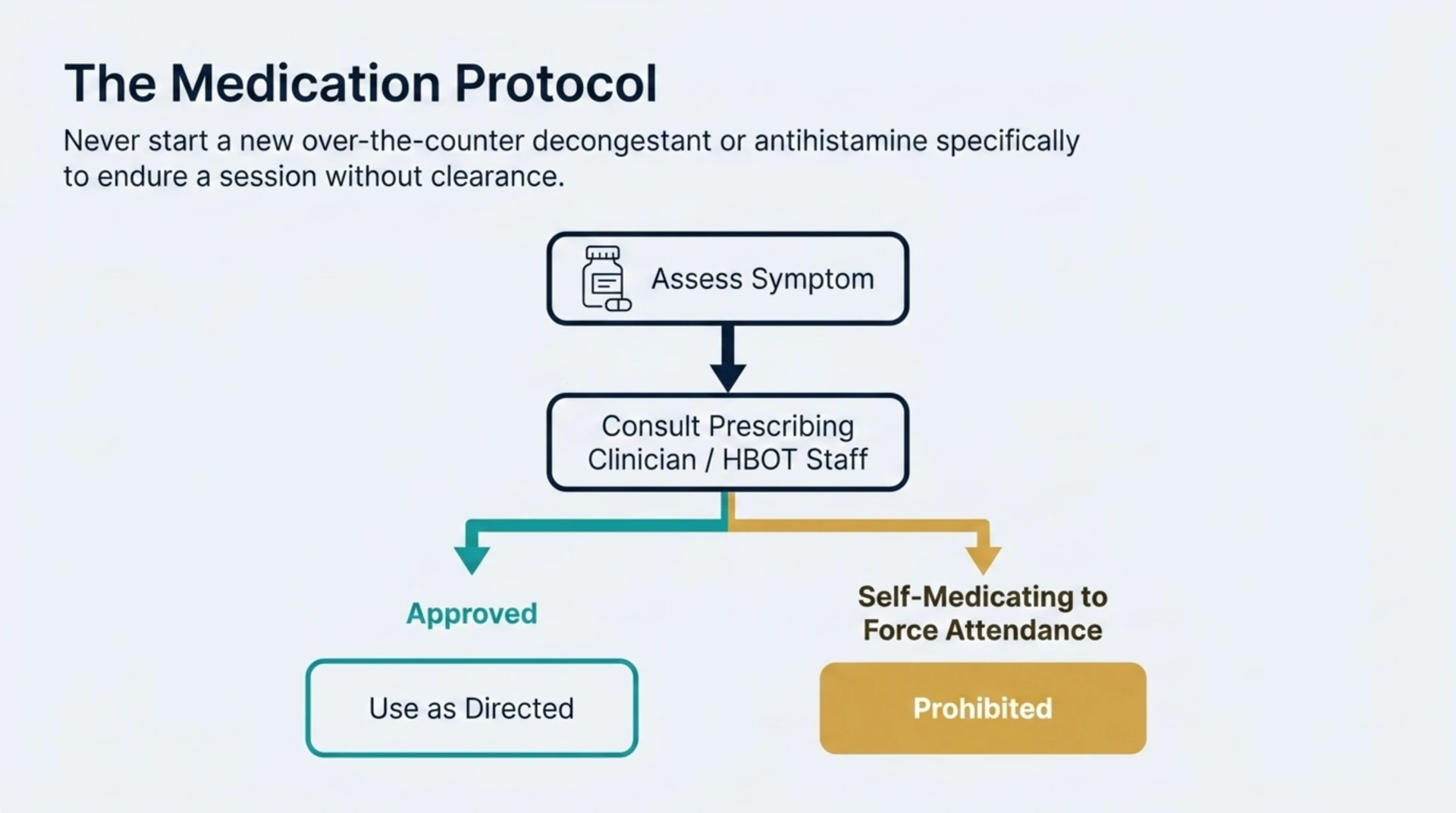
Many patients ask whether an over-the-counter decongestant, nasal spray, or antihistamine can help them get through a session despite mild congestion. This is a question for your prescribing clinician or your HBOT provider directly, since interactions and individual health history vary. Do not start a new medication specifically to attend a session without checking with the professionals coordinating your care first.
What clinics can generally tell you on the phone is whether your specific symptoms are mild enough to proceed or significant enough to reschedule. That conversation is quick, and it saves you a wasted trip if the answer is to wait.
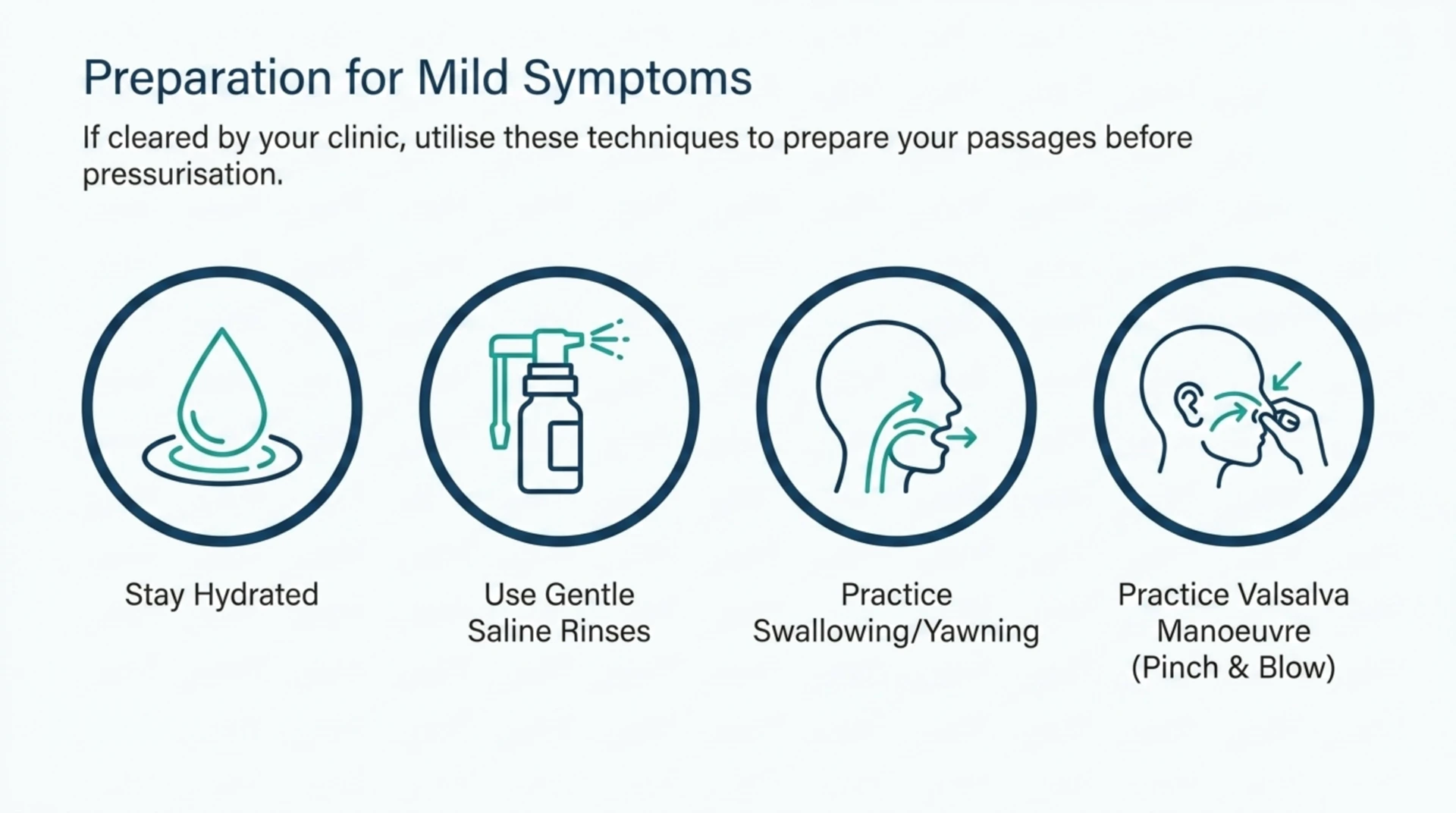
How to Prepare If You Have Mild Congestion
Practice gentle pressure-equalization techniques
If your clinic clears you to attend with mild symptoms, they may walk you through simple techniques such as swallowing, yawning, or gently pinching your nose and blowing (sometimes called the Valsalva manoeuvre) to help your ears equalize. Practicing this calmly before your session, rather than for the first time inside the chamber, can make the process feel more familiar.
Stay hydrated and use saline rinses
Simple nasal saline sprays or rinses can help thin mucus and keep passages clearer in the day or two before your appointment. Staying well hydrated supports the same goal. These are general comfort measures, not treatments for any medical condition, and they will not clear a significant blockage on their own.
Arrive early and speak up
Give yourself extra time before your session to mention any lingering congestion to staff. Speaking up before the chamber door closes is always better than trying to push through discomfort once pressurisation has started.
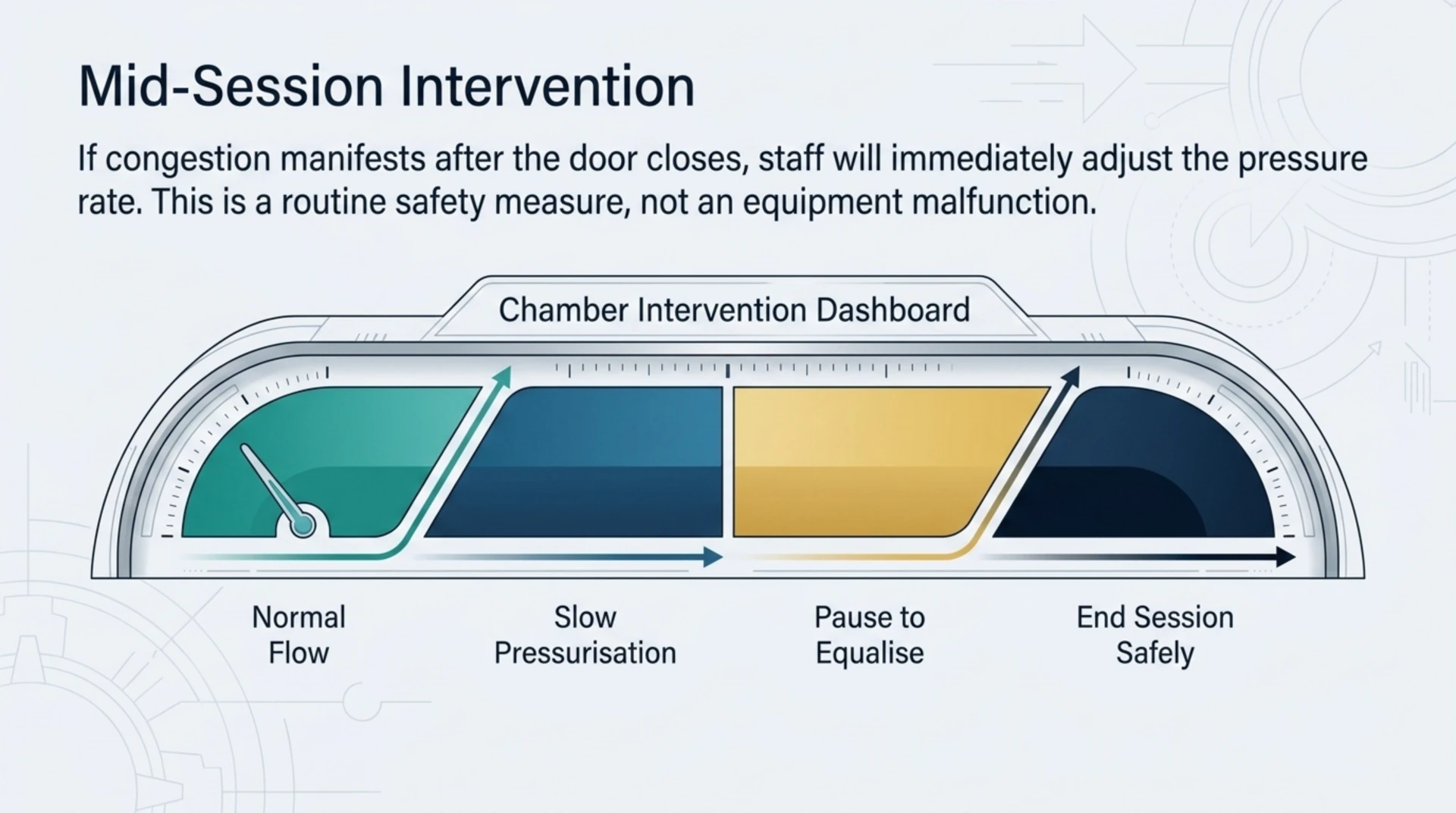
What Happens If You Attend With Blocked Sinuses?
If congestion is more significant than expected, staff may pause pressurisation, slow the rate of pressure change, or stop the session and reschedule you. This is a standard safety response to protect your ears and sinuses from strain, not a sign that something has gone wrong with the equipment or the process. Clinics would rather adjust the schedule than have a patient push through avoidable discomfort.
| Symptom | Generally okay to attend (confirm with your clinic) | Reschedule and call ahead |
|---|---|---|
| Mild, occasional sniffle | Often fine | Not usually needed |
| Fully blocked nose | Not recommended | Yes |
| Ear pressure or pain | Not recommended | Yes |
| Sinus headache when bending over | Not recommended | Yes |
| Mild throat scratchiness, no nasal blockage | Often fine | Not usually needed |
| Fever or feeling unwell | Not recommended | Yes |
This table is a general guide only. Your clinic’s screening call or check-in assessment is the final word for your specific situation.
Frequently Asked Questions
Can I get an HBOT session with a stuffy nose?
It depends on how blocked your nose is. Mild stuffiness that clears with a gentle blow may be fine, but a fully blocked nose usually means rescheduling. Call your clinic to describe your symptoms before your appointment.
Will a cold delay my whole treatment plan?
Missing one session to let a cold clear typically means rebooking that single appointment, not restarting a plan. Ask your clinic’s scheduling team how they handle missed sessions so you know what to expect.
Can children with sinus congestion attend a hyperbaric session?
The same pressure-equalization concerns apply to children, and young children may have more difficulty communicating ear discomfort. Parents should mention any congestion at check-in and follow the clinic’s guidance for paediatric patients.
Are decongestant sprays or antihistamines allowed before a session?
This is a question for your clinician or the HBOT provider’s medical staff, since it depends on your health history and the specific medication. Do not self-medicate solely to attend an appointment without checking first.
What if congestion starts partway through a session?
Tell staff immediately if you feel ear or sinus pressure once pressurisation has begun. Staff are trained to slow or pause the process and can end the session early if needed to protect your comfort and safety.
How soon after a cold clears can I resume sessions?
Most clinics wait until your nasal passages feel clear and any ear pressure has resolved before rebooking. Your clinic will give you specific guidance based on how your symptoms progress.
Does congestion mean something is wrong with the chamber?
No. Congestion is about your own ability to equalize pressure, not a malfunction with the equipment. Rescheduling protects you and is a routine part of how sessions are managed.
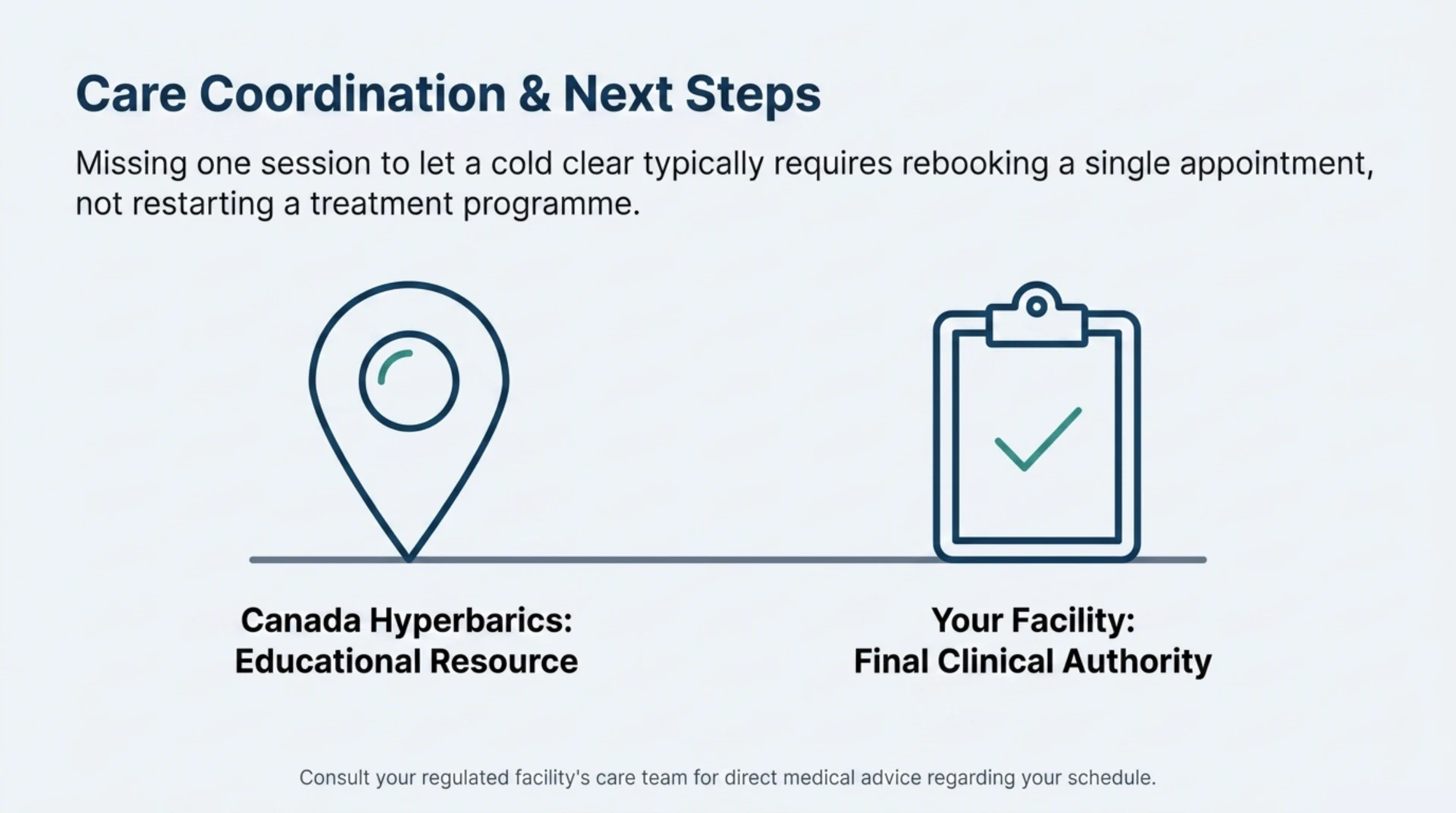
Where Canada Hyperbarics Fits Into Your Care Coordination
Canada Hyperbarics is an educational resource that helps patients and referring clinicians understand how hyperbaric oxygen therapy sessions are typically scheduled, prepared for, and delivered across hospitals and regulated facilities in Canada. We do not replace the guidance of your own care team, but we aim to make logistical questions, like what to do about a cold before an appointment, easier to answer. For details on how sessions are billed and what may be covered, see our coverage information.
If you are new to the process and want a plain-language walkthrough of common questions beyond congestion, our general FAQ page covers scheduling, what to bring, and what a typical visit looks like from start to finish.
Related Reading
- Hyperbaric Oxygen for Noise-Induced Hearing Loss: Evidence
- HBOT for Bell’s Palsy: Facial Nerve Referral Evidence
- HBOT for Diabetic Foot Ulcers: Cost-Effectiveness Evidence
This content is for informational purposes only and is not medical advice.
If you have questions about scheduling, preparing for a session, or what to do if you are feeling under the weather before an appointment, reach out to the hospitals and regulated facilities listed on our facilities page to speak with a member of their care team directly.