
TL;DR: Hyperbaric oxygen therapy (HBOT) is a treatment in which a patient breathes oxygen inside a pressurized chamber. Pregnancy is one of the health details that clinicians and intake staff ask about before booking a session, and every regulated Canadian facility has its own screening and consultation process for this question. This post walks through what that screening involves, what to expect at intake, and where to find facility-specific guidance, without offering medical advice.
Hyperbaric oxygen therapy pregnancy safety is one of the most common questions patients ask before their first appointment. If you are pregnant, planning a pregnancy, or unsure, you are not alone in wondering how a hyperbaric facility will handle that conversation. This post explains the intake and screening process step by step, so you know what to expect when you call or arrive for a consultation.
Nothing here is medical advice. It is a plain-language look at how the booking and screening process works at a regulated facility, so you can ask better questions and know where to look for facility-specific answers.
What Is Hyperbaric Oxygen Therapy?
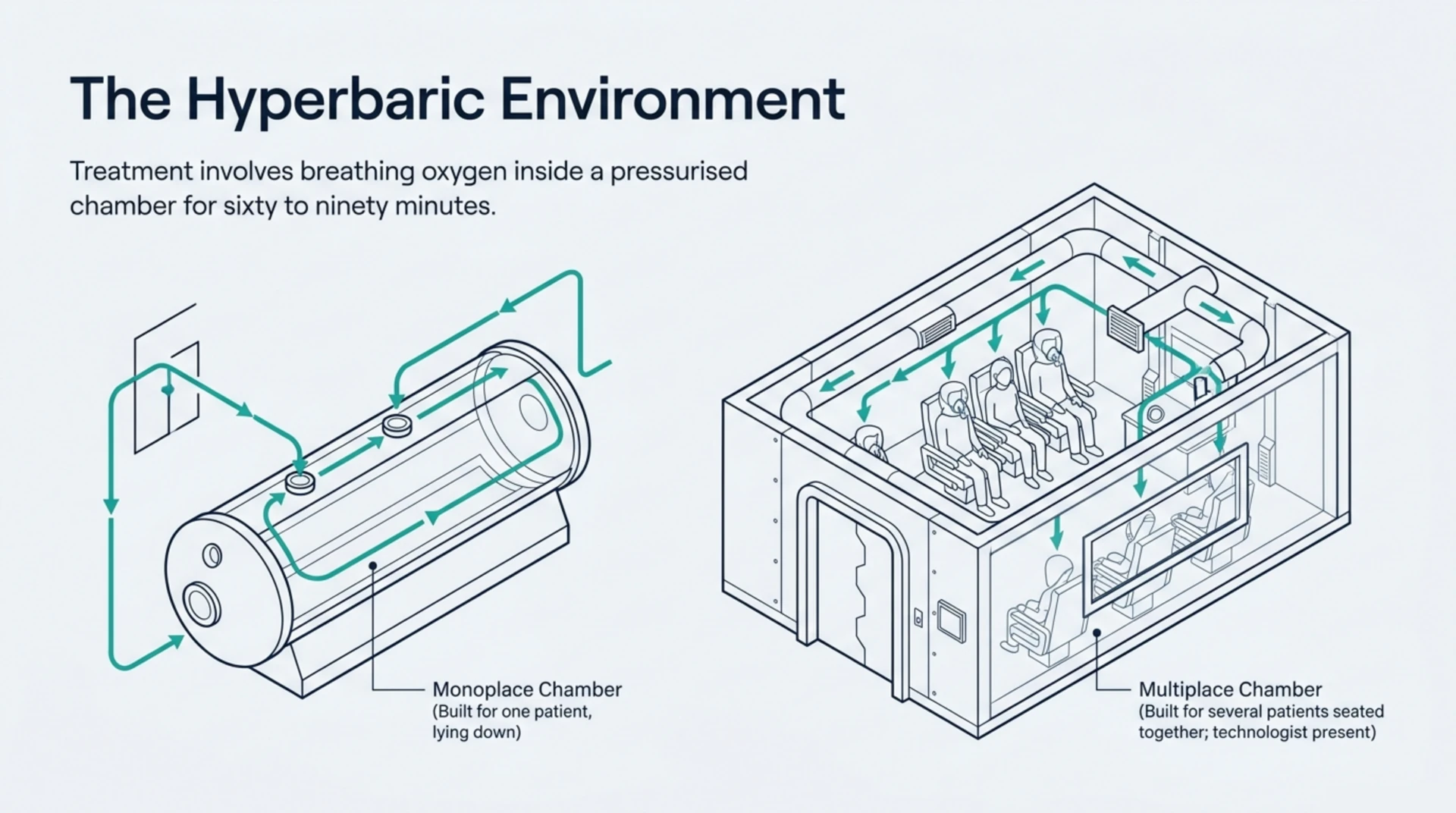
Hyperbaric oxygen therapy is a treatment that takes place inside a sealed chamber, where air pressure is raised above normal atmospheric levels while the patient breathes oxygen. Sessions typically last between sixty and ninety minutes, and patients usually rest, read, listen to audio, or nap while inside. Chambers come in two general formats: monoplace, built for one person lying down, and multiplace, built for several people seated together with a technologist or support staff present in the room.
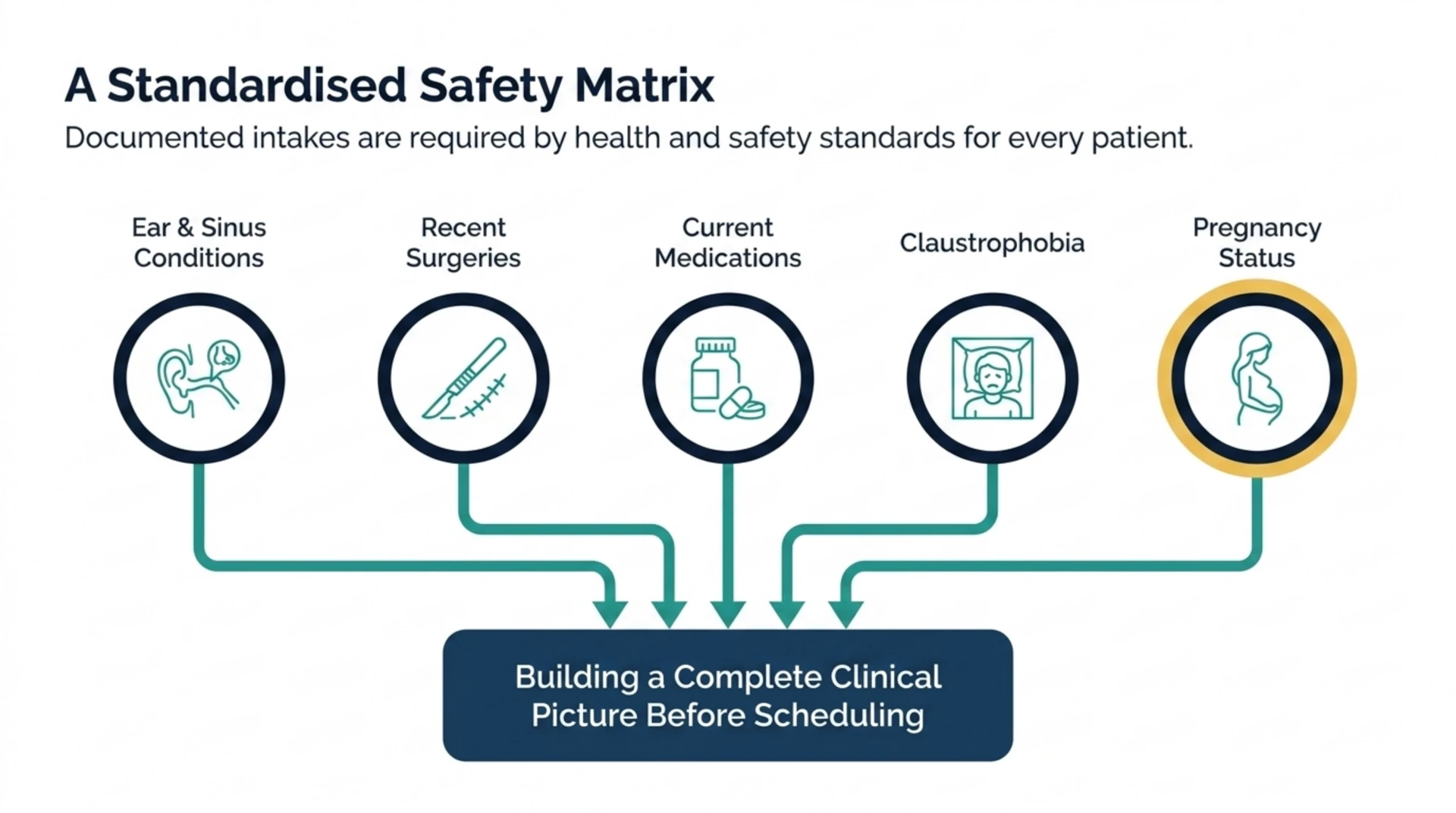
Every regulated facility runs an intake process before a first session. That process is where hyperbaric oxygen therapy pregnancy safety questions usually come up, because pregnancy is one of several health details that intake staff routinely ask about, alongside things like ear conditions, recent surgeries, and medications.
Why Does Pregnancy Come Up During Hyperbaric Oxygen Therapy Pregnancy Safety Screening?
Facilities in Canada operate under health and safety standards that require a documented intake for every patient, regardless of the reason they are seeking a session. Pregnancy status is one of the standard questions on that intake, in the same way facilities ask about claustrophobia, recent ear or sinus surgery, and certain medications.
Asking the question is a routine part of the booking and consultation workflow, not a judgment about whether a session will proceed. The purpose of the question is to make sure the clinical team has a complete picture before anyone steps into the chamber.
Who Asks the Question, and When?
Depending on the facility, the pregnancy question may appear on a written intake form, come up in a phone screening call, or be asked directly by a clinician or technologist during an in-person consultation. Some facilities ask at the time of booking, while others confirm again on the day of the first session.
What Happens After You Answer?
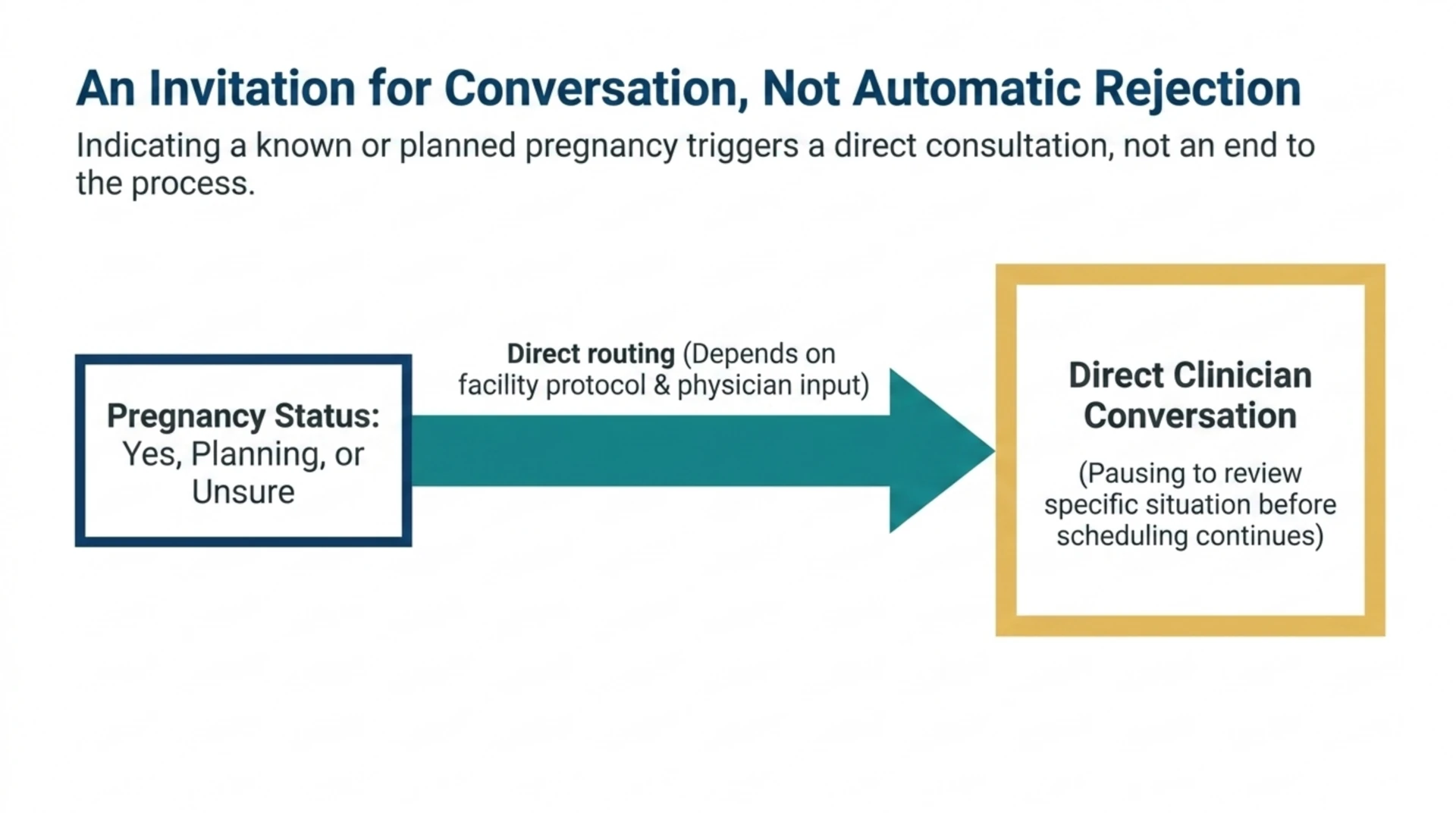
If you indicate that you are pregnant or think you might be, most facilities will pause and connect you with a clinician for a direct conversation before scheduling continues. This is a conversation, not an automatic rejection, and the specific next step depends entirely on the facility’s own protocol and your referring physician’s input.
What Happens During the Intake and Screening Process?
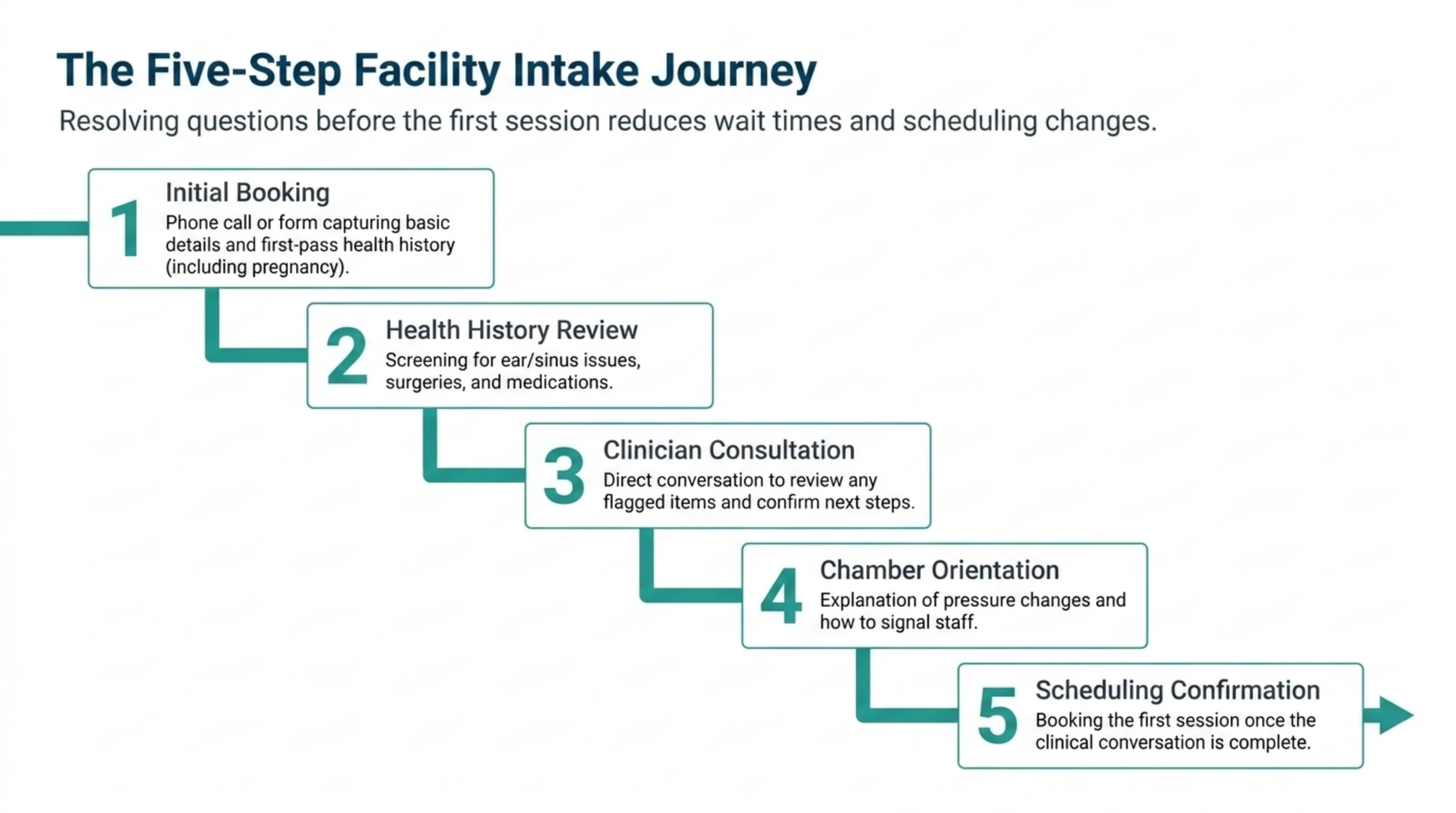
The table below outlines the general shape of a hyperbaric intake conversation. It describes the logistics of the process only, not what a chamber session does medically.
| Intake step | What it typically covers |
|---|---|
| Initial booking call or form | Basic contact details, reason for referral, and a first pass at health history questions, including pregnancy status |
| Health history review | Ear and sinus history, recent surgeries, current medications, and any conditions a clinician should know about before scheduling |
| Clinician consultation | A direct conversation to answer questions, review any flagged items from the health history, and confirm next steps |
| Chamber orientation | An explanation of what a session involves, how pressure changes feel, and how to signal staff during a session |
| Scheduling confirmation | Booking or rescheduling the first session once the intake conversation is complete |
This process exists so that patients arrive at their first session with their questions already answered, which helps facilities reduce wait times and avoid last-minute scheduling changes.
What Should You Expect If You Are Pregnant and Considering Hyperbaric Oxygen Therapy?
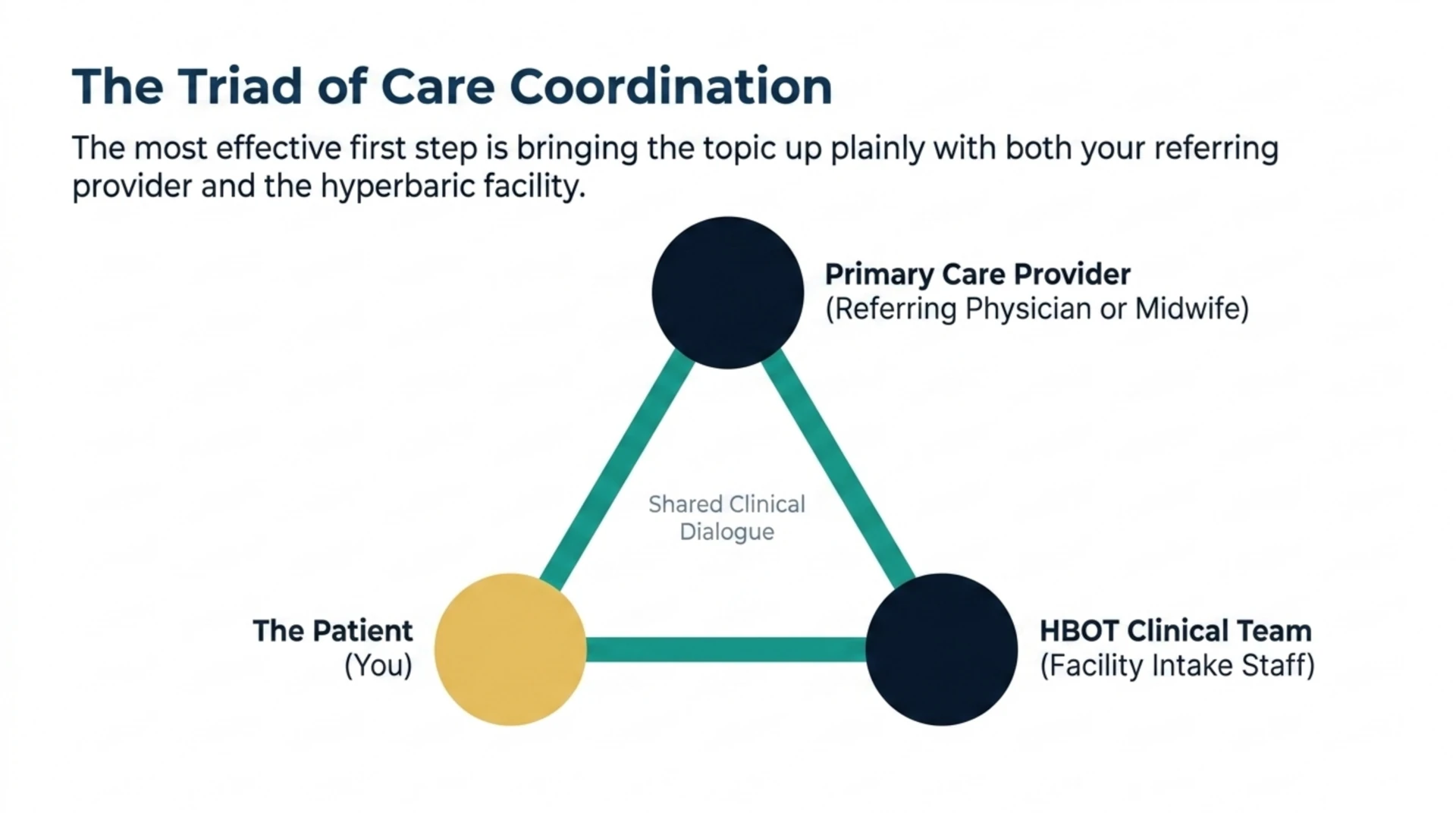
If you are pregnant, planning a pregnancy, or think you might be, the most useful first step is to say so plainly during intake and to bring the topic up with your referring physician or midwife as well as the hyperbaric facility. The facility’s clinical team and your own care provider are the right people to walk through your specific situation together.
Some patients are exploring hyperbaric oxygen therapy for a condition their physician is considering it for. If that describes you, our conditions overview is a good place to see the range of conditions clinicians discuss with patients, and to bring specific questions to your consultation rather than guessing.
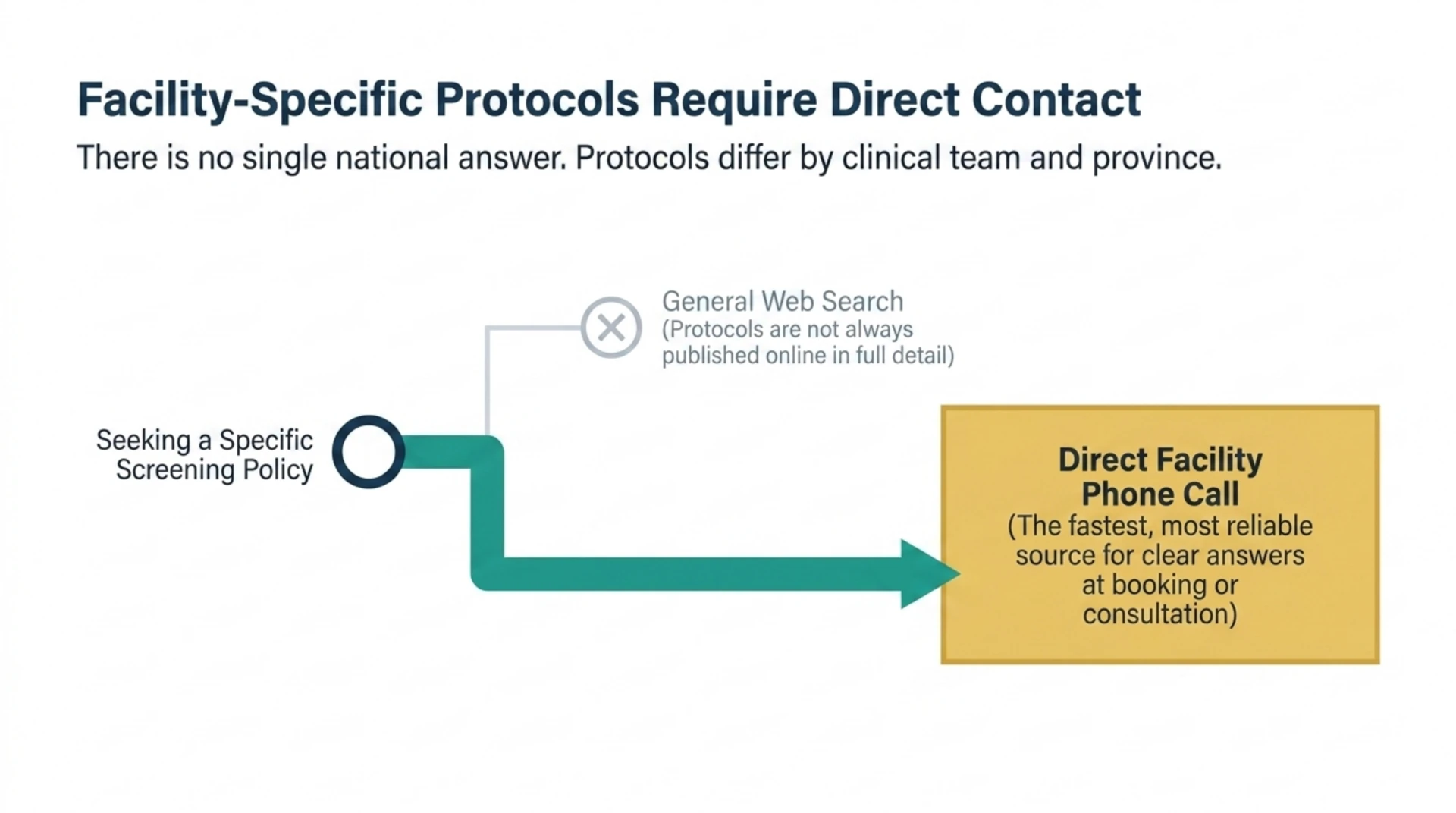
Every facility sets its own screening protocol, and protocols can differ by chamber type, by clinical team, and by province. Because of that variation, the most reliable source of an answer is the facility itself, not a general web search. Our general FAQ page covers other common intake questions, and our regulatory page explains how hyperbaric facilities in Canada are overseen.
Researchers continue to study hyperbaric protocols across a wide range of populations, and the published literature on hyperbaric oxygen therapy now runs to more than 14,000 studies. That volume of research is one reason intake teams take health history questions seriously: there is a lot of documented experience for clinicians to draw on when they talk through your history with you.
Frequently Asked Questions
Can pregnant patients book a hyperbaric oxygen therapy session in Canada?
Booking always starts with the same intake process as any other patient. Whether a session is scheduled, delayed, or discussed further depends on the facility’s own protocol and a direct conversation between you, the facility’s clinical team, and your own care provider. There is no single national answer, because each facility sets its own process.
Why do intake forms ask about pregnancy before a chamber session?
Pregnancy status is one of several standard health history questions facilities ask every patient, similar to questions about ear surgery or current medications. Asking is part of building a complete picture before scheduling, not a comment on any individual patient.
What if I find out I am pregnant after starting a course of sessions?
Tell the facility as soon as you know. Most clinical teams will want to have a follow-up conversation before your next scheduled session so they can walk through your updated situation with you and your care provider.
Do monoplace and multiplace chambers handle this question differently?
The intake question itself is the same regardless of chamber type. Chamber format mainly affects the logistics of a session, such as whether a technologist is in the room with you, rather than how the pregnancy question is handled during screening.
Who can I talk to about hyperbaric oxygen therapy pregnancy safety questions?
Start with the intake team at the facility you are considering, and loop in your referring physician or midwife. Both should be part of the conversation before a session is booked.
Where can I find a facility’s specific screening policy?
Ask directly when you call to book, or during your first consultation. Facility protocols are not always published online in full detail, so a direct phone call is usually the fastest way to get a clear answer. Our about page also explains how Canada Hyperbarics compiles facility information for patients researching their options.
The Bottom Line
Hyperbaric oxygen therapy pregnancy safety questions are a normal part of the intake process, and every regulated facility in Canada has a protocol for handling them. The most reliable path is a direct conversation with the facility’s clinical team alongside your own physician or midwife. Canada Hyperbarics exists to help patients understand that process and ask better questions, not to replace the conversation itself.
Related Reading
- Hyperbaric Clinic Clinical Trial Site Participation in Canada
- Hyperbaric Technologist Staffing Ratios & Scheduling
- Hyperbaric Clinic Liability Insurance & Malpractice Risk
This content is for informational purposes only and is not medical advice.
Ready to learn more about where hyperbaric oxygen therapy is offered? Visit our facilities page to find hospitals and regulated facilities across Canada, and to see the intake process in more detail before you book.