
TL;DR: A hyperbaric technologist staffing ratio is the minimum number of trained personnel a clinic assigns to operate and monitor a chamber safely during each session. Ratios differ for multiplace and monoplace chambers, and getting scheduling right protects patient safety, prevents burnout, and keeps a facility’s booking calendar predictable. This guide walks through practical ratio benchmarks, shift patterns, and Canadian regulatory considerations for clinic owner-operators.
Hyperbaric technologist staffing ratios are one of the least glamorous parts of running a chamber, and also one of the most important. Get the ratio wrong and you either burn out your team or leave a chamber unable to run a session at all. This guide breaks down how many technologists a typical multiplace or monoplace operation needs, how to build a schedule that survives sick days and vacation requests, and where Canadian regulatory requirements come into play.
This is a logistics and planning post, not a clinical review. If you are looking for the evidence behind hyperbaric oxygen therapy for a specific condition, visit our conditions overview instead.
What Are Hyperbaric Technologist Staffing Ratios?
Hyperbaric technologist staffing ratios describe the number of qualified staff assigned per chamber, per session, relative to the number of patients being treated. The ratio exists to make sure someone is always available to monitor equipment, respond to a patient concern, and manage the chamber controls without being pulled in two directions at once.
The right ratio depends heavily on chamber type. A multiplace chamber, which holds several patients in a shared compartment along with an inside attendant, has different staffing needs than a monoplace chamber, which treats one patient at a time and is typically operated from outside the chamber.
Why Staffing Ratios Matter for Chamber Safety and Throughput
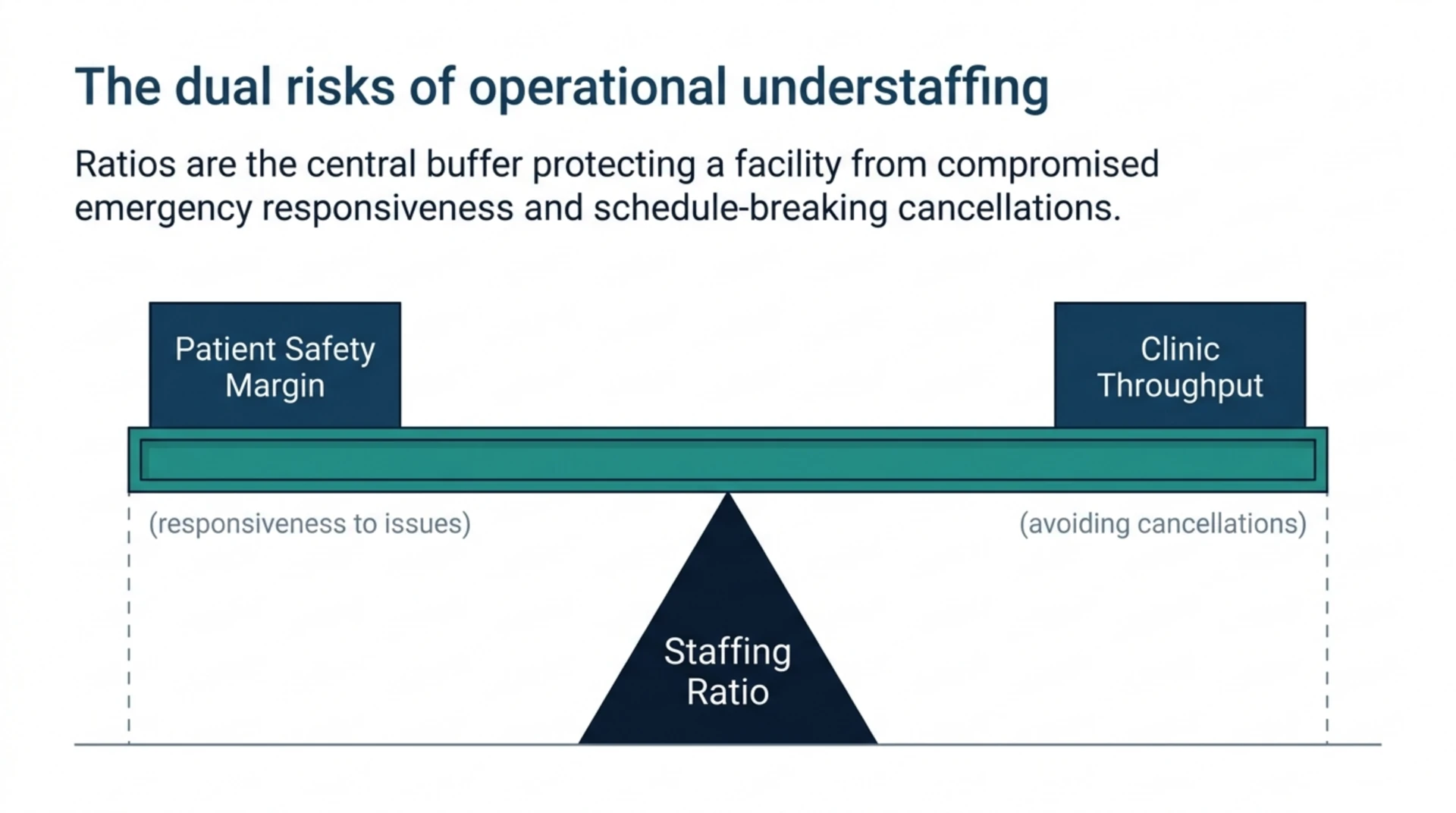
Understaffing a chamber session creates two separate problems. The first is safety margin: a technologist who is simultaneously managing the console, monitoring a patient, and fielding front-desk questions has less attention available if something needs a quick response. The second is throughput: a clinic that cannot run a session because a single qualified staff member called in sick has a scheduling problem, not a demand problem.
A well-designed staffing ratio is a buffer against both risks at once. It is not just about meeting a minimum number on paper. It is about making sure the minimum number is realistically available, session after session, without relying on the same one or two people every time.
How Many Technologists Does a Multiplace Chamber Need?
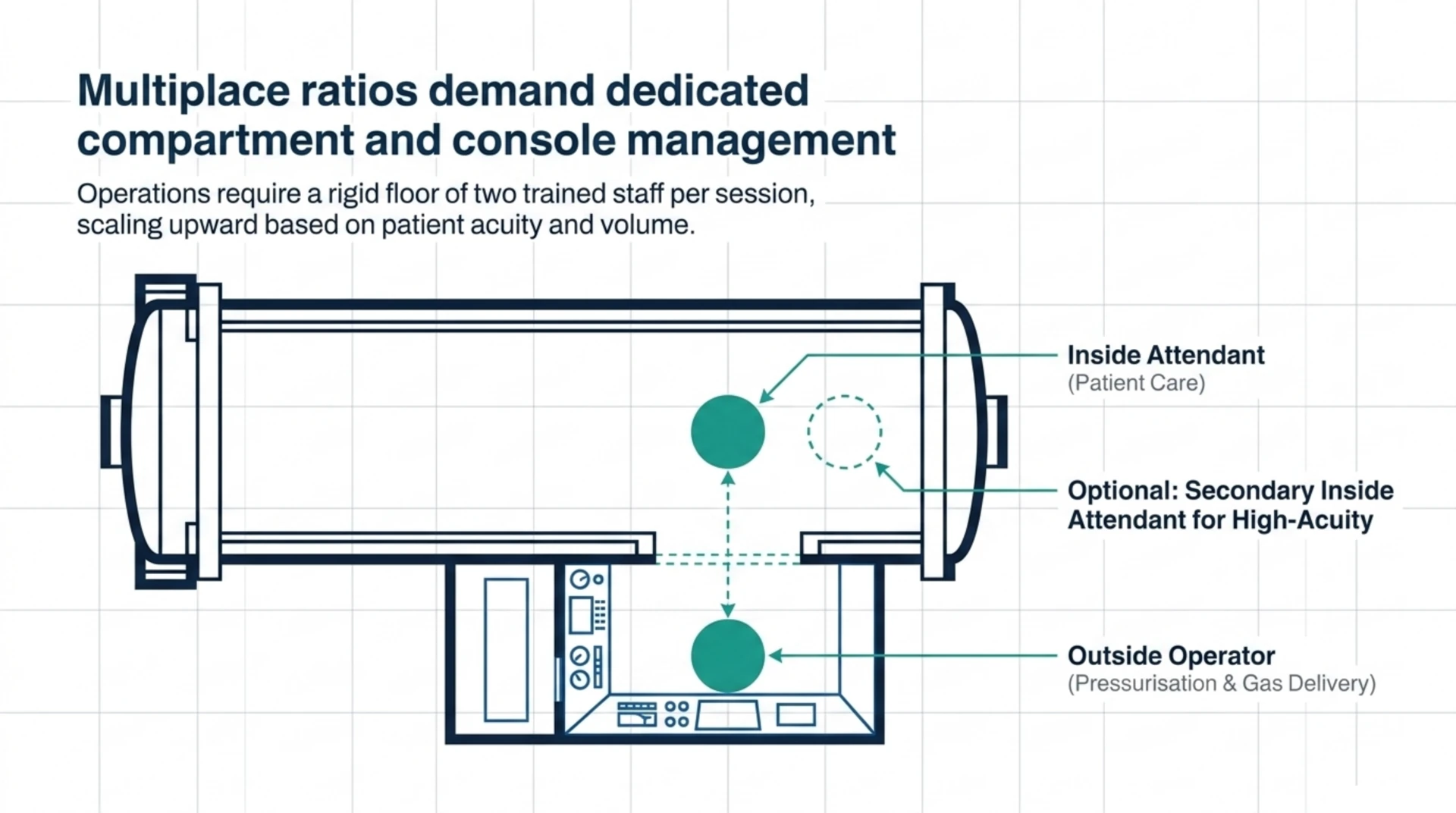
Most multiplace operations run with at least one inside attendant present in the chamber compartment with patients, plus one outside operator managing pressurization, gas delivery, and communications from the control panel. That is a baseline of two trained staff per session, not counting a supervising physician or on-call medical presence where required.
Larger multiplace clinics running multiple daily sessions, or treating higher-acuity patients, often add a second inside attendant so one person can focus on patient care while the other manages equipment and documentation. Two is the floor, not the target, for anything beyond the simplest single-patient session.
How Many Technologists Does a Monoplace Chamber Need?
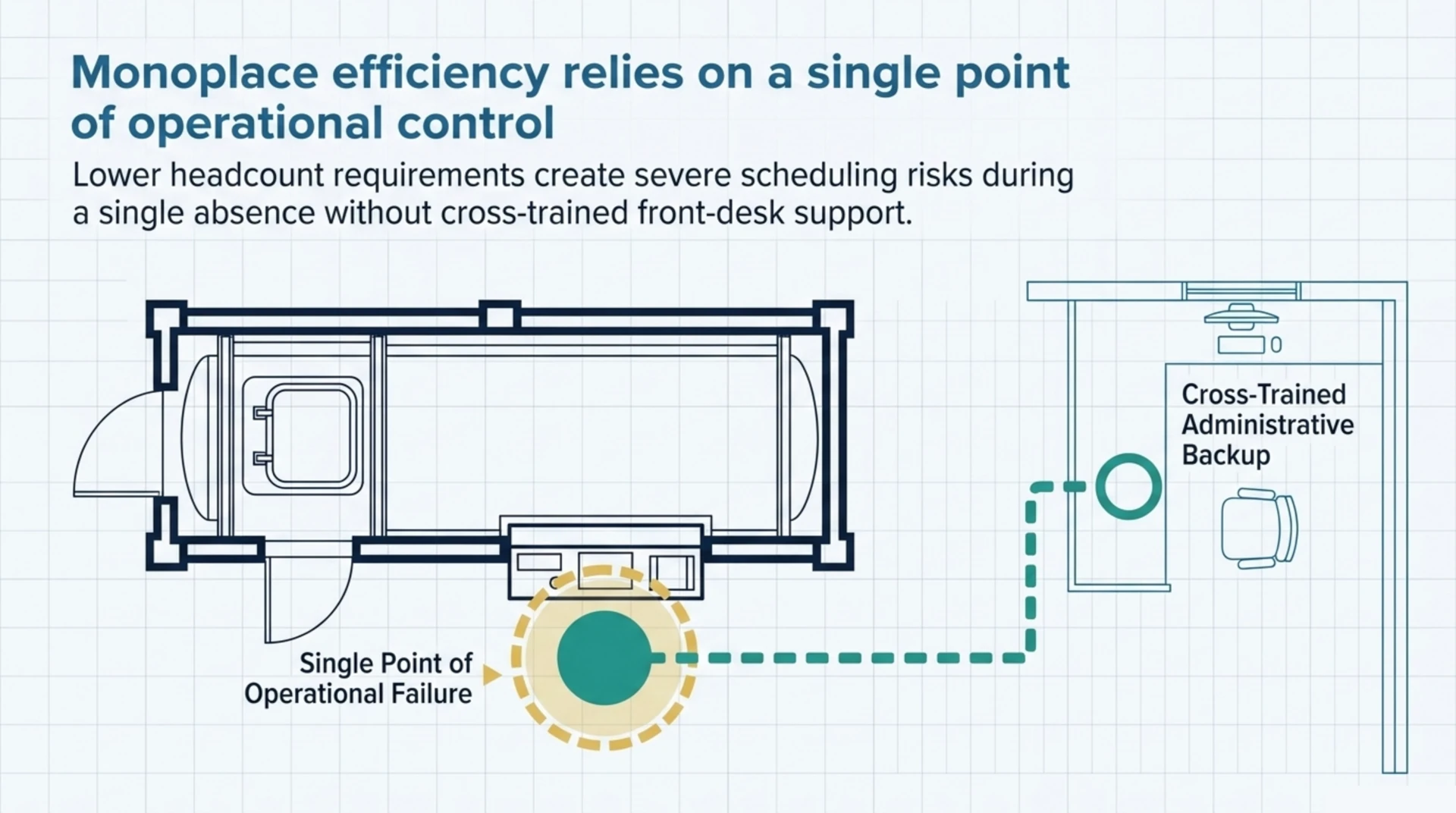
A monoplace chamber is typically run by a single trained operator stationed at the console outside the chamber, since there is no inside attendant compartment. That said, a single point of staffing failure is still a scheduling risk. Clinics running monoplace chambers usually keep at least one backup operator credentialed and available on short notice.
The lower headcount of a monoplace operation is an efficiency advantage, but it raises the cost of any single absence. Cross-training front-desk or administrative staff on basic monitoring protocols, even if they never run the console solo, closes that gap.
Staffing Ratio Comparison at a Glance
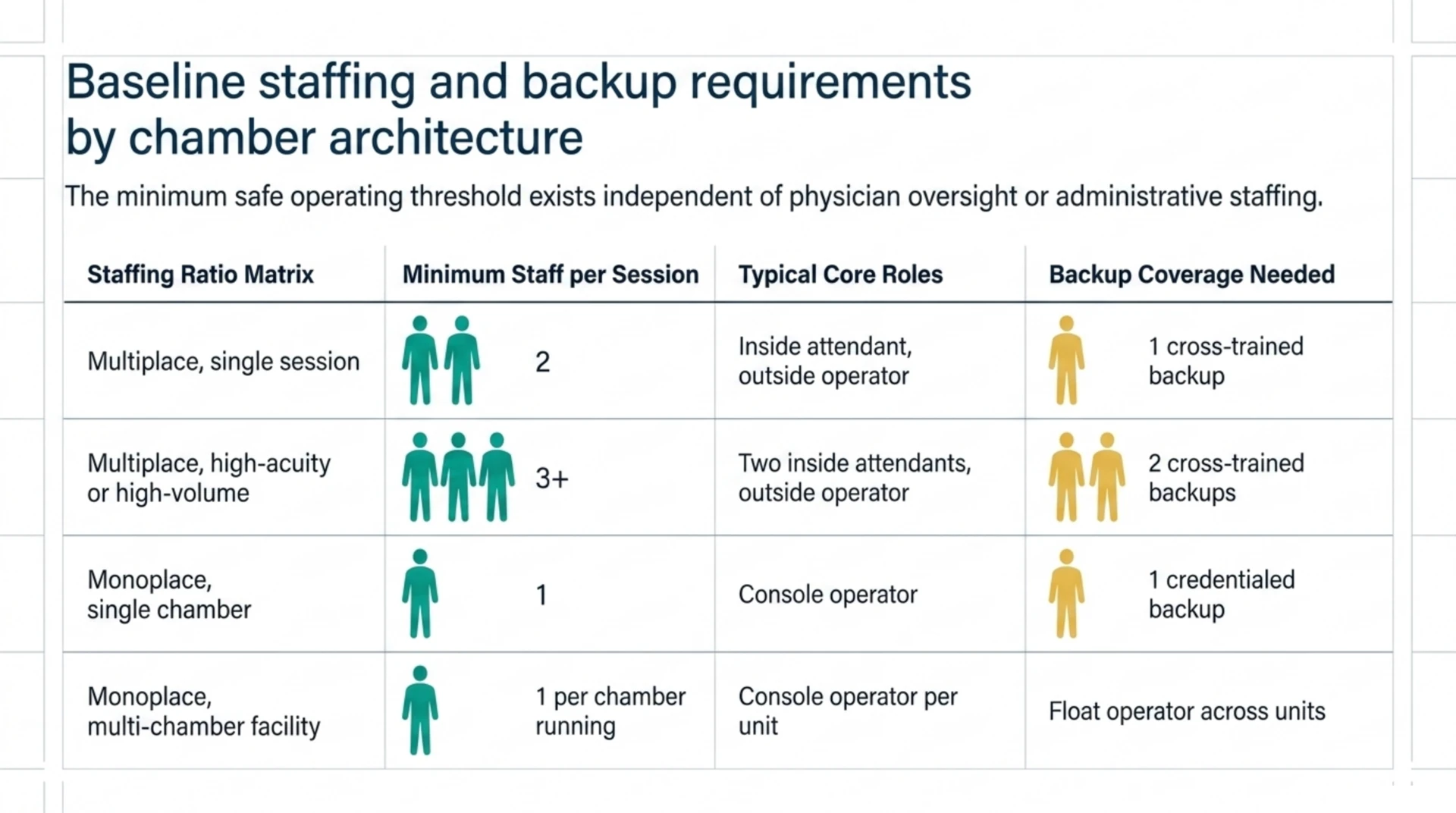
| Chamber Type | Minimum Staff per Session | Typical Roles | Backup Coverage Needed |
|---|---|---|---|
| Multiplace, single session | 2 | Inside attendant, outside operator | 1 cross-trained backup |
| Multiplace, high-acuity or high-volume | 3+ | Two inside attendants, outside operator | 2 cross-trained backups |
| Monoplace, single chamber | 1 | Console operator | 1 credentialed backup |
| Monoplace, multi-chamber facility | 1 per chamber running | Console operator per unit | Float operator across units |
Building a Weekly Schedule That Avoids Burnout
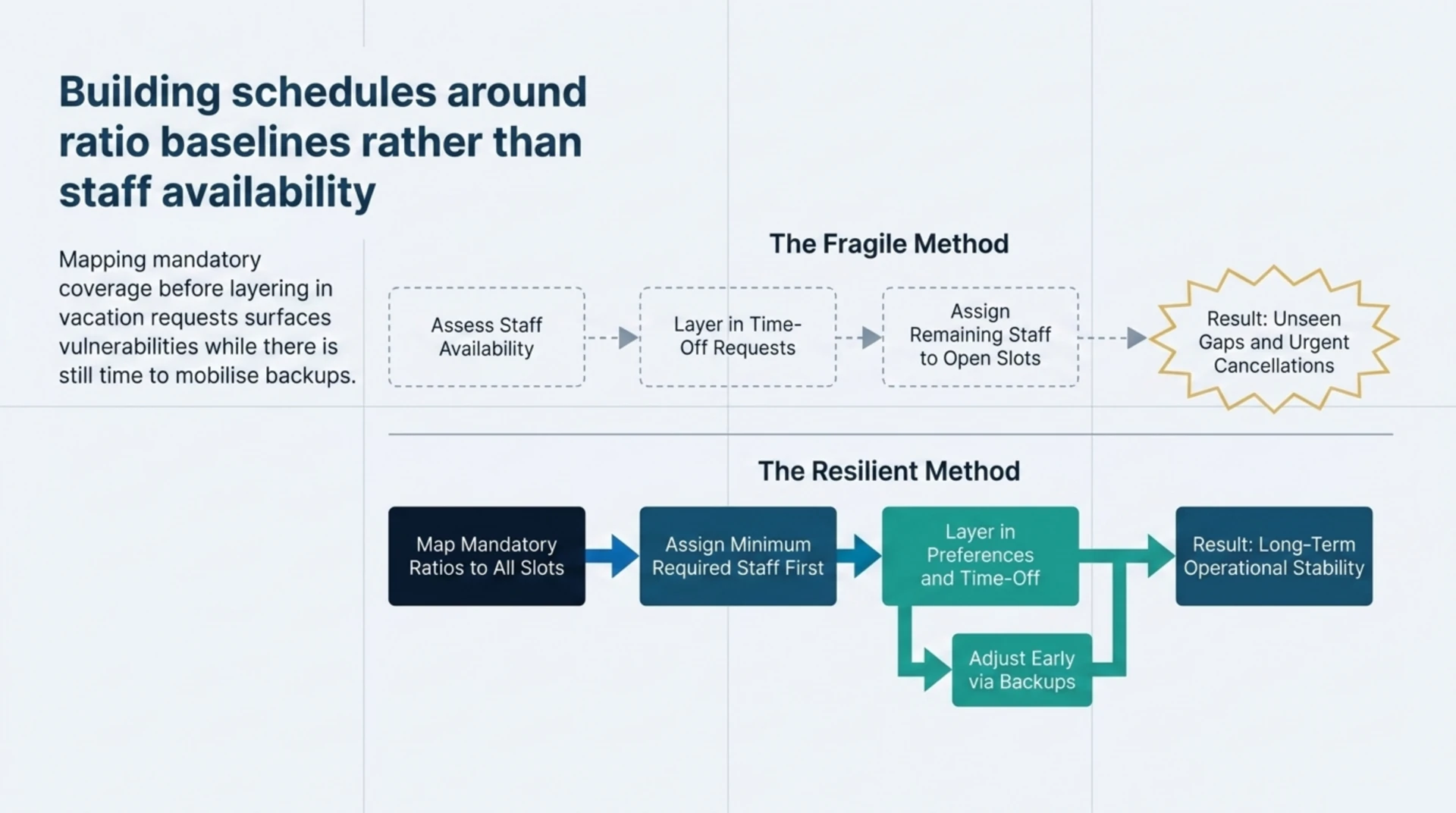
A common mistake in smaller clinics is building the weekly schedule around whoever is available, rather than around the minimum safe ratio for every slot on the calendar. That approach works until someone takes a vacation, and then the whole week collapses.
Start from the ratio, not from the roster. Map out every session slot for the week, assign the minimum required staff to each one first, and only then layer in preferences and time-off requests. This surfaces gaps early, while there is still time to adjust bookings or call in a backup.
Rotating who takes the early shift and who takes the late shift, rather than assigning fixed shifts by seniority, also spreads fatigue more evenly across the team. Technologist burnout tends to show up as increased sick time, which then compounds the original staffing shortfall.
Credentialing and Regulatory Considerations in Canada
Staffing ratios do not exist in isolation from credentialing requirements. Canadian facilities need to track which staff hold current hyperbaric-specific training, which certifications are up for renewal, and which provincial or facility-level requirements apply to their setting. For a summary of how Canadian regulatory oversight applies to hyperbaric facilities, see our regulatory overview.
A schedule is only as good as the credentials behind it. Building a simple credential-expiry tracker alongside the shift schedule prevents a common failure mode: discovering a technologist’s certification lapsed the same week you needed them to cover a session.
What Happens When You’re Short-Staffed?
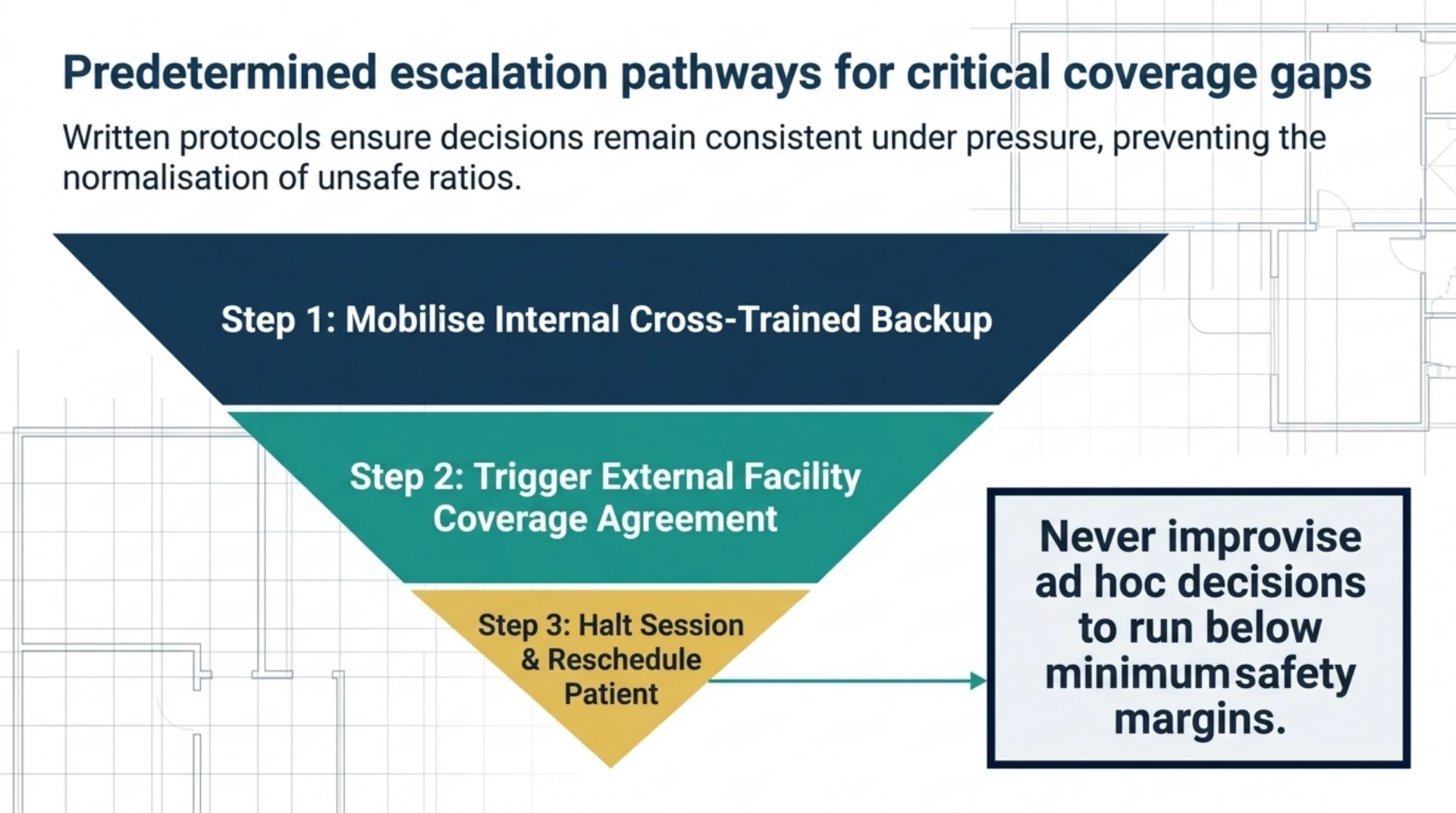
Every clinic eventually faces a day where the schedule does not add up. Having a written short-staffing protocol in advance, rather than improvising, keeps decisions consistent. Typical protocols include a clear escalation order (who gets called first, second, third), a defined threshold for cancelling or rescheduling a session rather than running it below minimum ratio, and a standing agreement with a neighbouring facility for coverage in extreme cases.
The goal is to never make an ad hoc decision to run a session below the minimum ratio. Once that becomes an accepted exception, it tends to become the norm.
Frequently Asked Questions
What is the minimum staffing ratio for a hyperbaric chamber?
For a multiplace chamber, most clinics operate with a floor of two trained staff per session: one inside attendant and one outside operator. Monoplace chambers are typically run by a single credentialed operator, with a backup available on short notice.
Can one technologist run more than one monoplace chamber at a time?
This depends on facility layout and internal policy. Some multi-chamber monoplace facilities use a float operator model where one technologist monitors several consoles positioned within direct line of sight, but this requires careful workflow design and is not appropriate for every facility.
How often should staffing schedules be reviewed?
A weekly review against the minimum ratio, combined with a monthly review of credential expiry dates, catches most scheduling gaps before they become urgent.
Does a supervising physician count toward the staffing ratio?
A supervising physician’s role is separate from the technologist staffing ratio. Physician oversight requirements are a distinct consideration and should be planned for independently of technologist coverage.
What credentials should a hyperbaric technologist hold?
Requirements vary by facility and province. Clinic operators should confirm current credentialing expectations directly with the relevant regulatory body rather than relying on general guidance. See our regulatory page for a starting reference point.
How does understaffing affect patient scheduling?
When a facility cannot meet its minimum staffing ratio for a slot, that session typically needs to be rescheduled. A proactive staffing plan reduces how often this happens and helps keep patient booking delays to a minimum.
Where to Learn More
Canada Hyperbarics maintains an educational library, including a growing collection of over 14,000 peer-reviewed studies, to help clinicians and clinic operators find reliable reference material. Staffing and scheduling are operational topics, but they sit alongside the clinical questions clinic owners are also weighing when deciding which conditions to treat. For that side of the picture, our conditions overview is a useful starting point, and our About page explains more about who Canada Hyperbarics is and why we publish this material.
Related Reading
- Hyperbaric Chamber Downtime: Business Continuity Plan
- Building Physician Referral Partnerships for HBOT Clinics
- HBOT Adverse Event Reporting: What Systematic Reviews Show
Staffing ratios and scheduling are a foundational operations problem for any hyperbaric facility, and getting them right is what makes safe, consistent chamber operation possible day after day. If you are researching where regulated hyperbaric facilities operate, visit our directory of hospitals and regulated facilities.
This content is for informational purposes only and is not medical advice.