
TL;DR: Is hyperbaric oxygen therapy covered by insurance? It depends almost entirely on the medical reason for treatment. Approved, emergency indications like decompression sickness are typically treated as insured medical care, while off-label or investigational uses face much more inconsistent coverage. The research base directly studying insurance and reimbursement decisions for HBOT is thin, and almost none of it is Canada-specific, so this post is honest about what the evidence does and does not show.
Is hyperbaric oxygen therapy covered by insurance? Hyperbaric oxygen therapy (HBOT) is a treatment in which a patient breathes oxygen at higher-than-normal air pressure inside a sealed chamber. Whether it is covered by a provincial health plan or private insurer depends on the specific condition being treated, not on the therapy itself. In this post, we look at what the available research says about how insurers and health systems decide what HBOT use to cover, and where the evidence is limited or indirect.
Is Hyperbaric Oxygen Therapy Covered by Insurance?
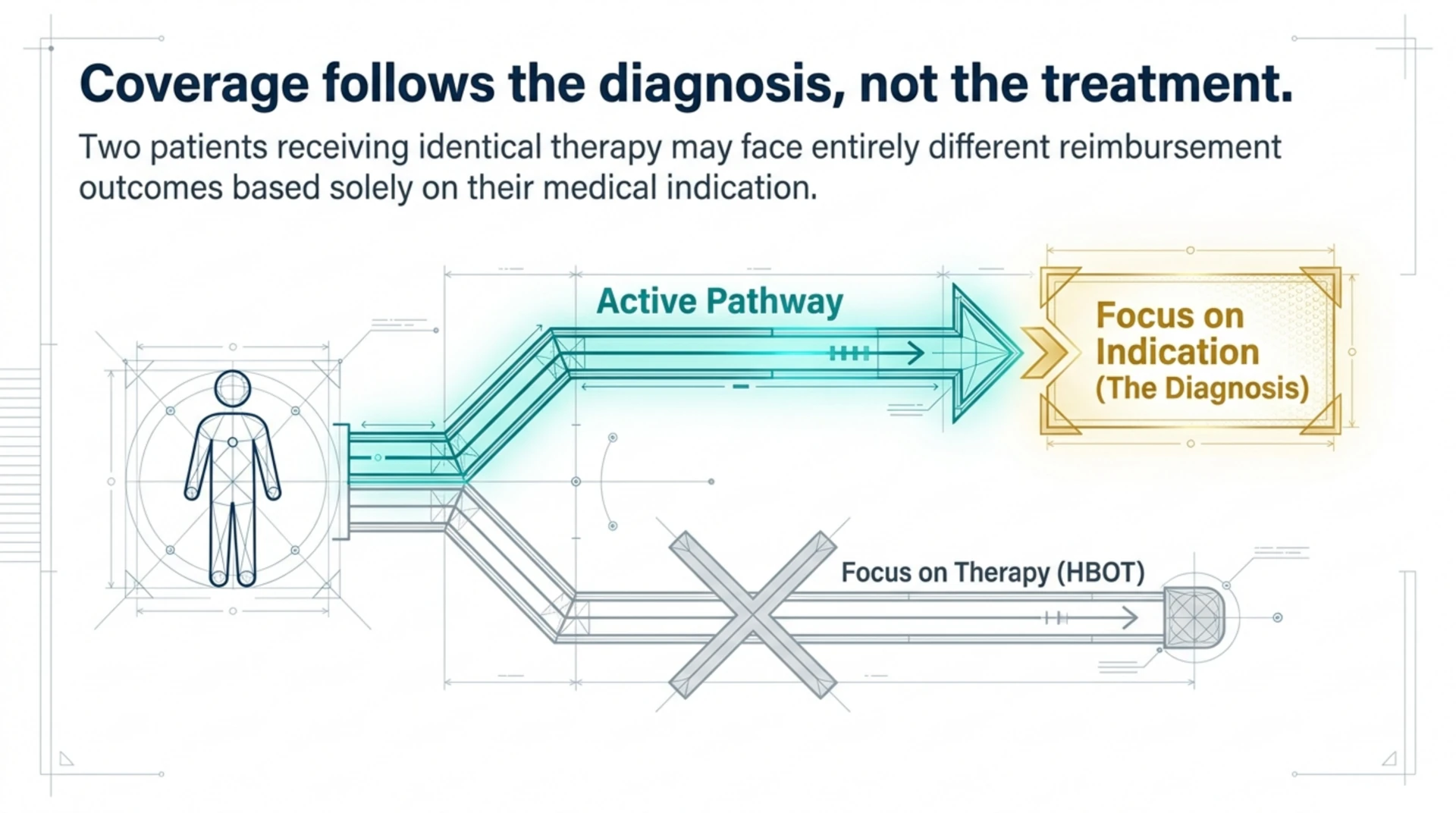
The short answer is: sometimes, and it depends on the indication. Coverage for HBOT generally follows whether a specific use is officially recognised as medically necessary by a payer or health authority, not whether the therapy exists at all. A well-established, emergency use of HBOT is treated very differently, from a coverage standpoint, than a newer or off-label use.
This distinction matters more than most patients expect. Two people could both be asking their insurer about “hyperbaric oxygen therapy” and get completely different answers, simply because they are being treated for different conditions.
How Do Insurers Decide What HBOT Uses to Cover?
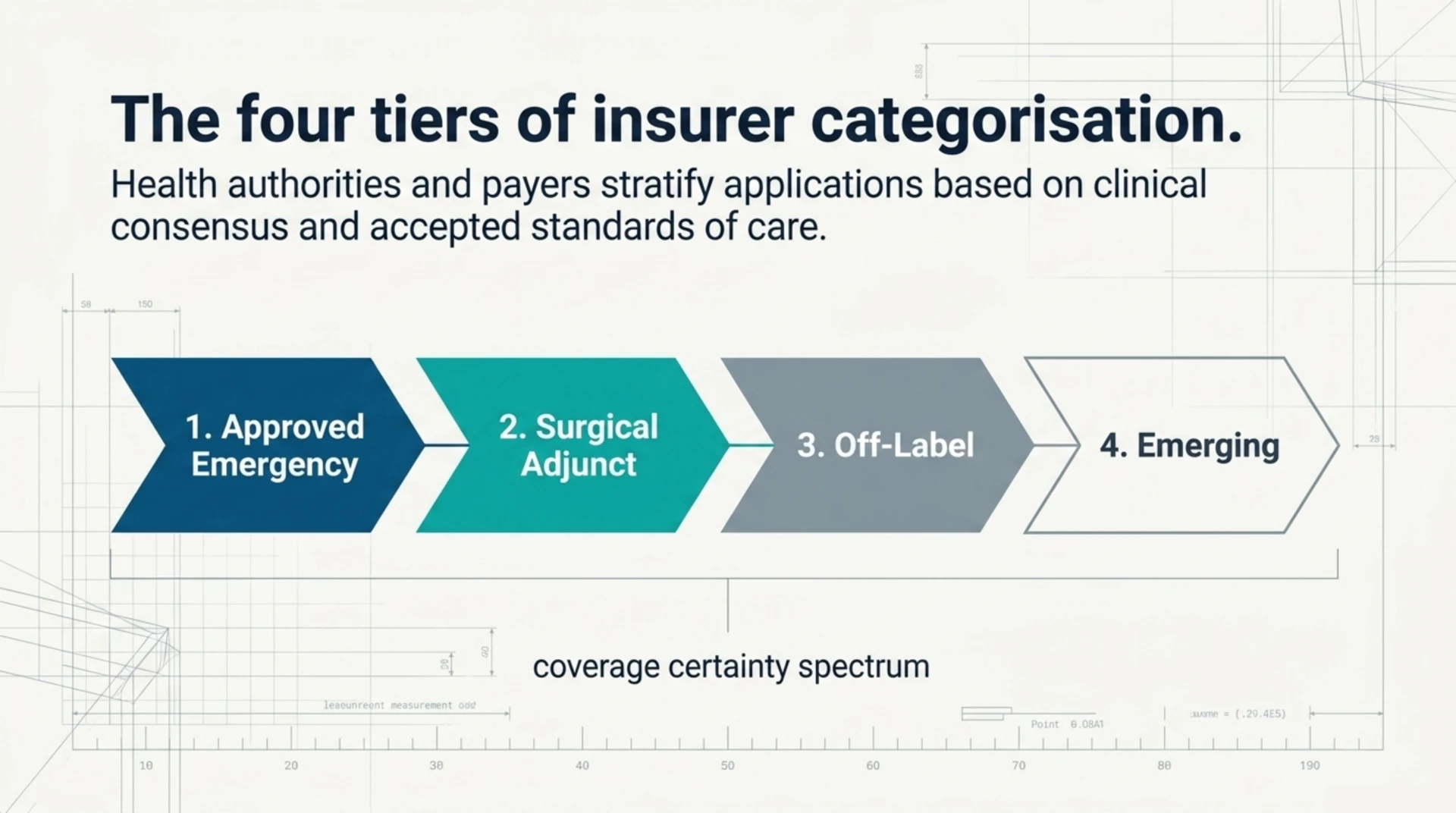
Insurers and health systems typically sort HBOT uses into a small number of categories: clearly approved indications, surgical adjunct uses tied to a specific procedure, and off-label or investigational uses. Each category tends to face a different coverage pathway.
Approved, emergency indications
Decompression sickness, sometimes called “the bends,” is one of the clearest examples of an approved HBOT indication. A 2016 article on diving accidents (PubMed | Our Assessment) describes how decompression injuries occur during diving and stresses the need for immediate medical care. Because decompression sickness is a recognised medical emergency, HBOT for this condition is generally treated like other urgent, insured medical care, rather than something a patient has to separately justify to a payer.
Approved surgical adjunct uses
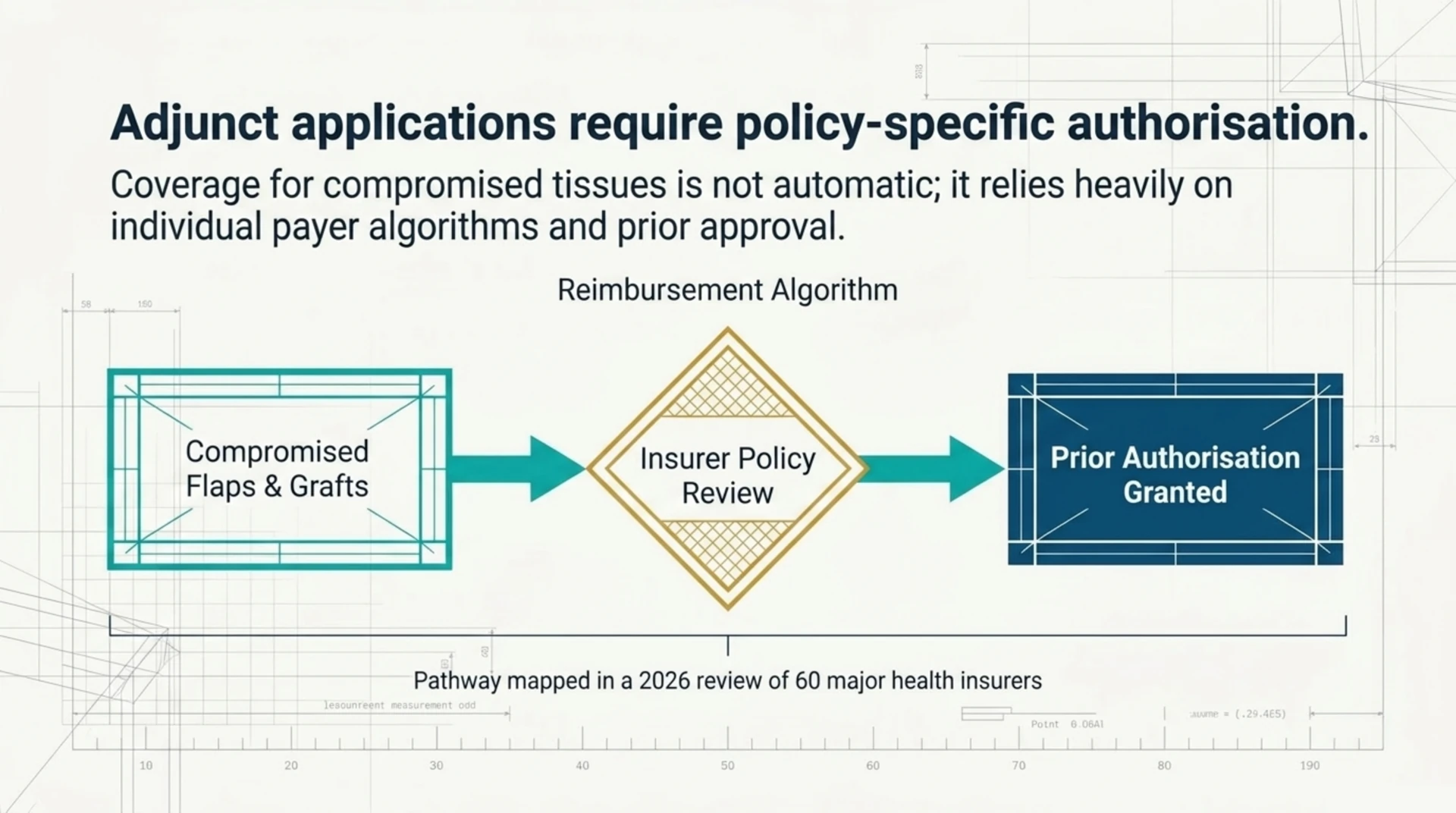
Coverage gets more complicated when HBOT is used alongside surgery rather than as an emergency treatment on its own. A 2026 review (PubMed | Our Assessment) examined the HBOT insurance policies of the 60 largest U.S. health insurers for compromised surgical flaps and grafts, and then built a reimbursement algorithm to help prescribing physicians navigate approvals. The existence of a reimbursement algorithm, in itself, tells us that coverage for this surgical-adjunct use is not automatic, it is policy-dependent and varies insurer by insurer.
Off-label and investigational uses
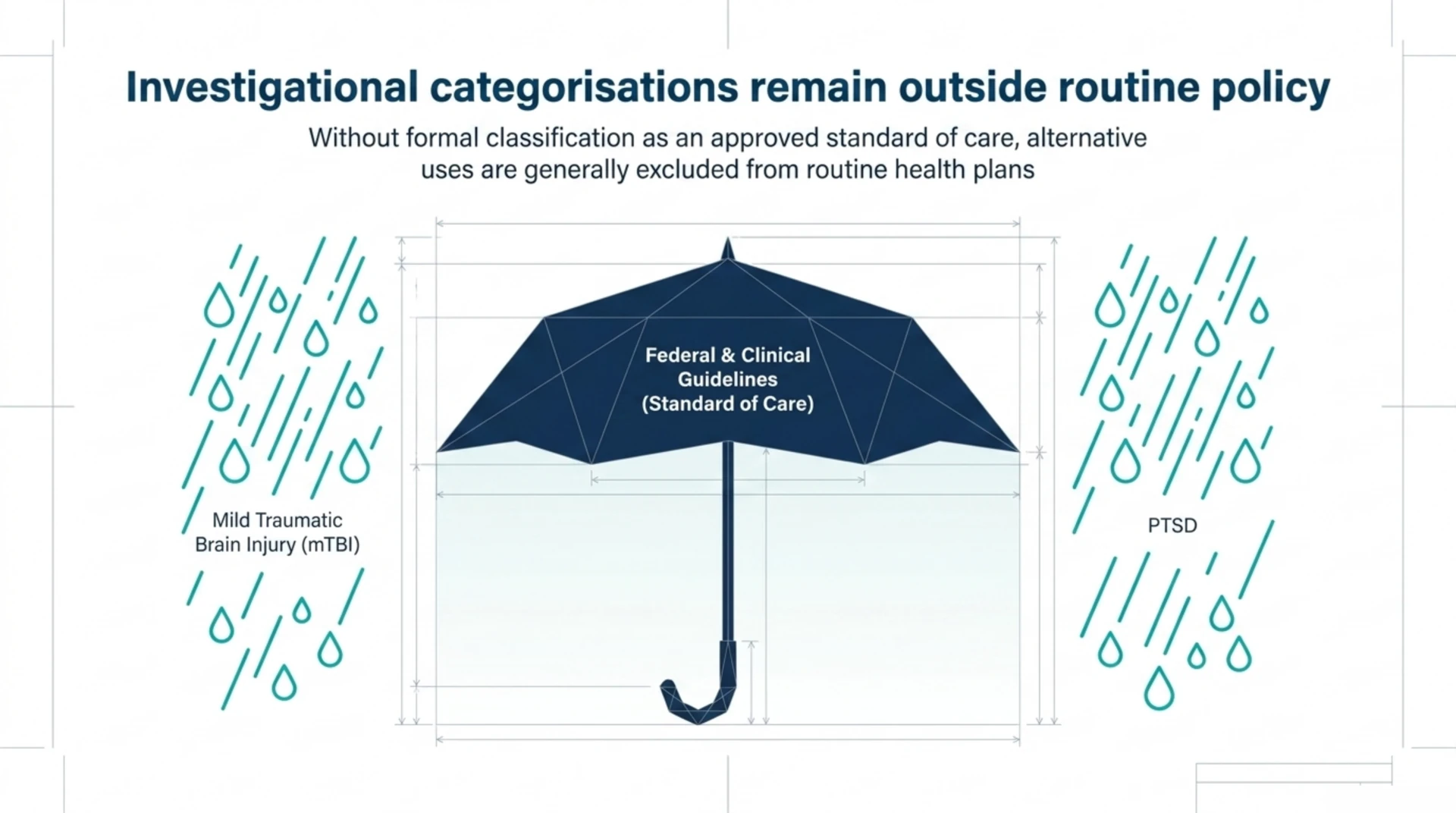
Some HBOT uses remain classified as investigational by major payers and government bodies, even when patient interest and some research support exist. A 2022 policy review (PubMed | Our Assessment) looked at U.S. federal policies and clinical practice guidelines on alternative uses of HBOT, particularly for mild traumatic brain injury and post-traumatic stress disorder. These off-label applications generally sit outside routine insurance coverage precisely because federal and clinical guideline bodies have not classified them as an approved standard of care.
What Does the Broader Evidence Say About Insurance and Access to Care?
Beyond HBOT-specific policy reviews, some research looks at the wider relationship between insurance status and the kind of care patients receive. A 2021 retrospective cross-sectional study (PubMed | Our Assessment) analyzed New South Wales public hospital data and found no overall association between rates of low-value services and a patient’s insurance funding status, though some individual hospitals showed variation.
It is important to be precise about what this study does and does not tell us. This research was not about hyperbaric oxygen therapy specifically, and it was conducted in the Australian public hospital system, not Canada. We include it here because it illustrates a general pattern worth being aware of: insurance status can shape what care a patient is offered or seeks out, independent of the treatment itself. That general pattern is a reasonable thing to keep in mind, but it should not be read as direct evidence about HBOT coverage.
What About Emerging or Newer HBOT Applications?
Coverage tends to lag furthest behind for the newest applications, simply because the evidence base is still small. A study of 47 children undergoing repeat hypospadias repair (PubMed | Our Assessment) examined whether perioperative HBOT was associated with fewer complications and better tissue healing outcomes compared with standard care.
This kind of small-population surgical study is genuinely useful for building clinical understanding, but a single study of 47 patients is not, on its own, the kind of evidence base that typically moves an insurer or health authority to add a new routine coverage category. Newer or narrower applications like this one are the ones patients should expect the most coverage uncertainty around.
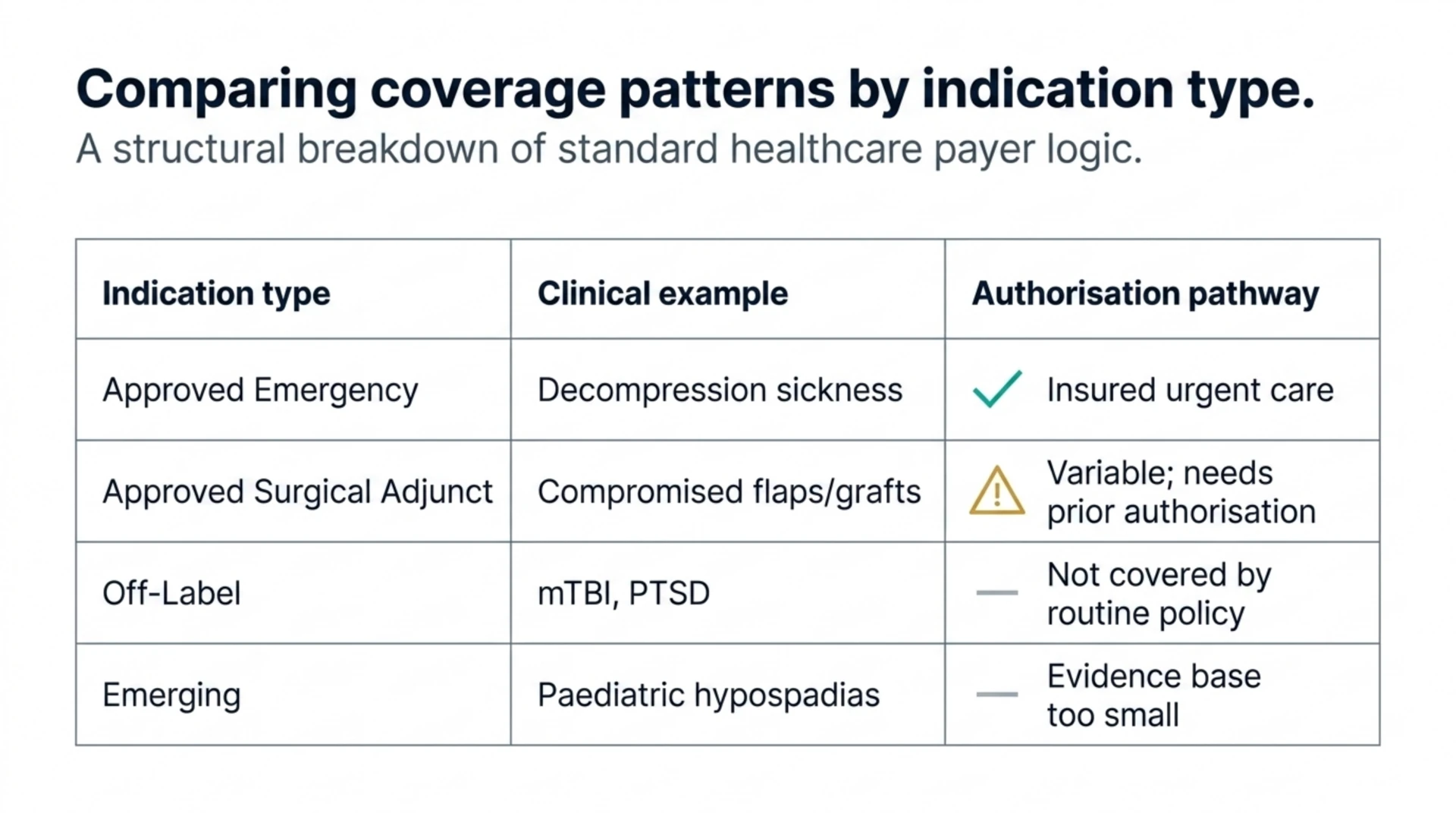
Comparing coverage patterns by indication type
| Indication type | Example from the evidence | Typical coverage pattern |
|---|---|---|
| Approved emergency indication | Decompression sickness | Generally treated as insured, urgent medical care |
| Approved surgical adjunct | Compromised surgical flaps and grafts | Varies by insurer; often needs prior authorization |
| Off-label / investigational | Mild traumatic brain injury, PTSD | Generally not covered by routine policy |
| Emerging surgical application | Perioperative use in paediatric hypospadias repair | Evidence base too small yet for routine coverage decisions |
What About Canadian Provincial Health Coverage Specifically?
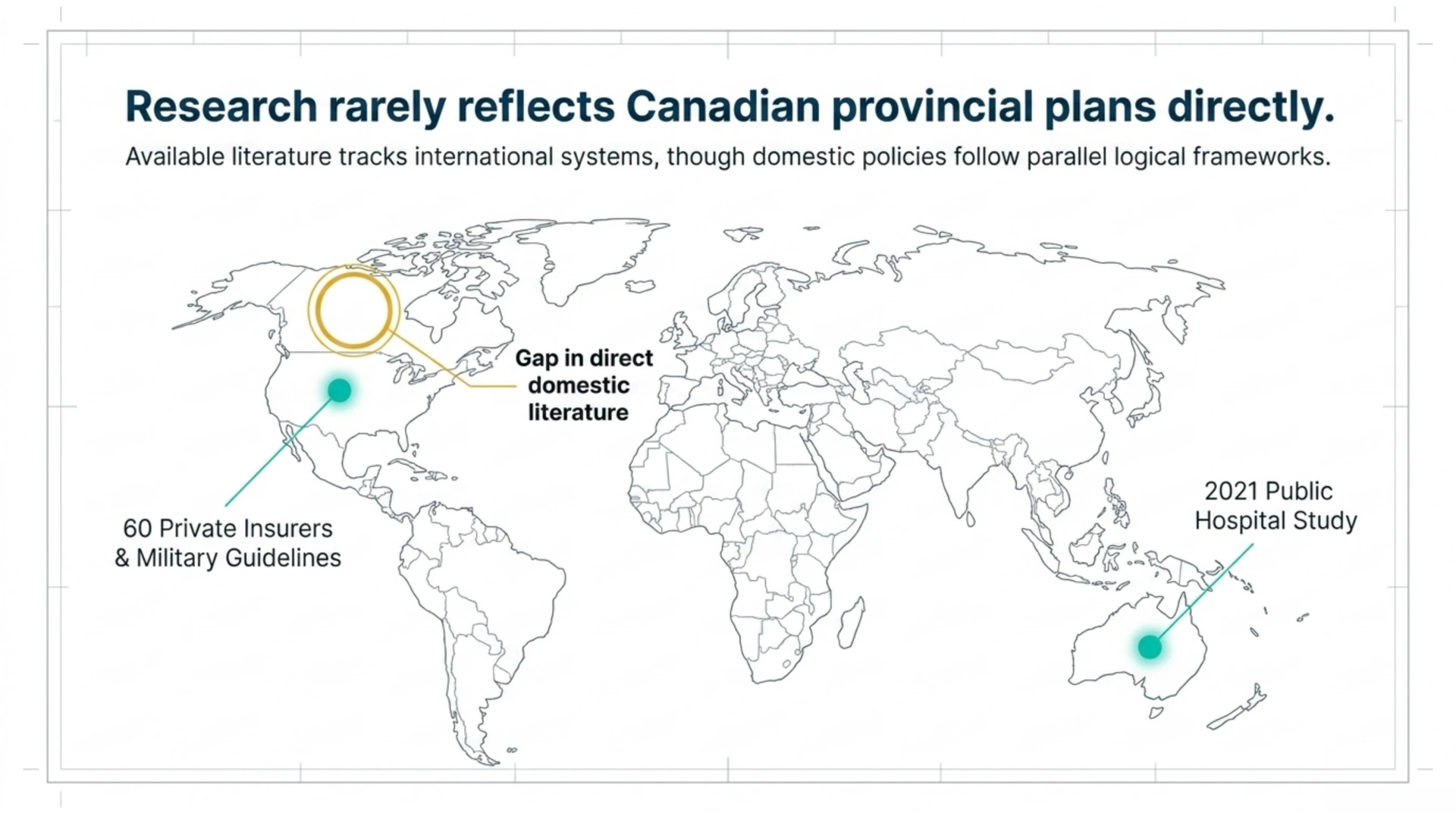
This is where we need to be direct about a limitation in the evidence pool behind this article. None of the research summarized above examines Canadian provincial health plans directly. The insurer policy review looked at large U.S. private insurers, the policy review looked at U.S. federal and military guidance, and the low-value-service study looked at the Australian public hospital system.
Our research database tracks over 14,000 peer-reviewed HBOT studies, but very few of them focus specifically on insurance and reimbursement policy, and fewer still are Canada-specific. What we can say, based on the general pattern across these studies, is that Canadian provincial plans are likely to follow a similar logic: approved, medically necessary indications recognised by that province’s health authority are the ones most likely to be an insured service, while off-label uses are the ones most likely to require private insurance or self-payment.
For a more detailed look at how coverage tends to work across Canadian provinces, see our overview of HBOT coverage in Canada. Because provincial policy can change and can vary by condition, the most reliable next step is always to confirm directly with your provincial health plan or your treating clinic.
Frequently Asked Questions
Does my provincial health plan cover hyperbaric oxygen therapy?
It depends on the condition being treated. Provinces are more likely to cover HBOT for indications that are formally recognised as medically necessary, such as decompression sickness, than for off-label uses. Confirm directly with your provincial health plan for your specific situation.
Why do some HBOT treatments get covered and others don’t?
Coverage decisions generally track whether an indication has been formally reviewed and approved by a health authority or insurer. Approved emergency and surgical-adjunct indications tend to have clearer coverage pathways than off-label or investigational ones.
Will private insurance cover HBOT if my province doesn’t?
This varies by insurer and by policy. The 2026 review of the 60 largest U.S. insurers found real variation in how private payers handle HBOT for compromised tissue, which suggests coverage decisions are made policy by policy rather than universally. Canadian private insurers are likely to show similar variation, though this specific research was conducted in the U.S. system.
Is HBOT covered for decompression sickness in Canada?
Decompression sickness is a recognised medical emergency, and HBOT is the standard treatment for it. Emergency, medically necessary treatment for a recognised condition is generally handled as insured medical care, though you should confirm details with your provincial plan.
Are off-label uses like traumatic brain injury or PTSD covered by insurance?
Generally, no. Federal and clinical guideline reviews have classified these as alternative or investigational uses rather than an approved standard of care, and insurance coverage typically follows that classification.
What should I do if I’m not sure whether my treatment will be covered?
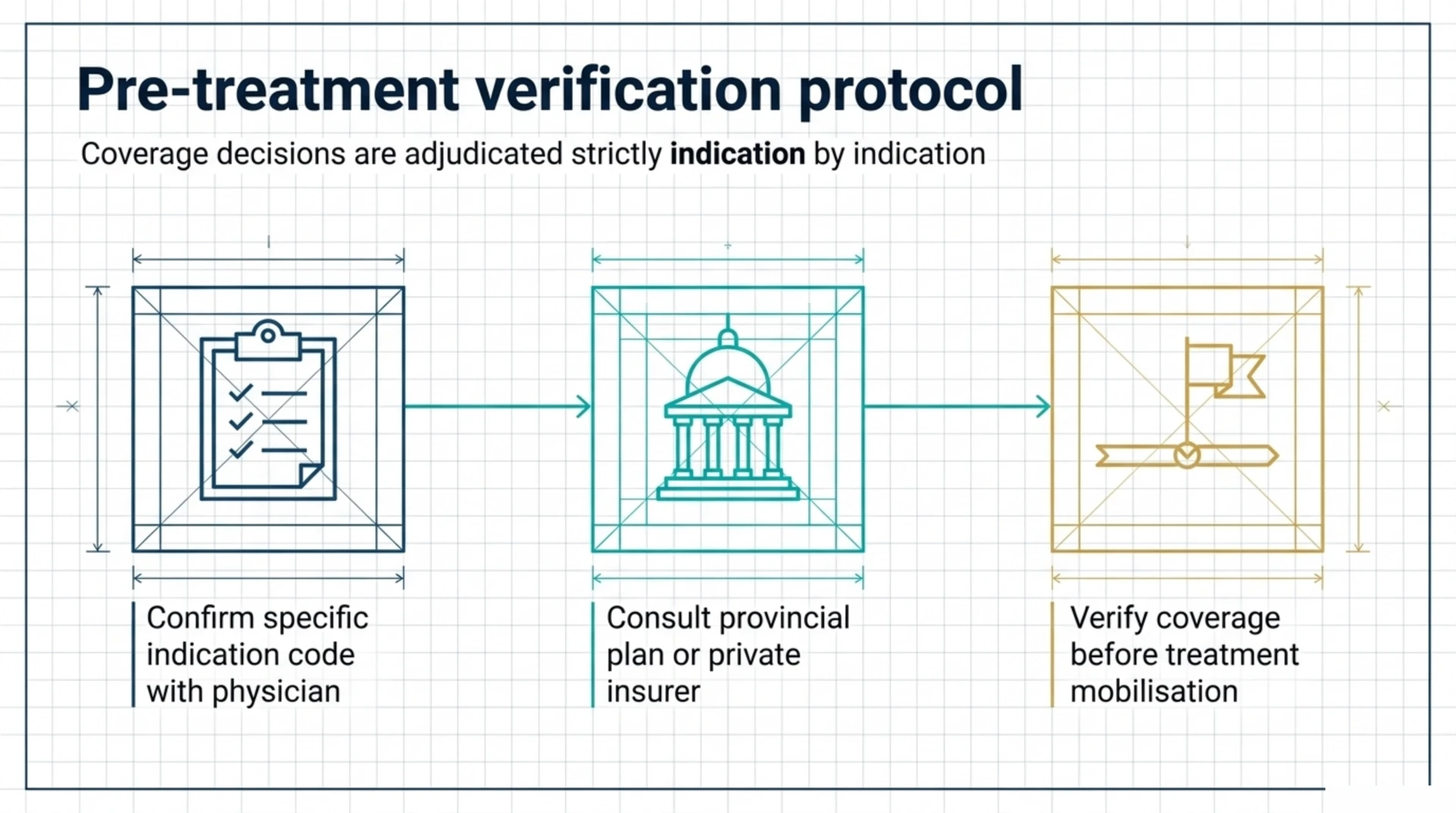
Ask your treating physician or clinic to help confirm the specific indication code being used, and check directly with your provincial health plan or private insurer before treatment begins. Coverage decisions are made indication by indication, not for HBOT as a whole.
Related Reading
- HBOT Referral Pathway for Patients Without a Local Chamber
- Inside the Hyperbaric Chamber: A Patient FAQ Guide
- How to Find a Hyperbaric Oxygen Therapy Clinic Near Me
If you are considering HBOT for any condition, the most useful next step is a conversation with your physician about whether it is appropriate for you, and whether your specific indication is likely to be a covered service under your plan.
This content is for informational purposes only and is not medical advice.