
TL;DR
A physician referral partnership is an ongoing working relationship between a hyperbaric clinic and a referring physician’s practice, built on clear referral criteria, consistent communication and mutual trust. Building physician referral partnerships for a hyperbaric clinic takes structured outreach: identify the right specialties, lead with education rather than a sales pitch, make the referral paperwork simple, and close the loop with progress updates after each referral. Clinics that treat referral development as an ongoing relationship, not a one-time mailer, see steadier patient flow over time.
Building physician referral partnerships is one of the most reliable ways a hyperbaric oxygen therapy (HBOT) clinic can grow a steady, appropriate patient base. Rather than relying on paid advertising or word of mouth alone, a hyperbaric clinic that invests in physician relationships creates a repeatable channel: referring doctors who understand what the clinic offers, who trust its process, and who know exactly how to send a patient. This guide walks through how to identify the right referral partners, start the conversation, structure your referral package, and keep the relationship active over time.
Canada Hyperbarics is an educational resource built for clinic operators, administrators and the practitioners who work alongside them, so this guide focuses on the practical mechanics of referral development rather than clinical outcomes. For background on the conditions clinicians most often consider HBOT for, see our conditions overview.
What Is a Physician Referral Partnership?
A physician referral partnership is a structured, ongoing relationship in which a referring physician sends appropriate patients to a hyperbaric clinic with a shared understanding of referral criteria, intake process and follow-up communication. It is different from a single referral or a cold introduction. A partnership implies repetition: the physician refers more than once because the process worked smoothly the first time.
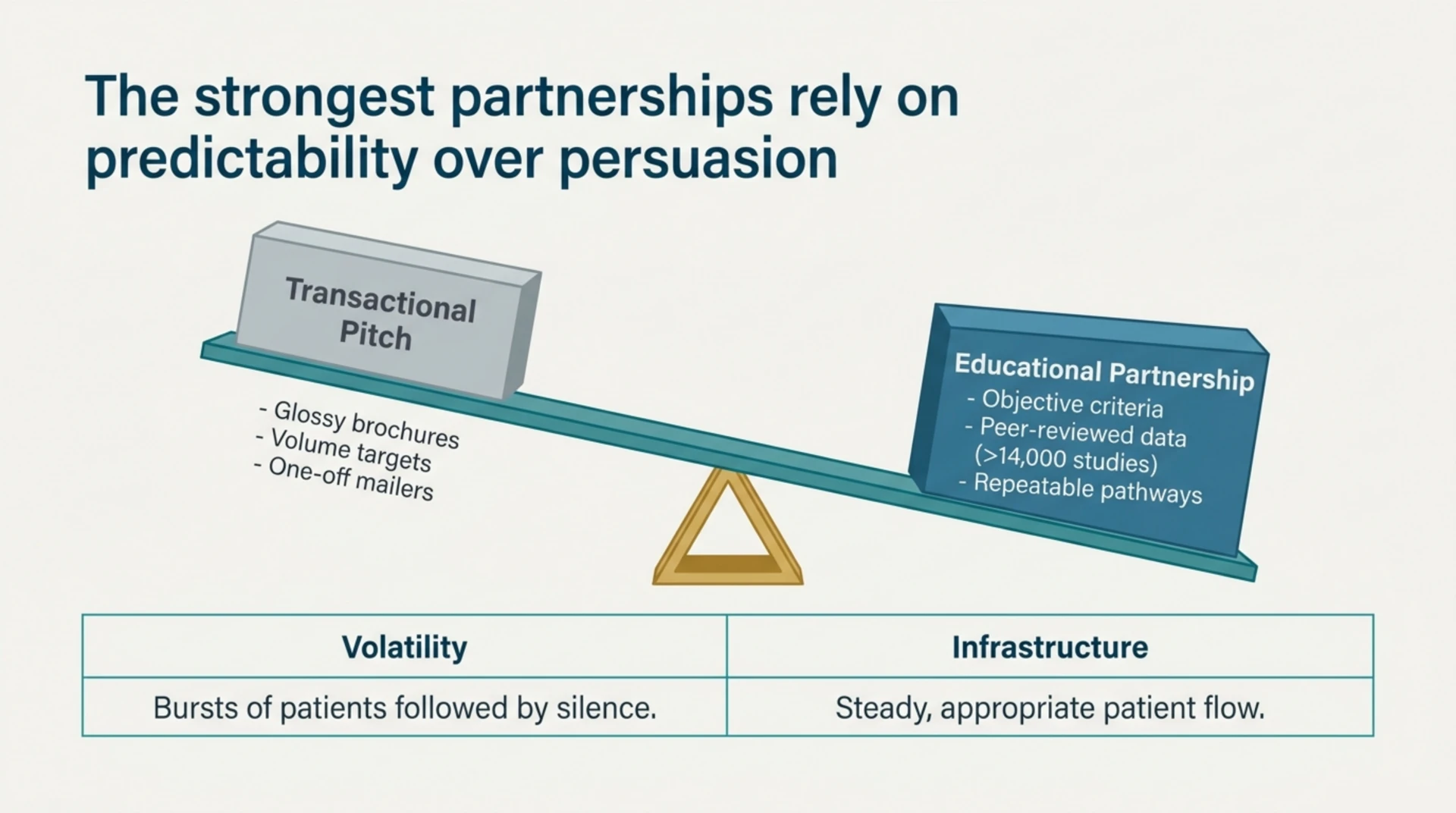
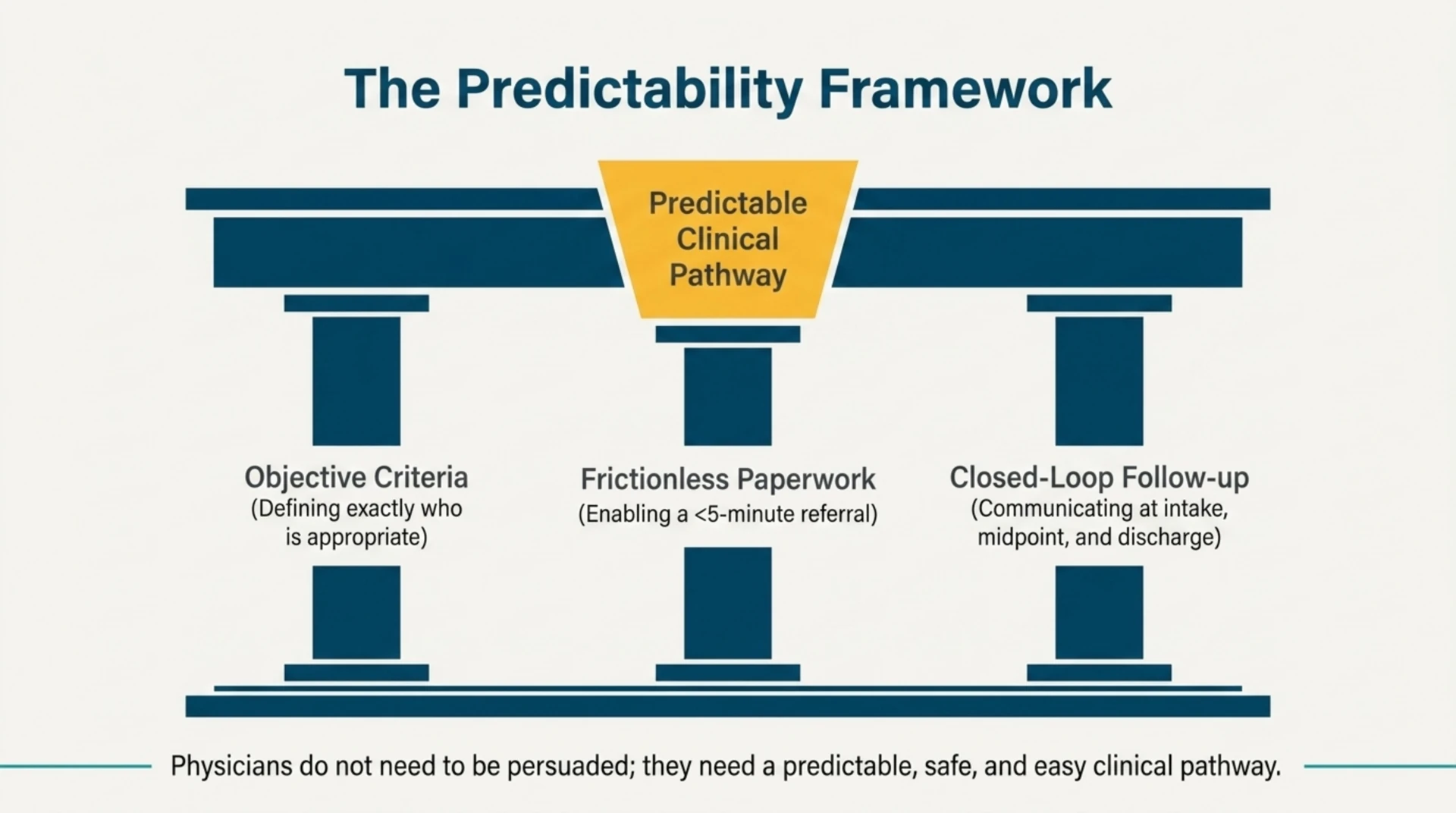
The strongest referral partnerships are built on predictability, not persuasion. A busy physician does not need to be convinced that hyperbaric medicine exists; they need to know exactly which of their patients might be appropriate, how to send a referral, and what happens after they do.
Why Building Physician Referral Partnerships Matters for Your Hyperbaric Clinic
Most hyperbaric clinics in Canada operate on a mix of self-referred patients and physician-directed referrals. For indications that require a documented physician referral, whether for internal intake protocols or for coverage purposes, a working relationship with local physicians is not optional infrastructure, it is the front door.
Clinics that never formalize referral relationships tend to see inconsistent intake: a burst of patients after a single conversation with a local doctor, then silence for months. A structured referral partnership program smooths that volatility. It also improves the quality of the referrals a clinic receives, because a physician who understands your intake criteria sends more appropriate patients and fewer that need to be redirected elsewhere.
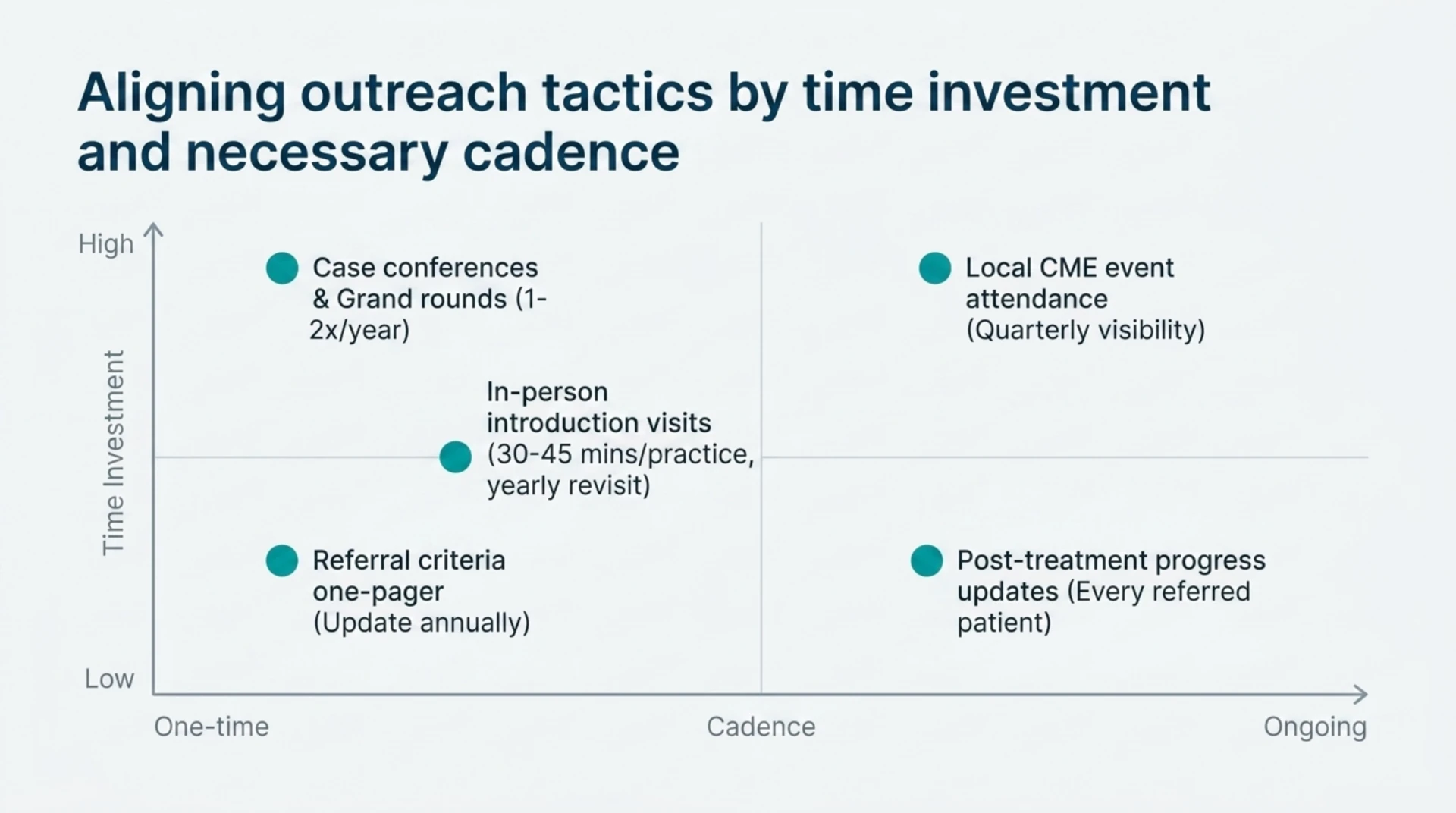
| Outreach Method | Time Investment | Best For | Typical Cadence |
|---|---|---|---|
| In-person introduction visit | Moderate (30 to 45 minutes per practice) | Wound care, plastics, ENT, vascular practices | One-time start, revisit yearly |
| Referral criteria one-pager | Low (created once, distributed widely) | Any specialty new to hyperbaric referral | Update annually or when protocols change |
| Case conference or grand rounds talk | High (preparation plus presentation time) | Hospital-affiliated physician groups | One to two per year |
| Post-treatment progress update | Low per patient, ongoing | Maintaining an existing referral relationship | Every referred patient |
| Local medical education event attendance | Moderate (event time plus follow-up) | Building broad name recognition | Quarterly or as events occur |
Who Should You Approach First?
Not every specialty is equally likely to refer. Prioritize outreach based on where clinicians most often consider HBOT within their own scope of practice. Common starting points include wound care physicians, plastic and reconstructive surgeons, vascular specialists, radiation oncology teams, and ENT practices. Family physicians and general practitioners are valuable long-term partners too, since they are often the first point of contact for a patient with a condition that might warrant a referral, but they typically need more general education before they refer confidently.
Start narrow, then widen. A clinic that tries to introduce itself to every specialty in a city at once tends to dilute its message. Begin with two or three specialties most aligned with the conditions your clinic sees most often, build a handful of strong relationships there, then expand outward using those early partners as references.
For a full list of the categories of conditions clinicians commonly consider hyperbaric oxygen therapy for, point interested physicians to the conditions section of the site rather than trying to summarize every indication in a single conversation.
How Do You Start the Conversation With a Referring Physician?
Lead With Education, Not a Pitch
Physicians are wary of anything that feels like a sales call. The most effective first conversation is educational: what a hyperbaric oxygen therapy session involves, what the referral process looks like, and where they can find independent background reading. Avoid framing the introduction around volume or growth targets. A one-page overview that explains the mechanics of a session and the referral pathway, without overstating what the therapy does, tends to land better than a glossy brochure.
Provide Clear Referral Criteria
Physicians refer more readily when they know exactly what makes a patient appropriate for referral and what documentation is needed. Provide a short, specific list: which conditions are commonly considered, what prior records or imaging are helpful, and any contraindication screening the referring practice should complete before sending a patient. Vague criteria create hesitation. Specific criteria create action.
Make the Paperwork Easy
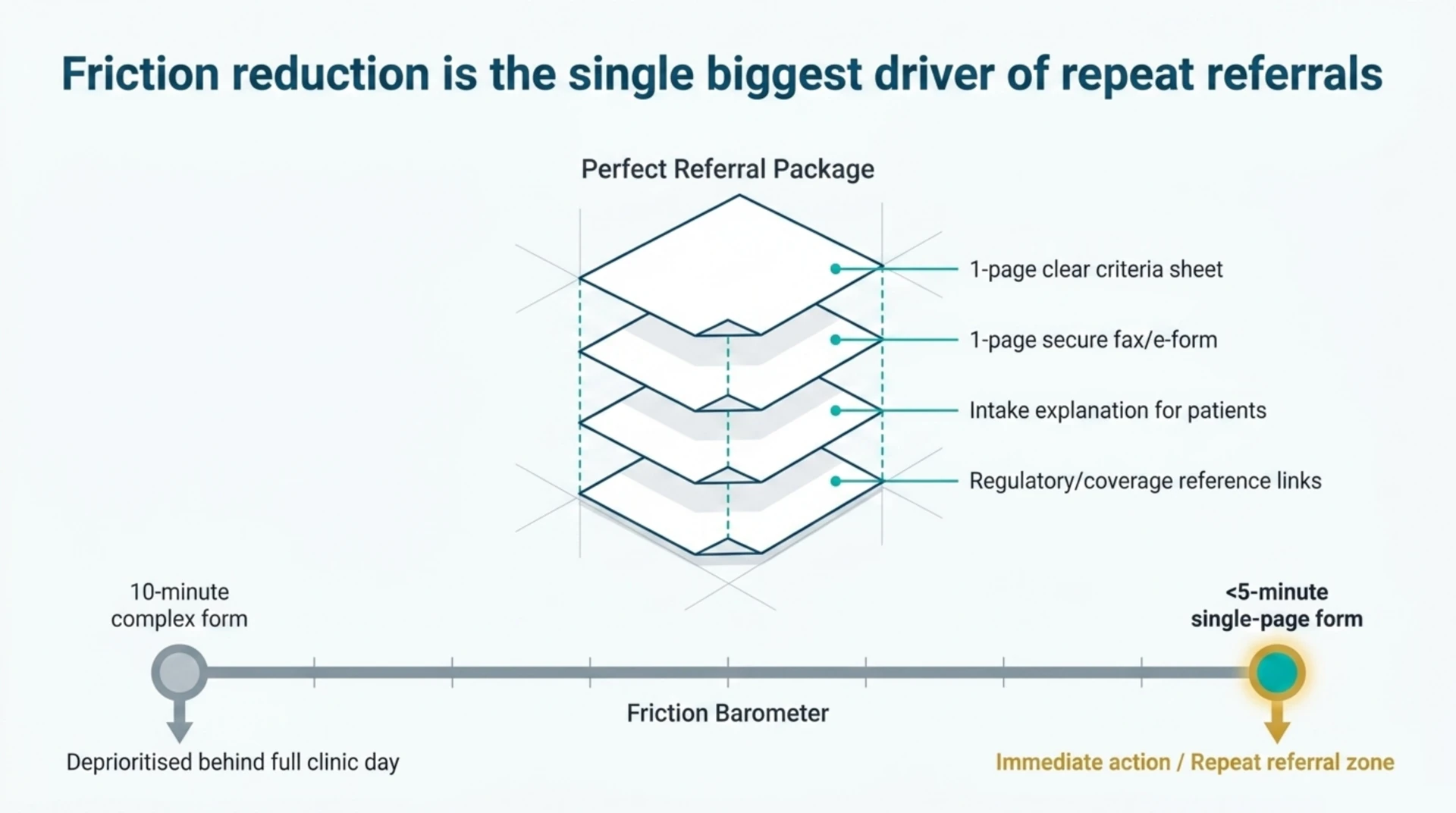
A referral form that takes ten minutes to complete gets deprioritized behind a full clinic day. Keep the referral form to a single page wherever possible, accept referrals by fax, secure email or an online form, and confirm receipt promptly. The single biggest driver of repeat referrals is friction reduction, not persuasion. If a physician’s office can send a referral in under five minutes and knows it will be acknowledged the same day, they are far more likely to think of your clinic the next time an appropriate patient comes through.
What Should a Referral Package Include?
A well-built referral package gives a physician’s office everything it needs without a follow-up phone call. At minimum, include a one-page referral criteria sheet, the referral form itself, a short explanation of what the intake and consultation process looks like from the patient’s perspective, and contact information for questions. If your clinic operates within a regulatory framework relevant to the province, a short note pointing physicians to the regulatory overview can answer credentialing and oversight questions before they are asked. Physicians whose patients ask about cost or funding will also appreciate a pointer to the coverage information, since billing questions are one of the most common reasons a referral stalls.
How Do You Keep a Referral Relationship Active?
Send Progress Updates
Once a patient has been referred, the referring physician wants to know what happened. A brief, appropriately consented update after intake, and again near the end of the treatment course, keeps the referring physician informed and reinforces that the relationship is collaborative rather than transactional. This is a logistical courtesy, not a clinical claim, and it is one of the easiest ways to build trust over a series of referrals.
Close the Loop After Treatment
When a patient’s course of sessions concludes, a short summary back to the referring physician, again with appropriate consent, closes the loop. Physicians who never hear back after a referral are less likely to send the next patient. Physicians who receive a clear, professional summary are reminded that the referral pathway works.
Attend Local Medical Education Events
Continuing medical education events, hospital rounds and local specialty society meetings are opportunities to stay visible without asking for anything directly. A clinic that shows up consistently, answers questions accurately, and avoids overstating what hyperbaric oxygen therapy can do for a given condition builds a reputation for being a credible, low-pressure resource. That reputation is what turns a single referral into a partnership.
What Are Common Mistakes Clinics Make When Building Referral Networks?
The most common mistake is treating referral development as a one-time campaign rather than an ongoing relationship. A single mailer or introductory visit rarely produces lasting referral volume on its own. Other frequent mistakes include making the referral process too complicated, failing to follow up with progress updates, and overstating what the therapy accomplishes in early conversations, which erodes credibility with physicians who expect measured, evidence-based communication. Clinics that instead point physicians to a well-sourced conditions resource backed by over 14,000 peer-reviewed studies, and let physicians draw their own conclusions from the literature, tend to build more durable trust than clinics that lead with promises.
How Long Does It Take to Build a Referral Network?
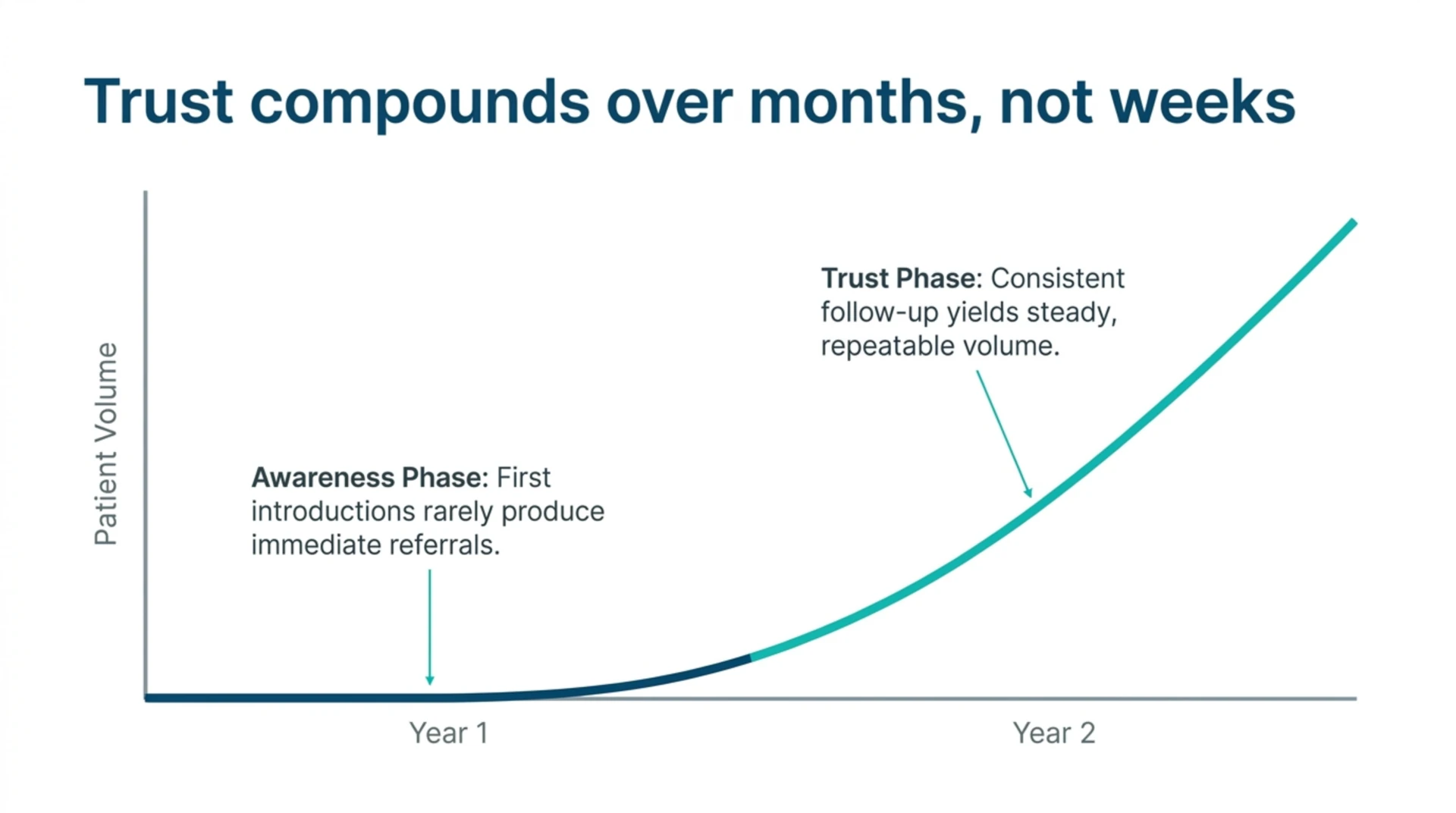
Most clinics should expect referral relationships to develop over months, not weeks. A first introduction rarely produces an immediate referral. What it produces is awareness, so that when an appropriate patient comes through that physician’s practice, the clinic is already on their radar. Clinics that stay patient, keep outreach consistent, and prioritize the follow-up steps above referral volume in year one tend to have a much stronger referral base by year two.
Frequently Asked Questions
How many physicians should a new hyperbaric clinic approach in its first year?
There is no fixed number, but a focused approach to ten to twenty practices in two or three closely aligned specialties tends to be more effective than a broad mailer to hundreds of physicians. Depth of relationship matters more than breadth of contact list.
Do referral partnerships require a formal agreement?
Not typically. Most physician referral relationships in Canada operate informally, based on trust and a clear referral process, rather than a signed contract. Any formal arrangement involving compensation or exclusivity should be reviewed against applicable provincial regulatory and professional conduct rules before proceeding.
Should a hyperbaric clinic pay for referrals?
Paying for patient referrals raises significant regulatory and professional conduct concerns in most Canadian jurisdictions and is generally not an appropriate way to build a referral network. Education, accessibility and consistent communication are the sustainable approach.
What information should a referral form request?
A good referral form requests basic patient identifying information, the referring physician’s contact details, the reason for referral, and space for any relevant prior records or imaging. Keeping the form to a single page improves completion rates.
How can a clinic reassure physicians about the credibility of hyperbaric oxygen therapy?
Point physicians to independently sourced, peer-reviewed background reading rather than making claims directly. A resource like Canada Hyperbarics, which organizes published research by condition, allows a referring physician to evaluate the evidence base on their own terms.
What is the biggest barrier to physician referrals for hyperbaric clinics?
Uncertainty about the referral process itself, more often than skepticism about the therapy, is the most common barrier. Physicians who are unsure how to refer, what paperwork is needed, or what happens after they refer tend to default to not referring at all. Removing that friction is usually the highest-leverage first step.
Should a clinic follow up if a physician does not respond to an introduction?
A single, low-pressure follow-up a few weeks later is reasonable. Beyond that, repeated unsolicited follow-up can be counterproductive. It is often more effective to stay visible through educational touchpoints, such as local medical education events, than to repeatedly contact a practice directly.
Related Reading
- Canada’s Hyperbaric Technician Workforce Shortage
- Medical Oxygen Supply Chain in Hyperbaric Clinics
- Hyperbaric Chamber Sterilization & Infection Control
Building physician referral partnerships is steady, unglamorous work, but it is also one of the most durable ways a hyperbaric clinic can grow. Clear criteria, easy paperwork, honest communication and consistent follow-up matter more than any single introduction. Canada Hyperbarics maintains a directory of hospitals and regulated facilities across the country; visit our facilities directory to see how hyperbaric programs are structured and regulated in different provinces.
This content is for informational purposes only and is not medical advice.