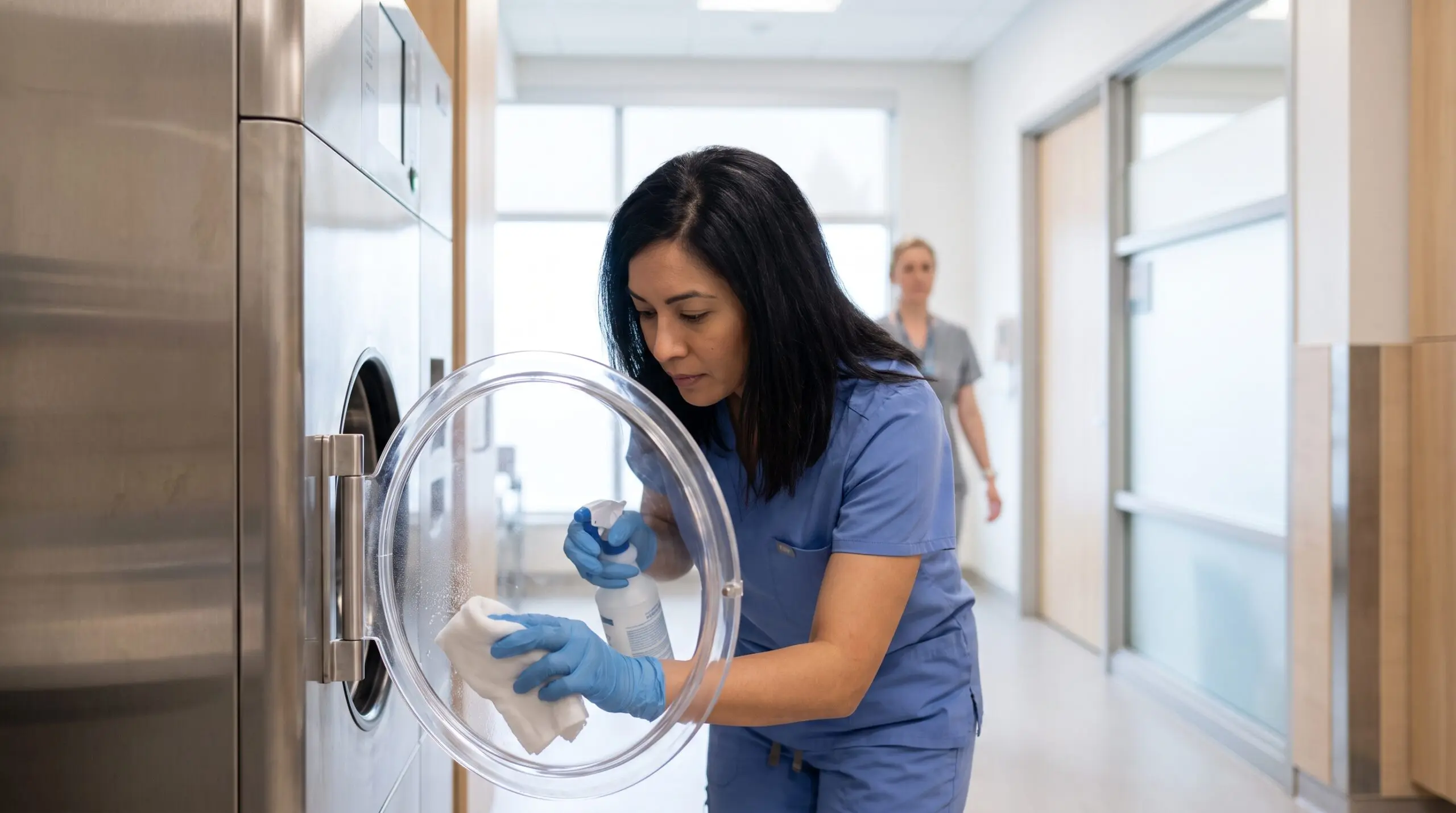
TL;DR: A hyperbaric chamber infection control sterilization protocol is the written, repeatable system a clinic follows to clean, disinfect, and inspect a hyperbaric oxygen therapy (HBOT) chamber between every patient session. It covers surface disinfection, air quality checks, cushion and mask hygiene, and staff sign-off documentation. This guide walks clinic owners and operators through building one, and points to where regulatory reference material fits in.
A hyperbaric chamber infection control sterilization protocol is the backbone of daily operations at any hyperbaric oxygen therapy (HBOT) facility. It is not a single task but a chain of small, repeated steps that together keep a shared, enclosed treatment space safe for the next patient. For clinic owners and operators, getting this right is as much a business discipline as a clinical one.
At Canada Hyperbarics, we hear from clinic operators who are setting up a new facility or tightening up an existing one. This post lays out a practical, step-by-step protocol you can adapt, along with the questions most owners ask when they are building their own sterilization schedule.
What Is a Hyperbaric Chamber Infection Control Sterilization Protocol?
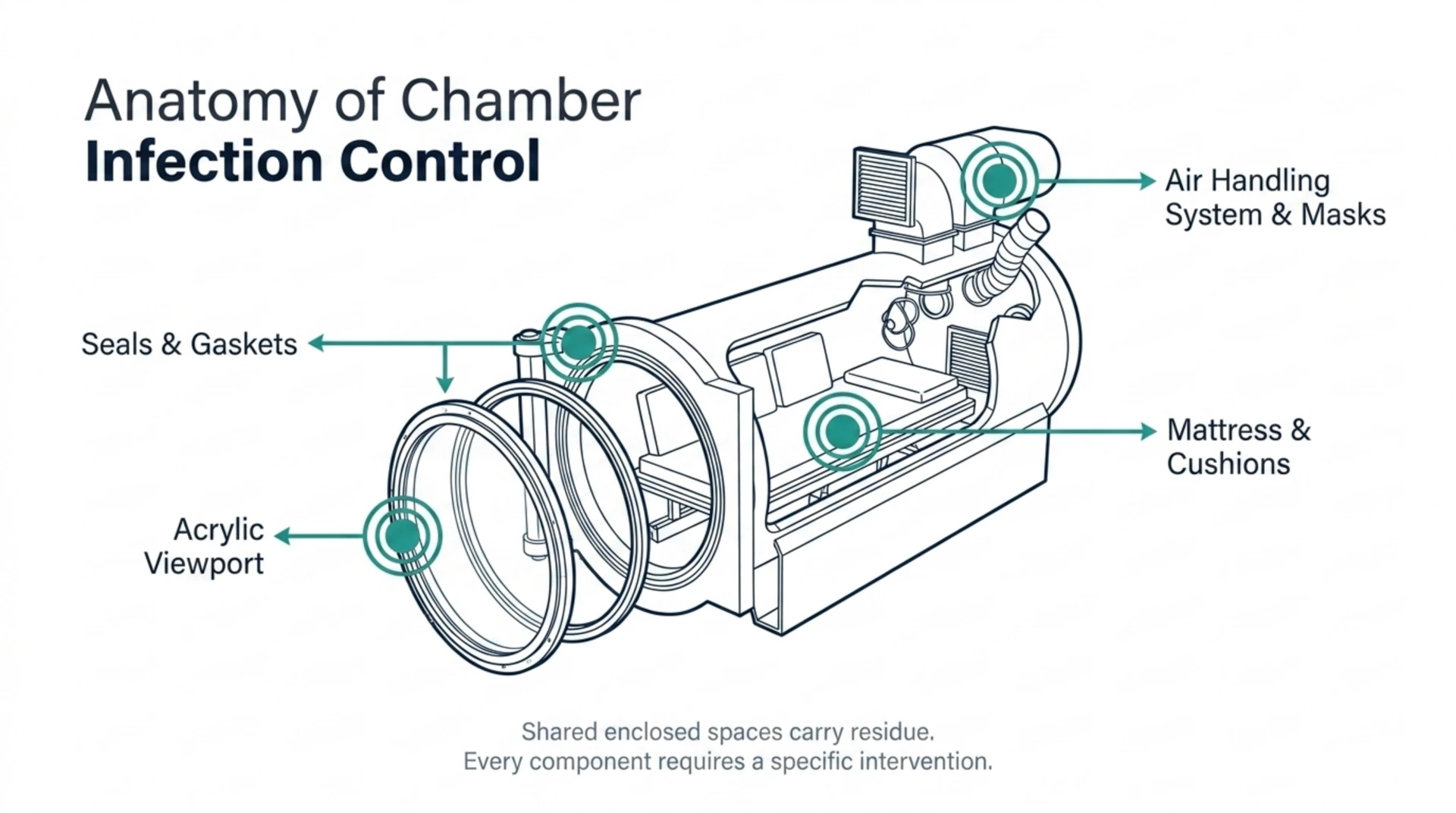
A hyperbaric chamber infection control sterilization protocol is a documented sequence of cleaning, disinfection, ventilation, and inspection steps applied before, between, and after patient sessions. It typically covers the interior chamber surfaces, the mattress or cushion, any masks or hoods, the acrylic viewport, and the surrounding treatment room.
The goal is consistency, not improvisation. A protocol written down and followed the same way every time removes guesswork from a busy clinic day and gives staff a clear standard to be trained against.
Why Infection Control Matters in a Hyperbaric Setting
A hyperbaric chamber is an enclosed space that multiple patients use across a single day. Surfaces, padding, and shared equipment can carry residue from skin contact, sweat, or airborne particles if they are not cleaned on a fixed schedule.
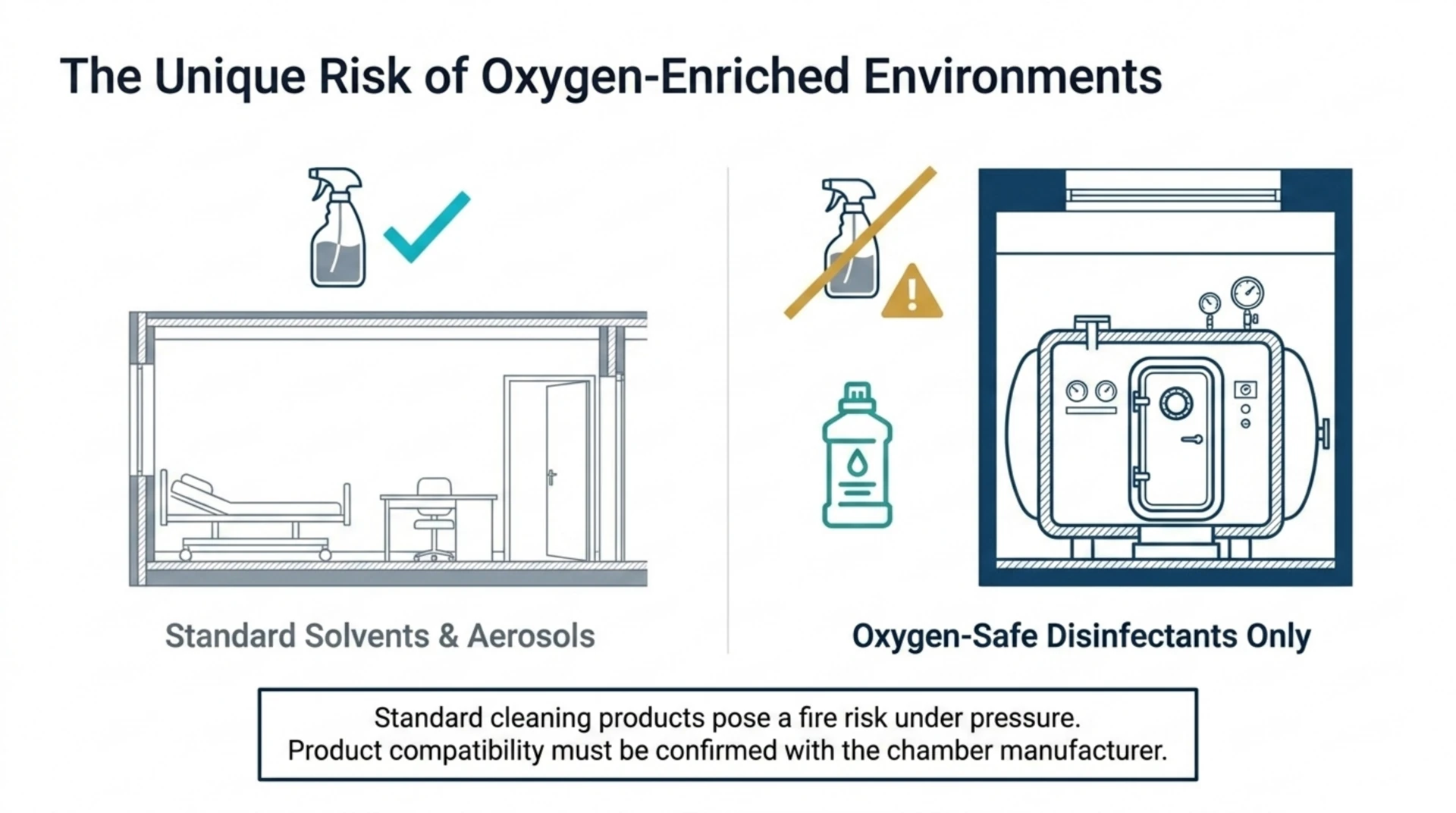
Because oxygen concentration and pressure inside a chamber are different from ambient room conditions, general clinic cleaning rules do not automatically transfer. Cleaning products and materials used inside or near a chamber need to be compatible with an oxygen-enriched environment, since some solvents and aerosols pose a fire risk under those conditions. Any facility building or reviewing its protocol should confirm product compatibility with the chamber manufacturer before adding a new disinfectant to the routine.
This is also a patient trust issue. Visible cleanliness and a documented routine reassure patients and referring clinicians that a facility takes safety seriously, alongside the credentials covered on our about page.
Building a Daily Sterilization Protocol: Step by Step
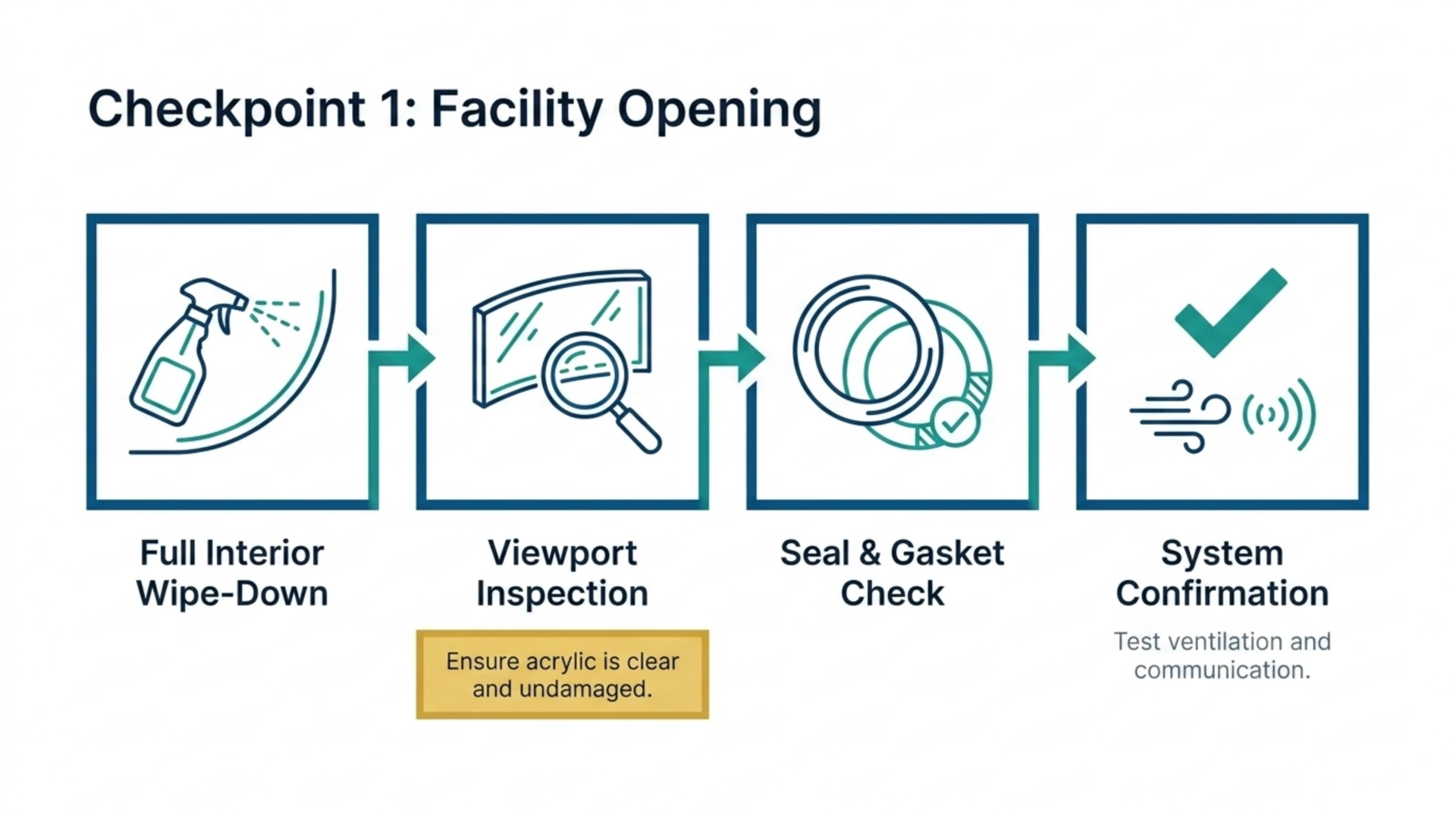
Most clinics organize their protocol around three checkpoints in the day: opening, between patients, and closing. Breaking it into checkpoints makes it easier to assign responsibility and to audit later.
Before the First Session
Start the day with a full interior wipe-down of the chamber using a manufacturer-approved, oxygen-safe disinfectant. Check that the acrylic viewport is clear and undamaged, inspect seals and gaskets for wear, and confirm ventilation and communication systems are functioning before any patient enters.
Between Patients
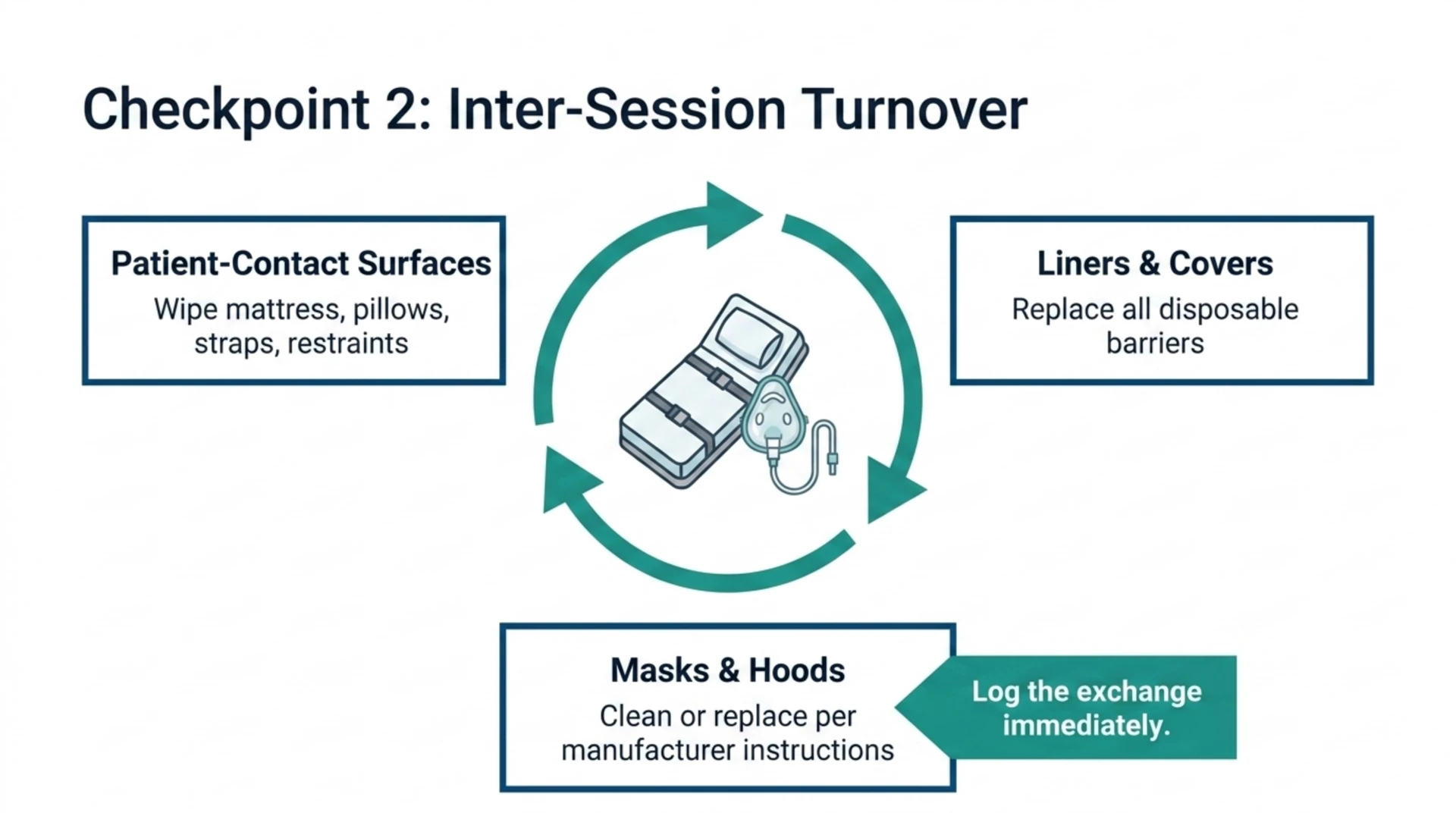
Between sessions, wipe all patient-contact surfaces, including the mattress, pillow, and any straps or restraints. Replace disposable liners or covers where used. Clean or replace masks and hoods according to the manufacturer’s single-use or reprocessing instructions, and log the exchange.
End of Day
At closing, perform a deeper clean of the full interior, check and log air quality readings, and record any maintenance flags for the next shift or a technician visit. A short daily log is often the difference between catching a small issue early and discovering it during an inspection.
What Should You Clean, and How Often?
The table below is a starting reference point. Actual frequency should always follow your chamber manufacturer’s documentation and your local health authority’s guidance.
| Component | Cleaning Task | Suggested Frequency |
|---|---|---|
| Interior chamber surfaces | Wipe down with oxygen-safe disinfectant | Between every patient, plus full clean at open and close |
| Mattress and cushions | Wipe or replace disposable cover | Between every patient |
| Masks and hoods | Clean or replace per manufacturer instructions | Between every patient |
| Acrylic viewport | Inspect and clean with approved, non-abrasive product | Daily, plus spot checks between patients |
| Seals and gaskets | Visual inspection for wear or damage | Daily |
| Air handling system | Filter check and air quality log | Daily, with scheduled technician service |
Air Quality and Ventilation Checks
Air quality monitoring is part of infection control, not separate from it. Regular checks on oxygen concentration, humidity, and filtration help confirm the chamber environment is behaving as expected and that ventilation between sessions is doing its job.
Document every reading, not just the ones that look unusual. A consistent log lets staff and technicians spot slow drift in a filter or seal well before it becomes a bigger problem.
Staff Training and Documentation
A protocol is only as reliable as the training behind it. New staff should be walked through each checkpoint, observed performing it, and signed off before working independently. Refresher training on a fixed schedule, such as quarterly, keeps the routine from drifting over time.
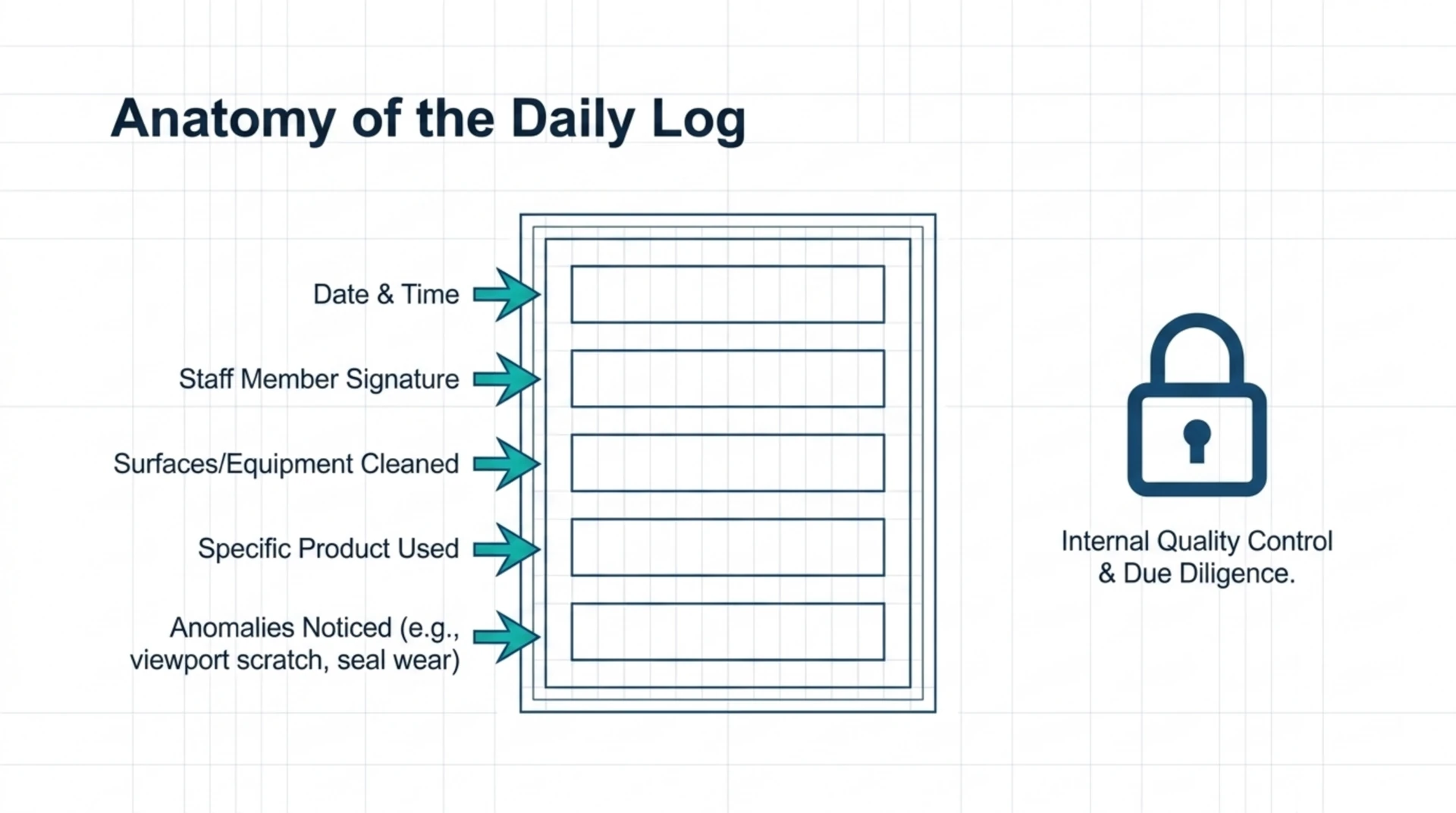
Keep dated logs for every cleaning and inspection step. These records matter for internal quality control, for onboarding new staff, and for demonstrating due diligence if a regulator or accrediting body asks for it.
How Does This Fit Into Regulatory Compliance?
Infection control expectations for hyperbaric facilities sit alongside broader medical device and clinic licensing requirements, which vary by province and by the setting a chamber operates in. Owners setting up a new protocol should cross-reference their local health authority rules with our regulatory overview for a starting map of what typically applies.
Facilities operating under a hospital or regulated multi-place setting often have infection control built into existing hospital policy already; single-place clinics generally need to build this structure themselves. Our facilities page outlines the differences between these settings in more detail.
Where Does This Fit With Patient Conditions?
Sterilization protocol is about the environment a session happens in, not about what a session is used for. Clinicians refer patients to HBOT for a range of conditions, and the evidence behind each of those is a separate topic from the cleaning routine covered here. If you want to see the conditions clinicians commonly consider HBOT for, visit our conditions overview rather than relying on this post for that information.
Canada Hyperbarics maintains a reference library that currently indexes over 14,000 peer-reviewed studies, and that library is the right place to look for evidence on specific conditions. This post stays focused on process and safety, not clinical outcomes.
Frequently Asked Questions
How often should a hyperbaric chamber be fully cleaned?
Most clinics perform a light wipe-down between every patient and a full interior clean at the start and end of each operating day. Follow your chamber manufacturer’s specific recommendations as the baseline.
Can any disinfectant be used inside a hyperbaric chamber?
No. Products must be compatible with an oxygen-enriched environment. Confirm compatibility with your chamber manufacturer before introducing a new cleaning product.
Who is responsible for infection control documentation?
Typically a designated clinic staff member or safety officer owns the daily log, though every technician performing a cleaning step should sign off on it individually.
Do single-place and multi-place chambers need different protocols?
The core principles, surface disinfection, air quality checks, and documentation, apply to both, but the specific steps and shared-space considerations differ. Check your chamber manufacturer’s guidance for your configuration.
What should be logged after each cleaning cycle?
Record the date, time, staff member, surfaces or equipment cleaned, product used, and any anomalies noticed, such as wear on a seal or a viewport scratch.
How does infection control connect to broader clinic accreditation?
Accrediting and regulatory bodies generally expect a documented, auditable protocol as part of overall facility compliance. See our regulatory page for a starting reference.
Where can I find more general questions about hyperbaric facilities?
Our FAQ page covers broader operational and patient-facing questions beyond sterilization.
Related Reading
- Cold or Sinus Congestion Before Hyperbaric Oxygen Therapy?
- Hyperbaric Oxygen for Non-Union Fracture Healing: Evidence
- HBOT for Diabetic Foot Ulcers: Cost-Effectiveness Evidence
A clear, well-documented hyperbaric chamber infection control sterilization protocol protects patients, protects staff, and protects a clinic’s reputation. Building one takes some upfront work, but a fixed daily routine pays for itself the first time an inspection or a new hire needs a clear answer for “how do we do this here.”
To see how Canada Hyperbarics categorizes hospitals and regulated facilities and where infection control responsibilities typically sit within each, visit our facilities page.
This content is for informational purposes only and is not medical advice.