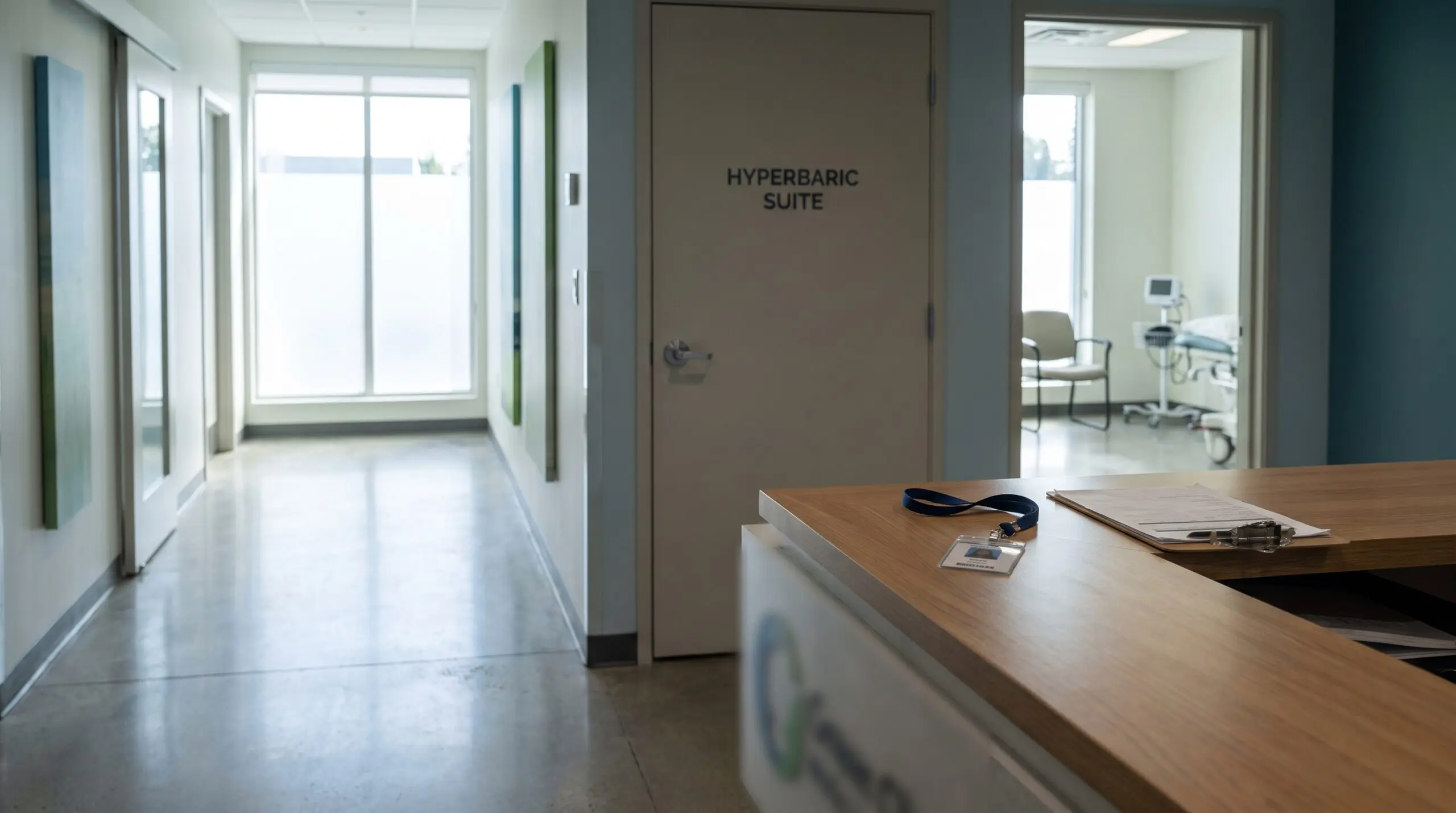
TL;DR: A hyperbaric technician workforce shortage is a gap between the number of trained chamber operators available and the number clinics need to run hyperbaric oxygen therapy programs safely. Across Canada, small clinic teams, long certification timelines and staffing gaps outside major cities are combining to stretch scheduling capacity, and clinics are responding with cross-training, regional partnerships and longer booking windows. This post looks at what is driving the shortage, how it affects appointment availability, and what to ask when comparing facilities.
If you have tried to book a hyperbaric oxygen therapy session recently and found the wait longer than expected, staffing may be part of the reason. The hyperbaric technician workforce shortage in Canada is not a single dramatic event. It is a slow, uneven squeeze that clinic owners, hospital departments and patients are all feeling in different ways, from a full-time centre in a major city to a part-time program attached to a rural hospital.
This is an operations story, not a clinical one. It does not change what happens inside the chamber during a session. It changes how many sessions a clinic can safely run in a day, how far in advance you may need to book, and how a facility structures its team. Understanding the staffing landscape helps clinic operators plan and helps patients set realistic expectations.
What Is Driving the Hyperbaric Technician Workforce Shortage in Canada?
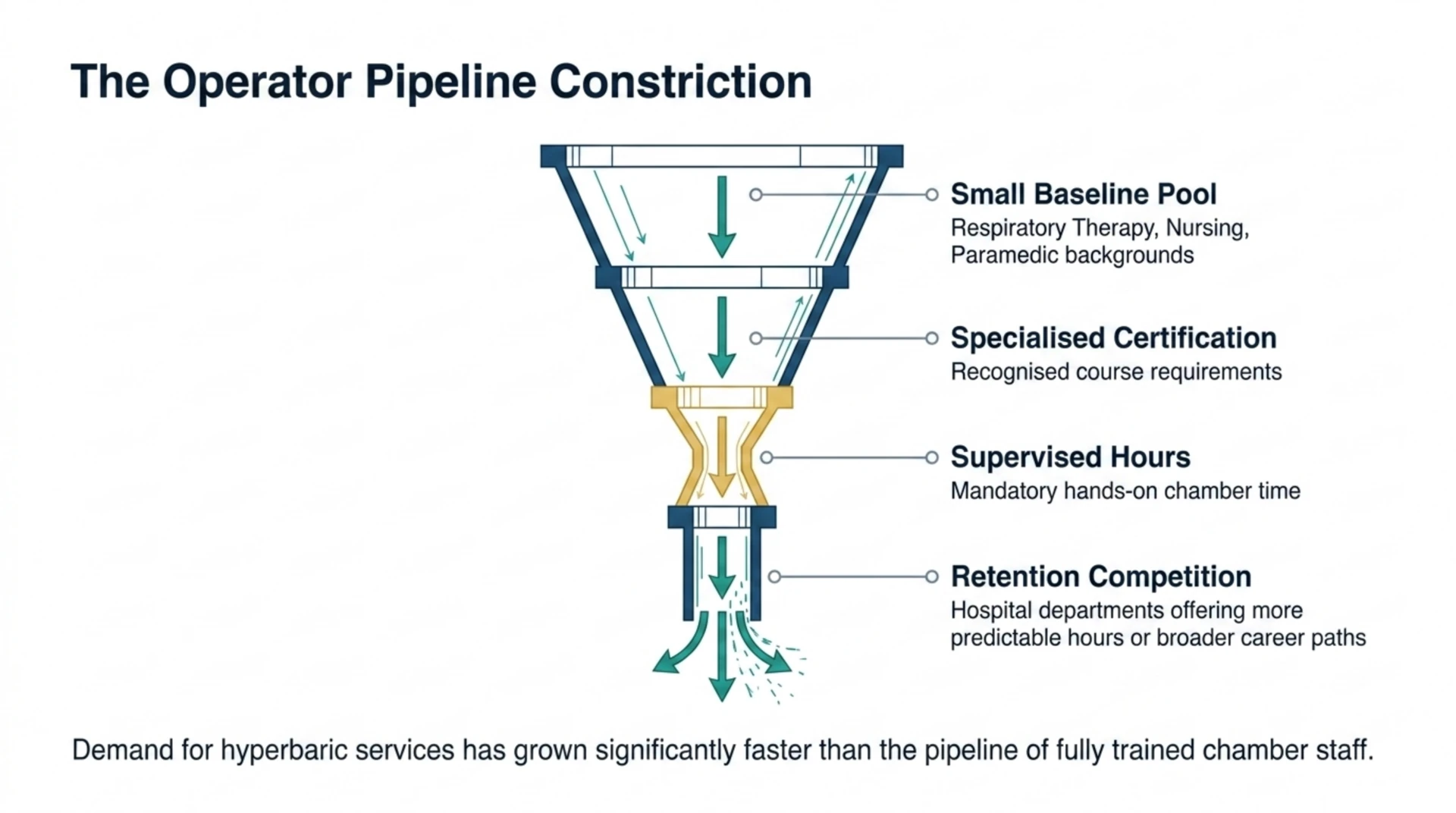
Several trends are converging at once, and none of them is unique to hyperbaric medicine. The core issue is that training a qualified chamber operator takes real time, and demand for hyperbaric services has grown faster than the pipeline of trained staff.
A Small, Specialized Talent Pool
Hyperbaric technicians are not a large occupational category to begin with. Most come from a respiratory therapy, nursing, or paramedic background before adding chamber-specific certification. That narrows the pool of people who can even begin training, long before shortage numbers show up in a staffing report.
Certification and Supervised Hours Take Time
Becoming a qualified hyperbaric technician generally means completing a recognised course plus a period of supervised, hands-on chamber time before working independently. That timeline is measured in months, not weeks. A clinic that loses a technician cannot simply post a job listing and fill the seat the following week.
Geography Concentrates the Problem
Hyperbaric programs are concentrated in larger centres, and rural or remote regions often have only one part-time program, if any. When a single technician in a smaller centre is unavailable, whether for training, illness, or relocation, the entire local program can pause. This is very different from a larger urban clinic with a rotating team of several trained staff.
Retention Competes With Other Specialties
Because many hyperbaric technicians cross-train from respiratory therapy or nursing, they are also in demand in hospital departments that may offer more predictable hours or broader career paths. Clinics have to actively build a case for staff to stay in hyperbaric work rather than move elsewhere within healthcare.
Why Does Chamber Staffing Matter for Clinic Operations?
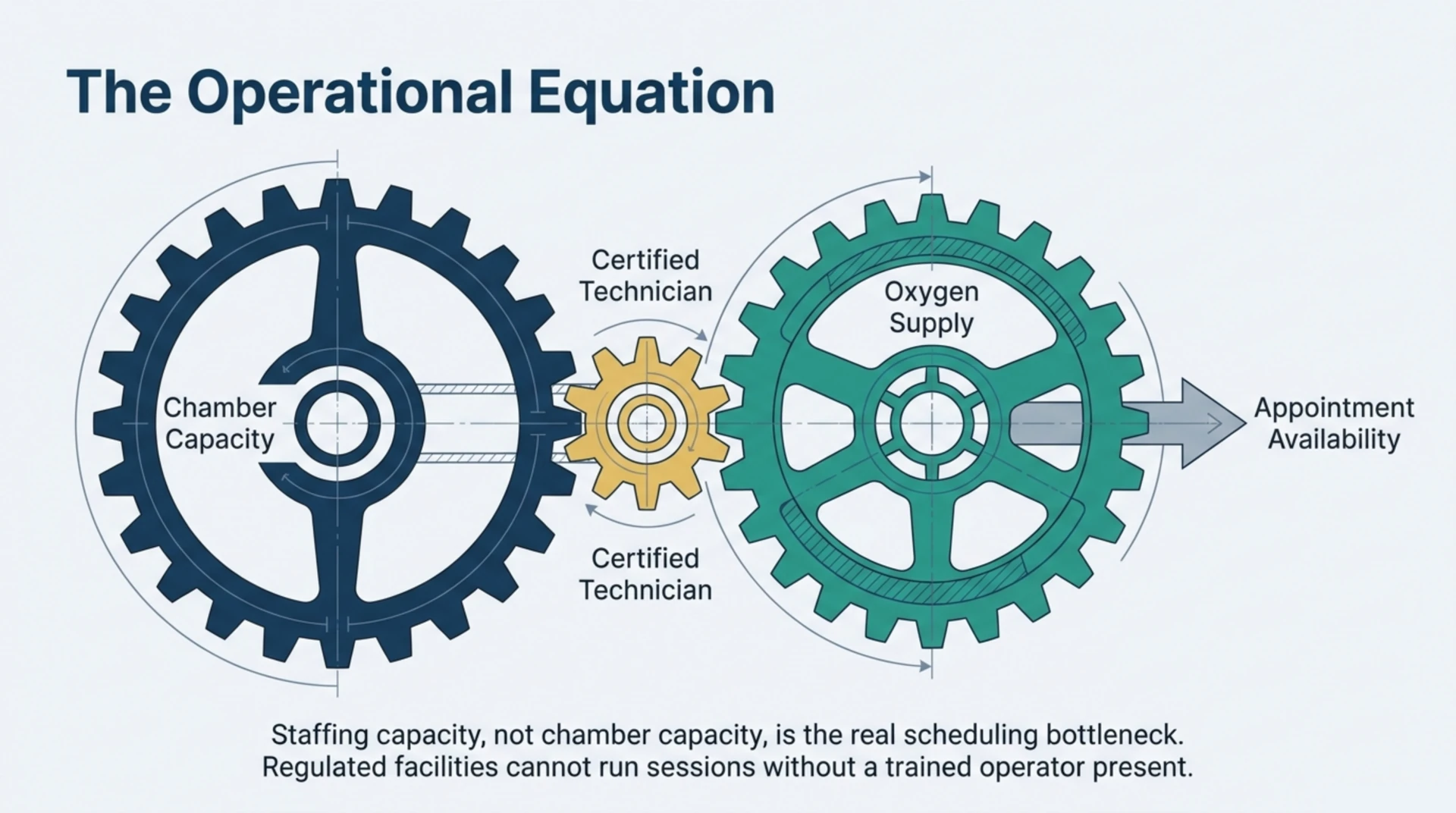
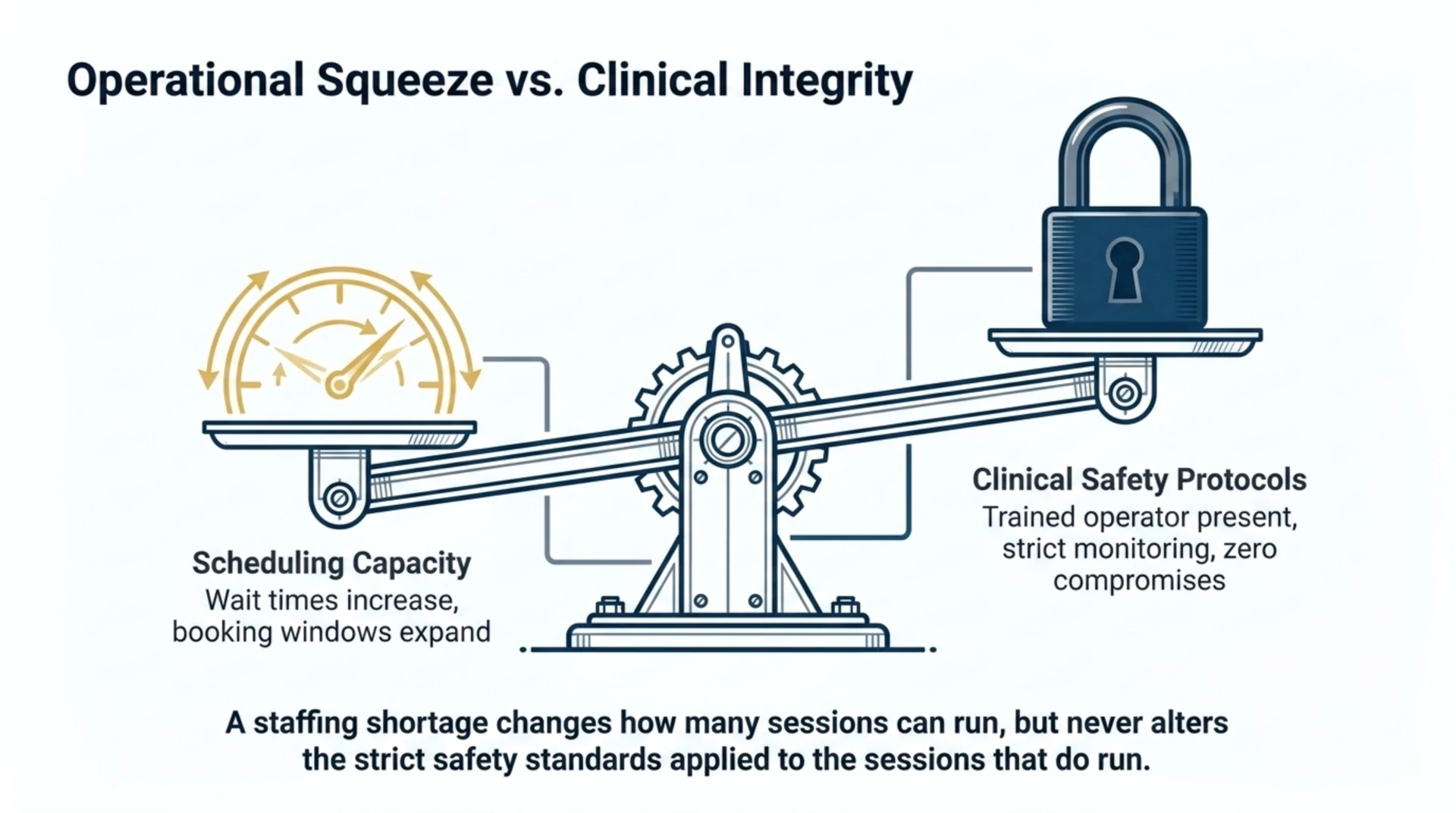
A hyperbaric chamber cannot run itself. Regulated facilities require a trained operator present and monitoring throughout every session, which means the number of qualified staff on a schedule directly limits the number of sessions a clinic can offer in a day. Staffing capacity, not chamber capacity, is often the real bottleneck in scheduling.
This matters for three groups differently:
- Clinic owner-operators need to plan staffing coverage the same way they plan equipment maintenance, as a core operational input rather than an afterthought.
- Referring providers benefit from understanding that a facility’s booking timeline reflects staffing reality, not a lack of interest in taking new patients.
- Patients and caregivers can plan around realistic wait times if they understand why a program’s schedule looks the way it does.
For a broader look at how facilities are structured and staffed, see our facilities overview, which outlines what to expect from hospital-based and independent hyperbaric programs.
How Are Canadian Clinics Adapting to the Shortage?
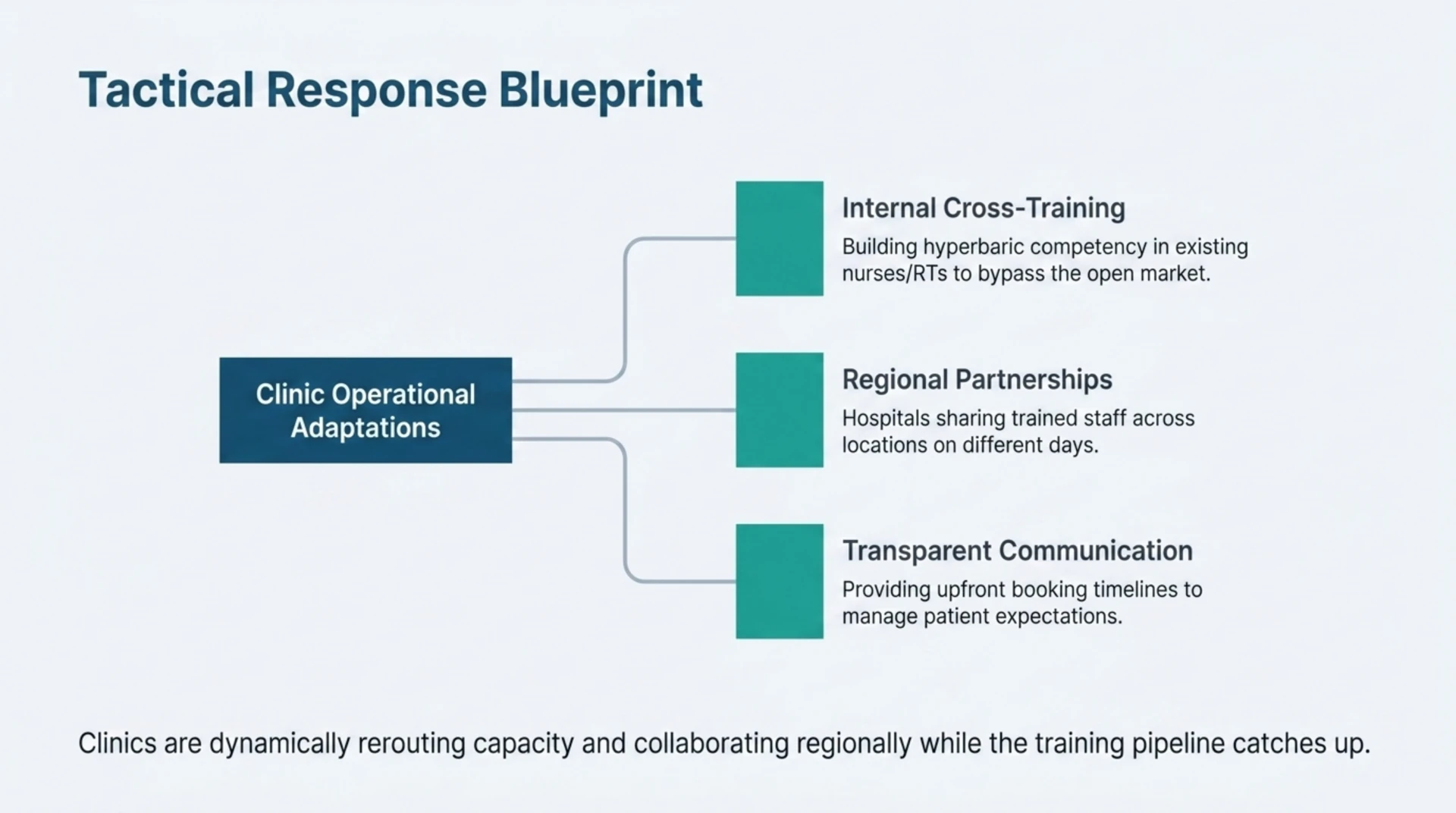
Clinics are not standing still. Several practical strategies have emerged across the industry to keep programs running while the training pipeline catches up.
Cross-Training Existing Clinical Staff
Some clinics are investing in cross-training nurses or respiratory therapists already on staff, building hyperbaric competency internally rather than competing solely on the open hiring market. This spreads scheduling flexibility across a wider team.
Regional Partnerships and Shared Staffing
In smaller markets, some facilities coordinate with nearby hospitals or clinics to share trained staff across locations on different days of the week, which keeps a program open even with a thin local talent pool.
Longer Booking Windows and Batch Scheduling
Many clinics have shifted to grouping sessions into defined blocks of the day rather than offering appointments continuously from open to close. This lets a smaller staff team run a full, safely supervised block of sessions rather than spreading thin across a long day.
Clearer Communication With Patients
Facilities that communicate booking timelines up front, rather than leaving patients to guess, tend to see fewer scheduling frustrations. If a program is honest that current wait times reflect staffing capacity, most patients plan around it without difficulty.
| Staffing Role | Typical Path Into the Role | Primary Responsibility in a Session |
|---|---|---|
| Hyperbaric Technician / Operator | Respiratory therapy, nursing or paramedic background plus chamber-specific certification and supervised hours | Operates the chamber controls and monitors the session in progress |
| Supervising Physician or Medical Director | Physician training plus hyperbaric medicine certification | Oversees the clinical program and reviews patient suitability |
| Intake or Scheduling Coordinator | Administrative or clinical support background | Manages booking, screening paperwork and appointment flow |
| Facility or Safety Officer | Often combined with the technician role in smaller programs | Maintains equipment logs and safety compliance records |
What Should You Ask When Comparing a Hyperbaric Facility?
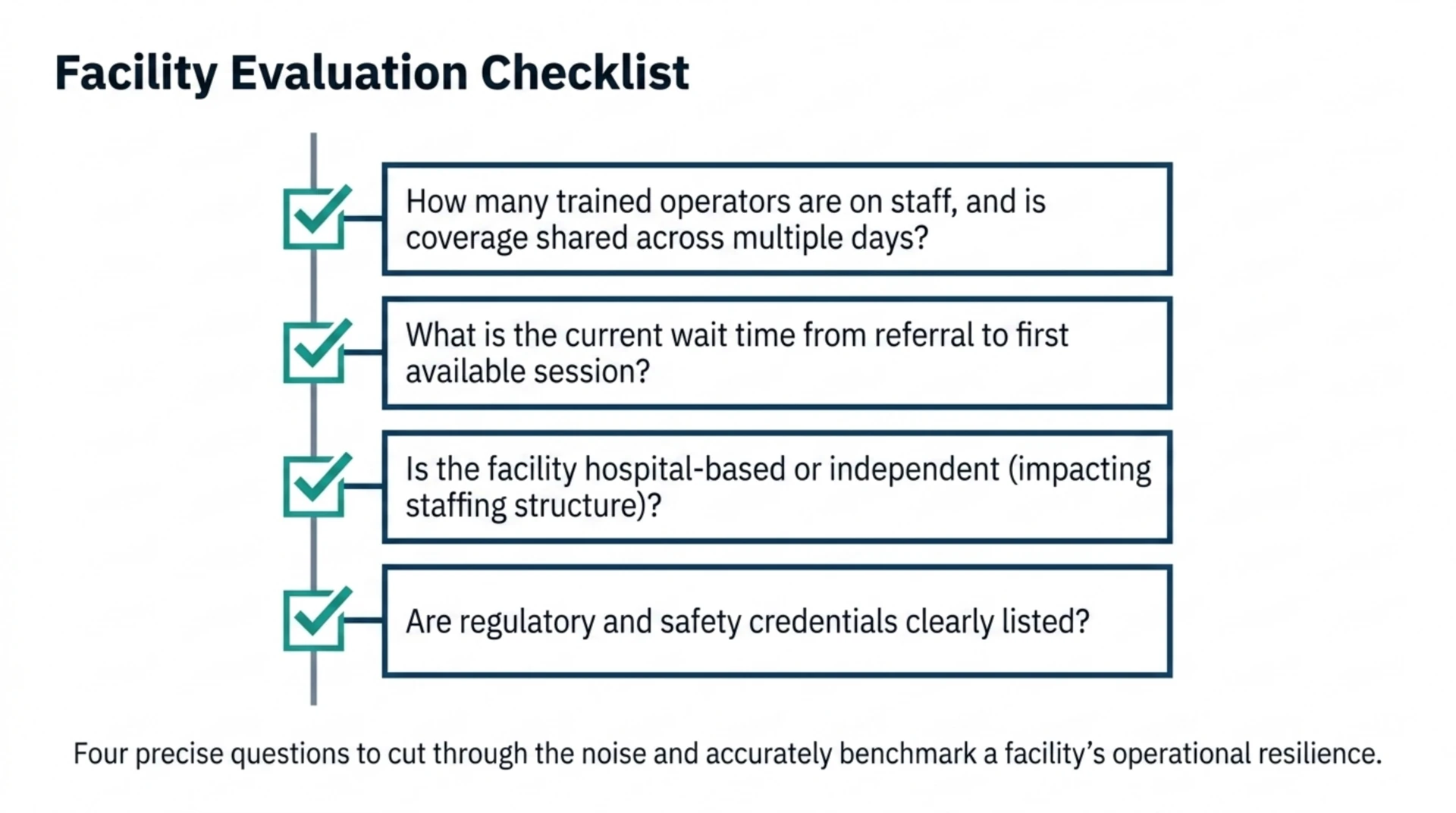
Whether you are a clinic operator benchmarking staffing against peers or a patient comparing programs, a few practical questions cut through the noise:
- How many trained operators does the program have on staff, and is coverage shared across multiple days?
- What is the current typical wait time from referral or inquiry to a first available session?
- Is the facility hospital-based or independently operated, and how does that affect staffing coverage?
- Does the facility list its regulatory and safety credentials clearly?
Our regulatory page outlines the oversight framework Canadian hyperbaric facilities operate under, which is a useful reference point when comparing programs. If you are researching a specific condition that a clinician may consider hyperbaric oxygen therapy for, our conditions overview is the place to start, since staffing and scheduling questions are separate from the evidence question of what a program is used for.
What Does This Mean If You Are Considering Hyperbaric Oxygen Therapy?
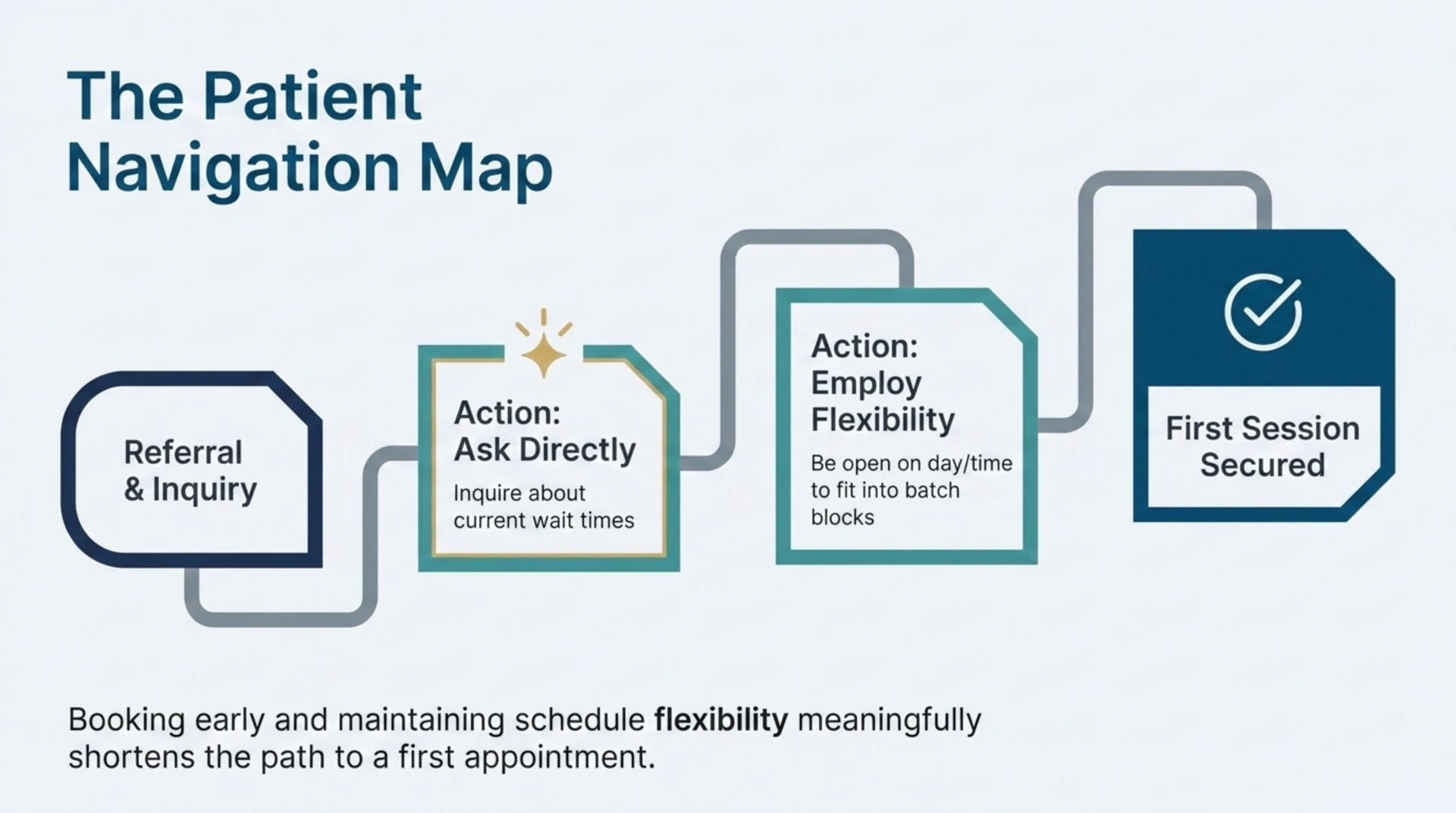
None of this changes what happens once you are in the chamber. A session still means resting comfortably while pressurized oxygen is delivered under staff supervision, and safety protocols remain the same regardless of how tight a clinic’s staffing schedule is. What changes is the path to get an appointment.
Booking earlier, asking directly about current wait times, and being flexible on the day or time of your session block can meaningfully shorten your path to a first appointment. Canada Hyperbarics tracks facility information across the country specifically so patients and referring providers are not navigating this blind.
Canada Hyperbarics maintains a broader educational library drawing on more than 14,500 peer-reviewed studies related to hyperbaric oxygen therapy, which is where the clinical evidence side of this topic lives. That library is separate from this operational discussion, which is focused purely on staffing and scheduling.
Frequently Asked Questions
Is the hyperbaric technician shortage happening everywhere in Canada equally?
No. It is most visible in rural and smaller-market programs that rely on a thin staff team, while larger urban centres with bigger teams tend to have more scheduling resilience.
Does a staffing shortage affect the safety of a session?
No. Regulated facilities do not run sessions without a trained operator present. A shortage affects how many sessions can be scheduled, not the safety standard applied to the sessions that do run.
How long does it take to train a new hyperbaric technician?
It typically involves completing a recognised certification course plus a period of supervised hands-on chamber hours, which together generally takes months rather than weeks.
Should I expect longer wait times for a first appointment right now?
Many programs are currently booking further in advance than in past years. Asking a facility directly about current wait times is the most reliable way to plan.
Can a clinic operate with just one trained technician?
Some smaller programs do, which is part of why a single staff change, such as illness or relocation, can visibly affect that program’s schedule until coverage is restored.
Where can I learn more about how Canadian hyperbaric facilities are regulated?
Our regulatory page explains the oversight framework facilities operate under, and our FAQ page covers common patient questions about the process.
Related Reading
- Medical Oxygen Supply Chain in Hyperbaric Clinics
- Hyperbaric Chamber Sterilization & Infection Control
- Cold or Sinus Congestion Before Hyperbaric Oxygen Therapy?
Staffing is one of the quieter operational challenges in Canadian hyperbaric medicine, but it shapes the patient experience as much as any piece of equipment. Canada Hyperbarics will keep tracking this story as clinics adapt.
To find a hospital or regulated facility near you and compare current staffing and scheduling information, visit our hospitals and regulated facilities directory.
This content is for informational purposes only and is not medical advice.